
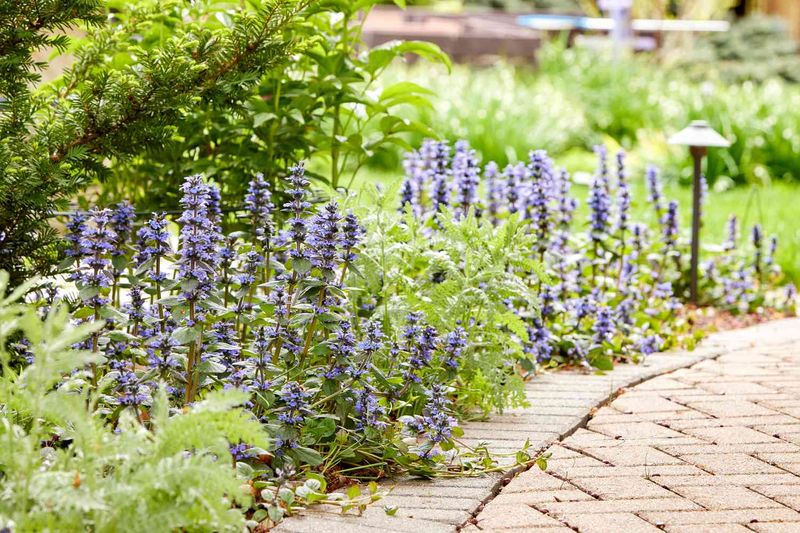
Bare patches in ornamental beds are practically an open invitation for weeds. You pull them, mulch over them, and a few weeks later they are back, thicker than before. There is a low-growing perennial called bugleweed that spreads across open soil and gradually shades out the space weeds need to take hold. It is not a magic fix, but in the right spot and with the right preparation, it can seriously cut down on how often you are out there pulling.
The groundcover behind the recurring weed problem is bugleweed
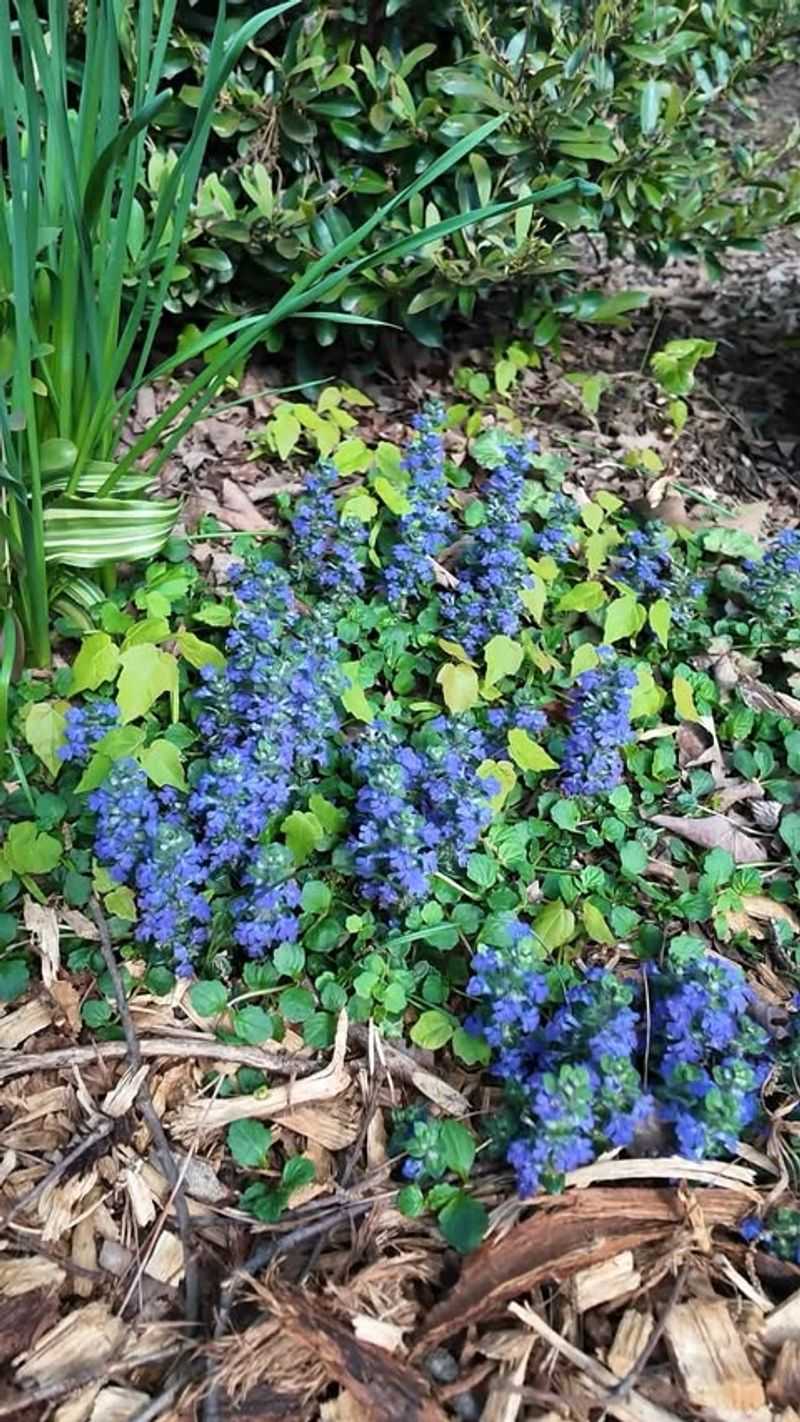
Carpet bugleweed, known by its botanical name Ajuga reptans, is the plant this article is built around. Also called bugleweed or carpet bugle, it is a low-growing perennial that sends out above-ground runners called stolons. Those stolons creep across the soil surface, root where they touch down, and gradually knit together into a tight mat that covers bare ground.
That mat is what makes Ajuga relevant to gardeners dealing with recurring weeds. Open soil is an opportunity for weed seeds, and Ajuga works by removing that opportunity over time. The University of Florida IFAS Ajuga profile describes it as a compact, mat-forming groundcover suited to ornamental landscape settings, which is exactly the kind of use this article covers.
A few limits are worth naming upfront. Ajuga can reduce new weed growth after it fills in a bed, but it does not eradicate established perennial weeds or guarantee that you will never pull a weed again. It also is not the right plant for every bare patch. North Carolina Extension notes that it can behave aggressively in some regions, so site fit and regional status both matter before you plant.
A dense mat reduces the light and space weeds need
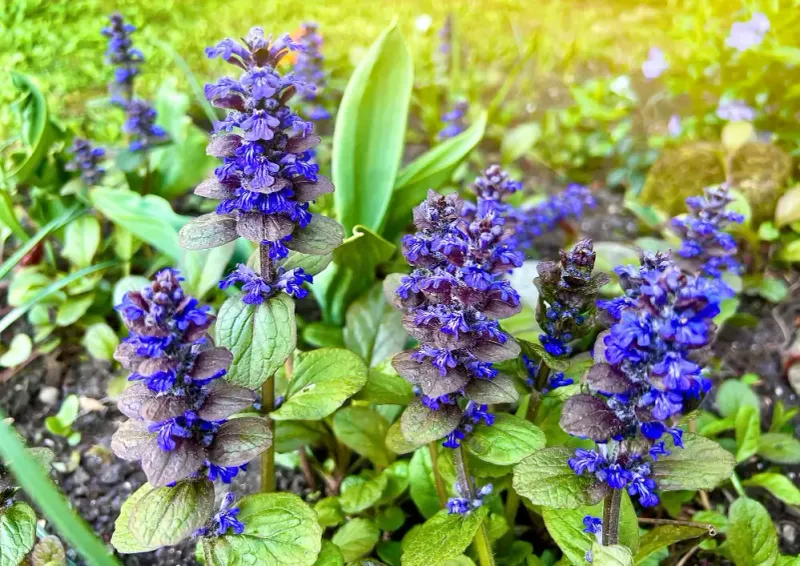
Bugleweed does not fight weeds with chemicals or root competition alone. The suppression is mostly physical: as stolons spread and leaves overlap, they close off the soil surface and block the light that weed seedlings need to establish. Fewer gaps in the canopy means fewer places for weed seeds to land on bare, sunlit soil and germinate.
A field study on Ajuga reptans found that once plots reached roughly 90 percent coverage – which took about 10 months after planting – weed biomass and manual weeding time were measurably lower than in bare plots. That is meaningful evidence, but it comes from one study under specific conditions. Treat it as a realistic indicator of what is possible after good establishment, not as a schedule every garden will follow.
Groundcover research conducted across multiple sites found a consistent pattern: weed suppression improved substantially after plants filled in and foliage densely reduced light at the soil surface. That multi-site groundcover comparison reinforces the mechanism without promising a specific timeline. The practical takeaway is that suppression builds as coverage builds, and the critical window is the fill-in period before the mat closes.
Choose the site before you choose the plant
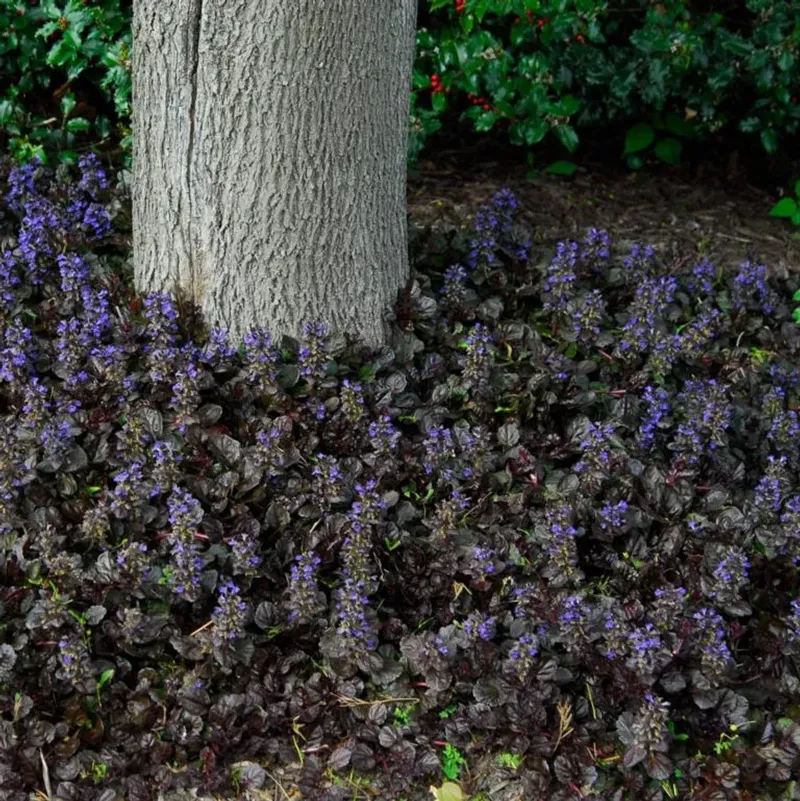
Ajuga performs reliably in shade or partial shade with moist, well-drained soil. Those are the conditions where its stolons spread steadily and its foliage stays dense enough to do real suppression work. University of Florida IFAS notes that full sun can work in cooler parts of its range when soil moisture stays adequate, but hot, dry exposure is a less dependable fit. In those conditions, the plant may thin out rather than fill in, which is the opposite of what you need.
Good candidate locations include gaps around established shrubs, the ground beneath trees where grass struggles, and slopes where bare soil erodes and weeds constantly recolonize. These are exactly the kinds of spots where Ajuga’s shade tolerance and spreading habit are assets rather than liabilities. The plant is low-growing and does not handle foot traffic well, so paths, stepping-stone areas, and any spot people regularly walk through are poor choices.
Keep Ajuga out of vegetable beds. Its spread is difficult to control once it gets going, and it can compete with crops for water and nutrients. Beds containing small, slow-growing perennials are also risky, because Ajuga can crowd them out before they have a chance to establish. The strongest case for this plant is in contained ornamental beds where its habit matches the space and the light.
Remove established weeds before Ajuga moves in
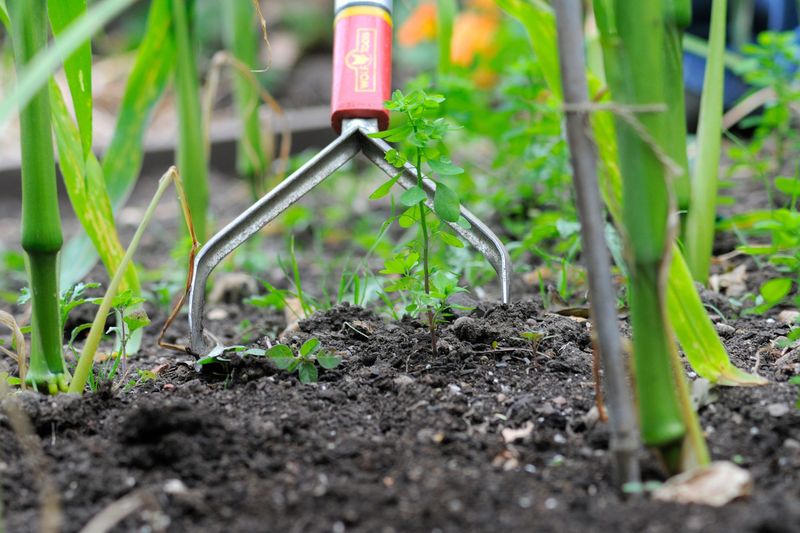
Planting Ajuga over an existing weed problem is one of the most common mistakes with any groundcover. Established perennial weeds, grasses, bindweed, or goutweed have root systems that a new groundcover simply cannot overcome. They will grow right through a young mat, and once Ajuga has spread, reaching in to remove them becomes much harder without damaging the groundcover itself.
Clemson Cooperative Extension’s groundcover guide makes this point clearly: most groundcovers cannot compete well with established weeds, and removing weeds after the groundcover has spread is difficult. The prep work done before planting determines how well the groundcover can do its job.
Clear the bed as thoroughly as practical before putting anything in the ground. For annual weeds and shallow-rooted species, hand pulling or hoeing at the right stage is often enough. Perennial weeds with deep or spreading roots may need repeated removal over a season to exhaust the root system. UC Agriculture and Natural Resources guidance on weeds in landscape plantings cautions against blanket herbicide use around ornamentals, and any product choice should match the specific weed, site, and label directions.
The goal is to hand Ajuga a clean start, not to cover up a weed problem and hope for the best.
Support the runners while the groundcover fills in
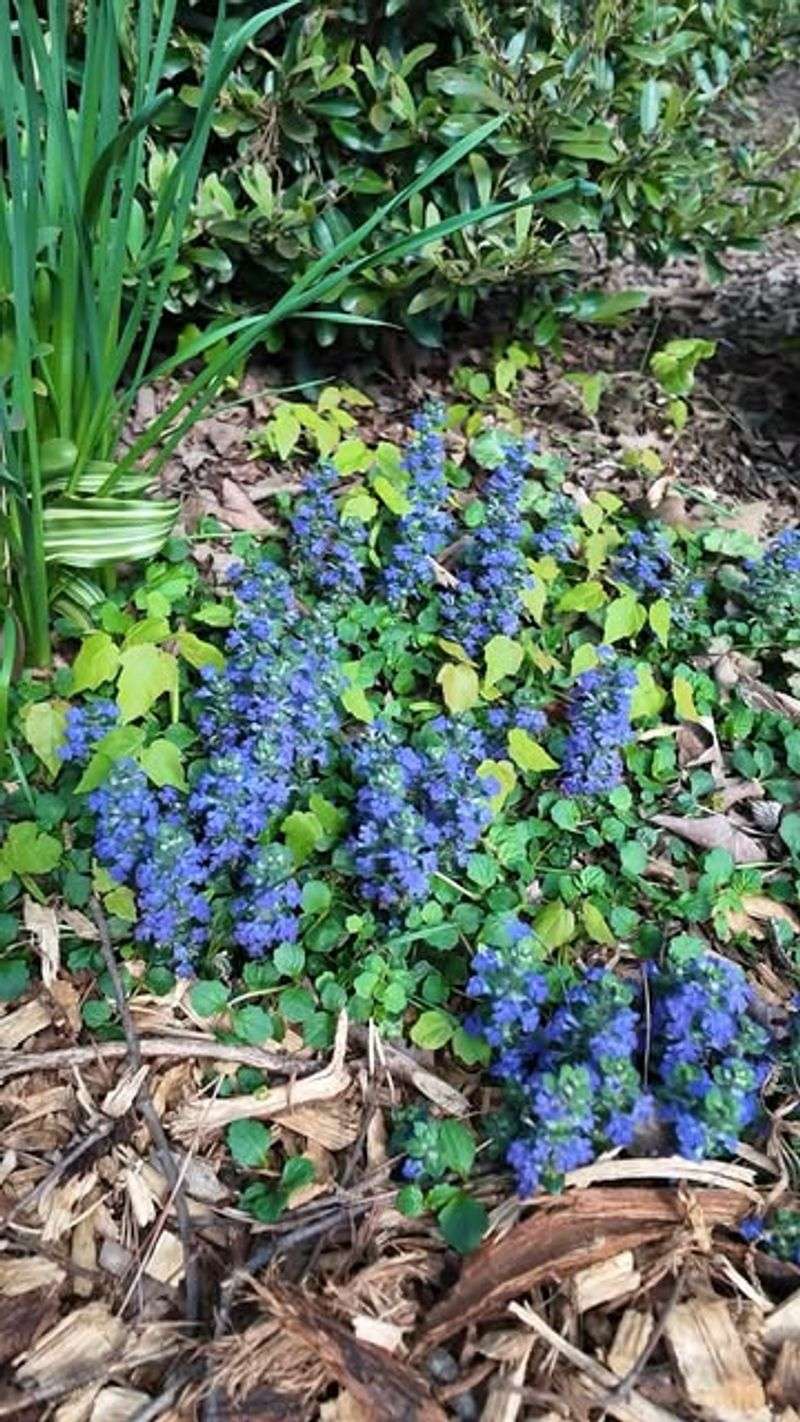
After planting, the establishment period is when the whole strategy is most vulnerable. Ajuga needs time to send out stolons, root them, and build the coverage that does the suppression work. During that window, bare soil between plants is still open to weeds, and letting those weeds go unchecked can set back the groundcover or force you to hand-weed around young plants repeatedly.
Spacing plays a real role here. Closer or staggered planting generally produces faster coverage because the stolons have less distance to travel before they meet. Clemson Extension’s groundcover planting guide recommends about a 2-inch layer of temporary organic mulch in the open spaces between plants while the groundcover fills in. That layer suppresses weed seeds, holds moisture, and gives the stolons something to root into as they spread.
Do not pack it too deep against the crowns, which can encourage rot.
Excessive crowding is the other side of that coin. Jamming plants too close together can increase disease pressure and create competition among the desirable plants themselves, so spacing is a judgment call based on plant size, site conditions, and how quickly you need coverage. University of Maryland Extension recommends removing any light-blocking landscape fabric or cardboard before planting, since those materials interfere with the stolon rooting that Ajuga depends on to spread. Mulch is the consistently supported tool during establishment; fabric is not a substitute.
The UF/IFAS guide on improving weed control in landscape beds gives a 2- to 3-inch range for organic mulch in landscape plantings, which aligns with the general principle of keeping the layer moderate rather than deep.
Know what Ajuga can suppress and what it cannot
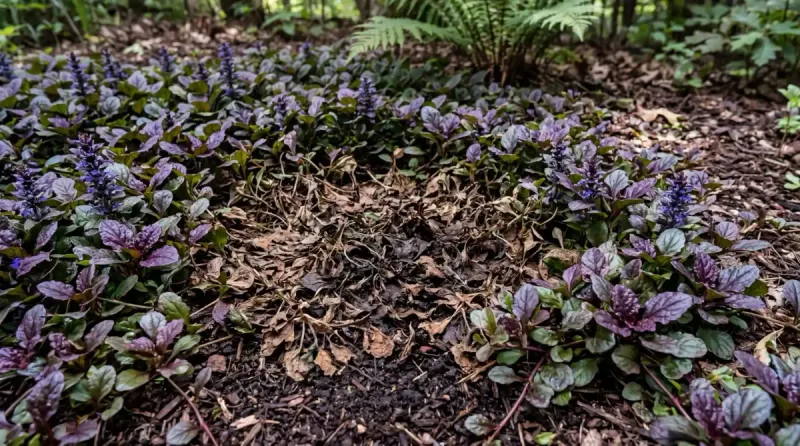
A mature Ajuga mat can reduce the number of new weed seedlings that establish, lower overall weed biomass, and cut down on the time you spend hand-weeding. Those are real, useful outcomes backed by field evidence. They are also specific outcomes, and understanding the limits is just as important as knowing the benefits.
Gaps in the mat still let weeds through. Any spot where stolons have not yet rooted, where a runner was removed, or where a plant died back remains open soil. Established perennial weeds with deep roots can also persist beneath a groundcover canopy, pushing up through gaps whenever conditions allow. The Ajuga-specific field study documented lower weed biomass after roughly 90 percent coverage was reached, not zero weeds.
That distinction matters when setting expectations with yourself or anyone else managing the bed.
Performance also varies considerably by site. Shade tolerance, soil moisture, drainage, winter temperatures, planting density, and the specific weeds present all affect how well Ajuga suppresses. A multi-site groundcover comparison study found that lady’s mantle, catmint, creeping phlox, and goldenrod ranked among the strongest weed suppressors in its evaluation; Ajuga was not among the top four performers in that particular trial. Ajuga is a solid choice for the right site, not a universal champion.
Clemson Extension notes that complete groundcover establishment can take up to two years, which means patience is part of the plan regardless of which species you choose.
Contain Ajuga before its spread becomes a new problem
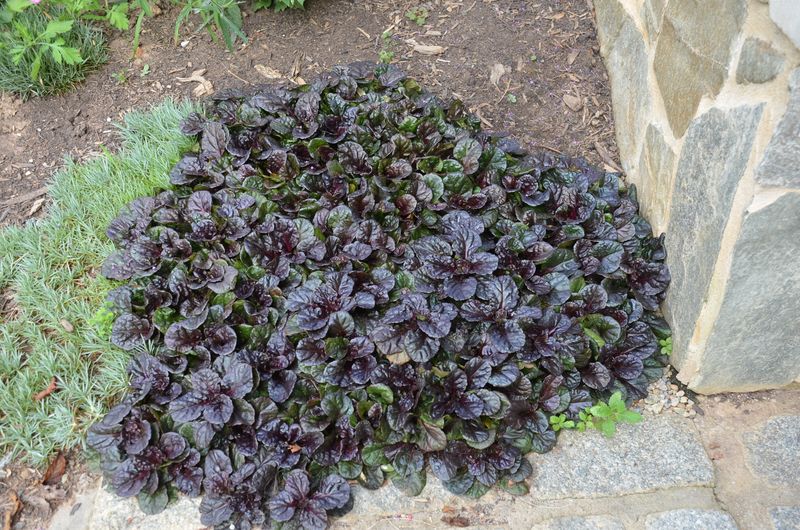
Ajuga’s spreading habit is the same quality that makes it useful and the same quality that can make it a headache. Stolons do not stop at the edge of your intended bed. They cross into lawns, creep under shrubs, and can move into natural areas near the planting site. Managing that spread is not optional; it is part of maintaining the plant responsibly.
University of Maryland Extension specifically recommends edging where spreading groundcovers border lawns, and that advice applies directly to Ajuga. A sharp spade or a plastic border edging strip installed a few inches deep can slow stolon movement across a lawn line. Beyond edging, removing unwanted runners by hand a couple of times per season keeps the plant inside its space, and dividing overcrowded clumps every few years improves air circulation and prevents the center of the mat from dying out.
Regional invasive status is the bigger concern. North Carolina Extension describes Ajuga reptans as aggressive in some regions, and the Invasive Plant Atlas of the United States documents invasive listings or concerns for this species in parts of the country. Check your state and local invasive-plant lists before purchasing, especially if your property is near natural woodlands or conservation areas. One more note: colorful or variegated cultivars are not automatically safer.
A plant’s leaf color does not determine how aggressively its stolons spread, and no source reviewed here establishes that ornamental cultivars are universally noninvasive.
Treat Ajuga as a living lid, not a weed-free guarantee
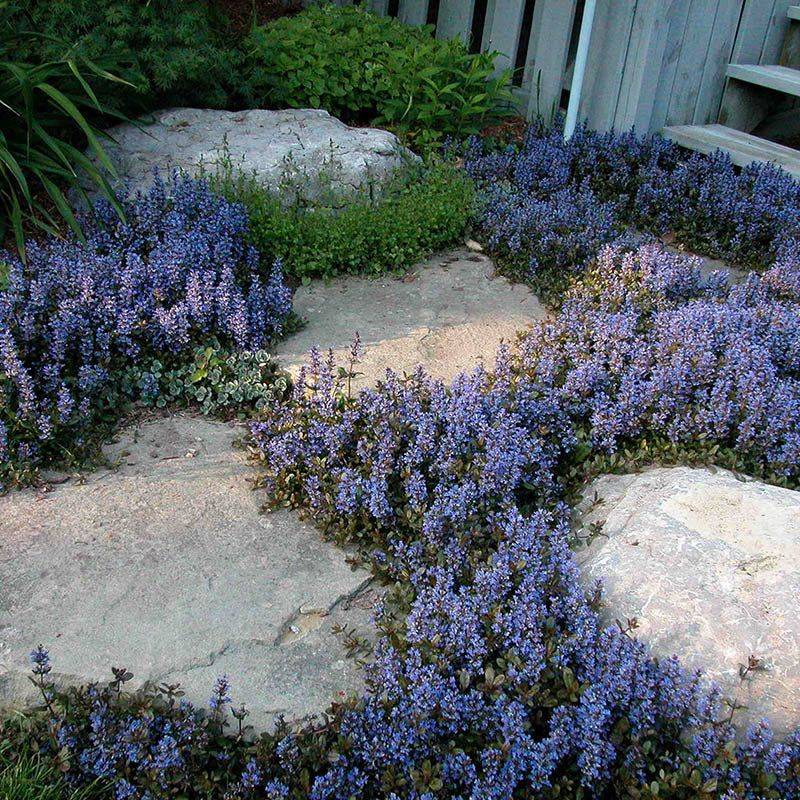
Ajuga can be a genuinely useful tool when the conditions line up: a shaded or partly shaded bed with moist, well-drained soil, existing perennial weeds cleared before planting, and a gardener willing to mulch the gaps and manage the runners during establishment. In that scenario, field evidence supports reduced weed biomass and less hand-weeding after the mat fills in, which is a real improvement over a bare, repeatedly weeded patch.
What it cannot do is end the work entirely. Gaps still need watching, runners still need trimming, and any established perennial weed that was not fully cleared before planting can resurface. University of Florida IFAS frames Ajuga as a landscape groundcover suited to contained ornamental settings, not a fix for every bare patch in the yard.
Before you buy, check your state’s invasive-plant list. Regional guidance on Ajuga varies considerably, and a plant that works well in one part of the country may be discouraged or restricted in another. A groundcover that fits its site and stays within its bed is a practical asset; one planted without that check can become the next problem you are trying to solve.