
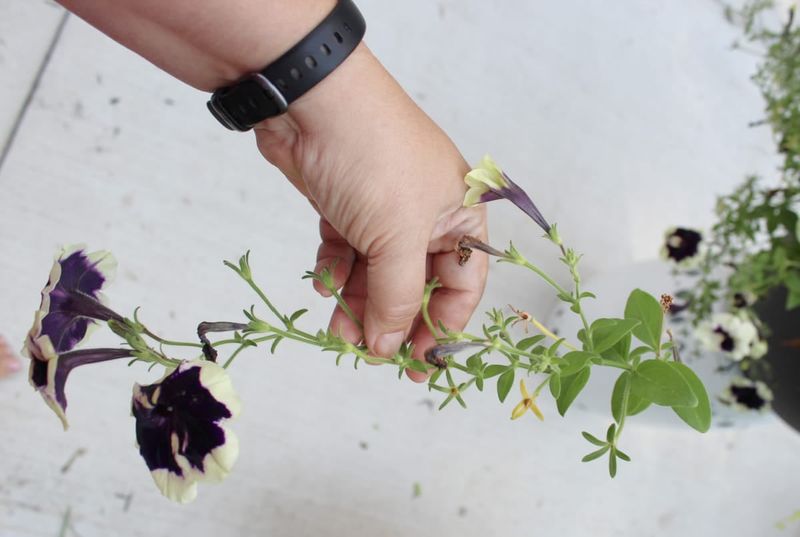
Petunias promise those overflowing, flower-packed baskets you see hanging on porches all summer. But too often they turn into a tangle of bare, stringy stems with a few sad blooms clinging to the tips. The good news is that leggy petunias almost always trace back to a handful of fixable habits. Once you know what is stealing your fullness, you can pinch, feed, and water your way back to a basket that spills over with color.
Leggy Stems Are a Warning Sign, Not a Petunia Quirk
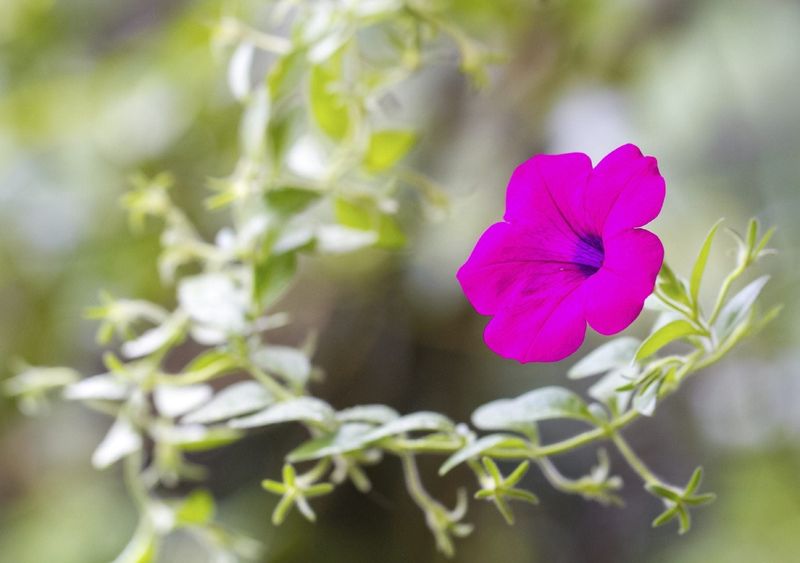
Ever glanced up at a hanging basket and wondered where all the flowers went, leaving behind what looks like a bird’s nest of green string? That stretched-out, bare-in-the-middle look has a name gardeners use all the time: leggy growth.
Petunias are naturally bushy plants that want to branch out and stay compact. When they shoot up long, floppy stems with blooms only at the very ends, the plant is telling you something in its environment is off. It is not simply the way petunias grow as they age.
The stretching usually points back to four everyday habits, and the encouraging part is that each one can be corrected. Light, pinching, feeding, and watering are the big levers, and most struggling baskets are missing on more than one.
Reading the plant early makes a huge difference. A petunia caught in June can often bounce back full and blooming by July, while one ignored until August may need a hard rescue. Learning to spot the warning signs is the first step toward baskets that stay generous instead of scraggly.
Too Little Sun Is the Quiet Culprit Behind the Stretch
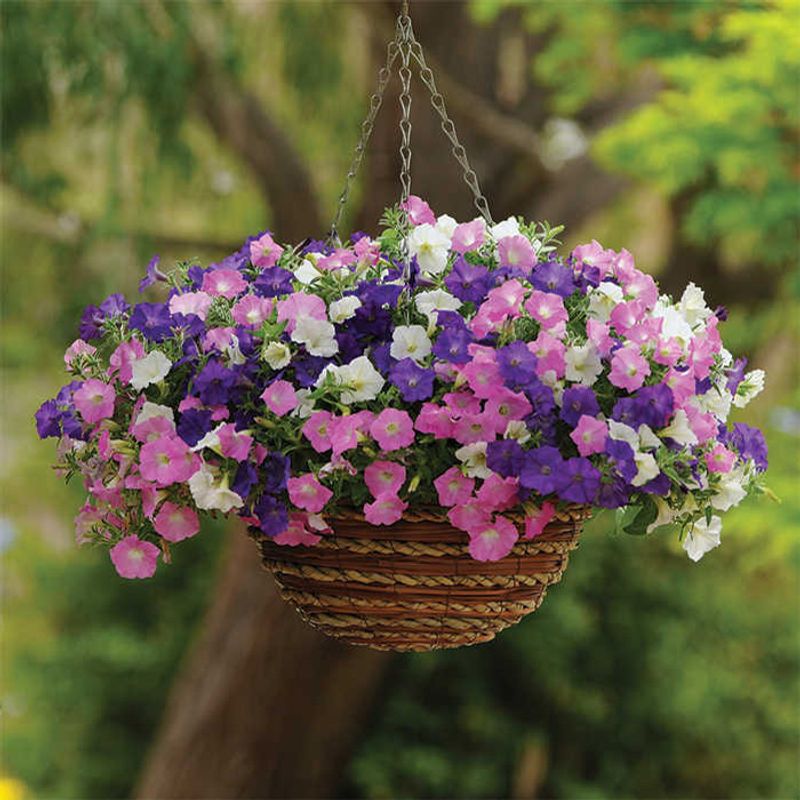
Picture a petunia reaching desperately toward a sliver of light, stems growing longer and thinner with every day it spends in shade. That reaching is a survival move, and it comes at the cost of the fullness you actually want.
Petunias are sun lovers through and through. They generally need six to eight hours of direct sunlight to stay compact and keep pumping out blooms. Tucked under an eave, behind a taller plant, or on a shady north-facing porch, they will stretch toward whatever light they can find and go bare in the middle.
If your basket is fading, take note of how the sun actually moves across that spot during the day. A location that looked bright at breakfast may sit in shadow by early afternoon.
Relocating the basket to a sunnier wall or rail often improves both bushiness and flowering within a couple of weeks. Rotating the container every few days also helps, since it keeps every side getting a fair share and can reduce that one-sided leaning toward the brightest window or opening.
Skipping the Pinch Lets Petunias Run Wild
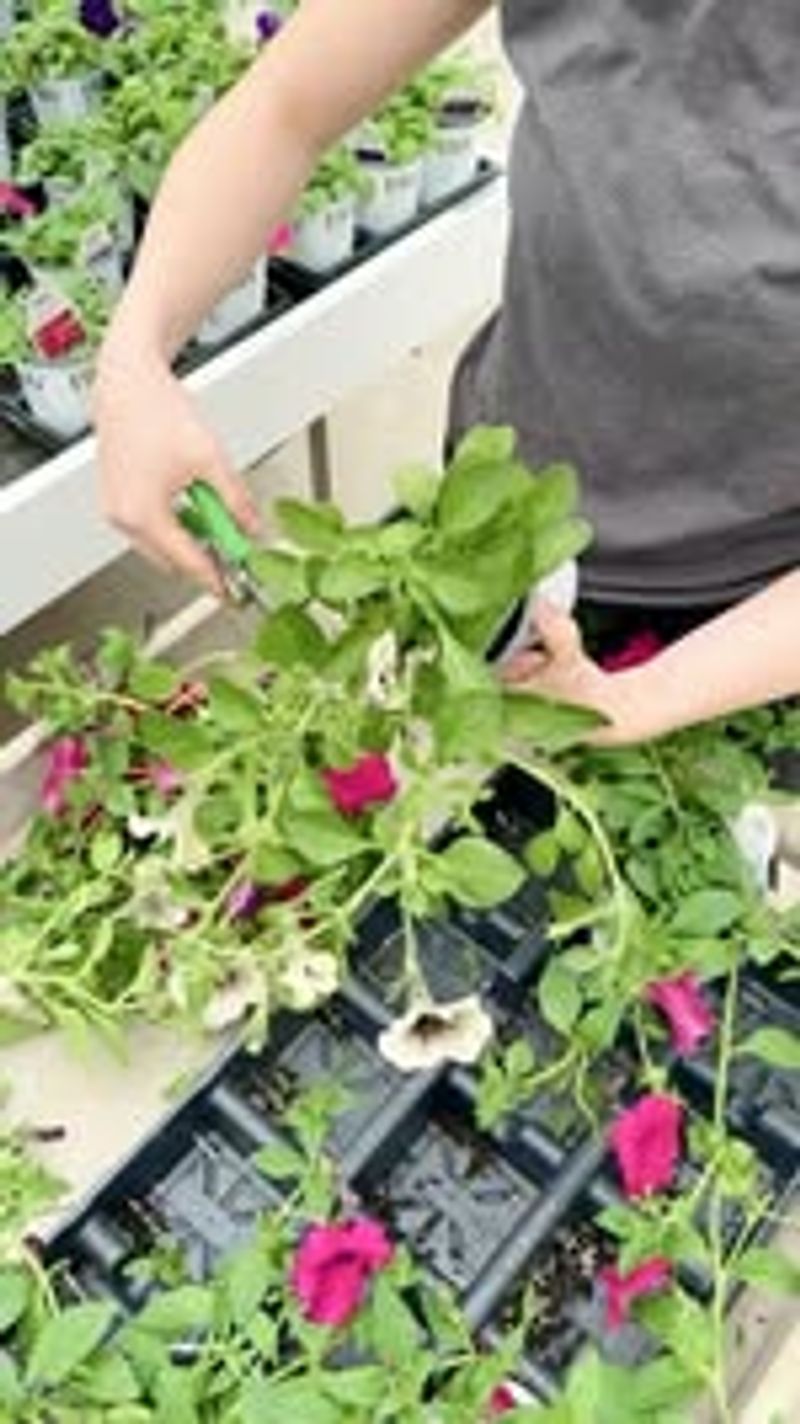
Here is a small act of tough love that feels wrong but works wonders: cutting your petunias back on purpose. Snipping off healthy growth seems counterproductive, yet it is one of the most reliable ways to keep a basket dense.
Left alone, a petunia funnels its energy into a few long lead stems that keep extending outward. Those stems bloom at the tips and go bare behind them, which is exactly the leggy shape nobody wants.
Pinching changes the plant’s plan. When you nip the growing tip back to a leaf node, the petunia responds by sending out two or more side branches from below the cut. More branches mean more blooms and a rounder, fuller shape.
Start pinching early, when plants are young, and repeat it lightly through the season whenever stems begin to run. Do not be shy about a harder midsummer cutback either.
Trimming a tired, stretched basket by about a third can look brutal for a week or so, but it often triggers a flush of fresh, compact growth that fills back in beautifully.
Are You Starving Your Petunias Without Realizing It?
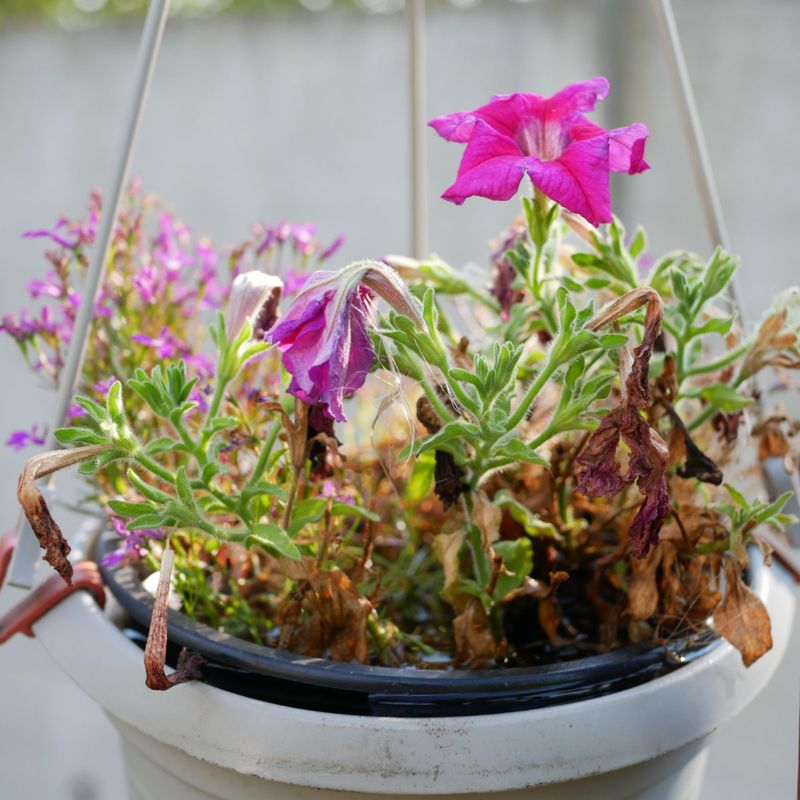
Few plants eat as hungrily as a blooming petunia. They flower nonstop, and that constant show burns through nutrients faster than most gardeners expect, especially in a small basket where roots have limited soil to draw from.
Rain and daily watering flush nutrients right out the bottom of a container. Within a few weeks of planting, that starter fertilizer in the potting mix is often long gone, and a hungry petunia responds by slowing its branching and dropping flowers while stretching thin.
Regular feeding can make a striking difference. Many gardeners have good luck with a balanced water-soluble bloom fertilizer applied every week or two, following the label rates for containers.
Watch the leaves for clues. Pale or yellowing foliage, particularly on older growth, often signals the plant needs a feeding boost rather than more water.
Consistency matters more than dumping on a big dose at once. Steady, moderate feeding tends to support that lush, mounding growth petunias are famous for, while feast-or-famine feeding can leave them stringy and stubborn about reblooming.
Watering Mistakes That Push Petunias Toward Bare Stems
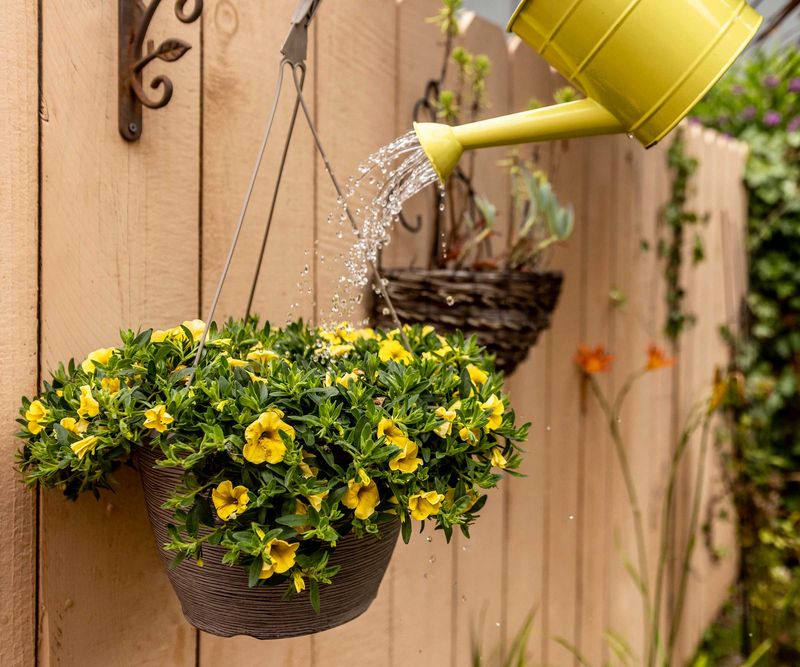
Water is where a lot of well-meaning gardeners trip up, because petunias are picky in both directions. Too little dries them into crispy sticks, while too much drowns the roots and leaves them just as unhappy.
Hanging baskets are especially tricky. They dry out fast in wind and sun, sometimes needing water once or even twice a day during a summer heat wave.
When a basket stays thirsty, the plant sheds lower leaves and blooms to survive, leaving those telltale bare stems behind. Chronically soggy soil, on the other hand, can lead to root problems that quietly stunt the whole plant.
Check the top inch of soil with your finger before reaching for the hose. Water deeply until it runs from the drainage holes, then wait until that top layer feels dry again before the next round.
Morning watering is usually the safest bet, giving foliage time to dry and roots a full reserve to handle the afternoon heat. Consistent, deep watering can go a long way toward keeping growth full instead of stringy and stressed.
Deadheading Keeps the Blooms Coming Instead of the Stretch
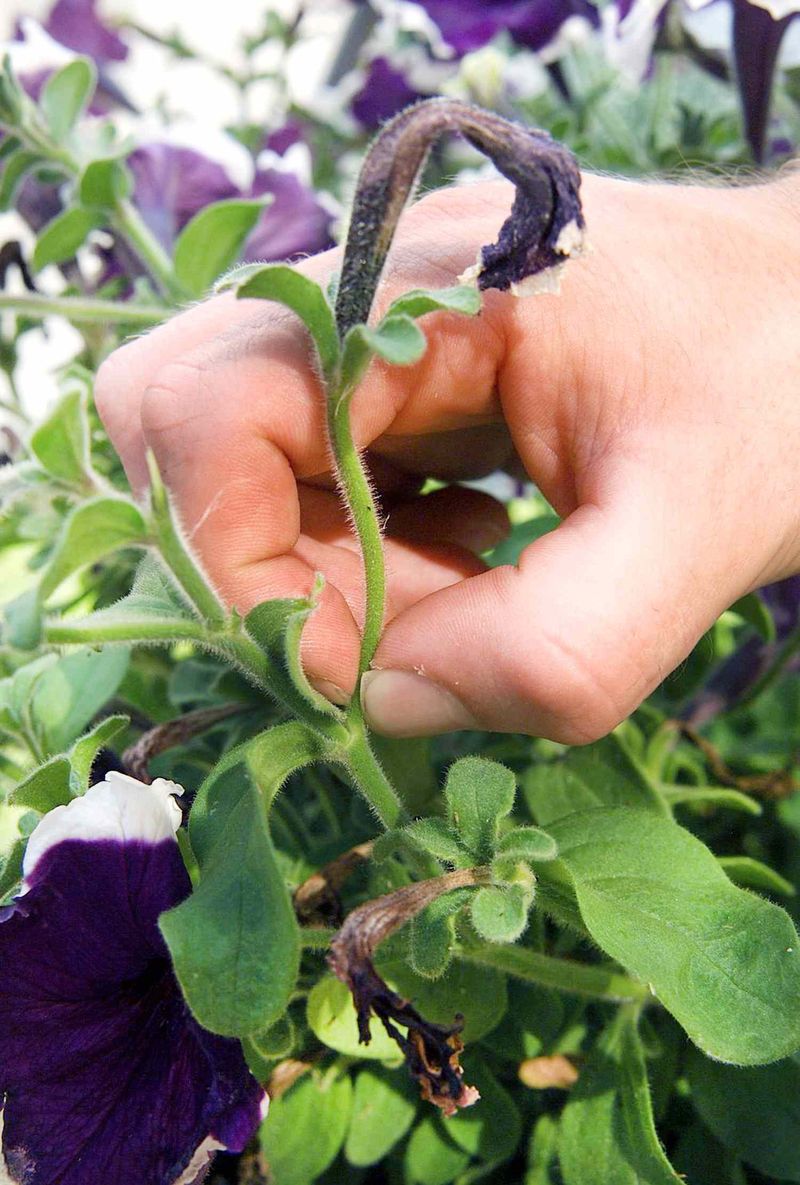
There is a hidden reason petunias stop blooming and start stretching, and it hides right where the old flowers used to be. Spent blossoms quietly turn into seed pods, and once a plant thinks it is making seed, it eases off producing new flowers.
Removing those faded blooms, a task called deadheading, tricks the petunia into keeping the show going. Instead of pouring energy into seeds, it redirects that effort toward fresh buds and tighter growth.
Some newer trailing varieties are marketed as self-cleaning and need less fussing, but even those often respond well to a little tidying. For older-style petunias, deadheading is nearly non-negotiable if you want continuous color.
Pinch or snip off the whole faded flower along with the small swelling behind it, not just the petals. That little bulge is the developing seed pod, and leaving it defeats the purpose.
A quick pass every few days keeps the job small and manageable. Paired with pinching, regular deadheading can help a basket stay covered in blooms rather than surrendering to long, tired, flowerless stems.
How to Rescue a Basket That Has Already Gone Leggy
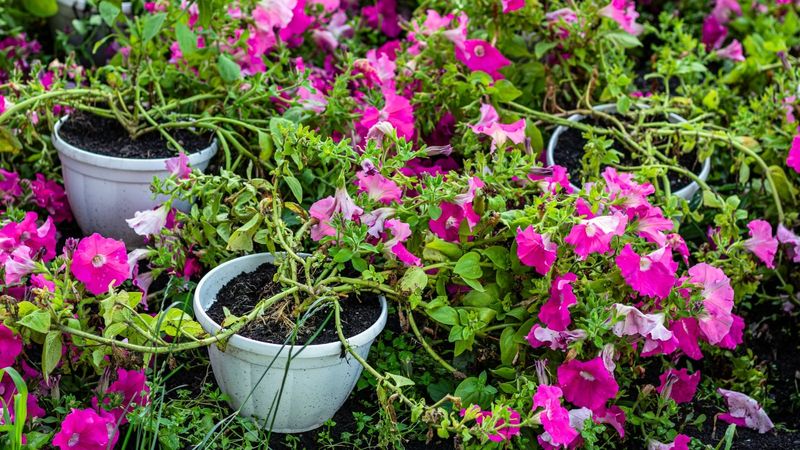
Maybe you are reading this while staring at a basket that already looks like a green mop of bare strings. Do not toss it yet, because petunias are remarkably forgiving and often bounce back with a firm reset.
Start with a hard cutback. Trim the stretched stems by about a third to a half, cutting just above leaf nodes so new branches have somewhere to sprout. It will look sparse and awkward for a week or two, and that is completely normal.
Right after cutting, give the plant a boost. A dose of balanced liquid fertilizer paired with steady watering can fuel the new growth the pruning triggers.
Move the basket into brighter light if it has been sitting in shade, since fresh shoots need sun to fill in densely rather than stretch again.
Within two to three weeks, most healthy petunias push out a wave of fresh, compact growth and begin reblooming. Keeping up with pinching, feeding, and deadheading from that point on usually prevents a repeat of the leggy slump for the rest of the season.
Small Habits That Keep Baskets Full All Season
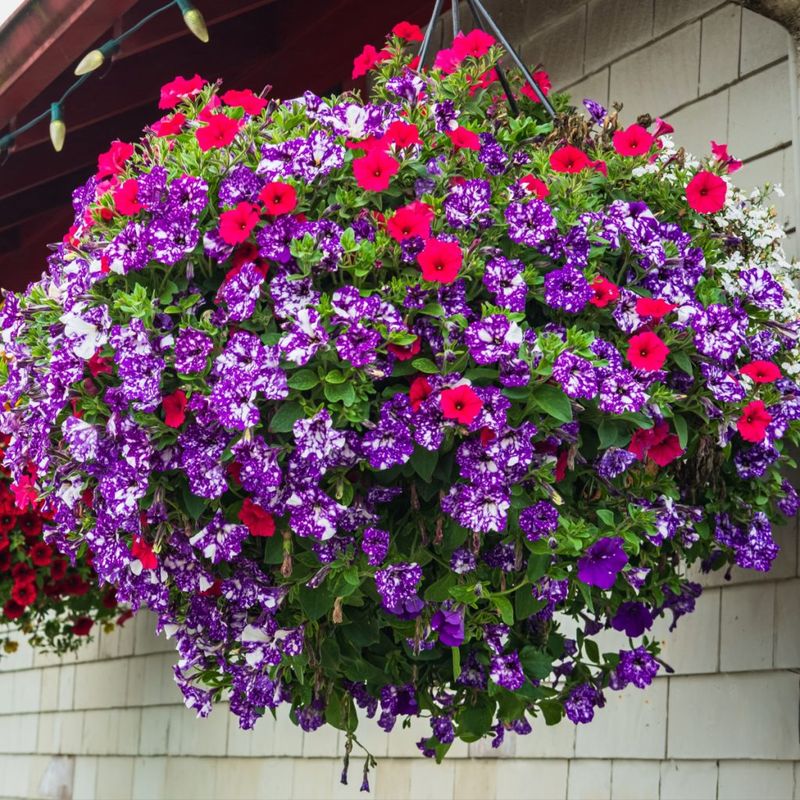
Full, cascading petunia baskets are not luck, and they are not reserved for people with green thumbs. They come from a short list of habits repeated consistently once you know which mistakes to sidestep.
Give your plants the sun they crave, pinch early and often, feed them regularly, and water with a rhythm that keeps soil moist but never soggy. Add routine deadheading, and you have covered the main reasons petunias turn leggy in the first place.
None of these tasks take long. A few minutes every few days beats a big rescue project in August, and the plants reward that steady attention with color that keeps spilling over the edges.
If your basket does slip, remember it is rarely too late to turn it around with a cutback and a little care. Petunias are eager growers that respond quickly when their needs are met.
Keep an eye on how the plant looks and let those bare stems or fading blooms be your early signal to step in. With these simple checks, your baskets can stay generous and blooming right through the warm months.