

Watching your coneflowers go quiet in mid-July can feel like something went seriously wrong, especially when the rest of the garden is hitting its stride. The good news is that fading blooms do not always signal a plant in trouble – sometimes a lull is simply part of the natural bloom cycle, and sometimes a fixable condition like moisture stress is playing a role. Before you pull plants or overhaul your routine, a quick look at the soil and the plant’s history can tell you far more than the drooping petals will. Understanding what is actually happening gives you real options instead of guesswork.
A July lull does not always mean the coneflower is finished
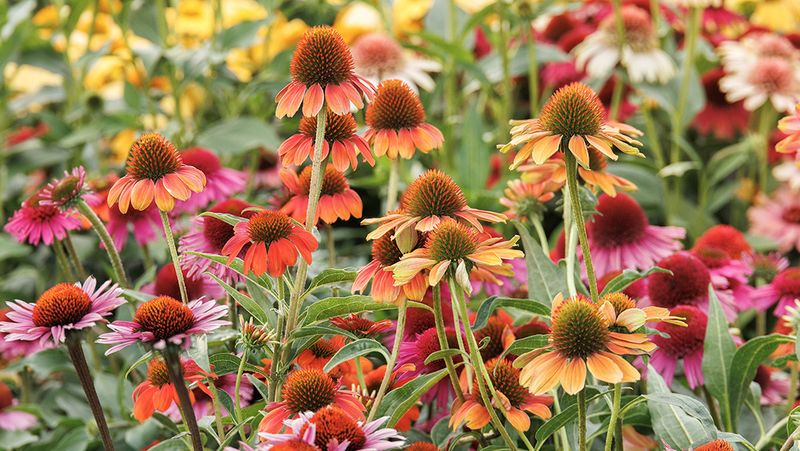
Plenty of gardeners assume that when coneflowers stop putting out fresh flowers in July, the plant has run its course for the season. That assumption skips over something important: bloom timing in Echinacea varies considerably depending on which species or cultivar you are growing. Clemson Extension’s Echinacea care guide notes that flowering commonly extends from early summer through August, and some cultivars produce sporadic rebloom into fall, so a mid-July slowdown may simply reflect where a particular plant sits in its natural cycle.
The word “coneflower” covers a wide range of species and cultivars sold at US garden centers. Their bloom periods, flower forms, vigor, and rebloom tendencies differ enough that advice written for one type does not automatically apply to another. A cultivar bred for a compact, early flush of color will behave differently from a straight species plant that spreads its flowers across a longer window.
Before suspecting the roots or the watering schedule, consider the plant’s identity, age, and overall vigor. Check whether it is getting at least six hours of direct sun, whether it has enough room to breathe, and whether the foliage looks genuinely stressed or simply older. A long-term Chicago Botanic Garden cultivar evaluation found meaningful differences in flowering performance across varieties, which means the cultivar itself is often the first variable worth ruling out.
Shallow or inconsistent watering is one possible summer stressor
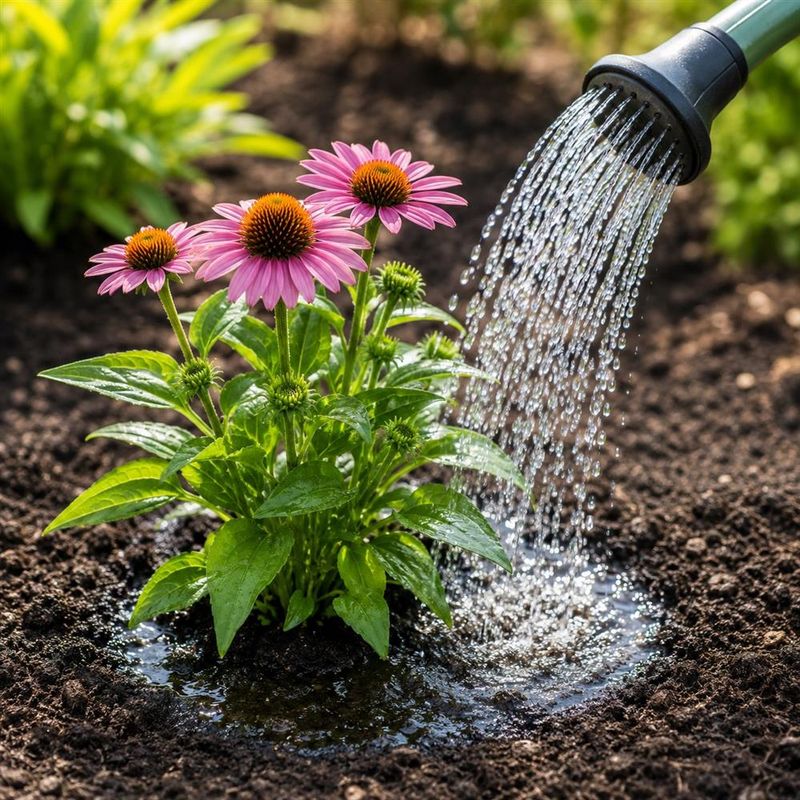
Established coneflowers have a reputation for handling heat and dry spells, and that reputation is mostly earned. The trouble is that drought tolerance is not the same as immunity from drought stress. During a prolonged dry stretch, even a well-established plant can experience wilting, reduced flowering, and root strain, particularly when summer heat is intense and rainfall stays absent for weeks.
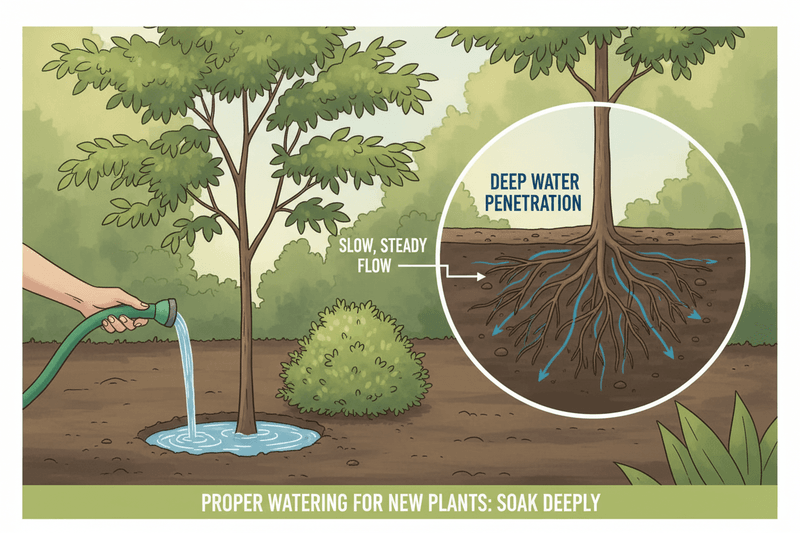
Repeated light watering – wetting only the top inch or two of soil each time – may encourage roots to stay near the surface rather than pushing deeper where moisture is more stable. Penn State Extension’s watering myths resource explains that frequent shallow irrigation can keep roots in the upper soil layer, making plants more vulnerable when the surface dries out quickly in summer heat. This pattern is especially worth watching with newly planted coneflowers, whose root systems have not yet spread into surrounding soil.
For plants installed in the current or previous season, inconsistent moisture is a more plausible contributor to mid-July decline than it is for a well-established clump. University of Maryland Extension guidance on coneflowers wilting and dying makes clear that both drought stress and overwatering can produce similar-looking symptoms. That matters because watering is one possible explanation for a July bloom slowdown – not a confirmed universal cause – and the right response depends entirely on what the soil is actually doing.
Check the root-zone soil before you reach for the hose
Wilting flowers and drooping stems feel like an obvious call to water, but the foliage does not always tell the full story. Heat alone can cause temporary midday wilt in coneflowers even when the root zone holds plenty of moisture. By late afternoon those same plants often recover on their own, with no watering needed.
A more reliable approach is to check the soil directly near the root zone, roughly 4 to 5 inches down. University of Maryland Extension advises checking soil at that depth before deciding whether to water, because surface appearance and foliage wilt are both unreliable guides. If the soil at that depth feels cool and damp, additional watering is likely unnecessary and could create new problems.
Saturated or waterlogged soil is another cause of wilting that looks almost identical to underwatering from above. When roots sit in poorly draining, oxygen-deprived soil for extended periods, they can become damaged or begin to rot. Damaged roots cannot move water and nutrients into the plant efficiently, so the foliage wilts and the plant may stop flowering – even though the soil is wet. Checking moisture at depth, rather than reacting to what the leaves look like, gives you the information you need to make the right call.
Match the watering response to the soil’s condition
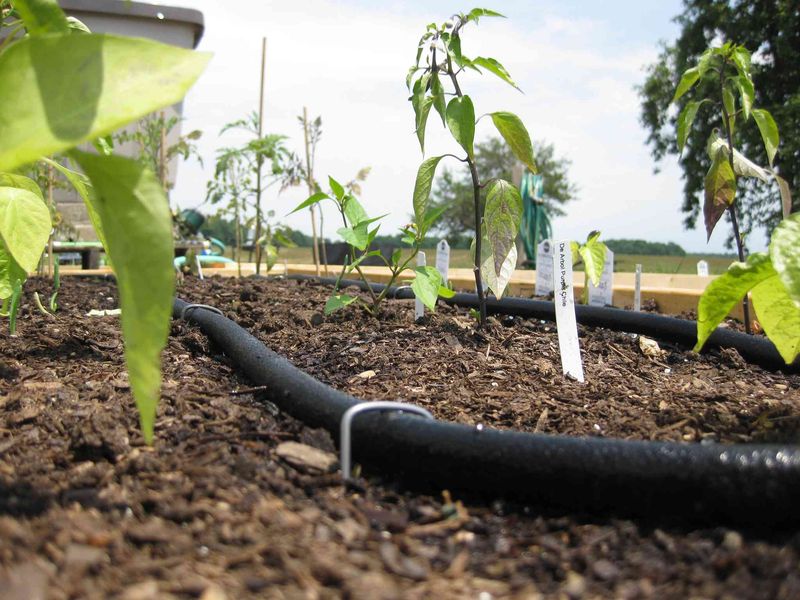
Once you know what the soil is actually doing, you can respond to it rather than guessing. Dry soil at the 4-to-5-inch depth calls for slow, thorough watering delivered at the base of the plant. Clemson Extension recommends watering at the root zone and avoiding overhead irrigation where possible, since consistently wet foliage can raise the risk of fungal disease. A soaker hose or drip line placed near the base lets moisture move down gradually rather than running off the surface.
How often to repeat that watering depends on your specific conditions. Soil texture, recent rainfall, temperature, wind, and the plant’s age all affect how quickly the root zone dries out. There is no universal volume or schedule that works across every garden, so reassess the soil every few days rather than watering on a fixed timer. Maryland Extension’s coneflower troubleshooting notes emphasize that soil inspection, not a set schedule, is the most reliable guide.
Saturated soil requires the opposite response. Adding more water to a poorly drained bed will deepen the problem rather than fix it. If the root zone stays wet after rain, look at whether the bed needs amended soil, raised planting, or a path for excess water to escape. Newly planted coneflowers need more consistent moisture than established ones while their roots are spreading, but even new plants can suffer when drainage is poor.
Established plants generally need less frequent irrigation, though they still benefit from a thorough soaking during genuinely prolonged dry periods.
More fertilizer is usually the wrong July rescue
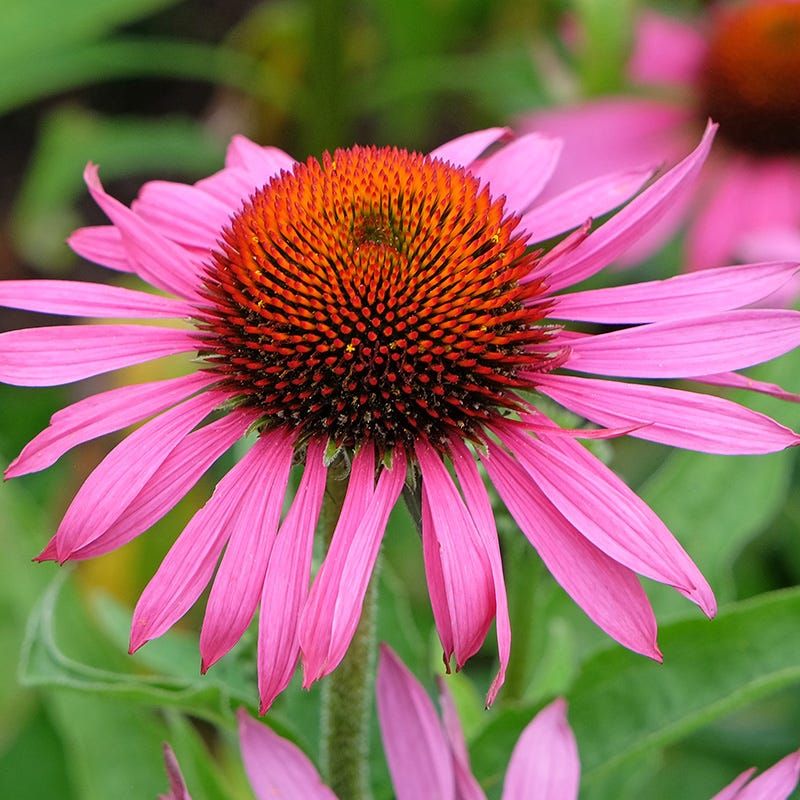
Reaching for fertilizer when a plant looks tired is a common instinct, but for coneflowers in mid-summer it often does more harm than good. Echinacea is a low-fertility plant by nature. Clemson Extension notes that coneflowers generally thrive without routine fertilization, and that heavy or unnecessary feeding tends to push the plant toward leafy, leggy growth rather than better flowering.
Excess nitrogen in particular can make stems tall and floppy, reduce flower production, and create lush conditions that favor weed competition around the base of the plant. None of those outcomes help a gardener who is hoping to see more blooms. The USDA plant fact sheet for Echinacea purpurea similarly characterizes the species as well-adapted to lean soils, which reinforces the case against routine mid-summer feeding.
If you have not done a soil test recently and the plants look genuinely nutrient-deficient – pale, stunted, or clearly struggling beyond what moisture stress would explain – a cautious early-spring application of a slow-release balanced fertilizer is a reasonable option some extension sources mention. A mid-July application to rescue fading blooms, though, is not supported by the evidence and may create new problems. Pause the fertilizer, address the moisture situation first, and revisit feeding only if a soil test gives you a specific reason to act.
Deadheading changes the display, not the roots
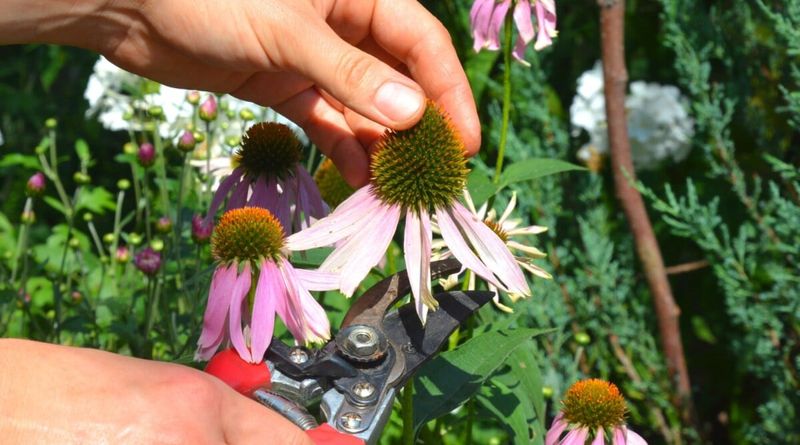
Removing spent blooms from coneflowers is one of those garden habits that gets treated as both essential and potentially harmful, depending on who you ask. The straightforward answer is that deadheading is optional, and its effects are mostly about the display rather than the plant’s root health. No credible extension or botanical source links routine deadheading to weakened coneflower roots.
Cutting off finished flowers can tidy the bed and may prompt some plants to push out additional buds, extending the floral show into late summer. Missouri Botanical Garden’s plant profile notes that deadheading can improve the display, while also pointing out that the seed heads left on the plant after flowering provide food for birds, particularly goldfinches, through fall and into winter.
The tradeoff is real and worth thinking through. If your priority is keeping the bed looking fresh and encouraging as many flowers as possible, deadheading makes sense. If you value the wildlife benefit or want plants to self-seed naturally over time, leaving the seed heads in place is a legitimate choice. Chicago Botanic Garden’s long-term Echinacea trial observed strong flowering in evaluated cultivars without specifying deadheading as a requirement for good performance.
Either way, the decision belongs to the gardener’s goals, not to a worry about root damage.
Persistent or distorted decline points to a different problem
Correcting the moisture situation and pausing unnecessary fertilizer will help a coneflower that is stressed by dry or waterlogged soil. When those changes do not produce any improvement after a couple of weeks, the problem likely has a different cause, and continuing to adjust water and feed will not fix it.
Several conditions can mimic moisture stress while having nothing to do with the watering schedule. Poor drainage that keeps roots wet for extended periods can lead to root rot, which produces wilting and flower loss that looks identical to drought damage from above. Insufficient sunlight – less than six hours of direct sun daily – limits flowering and can cause slow, progressive decline. Overcrowding reduces air circulation and can increase disease pressure.
Common pests like eriophyid mites and aphids, along with fungal leaf spots, can weaken plants and reduce flower production. Clemson Extension’s Echinacea factsheet covers several of these issues, and Penn State Extension’s Echinacea disease guide provides more detail on fungal and other disease problems.
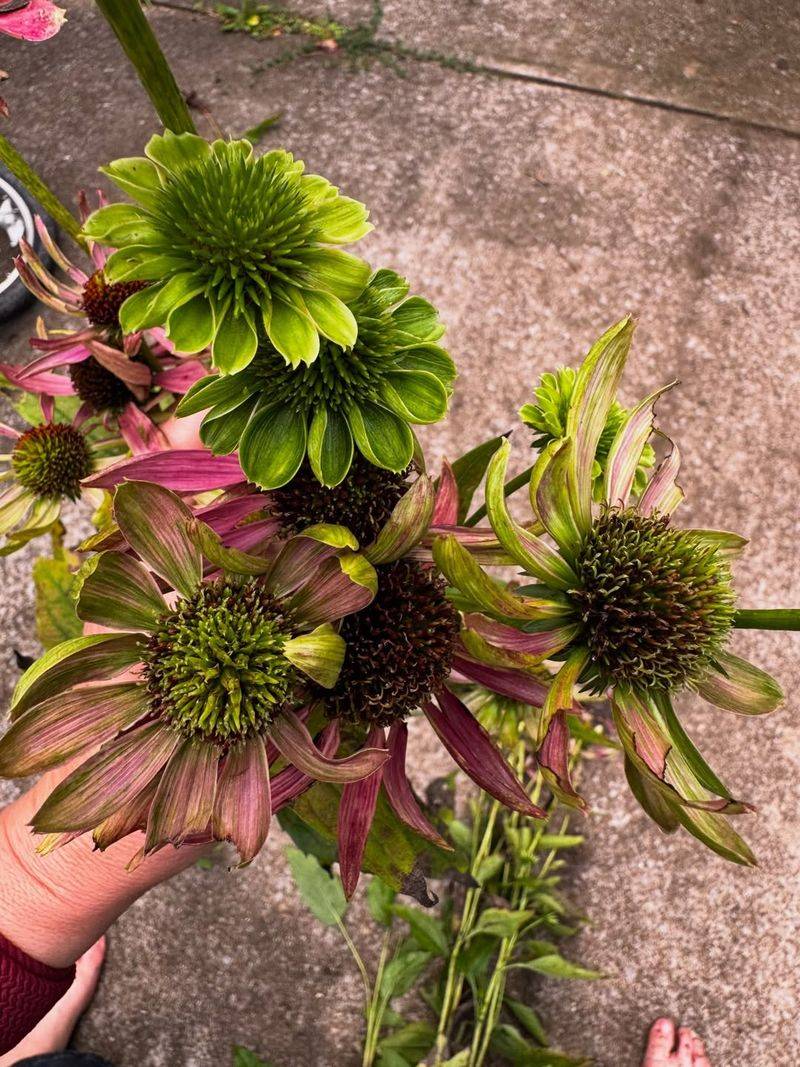
Aster yellows deserves a separate, clear warning. If your coneflowers show distorted or greenish flower parts, abnormal flower heads that look leafy or misshapen, witches-broom-like growth, or general stunting, those symptoms are not drought-related and cannot be corrected with extra water or fertilizer. Aster yellows is caused by a phytoplasma spread by leafhoppers, and infected plants should be removed and discarded rather than treated. Acting quickly limits the chance of spread to nearby plants.
Use a soil-first checklist before declaring the plant worn out
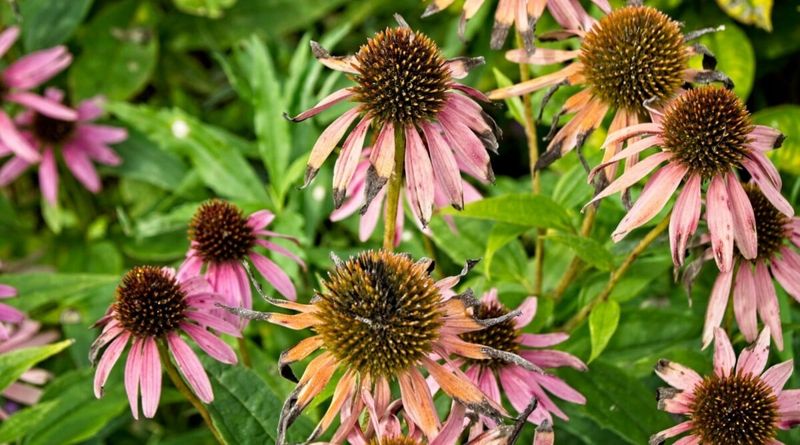
Working through a short, ordered sequence saves time and prevents the common mistake of applying one fix repeatedly when the plant needs something else. Start by identifying whether the bloom slowdown fits the cultivar’s normal pattern. Some coneflowers naturally taper off in mid-July, and if the foliage looks healthy and the plant is well-established, a rest period may be all that is happening.
If the plant looks genuinely stressed, check the soil at 4 to 5 inches deep near the root zone before doing anything else. University of Maryland Extension’s coneflower troubleshooting guidance supports this soil-first approach as the most reliable way to separate drought stress from waterlogging. Dry soil calls for slow, thorough watering at the base; saturated soil calls for better drainage and no additional water. Pause any fertilizer routine unless a soil test gives a specific reason to continue.
Remove stems that are clearly dead or diseased, but hold off on aggressive cutting while the plant is already under stress. Clemson Extension’s care guidance reinforces that coneflowers respond best to targeted, evidence-based intervention rather than blanket treatments.
A July flower lull is not a verdict on the plant’s future. Diagnose the pattern, correct what the soil tells you to correct, and give the plant time to respond. Many coneflowers that look finished in mid-July are simply pausing, not quitting.