
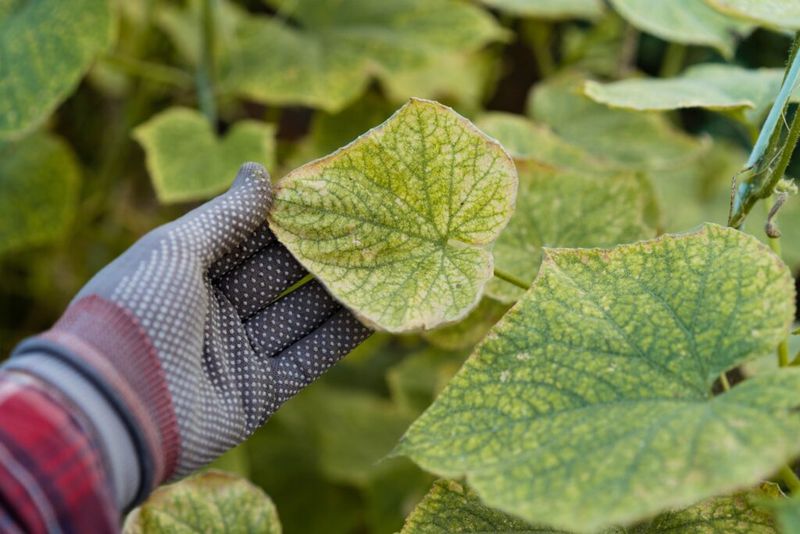
Midsummer heat gets blamed for a lot of cucumber problems, but when leaves start curling and showing tiny pale flecks, something smaller may be at work. Spider mites are arachnids that feed quietly on leaf undersides, and hot, dry weather can help them multiply while also stressing the plant directly. Knowing the difference between heat damage and a possible mite infestation matters because the response is different. This guide walks through how to look, what to look for, and how to act without making the situation worse.
Heat and Spider Mites Can Contribute to the Same Leaf Damage
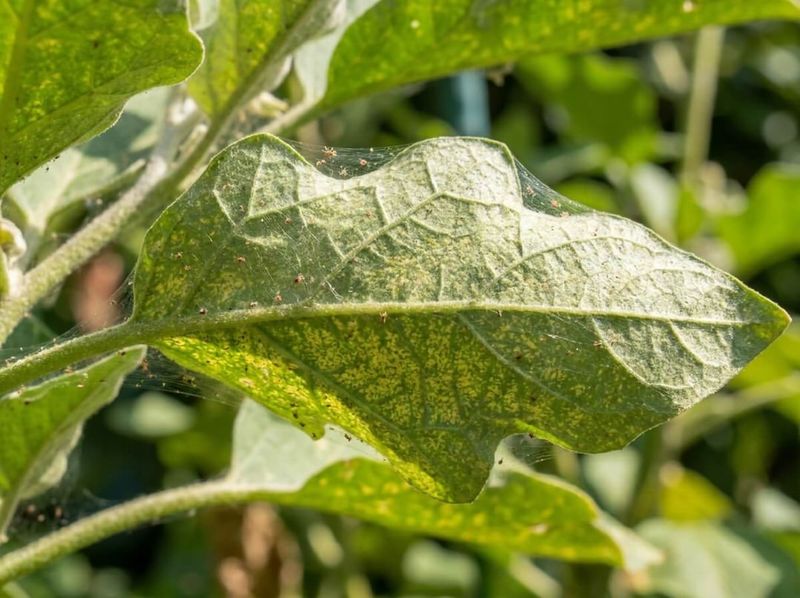
Blaming midsummer heat for struggling cucumber leaves is understandable, but heat and spider mites can contribute to the same symptoms at the same time. Hot, dry weather places cucumbers under drought stress, which can cause leaves to look dull, curl at the edges, or pale out. Those same conditions also accelerate spider-mite development and can intensify feeding damage on an already-weakened plant, as Colorado State University Extension guidance on spider mites explains.
Fine white, yellow, or pale stippling scattered across the leaf surface is one clue that supports spider-mite suspicion. Curling alone or general paling is much less specific and can appear with many other problems. Treating heat and mites as two separate possibilities that cannot coexist misses the point.
Several other causes can produce similar-looking leaves. University of Minnesota Extension’s cucumber leaf diagnostic tool lists aphids, downy mildew, bacterial wilt, viral disease, and nutrient problems among the conditions that can discolor or distort cucumber foliage. The core rule is straightforward: visible symptoms guide the investigation, but no one can name the cause from a distance. Inspect the plant before deciding how to respond.
What Spider-Mite Feeding Does to Cucumber Leaves
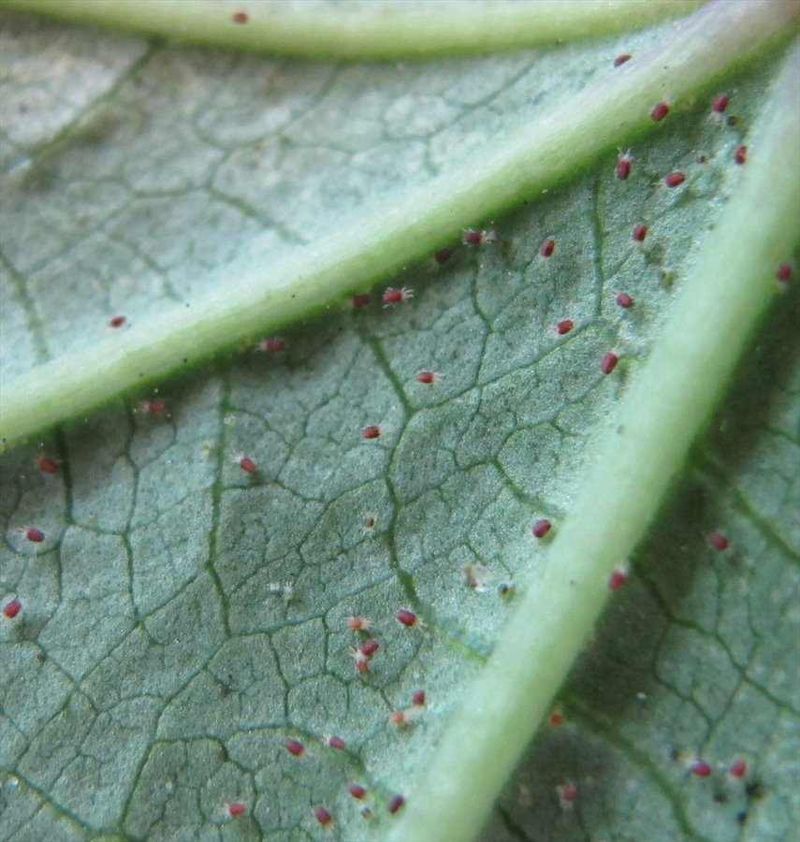
Spider mites are arachnids, not insects, and they feed primarily on the undersides of leaves by piercing individual plant cells and removing the chlorophyll inside. Each feeding puncture is too small to see on its own, but the accumulated damage shows up as fine pale specks on the upper leaf surface. According to the UC Statewide IPM Program’s cucurbit spider-mite page, early injury appears as fine white, yellow, or pale stippling that can eventually merge into broader bronzing or bleaching as feeding continues.
Heavier infestations may lead to leaf curling or distortion, more extensive bronzing, and in serious cases, leaf death, defoliation, and reduced fruit yield. That progression is possible, not guaranteed, and how quickly it moves depends on mite population size, plant health, and weather. A plant already stressed by drought may show more rapid decline.
University of Illinois Extension’s profile of the twospotted spider mite notes that the twospotted spider mite – one of the most common species on vegetable crops – thrives in hot, dry conditions, which is why midsummer outbreaks on cucumbers are especially common. Even so, the stippling pattern supports suspicion rather than proving the cause. Aphid feeding, certain fungal diseases, and other stressors can also produce discoloration, so the pattern needs to be paired with a closer look at the leaf itself.
Inspect the Undersides Before You Reach for a Spray
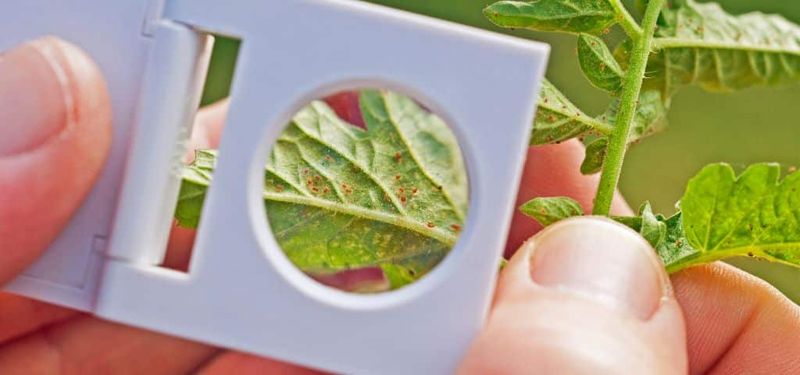
Flipping the leaf over is the single most useful step a grower can take before doing anything else. Spider mites concentrate on the undersides of leaves, particularly on lower or older foliage where populations tend to build first. Use a hand lens or magnifying glass rated at 10x or higher to scan the surface for tiny moving organisms, small round eggs, and the silk-like webbing that heavier populations produce. According to UC IPM’s cucurbit spider-mite guidance, spider mites are roughly 1/50 inch long and may appear greenish, yellowish, pink, or reddish, sometimes with two dark spots on the body.
Webbing strengthens the case for spider mites, but do not require it before taking the possibility seriously. Early infestations may show stippling with no visible web at all. The absence of webbing simply means the population may still be small, not that mites are absent.
A practical field check is the white-paper tap test. Hold a sheet of white paper under a damaged leaf and tap the leaf firmly a few times, then watch the paper for tiny specks that move on their own. University of Georgia Extension recommends this tap test as a way to detect mites. Keep in mind that detecting movement does not confirm that the mites are a damaging pest species or that they caused the stippling.
Predatory mites, which are beneficial, can also appear on the paper. Examine the specimens as closely as possible and consider the full symptom picture before moving to treatment. The Illinois Extension twospotted spider mite profile notes that predatory mites tend to be more active and lack the characteristic dark body spots, which can help distinguish them from pest species under magnification.
Reduce Plant Stress and Rinse the Foliage
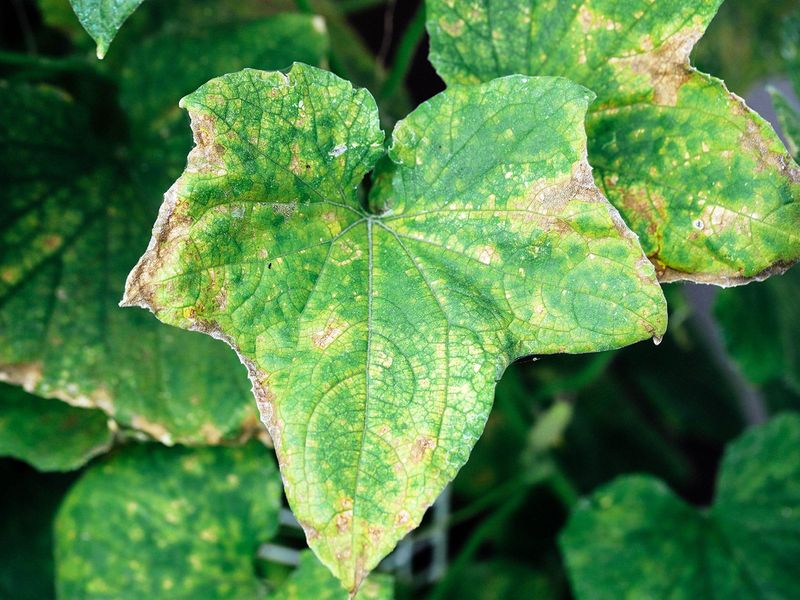
Once inspection supports spider mites as a likely contributor, or while the grower continues investigating a strong suspicion, the lowest-risk first response is to reduce plant stress and physically disrupt the mite population. Keeping soil moisture consistent is a good starting point. Colorado State University Extension guidance on irrigating vegetable gardens recommends watering deeply and regularly rather than letting the soil cycle between wet and bone-dry. Steady moisture helps the plant tolerate stress, but it does not kill mites and should not be treated as a stand-alone solution to an infestation.
A forceful but gentle stream of water aimed directly at leaf undersides can dislodge or kill some mites, disrupt webbing, and remove the dust that interferes with natural predators. Colorado State University Extension’s spider-mite resource describes foliage rinsing as a physical suppression measure that may need to be repeated. Plan to scout again after rinsing because surviving eggs and mites can restart the population.
Removing severely damaged leaves is worth considering when practical, since heavily infested foliage contributes little to the plant and can serve as a mite reservoir. CSU Extension’s guide to managing plant pests advises disposing of heavily infested material rather than adding it to a compost pile that may not heat reliably enough to kill eggs and mites. Bag the removed leaves and put them in the trash rather than leaving them in the garden.
Leave Natural Enemies on the Plant
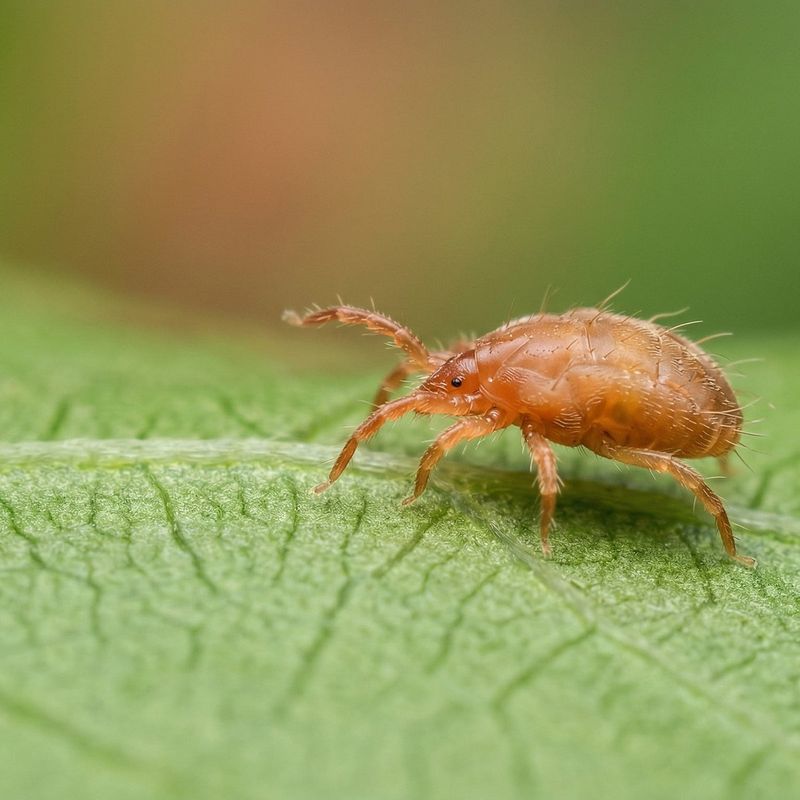
Before spraying anything, check whether the plant already has help. Several beneficial organisms feed on spider mites and can keep populations from exploding if given the chance. Predatory mites are among the most effective, but lacewings, lady beetles, minute pirate bugs, and predatory thrips also prey on mites and their eggs. UC IPM’s cucurbit spider-mite page notes that natural enemies can suppress mite populations and that outbreaks often follow applications of broad-spectrum pesticides that remove those predators.
Not every mite found on a cucumber leaf is harmful. Predatory mites tend to move more quickly than pest mites and generally lack the two dark body spots common on twospotted spider mites. Seeing any mite on the leaf does not mean the plant is under attack, and rushing to spray without confirming the pest can eliminate the very organisms working in the grower’s favor.
Penn State Extension’s guidance on mites in home fruit plantings reinforces that broad-spectrum insecticides applied without a confirmed pest ID can cause secondary mite outbreaks by wiping out predator populations. The practical takeaway is to pause before treating, identify what is actually on the plant, and give beneficial organisms a chance to work. Preserving natural enemies costs nothing and may reduce or eliminate the need for a product application.
Use Contact Products Only When the Label Allows
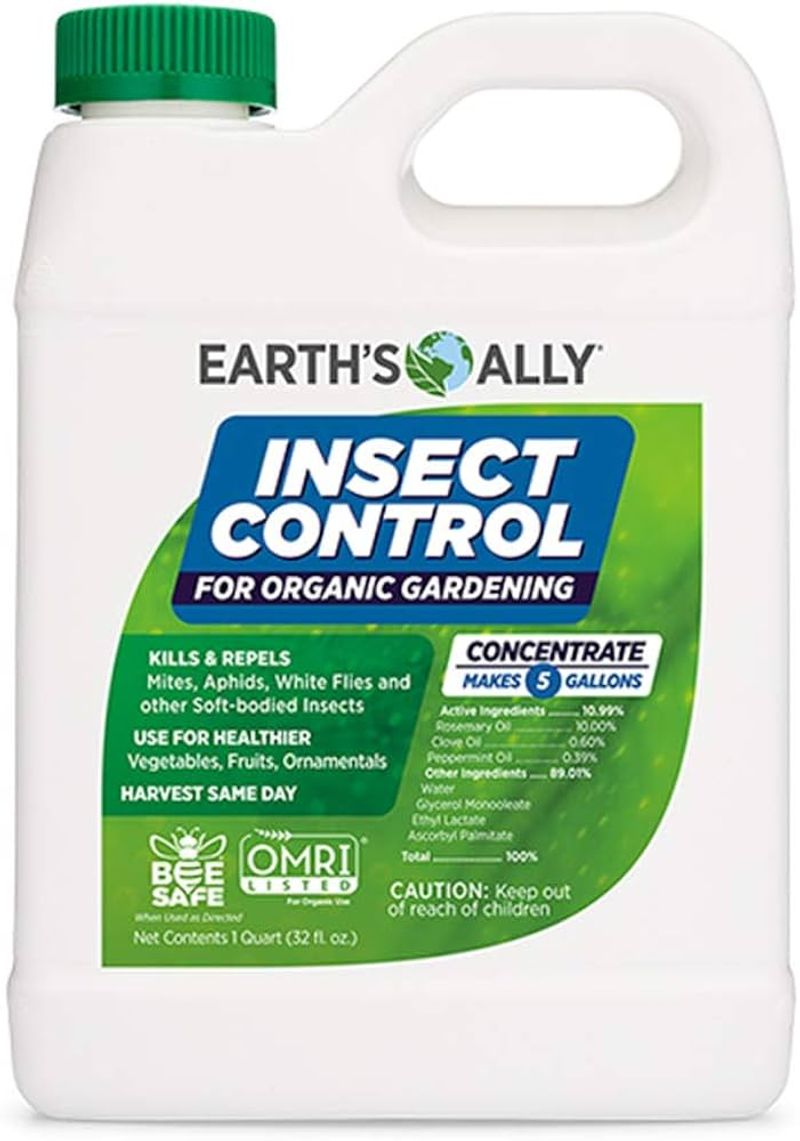
Physical suppression and biological control are the right first steps. A labeled insecticidal soap or horticultural oil may be worth considering when inspection has confirmed a light-to-moderate spider-mite infestation and rinsing alone has not brought the population down. Utah State University Extension’s spider-mite FAQ describes insecticidal soaps and horticultural oils as options for mite suppression, noting that thorough coverage of leaf undersides is essential because these products work by direct contact with the pest.
Eggs can survive a single contact treatment, and spider mites reproduce quickly, so one application is rarely the end of the story. Reassess the plant a few days after treating, and follow the product label’s instructions on whether and when a repeat application is appropriate. The label is not optional guidance. The EPA explains that pesticide labels are legally binding and specify exactly where and how a product may be used, including crop, pest, concentration, timing, preharvest interval, protective equipment, and reentry requirements.
Only use products labeled for cucumbers or cucurbit vegetables. Do not substitute dish soap, vinegar, rubbing alcohol, or any homemade detergent mixture. CSU Extension warns that ordinary household detergents can injure plant tissue, and formulations designed for pest control on plants are a safer choice. Soaps and oils can also burn foliage on plants that are already heat- or water-stressed.
UC IPM’s cucurbit guidance cautions that even products marketed as organic or low-risk can cause phytotoxicity under the wrong conditions. Apply during a cooler part of the day, such as early morning or evening, and only when the plant is adequately watered, following the specific temperature restrictions listed on the product label.
Recheck the Plant and Reconsider the Diagnosis
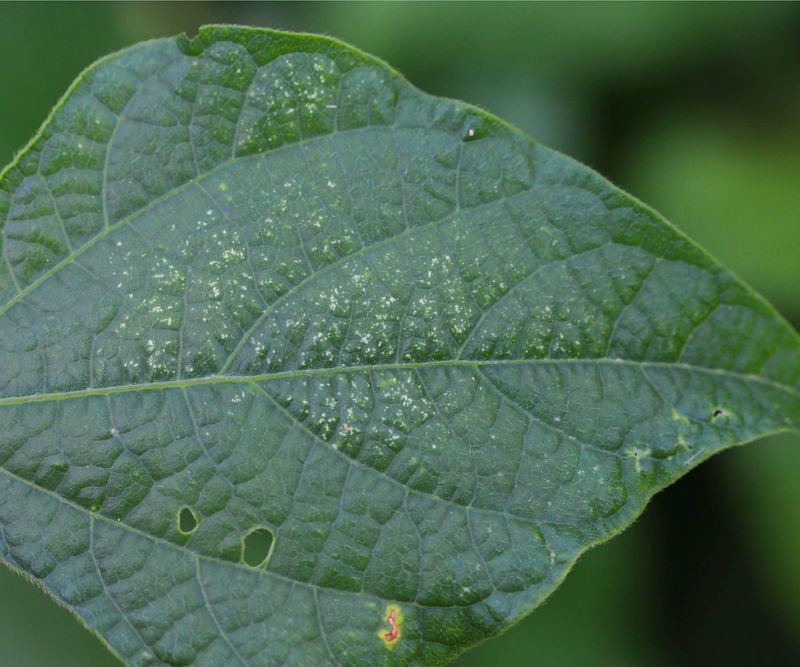
A single treatment or rinse session is not the finish line. Return to the plant every few days and check leaf undersides again, paying attention to new growth as well as the originally affected leaves. Look for fresh stippling, active mites, new webbing, or continued yellowing and curling. USU Extension’s spider-mite guidance emphasizes that mites can rebuild quickly from surviving eggs, making follow-up scouting a necessary part of any suppression effort.
If the symptoms persist or worsen despite consistent moisture, rinsing, and protected beneficials, step back and reconsider the diagnosis. University of Minnesota Extension’s cucumber leaf diagnostic tool covers several conditions that can look similar to mite damage, including downy mildew, viral infection, and nutrient imbalances. Finding mites on the plant does not automatically mean they caused every symptom, and heat damage may still be contributing alongside any mite activity.
The decision sequence is simple enough to follow without any special equipment: inspect first, suppress gently with water, protect beneficial organisms, and use only a cucumber-labeled contact product when evidence and label conditions both support it. Keep scouting after each step. Gardens that stay under regular observation tend to catch problems early, when the response can be modest rather than urgent.