
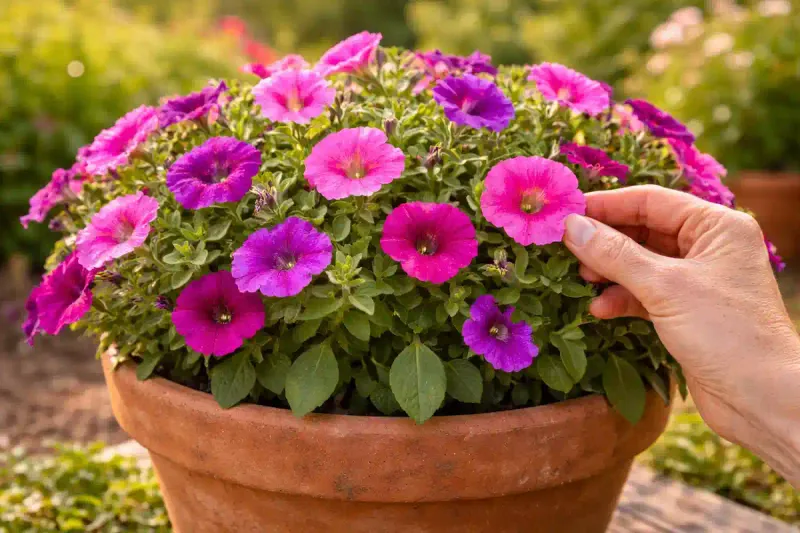
Around July, a lot of gardeners notice their petunias going quiet, fewer flowers opening, stems stretching out, and color fading fast. Before you write off the season, know that a skipped maintenance habit may be part of the problem, though it is rarely the whole story. Heat, water, light, and cultivar type all play a role, and figuring out which factor is holding your plants back makes the difference between a real fix and a wasted effort.
Check seed structures and growing conditions together
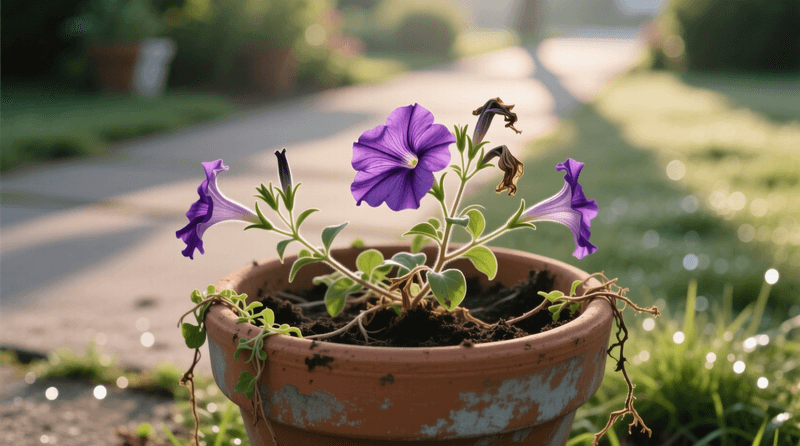
When petunias slow down in midsummer, the first instinct is often to blame one thing. A better starting point is to look at the whole plant and the conditions around it at the same time, because what you see will tell you whether deadheading is even the right next move.
Walk up to the plant and look carefully. A petunia with lush green foliage, vigorous new growth, and a cluster of faded blooms with swollen, rounded structures forming beneath them is showing you that seed development may be reducing its push to keep flowering. That plant is a reasonable candidate for deadheading and a feeding check. According to University of Minnesota Extension guidance on growing petunias, removing spent flowers and maintaining nutrition can help extend the blooming display, particularly in containers where the stakes for keeping flowers coming are higher.
A different picture calls for a different response. Wilted leaves, crisp or scorched edges, pale yellowing foliage, mushy stems near the soil, or spotted and distorted flowers all suggest that water, heat, drainage, disease, or nutrient problems need attention before anything else. University of Minnesota’s petunia diagnostic tool lists these symptoms as signs of separate problems that deadheading will not solve.
Heat belongs in this paired check. Petunias handle warm weather reasonably well, but Utah State University Extension’s guide to plant heat stress notes that scorching temperatures can slow growth and reduce flowering even when plants are otherwise well cared for. Assess retained seed structures and environmental stress together rather than assuming one caused the problem.
Remove the swollen seed-producing portion
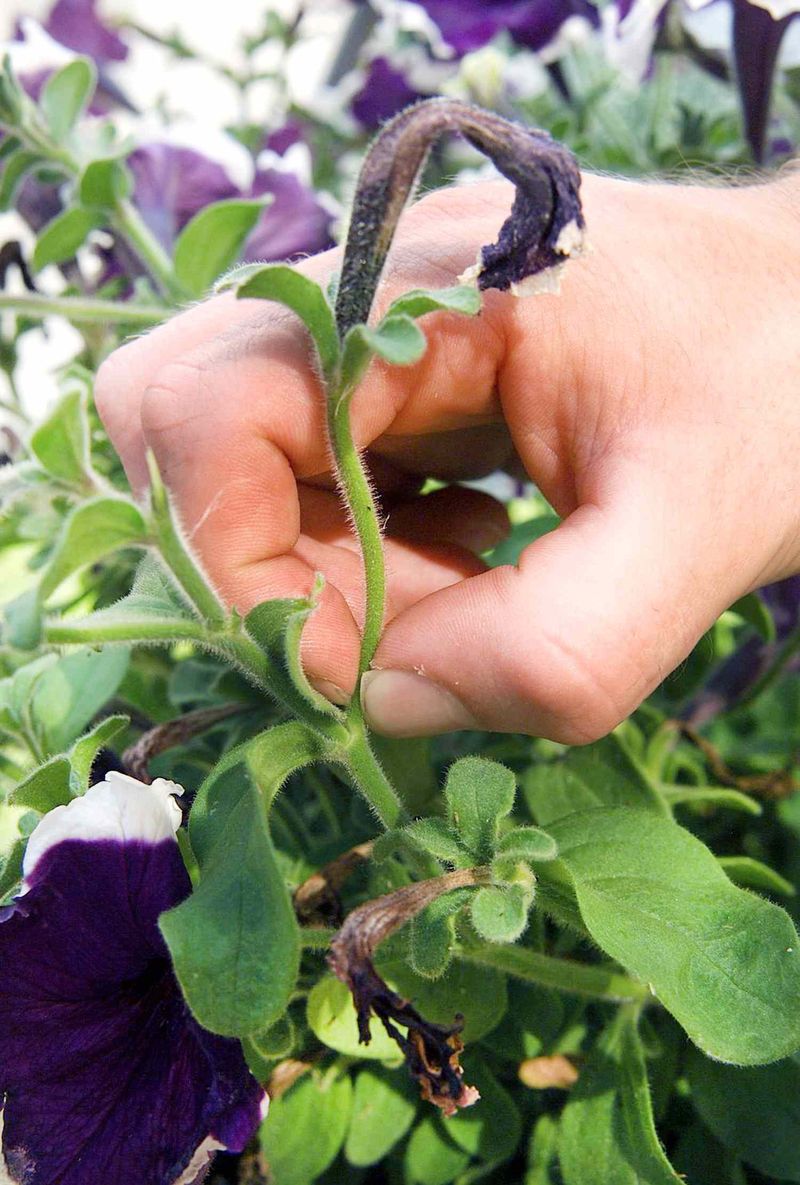
Pulling off a few loose petals and moving on is one of the most common mistakes petunia growers make. The visible flower is only part of what needs to go. Beneath each faded bloom sits a small, swollen, green structure where seeds develop, and leaving that in place allows the plant to keep investing in seed production rather than pushing out new buds.
The correct move is to follow the faded flower down the stem to that swollen base and pinch or snip it off along with whatever remains of the flower. Mississippi State University Extension’s deadheading guide recommends checking petunias about weekly for cultivars that retain their spent flowers, treating that inspection as a practical rhythm rather than a rigid rule. The goal is to reduce continued seed development and potentially encourage the plant to produce new flowers, not to perform a guaranteed energy transfer.
Containers and display plantings get the most out of consistent deadheading because the whole point of those plants is a long, visible floral show. University of Minnesota Extension notes that removing spent blooms is especially worthwhile for flowering annuals in containers, where maintaining a sustained display matters most. For large masses of garden petunias spread across a wide bed, working through every single spent flower may not be practical, and that is a reasonable trade-off.
Use clean, sharp scissors or pruning snips rather than tearing stems, which can leave ragged wounds. A quick wipe of the blades between plants is a good habit if you notice any diseased tissue.
Match cleanup to the petunia cultivar
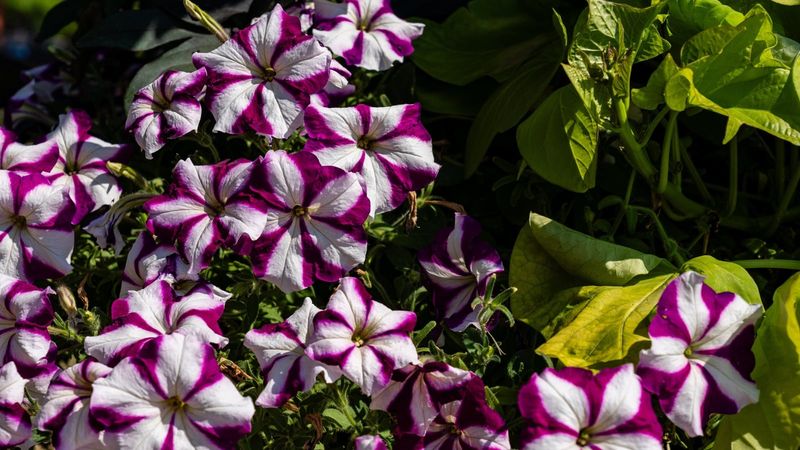
Not every petunia needs the same level of attention, and applying an intensive weekly deadheading routine to the wrong type can feel like a lot of work for little reward. The cultivar in your pot or bed makes a significant difference in how much cleanup actually helps.
Traditional large-flowered and double petunias tend to retain their spent blooms and can form seed structures fairly readily. For these types, removing old flowers and the swollen portion beneath them on a regular basis may meaningfully extend the blooming period. Clemson Cooperative Extension’s petunia factsheet notes that deadheading is especially beneficial for large-flowered and double varieties, while many smaller-flowered types continue blooming without the same routine removal.
Wave petunias, Supertunias, and similar spreading or trailing hybrids are often described as self-cleaning, meaning old flowers fall away on their own and the plant keeps producing new ones without much intervention. Oklahoma State University Extension’s profile of Supertunia Vista Bubblegum highlights this characteristic as a key selling point of the series. That said, even self-cleaning types can benefit from light trimming when stems get long and flowering slows.
Before committing to a weekly deadheading schedule, take a moment to identify what you are actually growing. Check the plant tag or do a quick search for the variety name. Two petunias sitting next to each other in similar containers may respond very differently to the same maintenance approach based entirely on their genetics.
Adjust feeding to the season and the container
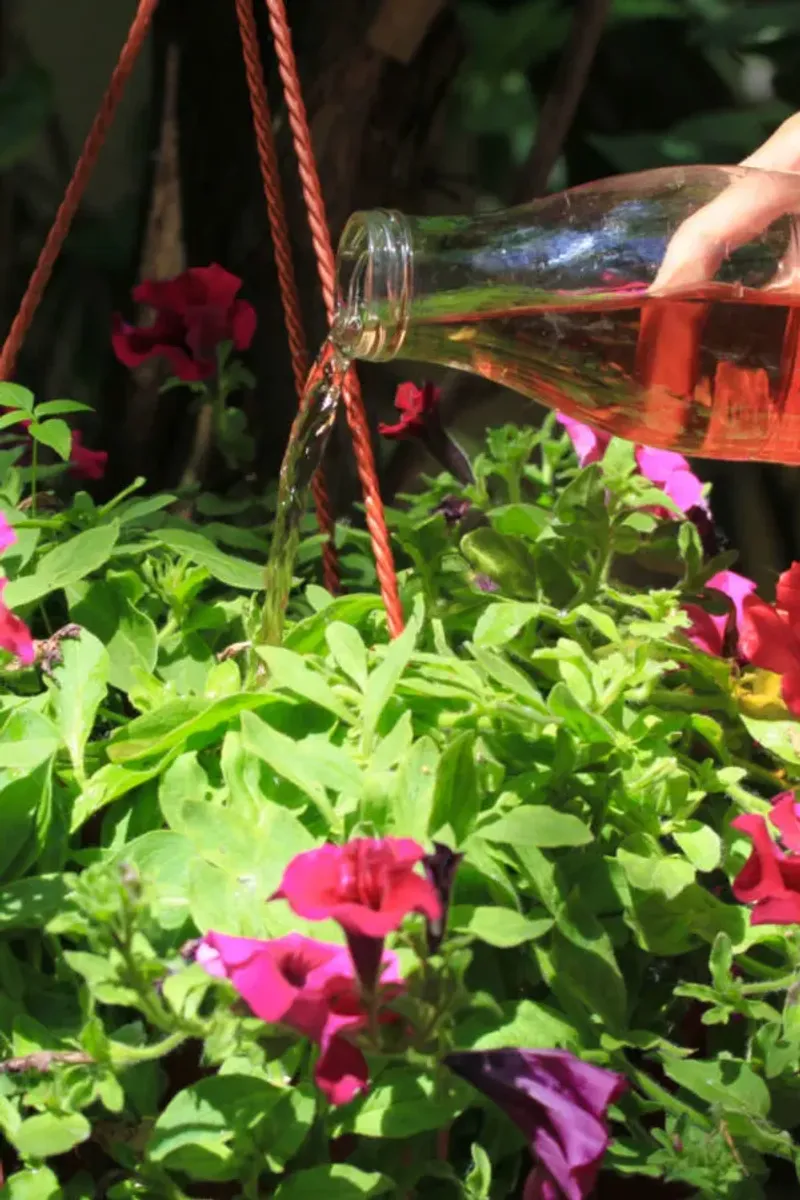
Nutrition quietly runs out in containers and hanging baskets faster than most gardeners expect. Every time you water, a small amount of dissolved nutrients moves through the potting mix and out the drainage holes, and by midsummer that slow loss can leave plants with less than they need to keep flowering at full speed.
University of Minnesota Extension offers some of the clearest published guidance on petunia feeding timing. Their recommendations suggest beginning regular liquid fertilizer applications around early to mid-July for plants that have been growing since spring, with garden petunias receiving a feeding roughly every three weeks, many container plantings every two weeks, and vigorous spreading types potentially more often. These intervals come from University of Minnesota Extension’s petunia growing guide and represent one regional extension source, not a universal calendar rule. Your local climate, season length, plant vigor, and the fertilizer already in your potting mix should all shape your actual schedule.
If your potting mix included a slow-release fertilizer at planting, check how long that product is formulated to last. Some blends feed for three months, others for six, and adding more fertilizer on top of an active slow-release charge can push nutrient levels too high and cause leaf burn or stunted growth.
For fertilizer type, a balanced all-purpose formula is a reasonable starting point for most containers, as noted in University of Minnesota Extension’s guidance on fertilizing container plants. A product somewhat higher in phosphorus or potassium is one option for encouraging flowering, but automatically reaching for a heavy bloom booster is not necessary for every plant. Always follow the product label and avoid feeding plants that are drought-stressed, heat-damaged, or showing signs of root trouble.
Prune leggy growth when picked flowers are not enough
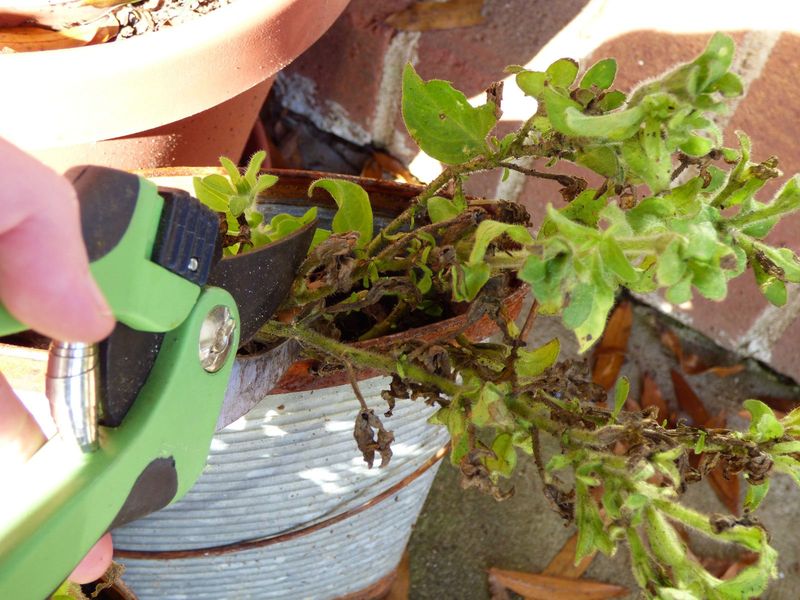
Regular deadheading keeps up with a plant that is actively blooming, but it does not fix one that has already gone long, sparse, and essentially flowerless. When stems stretch out to twelve or more inches with only a flower or two at the very tip and bare stem below, ordinary cleanup is not enough.
Cutting overgrown shoots back by roughly half, or leaving about three to five inches of stem with at least a few leaf nodes intact, can stimulate the plant to push out new lateral growth from those lower nodes. Clemson Cooperative Extension’s petunia factsheet supports this rejuvenating trim as a way to reinvigorate a plant that has become leggy, noting that petunias can be cut back more severely when needed as long as some foliage remains. This is a different action from deadheading: instead of removing individual spent flowers, you are reshaping the plant’s structure to encourage a new flush of branching.
After pruning, the plant will need time to push out new growth before flowers appear again. One Colorado State University Extension source describes a repeat display developing roughly two weeks after a midsummer pruning, though that timeline is not guaranteed and will vary with cultivar, weather, light, and plant health.
Before you cut, confirm the plant is not already under serious stress. A petunia that is wilting from drought, sitting in waterlogged soil, or showing signs of root damage needs those problems resolved first. Pruning a stressed plant and then fertilizing heavily can make things worse. Correct watering, let the plant stabilize, and then apply fertilizer only at label-directed rates once you are confident the roots are healthy enough to take it up.
Fix light, moisture, and heat before expecting flowers
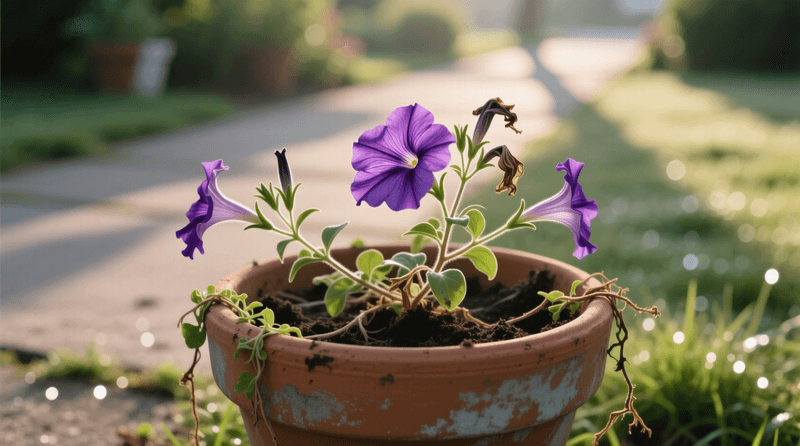
Deadheading and feeding matter, but neither one can substitute for the right growing environment. Petunias that are sitting in too much shade, drying out too fast, or baking in an exposed spot without enough water will produce fewer flowers regardless of how carefully you remove spent blooms.
Sunlight is the starting point. University of Minnesota Extension notes that petunias generally flower best with at least five to six hours of good sunlight and that full sun typically produces the strongest performance. A plant getting three hours of filtered light under a tree is not going to bloom like one in an open, sunny spot, and no amount of deadheading changes that math.
Moisture consistency matters just as much. Garden-bed petunias do better with a thorough, deep soak that reaches the root zone than with frequent shallow sprinkles that wet only the top inch of soil. Hanging baskets and small containers are a different situation entirely: during a stretch of hot summer weather, they can dry out completely in a single day, and checking them daily is not excessive. Soil should stay moist through the root zone but never sit soggy for extended periods, since continuously wet soil can lead to root and stem problems.
Heat deserves honest attention too. Petunias are relatively tolerant of warm weather, but extreme heat and drought can reduce flower production even in plants that are otherwise well maintained. Wilting during the hottest part of the afternoon, crisp or scorched leaf edges, and pale or bleached foliage are all signs that heat and water stress may be playing a bigger role than retained seed structures.
Spotted flowers, unusual leaf discoloration, or widespread decline across the plant may point toward disease or nutrient problems. University of Delaware Cooperative Extension’s guide to identifying nutrient deficiencies in ornamental plants points out that deficiency symptoms can closely resemble disease, making visual diagnosis alone unreliable. If something looks wrong beyond simple bloom slowdown, investigate those possibilities before doubling down on maintenance.
Use a measured rescue routine
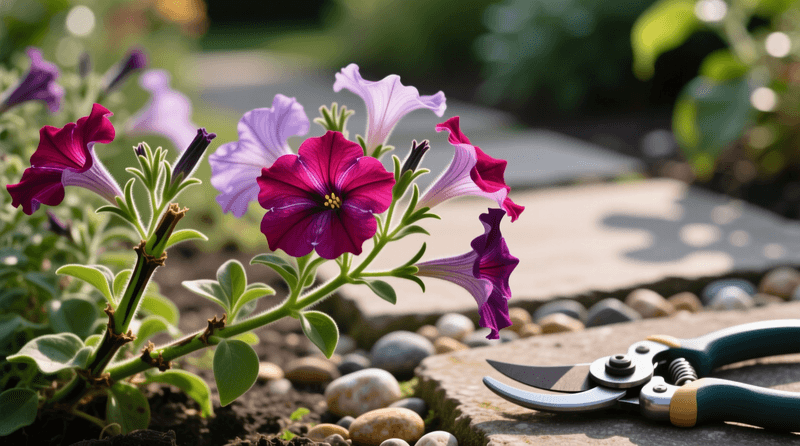
Rescuing stalled petunias works best as a sequence of small, honest steps rather than one dramatic intervention. Start by looking at the plant clearly: is it green and vigorous with retained seed structures, or is it wilted, pale, spotted, or declining? The answer determines what happens next.
For a healthy plant with spent flowers and swollen seed pods, remove those structures correctly, check that sunlight is adequate, and confirm that watering matches the container size and recent weather. If the plant is also leggy, prune back overgrown stems while retaining enough foliage for regrowth. Feed only after ruling out drought, root damage, or active disease, and follow the product label rather than applying extra fertilizer out of optimism. University of Minnesota Extension and Clemson Cooperative Extension both support this measured approach over aggressive intervention.
Flowering may improve gradually over the following weeks, depending on cultivar, temperature, available light, moisture, and overall plant health. No fixed two-week guarantee applies to every situation, and the response will vary. Keep monitoring the plant rather than repeating cuts or fertilizer applications on a rigid schedule, especially if symptoms point toward heat stress, poor drainage, root trouble, or disease that has not yet been resolved. A petunia that gets the right diagnosis, not just the most attention, tends to be the one that finishes the season still blooming.