
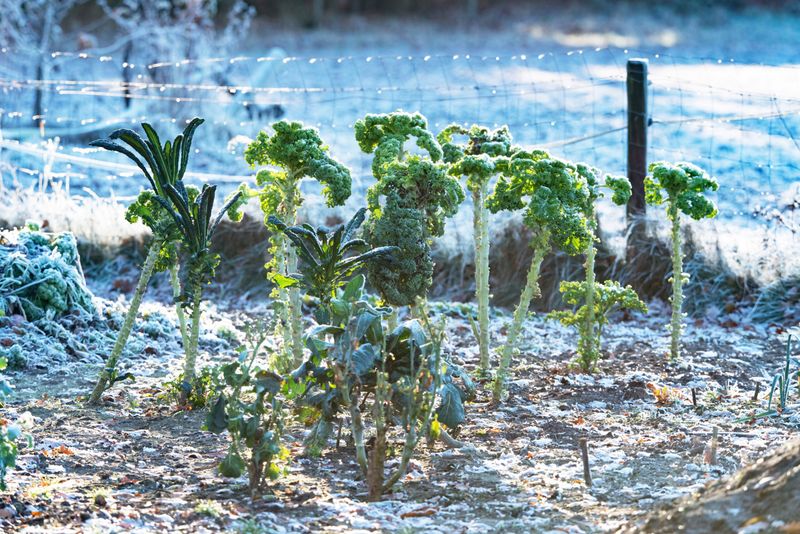
Kale is one of the few greens that can keep going when the rest of the vegetable bed has called it quits. Many gardeners swear the leaves taste milder after a cold snap, and the way you pick can stretch your harvest well into winter.
The results are not the same for every plant or every yard, though. Here is how to get the most from your kale when the temperature drops.
Cold may change kale’s flavor, but frost is no guarantee
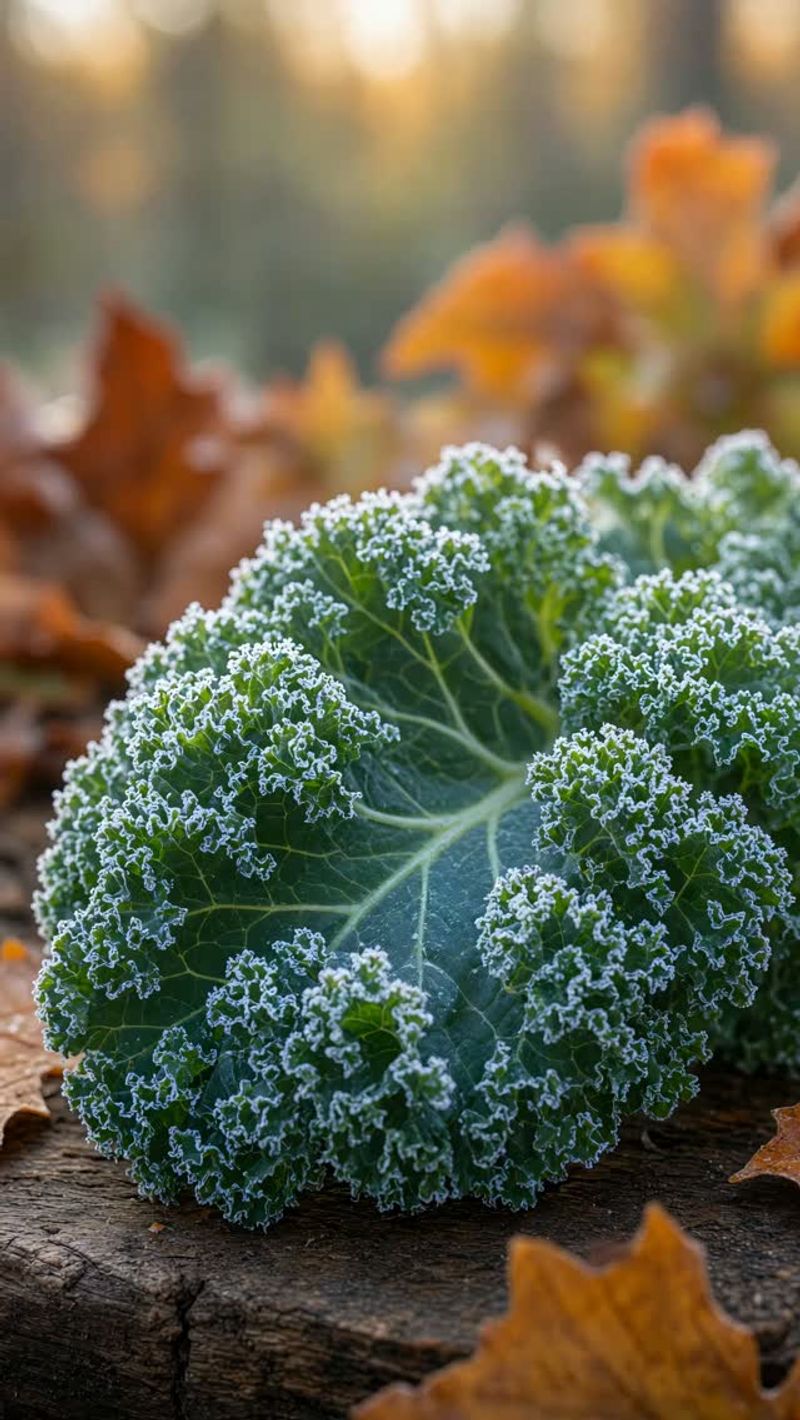
Plants respond to cold by changing their chemistry. A study on photoperiod, temperature, and cold acclimation in kale found that cold acclimation can raise soluble sugar levels, and field research on two kale cultivars also found shifts in sugars and other compounds after cold exposure.
That gives a believable reason some gardeners find their winter kale milder or sweeter.
Still, a chemical change in the leaf is not the same as a better taste on your plate. In a controlled sensory study of curly kale, frost did not reliably change flavor.
It mainly affected aroma and texture, and nitrogen fertilizer explained more of the taste differences.
So treat sweetness as a nice possible bonus. Taste a leaf before and after a cold spell, and let your own plants be the judge.
Starch turning into sugar is too simple a story for kale, so skip that explanation when you talk shop with neighbors.
Judge winter hardiness by your local conditions
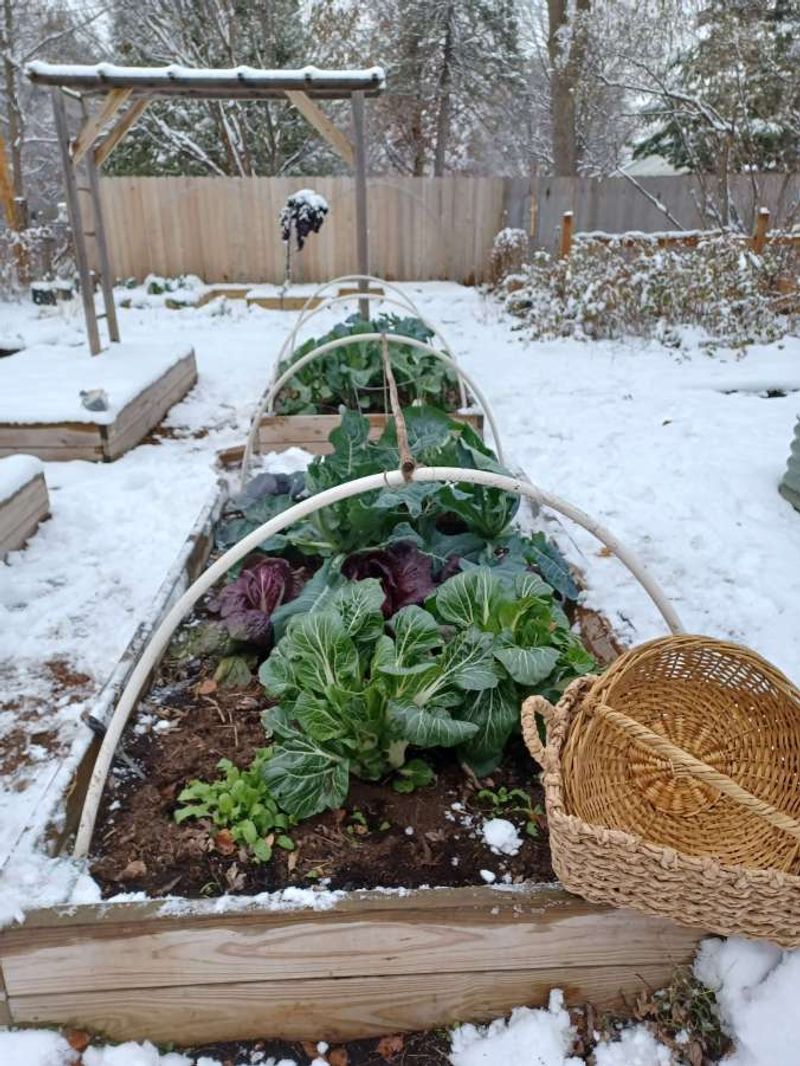
Kale is a cold-tolerant crop, but how much cold it handles depends on where you garden. Utah State Extension notes that mature plants can withstand very cold temperatures.
Cultivar, plant age, and the way your winter unfolds all shift the picture.
Regional numbers show how much the range varies. Oregon State guidance for western Oregon and Washington lists kale hardiness around 0°F and a harvest window of September through April.
Those figures are for that mild, wet region only, so do not treat them as a rule for the Midwest or Northeast.
A light frost is one thing, and a long, harsh freeze is another. Young plants, windy spots, and sudden temperature drops can all do damage.
Check your local extension office for first and last frost dates, and watch how your own plants look after each cold night.
Let frozen leaves thaw before harvesting
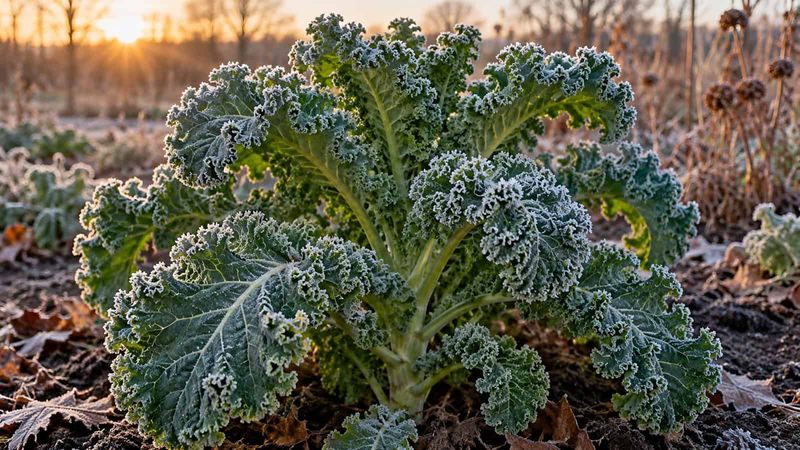
Patience pays off on a frosty morning. If the leaves are stiff and crunchy with ice, leave them alone.
Iowa State Extension warns that leaves cut while frozen may turn limp after thawing.
Wait until the air is above freezing and the leaves have thawed on their own. That often means picking in late morning or early afternoon rather than first thing.
Do not speed things along by shaking or rubbing the leaves, since frozen tissue is brittle and easy to bruise.
A quick test helps. Gently touch a leaf near the edge of the plant.
If it feels cold but flexible and there is no ice, go ahead and harvest. If it still snaps or feels hard, check again in an hour or two.
Pick outer leaves and protect the growing center
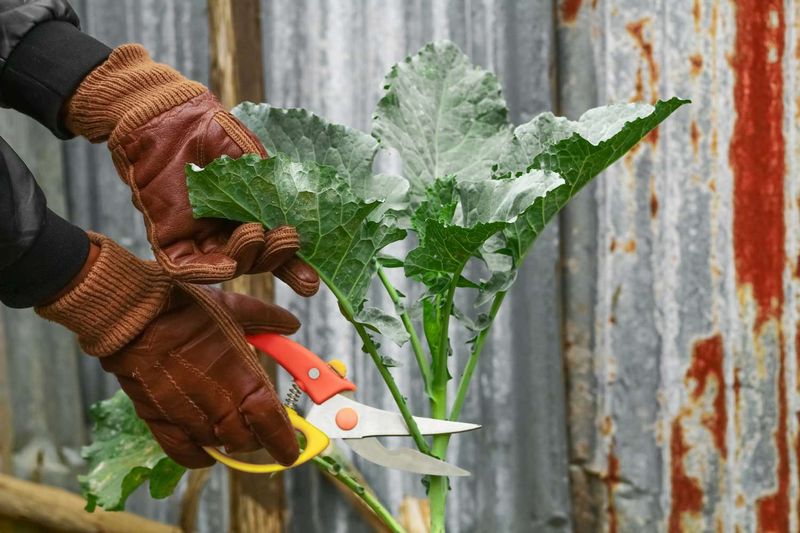
Think of a kale plant as a rosette that grows from the middle. The big, older leaves sit on the outside, and the small, tender ones cluster at the top.
Oregon State Extension recommends removing the outer leaves, and NC State Extension gives the same core advice.
Pick a few of the largest lower leaves from each plant, and snap or cut them close to the main stem. Take care not to nick the growing point at the very top.
Leave the younger leaves in place so the plant keeps some green surface to work with.
Spread your picking across several plants instead of stripping one bare. This method can stretch your harvest over many weeks.
It cannot promise steady new growth, since cold, short days slow a plant down no matter how carefully you pick.
Use row covers when cold spells threaten
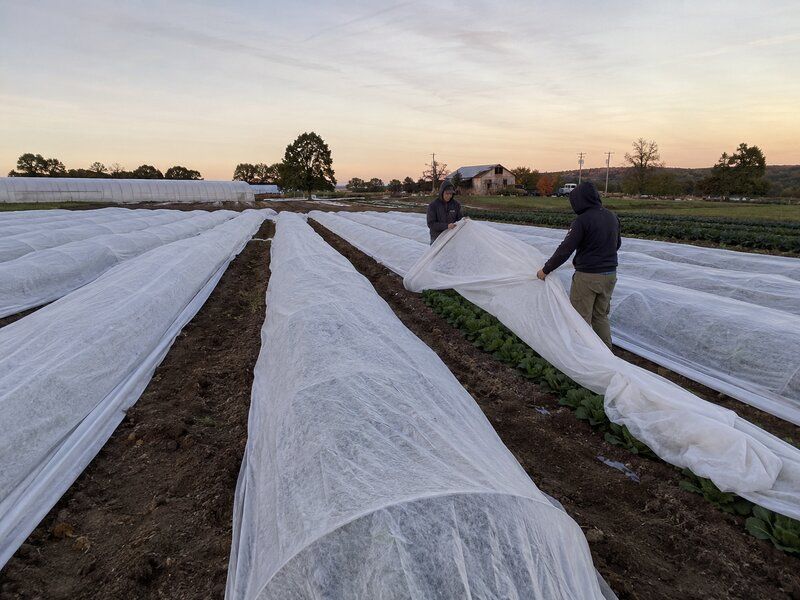
When a hard freeze is in the forecast, a cover can add a little protection. Oregon State winter vegetable guidance describes row covers as one way to shield crops during cold spells.
They may help most when the cold is sudden, harsh, or paired with drying wind.
Whether you need one depends on your local weather and how established your plants are. A tough mature kale plant in a mild climate may shrug off a light frost.
Young plants or a deep freeze are better reasons to cover up.
Check your covers on warm, sunny days. Heat can build up underneath fast, so vent or pull back the fabric until temperatures cool off again.
Even a well-placed cover is a helper, not a guarantee, and plants can still stall or suffer damage.
A longer harvest does not guarantee spring growth
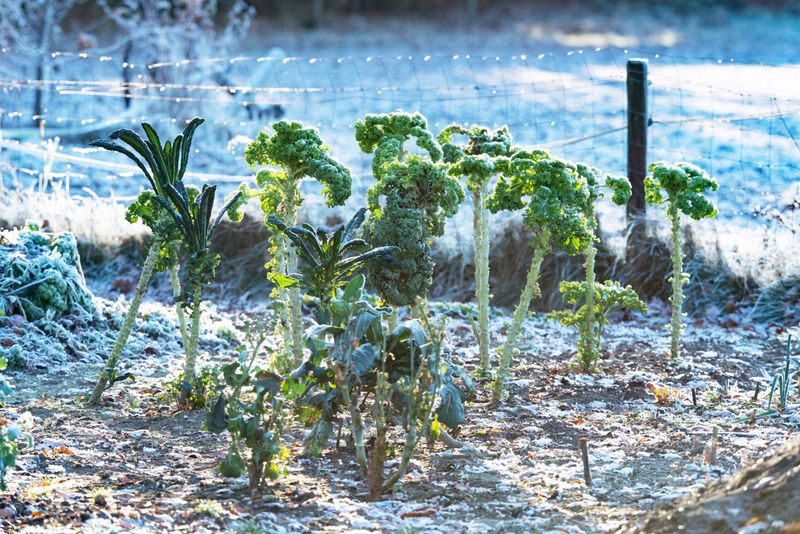
A plant that is still harvestable is not always a plant that is still growing. In deep winter, kale may hold its leaves but add very few new ones.
That is normal, and it is why picking slowly matters.
The steps in this article all help stretch the season: let leaves thaw first, take older outer leaves from Oregon State and NC State style repeat picking, and add cover when a cold snap hits. Even so, a harsh winter can slow growth or kill plants outright, and regional ranges like the September to April window in western Oregon and Washington will not match every yard.
Enjoy the harvest while it lasts, and plan a few extra plants for backup. Kale rewards patience, but it still follows the weather.