
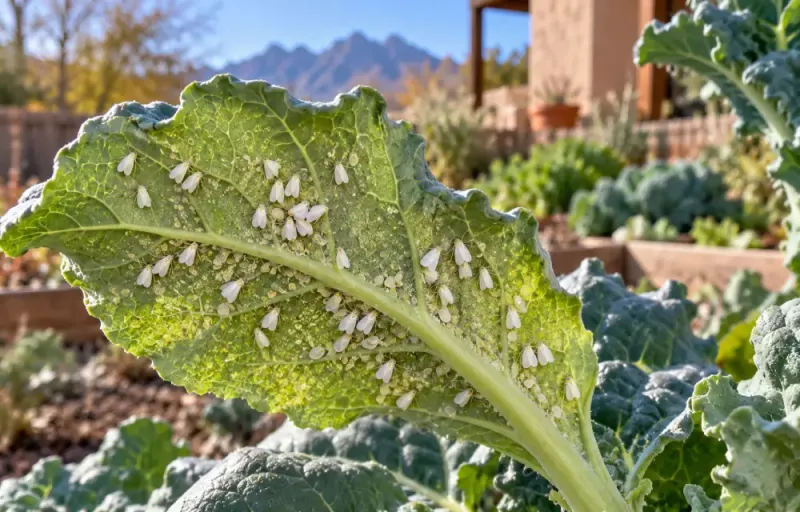
Your kale was looking great, and then the leaves started to curl and feel tacky to the touch. Tiny pests hiding on the undersides of leaves may be behind it, but the symptoms alone cannot tell you for sure.
A quick look under the leaves can save you from treating the wrong problem. If whiteflies show up, a cheap garden hose may help you push their numbers back.
Sticky, curled leaves are a clue—not a diagnosis
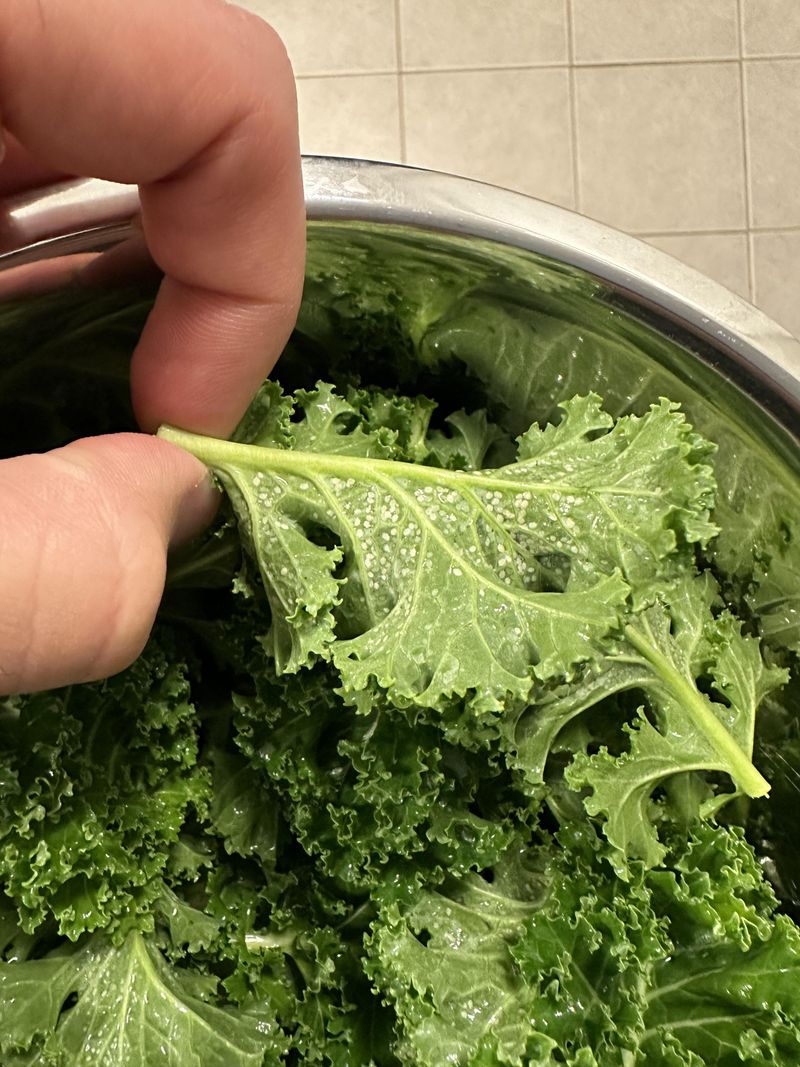
A tacky film on kale leaves is a reason to look closer, not a verdict. That stickiness is usually honeydew, a sugary waste product from sap-feeding insects.
University of Maryland Extension notes that aphids, soft scales, mealybugs, and other pests can all leave it behind, so the residue alone does not point to one culprit.
Curling and distortion are just as vague. Aphids can twist and crinkle kale foliage, as this aphid guide for home gardens explains, and vegetable leaf curling can also come from causes that have nothing to do with insects.
So before you reach for any spray, inspect the plant. Check the undersides of the affected leaves and the stems nearby, and note what is actually living there.
Matching the fix to the real pest keeps you from stressing a plant that is already struggling.
Check beneath the leaves for whiteflies
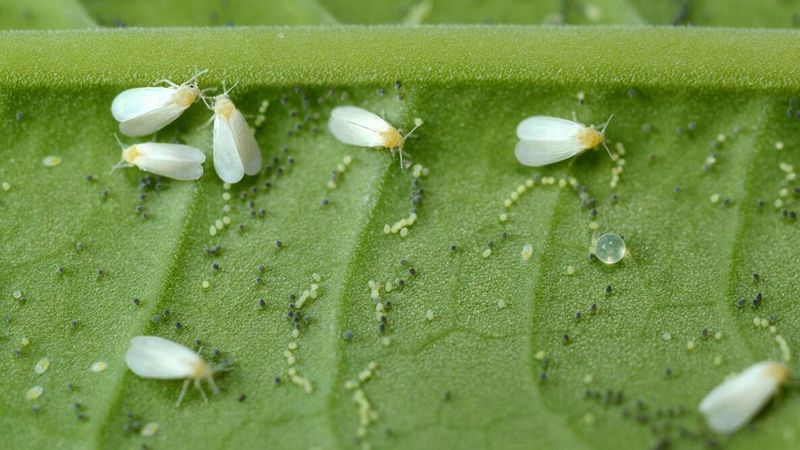
Grab a kale leaf that looks affected and turn it over. You are looking for tiny white adults, pale and flattened nymphs that look like little scales, and eggs scattered across the underside.
A hand lens or phone camera zoom makes the small stages much easier to spot.
Next, give the plant a gentle shake or brush the leaves with your hand. Adult whiteflies tend to flutter up in a small cloud when disturbed, then settle back down.
That behavior is one of the clearest field clues, according to University of Maryland Extension’s whitefly guide.
Finding adults, nymphs, or eggs supports a whitefly diagnosis far more than sticky or curled leaves ever could. If you see none of them, look for aphid clusters or other insects before you decide on a next step.
Check several plants, since pests often gather on some and skip others.
How whiteflies can make kale sticky and distorted
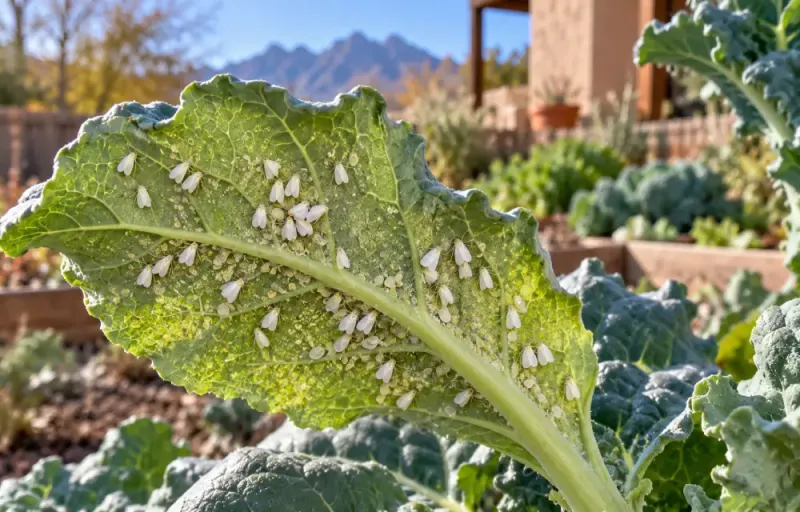
Whiteflies are sap feeders, and kale and other cabbage-family vegetables are among their garden hosts. As they feed, they release sticky honeydew onto the leaves below.
Texas A&M AgriLife Extension describes this feeding and the sugary residue that follows.
When numbers climb, heavy feeding can contribute to yellowing and distorted growth. Honeydew can also leave leaves looking dirty and tacky, which is not a pleasant surprise on something you plan to eat.
Maryland’s vegetable whitefly page covers these same effects.
None of this means every sticky or curled kale leaf has a whitefly cause. These pests are not unusually common on winter kale in Texas or Florida, either.
They are simply one possible explanation, and the leaf undersides will tell you whether they belong on your suspect list.
Use a controlled hose spray to knock whiteflies back
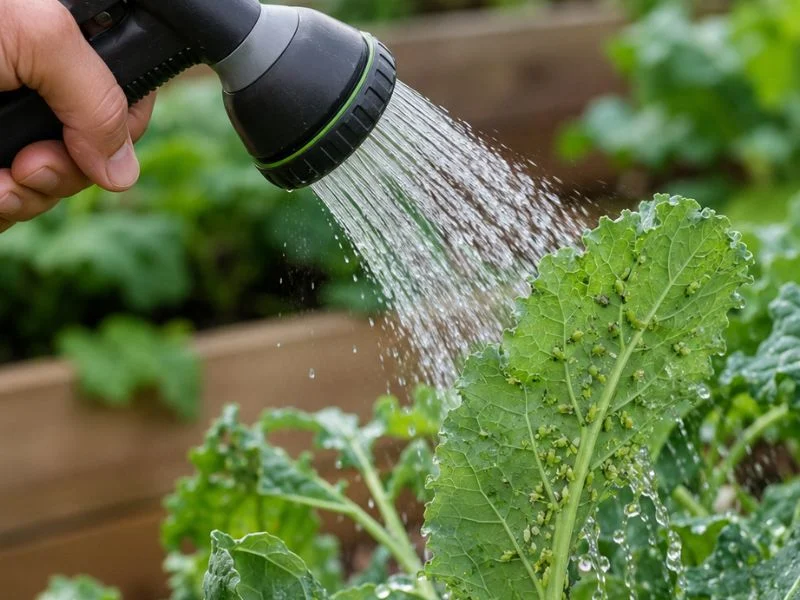
Once you have confirmed whiteflies, water is a cheap first move. A firm spray can dislodge adults and nymphs and may reduce a small or developing population.
Texas A&M AgriLife Extension recommends aiming the spray at the undersides of the leaves, where the pests live.
Keep it controlled. Use a shower or jet setting from a short distance, and lift the leaves with one hand while you spray upward with the other.
The goal is to knock insects loose, not to tear or bruise tender kale, so back off if the foliage bends or splits.
Spray in the morning so the leaves dry before evening. Think of this as a knock-back measure rather than a guaranteed cure.
Some whiteflies will fly off and some will remain, which is why one session is only the start.
Recheck the leaves and repeat as needed
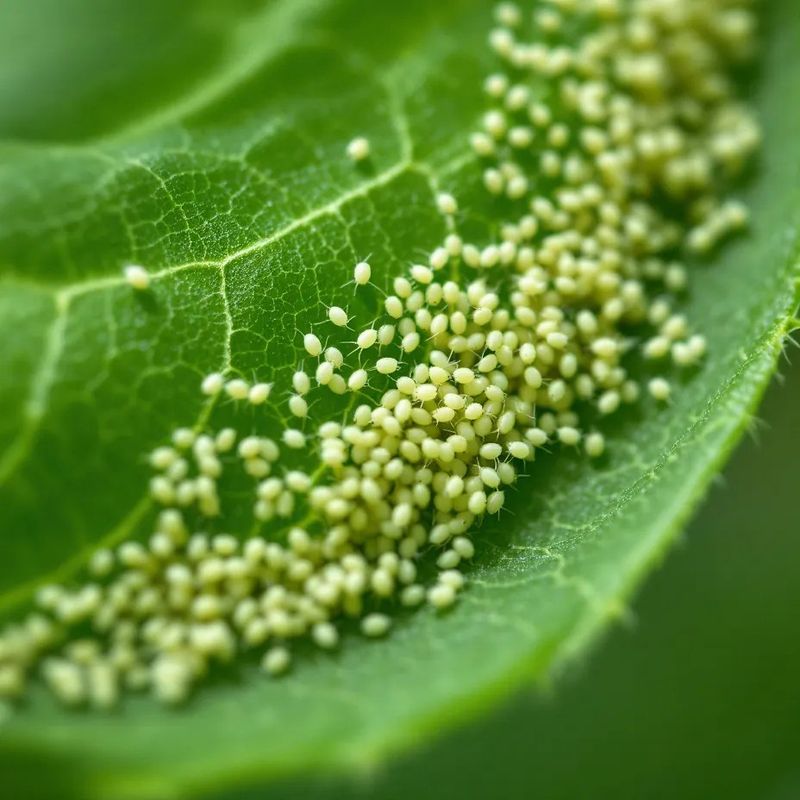
A day or two after spraying, flip the leaves again. Look for adults, nymphs, and eggs, and compare what you see with your first check.
Jotting down a quick note each time helps you tell whether things are improving.
Texas A&M guidance calls for repeating the spray at least weekly for three consecutive weeks. That schedule matters because eggs and young nymphs can survive a spray and mature into new adults.
Plan on a series of sprays rather than a single rescue.
A few adults drifting around may not call for action. Rising numbers of eggs and nymphs, though, suggest a growing population and make intervention more worthwhile.
Set your expectations accordingly, since one spray may not be enough.
If the infestation persists, protect the plant and its helpers
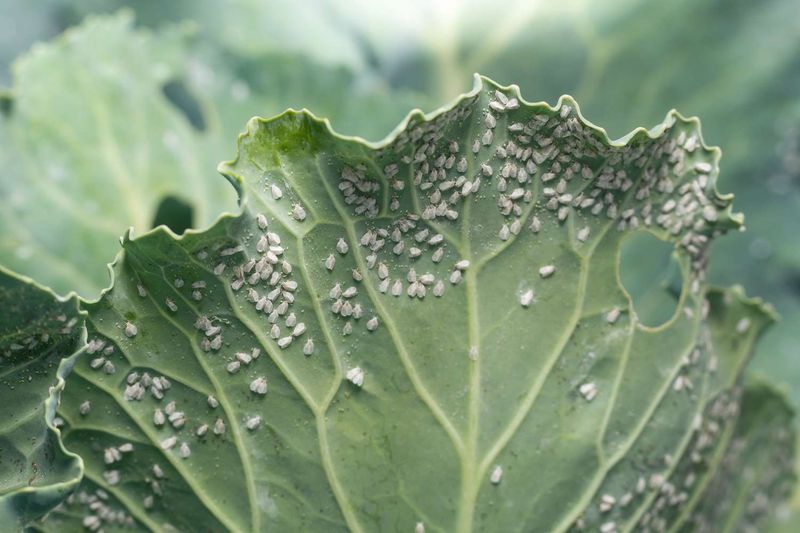
Heavy whitefly infestations can be hard to manage, and water alone may not finish the job. When it is practical, pick off the most heavily infested leaves and bag them rather than leaving them in the bed.
UC Statewide IPM Program guidance also points out that natural predators help keep whiteflies in check.
That is a good reason to skip unnecessary broad-spectrum pesticides, since they can harm the helpful insects working in your favor. Texas A&M likewise encourages preserving these natural enemies.
If you consider an insecticidal soap or oil, choose a product labeled for edible kale and follow the label exactly. Thorough coverage of the leaf undersides matters, and Maryland Extension notes that stressed plants or hot conditions can raise the risk of injury.
Keep checking the undersides every week. A hose is a useful tool, but steady inspection is what tells you whether your kale is truly pulling ahead.