
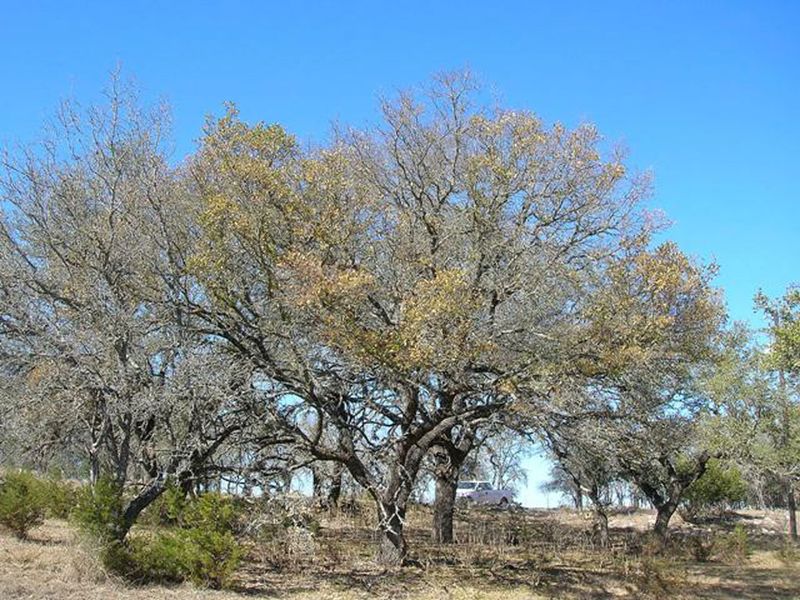
A viral claim has been spreading among Texas homeowners: that a new invasive insect is tearing through the state’s oak trees faster than anyone can stop it. The real story is more complicated, and knowing the difference could save your trees. The biggest documented threat to oaks across affected Texas regions is oak wilt, a serious fungal disease, and understanding how it actually spreads is the first step to protecting the trees in your yard.
What the evidence actually shows about Texas oak losses
Headlines warning of a fast-moving invasive insect wiping out Texas oaks are circulating online, but the authoritative sources reviewed for this article do not back that claim up. No confirmed report from a state or federal agency establishes that a newly spreading invasive insect is attacking Texas oak trees statewide. What the evidence does clearly show is a fungal disease called oak wilt, and its impact on affected Texas counties is well documented and serious.
Oak wilt is caused by the fungus Bretziella fagacearum. Texas A&M Forest Service reports that oak wilt has killed millions of trees across 76 Texas counties, making it one of the most destructive tree diseases in the state. That is a genuine emergency for homeowners in affected areas, and it deserves accurate, specific attention rather than a headline that points at the wrong cause.
Geographic scope matters here. Oak wilt is especially well documented in Central Texas, where live oaks grow in dense, interconnected groves. Homeowners in East Texas, North Texas, or other parts of the state should not automatically assume that a declining or dead oak has oak wilt. The disease’s presence, severity, and spread potential vary by county, tree species, and local conditions.
A tree that is thinning in the Panhandle may be dealing with drought stress, a different disease, or a combination of problems that have nothing to do with Bretziella fagacearum.
Correcting the invasive-insect claim is not about minimizing the risk. Oak wilt is a fast-moving, real threat in the counties where it is confirmed. The correction matters because misidentifying the cause leads homeowners to take the wrong action, or no action at all, while the actual problem continues to spread through their neighborhood’s root systems.
How oak wilt spreads through affected Texas landscapes
Oak wilt travels through Texas landscapes in two distinct ways, and both routes can move faster than most homeowners expect. Understanding them separately helps explain why the disease can jump from a sick tree to a healthy one with no obvious contact between the two.
Above ground, sap-feeding beetles are the key link. When a red oak infected with oak wilt produces fungal mats under its bark, those mats release a fruity odor that attracts beetles. The beetles pick up spores while feeding on the mats, then carry those spores to fresh wounds on nearby healthy trees. That is why fresh cuts, storm damage, and even minor string-trimmer nicks on an oak’s bark can become entry points for the fungus.
The beetles are not invaders from another continent; they are native insects acting as accidental carriers of a destructive pathogen. Texas Department of Transportation pruning guidance distinguishes this specific transmission mechanism from the broader condition called oak decline, which involves multiple stresses and should not be conflated with a single vascular disease.
Below ground, the story is just as urgent. Live oaks in Central Texas commonly grow in interconnected groves where root systems graft together naturally. Once the fungus enters one tree, it can travel through those grafted roots into neighboring trees that show no external symptoms yet. Texas A&M Forest Service reports average underground spread of about 75 feet per year in connected live-oak root systems.
A single infected tree in a dense grove can silently threaten every connected neighbor long before anyone notices anything wrong.
These two routes, beetle-carried spores reaching fresh wounds and underground root-to-root movement, are not the same as ordinary insect feeding on bark or wood. Borers chewing through sapwood cause a different kind of damage through a different biological process. Keeping those mechanisms separate helps homeowners respond to the right problem in the right way.
Symptoms that deserve a qualified evaluation
Certain warning signs on a Texas oak should send you straight to a certified arborist, not to a hardware store. Knowing which symptoms are genuinely concerning, and which ones might have a more ordinary explanation, can save you from both overreacting and missing something serious.
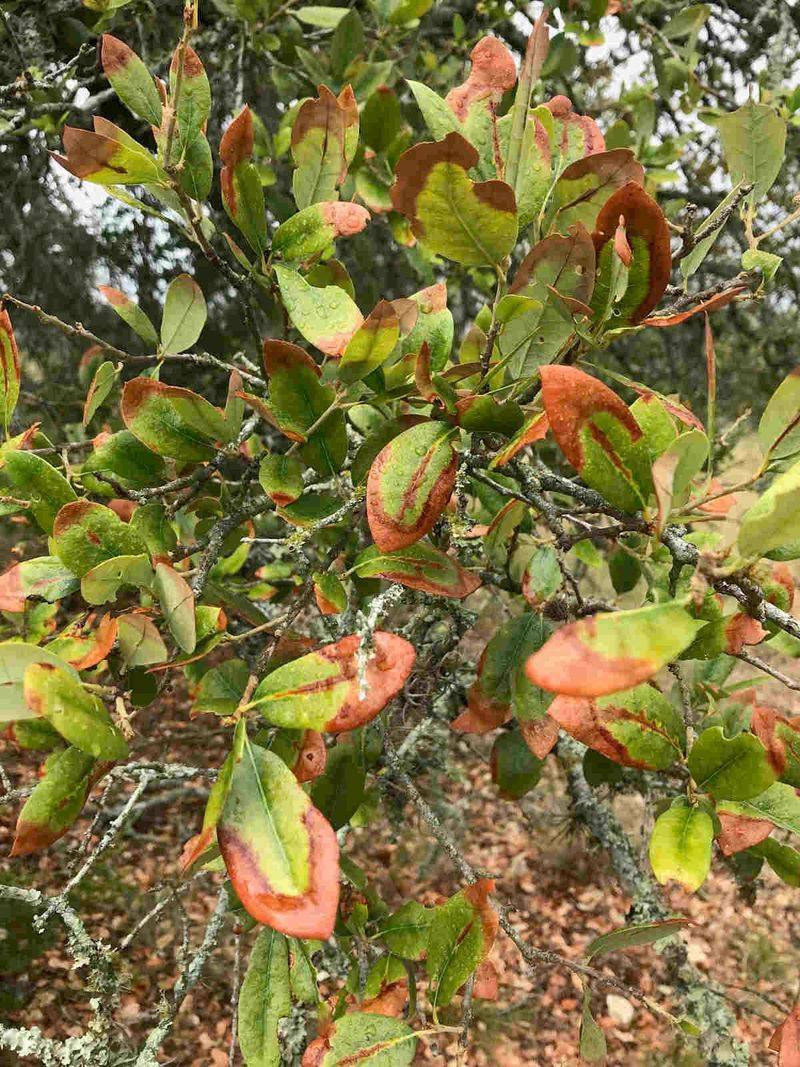
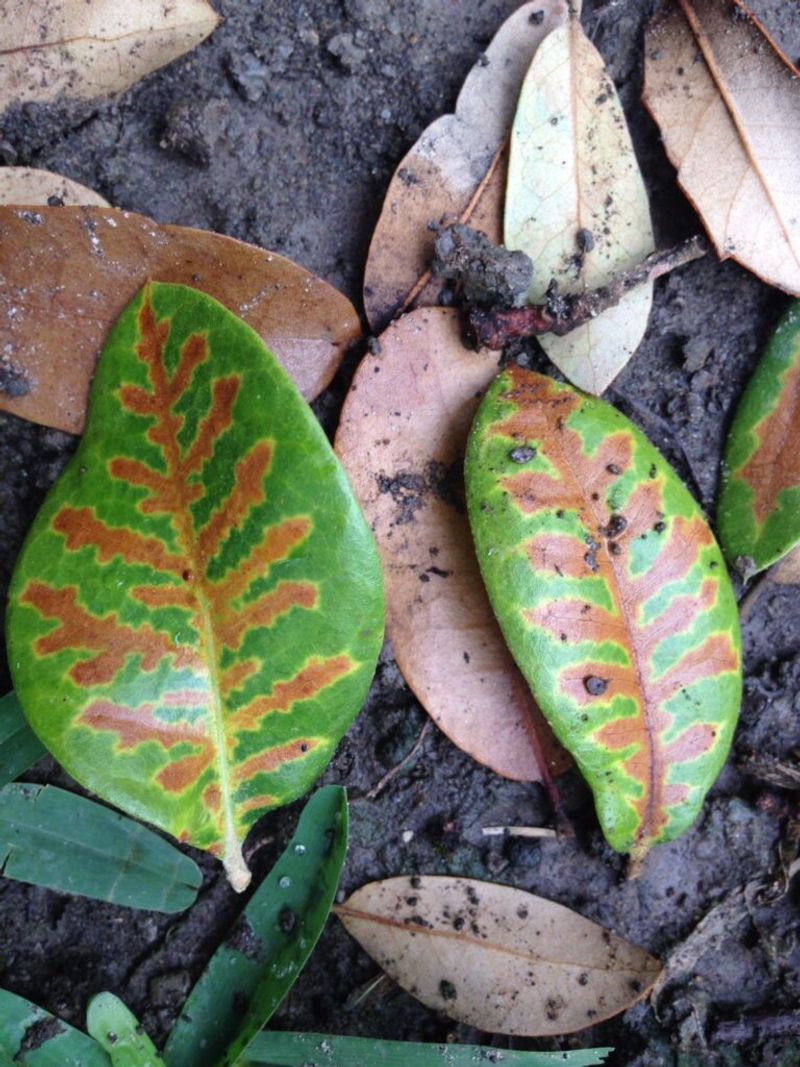
For live oaks, one of the clearest red flags is a pattern called veinal necrosis: the veins of the leaf turn yellow or brown while the surrounding tissue may still look greenish. Leaves may also show widespread discoloration before dropping prematurely. Canopy thinning that moves from the outer edges inward, or dieback that progresses rapidly over a few weeks rather than months, are also signs worth taking seriously. Oak wilt identification resources from TexasOakWilt.org describe these foliar symptoms as among the most recognizable visual indicators of the disease in live oaks.
Red oaks tell a different visual story. Their leaves may turn red or brown, sometimes still attached to the branch after dying, and the decline can move very quickly. Texas A&M Forest Service notes that red oaks are especially susceptible and may die within about one month after infection. Live oaks have intermediate susceptibility, meaning they can survive longer but are still at serious risk.
White oaks are less susceptible but not immune, so even a white oak showing unusual decline deserves a professional look if other explanations do not fit.
The complicating factor is that many other problems look similar. Spring leaf turnover in live oaks is normal and can alarm homeowners who are not used to it. Drought stress, root damage from construction, bark injuries, and other fungal diseases all produce leaf discoloration and canopy thinning. A photograph or a quick walk around the tree is not enough to tell the difference.
Symptoms alone cannot establish a diagnosis, and acting on a wrong diagnosis, by cutting, spraying, or removing a tree, can make a manageable situation significantly worse.
The oak borers behind the confusion
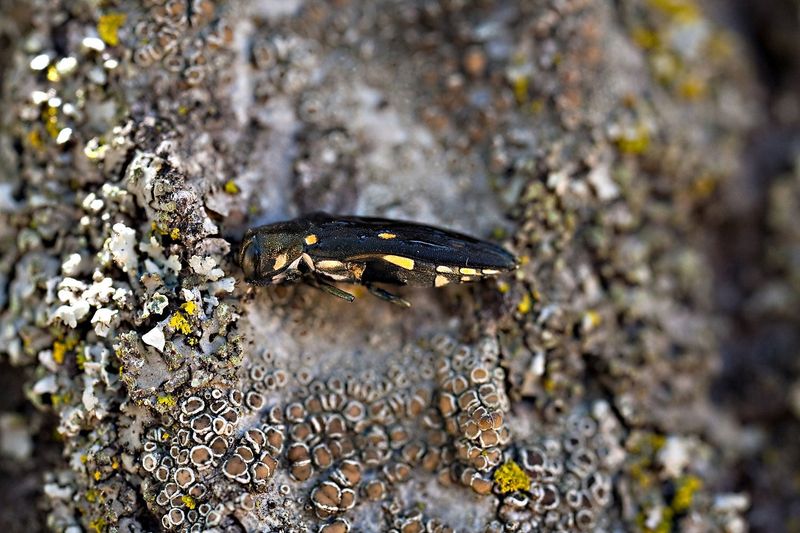
Much of the invasive-insect alarm circulating online likely traces back to two real beetles, neither of which fits the statewide Texas outbreak narrative being spread. Getting the facts straight about each one matters, because the right response depends on knowing what you are actually dealing with.
The two-lined chestnut borer, Agrilus bilineatus, is the beetle most likely behind the confusion in Texas. It does occur here, and it does attack oaks. However, Morton Arboretum guidance on the two-lined chestnut borer describes it as native to eastern North America, not an invasive species. Its typical pattern is to move in on trees that are already weakened by drought, injury, disease, or other stress.
A healthy, well-watered oak with no wounds is a much harder target than one that has been struggling through a Texas summer without irrigation. Calling it an invasive insect driving a statewide oak epidemic misrepresents both its origin and its behavior.
The goldspotted oak borer, Agrilus auroguttatus, is genuinely invasive and genuinely destructive, but its confirmed damaging population is in Southern California, not Texas. The USDA Forest Service leaflet on the goldspotted oak borer places confirmed specimens from Arizona, California, and Mexico. UC IPM’s goldspotted oak borer profile describes its established introduced range as California. Presenting this insect as a Texas threat is not supported by the authoritative sources reviewed here.
A note on D-shaped exit holes: both of these borers leave D-shaped holes in bark when adults emerge, but so do other species. Hole shape alone cannot identify the pest, and it definitely cannot tell you whether the insect or a prior disease caused the tree’s decline. Positive identification requires examining the full symptom picture and, when needed, the insect itself or its feeding galleries.
One confirmed invasive beetle does threaten Texas trees, but it is not an oak pest. The emerald ash borer is an invasive Asian beetle tracked by Texas A&M Forest Service across confirmed Texas counties, and it attacks ash trees specifically. Keep that threat separate from any conversation about oak health.
Prevent wounds during the Texas oak-wilt risk window
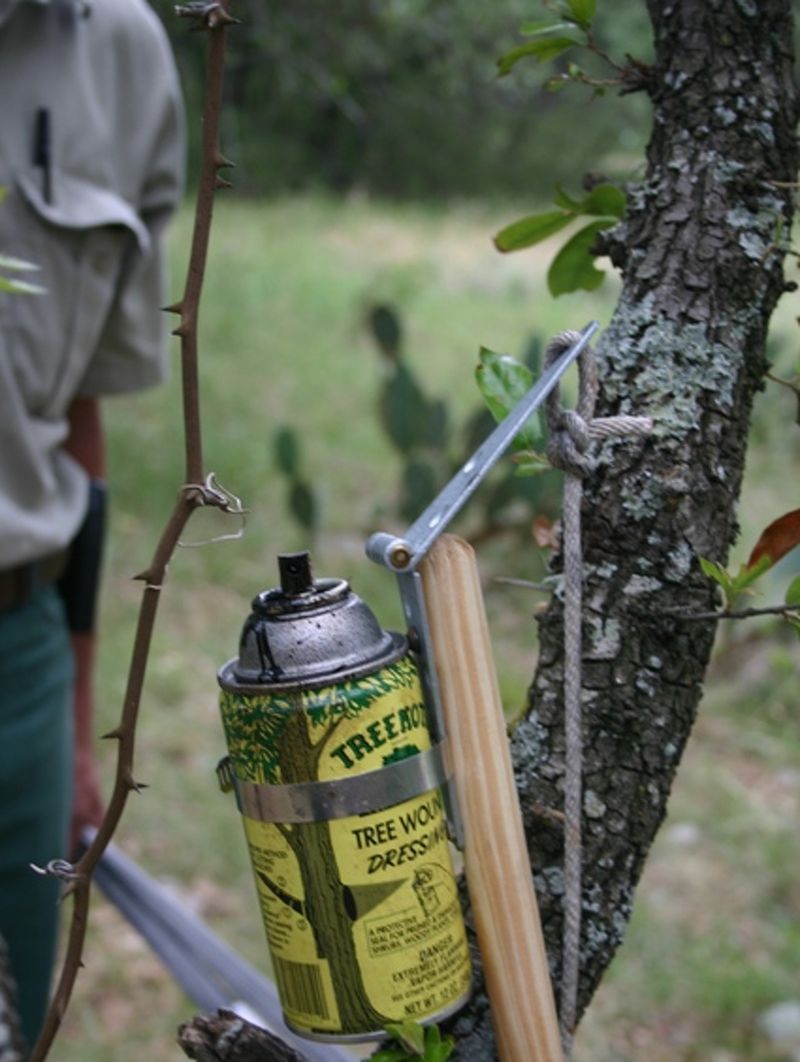
Prevention is the most cost-effective tool a Texas homeowner has against oak wilt, and most of it comes down to one rule: do not wound your oaks between February and June if you can help it, and seal any wound immediately when you cannot avoid it.
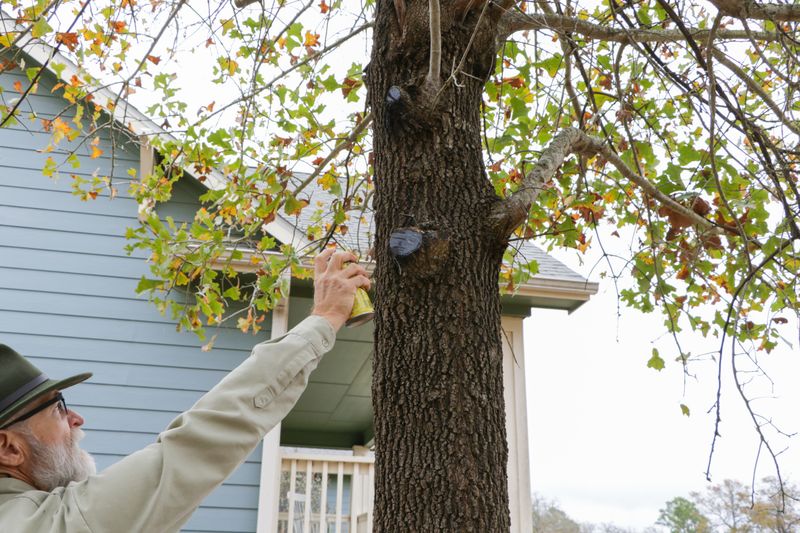
Texas A&M Forest Service guidance establishes February through June as the period when sap-feeding beetle activity and oak-wilt transmission risk are especially elevated. During those months, fresh pruning cuts, accidental nicks from string trimmers, construction damage near root zones, and even small bark scrapes can become entry points for fungal spores carried by beetles. Texas A&M Forest Service recommends painting oak wounds immediately with tree wound paint regardless of the time of year, not just during the high-risk window. That means if a storm snaps a branch in August, you still reach for the paint the same day.
Practical steps to build into your routine include scheduling any necessary pruning for July through January when possible, flagging oak root zones before any contractor work begins near the property, and keeping string trimmers and lawn equipment well clear of trunk bases. These are not complicated changes, but they require being deliberate, especially during spring when many homeowners feel the urge to tidy up trees before summer heat arrives.
Firewood deserves its own paragraph. Do not move potentially infected oak wood from a property where oak wilt is suspected or confirmed. The fungal mats that attract spore-carrying beetles can form under the bark of dead red oaks, and transporting that wood to a new location can introduce the disease to an area where it does not yet exist. Texas A&M Forest Service recommends burning, burying, or chipping dead infected red oaks soon after discovery to reduce the chance of those mats forming.
Before disposing of any wood from a tree you suspect had oak wilt, get a qualified local assessment so the disposal method matches the actual situation.
Get a diagnosis before treating or removing a tree
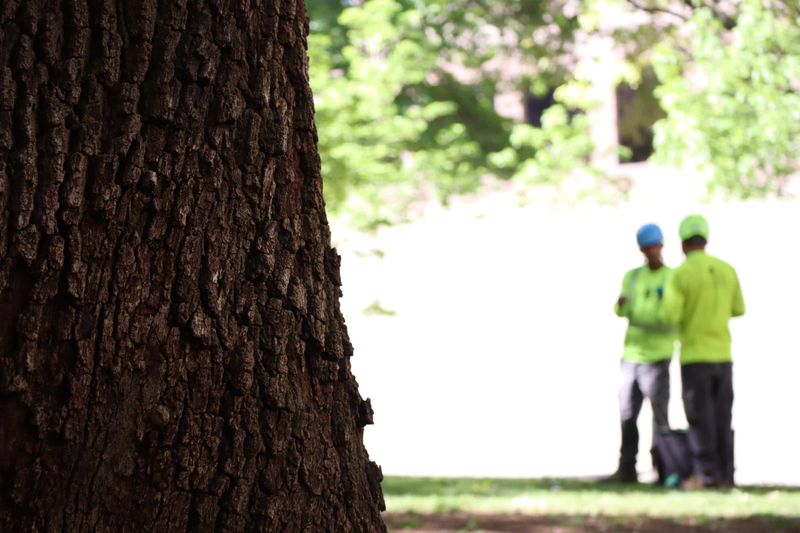
When a Texas oak starts showing worrying symptoms, the worst response is a quick trip to a garden center followed by a spray treatment based on a photo you found online. The symptoms of oak wilt, borer damage, drought stress, bark beetle activity, and other diseases overlap significantly. Acting on the wrong diagnosis wastes money at best and can destroy a tree that might have been saved at best.
A photograph cannot establish a diagnosis. Neither can a single beetle found near the tree, a handful of D-shaped holes in the bark, or a pattern of brown leaves. These are clues worth documenting, not conclusions. Write down what you observe, note the location and species of the tree, photograph the symptoms from multiple angles, and track how quickly the decline is progressing.
That information will be genuinely useful to a professional evaluator.
Contact a qualified local certified arborist when symptoms appear rapid, unusual, or spreading to neighboring trees. An arborist can assess the site, examine the symptom pattern across the whole tree and its neighbors, and recommend whether laboratory testing is appropriate. Texas A&M Forest Service serves as an information and referral resource for oak wilt concerns, and their website provides guidance on what to watch for and how to find help in your region. Do not expect a statewide agency to conduct routine individual property evaluations, but do use their published resources to prepare for a conversation with a local professional.
Texas A&M Forest Service guidance describes root-severing trenches as a specialized intervention that may extend at least 100 feet beyond the dripline of an infected tree and reach at least four feet deep. Fungicide injections protect only the individual trees that receive treatment and work best as a preventive measure for healthy, nonsymptomatic trees near confirmed diseased ones. Neither intervention is a universal fix, and neither should be undertaken without a site-specific professional assessment confirming it is the right tool for the situation.
Reduce the stress that invites secondary borers
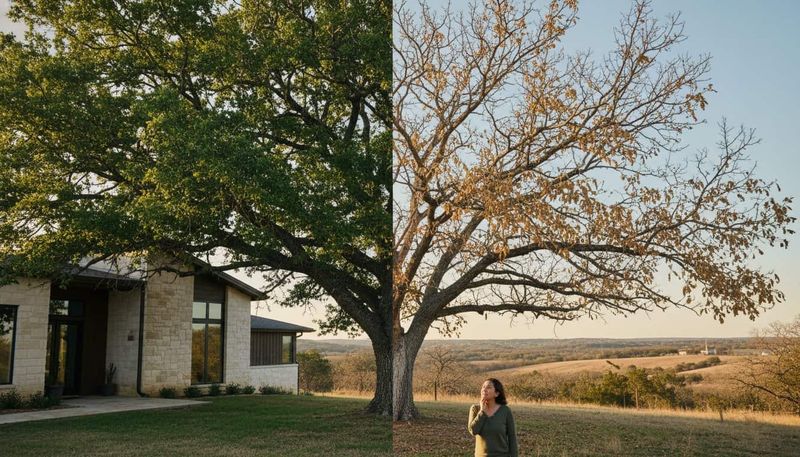
Once the oak-wilt picture is clear, there is a second, related concern worth addressing: the conditions that make Texas oaks vulnerable to opportunistic insects like the two-lined chestnut borer. Healthy trees are not easy targets. A borer moving into a vigorous, well-hydrated oak with intact bark faces a much harder job than one colonizing a tree already weakened by a difficult Texas summer.
Drought is the most common stressor that opens the door. During periods of triple-digit heat and limited rainfall, oaks under water stress pull resources away from their defenses. Morton Arboretum recommendations for managing two-lined chestnut borer emphasize reducing stress as the primary prevention strategy, including watering during hot, dry periods and avoiding soil compaction and drainage changes around the root zone. Construction activity near established oaks, whether from a new driveway, a fence installation, or a home addition, can compress soil and disrupt drainage in ways that weaken trees for years afterward.
USDA Forest Service research on trunk injury and fungal transport in Texas oaks shows that borers like Agrilus bilineatus can also create wounds that facilitate fungal entry, adding another layer to the stress-and-decline cycle. That research reinforces why keeping oaks structurally sound and properly watered matters beyond just borer prevention.
Infested wood should be removed from the area and disposed of properly to reduce the chance of beetles emerging and moving to nearby trees. Any decision to apply a pesticide requires a confirmed pest identification, a product with a label that covers that specific pest and tree type, and compliance with Texas and federal application requirements. Pesticide use without a confirmed diagnosis is not a safe shortcut.
Respond quickly without turning uncertainty into panic
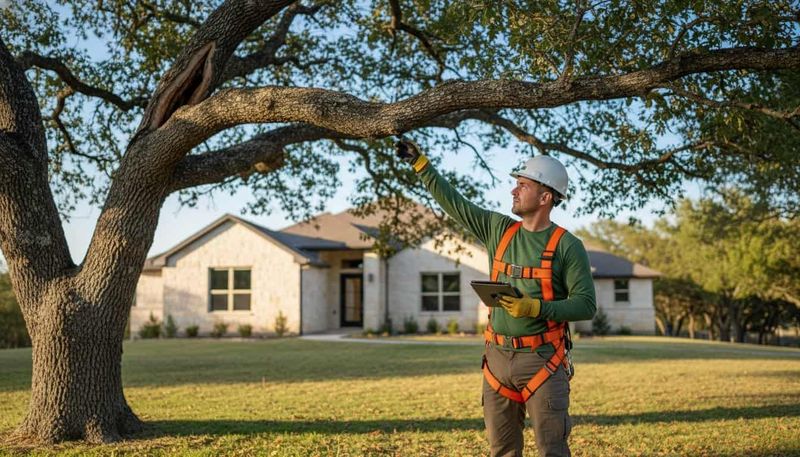
Seeing a beloved oak tree decline is stressful, and online headlines that blame a fast-moving invasive insect make that stress worse without giving homeowners anything accurate to act on. A calmer, more targeted approach protects trees far better than a panicked response to a misidentified threat.
Start with what you can control. Protect your oaks from preventable wounds, keep any suspect firewood on the property until you have professional guidance, and document what you are seeing with notes and photographs. If the decline looks rapid or is spreading to neighboring trees, that urgency is worth taking seriously, and it points directly toward getting a qualified local certified arborist out for an on-site look rather than toward a DIY treatment.
Beetles are part of the oak-wilt story in Texas, but they are carriers of a fungal pathogen, not the root cause, and the reviewed evidence does not support blaming a new invasive insect for statewide Texas oak losses. Texas A&M Forest Service guidance remains the most reliable starting point for understanding what is actually documented in your region. The trees worth worrying about most are the ones you can still protect, and protecting them starts with getting the diagnosis right.