
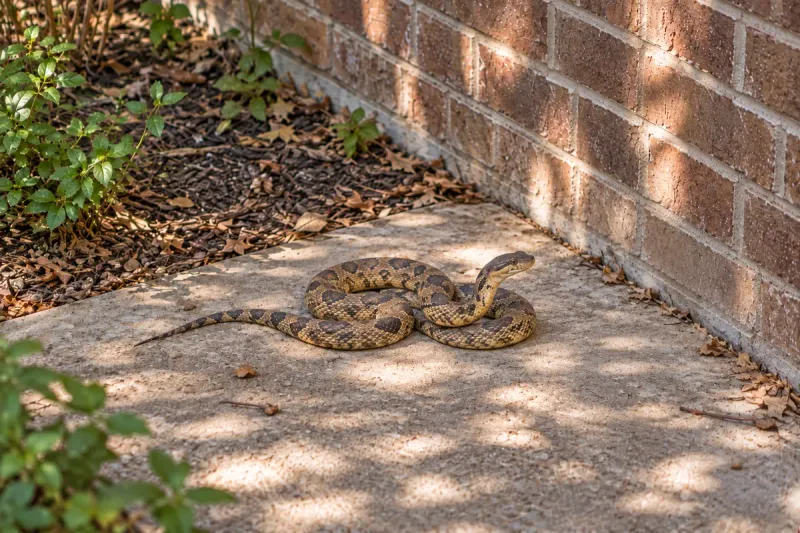
You pull back a tarp on the firewood stack on a cool Texas morning and spot a long, patterned snake. Many homeowners freeze, then wonder if the snake is a pest or a helper.
Ratsnakes do eat rodents, but that does not make them a plan for your garage. Here is what is known, what is not, and how to handle firewood and rodents safely.
Ratsnakes may eat rodents, but they cannot promise a rat-free garage
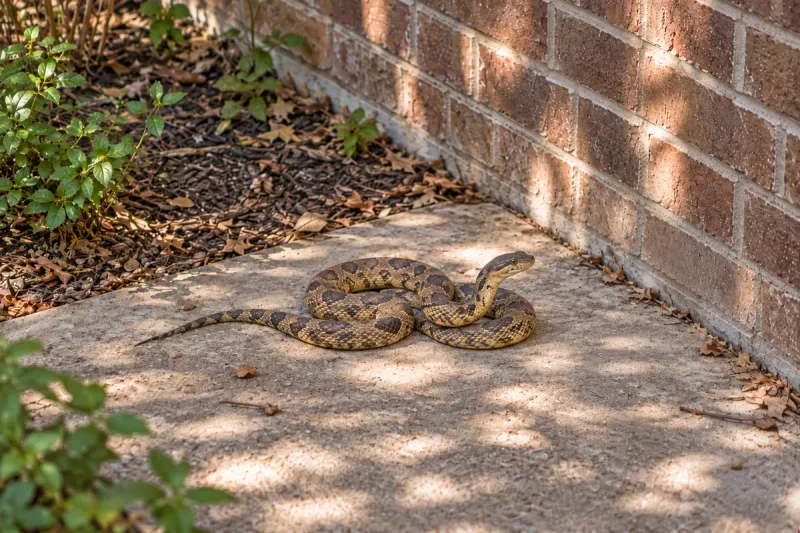
Ratsnakes earned their name honestly. According to the City of Sugar Land, Texas rat snakes eat mice, rats, and other small mammals, and they may also take birds or eggs.
They climb well and are sometimes found around outbuildings.
That makes a ratsnake a potential rodent predator. It does not make it a garage guard.
Eating a few rodents outdoors is an ecological benefit, but nothing in the sources we reviewed measures how much one snake changes the rodent numbers around a home.
Extension specialists are fairly blunt about predators in general. Alabama Cooperative Extension guidance says biological control is not reliable as the main way to handle rats and mice.
A University of Florida Extension podcast transcript makes a similar point about relying on predators.
So if you see a snake near your logs, you can appreciate that it may eat rodents. Just do not treat its presence as proof that your garage is safe, or as a substitute for rodent-proofing.
A snake outdoors says nothing about what is nesting behind your paint cans.
A winter sighting does not prove a snake is wintering in the woodpile
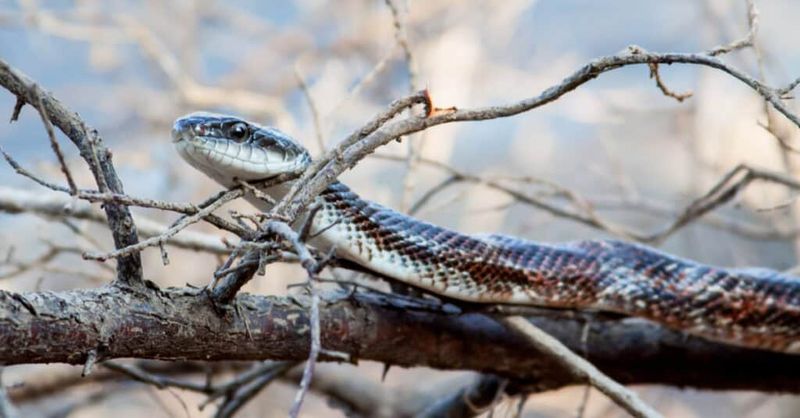
Stacked logs offer cover, so it is easy to picture a snake tucked in for the season. But seeing one in winter only tells you the snake was there that day.
It might be passing through, basking, or using the pile for a short time.
The general Texas Parks and Wildlife Snake FAQ says snakes normally hibernate in winter. That is a broad statement about snakes in general, and Central Texas ratsnakes tell a more specific story.
A Central Texas field study followed Great Plains ratsnakes at Fort Hood. The snakes it tracked were active year-round, without distinct hibernation periods or sites.
That finding applies to that species in that place, not to every snake people call a rat snake.
Other research points the same direction. A Queen’s University Biological Station project on ratsnake seasonal activity reports Texas ratsnakes active on warm winter days.
So a snake in your firewood on a mild January afternoon is best described as a winter sighting. Treat the pile as a place a snake may use or pass through, and do not assume it is sleeping there until spring.
Store the woodpile off the ground and away from the house

Where you stack firewood decides how many surprises you get. Texas Parks and Wildlife guidance in its venomous snake safety brochure suggests reducing shelter around the home and storing lumber or woodpiles at least 18 inches off the ground.
It also advises keeping woodpiles as far from the residence as possible.
A pile that sits flat on the soil makes tight, shaded gaps that rodents and snakes may find handy. Lifting it onto a rack or pallet frame opens the space underneath so you can see into it and sweep it clear.
Distance matters too. A stack by the back door puts cover right where you walk with an armload of logs.
Moving it to the far side of the yard means a snake that visits is farther from your doorway and your garage.
Clearing tall grass, loose boards, and clutter around the stack removes other hiding spots. Keep in mind this is guidance for lowering the odds, not a promise.
A raised, distant pile can still draw a visitor, so the handling habits in the next section still matter.
Handle firewood without reaching into unseen gaps
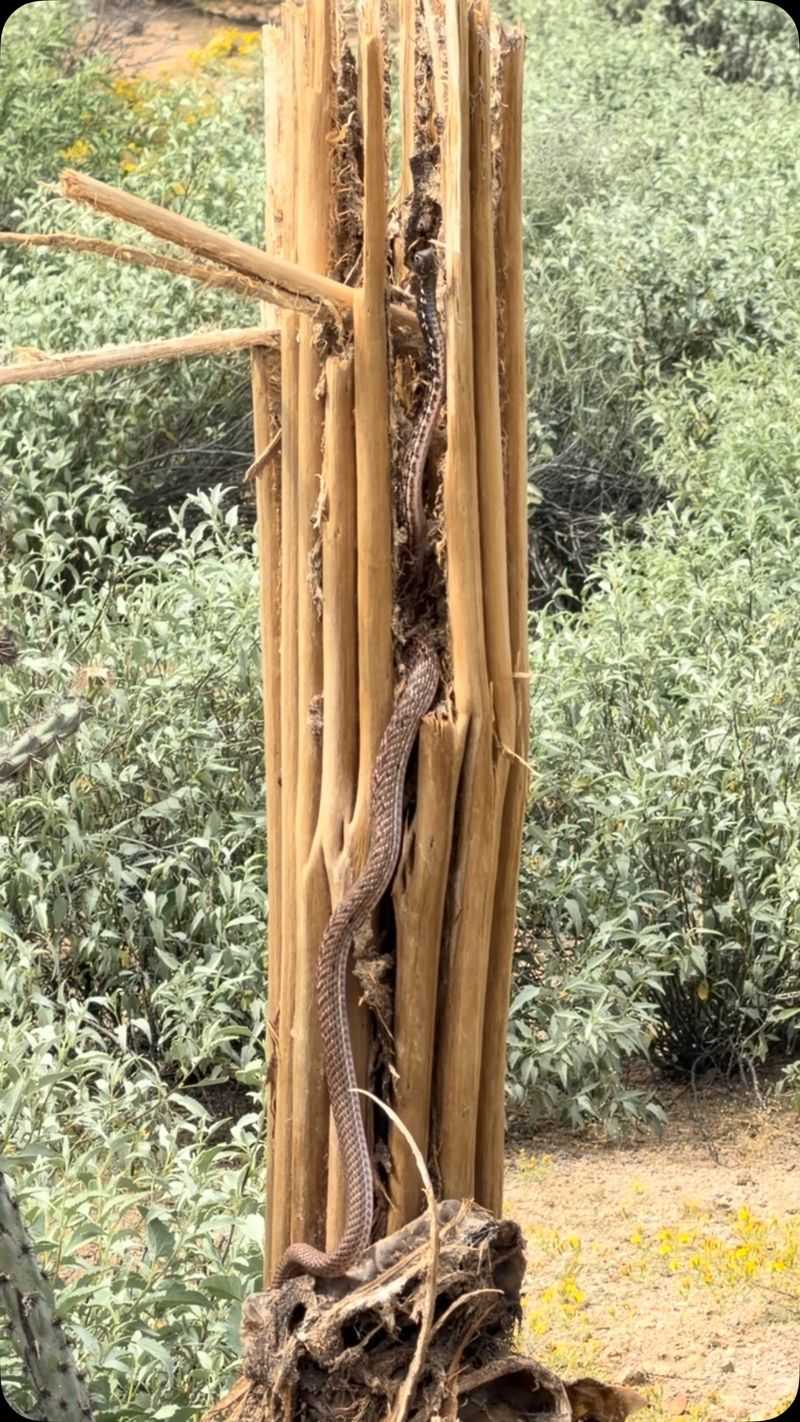
Build a quick routine and it becomes second nature. Look at the pile first, then reach only where you can see.
Never put a hand or foot into a gap you cannot see into.
Texas guidance recommends using a long stick or garden tool to check around logs before you pick them up. The Texas Parks and Wildlife brochure also suggests wearing boots and long pants in snake-prone areas, and a woodpile counts.
Take logs from the top and lift them from the side you can see. Skip the habit of grabbing the bottom log in a hurry.
If a snake shows up, stop and step back. Keep children and pets well away, and give the animal room to leave on its own.
Do not try to move it, and do not spend time guessing what it is.
The Texas Department of State Health Services snake guidance advises against handling snakes unless you are properly trained, and notes that even a dead snake may bite reflexively. Identification is hard, too.
Texas A&M AgriLife says no single feature reliably identifies every venomous Texas snake, so a casual label like rat snake is not a safe reason to touch one.
Seal the garage instead of relying on a snake
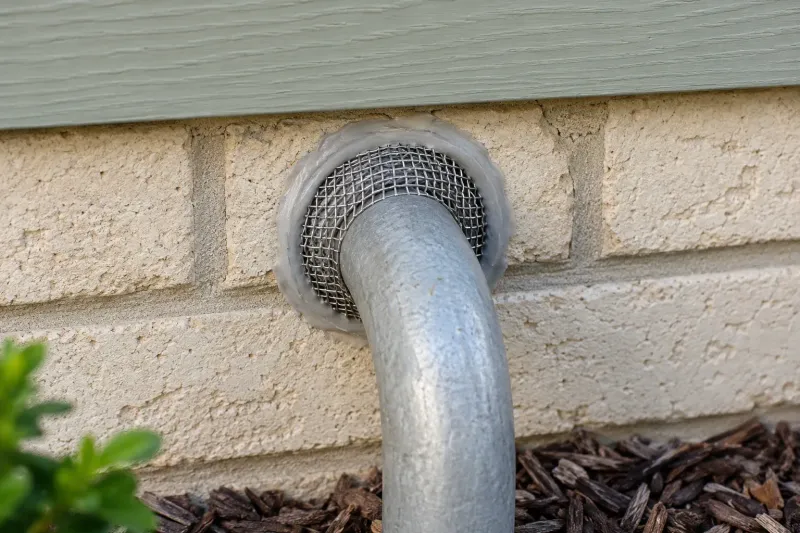
If rodents are the worry, the garage itself is where the work happens. Extension guidance focuses on keeping them out and removing what attracts them, not on bringing in predators.
Start with a slow walk around the garage looking for entry points. Alabama Cooperative Extension notes that rats can squeeze through gaps around half an inch, and mice through gaps around a quarter inch.
Check door bottoms, utility lines, vents, and wall corners.
Then seal what you find with sturdy materials. Worn door sweeps are a common weak spot.
Next, cut off food and nesting spots. Store pet food, birdseed, and grass seed in lidded containers.
Move cardboard boxes, loose paper, and fabric into sealed bins, and keep clutter off the floor so you can spot droppings early.
Regular cleaning helps you notice changes. A University of Florida Extension transcript discusses why relying on one quick fix, including predators, falls short.
Exclusion and sanitation decide whether rodents can get into the garage. A snake sunning on the woodpile does not change that either way.
Let an uncertain snake remain wild
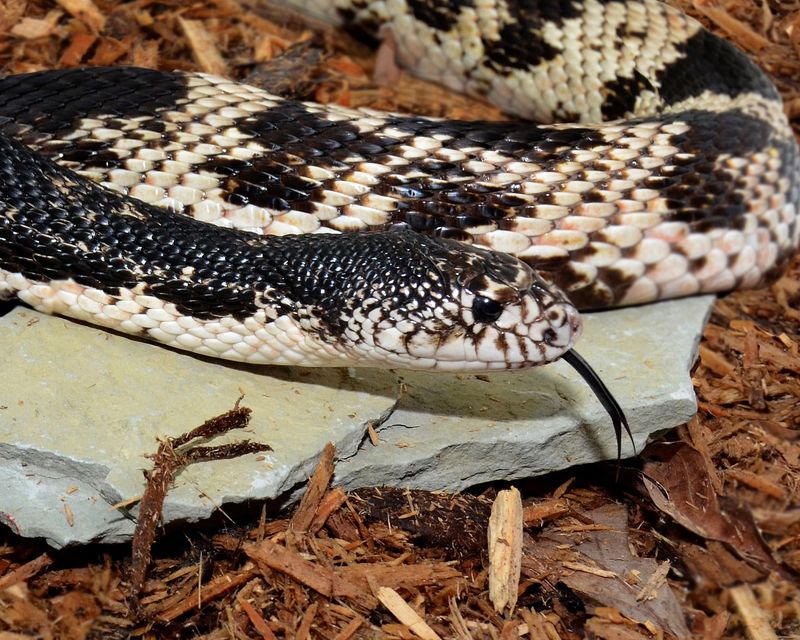
A ratsnake may eat rodents, as Sugar Land’s wildlife page describes, but extension guidance points to sealing and cleaning for garage rodents. Careful stacking and handling, as Texas Parks and Wildlife suggests, cut down on surprises.
When you meet a snake you cannot name, follow state health guidance: leave it alone and keep people and pets away.
Most snakes simply want to move along once the yard goes quiet.