
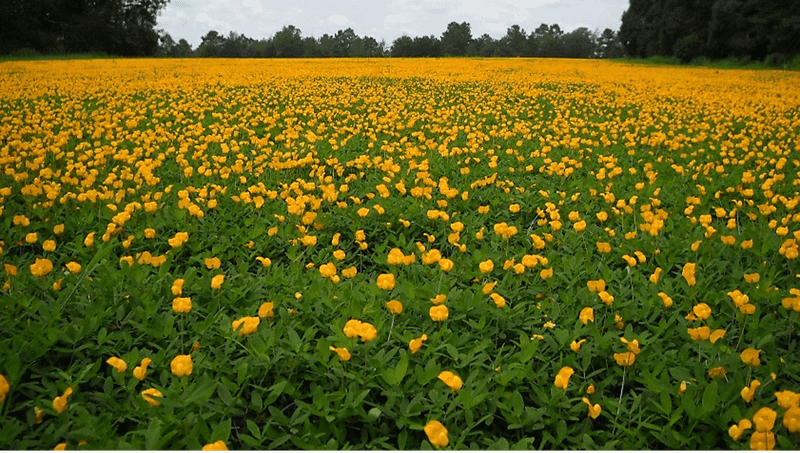
Few sights frustrate a Florida homeowner like a lawn turning crispy and tan when the rain stops and watering days get limited. Before you tear anything out, it helps to know what is really happening in the grass and what other choices exist.
One tough groundcover from UF/IFAS lists may suit some sunny yards, though it comes with real conditions. Here is how to tell whether it fits your yard and what to check before you buy a single plant.
A brown lawn may be dormant, not dead
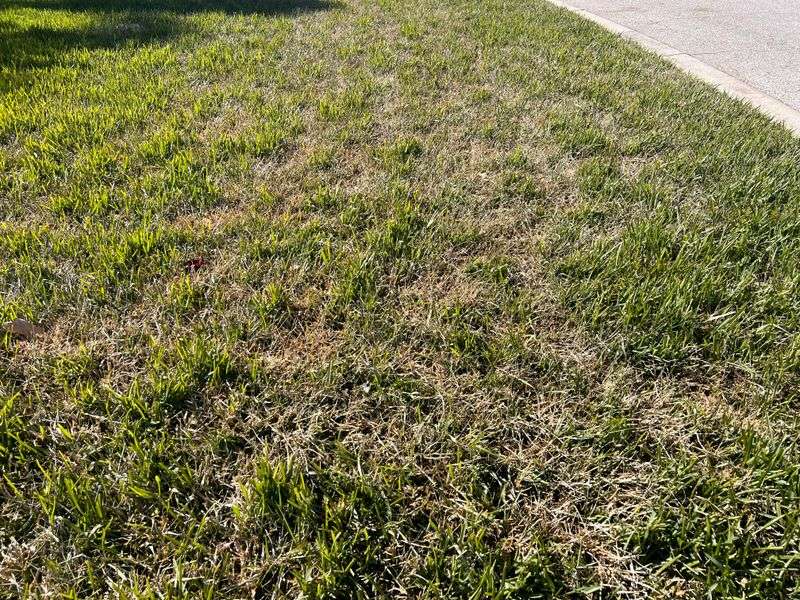
Picture a Florida lawn in the middle of a dry spell: tan blades, crunchy patches, and a neighbor or two with the same problem. It is easy to blame watering limits and decide the grass is finished.
But brown does not always mean dead.
According to UF/IFAS irrigation guidance, turfgrass can go into drought-induced dormancy. The leaves turn brown to save the plant’s energy, and the grass can recover when soil moisture returns.
Drought is only one reason a lawn browns, too. Pests, disease, compacted or sandy soil, and mowing or fertilizer mistakes can cause similar color changes.
A simple check helps. Tug a handful of blades near the crown, and look for green tissue at the base.
If the grass greens up after a good soaking or a stretch of rain, it was likely resting, not gone.
That is why a lawn alternative is worth considering only after you have assessed your yard honestly. A different groundcover will not fix every brown patch, and it will not suit every spot.
For the right sunny, lightly used area, though, it can be a way to cut back on turf that keeps struggling.
The groundcover is rhizoma perennial peanut
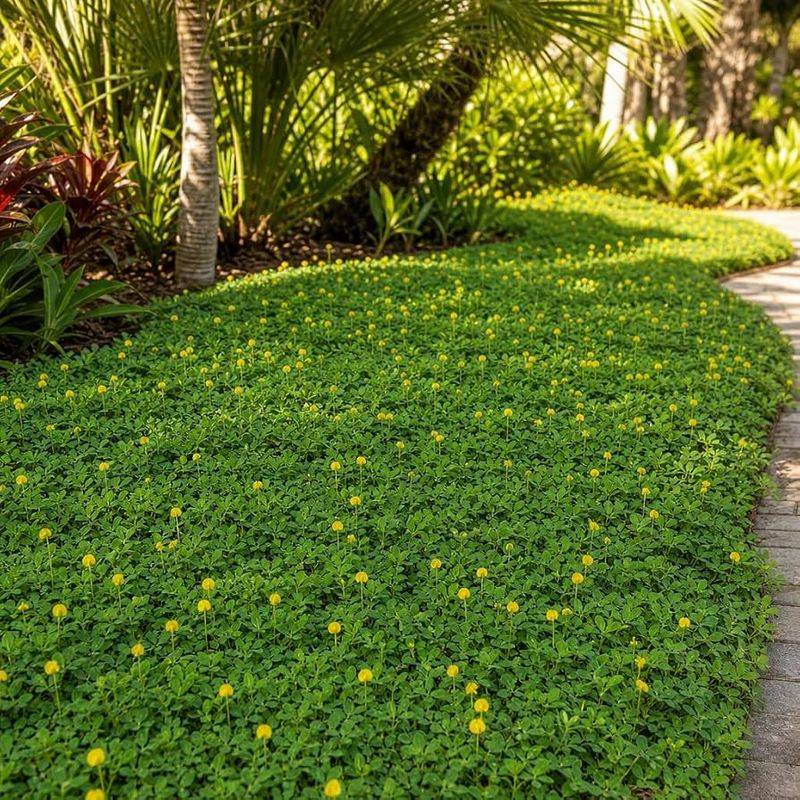
The plant is rhizoma perennial peanut, Arachis glabrata. UF/IFAS Gardening Solutions describes it as drought-resistant, a good fit for sunny sites, and usable as a lawn alternative where foot traffic is low.
It produces small yellow flowers above low, rounded leaflets and spreads by underground stems called rhizomes.
Florida-Friendly does not mean Florida-native. This plant is nonnative, and the widely planted types trace back to tropical and subtropical South America, as described in a UF/IFAS publication on its use as a living mulch.
It earns its place in Florida landscapes through performance and low input needs, not native status.
Be careful with the name at the garden center. Pintoi peanut is sold under a similar common name, but UF/IFAS says it is not drought-tolerant.
Ask for rhizoma perennial peanut and check the botanical name on the tag before you pay.
The drought advantage has limits
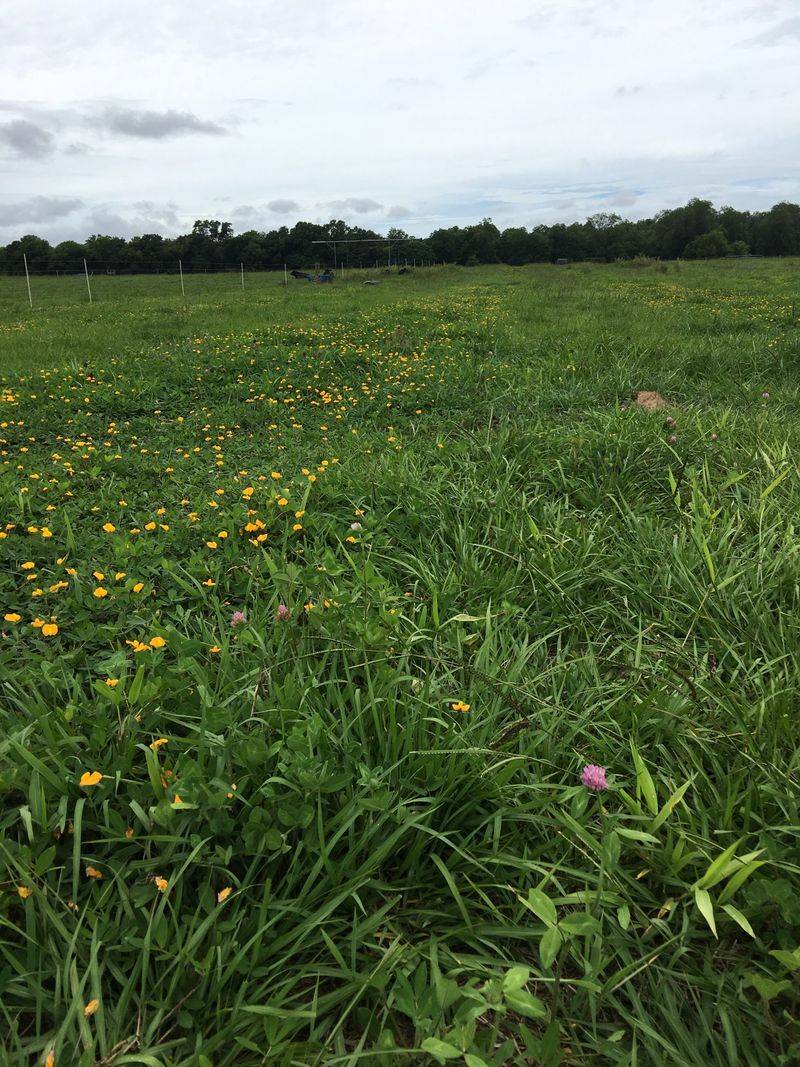
A 2026 field study from UF’s West Florida Research and Education Center gives the drought reputation some backing. The study of warm-season legumes mixed into turfgrass found that rhizomatous perennial peanut and sunshine mimosa were more drought-tolerant and less dependent on irrigation than turfgrass monocultures.
Now the fine print. The legumes were interplanted with turf at one northwest Florida research site.
The test did not look at a standalone perennial peanut lawn, every cultivar, or how plantings hold up under a local watering schedule. So treat it as a promising sign, not a guarantee for a yard in Miami or Jacksonville.
UF/IFAS guidance on the plant points the same direction: drought-tolerant once established. That phrase matters.
Established plants need less water than turf, but they do not need none, and a dry spell can still thin the foliage or dull the color.
In practice, plan on lower irrigation, not zero irrigation. If your yard has sandy, fast-draining soil, expect even tolerant plants to show some stress in a long dry stretch.
Sun and low foot traffic suit it best
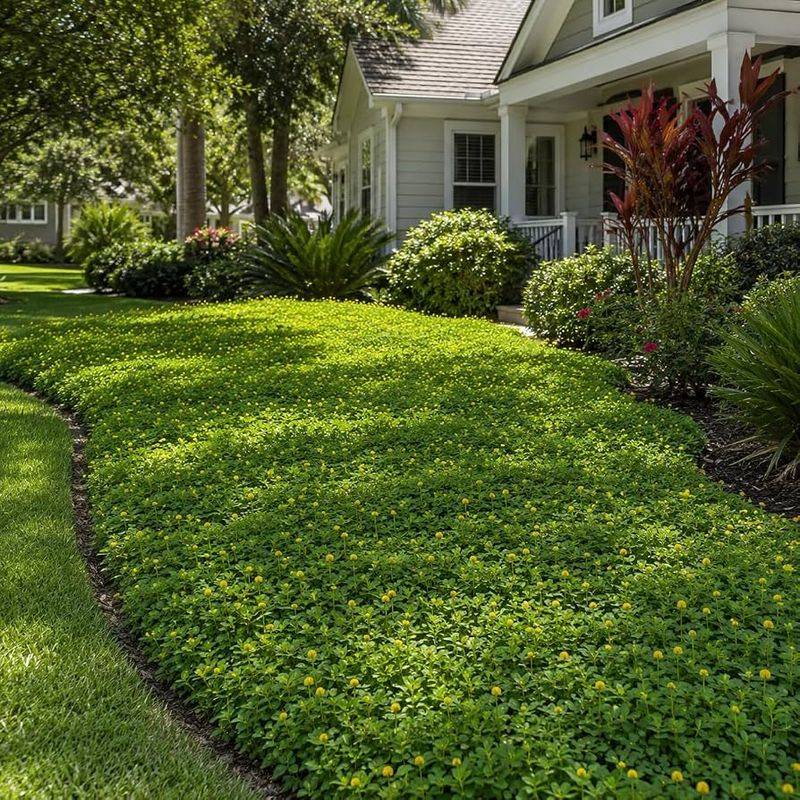
Walk your yard at midday and note where the sun lands. UF/IFAS says perennial peanut does best in full sun, while partial shade can work.
A spot that is shaded most of the day is probably better served by another groundcover.
Foot traffic is the second test. This plant does not handle heavy use well, so it is a poor choice for a play area, a dog run, or a shortcut to the mailbox.
Where people cross regularly, set stepping stones or a path through the planting.
Color matters too. It stays evergreen in frost-free parts of Florida, but frost can cause leaf drop in colder areas, such as North Florida.
If you want a deep green lawn look all winter, that is a real limit.
Finally, think about the edges. Its vigorous rhizomes can wander, so edging along beds, driveways, and walkways helps keep the planting where you want it.
Establishment still takes attention
Newly planted perennial peanut is not a set-and-forget project. UF/IFAS advises regular irrigation while plants establish, and it suggests spacing them 12 to 18 inches apart.
Closer spacing can fill in faster but means buying more plants.
Patience is part of the deal. Another UF/IFAS publication notes that establishment can be slow, and competing weeds may need control while the groundcover fills in.
Expect to pull or spot-treat weeds through the first season or longer, before the planting knits together.
Here is the difference to keep in mind. The lower water needs people talk about apply to established plants.
A fresh planting in sandy Florida soil can need steady watering for a while, plus weeding and a close eye on bare gaps.
If you can commit that early effort, the later payoff may be less irrigation than turf demands. If you cannot, the planting may stall or struggle, and weeds will take the open ground.
Check local watering rules before planting
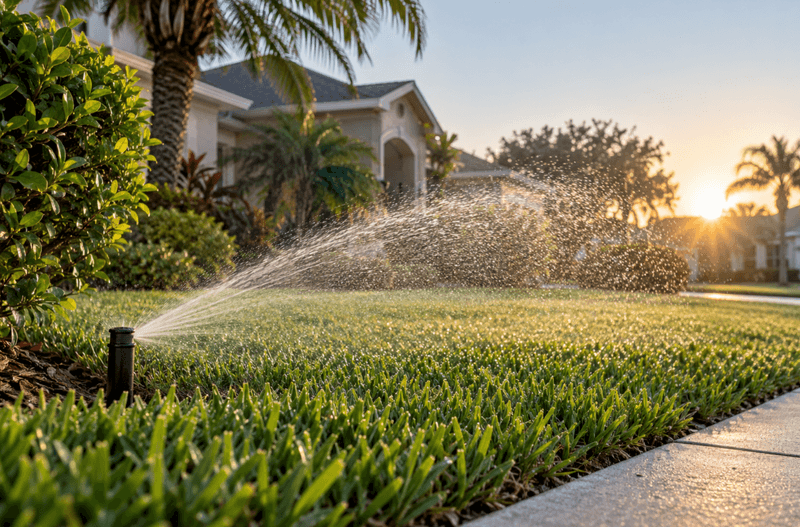
Watering rules differ across Florida. Each water management district and many cities or counties set their own days, times, and limits, so a neighbor two counties over may live under different rules than you.
That matters because new plants need water. UF/IFAS advises checking local rules and notes that some restrictions may make exceptions for newly installed landscapes.
Notice the word may. An exception is not something to assume.
Before buying a single flat of plants, call your utility or look up your local ordinance. Ask whether new landscape watering is allowed, how many days it lasts, and whether any permit or notice is needed.
Write down the answer and the dates.
Then match your planting time to that window. If you can legally water through establishment, you can plan with confidence.
If not, wait or choose another approach rather than watching a new planting dry out.
Choose it for the right part of the yard
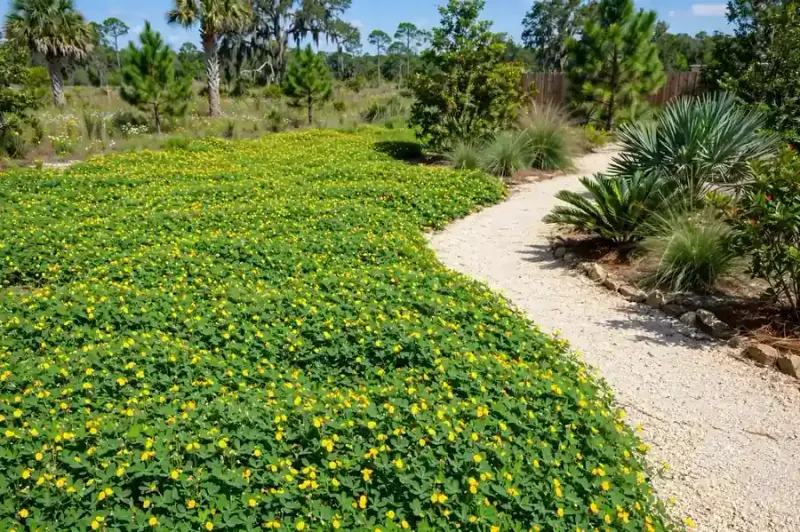
Here is a simple rule. Perennial peanut is worth considering for a sunny, low-traffic area if you can water it through establishment and accept its frost-related color changes and nonnative status.
Think front slopes, side yards, or open beds rather than the whole property.
It is a poor match for a heavily used lawn, and a poor bet where local watering rules do not allow establishment irrigation. For general fit questions, UF/IFAS plant guidance is a good place to start.
Treat it as a possible lower-irrigation tool, not a green carpet for every yard. Match the plant to the spot, and the spot will do half the work.