
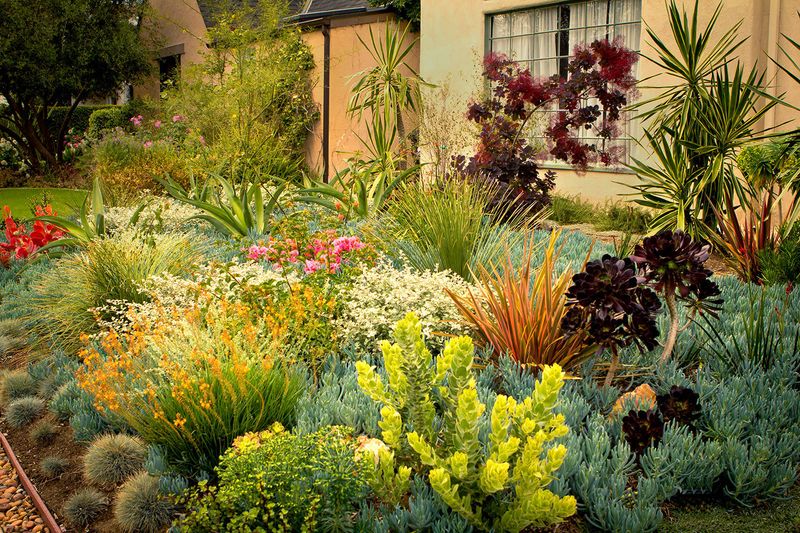
Water bills in Texas keep climbing, and summer restrictions make it harder every year to keep a thirsty St. Augustine lawn alive. That is why more homeowners across the state are quietly swapping out their grass for tough native plants that barely need a drink. These plants shrug off triple-digit heat, feed local pollinators, and still look great when the sprinklers stay off. Here are seven low-water favorites Texans are planting instead.
1. Buffalograss
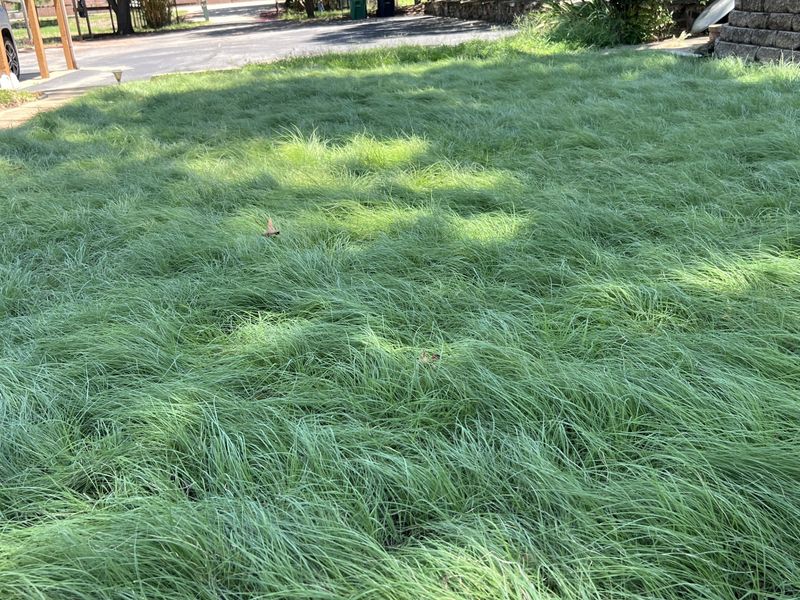
Long before subdivisions and sprinkler systems covered the state, buffalograss carpeted the Texas plains and fed roaming herds. That deep prairie history is exactly why it thrives today with almost no help from you.
Homeowners love it because it forms a soft, blue-green turf that mows like a regular lawn but drinks a fraction of the water. Once its roots settle in, it can coast through weeks of dry weather that would leave St. Augustine crispy and brown.
It stays low and fine-textured, so you can walk on it barefoot, let the kids play, and skip the weekly watering guilt. Many Texans mow it only a handful of times all season, or let it grow into a shaggy meadow look.
Fun fact: buffalograss is one of the few grasses actually native to North America’s central plains, which is why it handles our clay soils and brutal July sun so well. For anyone wanting a real lawn without the water bill, it is the easiest first swap.
2. Texas Sage (Cenizo)
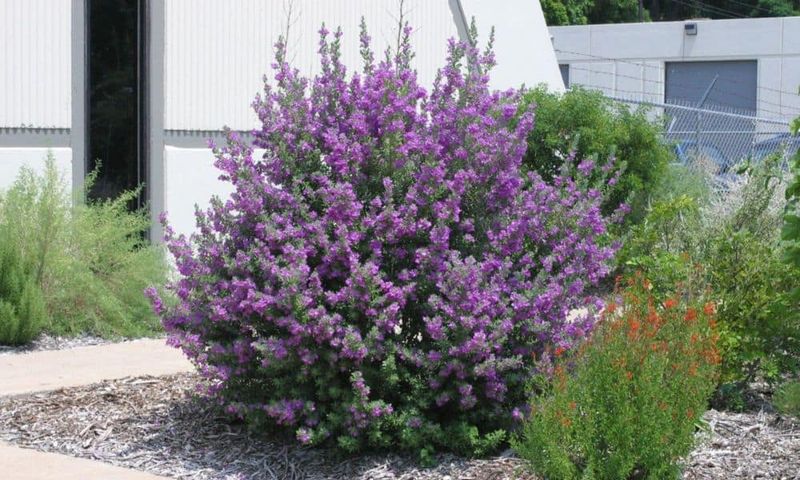
Drive through West Texas after a summer rain and you will see hillsides suddenly bloom purple almost overnight. That show comes from Texas sage, a silvery shrub that seems to celebrate humidity by covering itself in flowers.
Also called cenizo, this plant is built for punishment. It laughs at reflected heat from driveways and brick walls, tolerates poor rocky soil, and asks for water only in the harshest stretches once established.
Homeowners plant it as a low-maintenance hedge or a standalone accent, and pollinators treat the blooms like a buffet. The soft gray foliage also breaks up the endless green of a traditional yard, giving beds a cooler, calmer feel during the worst of the heat.
Because it needs so little fuss, cenizo has become a go-to for folks tearing out grass along fence lines and property edges where the hose rarely reaches. Give it full sun and good drainage, then mostly leave it alone and enjoy the surprise purple flushes all summer.
3. Blackfoot Daisy
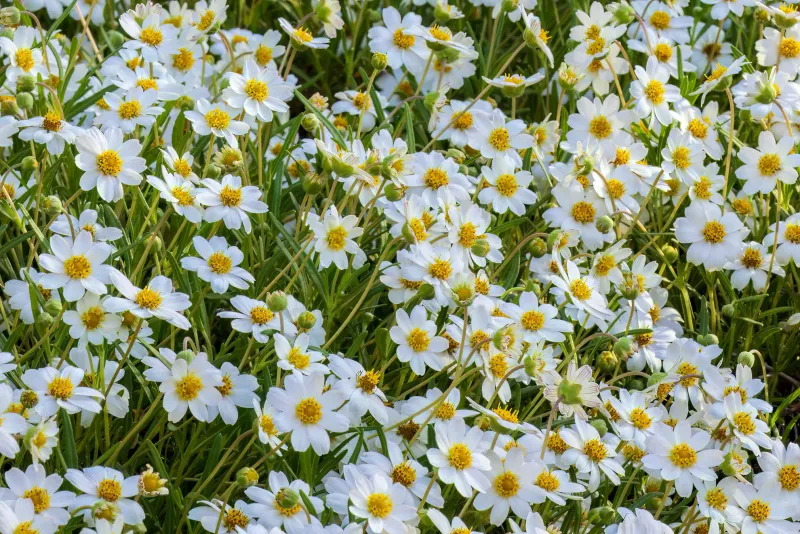
Some plants beg for attention. The blackfoot daisy just quietly covers itself in cheerful white flowers from spring until frost while asking for practically nothing in return.
Forming a tidy mound about a foot tall, it slips perfectly into the spots where St. Augustine always struggled anyway – hot borders, rock gardens, and the sun-baked strip along the sidewalk. Its roots reach deep, so it can go long stretches between waterings without wilting.
Bees and small native butterflies adore the honey-scented blooms, turning what used to be dull turf into a busy little pollinator stop. Because it stays compact, it plays nicely with taller natives and never sprawls out of bounds.
Texans replacing patches of lawn often scatter several of these across a bed to keep color going through the hottest months. Trim it back lightly if it gets leggy, and it rewards you with a fresh flush of daisies almost immediately.
4. Damianita
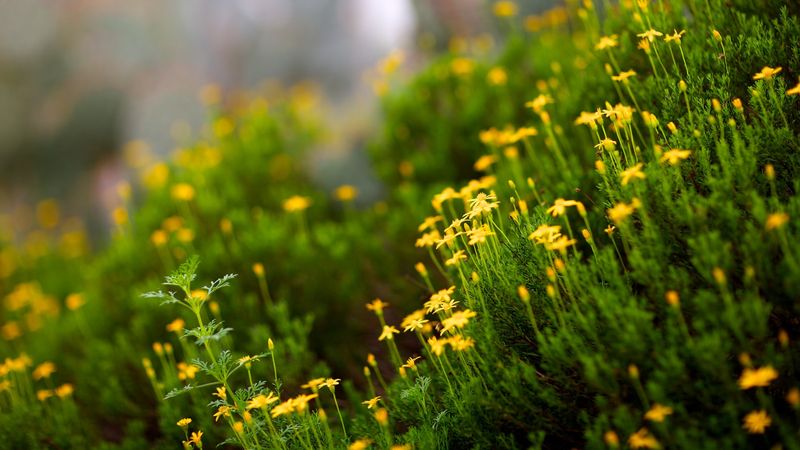
Picture a rounded cushion of dark green needles that erupts into a blanket of golden-yellow daisies every spring. Damianita delivers that punch of color while surviving on less water than almost anything else you can plant.
Native to the rocky slopes of the Chihuahuan Desert region, it actually prefers lean, gravelly soil and full, blazing sun. Rich soil and overwatering are the fastest ways to kill it, which makes it a dream for anyone tired of babying a lawn.
The fine, aromatic foliage stays green year-round, so beds never look bare, and deer tend to leave it alone thanks to its strong scent. That deer resistance alone has won over Hill Country homeowners fighting a losing battle with hungry herds.
Space a few together and you get a low, evergreen groundcover that lights up gold when it blooms. For steep spots and hot rock gardens where grass never belonged in the first place, damianita fills the gap beautifully.
5. Gulf Coast Muhly Grass
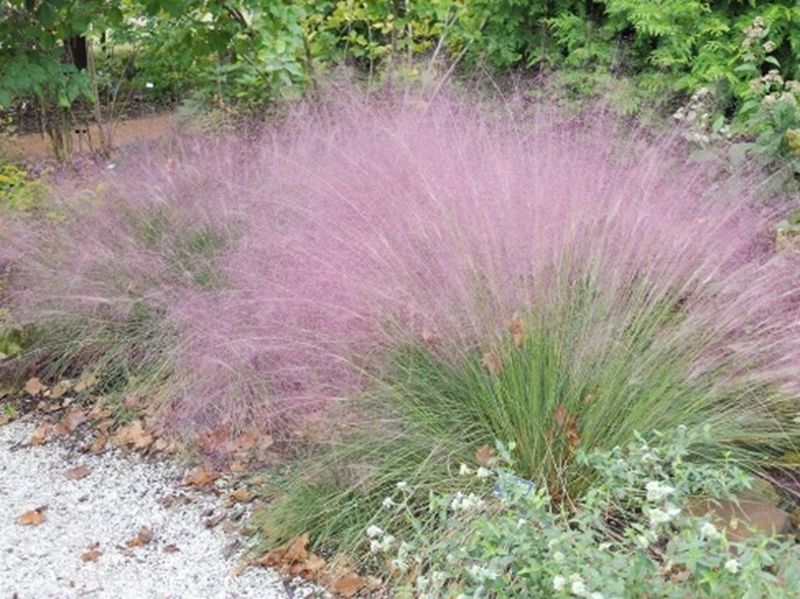
Every fall, this ornamental grass throws up a cloud of pink-purple plumes so airy it looks like cotton candy caught in the breeze. Gulf Coast muhly turns an ordinary yard into something people slow down to photograph.
Beyond the drama, it is genuinely tough. Adapted to sandy coastal soils and salty air, it handles Gulf Coast humidity, storm winds, and drought once its roots take hold, making it a smart pick for anyone dealing with hurricane-season weather.
Through spring and summer it stays a neat green fountain, then explodes into its famous pink haze right when most gardens start fading. A single cutback in late winter is about all the maintenance it demands all year.
Homeowners often plant muhly in loose drifts where a boring lawn used to sit, letting the plumes catch the low autumn light. It proves a low-water yard can be every bit as showy as a manicured green one, just without the constant watering.
6. Frogfruit
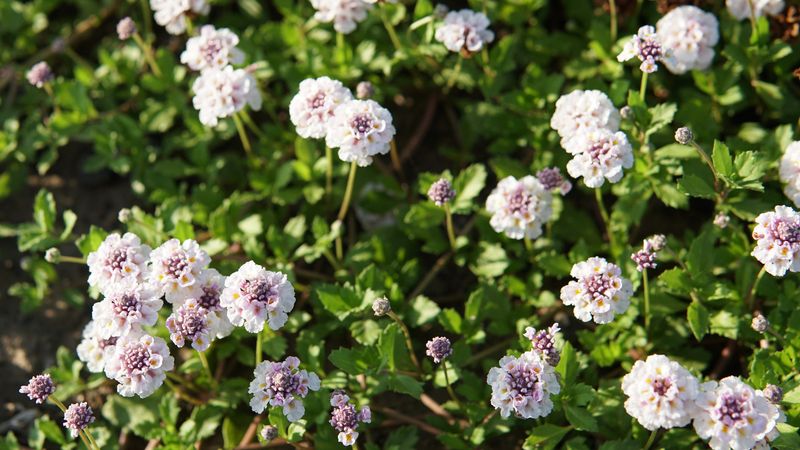
Meet the quiet groundcover that spreads flat across the ground and takes light foot traffic in stride, all while barely sipping water. Frogfruit has become a favorite lawn alternative for folks who still want something green underfoot.
It hugs the soil at just a few inches tall, sending out runners that knit together into a dense mat and slowly crowd out weeds. Tiny white-and-purple blooms pop up all season, drawing in small butterflies and beneficial bugs that most turf never supports.
Unlike fussier natives, frogfruit tolerates a wider range of conditions, from full sun to part shade and from dry spells to the occasional soggy patch after a Gulf storm. That flexibility makes it useful in exactly the tricky spots where St. Augustine tends to thin out and die.
Mow it or leave it – either way it keeps a low, tidy carpet with almost no supplemental water. For a walkable, pollinator-friendly ground layer, it is one of the most underrated swaps in the state.
7. Turk’s Cap
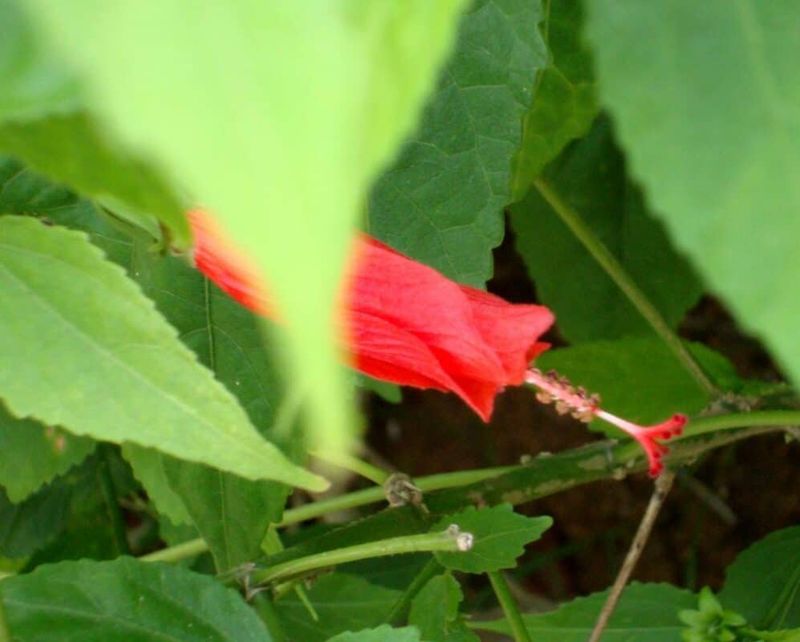
Bright red blooms that never quite open, curled up like tiny turbans, give this shade-loving native its unusual name and its charm. Turk’s cap solves a problem that stumps a lot of Texans: what to plant where grass fails under trees.
Happiest in dappled shade or morning sun, it thrives in the shady corners where St. Augustine grows thin and struggles anyway. Once settled, it powers through summer heat and dry stretches while pumping out flowers from late spring into fall.
Hummingbirds and butterflies work the red blooms constantly, so a single patch can turn a dead shady spot into the liveliest corner of the yard. It dies back in winter, then bounces up bigger the following spring with almost no attention from you.
Because it fills space fast and needs little water, homeowners use it to blanket the base of oaks and pecans where nothing else cooperated. Add in edible red fruit that wildlife devours, and you have a shade fix that earns its keep all season.