
You lift a handful of mulch while weeding, and a small, quick lizard darts away with a flash of orange or red near its head. In Florida, that could be a skink, but it could also be something else.
Skinks do eat some bugs gardeners dislike, though that does not make them a pest-control plan. Here is how to size up what you saw and what to do about it.
An orange head is a clue, not an ID
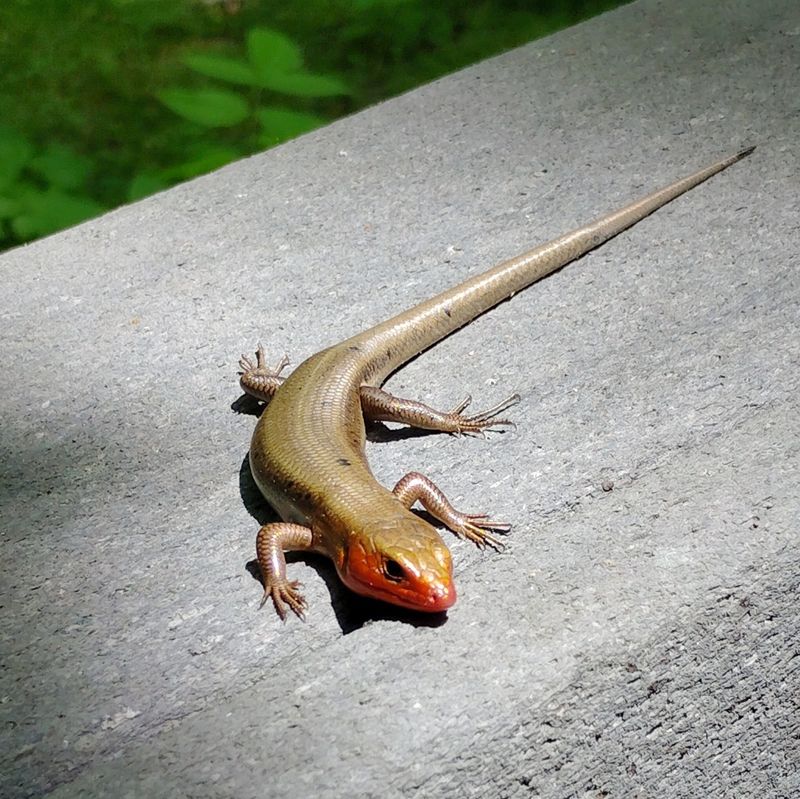
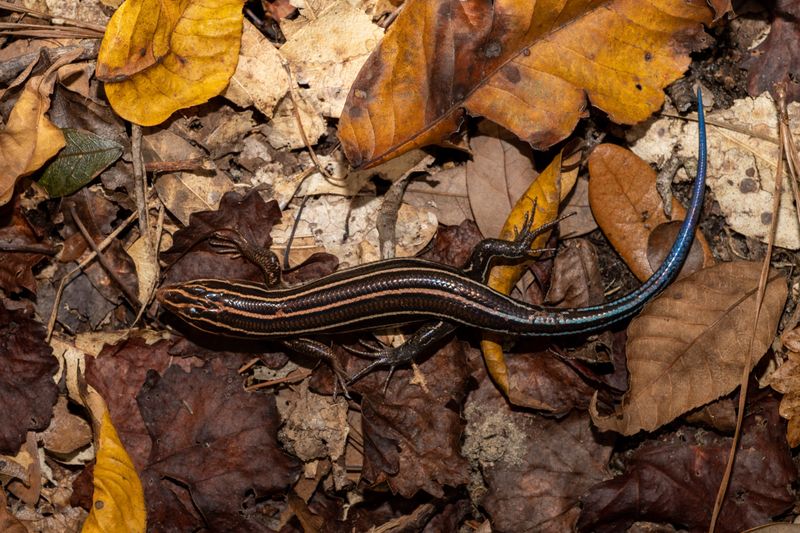
A reddish or orange head can fit an adult southeastern five-lined skink, but it cannot settle the question by itself. Florida State Parks describes young five-lined skinks as having five lengthwise stripes and a blue tail.
Adults may have a reddish-brown head and stripes that are less distinct.
That age difference matters when you are trying to match what you saw. A striped lizard with a bright blue tail points toward a young five-lined skink.
A plainer, larger lizard with a rusty head could be an adult of the same species, but it could be something else, too.
Color can also send you in the wrong direction. UF/IFAS Extension in Sarasota County notes that brown anoles, a nonnative lizard, can also have orange heads.
Florida also has similar skinks, and telling them apart can be tricky even for people who look closely.
So treat a quick glimpse as a tentative guess. If the lizard holds still, a few details help: Were there stripes?
Was the tail blue, brown, or gray? Did the body look smooth and shiny?
A clear photo taken from a respectful distance will tell you far more than a memory of a flash of orange.
Writing down the location and what you noticed gives you something to compare against a field guide later. Until then, calling it a possible skink is the honest answer, and that is perfectly fine for a garden visitor.
The little brown skink is a different species
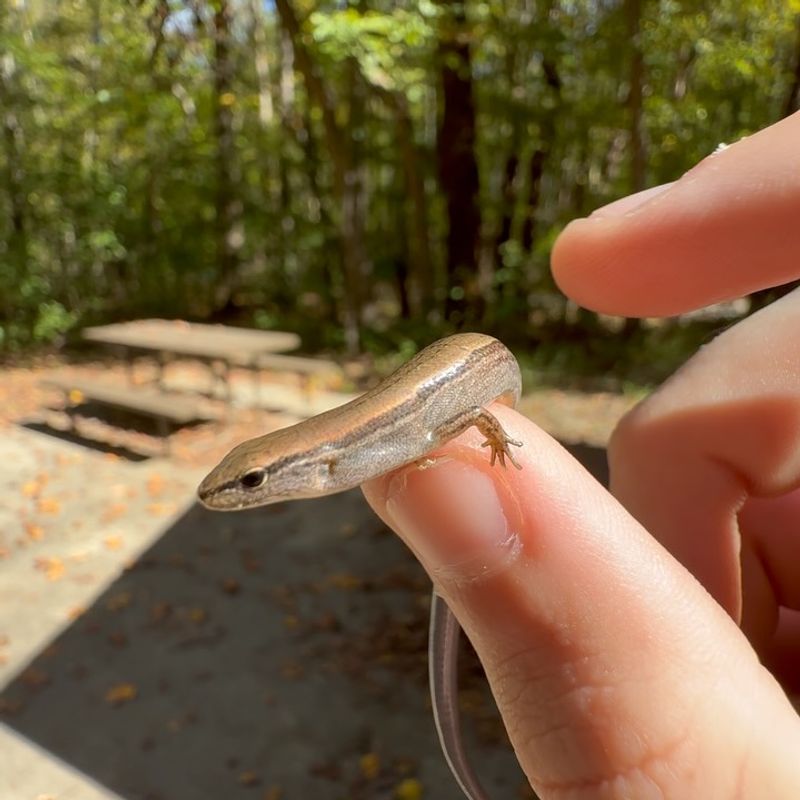
Sorting out skinks gets easier once you know that two names are not interchangeable. The little brown skink, also called the ground skink, is its own species, separate from the southeastern five-lined skink.
Gardeners may come across either one, and neither is the only skink a Florida yard might host.
According to the Oklahoma Department of Wildlife Conservation, the little brown skink is small and brown with dark stripes along its sides. Think of a slim, glossy brown lizard that looks plain next to a striped youngster.
One of the best clues is the tail. Young five-lined skinks typically have a conspicuous blue tail, as Florida State Parks notes.
Young little brown skinks resemble the adults instead, so a brown baby with no blue tail fits the little brown skink better.
A Department of Defense fact sheet shows the species occurs in both Florida and Texas. This guide stays focused on Florida, so the identification tips here should not be stretched to other states.
Even with these clues, a fast lizard in shadowy mulch is hard to name. Size, tail color, and side stripes are worth noticing, but a tentative label is still the safest one.
Mulch can offer a skink cover
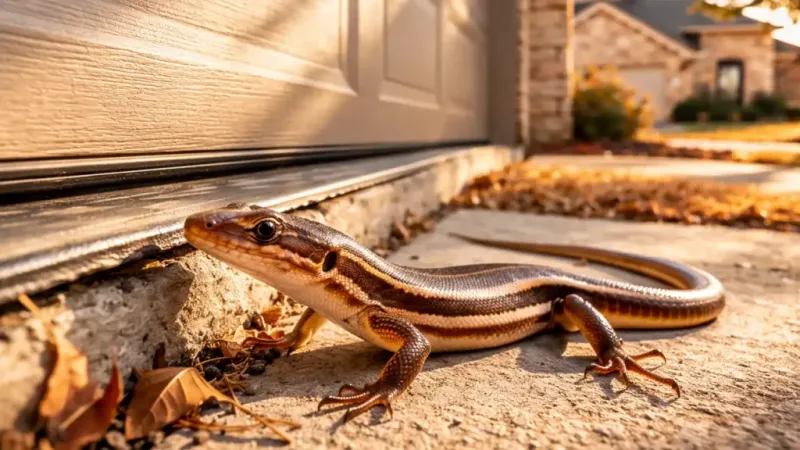
Ask why lizards turn up in mulch beds, and the simplest answer is shelter. UF/IFAS Wakulla County Extension points out that skinks may be found under cover such as leaf litter, logs, and decaying wood.
A layer of mulch has a lot in common with those spots.
That makes mulch a plausible hiding place. Cover can offer a place to tuck in, move around out of sight, and stay out of direct Florida sun.
NatureServe’s species profile is another place to read about the habitats the southeastern five-lined skink uses.
Finding a skink under mulch does not tell you why it is there. It could be resting, sheltering, or simply passing through.
Assuming it is hunting your pests would be a guess, not something you saw.
What it does explain is why you meet these lizards while weeding. Pulling back mulch, moving a board, or clearing leaves opens up their hiding spots, and the lizard bolts.
That surprise is part of tending a bed with a bit of natural cover in it.
What a skink may eat
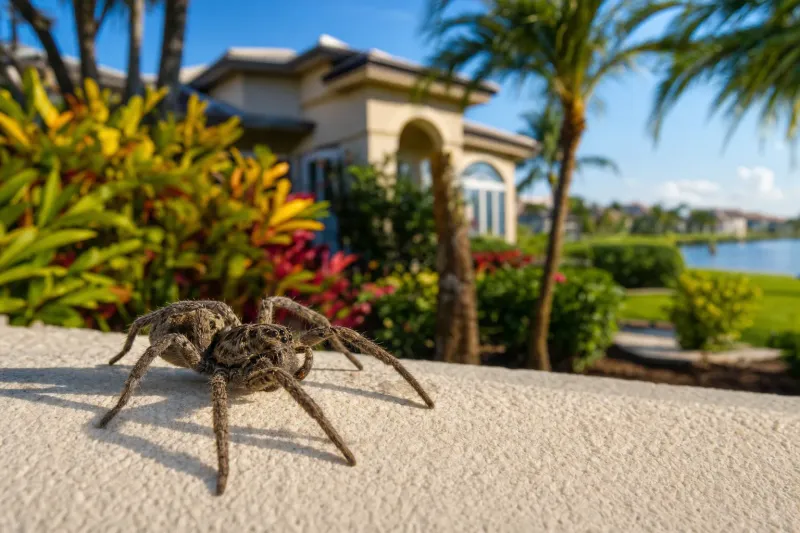
Skinks are not picky about invertebrates. UF/IFAS says the southeastern five-lined skink eats insects, spiders, and other invertebrates, and that its prey includes roaches.
Florida State Parks describes a similarly varied menu. Some of those animals are ones gardeners dislike.
Others, like spiders, are creatures many gardeners are glad to have around.
So the fair statement is a modest one: skinks may eat some insects people consider pests. That is a list of what they can eat, not a measurement of what happens in a yard.
Nothing here shows that backyard skinks keep pest numbers down or protect plants. They are not a replacement for the usual tools, such as checking plants regularly, fixing watering problems, or removing damaged leaves.
You also cannot tell what one lizard is eating from a glimpse in the mulch. Unless you watch it catch something, any claim about its meal is a guess.
A skink in the bed is best seen as a small bonus for a garden’s wildlife, not as part of a pest-control schedule.
Leave the skink and its shelter undisturbed
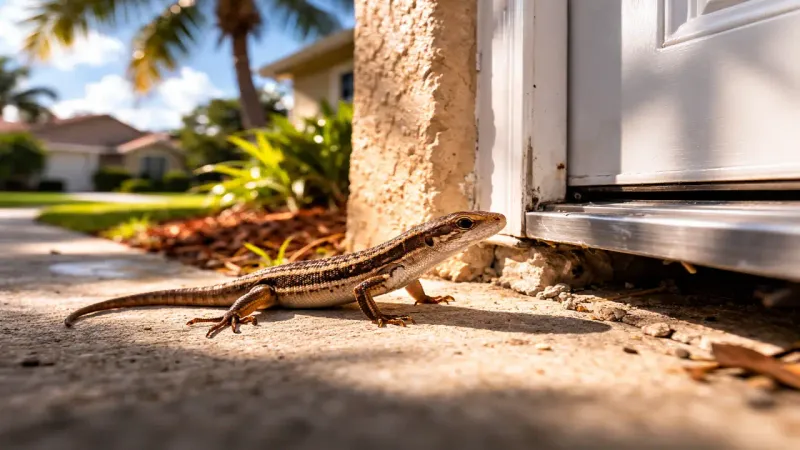
The easiest response is also the kindest: watch from a distance and let the lizard go on its way. Skip lifting boards, raking aside leaf piles, or trying to scoop it up.
Leaving its cover in place means the animal keeps its shelter.
Grabbing a skink can backfire. UF/IFAS notes that skinks can drop their tails when restrained.
The tail is not venomous or a stinger, but losing it is still a cost to the lizard, so catching or keeping a wild skink is not a good idea.
Cats are a bigger risk than gardeners usually realize. Florida State Parks identifies housecats as a major threat to native lizards.
Keeping pet cats indoors helps the wildlife in your beds.
If a lizard does end up in someone’s hands, wash up afterward. CDC guidance says reptiles can carry Salmonella even when they look healthy, and that children under five should not handle reptiles.
For kids, turn the sighting into a look-but-don’t-touch lesson. A phone photo from a few feet away works nicely.
A possible garden helper, not a pest-control plan
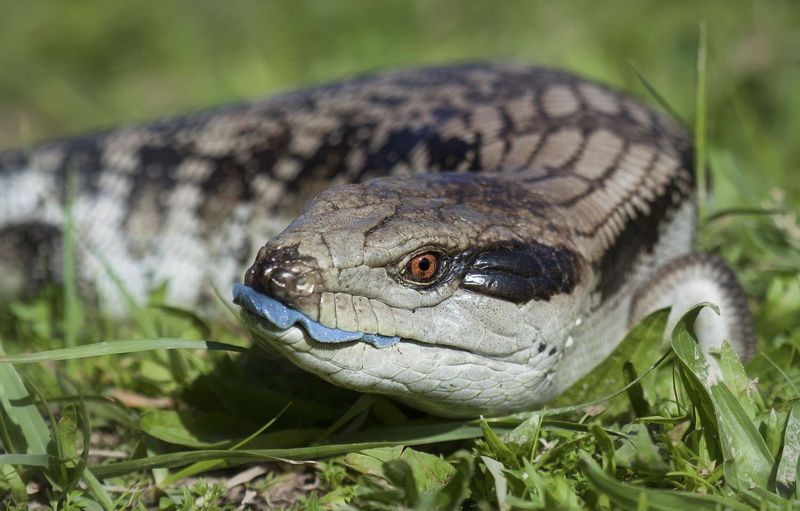
So, back to that orange-headed flash under the mulch. It could be a skink, as UF/IFAS Sarasota shows, but a quick look will not prove it.
Skinks may also eat some invertebrates gardeners dislike, as UF/IFAS Wakulla describes, though that is no promise of pest control.
If you think you saw a skink, leave it and its hiding place alone.
A garden helper is often just a neighbor you never quite meet.