
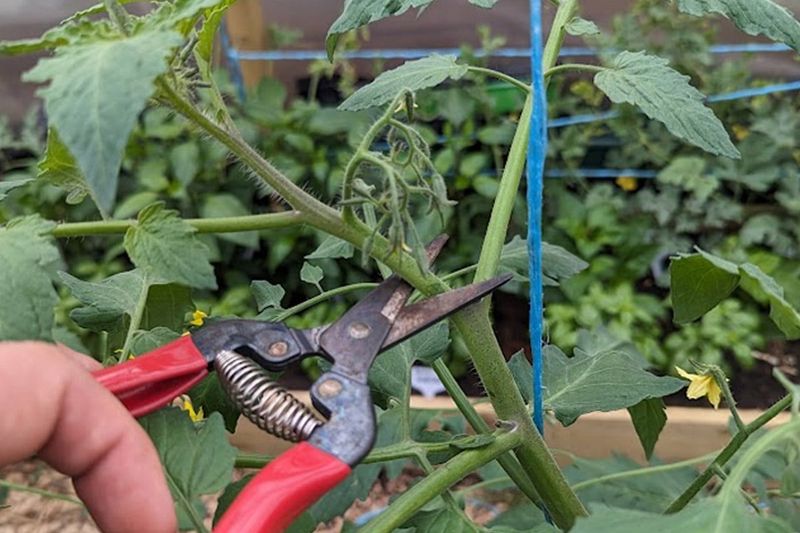
If your tomato plants have turned into towering, tangled giants with more leaves than fruit, they might be telling you something. Topping simply means snipping off the growing tip at the top of the plant, and it can push your tomatoes to ripen instead of climbing forever. It sounds scary to cut a healthy plant, but done at the right moment, it helps you get more red tomatoes before the season ends. Here are five solid reasons to grab your shears now, plus the timing tricks that make it actually work.
Endless Vertical Growth Is Stealing Energy From Your Fruit
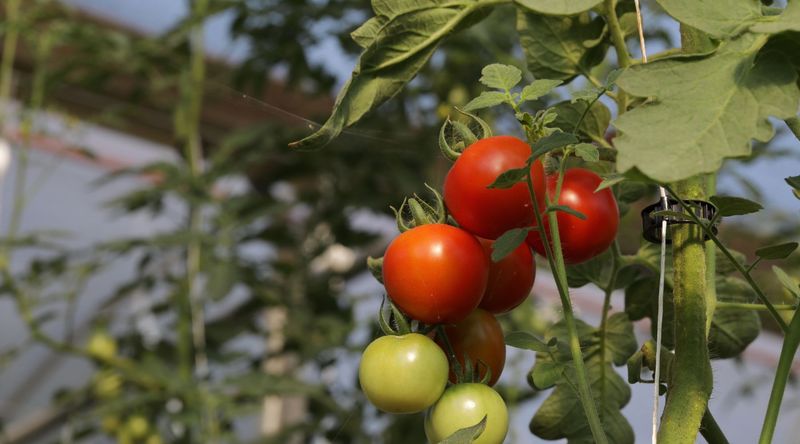
Ever notice your tomato plant shooting past its cage like it wants to reach the roof? That upward sprint feels productive, but it can quietly rob you of a harvest.
Indeterminate varieties keep growing taller all season, and every new inch of stem and leaf demands sugars the plant made through photosynthesis. When those sugars go into more green growth, they aren’t going into swelling and ripening the tomatoes already hanging on the vine.
Topping the plant removes the main growing tip, which signals it to stop reaching skyward. The energy that would have built new stems often redirects toward the fruit that’s already set, helping clusters fill out faster.
Think of it like a household budget with limited cash. Spend it all on expanding the house, and there’s nothing left to finish the rooms you already started.
By late summer, most of us don’t need a nine-foot plant. We need the green tomatoes we already have to turn red. Cutting the top can help nudge the plant toward finishing what it started rather than chasing more height it won’t have time to use.
Ripening Speeds Up When the Season Is Running Out
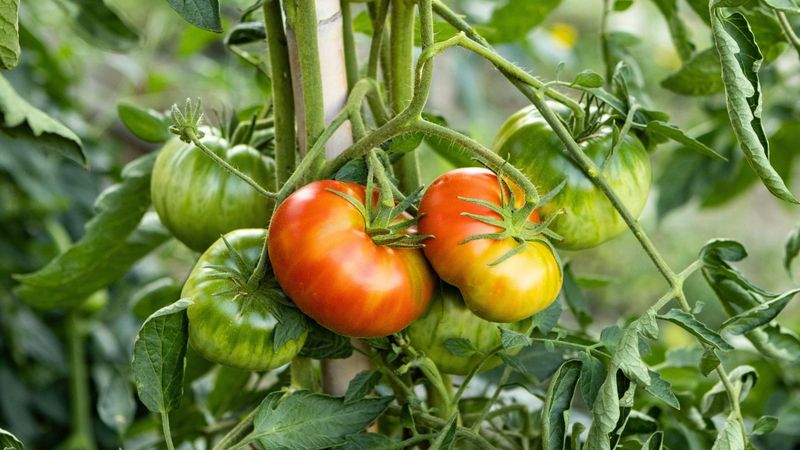
Here’s the worry that keeps a lot of gardeners up at night: a plant loaded with green tomatoes and a first frost date creeping closer on the calendar.
Late in the season, new flowers rarely have enough warm days left to become ripe fruit anyway. Those blossoms and tiny green nubs are basically writing checks the weather won’t cash.
Topping about four to five weeks before your area’s expected first frost tells the plant to quit starting new projects. Instead of feeding baby fruit that won’t finish, the plant can pour its resources into ripening the tomatoes that already have a real shot.
Gardeners often find this can shave days off ripening time, which matters a lot when cold nights are approaching. Every red tomato you pull before frost is one you didn’t lose.
In cooler northern zones, this trick tends to pay off even more, since the growing window is shorter. Watch your local frost forecast, count backward, and let that date guide your shears rather than guessing.
Better Airflow Can Fend Off Disease and Mold
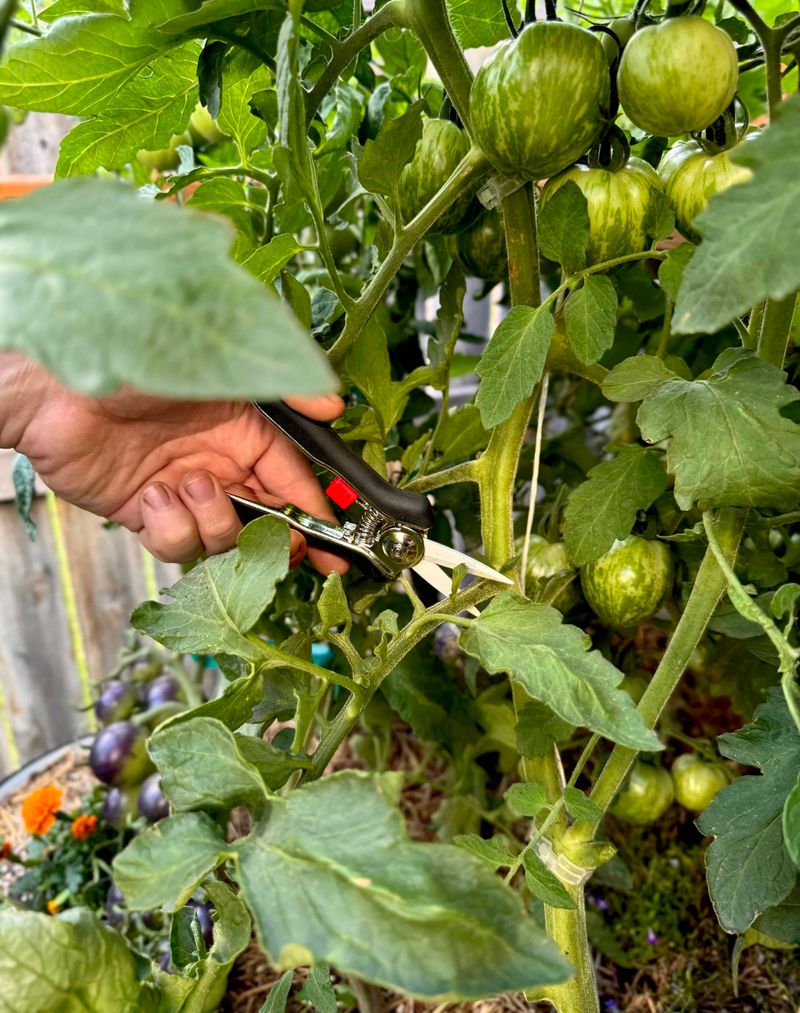
A jungle of dense tomato foliage looks lush, but it’s also a cozy hideout for the problems gardeners dread most. Damp, crowded leaves trap moisture, and moisture is what fungal troubles love.
Blight, powdery mildew, and leaf spot spread fastest where air sits still and leaves stay wet after rain or morning dew. When you top a plant and thin some of the upper growth, you open up the canopy so breezes can move through.
Improved airflow helps leaves dry faster, which can reduce the conditions that let disease take hold. Better sun reaching the interior may also help the plant shrug off minor problems.
None of this is a magic shield, and no cut guarantees a disease-free plant. But giving your tomatoes room to breathe is one of the simpler ways to make your garden less inviting to trouble.
Always clean your shears with rubbing alcohol between plants, especially if you’ve spotted any sick foliage. Dirty tools can carry disease from one plant straight to the next, undoing the good you just did.
Which Tomatoes Should You Actually Top?
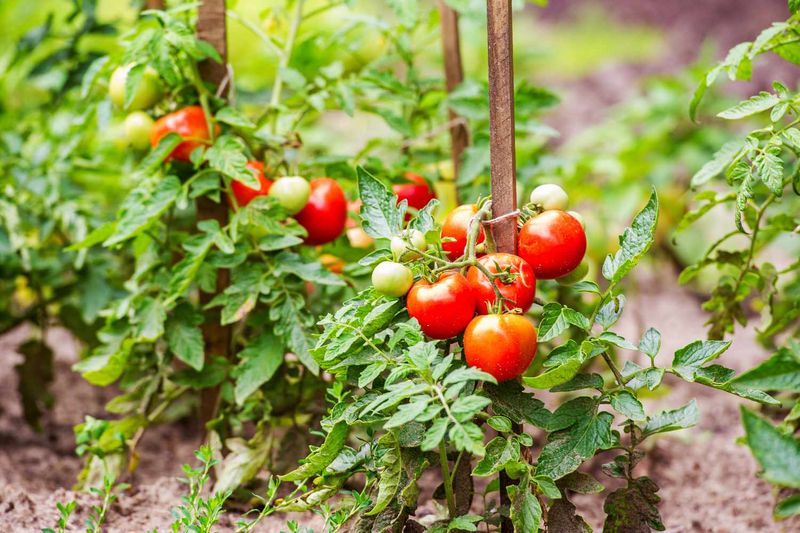
Before you go snipping everything in sight, one question matters more than any other: what kind of tomato are you growing?
Indeterminate types are the vining marathon runners. They keep growing and setting fruit until frost stops them, and they’re the ones that truly benefit from topping. Popular ones include most cherry tomatoes, beefsteaks, and many heirlooms like Brandywine and Cherokee Purple.
Determinate varieties are a different story. Often called bush tomatoes, they grow to a set size, set most of their fruit in one big flush, then wind down naturally. Topping these can actually cost you fruit, since you’d be removing growth the plant needs to finish its built-in cycle.
Check your seed packet or plant tag if you’re unsure which camp yours falls into. When the label’s long gone, watch the plant: if it keeps climbing and flowering nonstop, it’s likely indeterminate and a good candidate.
Matching the technique to the right plant is the difference between helping and hurting. Top the vining sprawlers, leave the tidy bushes alone, and you’ll be working with your plants instead of against them.
How to Make the Cut Without Shocking Your Plant
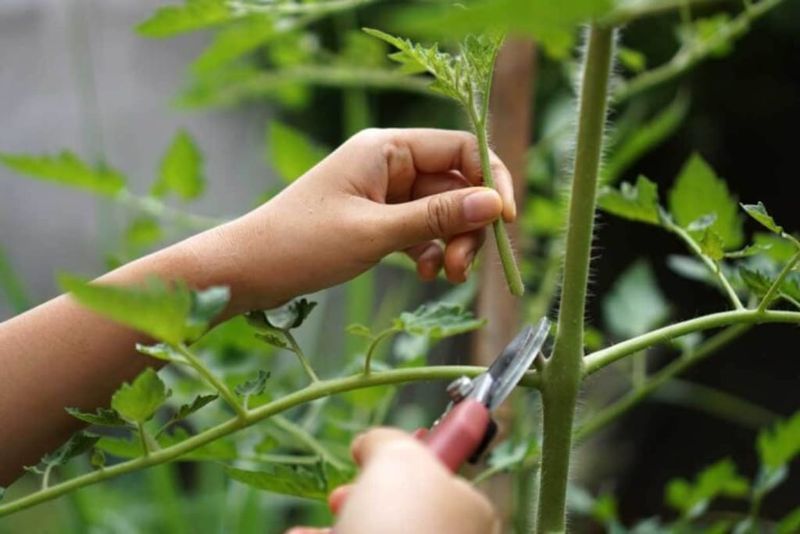
Grabbing scissors and hacking away is where good intentions can go sideways. The cut itself is easy, but a little technique keeps your plant from sulking afterward.
Start by finding the main growing tip at the very top of a leader stem. Cut just above a leaf node, leaving at least a few leaf sets below to keep feeding the fruit. A clean, angled snip with sanitized shears heals faster than a ragged tear.
Pick a cool, dry morning rather than the blazing heat of afternoon. Cutting during a heat wave adds stress on top of stress, so a milder day helps the plant recover more comfortably.
While you’re at it, pinch out the small suckers growing in the joints between the main stem and branches. Removing these can further steer energy toward ripening fruit.
Give the plant a gentle, deep watering afterward, and skip heavy nitrogen fertilizer that would only encourage the leafy regrowth you’re trying to slow. Within a week or two, you’ll often notice fruit coloring up. Go slow, keep tools clean, and your tomatoes should barely miss a beat.
The Payoff: Bigger, Faster-Ripening Tomatoes Before Frost
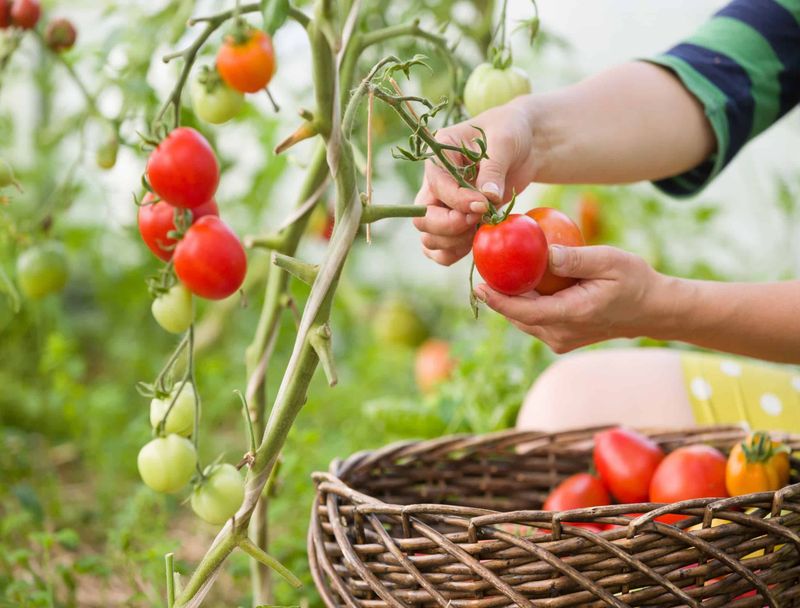
Picture the finish line: a basket of red, ripe tomatoes gathered while your neighbor’s plants are still crowded with stubborn green ones.
Pulling all these reasons together, topping is really about focus. You’re helping the plant stop spreading itself thin and start pouring everything into the fruit that can actually finish in time.
Gardeners who top at the right moment often report larger fruit, quicker ripening, and less late-season disease trouble. Those aren’t guaranteed outcomes, since weather and variety always play a role, but the odds tend to tilt in your favor.
The magic really is in the timing. Top your indeterminate plants roughly four to five weeks before your first expected frost, work on a mild morning, and keep your tools clean.
Do that, and you give your tomatoes their best shot at a strong, satisfying end to the season. So check your frost date this week, look over your plants, and decide whether it’s time to make the cut. A little snip now can mean a whole lot more ripe tomatoes on your kitchen counter later.