
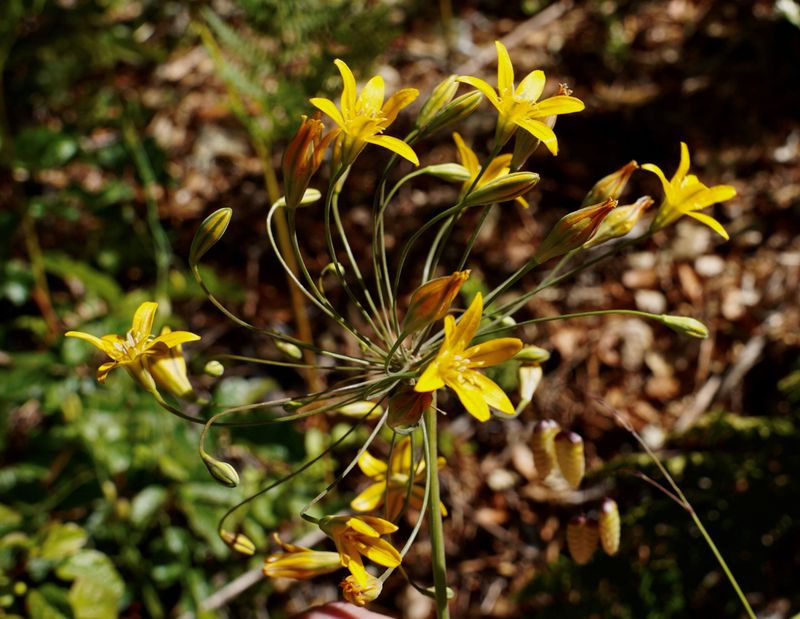
Some of the best spring flowers in California are already waiting underground, tucked inside small bulbs and corms. When you plant them in fall, the winter rains wake them up with no hose required.
By March and April, they push up blooms that feed native bees and butterflies. Here are ten native bulbs worth planting now if you want a water-wise yard that comes alive each spring.
1. Blue Dicks (Dipterostemon capitatus)
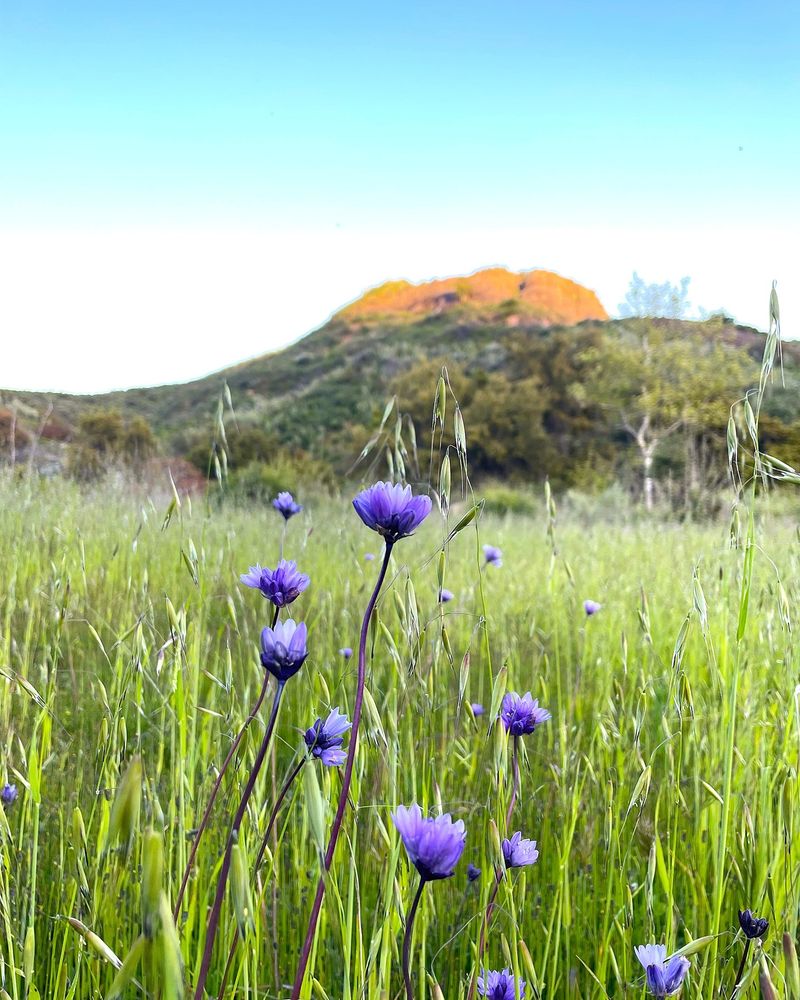
Hike almost any California foothill in March and you will spot little purple pom-poms bobbing above the grass. Blue Dicks are among the toughest natives you can grow, and they often show up first.
They make a smart starter bulb for nervous beginners.
Plant the corms about three inches deep in fall, in full sun and soil that drains well. Winter rain does the rest.
Once the flowers fade in late spring, the leaves dry out and the plant goes dormant, so you should stop watering that spot entirely.
Native bees and early butterflies may visit the blooms when little else is open. That makes Blue Dicks a quiet way to support pollinators during a lean stretch of the year.
They also tend to multiply over time, slowly filling in a dry slope or parkway strip.
2. Ithuriel’s Spear (Triteleia laxa)
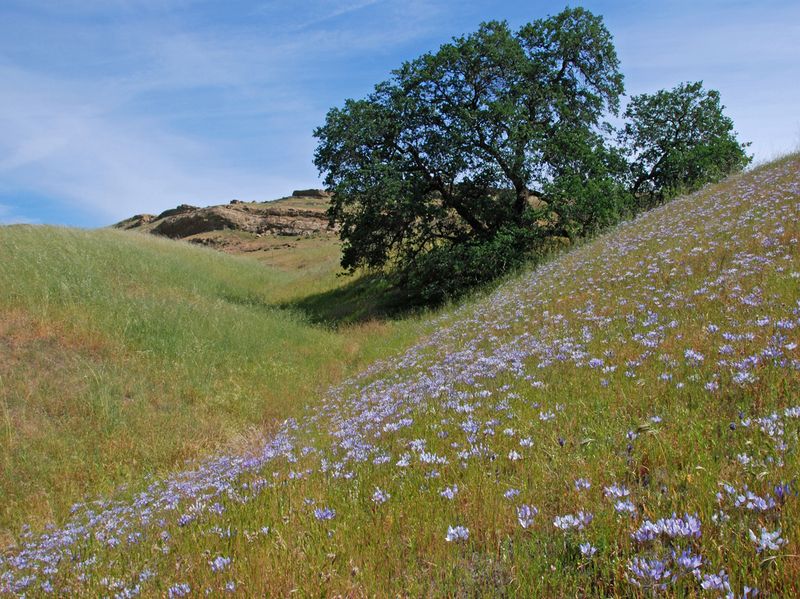
Legend has it the name comes from Milton’s Paradise Lost, where the angel Ithuriel carried a spear that revealed truth. Gardeners mostly care about the color, though.
Few flowers match its rich violet blue.
Triteleia laxa blooms a bit later than many natives, often in April and May. That timing helps stretch your spring show after early bloomers finish.
The flower heads sit on stems up to two feet tall, so they rise nicely above low groundcovers.
Give it sun or light shade and soil that dries out in summer. It handles clay better than many bulbs, which is good news for inland valley yards.
Plant corms in fall about four inches deep and skip summer water once foliage yellows.
3. Mariposa Lily (Calochortus)
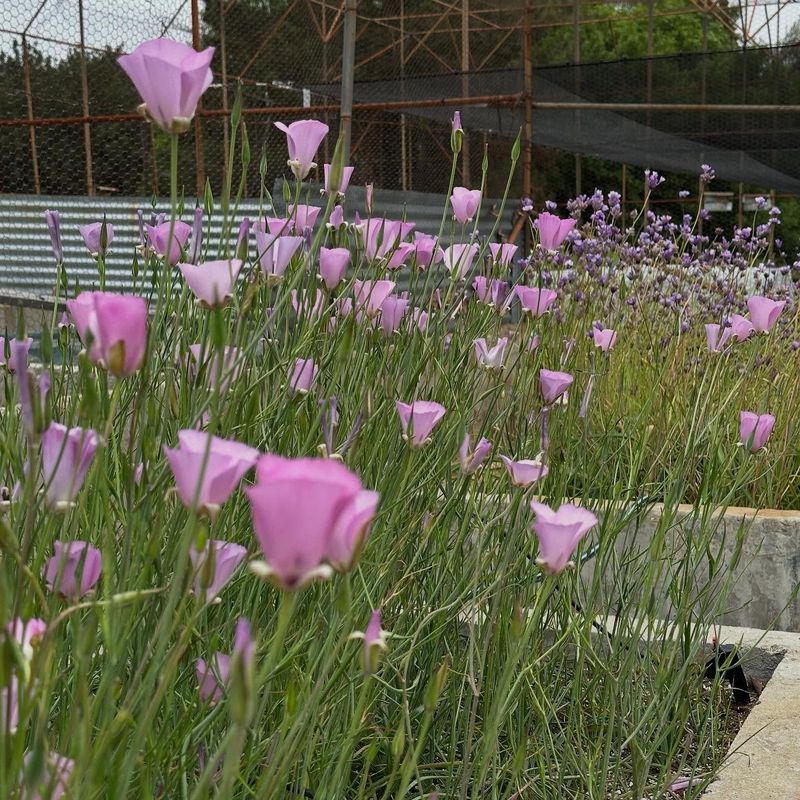
Mariposa means butterfly in Spanish, and one look at the painted petals explains it. Each cup-shaped flower carries spots, stripes, or hairy markings that seem almost hand-drawn.
They are showstoppers, but they come with a catch.
Calochortus hates summer water. Many gardeners lose them by watering nearby plants all summer, rotting the bulbs without realizing it.
Plant them in fast-draining soil, raised mounds, or large pots you can move out of the rain path once they go dormant.
Species like Calochortus venustus and Calochortus splendens are easier to find from native nurseries. Set bulbs about three inches deep in fall.
Gophers love them too, so wire baskets can help protect your investment.
4. Soap Plant (Chlorogalum pomeridianum)
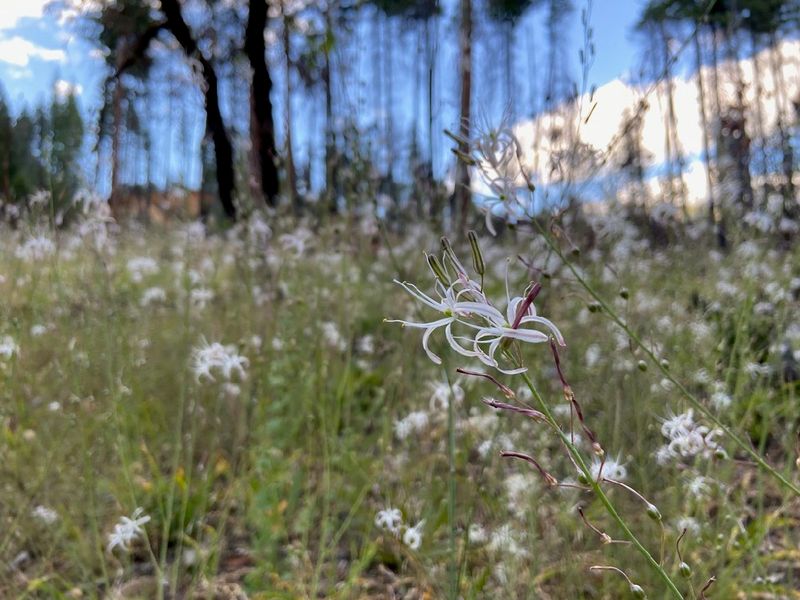
Native Californian peoples crushed this bulb to make soap and used its fibrous coat for brushes. Few garden plants carry that much history.
It also has a sneaky party trick.
The small white flowers open in late afternoon and evening, then close by morning. That schedule draws evening pollinators like moths and some native bees.
Sitting on a patio at dusk while the stalks light up can be a real treat.
Soap plant is large, with long wavy leaves and flower stalks that can reach several feet. It handles clay, drought, and part shade under oaks.
Plant bulbs fairly shallow in fall and let them settle in for a season or two before expecting a big show.
5. Harvest Brodiaea (Brodiaea elegans)
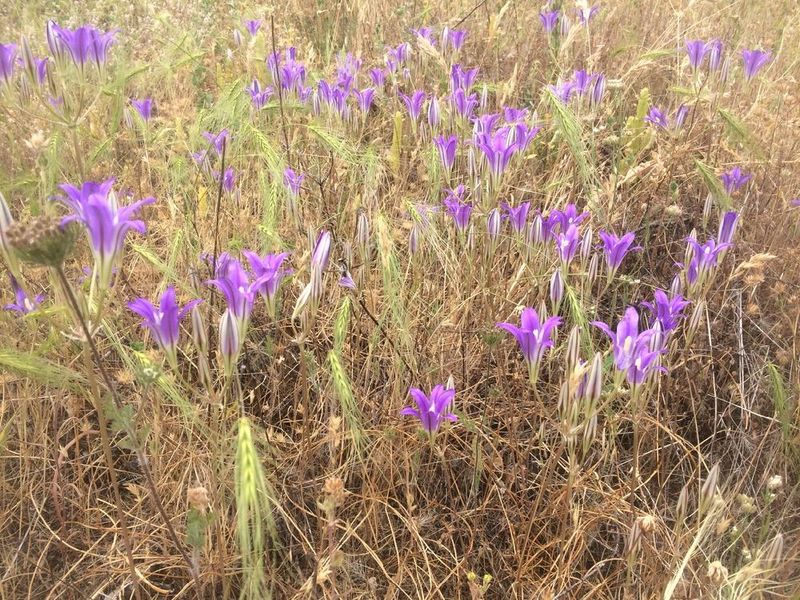
Most bulbs are done by the time summer heat arrives. Harvest Brodiaea does the opposite, opening its purple stars just as grasses turn gold.
Its leaves often wither before the flowers even appear.
That late timing fills a gap many California yards have in May and June. Pollinators searching for nectar in the early dry season can find a meal here.
The plant stays short, usually under a foot, so place it near a path where you will notice it.
Plant corms in fall in full sun. Clay or loam both work if drainage is decent.
After bloom, let the spot stay dry so the corm can rest through summer and return next year.
6. Checker Lily (Fritillaria affinis)
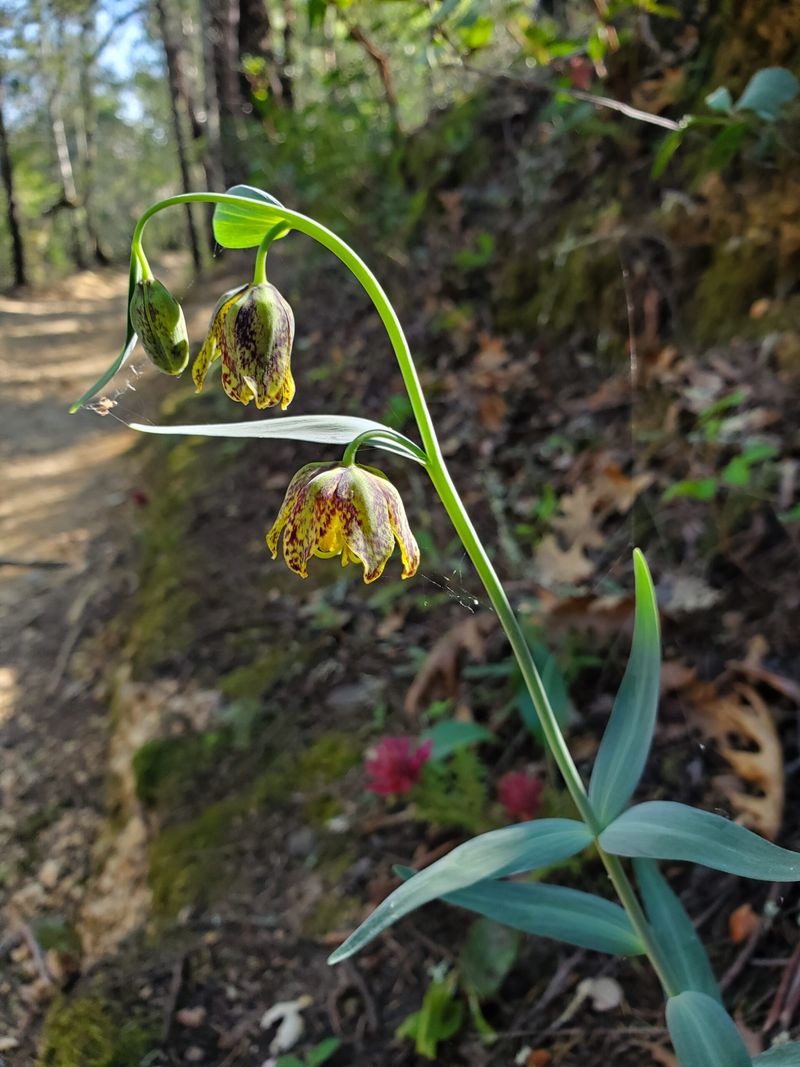
Hang a tiny checkered bell on a stem and you have the checker lily. Its mottled brown and green pattern is subtle, so this one rewards gardeners who look closely.
It is a favorite among collectors for good reason.
Fritillaria affinis does well in part shade, making it a great match for yards with oak trees or north-facing beds. Coastal gardeners tend to have the easiest time with it.
Inland, give it afternoon shade and mulch to keep the soil cool.
Plant bulbs about four inches deep in fall. Blooms usually appear in late winter to early spring.
Like most natives here, it needs a dry summer rest, so avoid planting it in irrigated lawn edges.
7. Douglas Iris (Iris douglasiana)
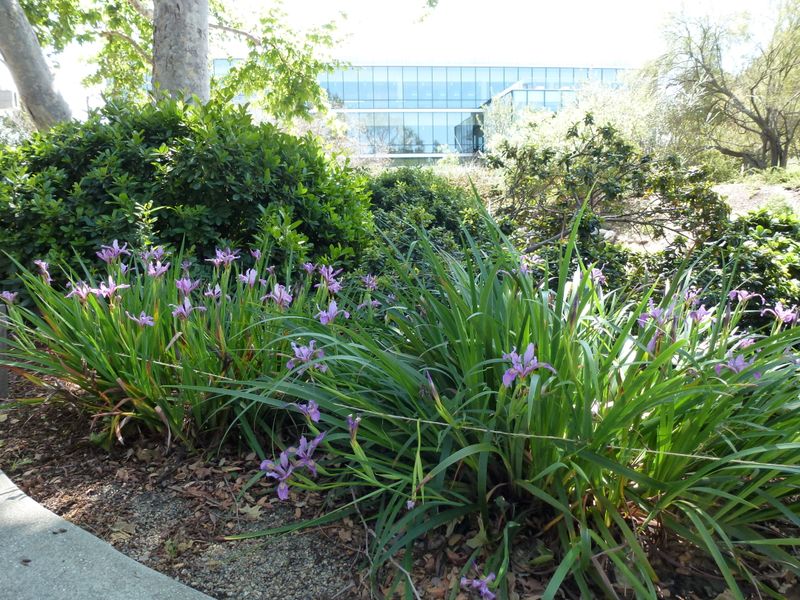
Okay, technically Douglas iris grows from a rhizome rather than a true bulb. It earns a spot here anyway because fall planting and winter rain set it up for a spectacular spring.
It is also one of the most forgiving natives you can grow.
Flowers range from deep purple to cream and pale yellow, often with fine veining. The evergreen clumps stay tidy year round, which helps if you want a planted area that never looks bare.
Bumblebees frequently visit the blooms.
Plant divisions in fall in sun near the coast or light shade inland. Occasional summer water is usually fine, though it can get by on very little once established.
Pacific Coast Hybrids offer even more colors.
8. Golden Brodiaea (Triteleia ixioides)
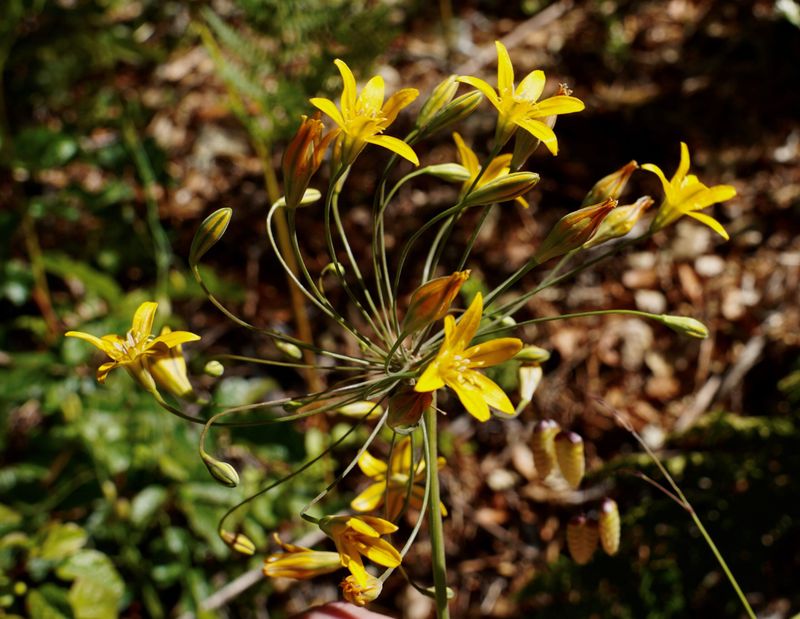
Purple dominates the native bulb world, so a splash of sunshine yellow feels like a welcome surprise. Golden brodiaea, sometimes called pretty face, carries starry blooms with a dark stripe down each petal.
Up close, they look almost striped like candy.
It pairs beautifully with blue and violet bulbs like Ithuriel’s spear. Planting the two together can create a lively spring mix with very little effort.
Small native bees may forage on the open flowers.
Plant corms in fall in full sun with good drainage. A rock garden, gravel bed, or slope suits it well.
Leave the soil dry after bloom so the corms can rest.
9. Leopard Lily (Lilium pardalinum)
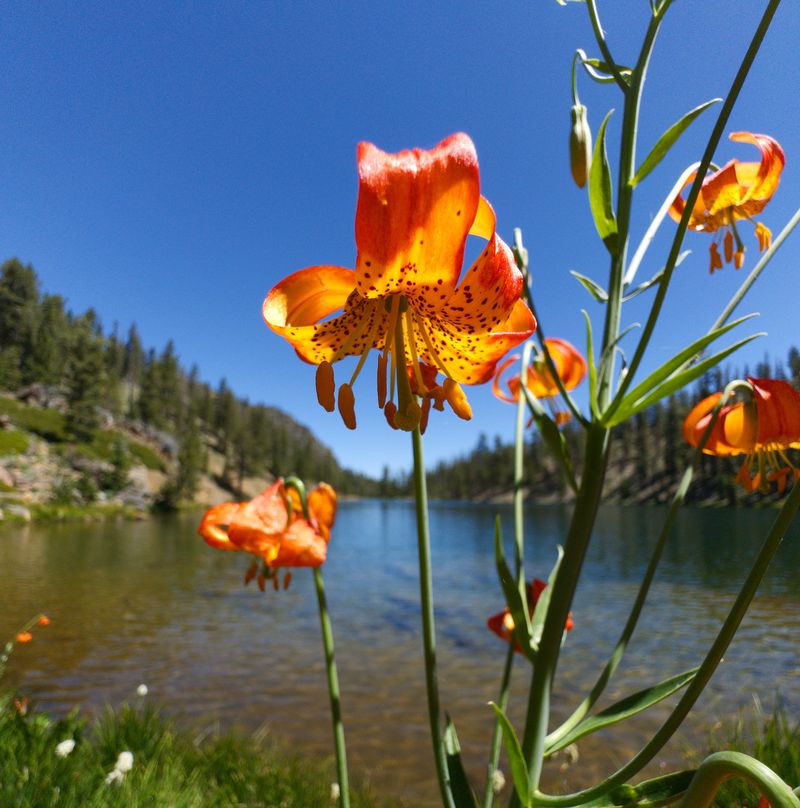
Hummingbirds seem to find leopard lilies fast. The dangling orange flowers, freckled with maroon spots and petals curled backward, are built for them.
For a wildlife yard, few bulbs deliver this much drama.
Unlike most entries here, Lilium pardalinum wants moisture. In the wild it grows along streams and seeps.
Plant it near a rain garden, downspout area, or shaded spot that stays damp longer into spring.
Set bulbs about six inches deep in fall in rich soil with part shade. Bloom usually arrives in late spring or early summer.
It may need some summer water in hot inland areas, so group it with other moisture-loving natives.
10. Wild Onion (Allium unifolium)
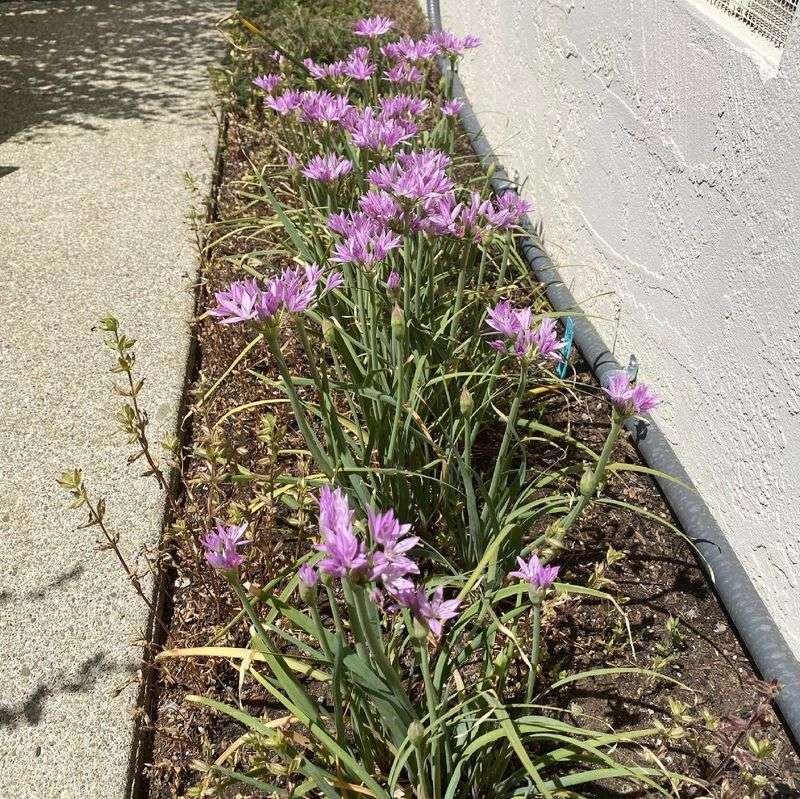
Garden centers sell plenty of ornamental alliums from overseas. Allium unifolium is California’s own, with soft pink flower clusters that look lovely in a meadow-style planting.
It is easygoing and rarely fussy.
Many native bulbs demand dry summers, but this one tolerates a bit more moisture and clay. That flexibility makes it handy for yards transitioning away from lawn.
Bees often work the blooms in late spring.
Plant bulbs in fall about three inches deep in sun or light shade. Leaves may brown at bloom time, which is normal.
Deer and rabbits tend to skip oniony plants, an extra perk for many suburban gardeners.
Plant a few of these natives this fall, let winter rain take over, and you can enjoy a blooming, pollinator-friendly yard without extra water.