
The ground under a big oak or pine can feel like a dead zone where nothing wants to grow. Roots soak up every drop of water, the canopy blocks the sun, and summer watering can actually hurt a native oak.
The good news is that a group of tough California natives evolved in exactly these conditions. Plant the right ones and that dusty patch can turn into a green, wildlife-friendly garden that barely needs a hose.
1. Hummingbird Sage (Salvia spathacea)
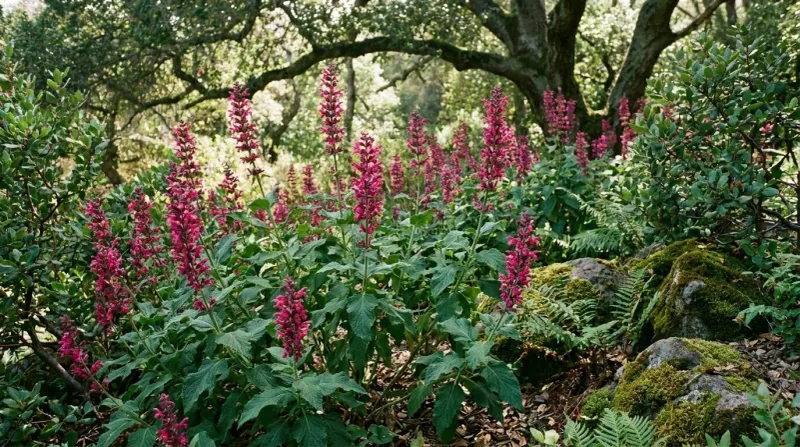
Brush past a patch of hummingbird sage and the air fills with a fruity, sage-like scent. That alone makes it a favorite for shady paths under oaks.
In late winter and spring, tall magenta flower spikes rise above the fuzzy leaves.
Hummingbirds treat those blooms like a fuel stop, which is how the plant got its name. It spreads slowly by underground runners, so a few plants can knit into a soft groundcover over a couple of years.
Once settled, it can usually get by on winter rain alone in most coastal and inland valley gardens.
Plant it in fall so winter storms do the watering for you. Leave the fallen oak leaves in place as mulch, since the sage seems to like that loose, natural layer.
2. Douglas Iris (Iris douglasiana)
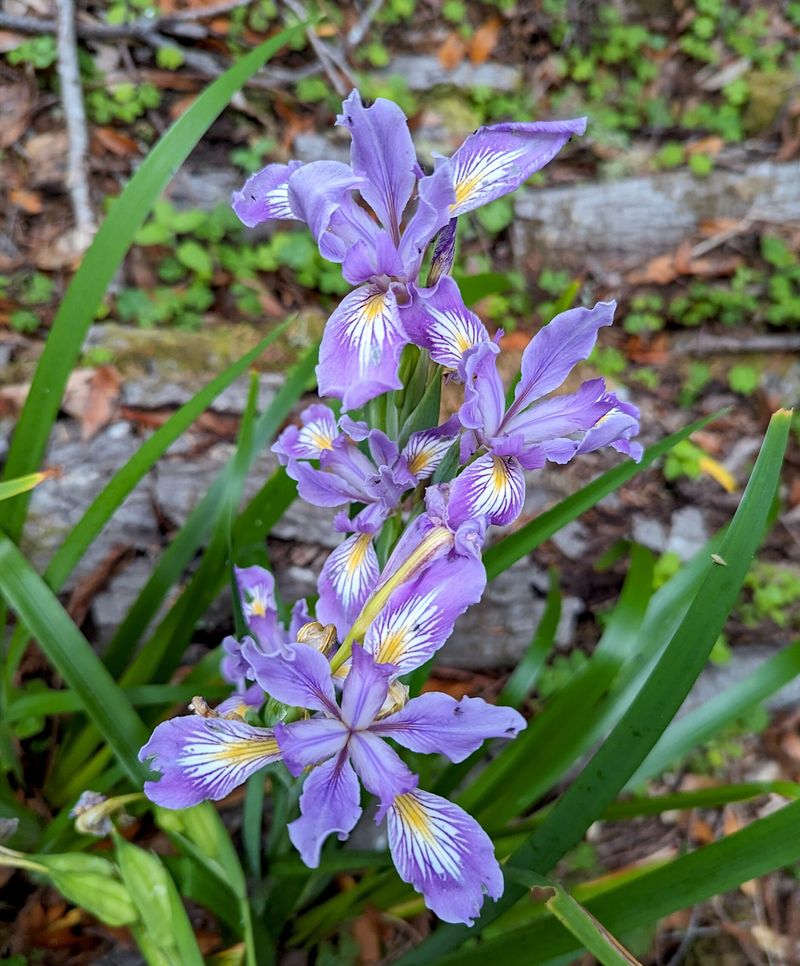
Some plants whisper, and Douglas iris sings. Each spring, its clumps burst into purple, lavender, cream, or even pale yellow flowers that look far too fancy for such a rugged plant.
Native to coastal hills from Santa Barbara north, this iris handles dry summer shade under pines and oaks with very little fuss. Its grassy, evergreen leaves stay tidy most of the year.
Native bees visit the blooms, and the clumps can help hold soil on gentle slopes.
Inland gardeners may want to give it a bit more shade and an occasional deep drink during heat waves. Divide crowded clumps in fall, and you will have free plants for the rest of the yard.
3. Creeping Snowberry (Symphoricarpos mollis)
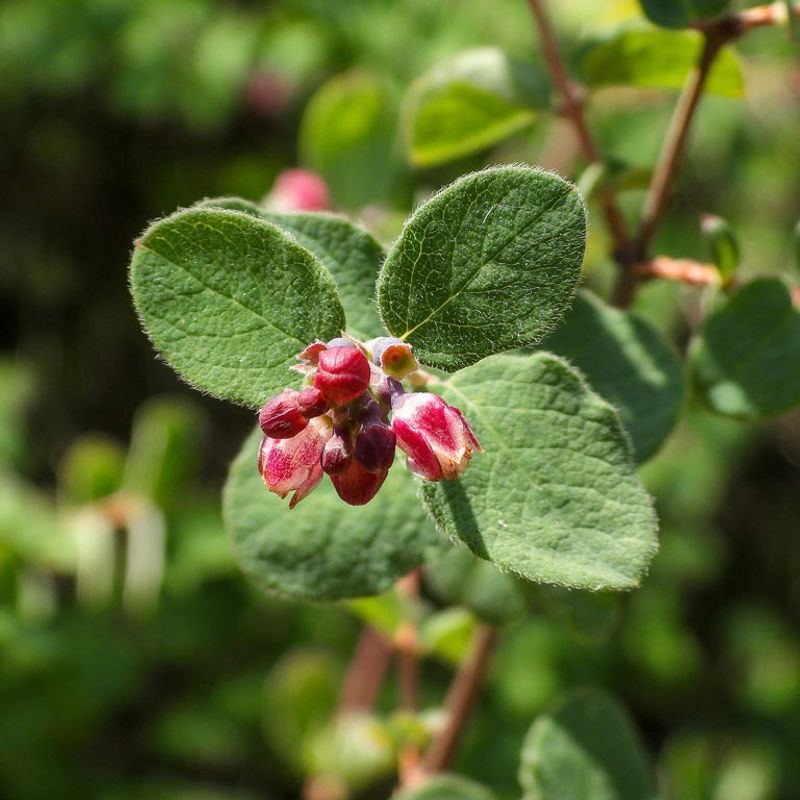
Ever wish a groundcover would just handle itself? Creeping snowberry comes close.
It grows low, spreads by runners, and fills bare soil under oaks where grass gave up long ago.
Tiny pink flowers appear in spring, followed by bright white berries that stick around into fall. Birds like thrashers and towhees may forage among the stems, and the plant offers shelter for ground-feeding wildlife.
It can drop some leaves in late summer drought, which is normal and not a sign of trouble.
Hold off on summer irrigation once it is established. That dormant look is part of how it survives, and keeping the oak root zone dry matters more than a perfectly green carpet.
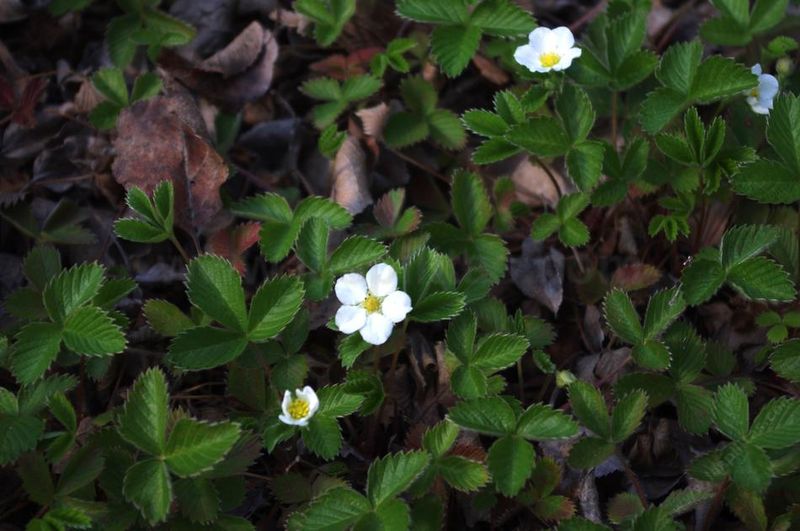
4. Wood Strawberry (Fragaria vesca)
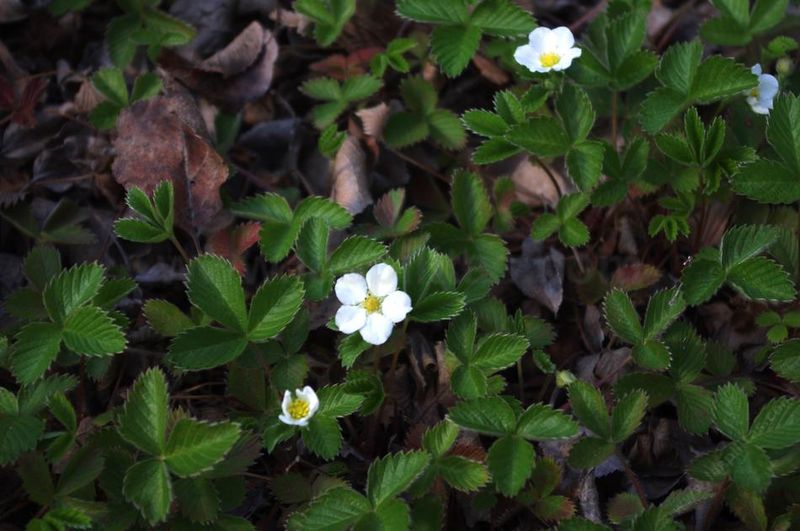
Kids love finding the tiny red berries tucked among the leaves. Wood strawberry, also called woodland strawberry, is a charming native that brings a little edible surprise to shady corners.
It forms a low mat of bright green leaves and white flowers, spreading by runners. In truly bone-dry spots it may go partly dormant in late summer, then bounce back with fall rains.
Pollinators visit the flowers, and birds often beat you to the fruit.
Use it along the edge of the shade zone where it gets a bit of morning light. It pairs nicely with irises and ferns for a layered woodland look.
5. California Wood Fern (Dryopteris arguta)
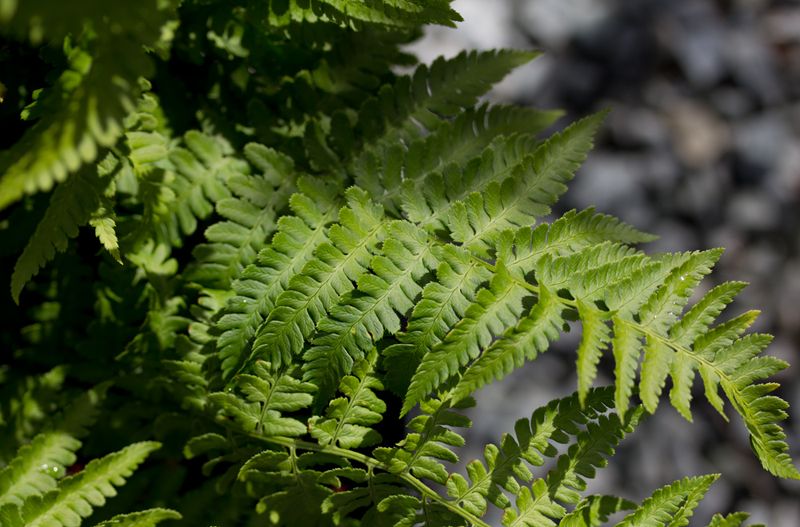
Most people assume ferns need constant moisture. California wood fern breaks that rule in style.
Found naturally under oak woodlands across much of the state, it handles long, dry summers by going semi-dormant, then greening up again when rain returns. Its lacy fronds add a cool, soft texture that makes a shady spot feel calm and lush, even in August.
It stays fairly compact, usually around two feet tall.
Tuck it near rocks or logs where it can keep its roots cool. Avoid the urge to water it like a nursery fern, since soggy summer soil can invite root problems for both the fern and your oak.
6. Island Alum Root (Heuchera maxima)
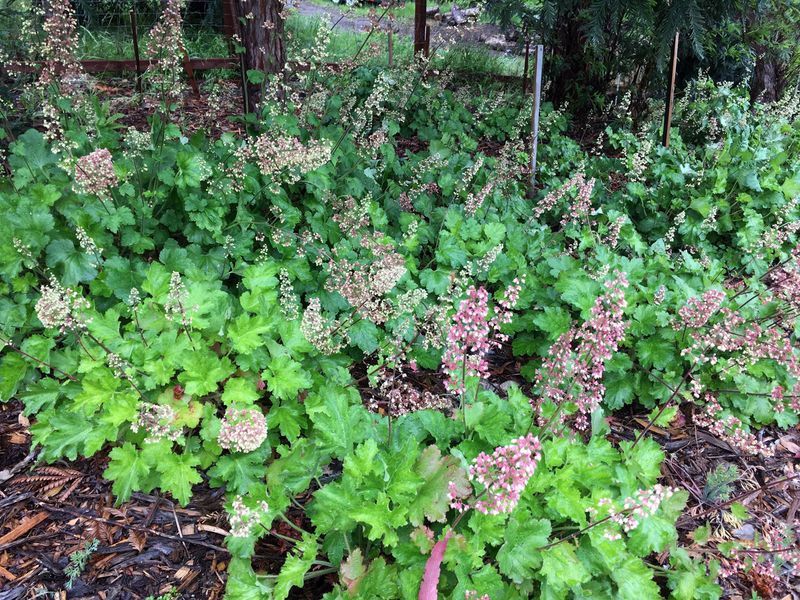
Picture big, scalloped leaves topped with airy wands of tiny white or pink flowers in late winter. Island alum root comes from the Channel Islands, where it clings to shady, rocky canyons.
That background makes it a smart pick for dry shade in Southern and coastal California. The flowers draw hummingbirds and small native bees early in the year, when food can be scarce.
Its leaves stay attractive most of the year with little care.
Plant it in groups along a shady path or beneath a pine. A little afternoon shade is a must inland, and good drainage helps it last for many years.
7. Pink-Flowering Currant (Ribes sanguineum var. glutinosum)
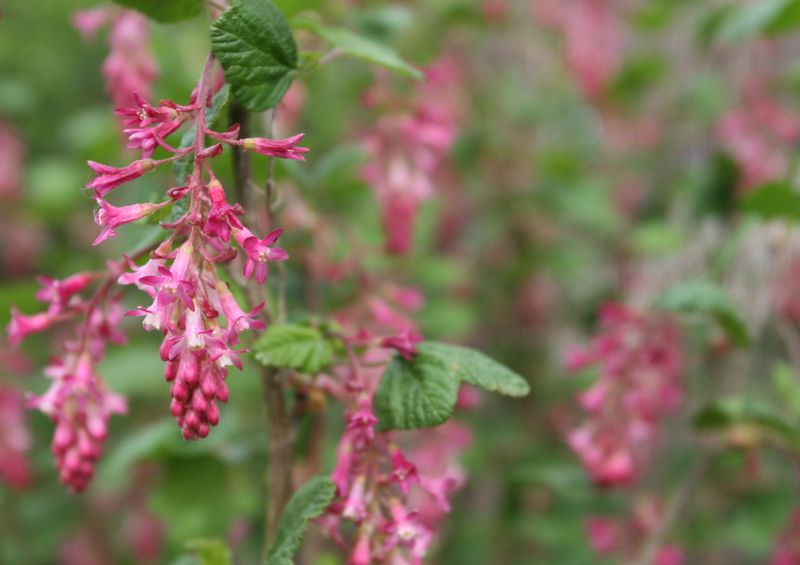
When pink-flowering currant blooms in late winter, it feels like spring arrived early. Dangling clusters of pink flowers hang from bare or newly leafed branches, and hummingbirds show up almost right away.
A deciduous shrub that grows roughly five to eight feet tall, it works well as a backdrop under the high canopy of oaks and pines. It goes dormant in the dry season, so summer leaf drop is expected.
Birds may also eat the dark berries later in the year.
Give it filtered shade rather than deep gloom for the best flowers. On fire-prone hillsides, keep it pruned and spaced away from structures as part of your defensible-space plan.
8. Coffeeberry (Frangula californica)
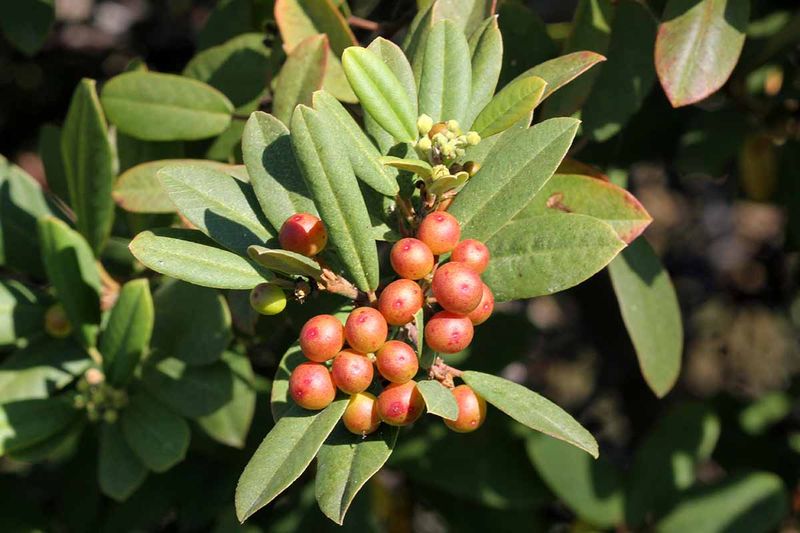
Need a green screen in a spot nothing else will fill? Coffeeberry is the dependable workhorse of the California shade garden.
Its glossy evergreen leaves look good all year, and it tolerates sun, part shade, and dry soil once established. Small flowers feed bees, and the berries ripen from red to nearly black, drawing robins, thrushes, and other birds.
Compact selections like Mound San Bruno or Eve Case fit smaller yards.
Place it at the outer edge of an oak canopy rather than right against the trunk. That keeps the root crown clear and gives the shrub a bit more light to stay full.
9. California Fescue (Festuca californica)
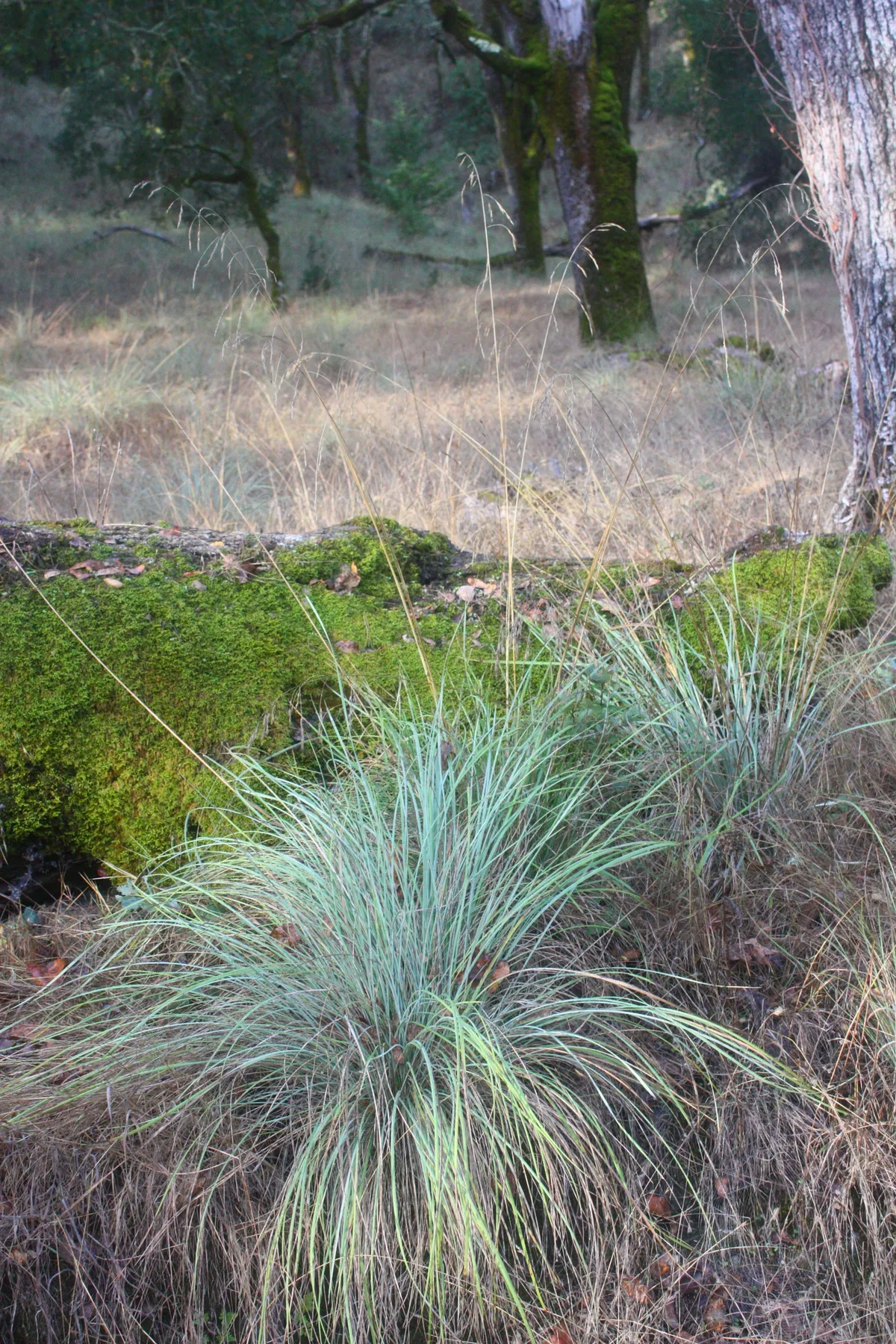
Lawn grass under an oak is a struggle, and the summer water it needs can harm the tree. California fescue offers a softer, smarter swap.
A clumping native bunchgrass with blue-green blades, it grows about two feet tall and moves gently in the breeze. It naturally grows in oak woodland openings, so it is right at home in dry, partly shady ground.
Seed heads can feed birds, and the clumps give shelter to beneficial insects.
Plant it in drifts for a meadow look, mixed with irises and hummingbird sage. Cut back tired foliage in late fall before the rains, and it should refresh itself for the new season.