
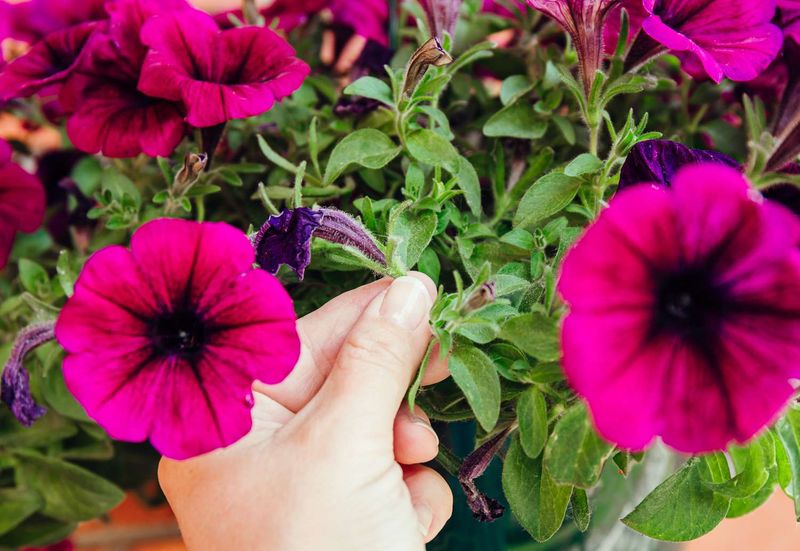
Petunias are some of the most cheerful plants you can grow in a container or garden bed, but by midsummer many gardeners notice the flowers slowing down, stems getting leggy, and little green capsules appearing where blooms used to be. The way you remove those spent flowers matters more than most people realize. Learning the right technique for the right variety can make a real difference in how long your plants keep flowering through the season.
Why Petunias Can Slow Down by August
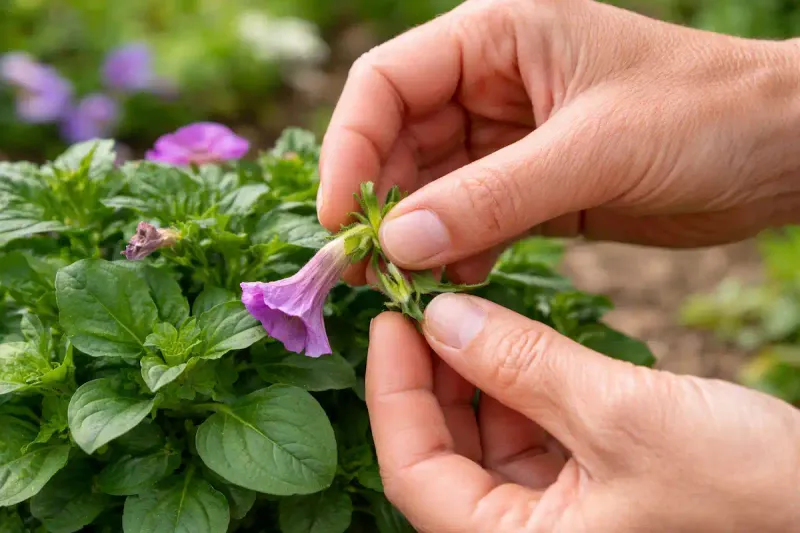
Petunias put on a fantastic show from late spring into early summer, then something shifts. New buds slow down, spent flowers linger on the stems, and small green bumps appear just below where the petals were. That green bump is a seed capsule, and once it starts developing, the plant begins channeling resources toward ripening seeds rather than pushing out new flowers.
The trouble is, this slowdown is not always caused by seed development alone. University of Minnesota Extension guidance on growing petunias notes that heat, insufficient sunlight, inconsistent watering, and nutrient depletion can all reduce flowering, particularly as summer temperatures climb. A plant stressed by drought or shade may produce fewer buds regardless of how carefully you remove spent blooms.
Variety also plays a significant role. Clemson Cooperative Extension’s petunia factsheet explains that traditional large-flowered and double types tend to hold onto their seed-forming structures after blooming, making them good candidates for regular deadheading. Many modern spreading and small-flowered types shed spent blooms on their own and may not show the same pattern.
Recognizing the actual cause of your plant’s slowdown is the first step. Fewer flowers in August can reflect seed capsule development, heat stress, root problems, disease, low light, or some combination of these factors. Deadheading is one helpful tool for the right varieties, but it works best as part of a broader approach to summer petunia care.
Remove the Faded Flower and the Seed Capsule
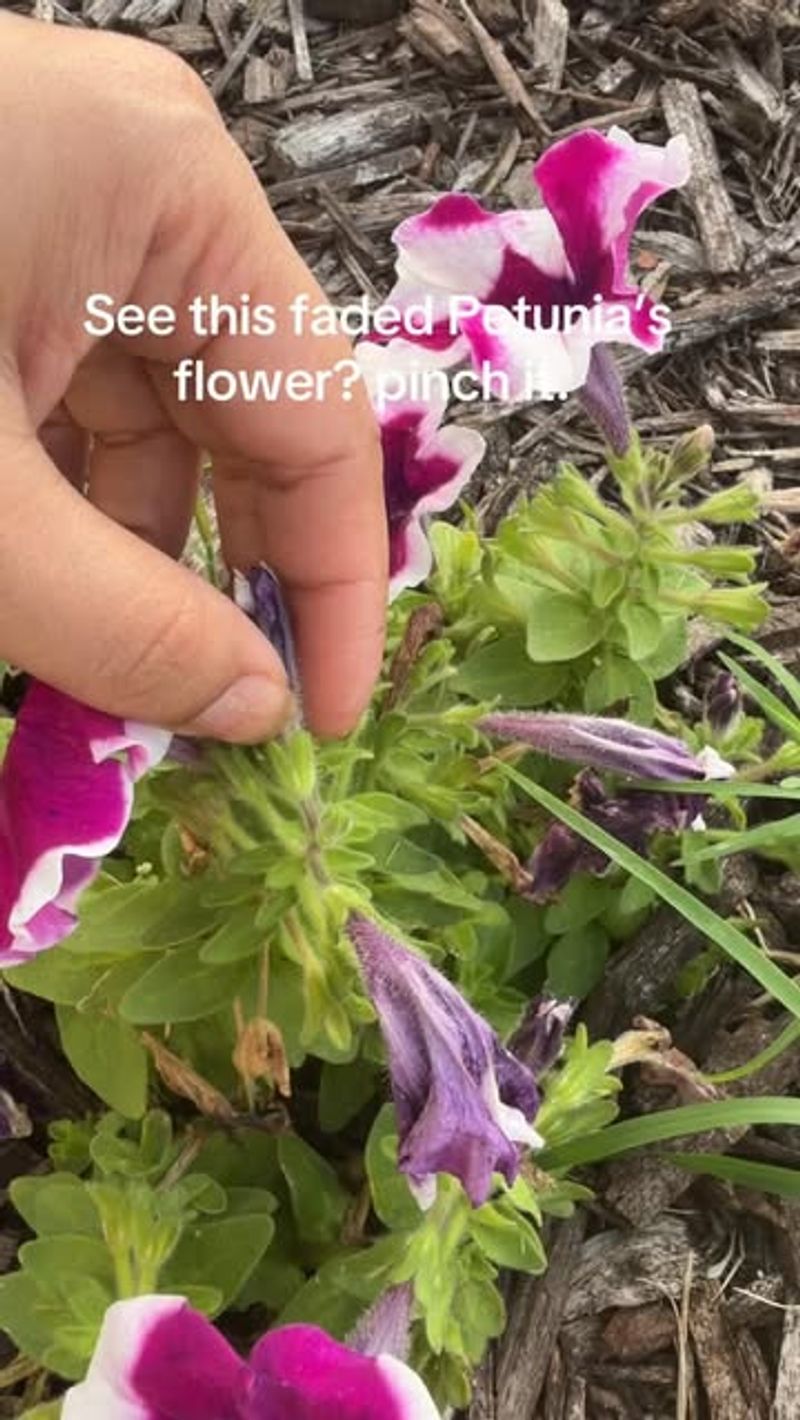
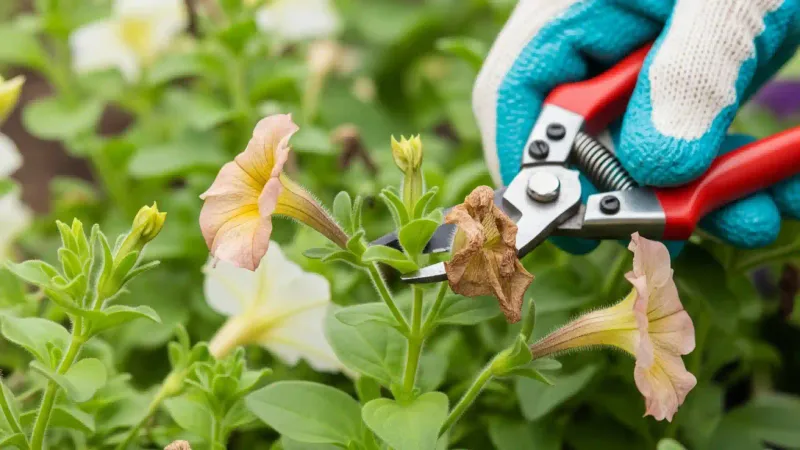
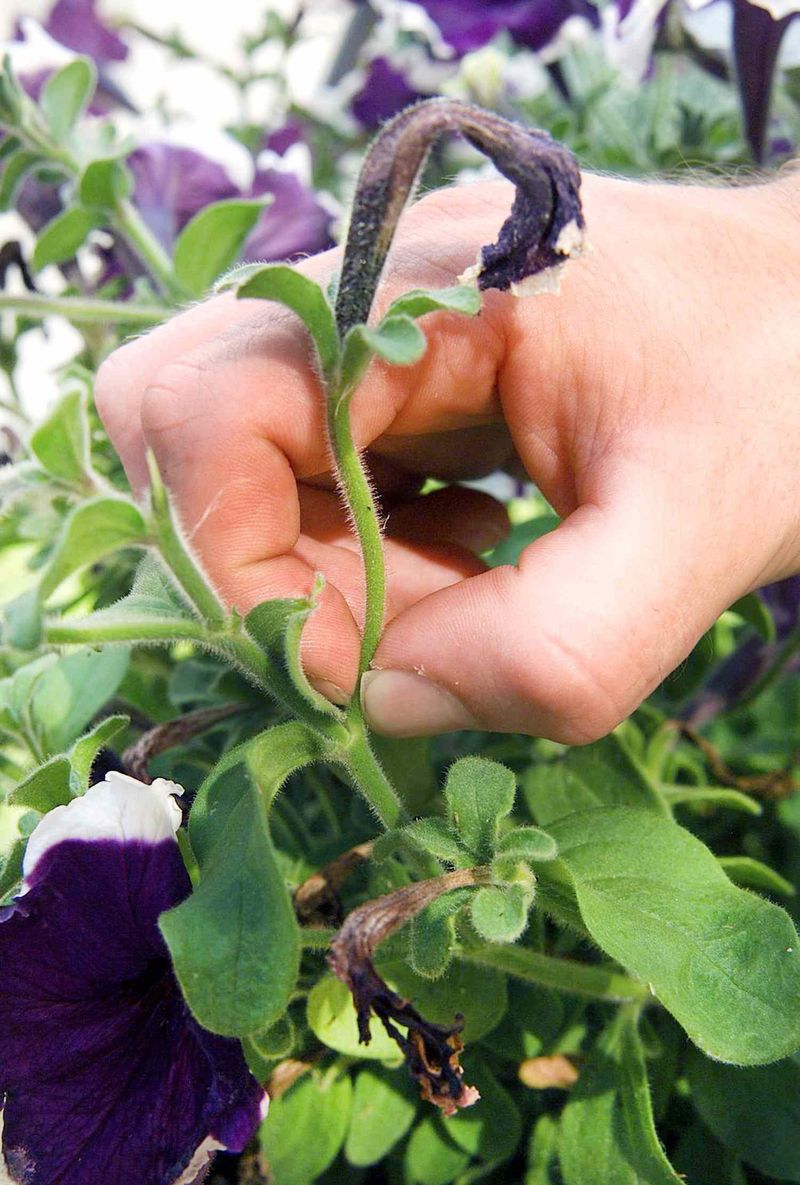
Here is where most gardeners go wrong: they pull off the colorful petals and consider the job done. The petals are the easy part to see, but the seed-forming structure sits just below them on a short, slightly thickened stalk. Leaving that structure behind is like removing the top of a weed and leaving the root in place.
Mississippi State University Extension’s deadheading guide recommends removing the stalk at its base so the entire spent-flower unit comes away cleanly, including the enlarged green ovary beneath the petals. University of Minnesota Extension similarly advises removing the faded flower together with the portion below it where seeds develop. Either your fingers or a small pair of clean scissors will work for the job.
The sequence is straightforward. Wait until a bloom is clearly faded or wilted rather than trying to catch it at the first sign of aging. Locate the short stalk beneath the spent flower, then trace it down to where it meets the main stem. Pinch or snip at that junction so the complete unit, petals, stalk, and seed capsule, comes away in one motion.
Doing this correctly can support continued flowering in petunia varieties that benefit from the practice. The plant no longer has a developing seed capsule drawing resources, and new buds have a better chance of forming. That said, this technique works best when the rest of the plant’s needs are also being met, and results will vary by cultivar and growing conditions.
Build a Simple Deadheading Routine
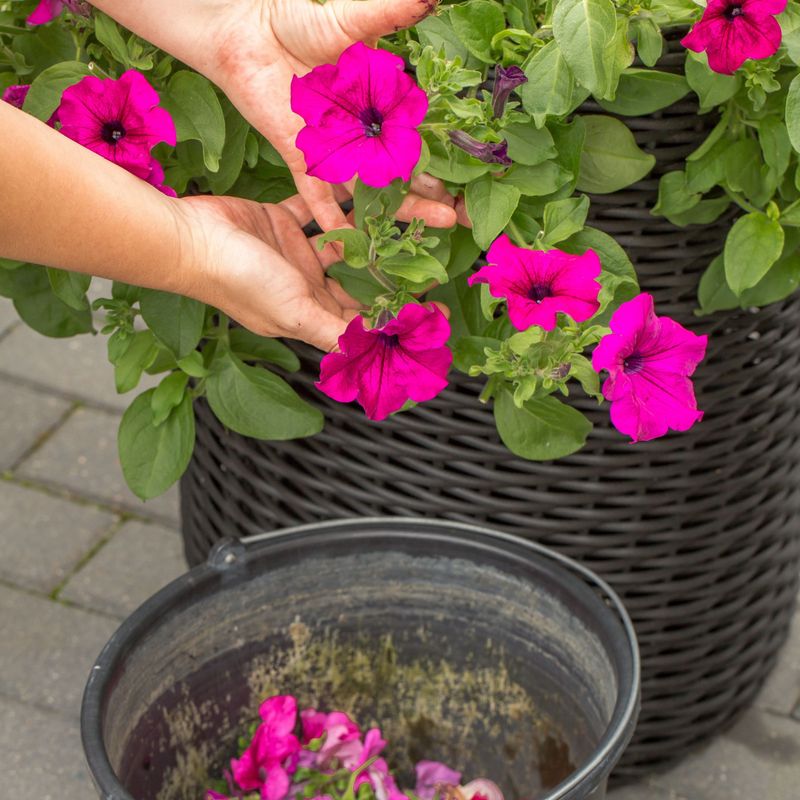
Knowing the right technique is only useful if you actually do it often enough to matter. For traditional petunias, particularly those growing in containers or hanging baskets, a weekly check is a practical target. Mississippi State Extension recommends deadheading once a week for these types, while University of Minnesota Extension suggests removing faded flowers whenever you can fit it in.
Containers and hanging baskets deserve the most consistent attention. Because gardeners view them up close, a cluster of spent blooms and seed capsules is hard to miss and affects the plant’s overall appearance. More practically, container plants have a limited root volume compared to in-ground plantings, which means stress from developing seeds, heat, or inconsistent watering shows up faster and more noticeably.
In-ground plantings in beds or borders follow a different logic. A large mass of petunias spread across a garden bed does not need every spent flower removed on a strict schedule. If the planting looks good and continues to produce new blooms, occasional tidying may be enough. Save your careful weekly attention for the plants you see and interact with most closely, such as a front-porch basket or a patio planter.
Making deadheading part of a regular garden walk, rather than a separate chore, keeps the routine from feeling like extra work. A quick pass with your fingers or snips every seven days or so during the active growing season is usually enough to stay ahead of seed capsule development on traditional varieties.
Let the Variety and Conditions Guide the Chore
Not every petunia on the market needs the same level of attention. Grandiflora types, which produce large, showy blooms, and double petunias with their layered petals are the varieties most likely to hold onto spent flowers and seed capsules. For these plants, regular deadheading can make a noticeable difference in keeping new flowers coming.
Clemson Cooperative Extension’s petunia factsheet explains that many smaller-flowered, spreading, and vegetatively propagated modern types are considered self-cleaning, meaning faded blooms drop away without intervention. Popular branded series in this category are often marketed as low-maintenance for exactly this reason. Checking your plant tag or looking up the cultivar name will tell you which category your petunias fall into.
Self-cleaning, however, does not mean the plant handles everything on its own. Mississippi State Extension’s guidance on Supertunias notes that even these low-maintenance types benefit from occasional tidying when rain-damaged or stuck flowers accumulate, and they may need midsummer trimming if they become sprawling or sparse.
Growing conditions layer on top of variety. A self-cleaning petunia under heat stress, low light, or inconsistent moisture may still underperform by August, while a well-sited grandiflora with attentive care can continue flowering well into late summer. University of Minnesota Extension confirms that sunlight, water, and nutrition all influence flowering alongside the plant’s genetic tendencies, so variety is a strong guide but not the only factor.
Use a Different Trim for Leggy Growth
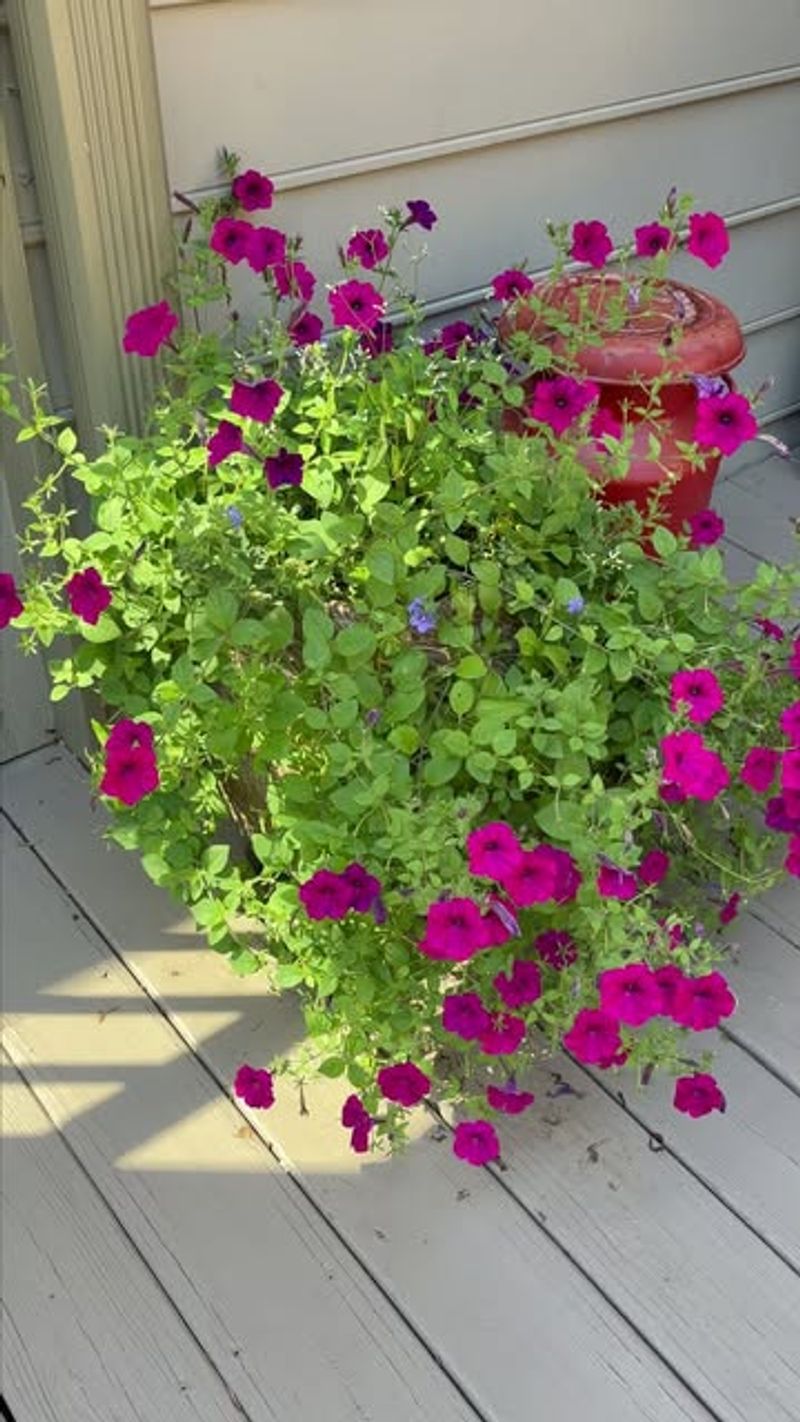
When a petunia stops looking full and starts looking like a collection of long, bare stems with a few flowers at the tips, ordinary deadheading will not fix the problem. At that point, the plant needs a different kind of pruning, one that removes portions of stems rather than just individual spent flowers.
This approach is called heading back or rejuvenation pruning, and it is distinct from deadheading. Penn State Extension’s guide on pruning herbaceous plants confirms that many petunias respond well to cutting back, and Penn State’s transplanting annuals guidance reinforces the distinction between removing spent blooms and shaping the plant’s overall structure. Clemson Extension recommends cutting leggy or nonflowering plants to about half their length while retaining healthy leaves or nodes so the plant has the foliage it needs to recover.
Cutting every stem at once can create a temporary gap in color. N.C. Cooperative Extension notes that a substantial cutback may take about one to two weeks before new blooms appear. If continuous color matters, consider pruning in stages, cutting half the stems one week and the rest a week or two later.
This way, some stems are always further along in the recovery cycle.
Never cut petunias down to bare soil or strip away all the foliage. Retaining several healthy leaves or nodes on each stem gives the plant the photosynthetic capacity it needs to push new growth. A well-timed cutback on a leggy midsummer petunia can produce a noticeably fuller plant in a few weeks.
Check Light, Water, Nutrition, and Disease
Even perfect deadheading technique cannot compensate for a plant that is struggling with its environment. Before assuming the issue is spent flowers, run through a quick checklist of the conditions that most commonly contribute to reduced blooming by late summer.
Sunlight comes first. University of Minnesota Extension recommends roughly five to six hours of good sunlight for petunias, with fuller sun generally producing more flowers. A plant in too much shade may produce sparse blooms no matter how often you deadhead.
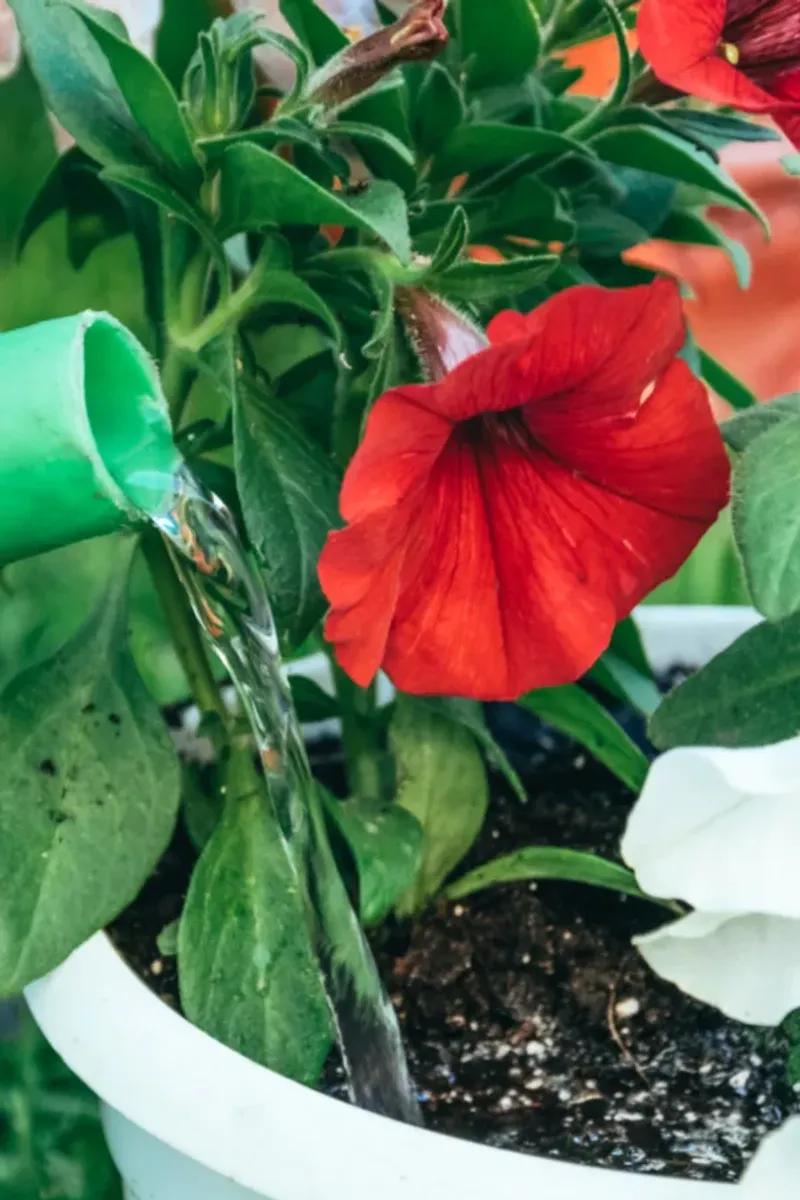
Water needs vary by situation. Containers and hanging baskets can dry out quickly during hot weather and may need checking daily in peak summer heat, while in-ground plantings generally do better with thorough, less frequent watering that encourages deeper root growth. University of Minnesota Extension’s container plant guidance warns that allowing a container petunia to wilt repeatedly can interrupt flowering for an extended period, so consistent moisture matters as much as technique.
Nutrition is a related concern for containers because frequent watering gradually depletes nutrients from the potting mix. Regular fertilization following label directions can help maintain flowering, but more fertilizer is not always better. Overfertilization can damage roots and worsen the situation, so stick to the product’s recommended rate and frequency rather than doubling up in hopes of faster results.
Disease and petal blight are worth watching for, especially in humid summers. Clemson Cooperative Extension advises avoiding wetting foliage and flowers during watering, since wet conditions can promote disease and cause petal damage. Research presented at the American Society for Horticultural Science found that elevated temperature reduced the number of flowers per petunia plant in controlled conditions, a reminder that heat stress can drive August decline regardless of pruning habits.
Save Selected Flowers for Seed
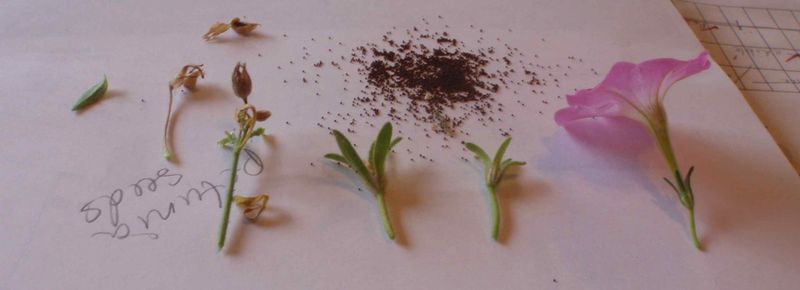
All the advice about removing seed capsules comes with one important exception: gardeners who want to collect petunia seeds need to leave selected flowers alone. Removing the ovary, the swollen green structure beneath the petals, prevents seed from developing. If you deadhead every bloom without exception, you will not have seeds to save at the end of the season.
The practical approach is to mark a few flowers you want to keep for seed, perhaps with a small piece of colored yarn or a plant tag, and deadhead everything else as usual. Let those marked blooms mature fully until the capsule turns dry and papery, then collect and store the seeds in a cool, dry place.
Ask Extension’s guidance on collecting petunia seeds notes that most petunias sold today are hybrids, and hybrid seedlings may not reliably reproduce the parent plant’s flower color, size, or growth habit. Seeds from a hybrid petunia may produce offspring that look quite different from the plant you started with. That is not a reason to avoid seed saving, but it is worth knowing before you plan next year’s garden around the results. Seed saving is a deliberate and rewarding gardening choice, not a mistake, as long as you go in with realistic expectations about what those seeds may grow into.
Match the Trim to the Symptom
Pulling together everything in this article comes down to matching what you do to what you actually see on the plant. Three common situations each call for a different response.
When individual blooms fade and leave behind a visible seed capsule on a traditional, large-flowered, or double petunia, remove the complete spent-flower unit: the petals, the short stalk, and the green seed-forming structure beneath it. Mississippi State Extension’s deadheading guidance and Clemson Cooperative Extension’s petunia factsheet both support this as the correct technique for varieties that hold onto seed-forming tissue after flowering.
When your petunias are a self-cleaning spreading type, skip the routine weekly deadheading and focus instead on occasional cleanup of stuck or rain-damaged flowers, plus midsummer shaping if the plant becomes sprawling or thin.
When stems turn long and sparse with few buds anywhere on the plant, reach for pruning shears rather than your fingertips. A staged one-third-to-one-half cutback, guided by Penn State Extension’s pruning recommendations, can restore branching and renewed flowering over the following weeks.
Correct deadheading on the right varieties can support longer, more consistent flowering through late summer, but University of Minnesota Extension is clear that sustained performance also depends on sunlight, water, nutrition, and the cultivar itself. The trim is one piece of the puzzle, and knowing which trim fits the situation is what makes it count.