
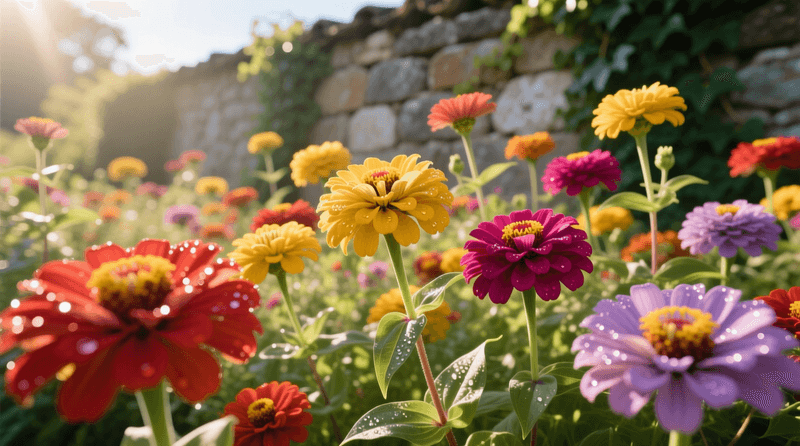
Florida summers are hard on flowers. Scorching heat, heavy rain, sandy soil that dries out fast, and humidity that invites disease can wipe out a bed before August even arrives. Zinnias, especially narrow-leaf types and newer disease-resistant varieties, can deliver reliable color through those months when planted in the right spot and given the right start. They are not foolproof, but they are one of the more dependable options a Florida gardener has for a full-sun summer bed.
A Reliable Summer Annual, Not an Indestructible One
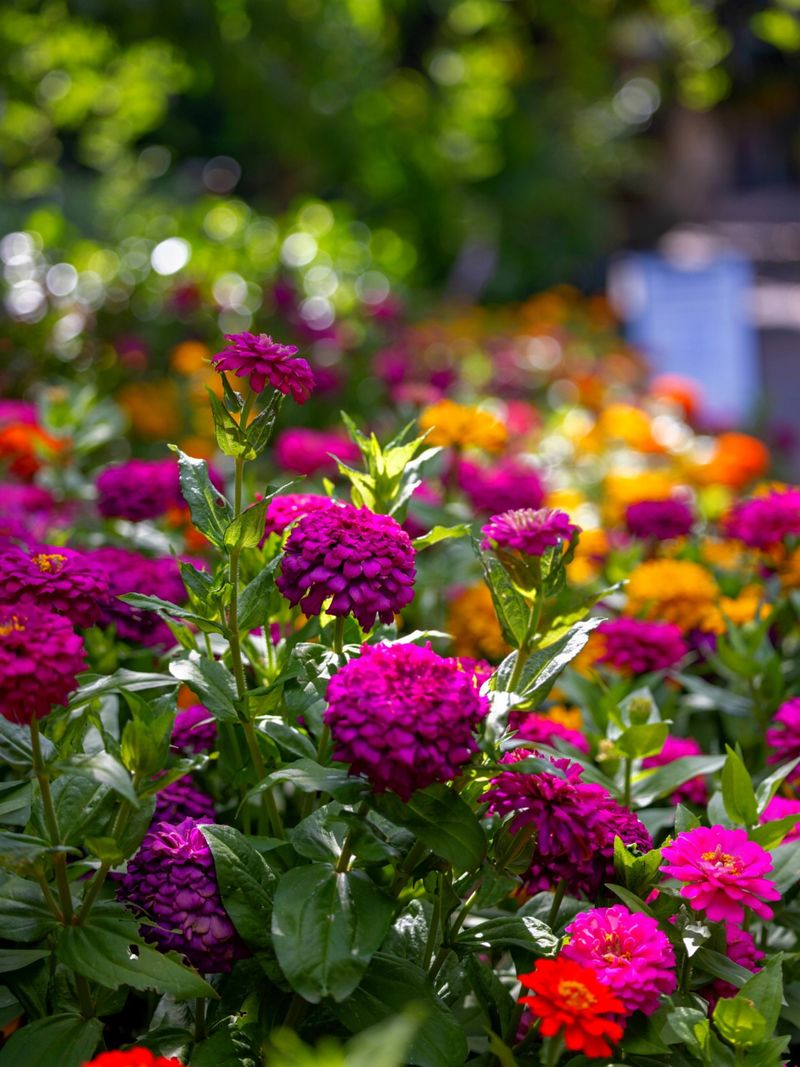
Zinnias earn their reputation one summer at a time. UF/IFAS zinnia guidance describes them as full-sun plants suited to Florida’s hot summers that can keep blooming through the season when they stay healthy. That conditional phrase matters: healthy plants in well-drained soil with adequate spacing perform well, while plants crowded into wet beds or ignored after transplanting often struggle before the season peaks.
Narrow-leaf zinnias, sometimes listed as Zinnia angustifolia or Z. linearis, hold up particularly well in humid conditions because their smaller foliage dries faster after rain or irrigation. Disease-resistant hybrids add another layer of reliability. UF/IFAS publication FP623 rates zinnia drought tolerance as high, which is useful in Florida’s fast-draining sandy soils, but it also notes sensitivity to certain pests and diseases. High drought tolerance after establishment is a real advantage; it does not mean newly transplanted zinnias can go without water.
The idea that experienced gardeners overlook zinnias as too simple is a useful way to frame why they deserve a second look, but it is editorial color rather than a documented trend. What the evidence does support is calling zinnias accessible, heat-tolerant summer annuals that can provide dependable color when conditions match their needs. The UF/IFAS bee-plant database also confirms they are not Florida natives; they are nonnative annuals listed as suitable for Florida gardens. That distinction matters for gardeners who prioritize native plantings, but it does not change their practical value as a summer color solution in the right bed.
Full Sun Helps Zinnias Bloom, but Drainage Still Decides the Outcome
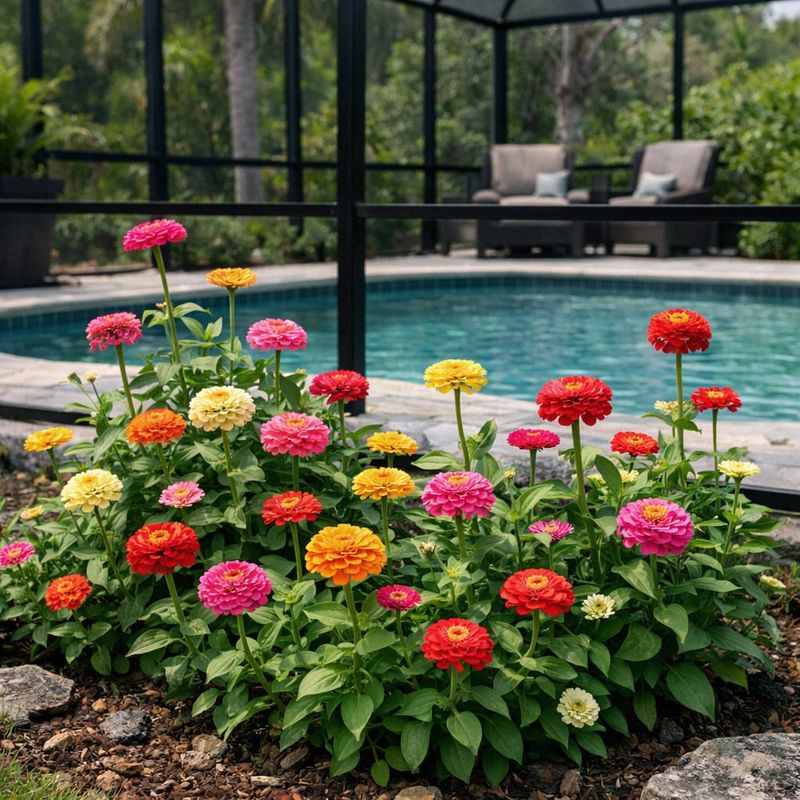
Six hours of direct sunlight is generally the threshold that separates a full-sun planting from a partial-shade one. UF/IFAS pollinator planting guidance uses six to eight hours as a practical target for sunny plantings, and zinnias fall squarely in that category. Placing them where afternoon shade cuts that total below six hours usually means fewer flowers and weaker stems, which makes the plant more vulnerable to disease pressure over a long summer.
Strong light supports flowering, but it does not protect roots from standing water. UF/IFAS documentation on zinnias is direct: the plants tolerate all but wet soils. A bed that collects water after summer thunderstorms, sits in a low spot, or drains slowly can cause decline even when the sun overhead is intense. Gardeners sometimes assume that heat-tolerant plants must also handle wet feet; zinnias do not.
The practical test before planting is simple. After a heavy rain, check whether water pools in the intended bed and how long it takes to drain. Sandy soil in most of Florida drains quickly, which usually works in zinnias’ favor. Clay-heavy or compacted areas, low spots near downspouts, or beds bordered by hardscape that slows runoff can all create the saturated conditions that undercut the plant’s heat tolerance.
Choosing a site that gets full sun and drains freely is the single most important setup decision a Florida gardener can make for a zinnia bed. UF/IFAS guidance reinforces that well-drained soil is a non-negotiable requirement, not a preference.
Manage Sandy Soil Instead of Assuming Drought Tolerance Does the Work
Sandy soil drains fast, which is usually good news for zinnias, but it also means a sunny bed can dry out more quickly than gardeners expect. UF/IFAS soil management guidance explains that Florida’s sandy soils have low water-holding capacity, so irrigation that seems adequate by the calendar may not match what the root zone actually needs during a stretch of dry, hot weather.
New transplants need regular water while their root systems spread into surrounding soil. UF/IFAS irrigation guidance recommends adjusting frequency based on soil type, sun exposure, season, and plant type rather than following a fixed daily schedule. Once zinnias establish, UF/IFAS bedding plant care resources suggest watering as needed, using rainfall and soil moisture as the guide. The goal is to wet the root zone thoroughly each time without leaving the soil saturated for extended periods, which encourages root problems.
Mulch helps bridge the gap between Florida’s fast-drying soil and the plant’s water needs. UF/IFAS mulching guidance supports a two- to three-inch layer to conserve moisture and moderate soil temperature, but that layer should never rest against plant stems. Piling mulch against zinnia stems traps moisture at the crown and invites rot. For small annual beds, apply mulch with a light hand so it conserves moisture without blocking drainage or holding excess water against the base of plants.
UF/IFAS bedding plant establishment guidance reinforces that soil and irrigation management together, rather than drought tolerance alone, determine whether annuals perform through a Florida summer.
Select Cultivars With Humidity and Disease in Mind
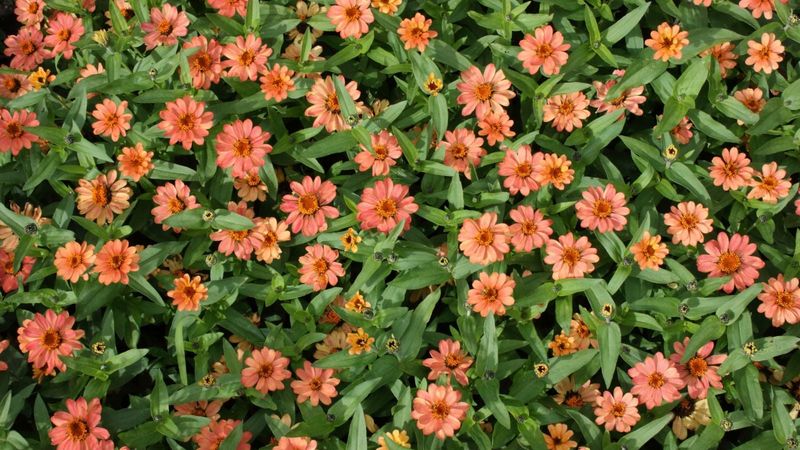
Not every zinnia handles Florida’s humidity equally. Narrow-leaf types such as Zinnia angustifolia tend to resist disease better than large-flowered common zinnias because their foliage dries faster between rain events. For gardeners who want broader flower size and color range, choosing a documented disease-resistant hybrid makes a meaningful difference over selecting whatever is on the nursery shelf.
UF/IFAS Miami-Dade garden planning materials identify several cultivars with improved disease resistance suited to Florida conditions: Profusion, Orange Star, Pinwheel, Oklahoma, Benary’s Giant, and Crystal White. Each of these has been recognized for performing under humid conditions, though cultivar performance can still vary by site, season, and local disease pressure. Selecting from this list is a more defensible starting point than assuming any zinnia will hold up equally well through August in South Florida.
Cultivar size also affects how a bed is designed. Compact types like Profusion and Pinwheel work well in tight spaces and container edges. Taller types like Benary’s Giant need more room between plants to maintain airflow, and their height can create a layered look in a mixed bed. UF/IFAS zinnia resources note that growth habit should guide spacing decisions rather than applying a single measurement across all types.
FP623 reinforces that crowding increases disease risk, so matching the cultivar’s mature size to the available bed space is part of getting the selection right from the start.
Use Spacing and Surface Watering to Reduce Disease Risk
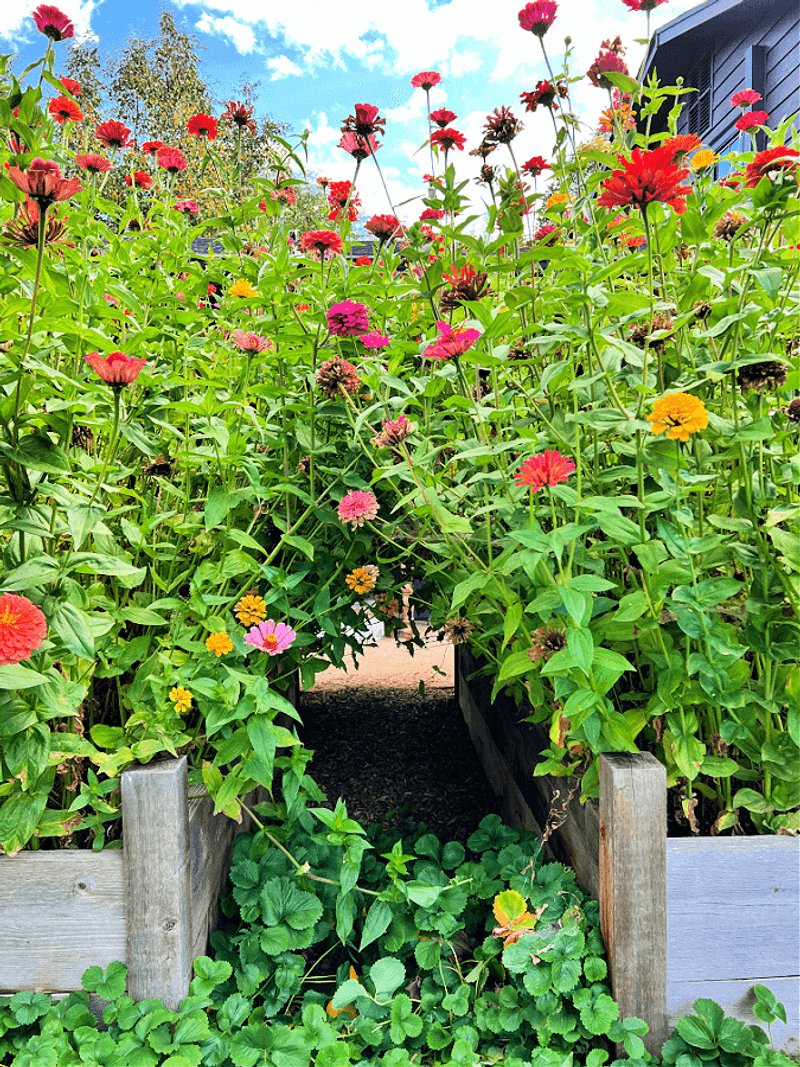
Crowded plants trap humid air between their leaves, and Florida’s summer humidity is already high enough without help. UF/IFAS zinnia guidance recommends spacing plants according to their growth habit, and FP623 supports approximately 8 to 12 inches between many zinnia types as a starting point. Larger cultivars like Benary’s Giant need more room than that, so check the mature spread on the seed packet or plant tag before setting plants in the ground.
Adequate spacing helps reduce the humid microclimate that encourages fungal diseases such as powdery mildew and leaf spot, but spacing alone does not prevent heat stress, drought stress, or wilting. A well-spaced bed that runs out of water on a 95-degree afternoon will still wilt. Spacing is one layer of a broader care approach, not a substitute for consistent irrigation and monitoring.
Where water lands matters as much as how much is applied. EDIS publication FP623 recommends watering at the soil surface rather than routinely wetting the foliage. Wet leaves in humid weather create conditions where fungal spores can germinate and spread. Drip lines, soaker hoses, or a hand wand directed at the soil all accomplish this better than overhead sprinklers.
Common zinnia problems in Florida include powdery mildew, leaf spots, blight, bacterial leaf spot, bacterial wilt, aphids, and spider mites. Keeping foliage dry during irrigation does not make zinnias disease-proof, but it removes one reliable pathway for fungal problems to get started.
Grooming Can Extend the Display, but Zinnias Still Need Observation
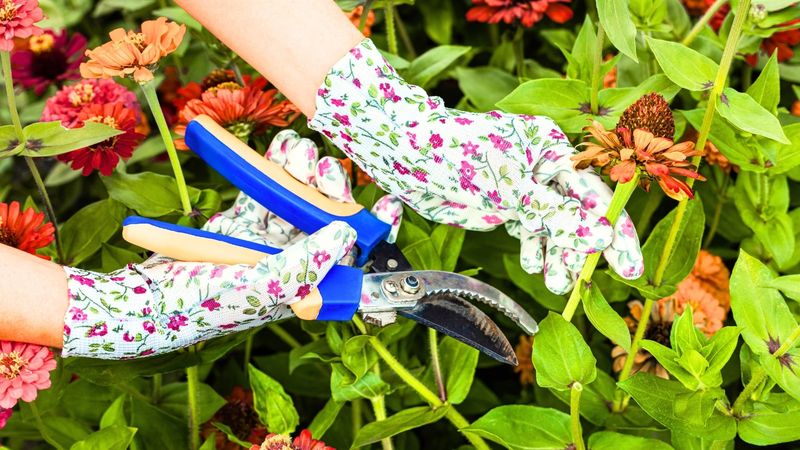
Pinching the growing tips of young zinnia transplants encourages the plant to branch rather than shoot straight up. More branches mean more flowering stems, which translates to a fuller, more productive plant over the course of the season. UF/IFAS zinnia care guidance notes that pinching young plants and removing spent flowers can both extend the flowering display.
Deadheading, or removing flowers that have faded, redirects the plant’s energy away from seed production and toward new blooms. Some modern cultivars, particularly compact types in the Profusion series, produce enough new flowers on their own that intensive grooming is less critical. FP623 supports this distinction: some types remain presentable with minimal grooming, while others benefit more from regular attention.
Grooming is optional in the sense that zinnias will not stop flowering entirely if spent blooms are left in place. What grooming cannot do is substitute for monitoring. Florida summers change quickly, and a bed that looked fine on Monday can show signs of bacterial wilt, mite damage, or powdery mildew by Friday. Checking plants during regular watering visits, adjusting irrigation when rainfall has been heavy, and catching pest or disease problems early all matter more over the long run than how consistently flowers are deadheaded.
A tidy bed and a healthy bed are not always the same thing.
Know When Heat-Tolerant Zinnias Are the Wrong Choice
Zinnias are summer annuals, not permanent landscape plants, and their practical limits matter as much as their strengths. The UF/IFAS bee-plant database lists wind resistance for zinnias as unknown. That means gardeners should not count on them to hold up through hurricane-force winds, storm surge, or flooding. Treating them as a reliable summer color source in a protected bed is reasonable; treating them as a storm-ready landscape plant is not supported by available evidence.
Salt is a separate and serious concern for Florida gardeners near the coast. The same UF/IFAS database rates zinnia salt tolerance as low to none. Salt spray from onshore winds can damage foliage and reduce flowering even without a storm event. Storm surge introduces a compounding problem: UF/IFAS storm surge guidance explains that saltwater flooding can leave salts behind in soil and irrigation water long after the water recedes, damaging plants that would otherwise have survived the flood itself.
Coastal gardeners dealing with regular salt exposure should look to plants with documented salt tolerance rather than trying to protect zinnias from conditions they are not equipped to handle. UF/IFAS salt-tolerant plant resources offer a starting point for those sites.
Timing is another variable that shifts by region. UF/IFAS zinnia guidance and FP623 both indicate that spring planting works across Florida, while South Florida gardeners can also plant in fall. North and Central Florida gardeners should check with their local UF/IFAS Extension office for the timing that fits their specific climate zone, since the difference between a frost-safe planting date in Gainesville and one in Homestead can be several weeks in either direction.
Match the Zinnia to the Site, Then Let Conditions Guide Care
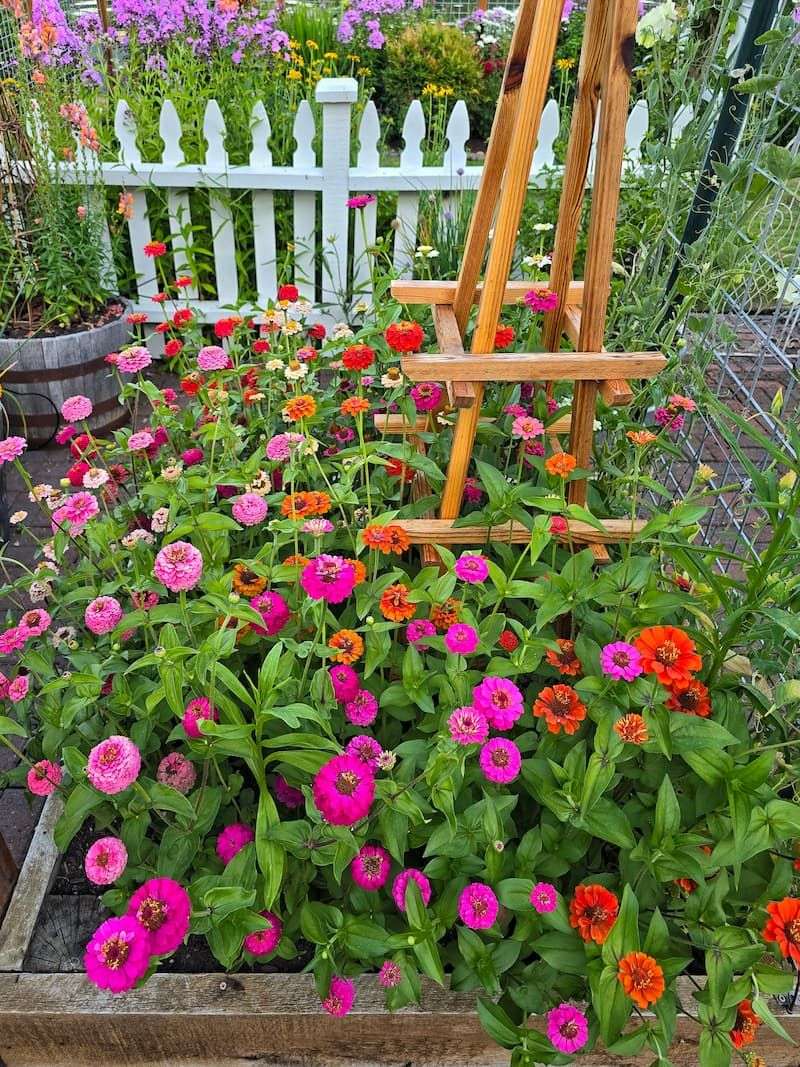
Before buying seeds or transplants, run through a short site check. The bed needs full sun, meaning at least six hours of direct light each day, and it needs to drain reliably after heavy summer rain. UF/IFAS zinnia guidance and FP623 both identify full sun and well-drained soil as the foundation of a productive zinnia planting. If the site pools water or sits in shade for most of the afternoon, a different plant is a better fit.
Once the site qualifies, choose a narrow-leaf type or a documented disease-resistant cultivar from the list that includes Profusion, Orange Star, Pinwheel, Oklahoma, Benary’s Giant, and Crystal White. Water consistently during establishment, then adjust frequency based on rainfall, soil moisture, and plant response rather than a fixed schedule. UF/IFAS soil management guidance is a useful reference for calibrating irrigation to Florida’s sandy conditions. Space plants according to their mature size, keep irrigation at soil level, and check the bed regularly for signs of disease or pest activity.
UF/IFAS confirms that zinnias attract bees and other pollinators, which adds seasonal value beyond color alone. The measured conclusion is this: zinnias can provide dependable Florida summer color when the site avoids saturation and salt, the cultivar fits the humidity, and care stays responsive to changing conditions. A plant that suits its site rarely needs to be rescued.