
The strip of soil along your house might be the toughest spot in your whole yard. In much of California, it is packed clay that cracks in August, and the wall behind it bounces afternoon heat right back onto every leaf.
Pick the wrong shrub and you end up with crispy stems, wasted water, and a front yard that looks tired by July. The good news is that a handful of plants shrug off clay, heat, and drought, and many of them feed local bees and birds too.
1. Hummingbird Sage (Salvia spathacea)
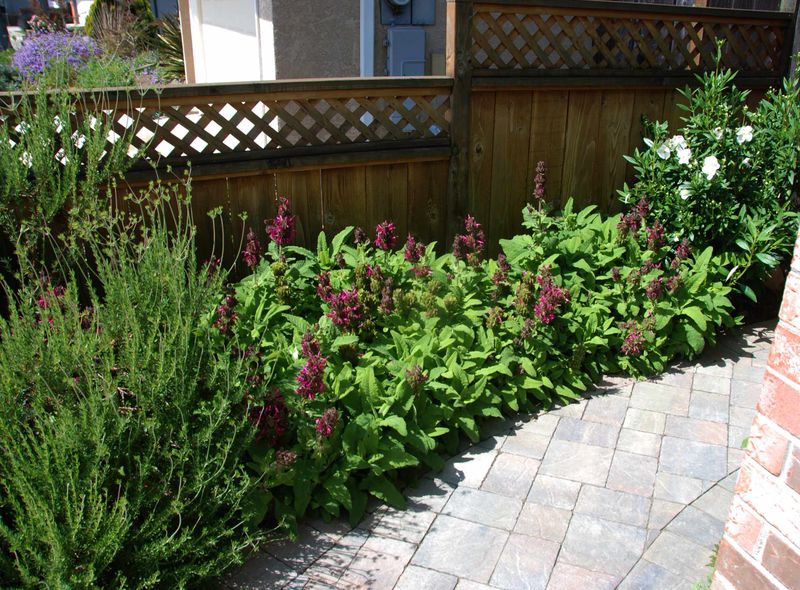
Plenty of gardeners give up on the shady north or east side of the house, but this California native was practically made for it. Its fruity-scented leaves form a low carpet, and spring brings tall magenta spikes that hummingbirds visit constantly.
Clay does not scare it. Hummingbird sage spreads slowly by underground stems and can handle heavy soil as long as water does not sit in puddles around the crown.
Once settled, it usually needs only occasional summer water, which may help you stay within local watering limits.
Use it under windows or beside the front walk where a shrub would block light. Cut back the spent flower stalks in early summer and it stays tidy without much fuss.
2. Coffeeberry (Frangula californica)
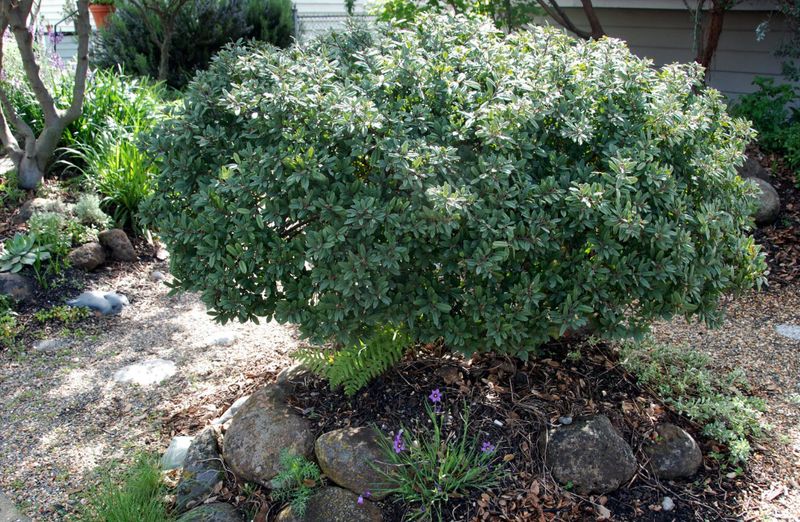
If boxwood keeps scorching on your hot south wall, coffeeberry is the swap worth making. Its glossy green leaves look polished enough for a formal front yard, yet it rarely needs more than a monthly summer soak once established.
Compact selections like ‘Mound San Bruno’ and ‘Eve Case’ stay around 4 to 6 feet, which fits nicely below most windows. The shrub tolerates clay well and handles reflected heat better than many nursery standards.
Here is the wildlife bonus. The small flowers draw native bees, and the berries ripen from red to near black, feeding thrushes and other birds in fall.
3. Germander Sage (Salvia chamaedryoides)
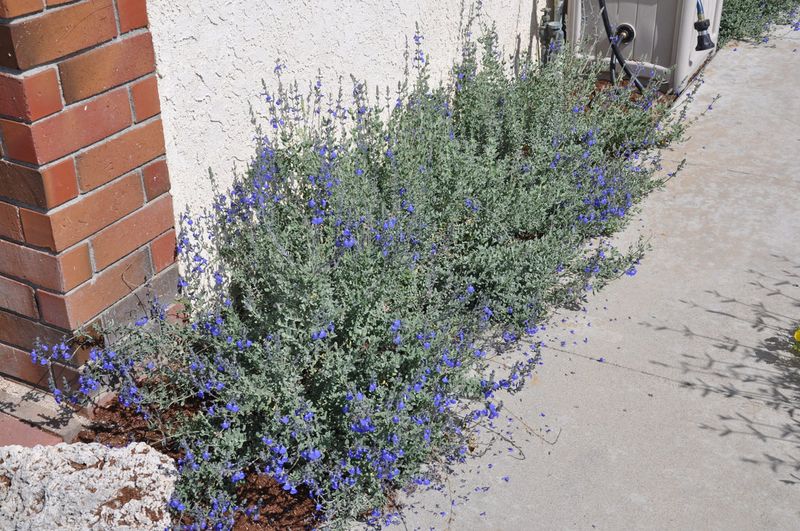
Bright blue flowers in brutal heat? Germander sage pulls it off.
Low and silvery, it creeps along the front edge of a foundation bed and blooms on and off from spring into fall.
Its fuzzy gray leaves reflect sunlight, which is one reason it holds up beside hot walls in places like Sacramento or Riverside. Plant it slightly raised on a small mound if your clay drains slowly.
Bees love it. A quick shear after each bloom flush keeps it compact and coaxes out more flowers.
4. Westringia (Coast Rosemary)
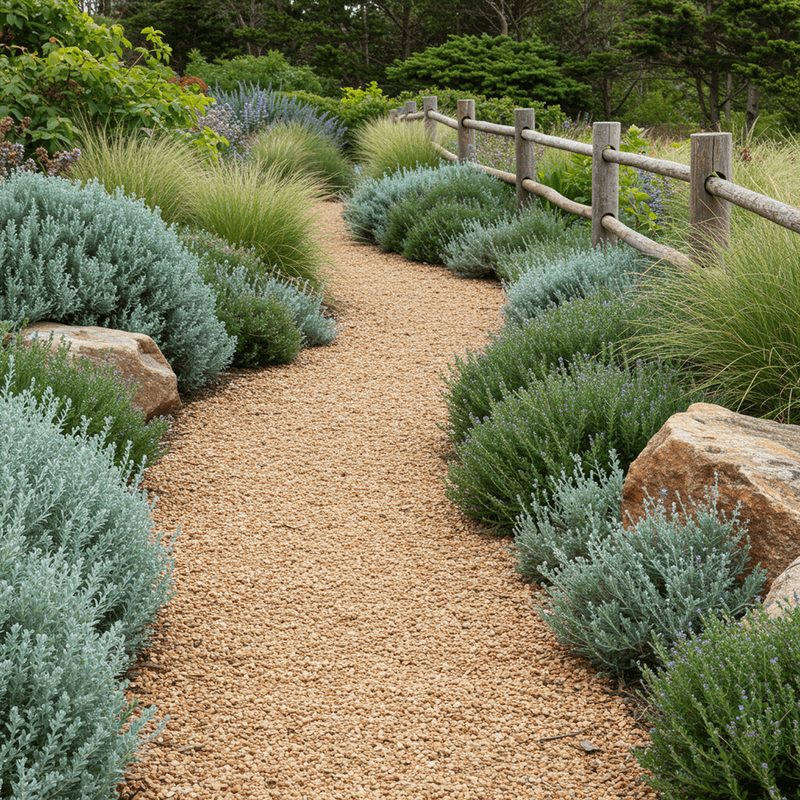
Some homeowners want clean, rounded shapes without the water bill of a traditional hedge. Westringia, sometimes called coast rosemary, gives you that look with fine gray-green foliage and tiny pale flowers almost all year.
Hailing from coastal Australia, it handles wind, heat, and heavier soils better than real rosemary, which can rot in wet clay. Dwarf types like ‘Grey Box’ stay about 2 to 3 feet tall with almost no pruning.
It is not a native, so pair it with natives nearby if pollinator support is your goal. As a tidy backbone plant, though, it is hard to beat.
5. California Fuchsia (Epilobium canum)
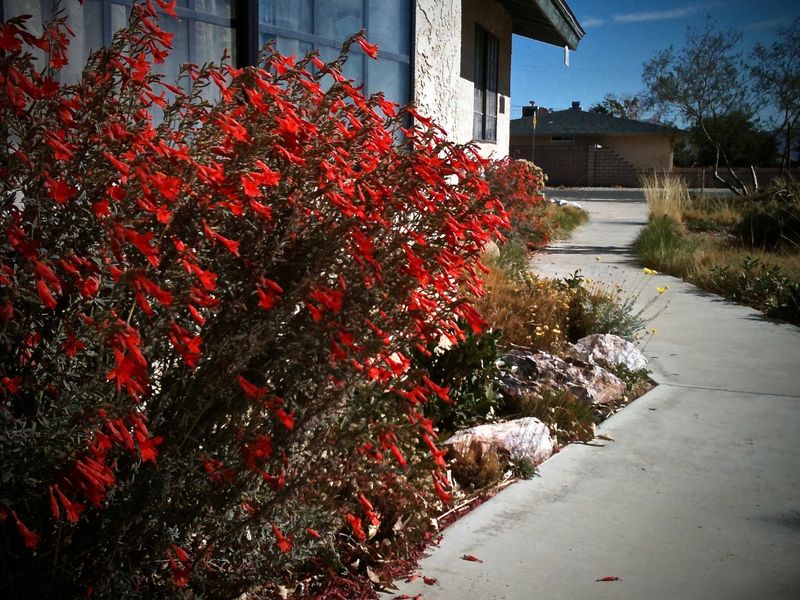
Late August is when most foundation beds look exhausted. California fuchsia waits for exactly that moment to explode with scarlet tubular flowers.
Hummingbirds treat it as a fuel stop before migration, and it asks for very little water. It tolerates clay, though good drainage keeps it happiest, so avoid planting it right where a downspout empties.
Expect it to spread a bit. Cut it nearly to the ground in winter and it returns fresh in spring.
6. Deer Grass (Muhlenbergia rigens)
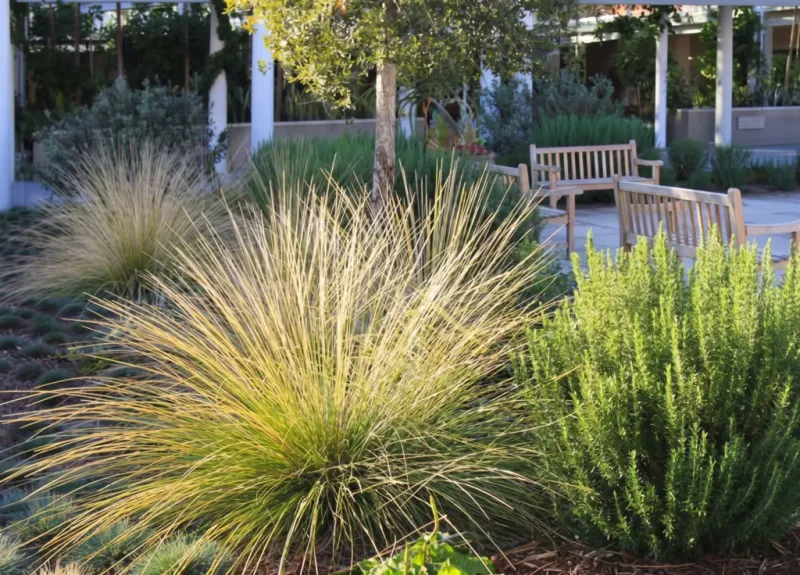
Native peoples in California once wove baskets from the flower stalks of deer grass, and the plant is just as useful in a modern yard. Its fountain shape softens hard corners and blank walls.
Deer grass grows naturally in heavy soils and puts up with both winter wet and summer bake. A deep drink every few weeks in summer is typically enough once roots settle.
Give each clump about 4 feet of space. The seed heads may feed small birds, and the dense base offers shelter for beneficial insects.
7. Dwarf Toyon
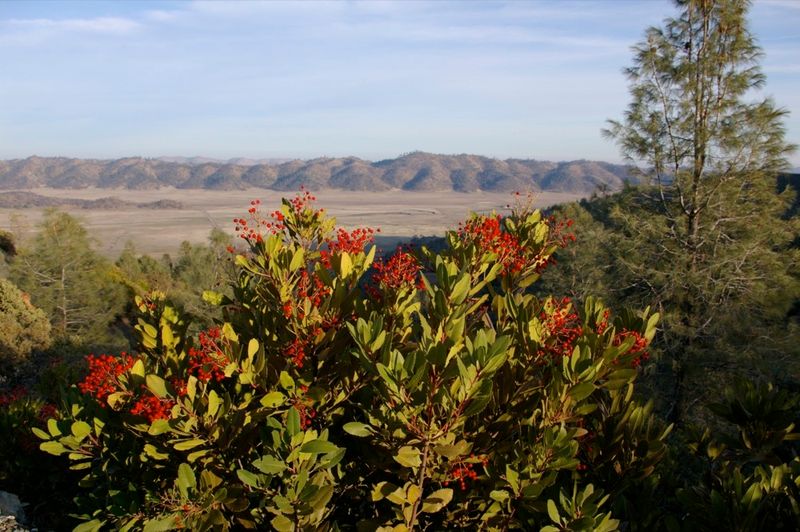
Hollywood is said to take its name from toyon, the native shrub also called California holly. Newer compact forms make it workable right against the house.
Toyon roots handle clay, and its leathery leaves resist heat and drought. White summer flowers draw bees, and red winter berries pull in robins and cedar waxwings.
Keep it a few feet from the wall for airflow. Light shaping after berries fade keeps it neat.
8. Cleveland Sage (Salvia clevelandii)
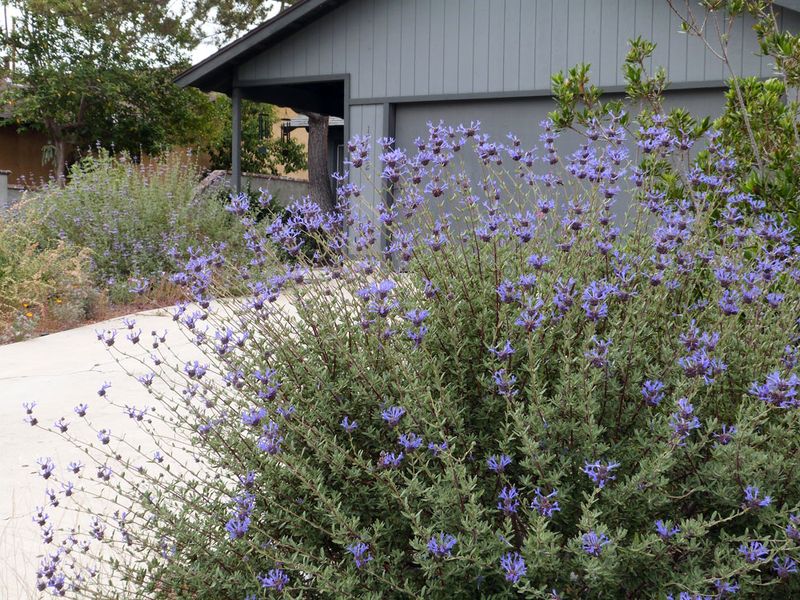
Brush against Cleveland sage and the whole porch smells like a summer hillside. That fragrance alone earns it a spot near a doorway or patio.
It is one of the toughest sages for full sun and reflected heat. In clay, plant high and water sparingly in summer, because overwatering is the usual way people lose it.
Lavender-blue flower whorls feed native bees and hummingbirds. For fire-prone neighborhoods, keep it well watered at the edge of your zone and away from vents, since oily sages can burn.
9. Lantana ‘New Gold’
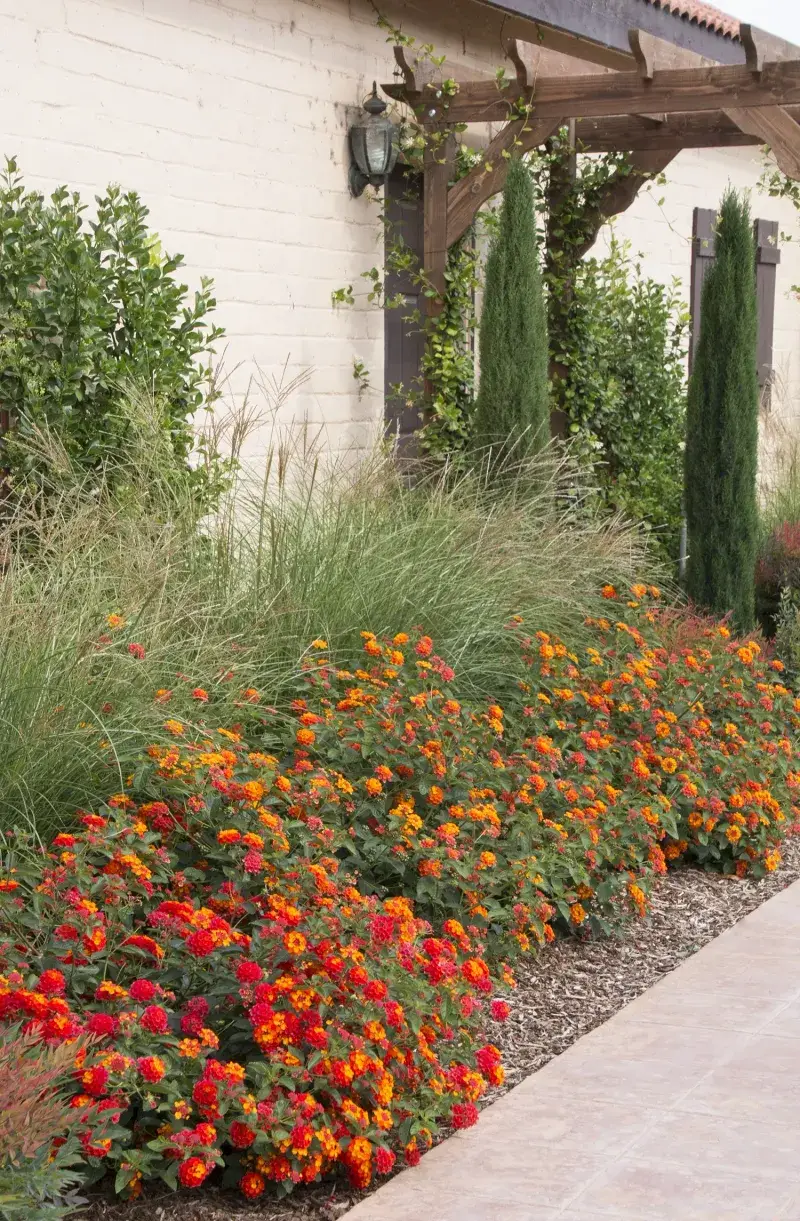
Some spots are just plain mean, like the bed between a hot driveway and a west-facing wall. ‘New Gold’ lantana thrives there, blooming nonstop through 100-degree days.
It accepts clay and needs little water once rooted. Butterflies visit often, and this variety sets few seeds, which can reduce spreading concerns.
Keep in mind the leaves and berries are toxic to pets and people if eaten. Trim it back hard in late winter to keep it full.
10. Island Bush Snapdragon (Gambelia speciosa)
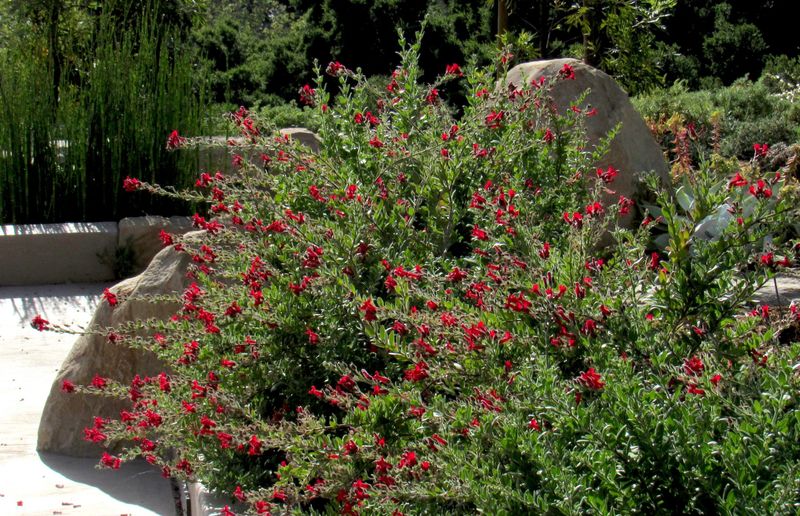
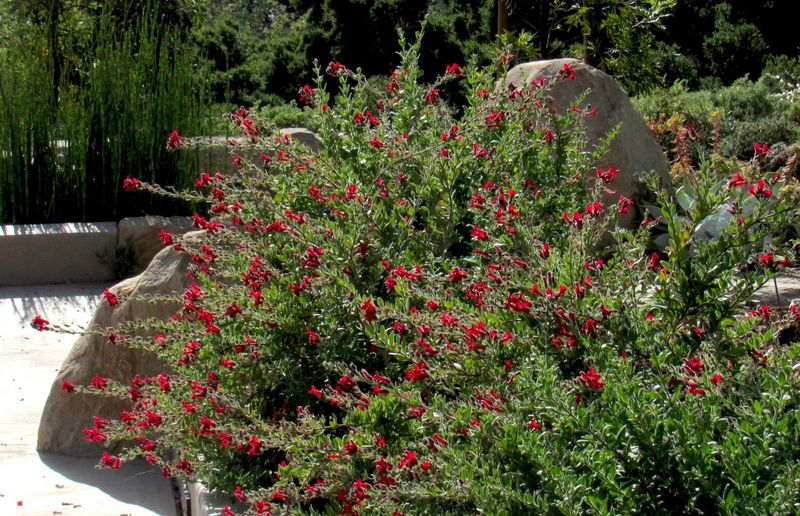
Rare in the wild and found mainly on California’s Channel Islands, this native brings bright red flowers to the entry garden.
It handles sun, heat, and moderate clay, especially when given a mound for drainage. Hummingbirds visit many months of the year.
Use it as an airy accent near steps or a mailbox. A light trim after blooming keeps it from getting leggy, and occasional summer water keeps it fresh.