
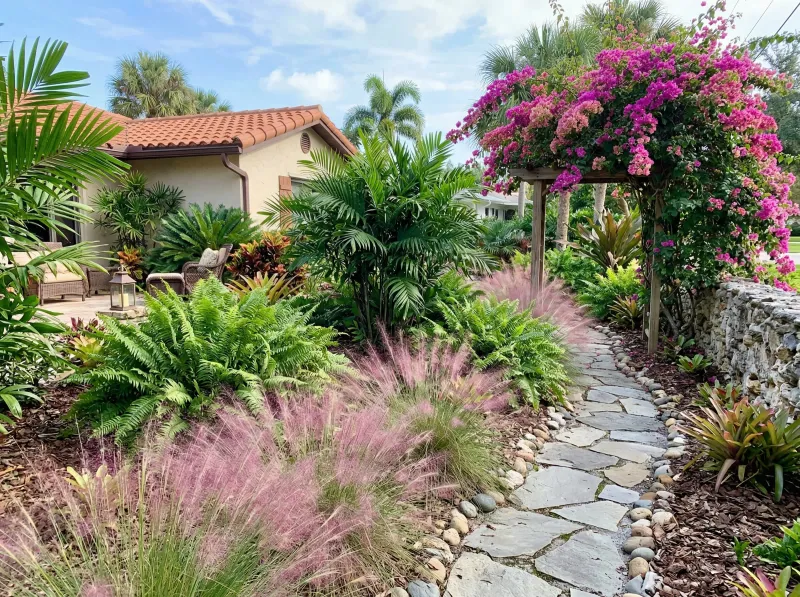
Liriope has been the go-to edging plant in Florida yards for decades, but a lot of gardeners are quietly swapping it out. The reason is simple: several Florida-native plants look sharper, shrug off summer heat, and barely need watering once they settle in. That means less time dragging the hose around and more time enjoying your yard. Here are nine native picks that make tired liriope borders look outdated.
1. Muhly Grass (Muhlenbergia capillaris)
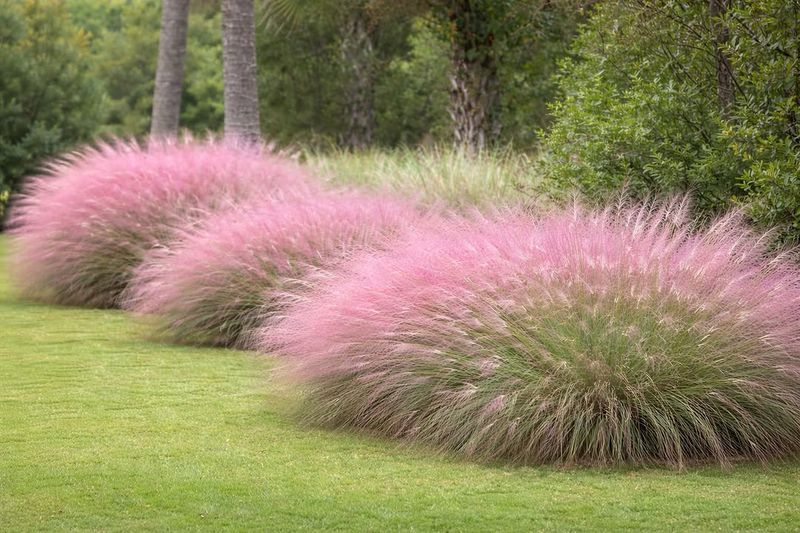
Come October, this grass throws a party. Muhly grass erupts into clouds of pink-purple plumes that catch the low autumn sun and practically glow, turning a plain border into something neighbors slow down to look at.
Native across Florida and blessed with a UF-IFAS thumbs-up, it handles sandy soil like a champ and asks for almost nothing once its roots dig in. Full sun keeps it densest, though it tolerates a little shade without complaint. Water it through the first summer, then let the hose stay coiled.
The fine, green blades stay tidy at roughly two to three feet, so it works as a flowing edge without flopping into the lawn. A single trim in late winter is really the only chore on the calendar. Salt tolerance and drought resistance make it a smart choice for coastal yards that liriope tends to sulk in.
Fun bit of trivia: those airy pink plumes are sometimes called cotton candy grass at nurseries, and once you see a mass planting backlit at sunset, the nickname makes perfect sense.
2. Sunshine Mimosa (Mimosa strigillosa)
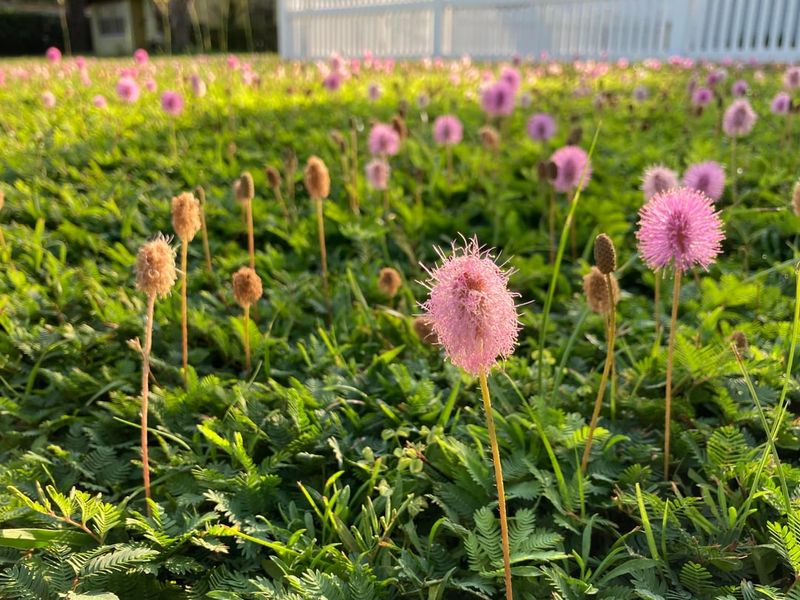
Touch a leaf and watch it fold up shy, then pop open again minutes later. Sunshine mimosa is the living toy of the native plant world, and it doubles as one of the toughest groundcovers Florida can grow.
Instead of standing upright like liriope, it hugs the ground and spreads into a soft green mat dotted with fluffy pink powder-puff flowers spring through fall. That low, dense habit chokes out weeds and even takes light foot traffic, so some folks use it as a no-mow lawn alternative in sunny strips.
Deep roots pull moisture from Florida sand that leaves thirstier plants gasping, and it laughs off heat once established. Butterflies and the little sulphur caterpillars adore it, adding motion to a spot that used to just sit there. UF-IFAS lists it as a fine native groundcover, which gives it real credibility for edging beds and slopes.
Give it full sun, skip the fertilizer, and let it knit itself together. About the only maintenance is trimming stray runners that wander where you would rather they didn’t.
3. Muhly’s Quiet Cousin: Fakahatchee Grass (Tripsacum floridanum)
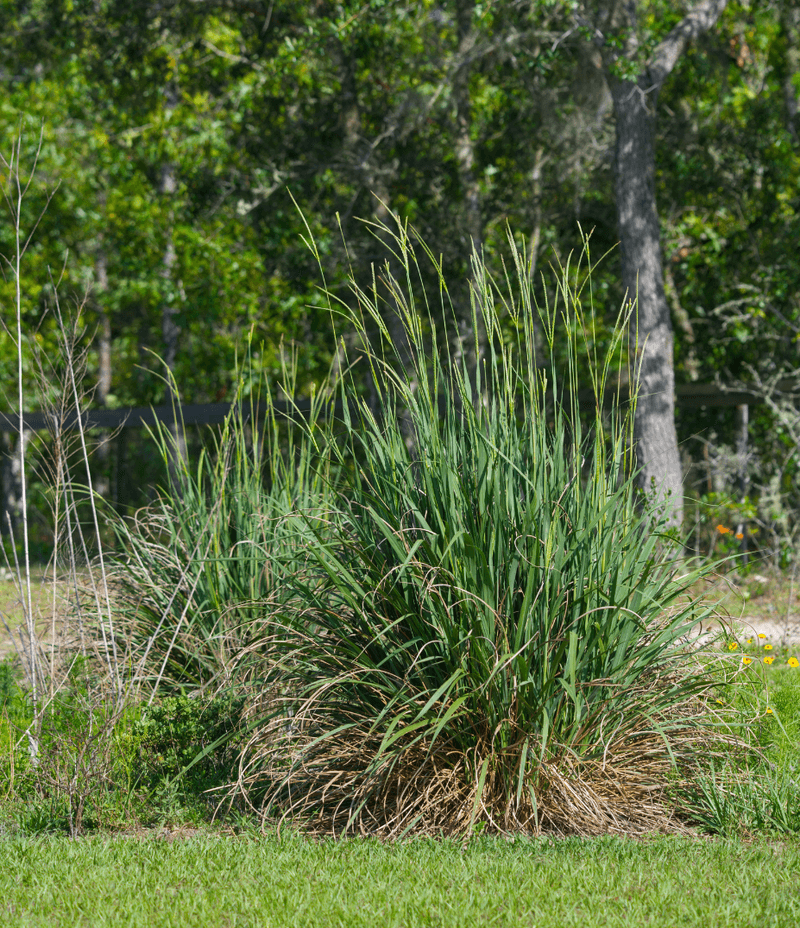
Think of it as the calm, architectural sibling in the native grass family. Dwarf fakahatchee grass forms neat, arching green fountains that hold their shape year-round, giving borders structure even when nothing is blooming.
Endemic to South Florida, this grass evolved right here, so it takes muggy heat, occasional flooding, and long dry spells in stride. It tops out around two to three feet, making it a natural liriope replacement that reads as fuller and more graceful along a walkway.
Wildlife gets a lot from it too. The foliage feeds skipper butterfly larvae, and the seed heads draw small birds, so a plain edge quietly becomes a food source. Because it tolerates both wet and dry conditions, it bridges the awkward low spots in a yard where flooding after storms is common.
Maintenance is refreshingly light. Cut it back once in late winter, divide clumps every few years if they get crowded, and otherwise leave it alone. No supplemental water once it roots, no fertilizer routine, and no fussing after a hurricane blows through.
4. Coontie (Zamia integrifolia)
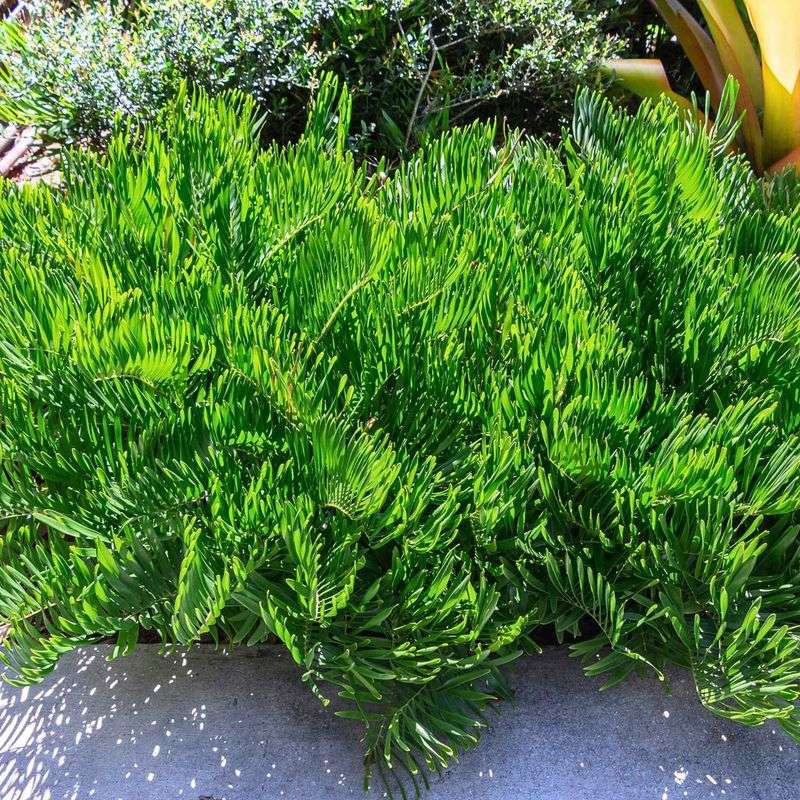
Here is a plant that shared the planet with dinosaurs and still refuses to die. Coontie is Florida’s only native cycad, a stiff, glossy, fern-like tuft that looks almost prehistoric because, well, it basically is.
Slow and steady is its whole personality. It grows into a tidy, symmetrical clump about two to three feet wide, holding its dark evergreen fronds through drought, heat, and even a fair amount of shade. Once established, it is famously indestructible and needs essentially zero irrigation.
That toughness comes with a bonus: coontie is the only host plant for the rare atala butterfly, whose bright-orange-spotted caterpillars have made a comeback thanks to gardeners planting it. Swap a strip of liriope for coontie and you might be helping revive a butterfly.
A quick word of caution, since honesty matters here. All parts of coontie are toxic if eaten, so it may not suit yards with curious pets or toddlers who nibble. For everyone else, it delivers a bold, low, sculptural edge that stays handsome decade after decade with almost no attention.
5. Blue-Eyed Grass (Sisyrinchium angustifolium)
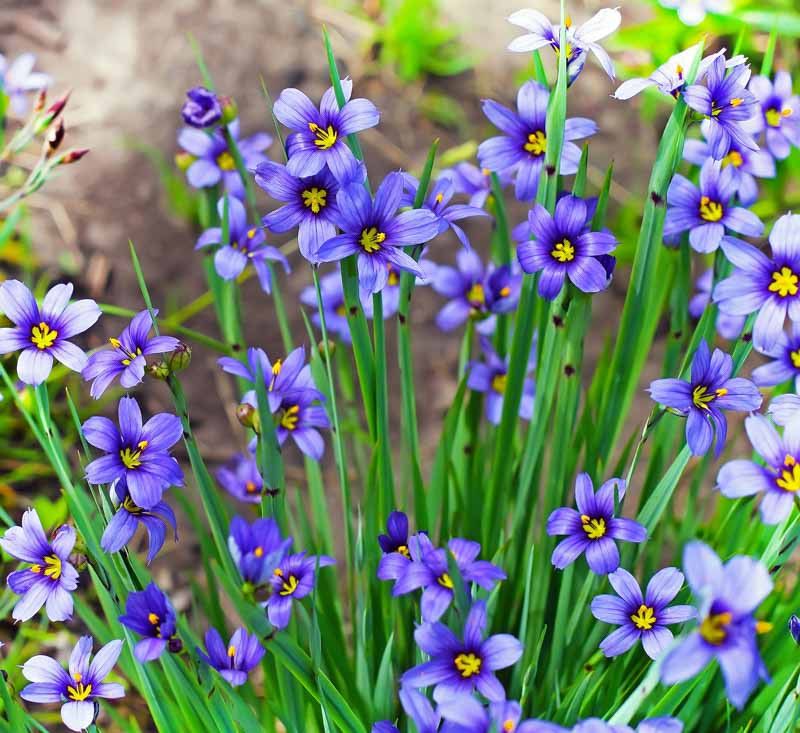
Do not let the name fool you. Blue-eyed grass is not a grass at all but a petite member of the iris family, and it sprinkles a border with tiny star-shaped violet-blue flowers that seem to float above slender green blades.
Standing only about a foot tall, it slides right into the low-edging role liriope usually fills, but with actual flowers instead of flat green sameness. Blooms show up in spring and can repeat, giving delicate color right where a path meets a bed.
Florida-native and comfortable in the sandy, sometimes soggy soils of the state, it enjoys full sun to part shade and asks very little once settled. It self-seeds gently, so a small planting slowly fills in gaps on its own, which is a nice free upgrade.
Pair it with muhly grass or coontie and you get a layered edge with color at three different heights. Trim spent foliage in late winter and otherwise let this dainty native do its quiet, water-thrifty thing.
6. Beach Sunflower (Helianthus debilis)
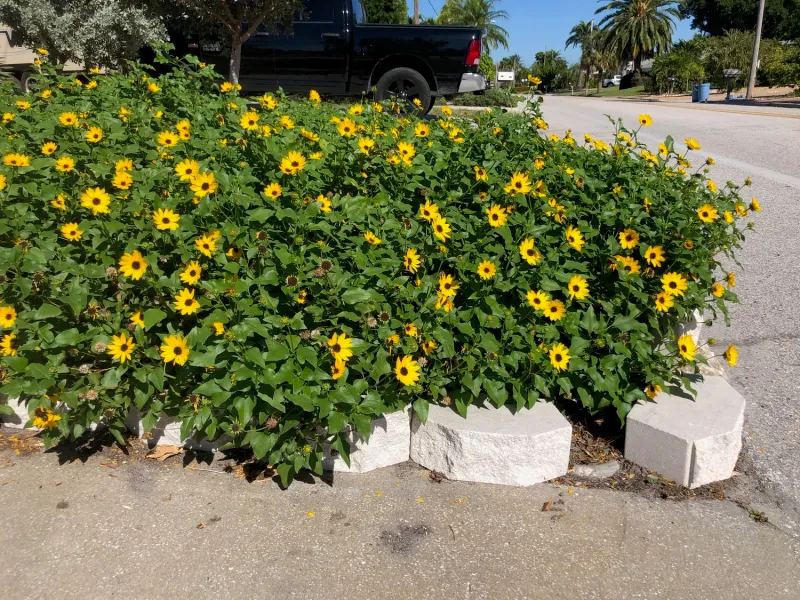
Picture a border that blooms cheerful yellow every single month of the year, even during the sticky depths of a Florida July. Beach sunflower does exactly that, unspooling small daisy-like blooms across a spreading, sprawling mat.
Built for the harshest spots, it thrives in pure sand, blasting sun, and salt spray that would fry most edging plants. Coastal gardeners lean on it hard because it stabilizes loose soil and never seems to notice the heat. Water is barely a consideration once it takes hold.
Pollinators treat it like a diner that never closes, so bees and butterflies keep the planting buzzing. It grows fast and low, roughly one to two feet tall while creeping outward, making it a lively alternative to a static row of liriope.
Because it spreads enthusiastically, plant it where it has room to roam or plan on trimming the edges now and then. In return you get near-constant color, storm resilience, and a plant that treats drought like a mild inconvenience.
7. Powderpuff Purple Lovegrass (Eragrostis spectabilis)
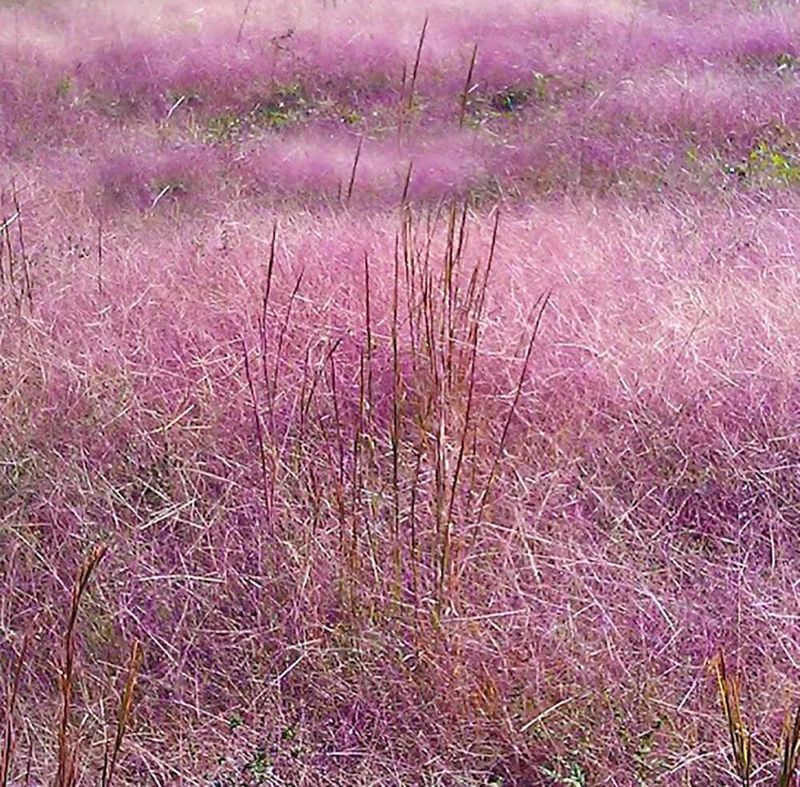
Late summer into fall, this native grass pulls off a magic trick, hovering a haze of reddish-purple over the ground like colored smoke. Purple lovegrass is subtle up close and jaw-dropping in a mass, especially when the light hits those airy seed heads.
Short and clumping at around one to two feet, it fits tight edging spaces where taller grasses would overwhelm. It is a genuine Florida native adapted to poor, sandy, well-drained soils, which describes plenty of yards around the state perfectly.
Toughness is the whole appeal. Purple lovegrass wants full sun, hates pampering, and rewards neglect with better color. Overwatering or rich soil actually makes it floppy, so this is one plant where skipping the hose truly makes it look its best.
It reseeds to fill in naturally and greens up quietly the rest of the year, so the fall color feels like a reward rather than a full-time job. For gardeners craving that soft, meadowy look without any of the maintenance drama, it is an easy yes.
8. Dwarf Fakahatchee’s Shade Match: Wild Coffee (Psychotria nervosa)
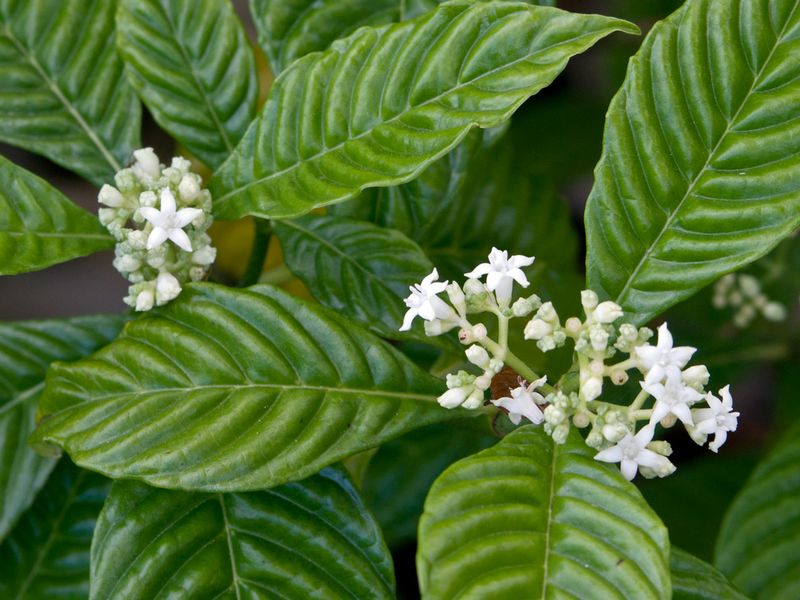
Shady borders are where liriope usually wins by default, but wild coffee steals that job with far more personality. Its deeply grooved, glossy leaves catch light in dim corners and give the plant an almost quilted, textured look you cannot ignore.
A South and Central Florida native, it keeps a rounded, bushy shape from two to four feet, so you can shear it lower for a formal edge or let it fill out. Small white flowers give way to bright red berries that cardinals and mockingbirds happily raid.
Heat and shade are no problem, and once its roots are down it manages Florida’s dry stretches without begging for water. It does prefer protection from hard frost, so North Florida gardeners may want it in a sheltered spot. Despite the name, the berries are not true coffee and are not meant for brewing.
For a woodsy, layered border under oaks or on the north side of a house, wild coffee brings evergreen structure, wildlife value, and a lush tropical feel that flat liriope simply cannot match.
9. Twinflower (Dyschoriste oblongifolia)
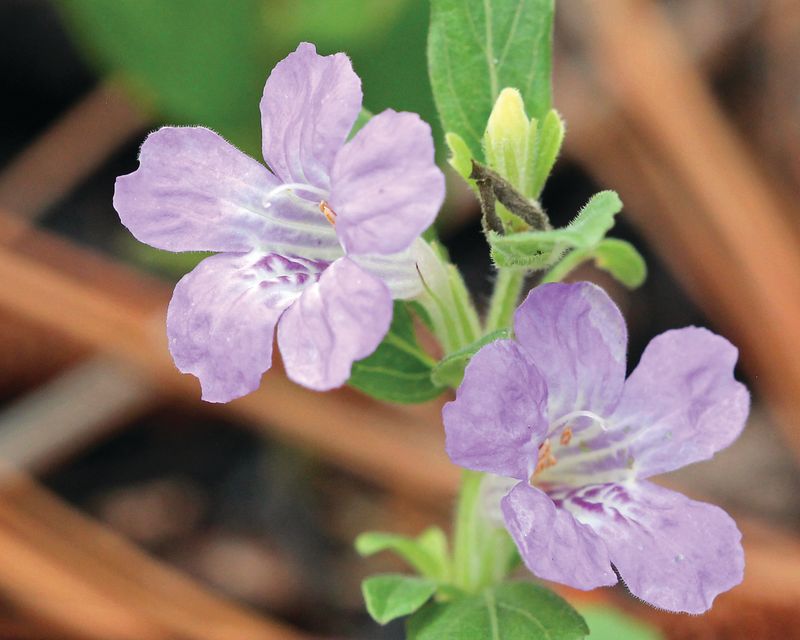
Small but mighty describes this quiet overachiever. Twinflower creeps along as a low, tidy carpet studded with soft lavender-purple blooms that pop in pairs, which is exactly how it earned its name.
Native to Florida’s sandy uplands, it was practically engineered for the state’s droughty soil and blistering sun. Once established it needs no regular watering, holds up through summer heat, and quietly spreads to knit shut the bare patches where weeds usually sneak in.
Staying under a foot tall, it makes a delicate front-of-border edge or a flowering filler between larger natives like coontie or muhly grass. Butterflies, particularly the common buckeye, use it as a host plant, so a modest planting pulls in fluttering visitors all season.
Because it is evergreen in much of Florida and blooms across the warm months, the color rarely quits. Low, water-wise, wildlife-friendly, and content to be ignored, twinflower is the kind of humble native that makes a liriope strip feel like a missed opportunity.