
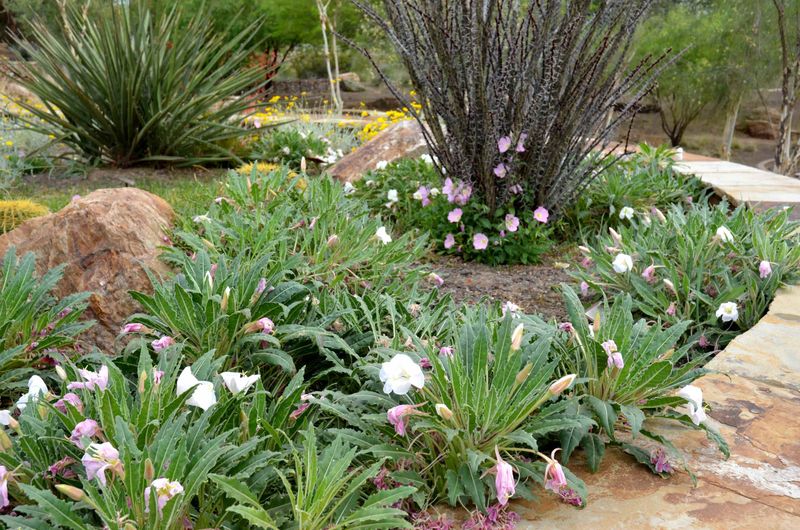
Weeds are the uninvited guests that show up every summer in Texas yards, and no amount of mulch seems to keep them away for long. What if the ground itself could fight back? Native Texas groundcovers spread across bare soil, block sunlight from reaching weed seeds, and shrug off the triple-digit heat that kills fussier plants. Here are eight tough natives that do the weed-fighting work for you while sipping barely any water.
1. Frogfruit (Phyla nodiflora)
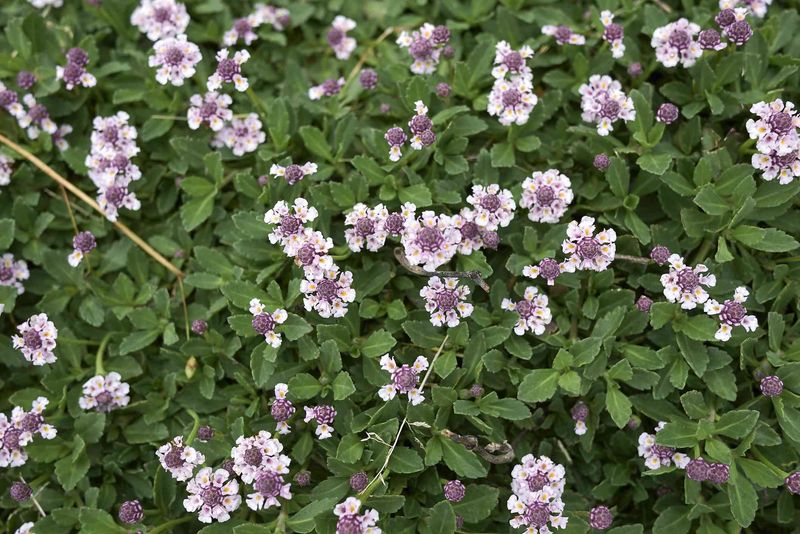
Step on a patch of frogfruit and it barely notices, which is exactly why Texas gardeners quietly love it. This low creeper hugs the ground and sends out runners that root as they travel, knitting together a dense mat that leaves weed seeds no open soil to claim.
It handles foot traffic, tolerates both soggy clay after a Gulf Coast storm and the crusty dry spells of August, and rarely climbs more than a few inches tall. Tiny white-and-purple flowers dot the green all summer, pulling in bees and small butterflies that turn your weed barrier into a pollinator stop.
Fun fact: frogfruit is a host plant for several butterfly species, including the phaon crescent, so the mat you plant to smother weeds ends up feeding caterpillars too. Once it fills in, mowing is optional, and it asks for almost no supplemental water after the first season. Few natives multitask this hard.
2. Horseherb (Calyptocarpus vialis)
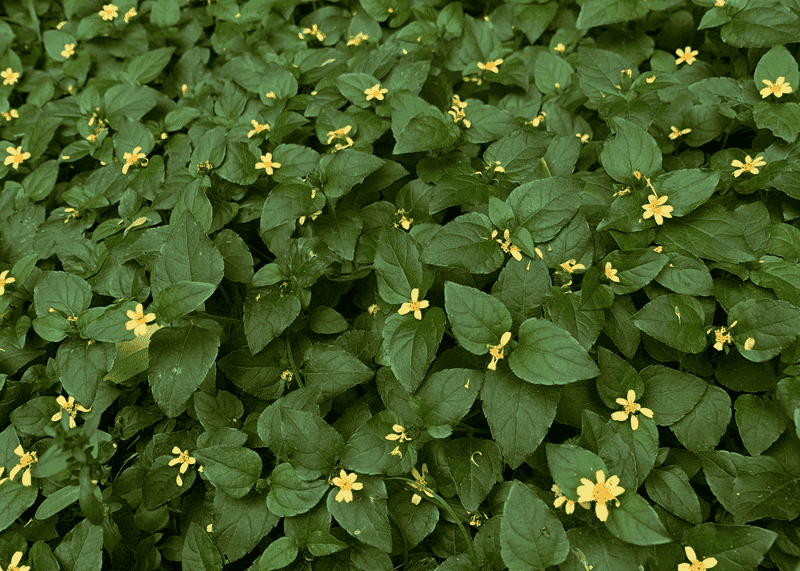
Gardeners either adore horseherb or grumble about it, and that split says everything about how vigorously it grows. Left to its own devices in the dappled shade under Texas live oaks, it forms a soft green carpet that muscles out the weeds most other plants surrender to.
Small yellow star-shaped flowers appear off and on through the warm months, and deer tend to leave it alone. It thrives in the tricky dry shade where St. Augustine grass thins out and bare dirt invites invaders.
During a brutal drought it may brown and go dormant, but it bounces back with the next good rain like nothing happened. Because it spreads so eagerly, plant it where you want full coverage and edge it away from beds you want to keep tidy. Think of it as a self-repairing lawn alternative that never needs a bag of mulch to keep the ground covered.
3. Silver Ponyfoot (Dichondra argentea)
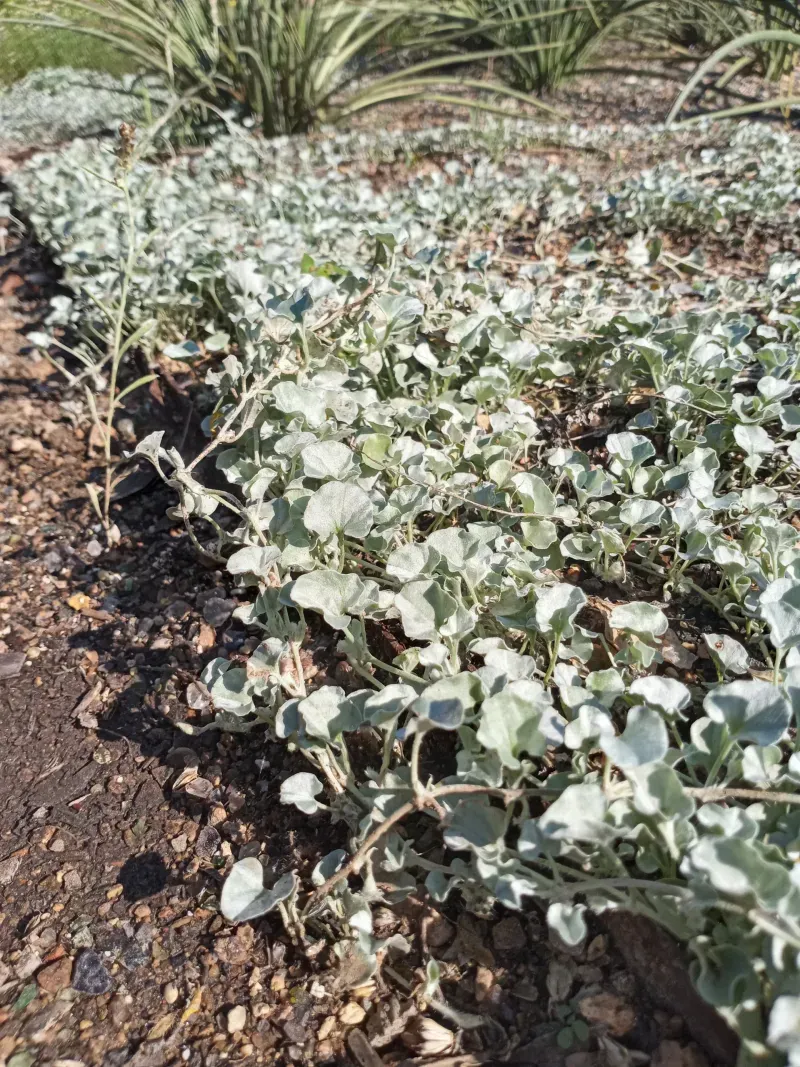
Imagine a river of shimmering silver flowing over your rock border, and you have silver ponyfoot on a good day. The fan-shaped leaves catch the harsh Texas light and reflect it back, giving beds a cool, moonlit look while the plant quietly denies weeds any elbow room.
Native to the drier western reaches of the state, it laughs at heat and rocky, poor soil. Drainage matters more to it than fertility, so it excels tumbling over retaining walls, filling gravel gaps, and softening the edges of xeriscaped yards under water restrictions.
Its trailing stems root down as they wander, so a few starter plants stretch into a broad silvery sheet within a season. Pair it with darker green natives and the color contrast makes the whole bed pop. When the goal is beauty and weed suppression on almost no water, this one earns its spot.
4. Texas Frogbit Alternative: Snake Herb (Dyschoriste linearis)
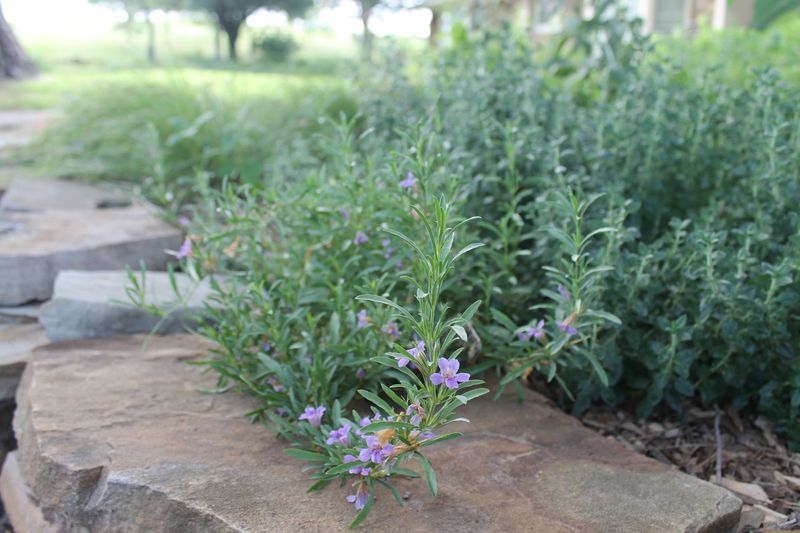
Not every weed-blocker needs to sprawl aggressively, and snake herb proves it with a tidier, clumping habit. It knits together low and tight, filling sunny gaps with narrow green leaves and cheerful lavender-purple flowers that keep coming through the hottest stretch of summer.
This one is a true survivor of the Texas Hill Country, comfortable in thin limestone soils where little else volunteers. Once established, it asks for essentially no water and shrugs off the triple-digit afternoons that wilt store-bought bedding plants.
Butterflies work the blooms, and the plant reseeds gently to fill in over time without staging a hostile takeover of the whole bed. For gardeners who want weeds crowded out but still like a controlled, intentional look, snake herb strikes a nice middle ground. It covers ground the polite way.
5. Wooly Stemodia (Stemodia lanata)
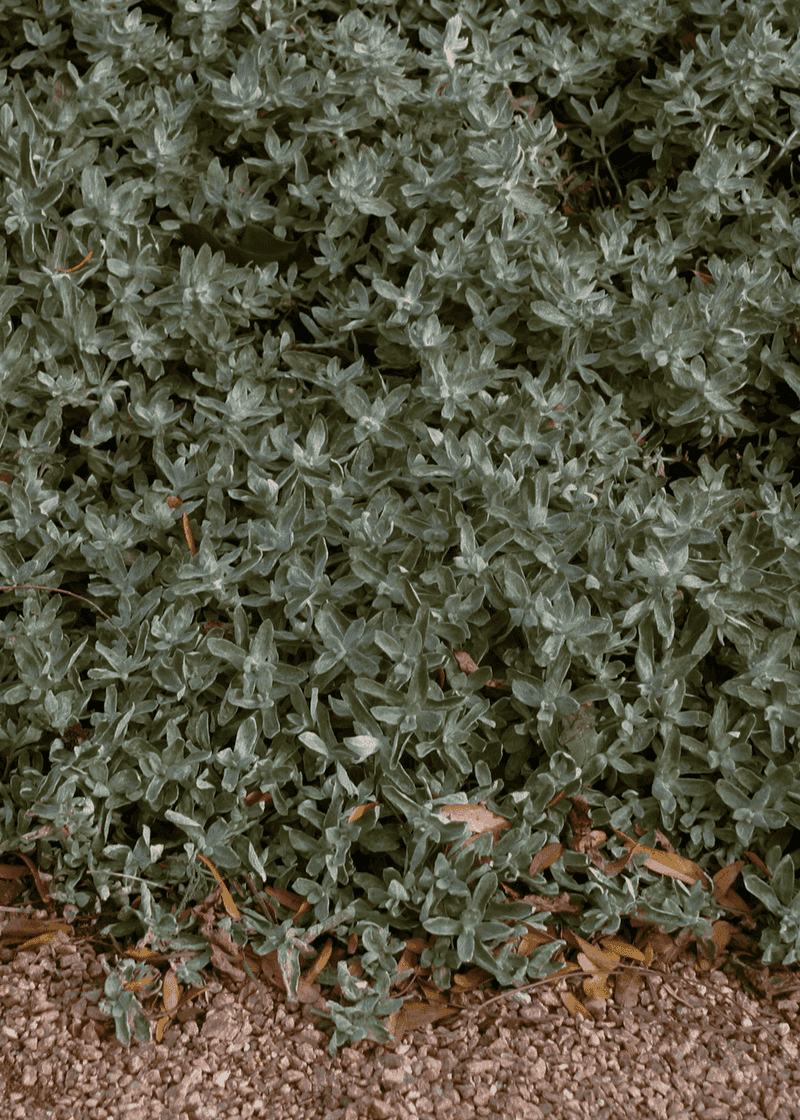
Run your fingers across wooly stemodia and it feels like a plant wearing a soft gray sweater. That fuzzy silver coat isn’t just charming; it reflects sunlight and helps the plant conserve moisture, which is how it thrives on sand dunes and scorching South Texas ground.
The trailing stems spread into a felted mat only a few inches high, blanketing bare soil so completely that weed seedlings never see daylight. Heat, sandy soil, salt spray near the coast, and long dry spells barely register with this tough native.
Because it stays so low and soft-textured, it works beautifully between stepping stones or spilling across a hot, sunny slope where mulch would just blow or wash away. Give it excellent drainage and full sun, then step back and let the silver mat do its quiet work. In a xeriscape, it is one of the most drought-proof carpets you can grow.
6. Zexmenia (Wedelia acapulcensis var. hispida)
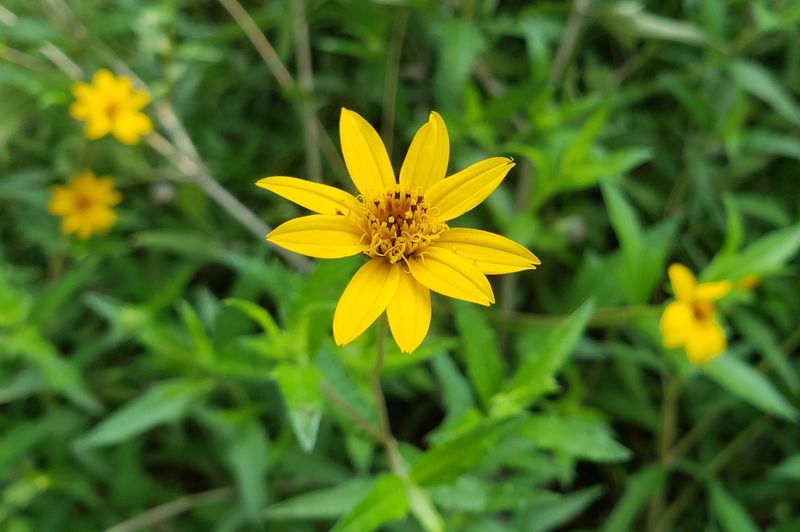
Here’s a groundcover that doubles as a wildflower show. Zexmenia mounds up a little taller than the others on this list, roughly one to two feet, and covers itself in golden-orange daisy blooms that keep firing from spring straight through the first frost.
Its bushy, spreading form shades out weeds beneath its canopy while giving beds real structure and color. Tough as they come, it handles clay or rocky ground, laughs at Texas drought once rooted, and comes back reliably year after year.
Pollinators adore it, and it is a larval host for the bordered patch butterfly, so the weed control comes bundled with a working wildlife habitat. Cut it back in late winter and it returns fuller each spring. When you want coverage that also earns compliments from the neighbors, zexmenia delivers on both fronts.
7. Gregg’s Mistflower (Conoclinium greggii)
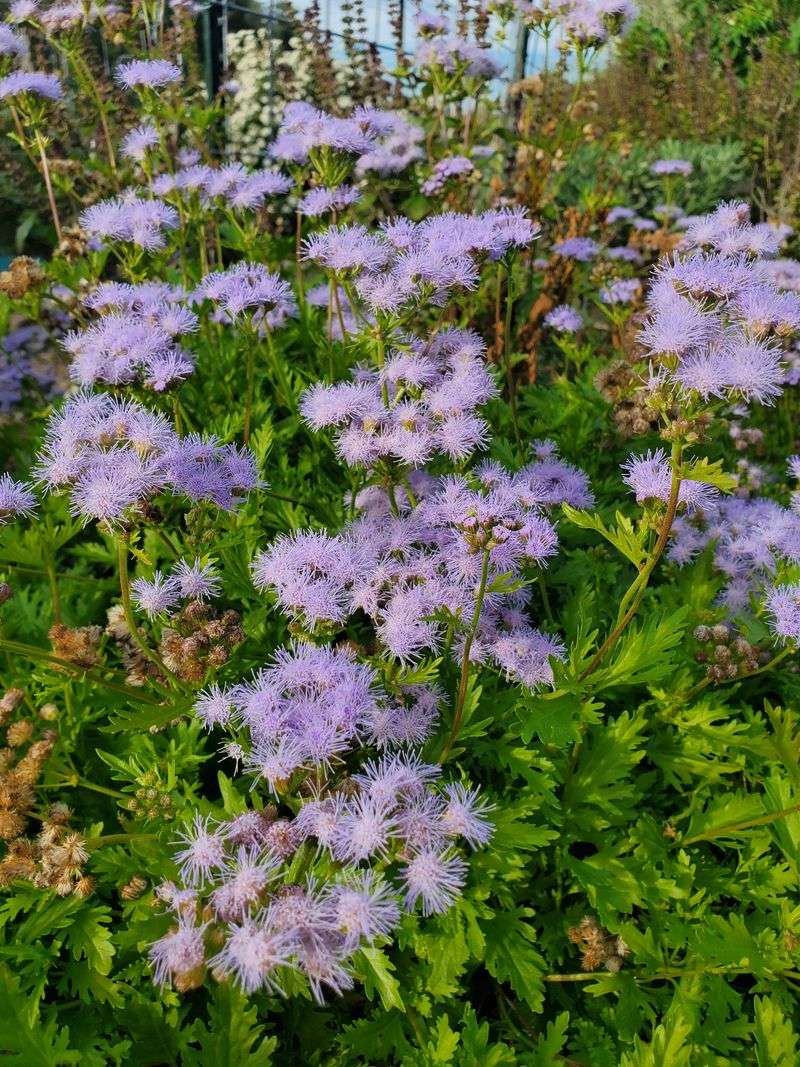
If you have ever wanted a plant that fights weeds and throws a butterfly party at the same time, Gregg’s mistflower is your answer. Its fluffy blue-purple flower clusters draw queen and monarch butterflies in swarms during migration, turning a practical groundcover into the most-watched corner of the yard.
It spreads by underground runners, forming loose colonies that fill space and shade out competitors in sunny to lightly shaded spots. Native to Central and West Texas, it takes the heat in stride and needs little water once settled in.
The soft mounding growth reaches about a foot or two tall and dies back in winter before returning stronger each spring. Give it room to roam, because it does like to wander into new territory. For weed control that pulls double duty as pollinator fuel, this native is hard to beat.
8. Prairie Verbena (Glandularia bipinnatifida)
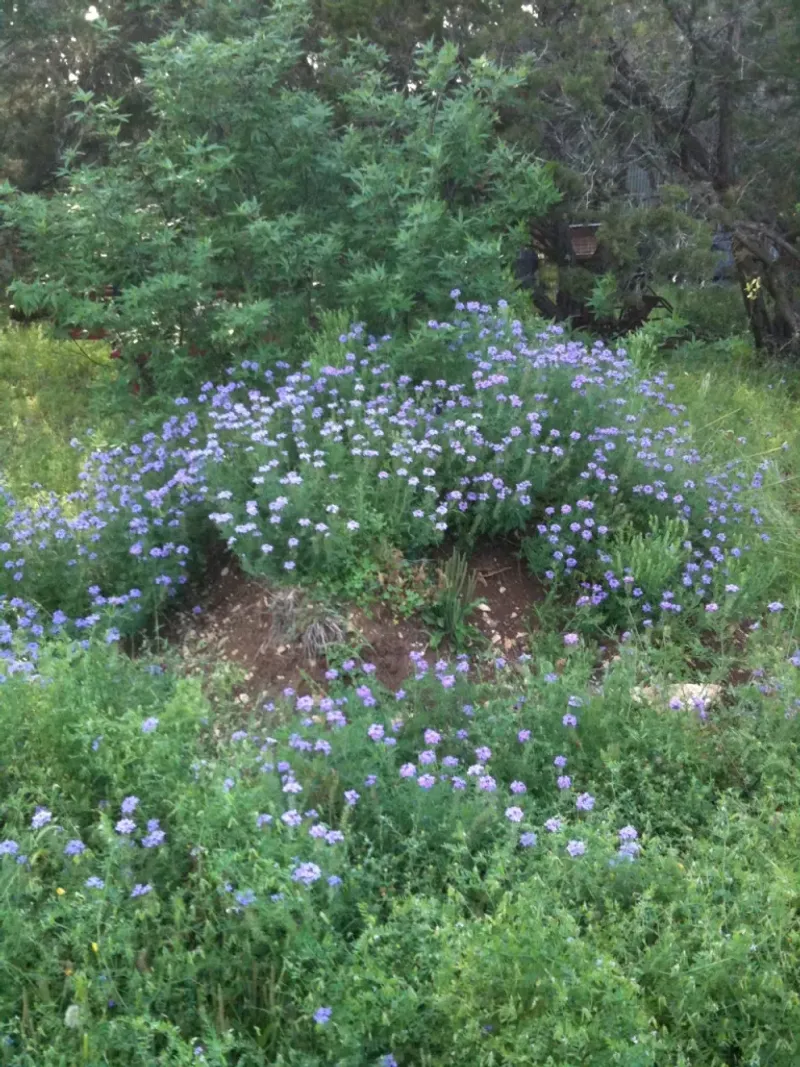
Drive any Texas back road in spring and those sweeping purple patches along the shoulder are often prairie verbena putting on its wild display. Brought into the garden, that same enthusiasm translates into a low, spreading blanket of lacy green foliage topped with rounded purple flower heads for months on end.
The trailing stems root as they creep, so a handful of plants quickly close ranks over bare ground and leave weeds no place to sprout. It thrives in full sun, tolerates poor and rocky soil, and needs almost no watering once its roots go deep.
Bees and butterflies mob the blooms from spring well into fall, and it reseeds freely to fill any thin spots on its own. Shear it back after heavy flowering and it rewards you with a fresh flush. Beautiful, tough, and self-sufficient, it may be the most cheerful weed barrier you can plant.