
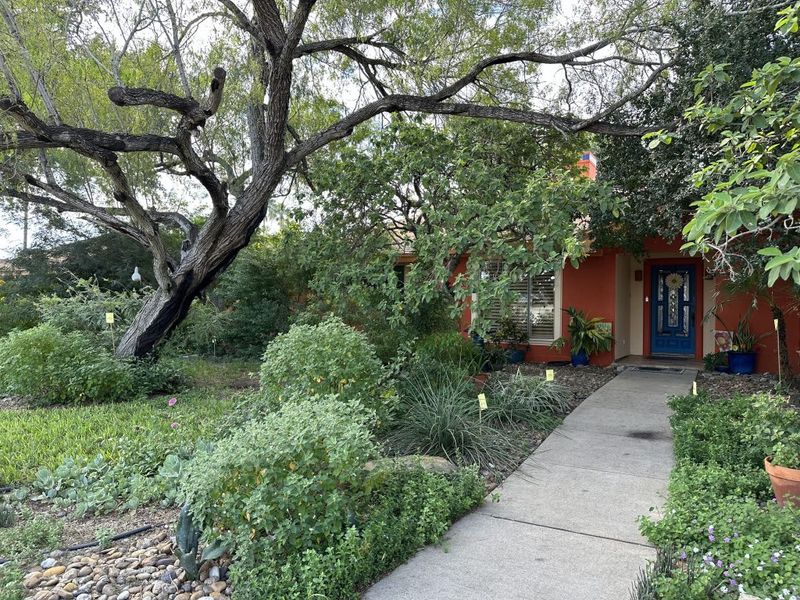
A headline promising one native Texas plant that sends scorpions packing sounds almost too good to be true, and that instinct is worth trusting. Scorpions are a real concern across much of Texas, and the idea of a landscaping shortcut is genuinely appealing. The problem is that the evidence behind that promise does not hold up the way the headline suggests. What actually works is less glamorous but far more reliable.
The headline makes a promise the evidence cannot support
That headline reads like a satisfying answer to a genuinely frustrating problem. Before acting on it, though, it deserves the same skepticism you would apply to any bold gardening claim circulating online. The core assertion, that one native Texas plant makes scorpions decide a yard is not worth their time, is not supported by reliable evidence from field studies, university research, or any pest-management authority.
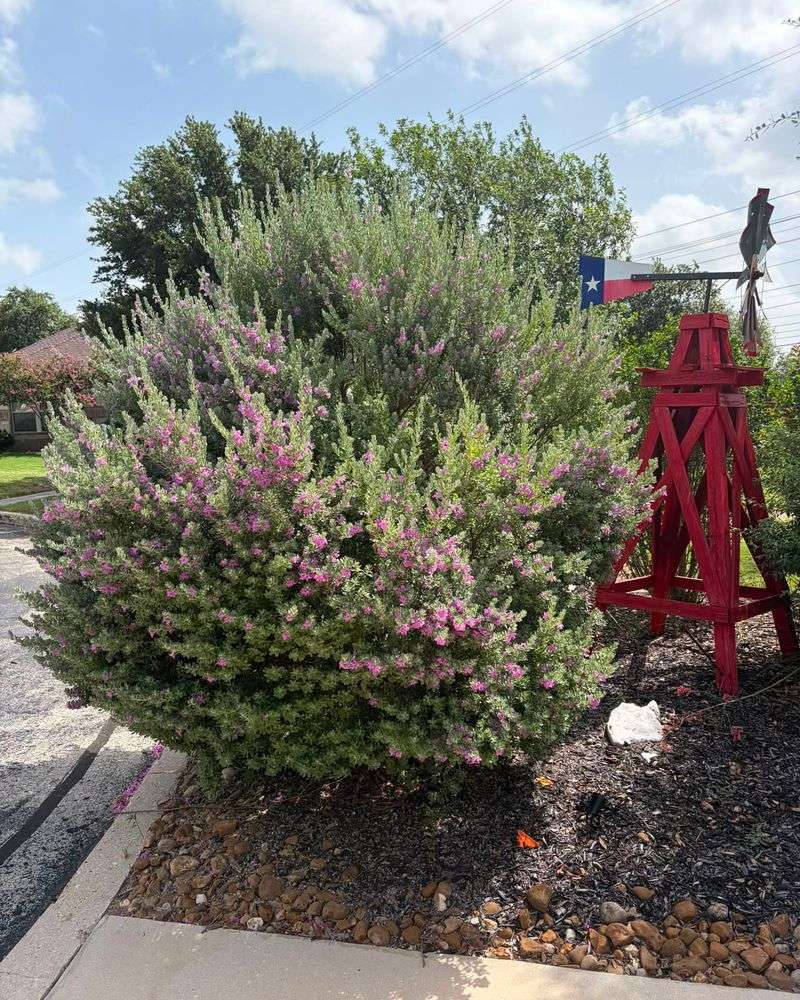
Texas sage (Leucophyllum frutescens) appears to be the plant behind at least one online gardening claim associating a native shrub with scorpion deterrence. That gardening article makes the connection, but it is not a university study, a government publication, or a peer-reviewed field trial. Treating its claims as established fact would be a mistake.
The contrast with authoritative guidance is striking. Texas A&M AgriLife Extension addresses scorpions as a common presence across much of Texas and points to habitat modification and exclusion as the practical control strategy, not a plant-based deterrent. No native Texas plant appears in their recommendations as a way to drive scorpions away from a home.
The corrected answer is straightforward: no single native Texas plant has been shown to repel scorpions or make a residential yard unattractive to them. Texas sage may be a legitimate and attractive native shrub worth growing for other reasons, but those reasons do not include proven scorpion control. The rest of this article explains what the evidence actually supports and how to build a yard that is genuinely less hospitable to scorpions.
Native does not mean scorpion-repellent
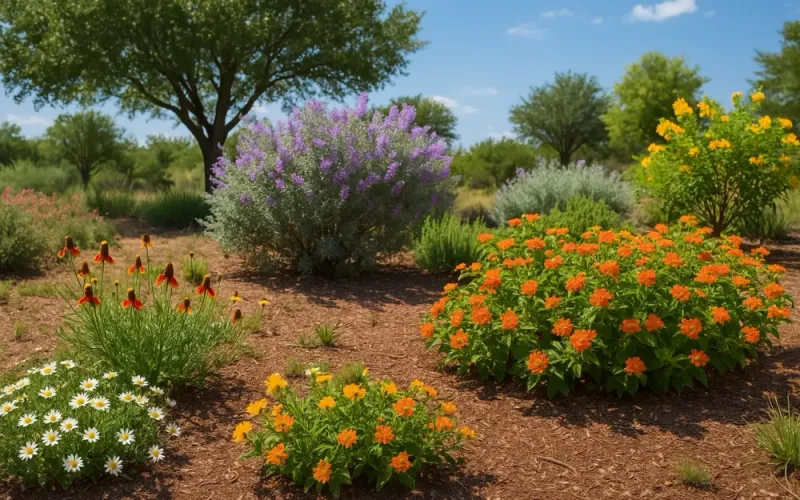
A plant earning the label “native” means it evolved in Texas conditions, handles local soils and climate, and typically needs less water and maintenance than introduced species. Those are real and meaningful advantages. What that label does not mean is that the plant has any demonstrated effect on scorpion behavior.
Austin’s official plant guide recommends native and adapted plants for their drought tolerance, regional fit, pest and disease resistance, and lower irrigation demands. Similarly, the Texas Parks and Wildlife Department’s Wildscapes program promotes native plantings suited to Texas weather. Neither source identifies a native plant as a proven scorpion deterrent.
Lavender is a useful cautionary example. It shows up repeatedly in online discussions about repelling scorpions in Texas, but a 2010 response from the Lady Bird Johnson Wildflower Center made two important points: lavender is a Mediterranean plant, not a Texas native, and plants generally do not do much to repel pests. The Wildflower Center is one of the country’s leading native-plant authorities, and their answer was notably unsupportive of the plant-as-repellent idea.
The same logic applies to rosemary, mint, lemongrass, citronella, and similar scented plants that cycle through scorpion-deterrent conversations. Each has its own horticultural profile, regional fit, and water requirements, but none has been demonstrated to keep scorpions away from Texas yards. Choosing plants based on their landscape value, regional suitability, and maintenance needs is sound practice. Choosing them as a substitute for actual scorpion management is not.
Scorpions respond to shelter, prey, and access
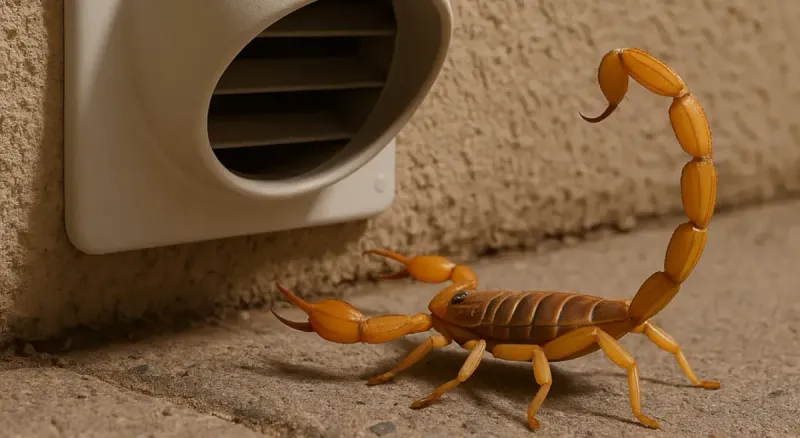
Understanding what actually draws scorpions toward a home changes the entire conversation. The conditions that matter most have nothing to do with which plants are growing nearby. Scorpions are opportunists, and they move toward places that offer shelter, food, and easy entry.
On the shelter side, UC IPM’s scorpion guidance identifies cracks, debris, boards, stones, firewood, and other sheltered spaces as common harborage. Inside and around a home, entry points include gaps around doors, windows, plumbing penetrations, foundations, roof eaves, and vents. A scorpion does not need a large opening to get through, and once inside it will find new harborage in closets, shoes, folded towels, and other undisturbed spaces.
Food availability is another factor that often gets overlooked in plant-focused discussions. Scorpions are predators that feed on insects and other arthropods. Conditions that support higher insect populations around a home, including standing water, dense low vegetation, and certain types of outdoor lighting, can effectively set a dinner table for scorpions. This matters because increasing insect activity near a home could theoretically increase prey availability rather than reduce scorpion presence.
Outdoor lighting is a specific example worth flagging. UC IPM recommends switching to less insect-attractive yellow lighting in areas where scorpion activity is a concern. Standard white or blue-spectrum lights draw insects in greater numbers, and more insects near entry points means more prey concentrated exactly where you do not want it.
A shrub planted along the foundation, whatever its species, does not override these conditions. If that shrub is irrigated heavily, mulched thickly, spaced too close to the wall, or allowed to accumulate leaf litter, it could add shelter, moisture, and insect habitat rather than subtract it. Plant identity matters less than how the space around the home is managed overall.
Fix the foundation zone before replacing your plants

Before spending money on new plants or pest sprays, a walk around the foundation perimeter will reveal more actionable opportunities than any landscaping change. The physical conditions immediately surrounding a home are where scorpion management actually begins.
Start by removing objects stored against the exterior walls: stacked lumber, stored pots, old boards, unused equipment, and accumulated yard debris. Each of those creates exactly the kind of sheltered, undisturbed microhabitat that scorpions use. Move firewood well away from the house and store it elevated off the ground. Trim tree branches and shrubs that touch or overhang the roof, since scorpions can use vegetation as a bridge to reach upper-story entry points.
On the building itself, UC IPM’s scorpion management guidance recommends repairing or replacing damaged window and door screens, installing or replacing door sweeps and weather stripping, and caulking any gaps around plumbing penetrations, utility conduits, and foundation cracks. These steps address the actual pathways scorpions use to enter a home, and they provide lasting benefit without requiring repeat applications.
Pesticides come up in almost every scorpion conversation, but their role is more limited than most product labels suggest. Sprays may be inconsistently effective when used alone because scorpions spend most of their time deep inside cracks and crevices where surface applications do not reach. Adult scorpions are also harder to kill with pesticides than many other household arthropods. Any pesticide application should follow the product label precisely and be used alongside, not instead of, habitat modification and exclusion.
A spray applied to a yard full of debris, unsecured entry points, and active insect populations will not solve the problem.
Switching outdoor lights near doors and vents to less insect-attractive yellow bulbs is a low-effort step that reduces the prey concentration near entry points. These physical and behavioral changes collectively do more than any single plant selection.
Choose Texas natives for the landscape, not as a barrier
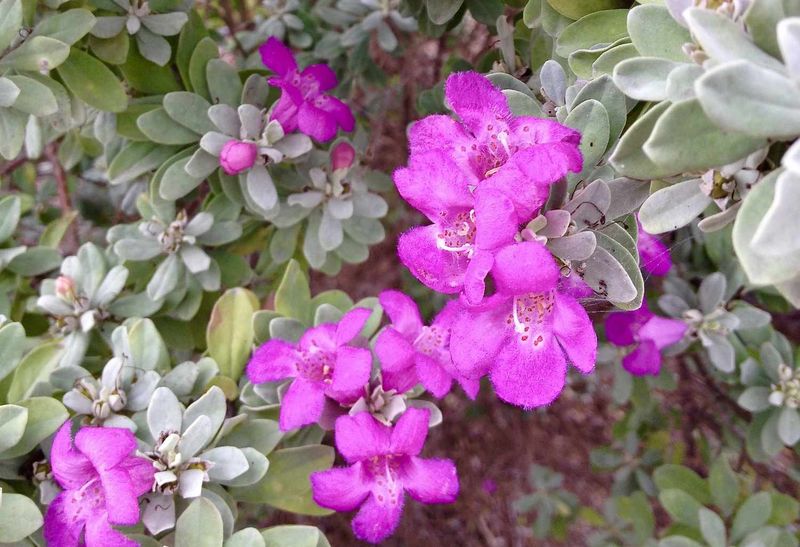
Texas sage genuinely earns its place in many Texas landscapes. It handles heat, tolerates poor soils, blooms reliably after rainfall, and requires very little irrigation once established. Those qualities make it a practical choice for homeowners dealing with triple-digit Texas summers and municipal water restrictions. The problem only arises when those real horticultural strengths get conflated with scorpion-deterrent properties that have not been demonstrated.
Choosing any native or adapted plant well means matching it to regional conditions. Austin’s plant guide allows filtering by soil type, sun exposure, water needs, and plant category, which is exactly the kind of region-specific selection process that leads to lower-maintenance, better-performing landscapes. Texas is large enough that a plant well-suited to the Edwards Plateau may not be appropriate for the Gulf Coast, the Pineywoods, South Texas, or the Trans-Pecos. The TPWD Wildscapes program similarly emphasizes regional fit as a starting point.
Maintenance and placement matter as much as species selection, particularly near the home’s foundation zone. A dense shrub planted too close to a wall, over-irrigated, heavily mulched, or left unpruned can create shade, retain moisture, trap leaf litter, and harbor insects, conditions that work against scorpion management rather than supporting it. UC IPM’s guidance identifies shelter, moisture, and prey availability as key factors in scorpion presence, and poor planting management can contribute to all three.
Maintaining clear visibility and some open space between foundation plantings and the wall, keeping mulch thin near the perimeter, and avoiding irrigation that pools near the foundation are practical steps that apply regardless of which species you choose. No single plant species, native or otherwise, is universally appropriate for every Texas region, every soil type, or every sun and water situation.
Laboratory scent findings do not create a Texas yard treatment
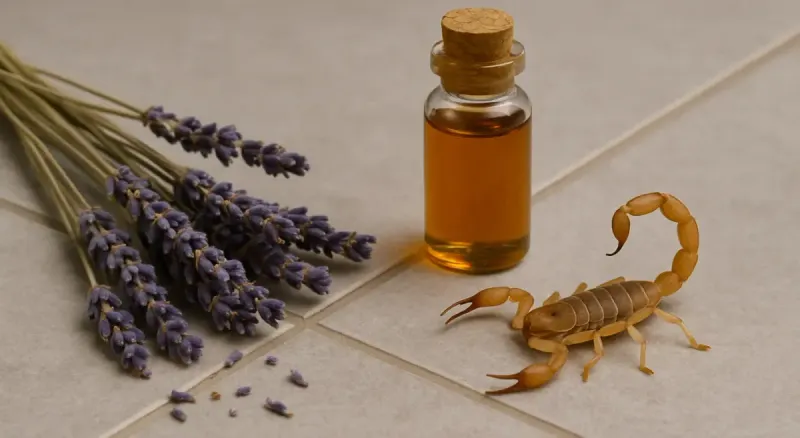
Some of the plant-repellent claims circulating online do have a kernel of real science behind them, but the distance between a controlled laboratory finding and a practical yard treatment is much larger than those claims suggest. Knowing where that gap is helps you evaluate future headlines more accurately.
One peer-reviewed study published in the Journal of Comparative Physiology A examined shelter selection in two scorpion species and found that rosemary oil repelled one tested scorpion species but had no apparent repellent effect on the other. The study used controlled shelter-choice experiments, not outdoor yards, not living rosemary plants, and not Texas scorpion species. A compound that influences shelter choice in one species under lab conditions tells you something interesting about scorpion sensory biology. It does not tell you that planting rosemary along your fence line will reduce scorpion encounters at home.
A separate study examined sensory responses in scorpions to compounds derived from Cymbopogon plants, which include citronella and lemongrass relatives. That research identified a scorpion molecular target for plant-derived natural repellents, which is a meaningful step in understanding the biology. What it does not do is establish that planting lemongrass around a Texas home reduces scorpion activity. The study tested specific compounds under controlled conditions, and Cymbopogon species are not interchangeable with Texas-native plants.
Scorpion species also differ substantially in habitat preferences, venom chemistry, climbing ability, and sensory responses. Results from European, Middle Eastern, Brazilian, or Arizona species should not be automatically applied to the species most common in your part of Texas. When a claim moves from “compound X showed repellent effects on species Y in a lab” to “plant this in your yard and scorpions will leave,” it has traveled well past what the research actually supports.
Monitor safely and recognize serious sting symptoms
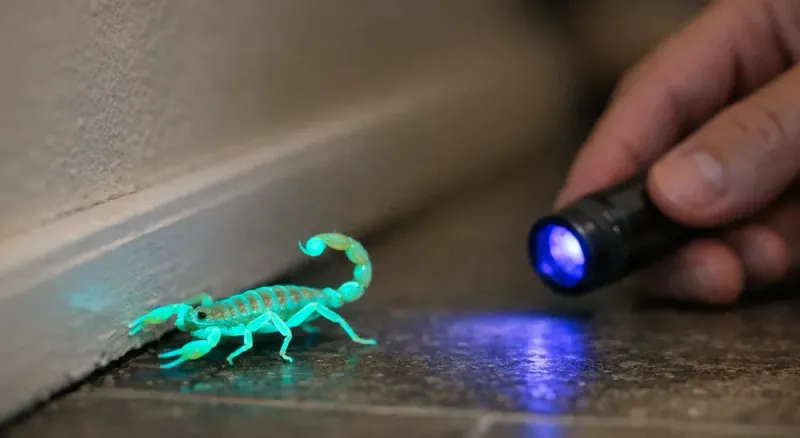
Knowing where scorpions are in your yard gives you far more useful information than hoping a plant is doing the job invisibly. A portable black light, available at most hardware stores, is one of the most practical tools a Texas homeowner can own for this purpose. Scorpions fluoresce under ultraviolet light, making them easy to spot at night even against soil or leaf litter. Walking the perimeter of your yard and foundation with a UV flashlight after dark reveals harborage areas, travel routes, and population density in a way that daylight inspection cannot.
During yard work, UC IPM recommends wearing gloves and closed-toe shoes whenever you are moving debris, turning stones, or working near the foundation. Clothing, shoes, and towels left outdoors overnight should be shaken out before use. These habits address the most common sting scenarios, which often involve incidental contact rather than a scorpion actively seeking out a person.
Sting reactions vary considerably. Many stings cause localized pain, swelling, and numbness that resolve without medical intervention. However, some individuals, particularly young children, older adults, and people with sensitivities, can experience more serious reactions. CDC guidance for scorpion stings advises staying calm, applying ice to the sting site without immersing the area in ice water, and contacting a qualified health-care provider or poison-control center.
Symptoms that warrant prompt medical attention include trouble breathing, muscle twitching, convulsions, drooling, slurred speech, and other severe neurologic signs. Texas A&M AgriLife Extension recommends consulting your county Extension office for local species identification and control guidance, since scorpion species, sting severity, and regional prevalence vary across Texas. Poison control can be reached at 1-800-222-1222 in the United States and is a fast resource when symptoms are unclear.
A less inviting yard beats a magic plant
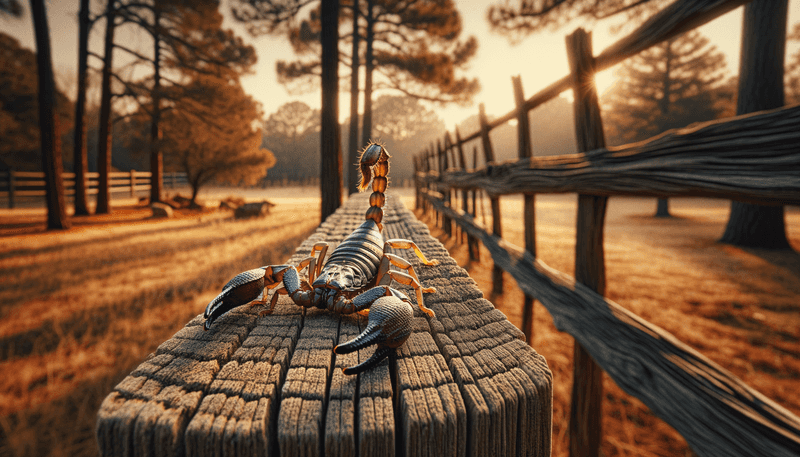
The headline promised one plant that makes scorpions walk away. The honest answer is that no single native Texas plant has demonstrated that ability, and waiting for one to do the work leaves the conditions that actually matter unaddressed.
Texas sage may be a genuinely worthwhile plant for the right Texas region, soil type, and light conditions. Grow it for its drought tolerance, its purple blooms after rain, and its low-maintenance profile. Just do not grow it expecting it to serve as a scorpion barrier, because the conditions scorpions actually respond to are shelter, prey, moisture, and access, none of which a shrub reliably controls on its own.
The practical sequence holds up well: select plants suited to your specific Texas region using region-specific tools like Austin’s plant guide, manage the foundation zone by removing debris and maintaining clearance, reduce shelter and prey-attracting conditions around the perimeter, seal entry points with caulk and weather stripping, and use a UV flashlight to monitor at night. Texas A&M AgriLife Extension confirms that this kind of habitat modification and exclusion is the approach with real evidence behind it.
A yard that offers scorpions fewer places to hide, less prey to chase, and no easy way inside is genuinely less attractive to them. That outcome takes more than one plant, but it is also far more achievable than any headline suggests.