
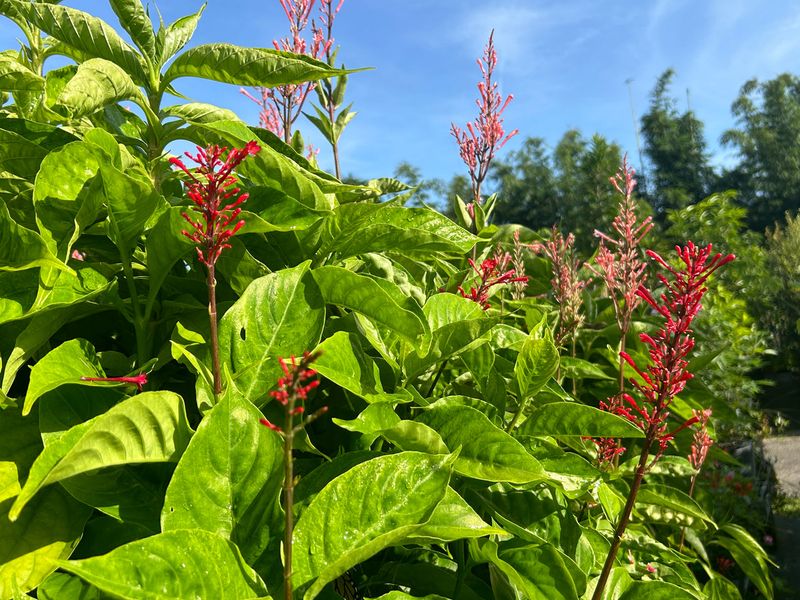
Many gardeners are told that hummingbird plants need full sun, which leaves shadier yards feeling left out. Firespike is a red-flowered plant that tolerates partial shade and can attract hummingbirds.
In North and Central Florida, it flowers in fall and winter, when many gardens look quiet. Here is what it can do for your yard, and where its limits are.
Firespike can add color to a partially shaded garden
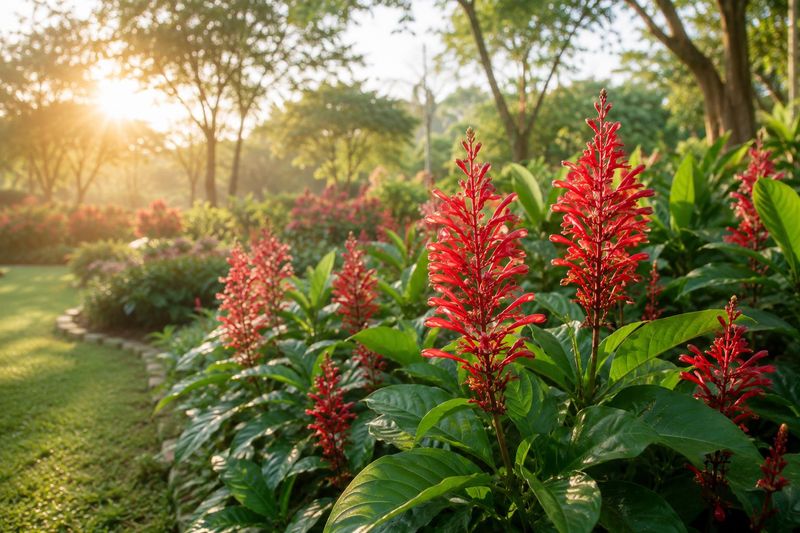
Picture a tall, leafy shrub with glossy green leaves and upright spikes covered in small, bright red tubes. That is firespike, a nonnative plant that has found a home in many Florida gardens.
UF/IFAS describes firespike as a plant that tolerates partial shade and attracts hummingbirds with its nectar-bearing flowers.
That combination is rare. Many of the showiest hummingbird plants want lots of sun, so a yard with oak shade or a north-facing wall can feel short on options.
Firespike gives those spots a chance at bold red color when other beds are fading.
The red, tubular blooms are what catch the eye of people and hummingbirds alike. Each spike carries many small flowers, so a healthy plant can make a strong splash against a dark green backdrop.
In a corner that usually looks flat, that kind of color can change the whole feel of the space.
Still, a fair picture matters. Firespike can add color and nectar to a partially shaded Florida garden, but it does not promise nonstop winter feeding.
Hummingbirds may visit, or they may not, depending on where you live and what is happening in your area. Think of firespike as one useful tool for a shadier yard, not a guarantee.
The sections ahead cover how much shade it handles, when it flowers in different parts of the state, how big it gets, and what a freeze can do to it.
How much shade can firespike tolerate?
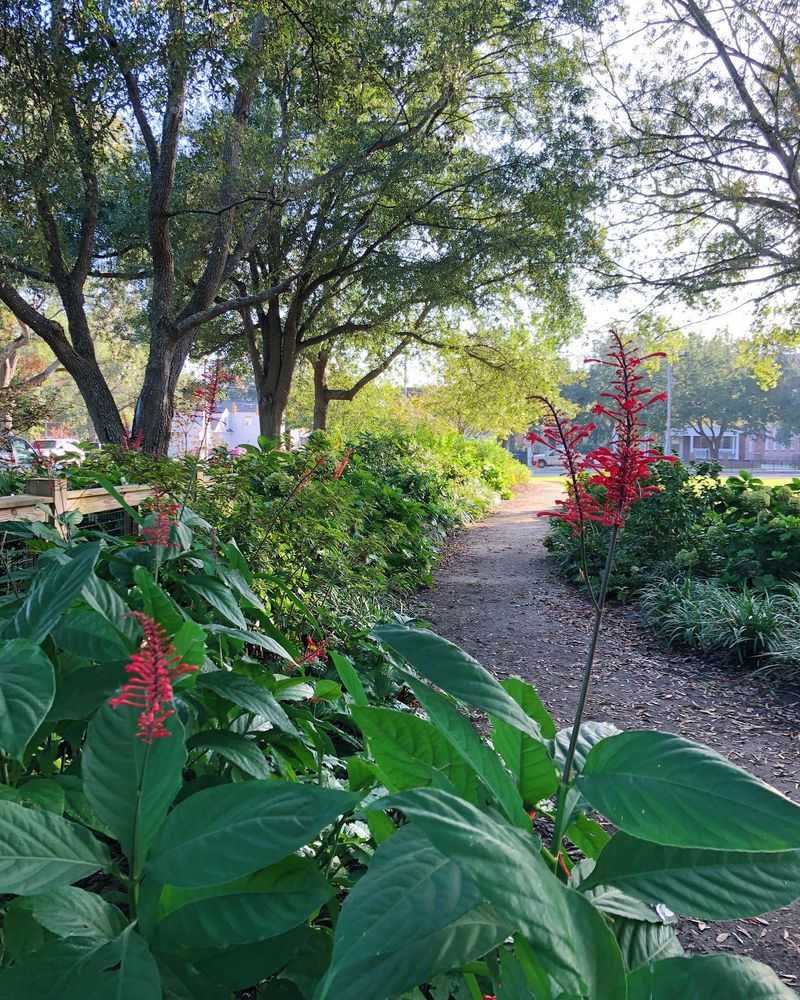
Here is where a little care with words helps. Firespike tolerates partial shade, which is not the same as thriving in deep shade.
UF/IFAS Florida-Friendly Landscaping lists it as tolerant of partial shade while recommending full sun for the best blooming.
So the plant can grow where light is filtered or limited, but sunnier spots generally give you more flowers. UF/IFAS Gardening Solutions says the same thing: full sun generally produces more flowers.
That means a shaded planting may give you leaves and fewer blooms than a sunny one.
No exact number of sun hours is given, so skip the stopwatch. Instead, watch your yard.
Notice which corners get bright, filtered light for part of the day, such as the edge of a tree canopy or a bed that catches morning sun. Those are better tests than the darkest spot beside a fence.
If you are not sure, try a compromise. Put firespike where it gets the brightest light your shady area offers, rather than in the gloomiest corner.
A bed at the edge of shade often beats one in the middle of it.
If the only open spot is deep shade under dense evergreens, firespike is probably not the best match. Look for a brighter location, or treat any flowers there as a bonus.
When does firespike flower in different parts of Florida?
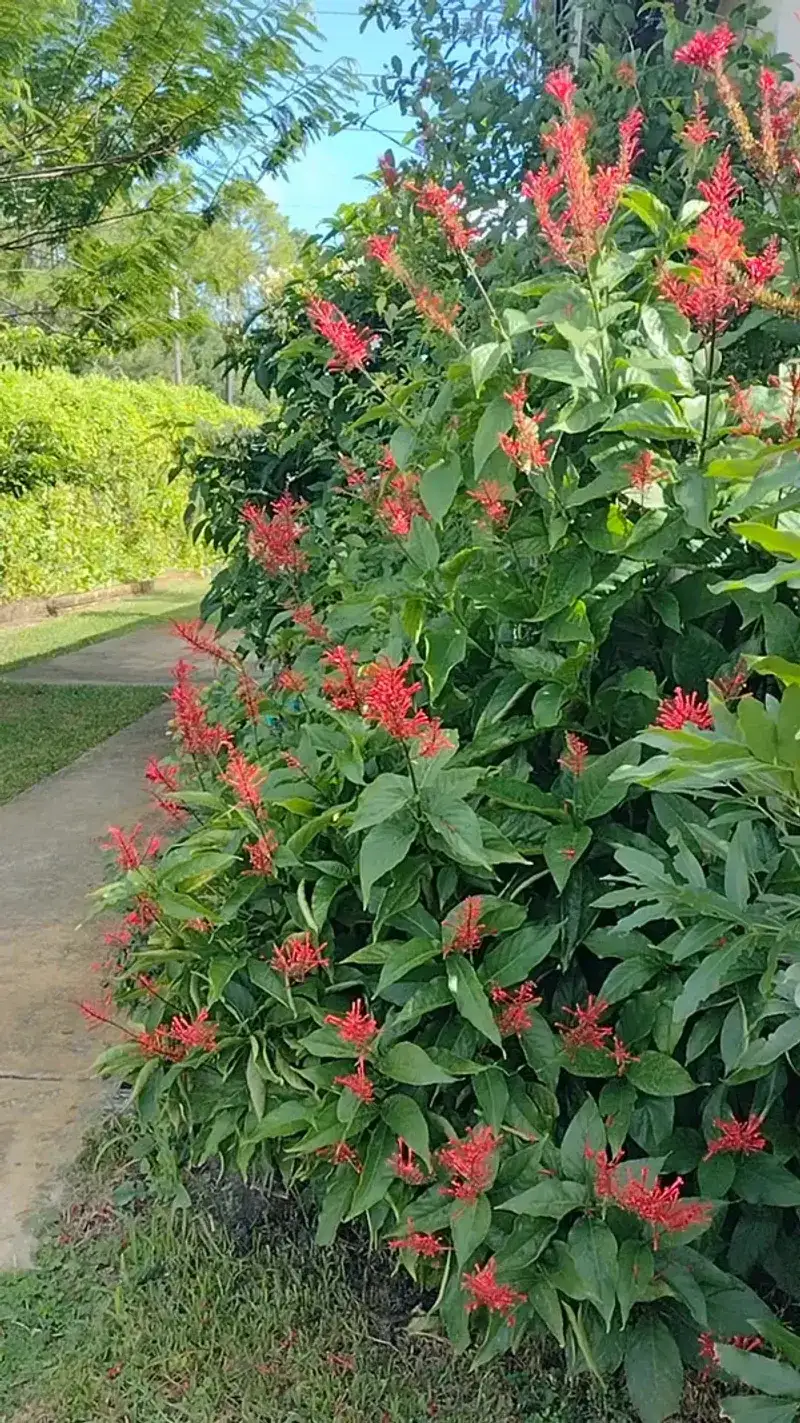
Florida is a long state, and firespike does not follow one calendar everywhere. UF/IFAS reports that it flowers in fall and winter in North and Central Florida.
In South Florida, it can flower year-round.
For gardeners in Pensacola, Gainesville, Orlando, or Tampa, that makes firespike a possible source of color when many summer bloomers are done. It is the cooler months that stand out, which suits a gardener who wants something happening in the yard when days are short.
These are regional patterns, not promises. A plant in your yard may bloom later, earlier, or lightly depending on light, weather, and how the season goes.
Some winter days will have plenty of flowers, and others may have fewer.
A good habit is to keep a simple garden note. Write down when your firespike first shows color and when it slows down.
After a season or two, you will know how it behaves in your exact spot, which is worth more than any general rule.
South Florida gardeners should also keep expectations realistic. Year-round flowering is possible there, but that does not mean every plant blooms every week.
Treat the regional timing as a helpful guide, then let your own yard tell you the rest.
Why do hummingbirds visit firespike?
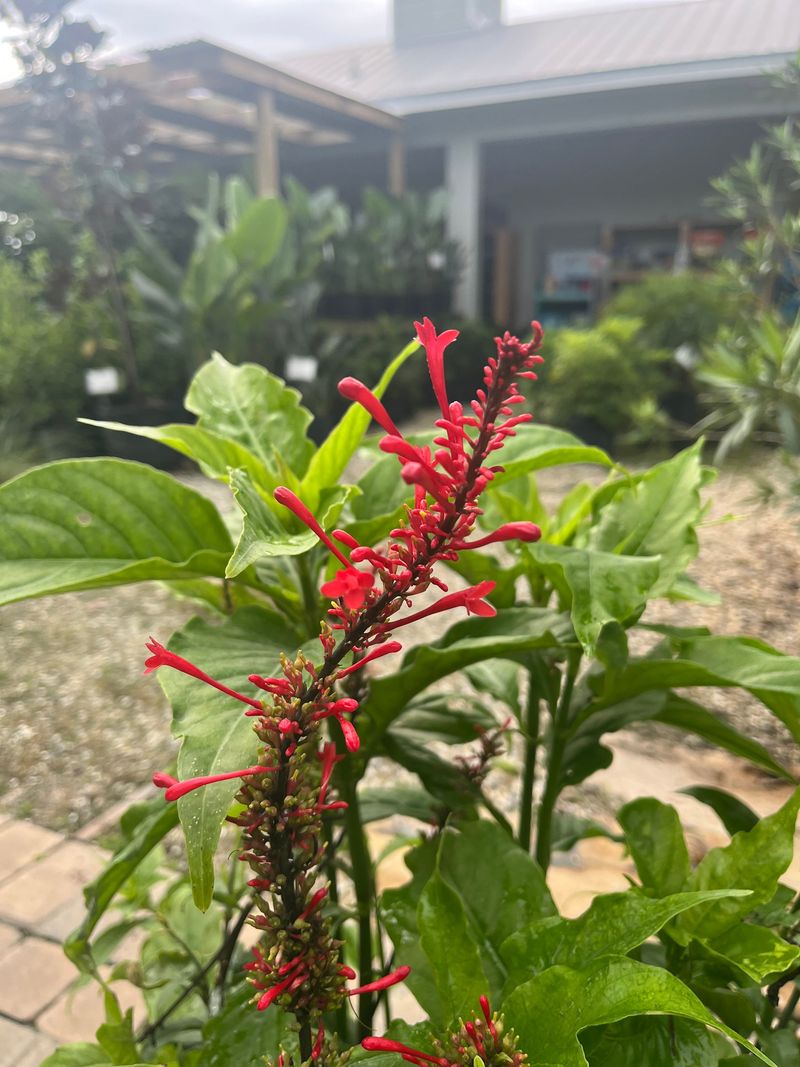
Hummingbirds feed on nectar, and firespike offers it. UF/IFAS lists firespike as a plant that attracts hummingbirds, and its red, tubular flowers fit the kind of blooms these birds often visit.
Color and shape help, but they do not guarantee a visit.
Which hummingbirds you see also matters. UF/IFAS identifies the ruby-throated hummingbird as the most common species in Florida.
Black-chinned and rufous hummingbirds are occasional winter visitors, so spotting one is a treat rather than something to expect.
That means winter hummingbird activity is not the same everywhere in the state. Some yards may see regular visitors, while others may see very few.
Where you live, what grows nearby, and the weather that year can all play a part.
So how do you make the most of it? Plant firespike where you can watch it from a window or porch, and keep an eye out in the cooler months.
A few minutes in the morning with a cup of coffee tells you more than guessing.
If no birds show up, do not assume the plant has failed. Hummingbirds move around, and a flowering plant is simply one more reason for them to stop by.
Treat each visit as a bonus and the plant as a long-term part of your yard.
Give firespike room and suitable soil
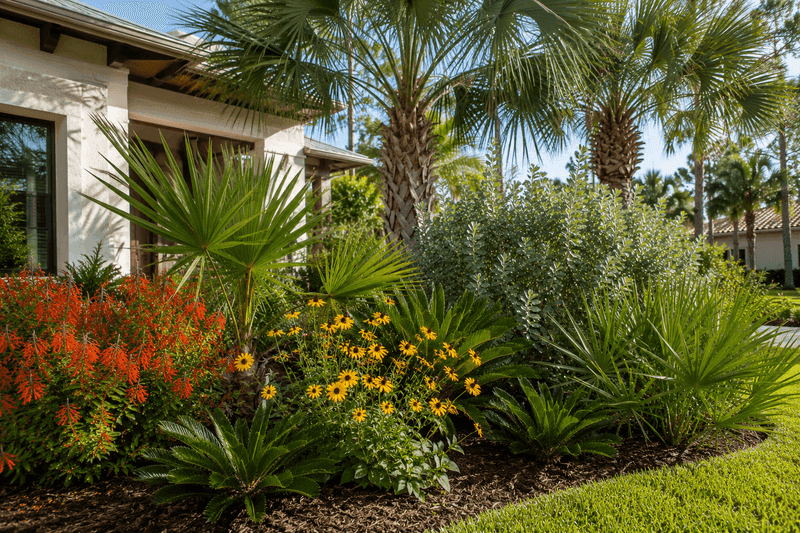
Firespike is not a tiny border plant. UF/IFAS lists it at about 2 to 6 feet tall and 2 to 3 feet wide, with spacing of 24 to 36 inches.
That is a wide range in height, so plan for a plant that could end up fairly large.
Think about where it will stand in a few seasons. Behind lower plants, along a fence line, or at the corner of a shaded bed are all sensible spots.
Avoid tucking it right against a walkway where it will crowd people, or too close to a neighbor plant that needs its own room.
Soil is more forgiving than many gardeners expect. UF/IFAS says firespike tolerates sandy to loamy soils, and established plants are moderately drought tolerant.
That is good news for Florida yards with fast-draining sand.
Moderate drought tolerance applies once a plant is established, so a new planting still needs attention while it settles in. It does not mean the plant is maintenance-free, and it does not mean every site will suit it.
Before you plant, picture the finished size and mark the spot with stakes spaced within the 24 to 36 inch range. Standing back and looking at it helps you judge whether the plant will fit the bed, the light, and the view from your window.
A hard freeze can interrupt flowering
Winter in Florida is not the same everywhere, and cold matters for firespike. UF/IFAS notes that a hard freeze may kill the above-ground growth.
The plant typically returns in spring, but flowers can be lost for a while.
For North and Central Florida gardeners, that is the main trade-off. The same cooler months when firespike flowers are the months when a freeze can cut the show short.
Firespike is not freeze-proof, and it is not reliably evergreen across the state.
It is also helpful to know what kind of plant you are adding. UF/IFAS Florida-Friendly Landscaping identifies firespike as nonnative and says it often reseeds.
Reseeding is not the same as being classified as invasive, but it is a reason to watch for seedlings and decide where you want them.
Site conditions matter too. The same source lists low-to-no salt tolerance and says wind resistance is not known.
If your yard is near the coast, gets salt spray, or sits in a windy, exposed spot, firespike may not be the safest choice.
Before planting, consider your local freeze risk, your distance from salt water, and how exposed the spot is. Those details will tell you more than the plant tag.
Decide whether firespike fits your garden
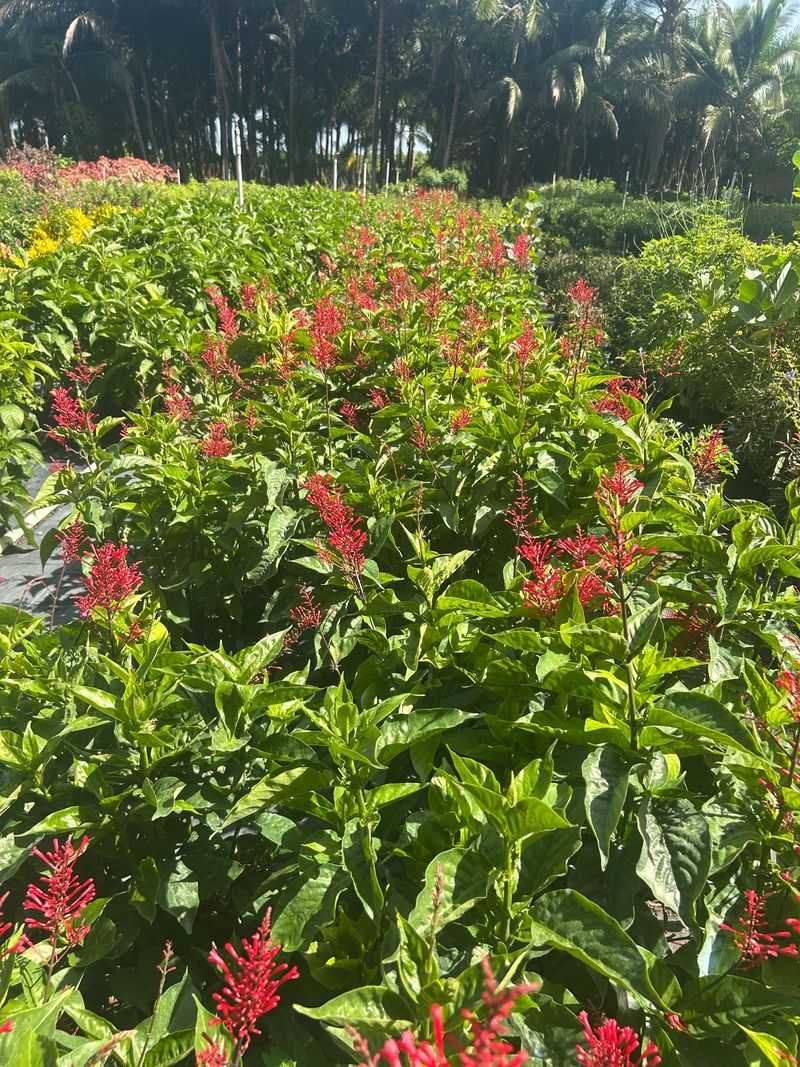
Firespike may suit you if you have partial shade, room for a sizable plant, and realistic expectations about regional flowering and freezes. It can attract hummingbirds, but it cannot guarantee visits or continuous flowers.
Skip it for deep shade, salty coastal exposure, or a very tight space.
If those pieces fit, give it a try. A shady corner may be more useful than it looks.