
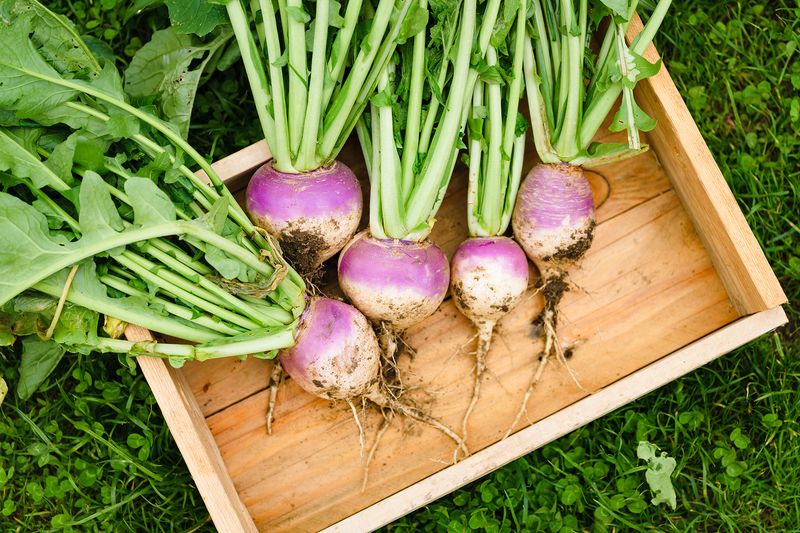
You waited weeks for fat, impressive turnips, then bit into one that felt like chewing a stick. It happens to Texas and Florida gardeners every fall, and the roots usually look perfectly fine from above.
The good news is that a simple size check can help you catch turnips before the texture slips. Here is how to read the clues and decide when to pull them.
Woody texture is a symptom, not a diagnosis
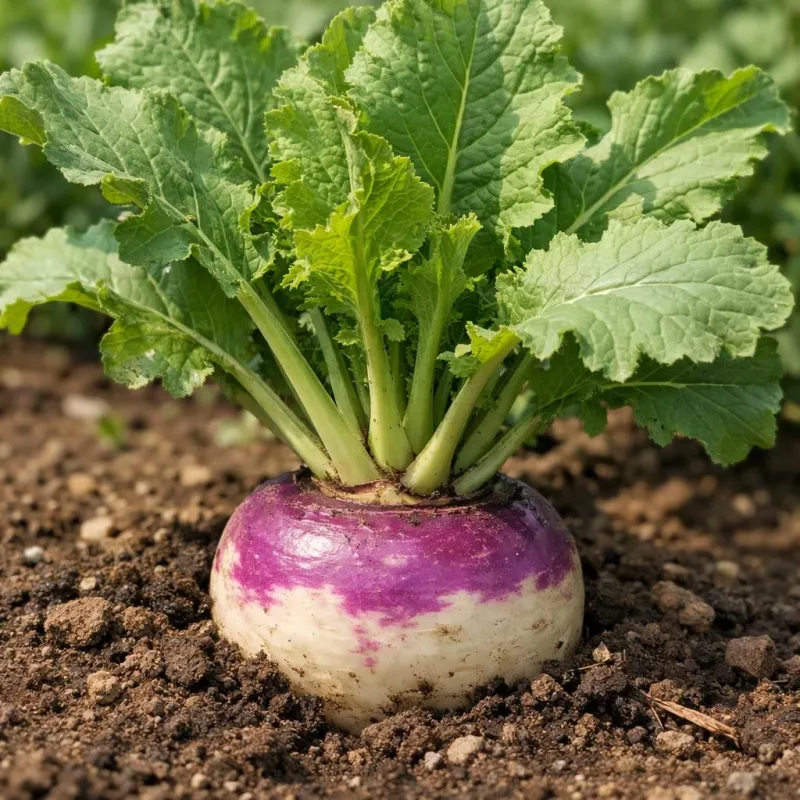
Tough, fibrous, pithy, or woody: gardeners use all of these words for the same disappointment. The trouble is that more than one thing can cause it, so the root itself is the clue to follow.
Overmaturity is a common contributor. UF/IFAS notes that roots larger than about 3 inches can turn pungent, pithy, and stringy, and UC Extension says overmature turnips can become tough and woody.
Still, size is only the first check. Hot, dry weather and uneven moisture can also hurt quality, as Virginia Cooperative Extension points out.
Not every big turnip will be woody, and a medium one can still disappoint, so think of size as a clue rather than a verdict.
Harvest turnips while roots are still modest
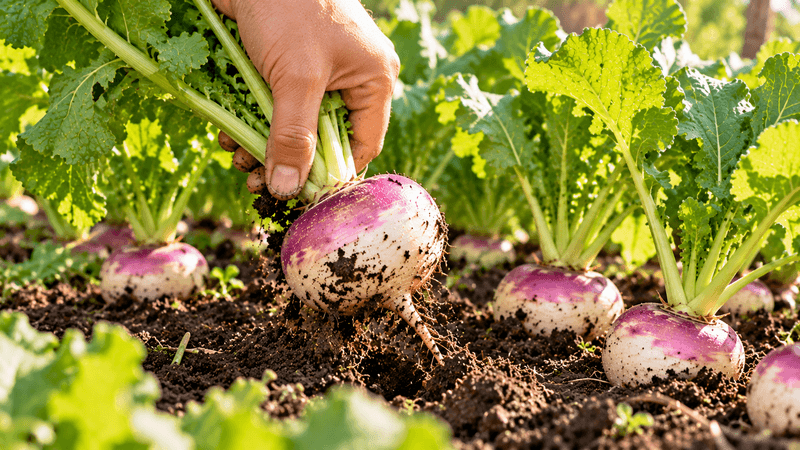
Extension advice clusters around small roots. Texas A&M AgriLife recommends harvesting at 1½ to 2½ inches across.
Virginia Cooperative Extension calls 2 to 3 inches a good quality size.
UF/IFAS says to harvest at 3 inches or less and describes 2-inch roots as milder.
Blend those together and you get a handy household rule: start checking roots at about 2 inches across, and pull them before they grow beyond roughly 2½ to 3 inches. Keep a ruler or a measured stick by the bed so you are not guessing.
Treat this as a guideline, not a guarantee. Smaller roots tend to be milder and more tender, but variety and your own taste can shift the ideal size, and no size promises sweetness.
Use days to maturity as a prompt to inspect
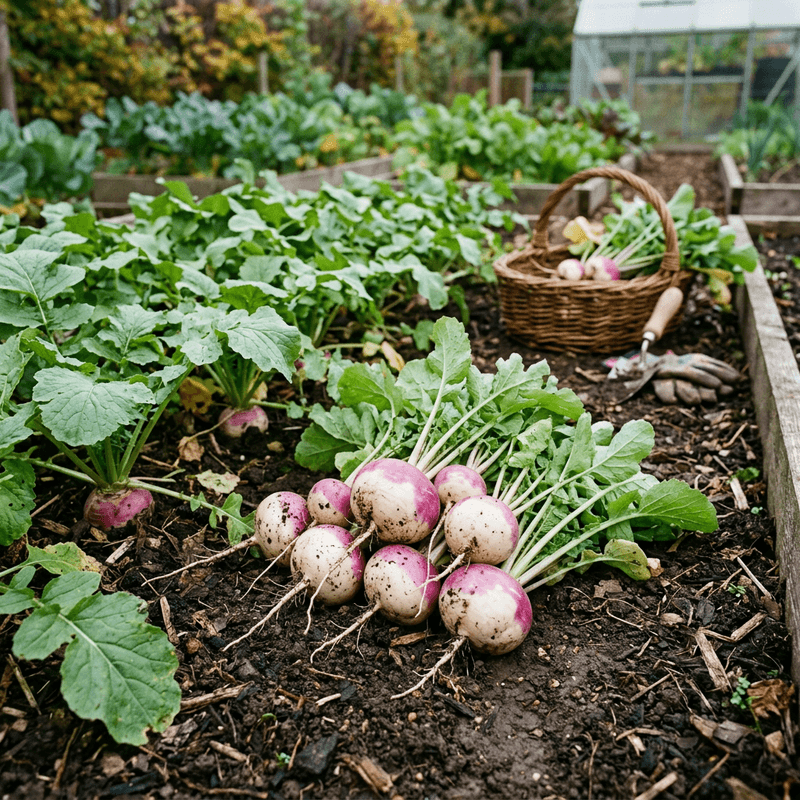
Seed packets list days to maturity, and that number is best used as a reminder to go look. Sources give a range, not a deadline.
UF/IFAS and Florida Fresh list roughly 40 to 60 days from sowing, while Virginia Extension lists 30 to 60 days.
Cool snaps, warm spells, and soil conditions can all speed up or slow down a crop. So mark the early end of your variety’s range on the calendar, then start inspecting.
Gently brush soil away from the exposed root shoulders and compare them to your ruler. If they are near 2 inches, harvest a few and taste.
If they are smaller, wait a few days and check again. Let the root size, not the date, make the call.
Keep moisture steady and account for heat
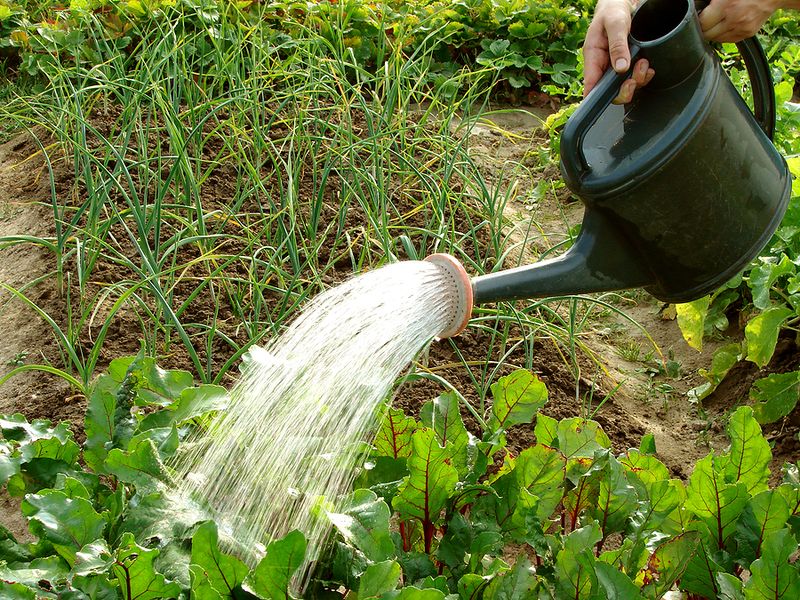
A turnip can be the right size and still turn out stringy if the plant had a rough stretch. Heat and swings between bone dry and soaked soil put stress on the roots, and Utah State Extension links moisture fluctuations to woody or pithy roots and bitter flavor.
Texas A&M also says turnips need adequate moisture to size up well, and UC’s guidance on growing turnip points to steady care too.
Utah State suggests about 1 to 2 inches of water a week, but use that only as a general benchmark. Subtract rainfall, water more often in sandy Florida soil, and ease up after storms.
Stick a finger into the soil to check, and never leave the bed waterlogged.
Even steady watering will not guarantee tender roots, but it can lower the stress that contributes to poor texture.
Match fall planting and spacing to your region
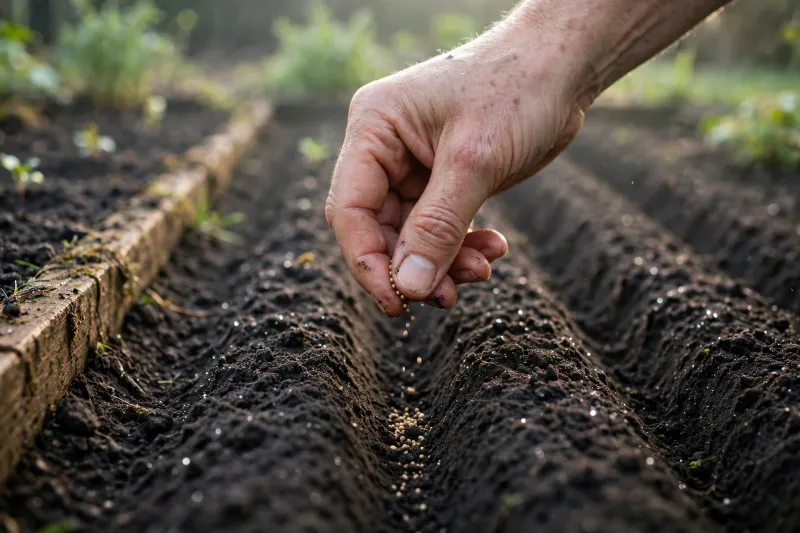
Timing starts with temperature. Texas A&M advises fall planting once average daytime temperatures are below 80°F, so waiting for the heat to break matters more than the date on the calendar.
Florida is split into zones. UF/IFAS lists August through February in North Florida, September through February in Central Florida, and September through January in South Florida.
Those are regional windows, not promises of tender roots.
Once seedlings are up, thin them. Texas A&M recommends spacing plants 2 to 3 inches apart, since crowded roots struggle to size up.
The same source calls for adequate moisture and moderate fertility.
Good spacing and feeding set the stage, yet they will not prevent woodiness by themselves.
Frost is not a cure for woody roots
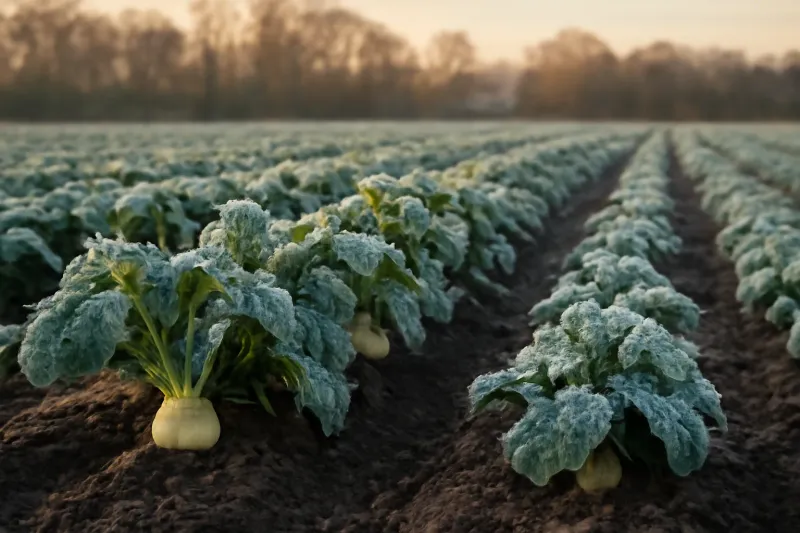
Waiting for the first frost to fix tough turnips is a common tip, but it will not work. A light chill may improve flavor, according to UC Master Gardeners of Sonoma County, yet a root that has already turned woody stays woody.
Turnips do handle cold well. UF/IFAS says they tolerate frost and some freezing, but a tender harvest does not depend on it.
In Texas, Texas A&M advises harvesting before heavy fall frosts. Frost timing varies a lot from the Panhandle to the Gulf Coast, and parts of South Florida may barely see any.
So keep measuring roots instead of watching the forecast. If frost arrives while your turnips are still modest, treat it as a bonus.
Separate turnip texture from other root problems
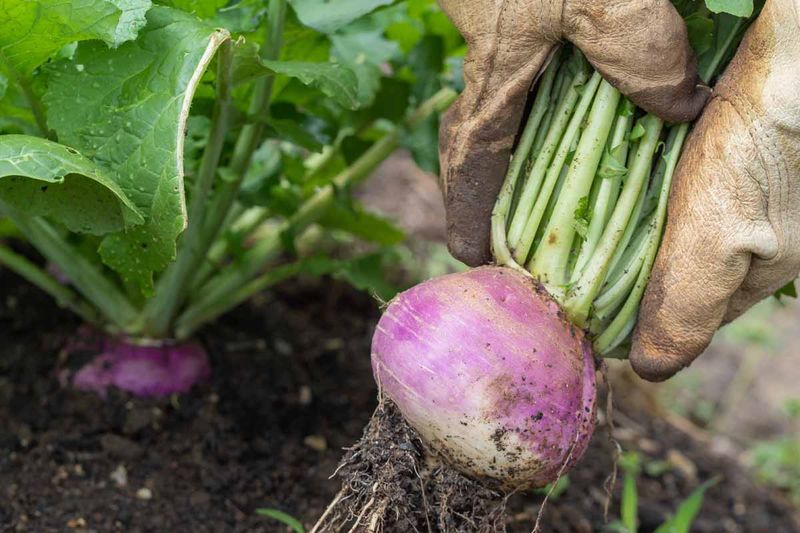
Not every letdown is overmaturity. Start by using the right yardstick, because turnip size advice is not rutabaga advice.
Virginia Extension suggests turnips at 2 to 3 inches but rutabagas at 3 to 5 inches, so do not hold turnips to the bigger number.
Variety matters as well. Texas A&M notes that some types, including Shogoin and Crawford, are grown mainly for greens and may not form large, high-quality roots.
Odd-looking roots may point elsewhere. Texas A&M associates root galls with root-knot nematodes and black centers with boron deficiency.
Those are different problems from woody texture.
If you spot galls or dark centers, do not blame size alone. A turnip is a quick teacher: small, steady, and checked often beats big and forgotten.