
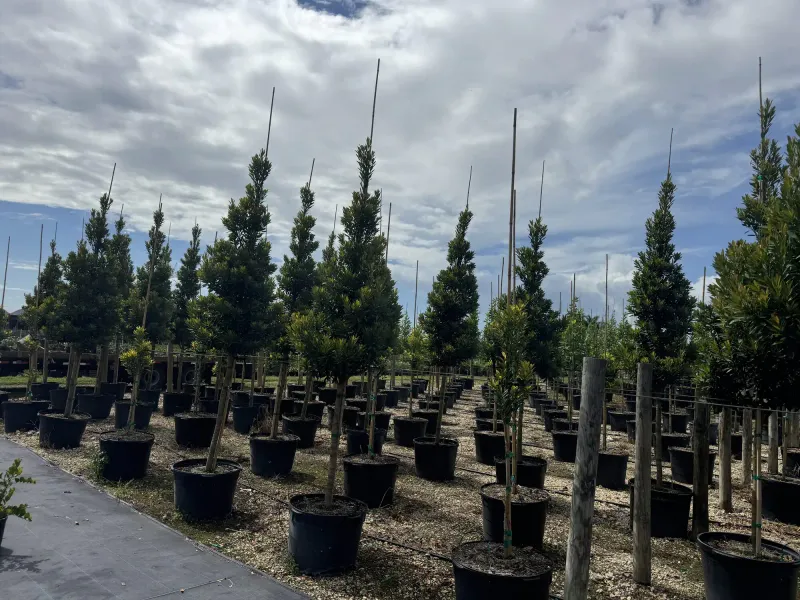
Shade is serious business in Florida, where summer heat turns a concrete driveway into a frying pan and an unshaded west wall can drive up your electric bill for months. A lot of homeowners are looking for a tree that delivers structure and coverage without constantly dumping leaves, cracking sidewalks, or growing into a maintenance nightmare. The Japanese blueberry tree has been showing up in Florida landscape guides and local plantings as one option worth a closer look. This article walks through what it can realistically do, where it works best, and what it honestly costs you in time and cleanup.
A plausible Florida option—not a neighborhood trend
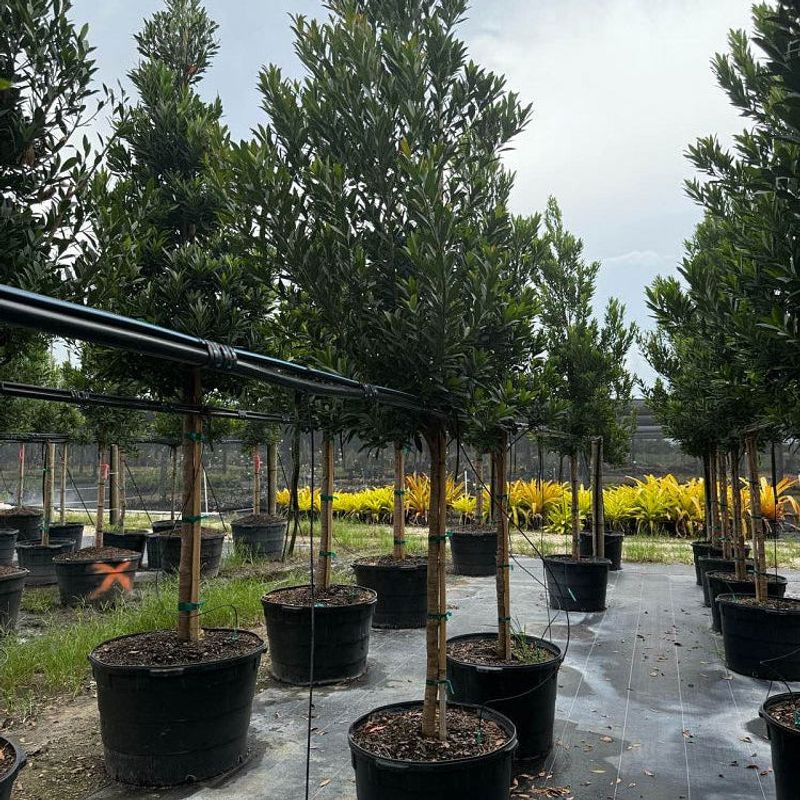
The Japanese blueberry tree, known scientifically as Elaeocarpus decipiens, keeps appearing in Florida landscape plans for a straightforward reason: its narrow, upright silhouette fits into yards where a wide-spreading oak or laurel would quickly take over. The foliage stays glossy green year-round, and the new growth flushes in a warm bronze or red that catches the eye against older leaves. Spring brings small white flowers, and those eventually give way to blue or purple fruit that hang in clusters through the season.
Before going further, the title of this article deserves a correction. The evidence does not support the idea that Florida neighborhoods are broadly or recently adopting this tree as a defined trend. UF/IFAS Extension’s profile on Elaeocarpus decipiens describes it as urban-tolerant and suitable for street-tree use with proper irrigation, but that is a suitability note, not a trend report. The tree shows up in Florida landscape guidance and some local plantings, and that is the honest scope of the claim.
What the species does offer is a formal, columnar presence that looks intentional from the moment a substantial nursery specimen goes into the ground. Charlotte County Extension describes the tree as well-suited to Florida landscapes for its evergreen density and upright habit. The UF/IFAS plant directory places it in a low-invasion-risk category, meaning it is not currently flagged as a problem species in Florida’s natural areas. The Port St. Lucie Botanical Gardens includes it among trees worth considering for central and south Florida landscapes.
For homeowners in those warmer regions who want structure, some shade, and a tidy vertical form, this is one plausible option, not the proven best choice, but a reasonable one to evaluate.
The cooling benefit depends on where the canopy lands
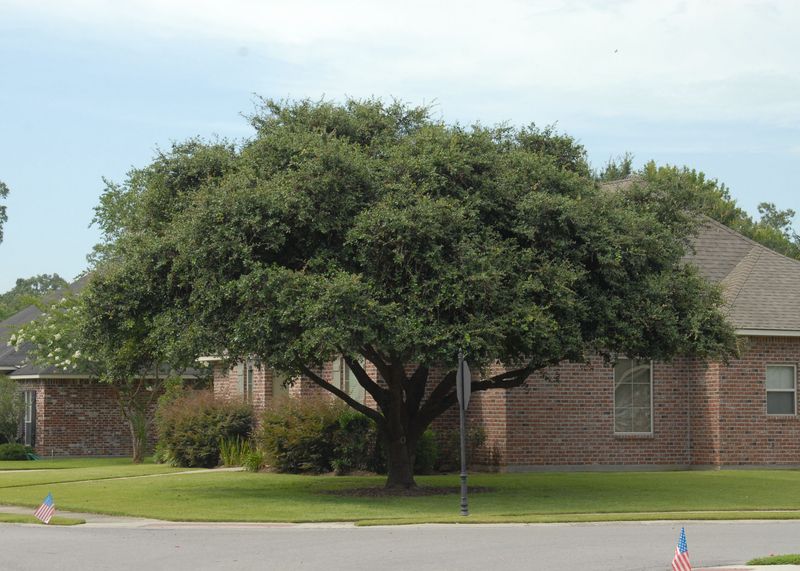
Tree shade can genuinely reduce heat exposure around a Florida home, and UF/IFAS guidance on the benefits of trees notes that strategically placed trees can lower cooling energy demand. Medium and large trees cast more useful shade on buildings than small ones, so the size a tree reaches over time matters as much as the species name on the tag.
One tree, even a well-placed one, does not materially cool an entire neighborhood. What it can do is reduce surface temperatures on the areas directly beneath and beside its canopy: a patio, a driveway section, or a west-facing wall that would otherwise absorb heat through the afternoon. UF/IFAS planting guidance for energy savings recommends prioritizing east- and west-facing walls and the surfaces people actually use, because those spots receive the longest and most intense sun exposure during the day.
Placement is where the cooling math either works or fails. A Japanese blueberry planted on the north side of a house, or tucked into a corner where it shades mostly fence, contributes very little to comfort or energy use. The same tree positioned to intercept afternoon sun on a west wall or to shade a car parked in a driveway provides real, localized relief. UF/IFAS Extension publication EP310 connects useful building shade to mature canopy height and spread, not to species identity alone.
The cooling benefit of a Japanese blueberry grows as the tree matures; a newly installed specimen offers some initial shade and a lot of visual structure, but the full thermal payoff comes over years, not months.
Year-one presence comes from buying size, not promising speed
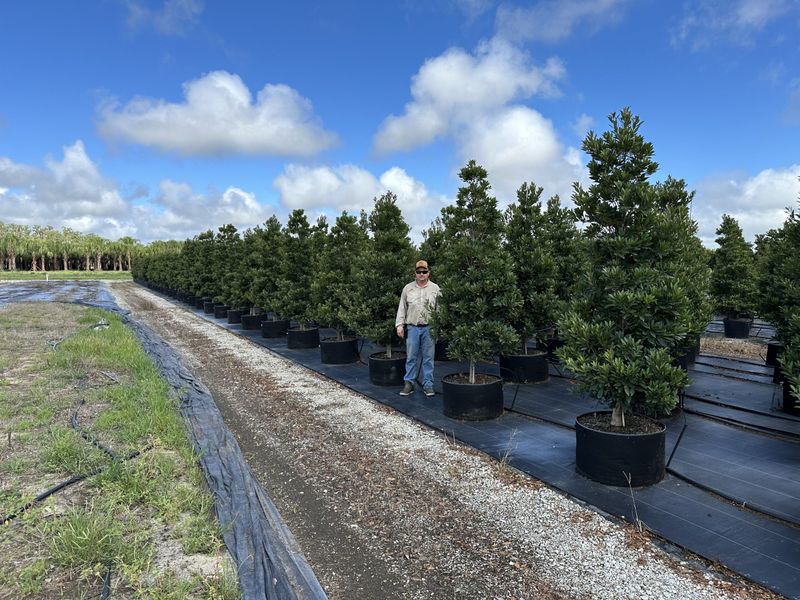
Growth rate is where the Japanese blueberry’s reputation gets complicated. Some landscape sources describe it as a reasonably vigorous grower under good conditions, while Jacksonville’s municipal tree list specifically calls it slow-growing. The safest honest description is slow to moderate, depending on soil quality, irrigation consistency, heat exposure, and how well the tree establishes after planting. Anyone who plants a small sapling expecting dense canopy shade within a single growing season is going to be disappointed.
UF/IFAS Extension describes the species as capable of reaching roughly 40 feet at maturity, while local Florida landscape sources and the Port St. Lucie Botanical Gardens commonly cite 20 to 35 feet in typical landscape conditions. The variation reflects real differences in site, soil, water, and care rather than a disagreement about the species. Treat mature size as a range, not a fixed number, and plan your site accordingly.
The practical answer to year-one presence is straightforward: buy a bigger tree. A nursery-grown specimen in a 45-gallon or larger container arrives with established branching, dense foliage, and enough height to look purposeful in the landscape from day one. Charlotte County Extension notes that the tree’s upright habit and evergreen density create an immediate sense of structure. That immediate visual effect is entirely real, but it comes from purchasing a substantial plant, not from a promise that the tree will sprint to maturity.
A small planting needs several years of good establishment care before it contributes meaningful canopy shade.
Manageable cleanup still includes leaves, flowers, and fruit
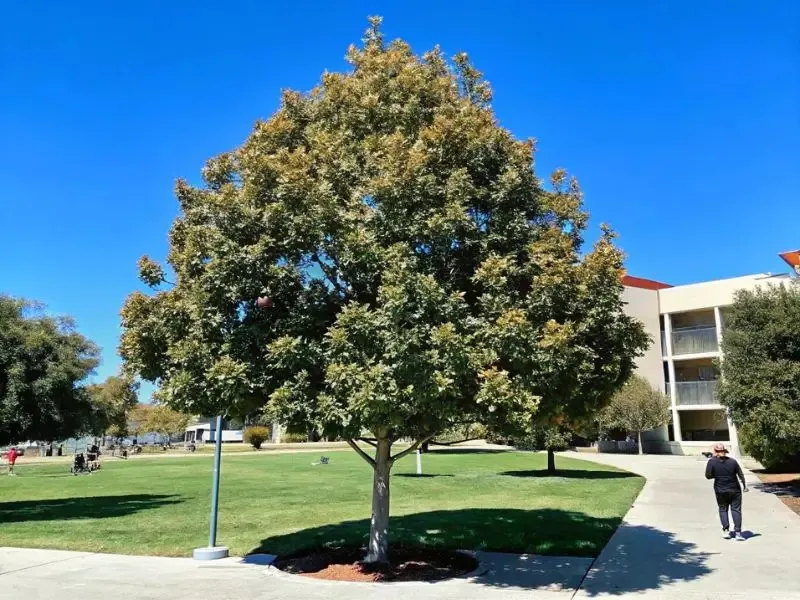
Calling this tree low-maintenance is fair in context. Calling it mess-free is not. Evergreen does not mean the tree holds every leaf indefinitely. Charlotte County Extension explicitly notes that Japanese blueberry sheds leaves year-round and that some homeowners may find the litter unacceptable.
Add spring flowers that eventually drop, and blue or purple fruit that can stain pavement or attract wildlife, and the cleanup picture is more honest: less dramatic than a shedding deciduous tree in autumn, but not zero.
For most homeowners, the litter level is workable. The fruit tends to drop in batches rather than in a constant daily rain, and the narrow crown keeps the debris zone smaller than a broad-canopy tree would create. The bigger maintenance commitment is structural pruning, especially in the first few years. UF/IFAS Extension recommends early formative pruning to establish a clear central leader, remove branches that cross or rub, and address included bark before it becomes a structural problem.
Getting the branching pattern right early reduces the likelihood of needing major corrective cuts later.
What pruning should not become is a workaround for a poorly sited tree. Repeatedly shearing a Japanese blueberry to keep it smaller than its mature dimensions, or using heavy reduction cuts to squeeze it into an undersized space, is not a sustainable maintenance strategy. The tree’s narrow form is a genuine asset in the right location, but that form has limits, and forcing it to stay artificially small creates stress, poor structure, and more work over time. Choose the spot based on where a 25-to-40-foot upright tree fits naturally, and the pruning requirement stays purposeful rather than constant.
Rooting space matters more than a species promise beside pavement
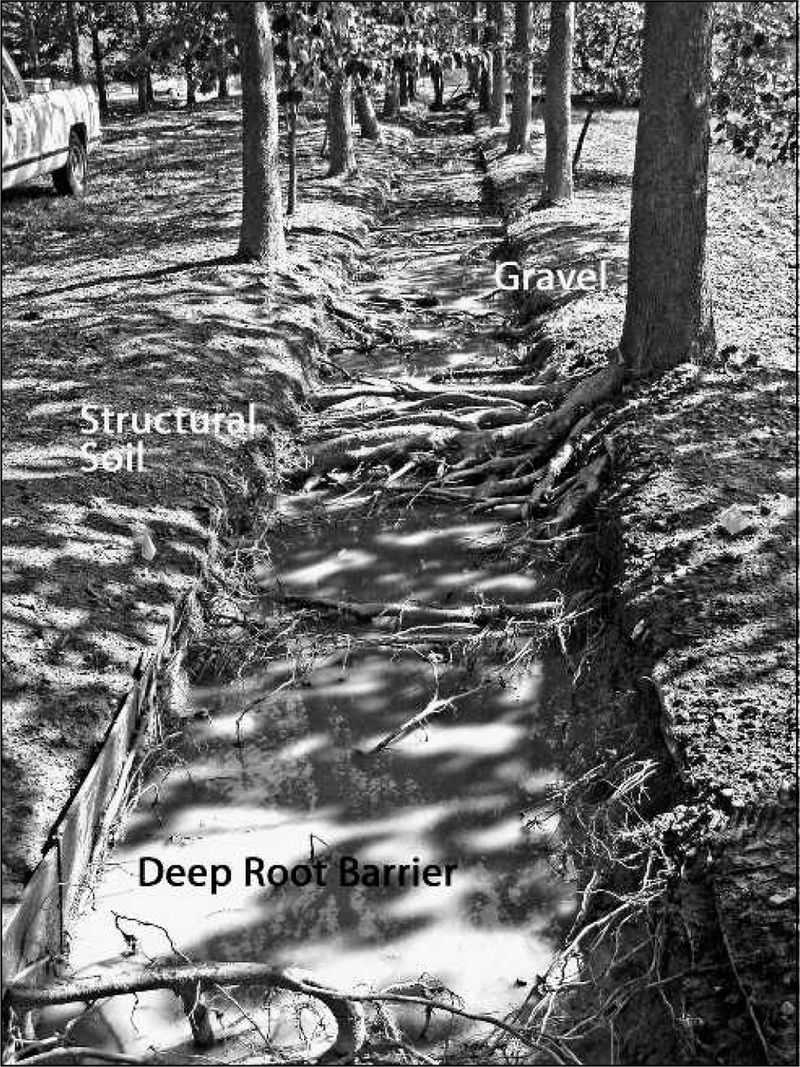
A narrow canopy does not mean narrow roots. The upright silhouette of a Japanese blueberry can give homeowners a false sense of security when siting it near sidewalks, driveways, or foundations, but the canopy shape above ground says very little about how far roots will extend below it as the tree matures. UF/IFAS Extension publication EP309 addresses root conflicts with hardscape and is clear that no species can be guaranteed not to disturb pavement over time.
UF/IFAS Extension publication EP310 explains that root-pavement conflicts are primarily a site-design problem. The variables that determine whether a tree eventually disturbs hardscape include mature tree size, the volume of soil available to the roots, soil compaction, irrigation patterns, distance from pavement, and the type and condition of the pavement itself. A tree given adequate rooting space and planted with proper setbacks from concrete is far less likely to cause problems than the same species crammed into a narrow tree pit with compacted soil and no room to grow.
Orange County Extension’s guidance on trees, streets, and sidewalks reinforces that large-maturing trees placed too close to pavement can eventually cause damage, regardless of their canopy form. Before planting a Japanese blueberry near a walkway, curb, utility line, or foundation, measure the available rooting space, check the mature size range for your specific site conditions, and confirm that the setback gives the root system somewhere to go. If the space is genuinely tight, the honest answer may be a different species or a different location, not a promise that this tree’s narrow crown exempts it from the physics of root growth.
Florida establishment care determines whether the tree succeeds
Sandy Florida soil is one of the most consistent challenges in establishing any tree. Water moves through it quickly, which means a newly planted tree can dry out between rain events faster than a homeowner expects. UF/IFAS Extension notes that Japanese blueberry needs regular irrigation until it is fully established, and that favorable growth depends on consistent water availability during that period. Skipping irrigation because it rained two days ago is a common mistake in Florida’s fast-draining soils.
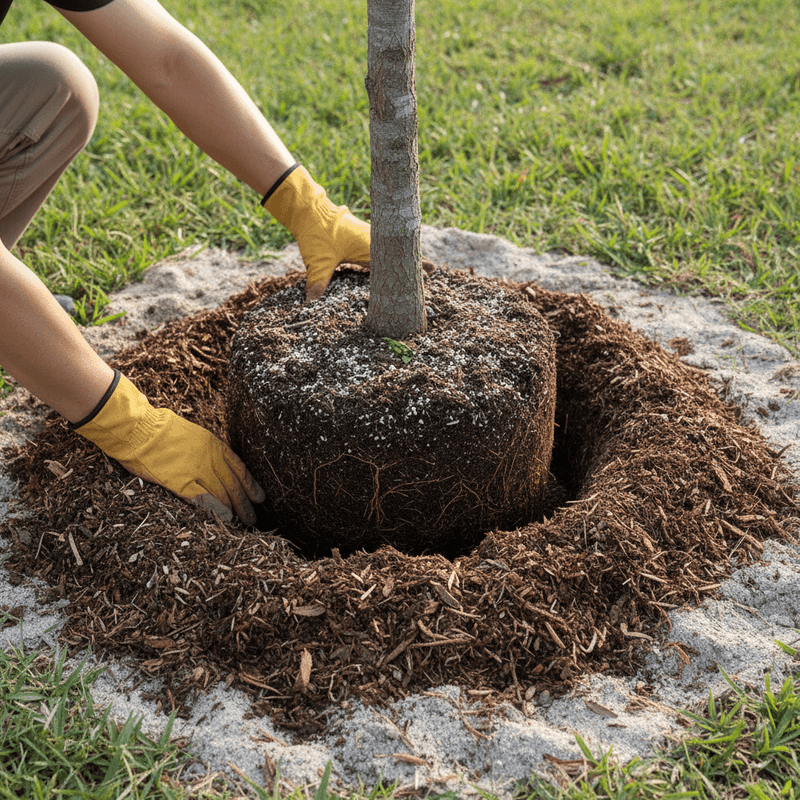
The planting technique sets the foundation. Dig the hole two to three times wider than the root ball, but no deeper than the root ball itself. UF/IFAS planting and establishment guidance specifies that the root flare, the point where the trunk widens at the base, should remain visible above the soil line after planting. Burying the root flare invites rot and long-term decline.
Apply a 2-to-3-inch layer of mulch over the root zone, but keep it pulled back a few inches from direct trunk contact. EDIS publication EP314 reinforces that mulch-on-trunk contact creates a moist environment that encourages disease and bark damage over time.
Irrigation frequency is not a fixed schedule. UF/IFAS Extension publication EP110 ties establishment watering to soil type, rainfall, heat load, sun exposure, and how quickly the root ball dries out, not to a calendar. A tree planted in June in full sun on a sandy ridge needs more frequent attention than one planted in October in partial shade on a heavier soil. UF/IFAS water quality publication WQ142 also cautions against overwatering, which in compacted or poorly drained spots can suffocate roots just as effectively as drought.
Check the root zone regularly, water when it begins to dry, and plan to continue that care through at least one full hot and dry season after planting.
Its nonnative status and storm limits belong in the decision
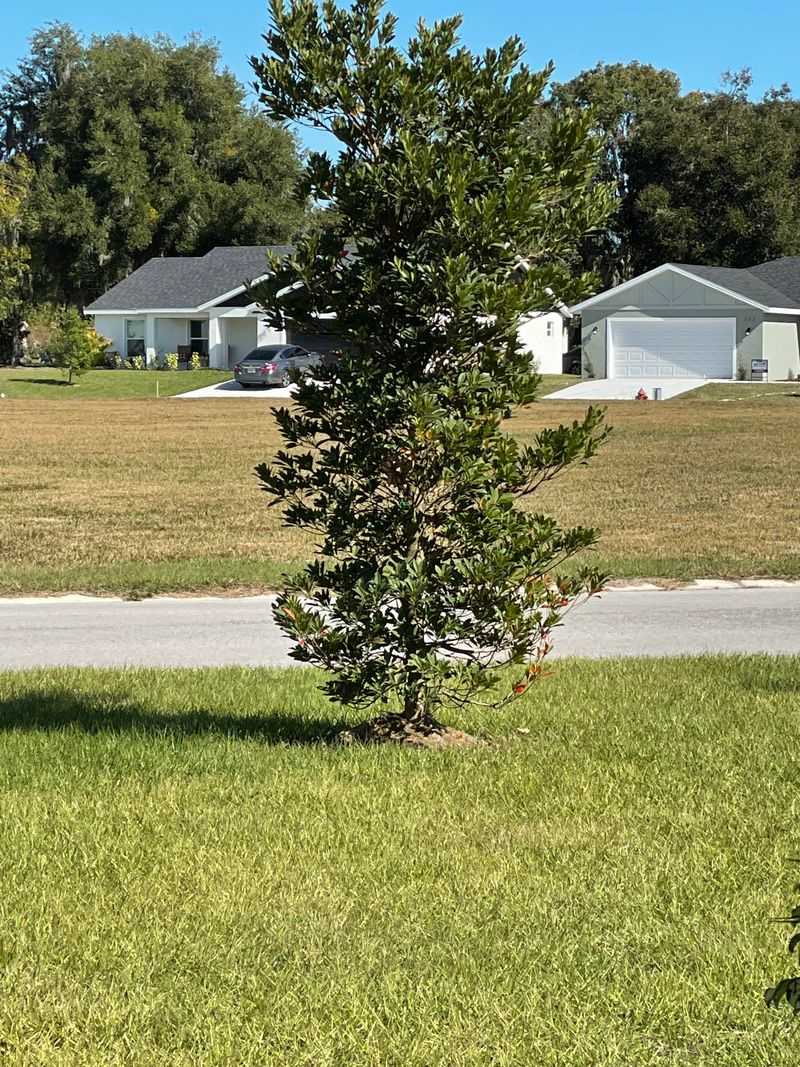
Japanese blueberry comes from temperate East Asia, not from Florida. That distinction matters when homeowners weigh it against native alternatives. Charlotte County Extension identifies the tree as nonnative, and the UF/IFAS plant directory classifies it as low risk for invasion, meaning it is not currently considered a problem in Florida’s natural areas. Low invasion risk is a meaningful and reassuring qualification, but it is not the same as native status.
A Florida-native tree would offer documented relationships with local insects, birds, and other wildlife that a nonnative species, however well-behaved, simply cannot replicate in the same way.
Regional fit is also uneven across the state. Port St. Lucie Botanical Gardens and Charlotte County Extension both document the tree performing well in central and south Florida and in the warmer coastal portions of the state. Colder north Florida locations, where occasional hard freezes occur, have less documentation behind them. Homeowners north of the I-4 corridor should check with their local county extension office before committing to a planting.
Storm performance is the other limit worth naming clearly. No tree is hurricane-proof. UF/IFAS wind resistance research and related UF/IFAS storm studies focus on species with documented post-hurricane survival data, and Japanese blueberry is not among the principal trees evaluated in those studies. UF/IFAS Extension publication EP042 notes that wind performance depends on a tree’s structural pruning history, root health, soil conditions, age, and the intensity of the specific storm, not on species identity alone.
An upright, well-pruned tree in good soil may fare reasonably well, but no one can promise that outcome in advance. Structural pruning and adequate rooting space are the best preparation available.
Choose it for the site you have, not the promise in the headline
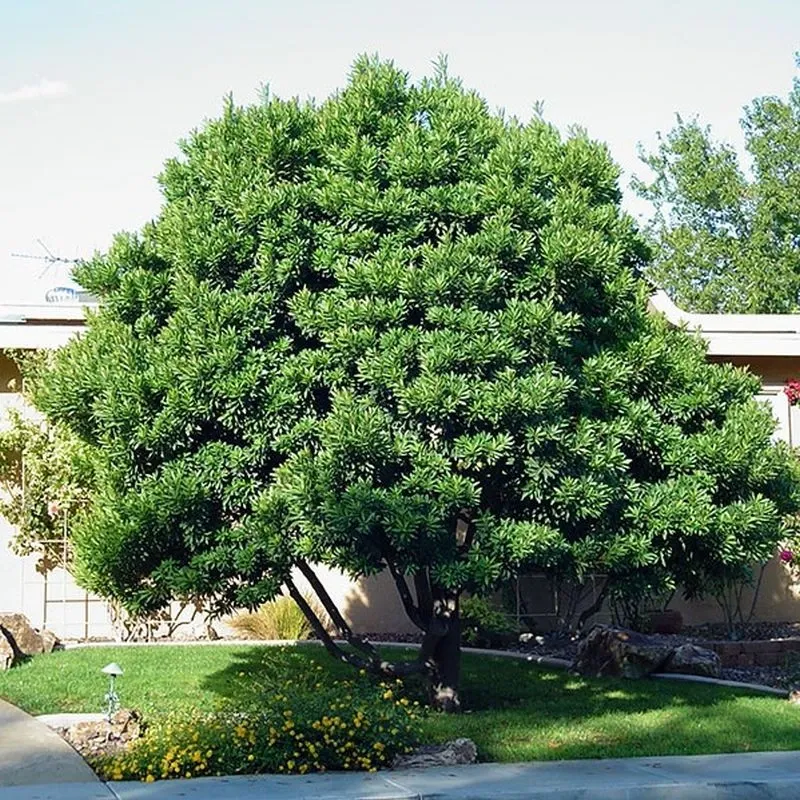
Japanese blueberry is a reasonable choice for a specific kind of Florida homeowner: someone who wants a formal, upright evergreen that creates structure and localized shade, has room for a tree that may reach 25 to 40 feet over time, can commit to establishment irrigation through at least one full hot season, and is comfortable with periodic leaf, flower, and fruit cleanup. UF/IFAS Extension’s species profile supports that use case for central and south Florida and warmer parts of the state.
If the site is cramped beside a foundation, directly over a utility line, or in a confined sidewalk pit with minimal soil volume, a different tree or a different location is the better answer. UF/IFAS guidance on planting trees for energy savings consistently connects cooling value to mature canopy size and placement, not to a species label. A well-placed tree of the right size does more for comfort and energy use than a poorly placed one of any species.
Readers in colder north Florida should confirm local suitability with their county extension office before planting. Port St. Lucie Botanical Gardens and county extension sources both focus their recommendations on warmer Florida regions. A substantial nursery specimen gives you an intentional, structured look from the start, but that is a head start on presence, not a shortcut to a mature canopy. Good establishment care is what converts that head start into a tree that actually performs over time.
The headline promised a quiet revolution; the tree offers something more durable and more honest: a plausible fit for the right yard, tended by someone who knows what they signed up for.