
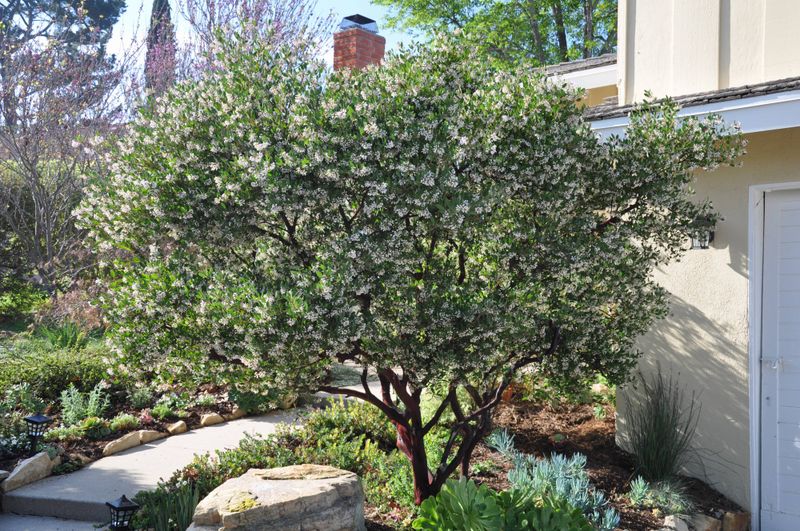
The west side of a California house takes a beating every summer afternoon, when the sun bounces off stucco and walls until plants look cooked by August. Many homeowners keep replacing thirsty shrubs that fry, wasting water and money in the process.
The good news is that some shrubs actually love this spot and can feed bees, birds, and butterflies while sipping very little water. Here are ten tough picks that can turn your hottest wall into a living, water-wise border.
1. Cleveland Sage
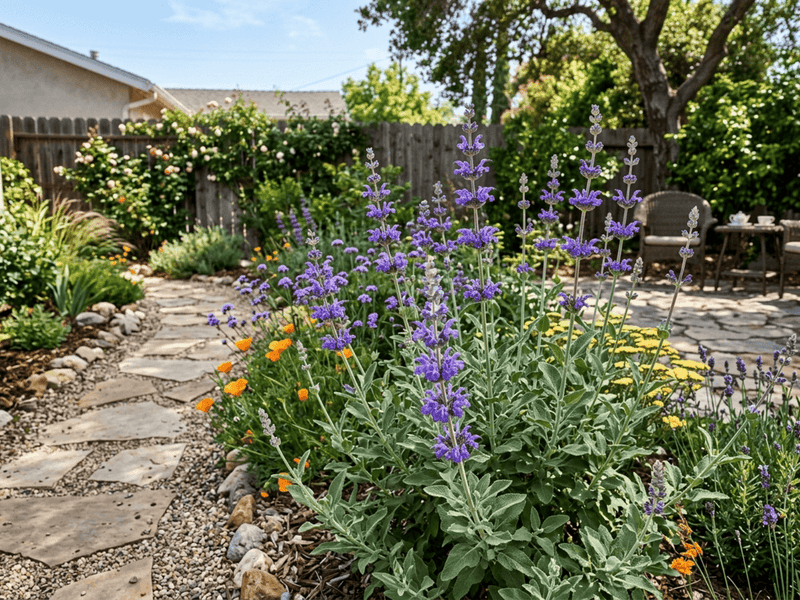
Brush past a Cleveland sage on a hot afternoon and the whole yard smells like a chaparral hillside. That scent is a clue to its toughness, since the oils help the leaves handle intense sun and dry air.
Native to Southern California and Baja, Salvia clevelandii grows about 3 to 5 feet tall and wide. In late spring it stacks lavender-blue flower whorls up its stems, and native bees and hummingbirds tend to show up fast.
Give it fast-draining soil and resist the urge to water it like a lawn shrub. Once established, a deep soak every few weeks in summer is often plenty, and overwatering is the more common way people lose it.
2. Manzanita
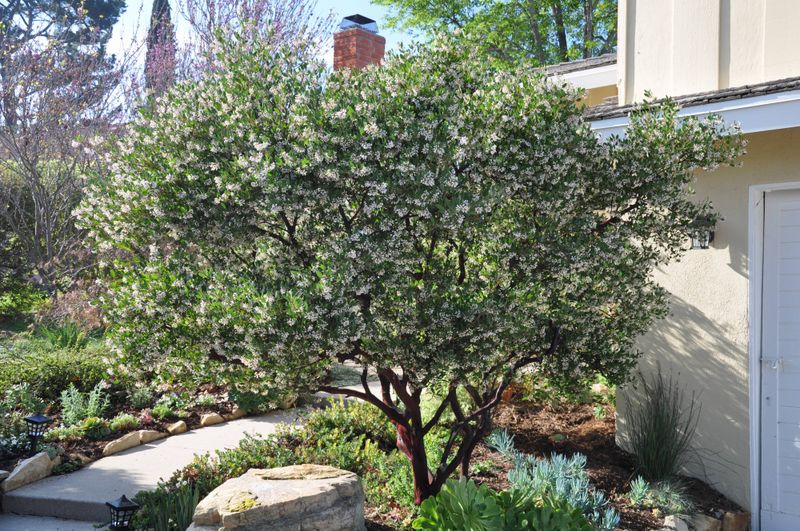
Sculptural is the word that comes to mind. Manzanita’s smooth, cinnamon-red bark twists like driftwood, and it looks good every single month of the year.
Cultivars such as Howard McMinn and Sunset are forgiving choices for garden settings, handling reflected heat better than you might expect. Tiny pink or white bell flowers arrive in late winter, giving early native bees and hummingbirds a meal when little else is blooming.
The catch is summer water. Manzanitas generally prefer to stay dry once established, so place them away from lawn sprinklers and drip lines that run often.
Fun fact: the name means little apple in Spanish, a nod to the small berries that follow the flowers.
3. California Lilac
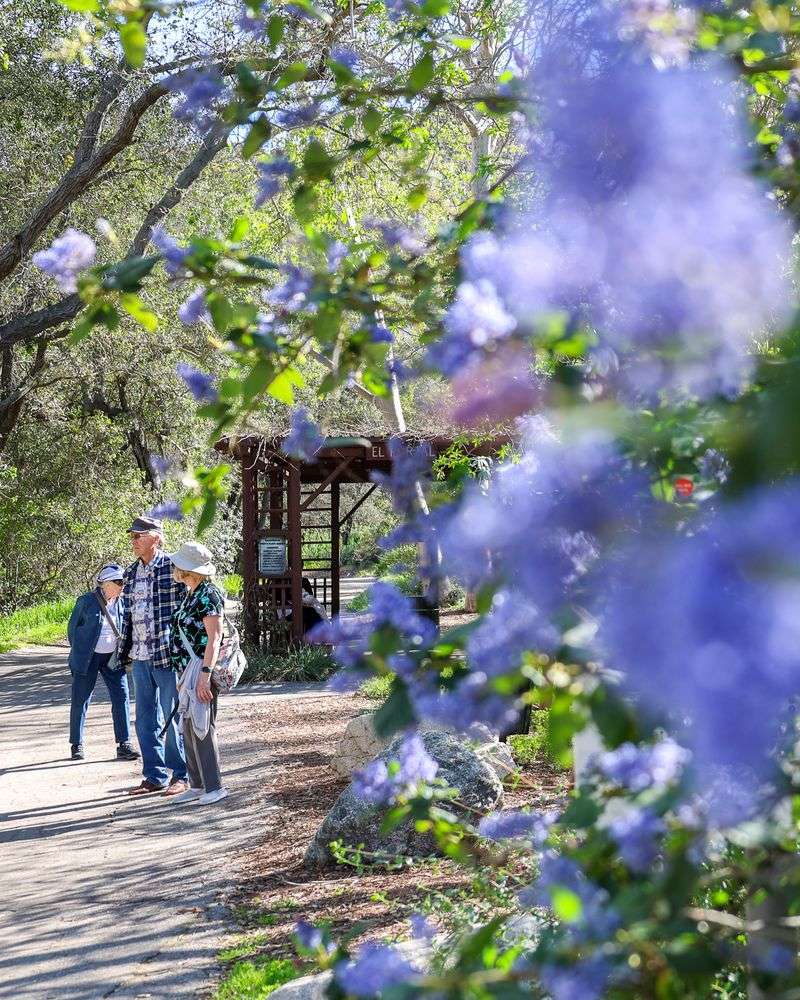
Few sights in a California spring beat a ceanothus in full bloom, glowing electric blue and literally buzzing with bees. If your west wall needs a showstopper, start here.
Varieties like Ray Hartman, Concha, and Dark Star range from compact mounds to small trees. They fix their own nitrogen, so they rarely need fertilizer, and feeding them can actually shorten their lives.
Plant in fall so winter rains help roots settle in. In hot inland valleys, a variety bred for heat and clay tolerance may hold up better than coastal types.
4. Toyon
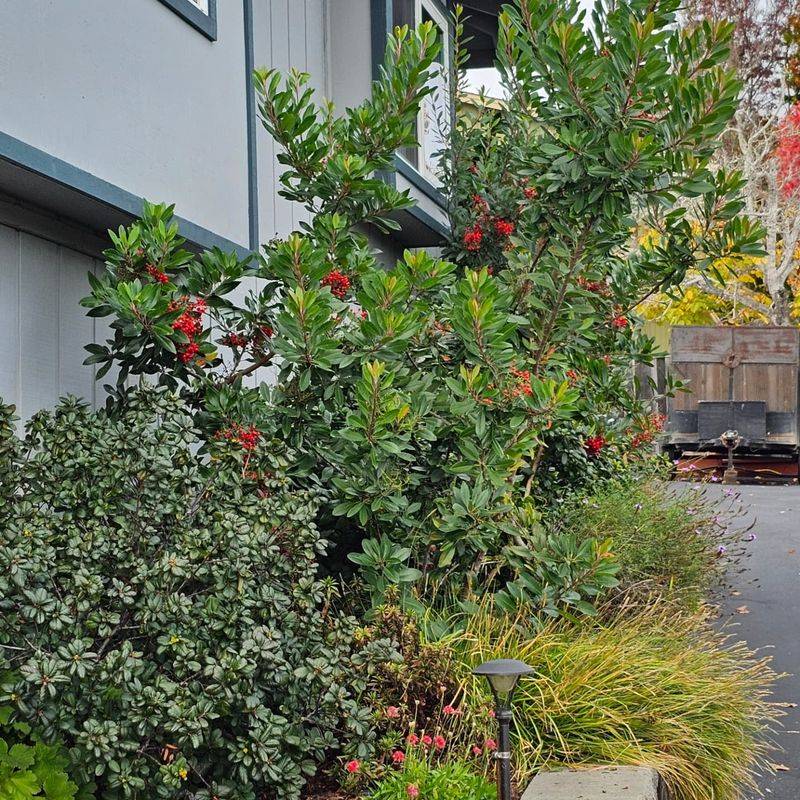
Hollywood was reportedly named after this shrub, sometimes called California holly. Its winter berries once colored hillsides around Los Angeles red.
Toyon can reach 8 to 15 feet, which makes it a solid screen for a hot west property line or a tall, blank wall. Summer brings white flowers loved by pollinators, and winter berries can draw robins, mockingbirds, and cedar waxwings.
It tolerates clay, heat, and drought once established, and it accepts occasional summer water better than many natives. Prune lightly to keep it shaped as a hedge or small tree.
5. Bush Anemone
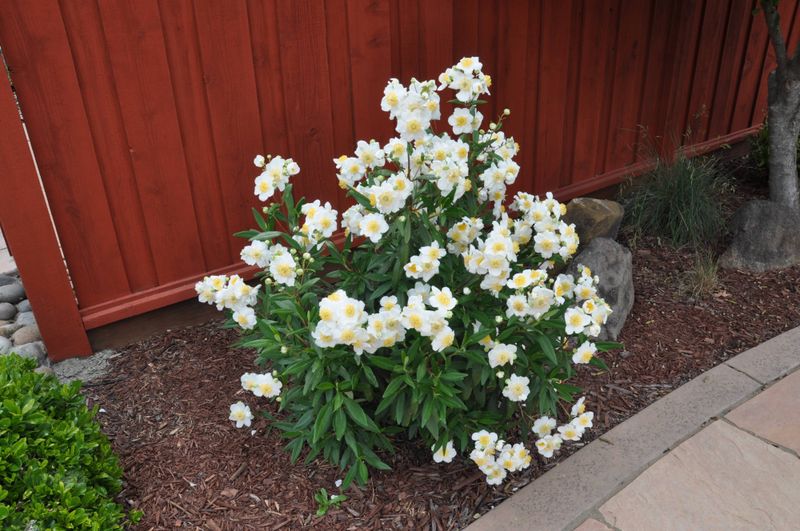
Glossy leaves, fragrant white blossoms, and a rare backstory make this one a quiet star. Carpenteria californica grows wild in only a small area of the Sierra Nevada foothills near Fresno.
In gardens it forms a tidy 4 to 6 foot shrub that blooms in late spring and early summer. The flowers look almost like single white roses with golden centers.
On a scorching west exposure, it may appreciate a little afternoon relief from a nearby tree or some occasional deep watering. Think of it as a tough plant with a touch of elegance, ideal near an entry or patio.
6. Desert Mallow
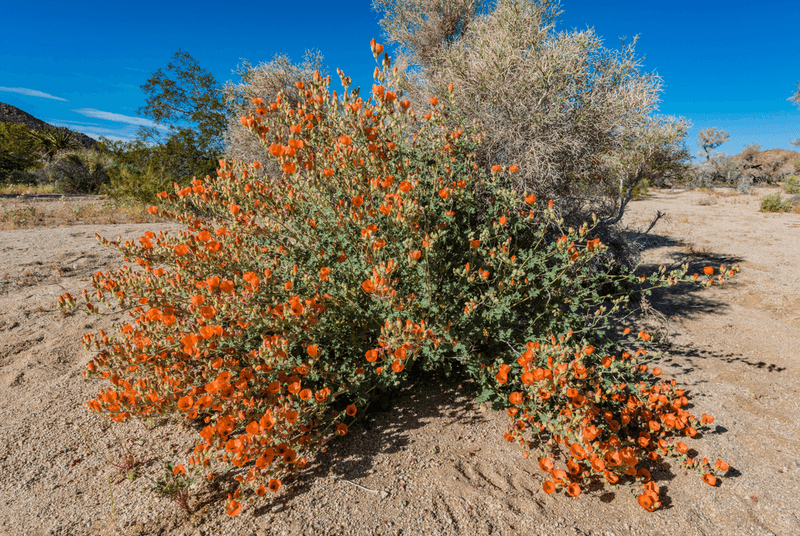
Hot, dry, and blasted by afternoon glare? Desert mallow shrugs it off.
Sphaeralcea ambigua comes from the Mojave and Colorado deserts, so a west wall in Riverside or Bakersfield feels like home.
Fuzzy gray leaves reflect sunlight, and apricot-orange cup flowers can appear off and on from spring into summer. Native bees, including specialist bees that rely on mallows, are frequent visitors.
Cut it back hard in fall to keep it from getting leggy. One tip: the leaf hairs can irritate skin, so wear gloves while pruning.
7. Rosemary
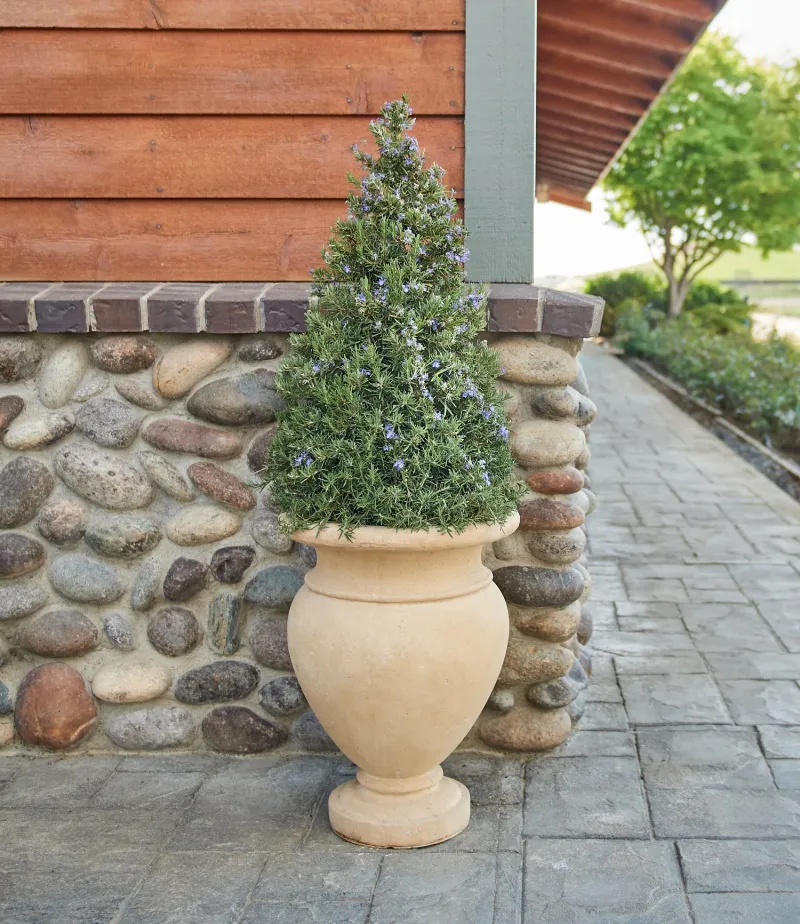
Here is a shrub you can snip for dinner. Rosemary hails from the Mediterranean, whose climate is nearly a twin to California’s, so long dry summers suit it well.
Upright forms like Tuscan Blue make a fragrant low hedge, while trailing types spill nicely over walls. Winter and early spring flowers may feed bees when few other blooms are open.
Poor, sandy soil keeps it compact and flavorful. Too much water and rich soil usually lead to root rot, which is the most common reason it fails.
8. Coffeeberry
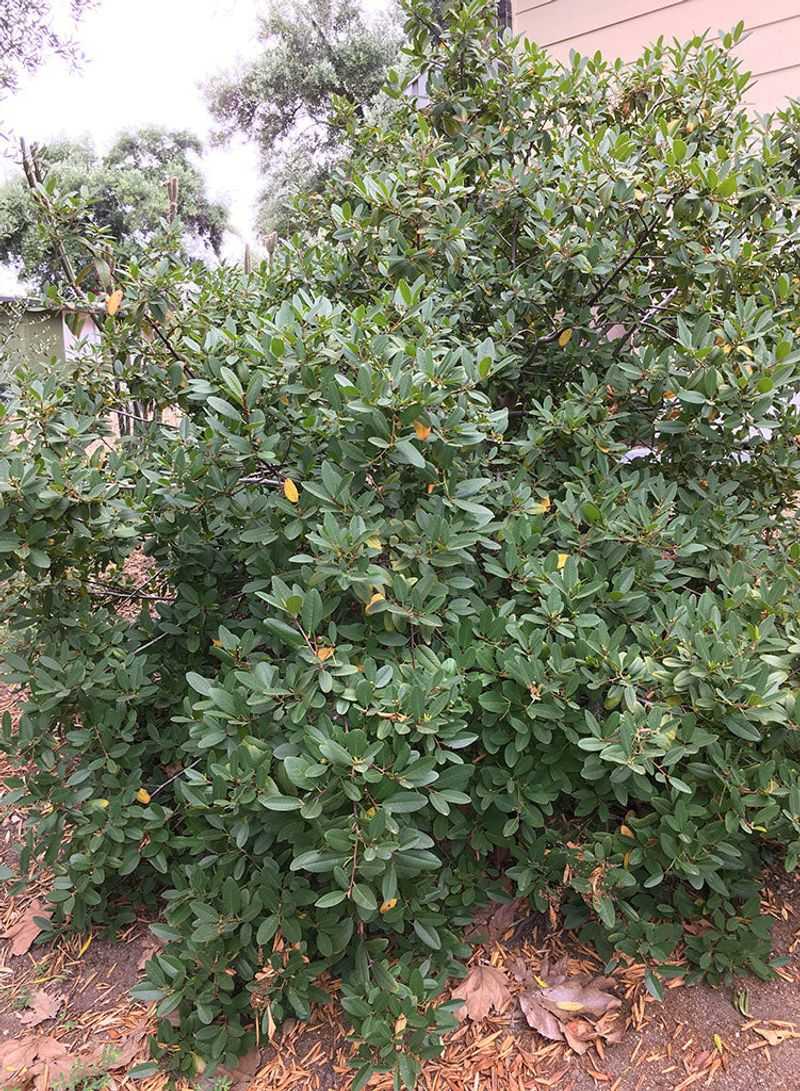
Plenty of homeowners walk right past coffeeberry at the nursery because it lacks flashy flowers. That is a mistake, because few shrubs work harder for wildlife.
Frangula californica produces berries that turn from green to red to nearly black, and birds tend to strip them quickly. Its small flowers feed bees, and it can host the pale swallowtail butterfly.
Compact cultivars like Mound San Bruno and Eve Case stay around 4 to 6 feet and handle sun with modest summer water. They also make a neat, evergreen backdrop for showier plants.
9. Lemonade Berry
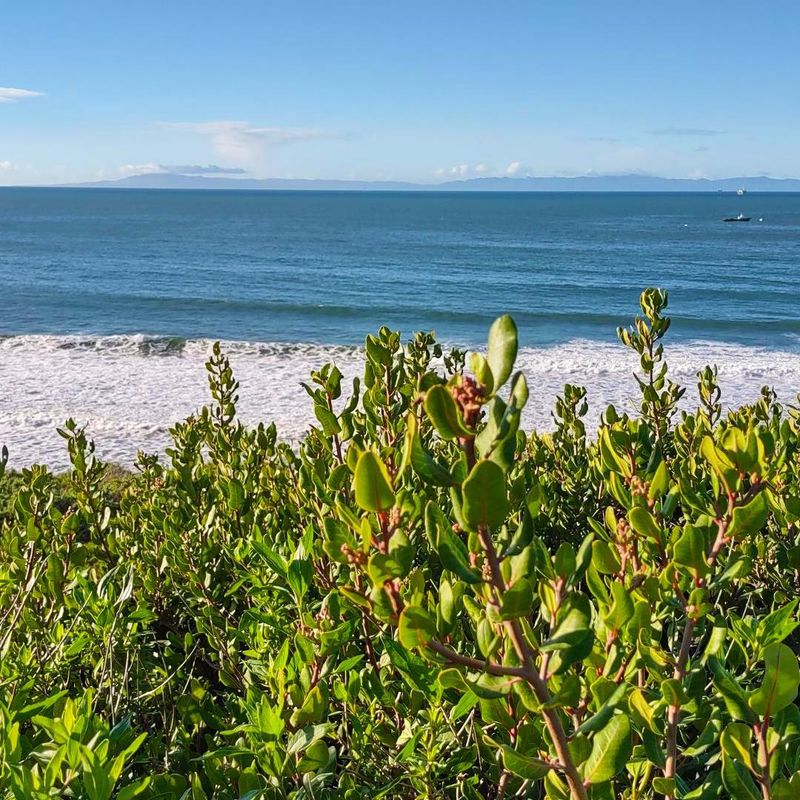
Early Californians soaked the sticky, tart berries of this shrub to make a lemony drink, and the name stuck. Rhus integrifolia still grows wild on coastal bluffs from Santa Barbara to San Diego.
Thick, leathery leaves stand up to sun, wind, and salt air, making it a smart pick for coastal west sides. It can be shaped into a dense hedge or left as a rounded shrub up to 10 feet.
Pink and white flowers in late winter help early pollinators. Once established, it typically needs little to no summer watering near the coast.
10. Bush Germander
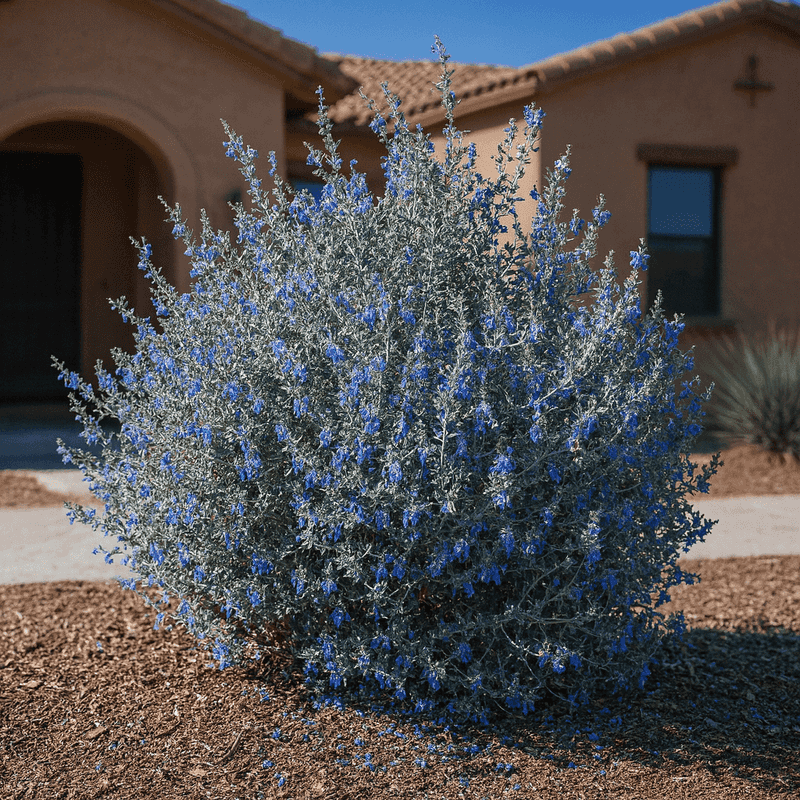
Silver foliage can do wonders for a sunbaked spot, cooling the look of a hot wall. Teucrium fruticans offers that shimmer plus small sky-blue flowers.
This Mediterranean shrub tolerates heat, drought, and heavy shearing, so it works as a formal low hedge or a loose, airy screen. Bees often visit its blooms through much of spring and into summer.
Because it stays fairly low and responds well to trimming, it can fit fire-conscious designs when kept tidy and free of dead wood. Check your local defensible-space rules before planting close to the house.