
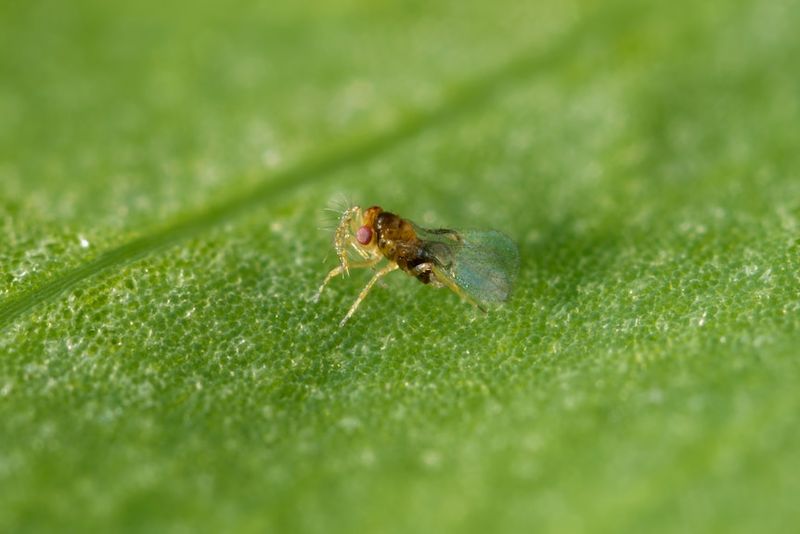
If something just chewed your tomato leaves to lace, there is a good chance a wasp is already on the case. California yards are full of hunting wasps that spend their days tracking down caterpillars to feed their young.
Most of them are calm, solitary, and far more interested in hornworms than in you. Get to know seven of these helpers, and you may never reach for a spray bottle again.
1. Western Paper Wasp
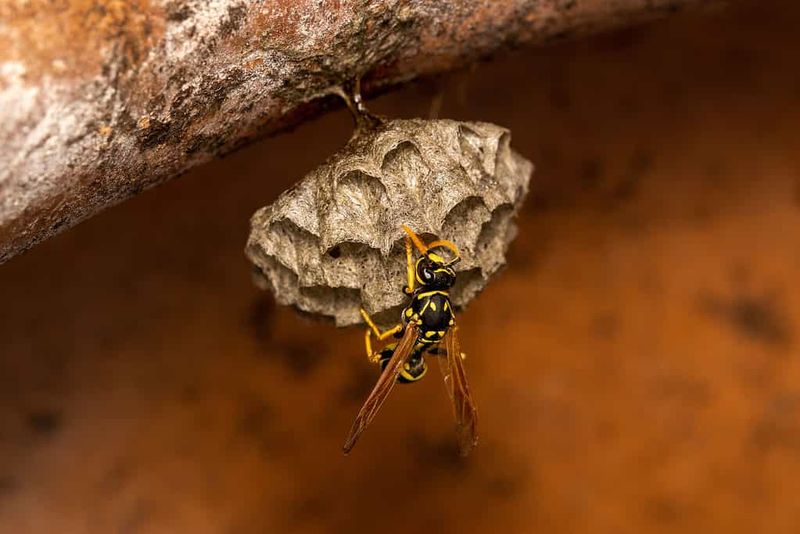
Picture a tomato hornworm munching away at dawn, and then a slim brown-and-yellow wasp dropping onto it like a hawk. Paper wasps in the genus Polistes are some of the busiest caterpillar hunters in California gardens.
They chew up their prey into a meatball and fly it back to the nest for their larvae.
You have probably seen their umbrella-shaped nests hanging under eaves or patio covers. A single colony can haul off thousands of caterpillars in one season, including cabbage loopers and armyworms.
That adds up to real relief for your vegetable beds.
Paper wasps will defend their nest if bumped, so leave nests that sit away from doors and walkways alone. Planting yarrow and California buckwheat gives the adults nectar between hunts.
2. Thread-Waisted Wasp
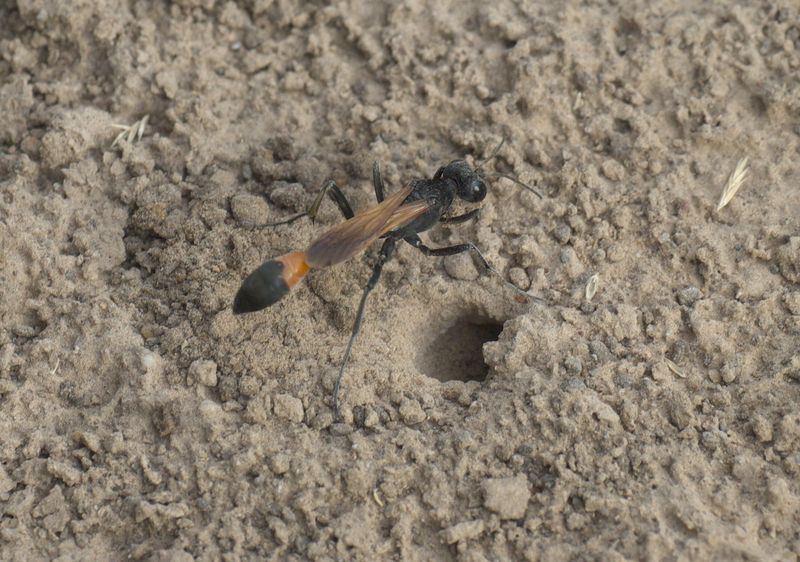
Few insects look as odd as the thread-waisted wasp, with a body so skinny in the middle it seems ready to snap. Ammophila wasps patrol sandy soil and dry paths across the state.
They are loners with zero interest in stinging people.
Here is the wild part. A mother wasp paralyzes a caterpillar, drags it to a burrow she dug, lays one egg on it, and seals the door with a pebble.
Scientists have even watched some of them use a small stone as a tamping tool.
Leave a few bare, sunny patches of soil instead of covering every inch with mulch. That small change gives these diggers a place to raise the next generation of caterpillar hunters.
3. Braconid Wasp
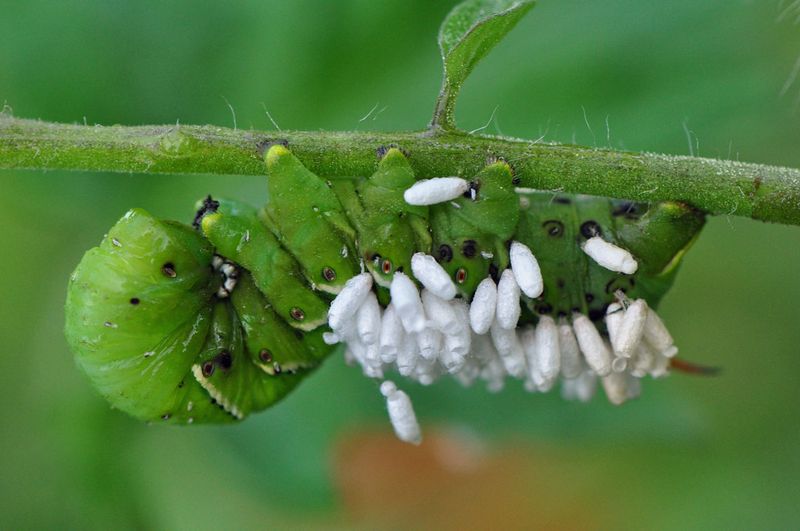
Ever found a hornworm covered in what looks like tiny grains of rice? Do not pull it off.
Those white specks are cocoons of braconid wasps, and they are about to make a lot more pest control.
Braconids are tiny, often smaller than a grain of sand to a few millimeters long. Females lay eggs inside caterpillars, and the larvae eat the host from within.
The doomed caterpillar stops feeding fast, so your plants get a break right away.
Leave those spotted hornworms on the plant or move them to a corner of the garden. Each one can release dozens of new wasps ready to hunt the next round of pests.
4. Trichogramma Wasp
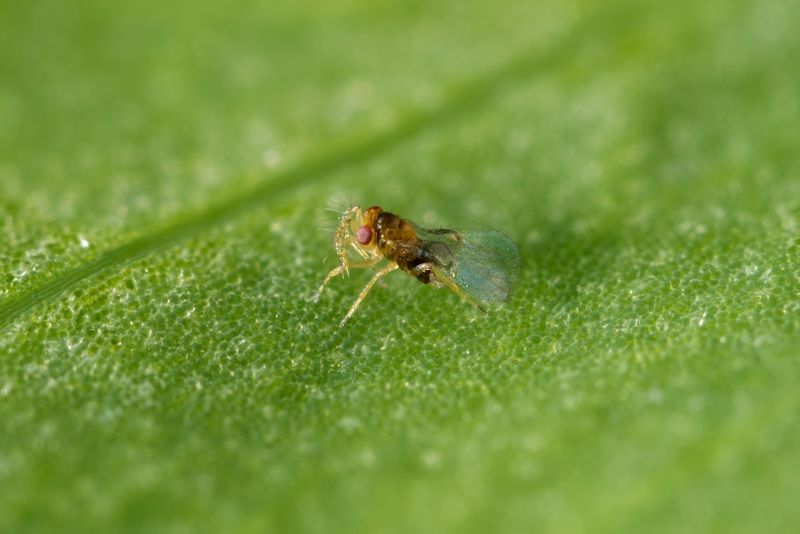
Talk about stopping trouble early. Trichogramma wasps attack caterpillars before they even hatch, laying their eggs inside moth eggs.
The pest never gets a single bite of your leaves.
These wasps are almost invisible, about the size of the period at the end of this sentence. California farmers have released them for decades to protect orchards and row crops from codling moths and corn earworms.
Home gardeners can buy cards of them too.
They work best when moth eggs are present, so timing matters. Skipping broad-spectrum sprays keeps wild populations alive on their own.
5. Ichneumon Wasp
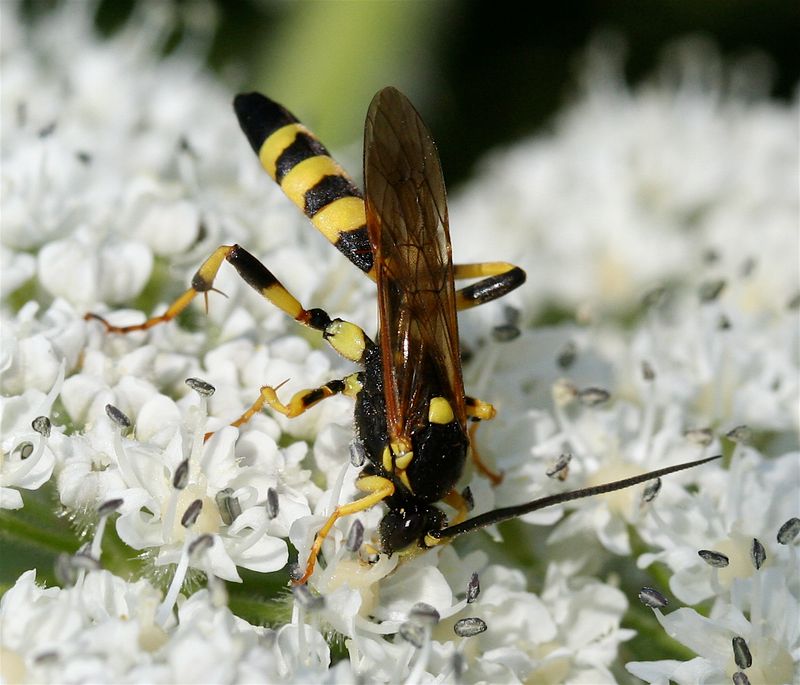
With its long dangling antennae and slender orange body, an ichneumon wasp looks more scary than it is. The long tail many species carry is for laying eggs, not stinging.
Most will simply drift past you.
Ichneumons find caterpillars, sometimes hidden inside rolled leaves, and plant eggs inside them. Oak moth caterpillars, which can strip coast live oaks bare, are a favorite target in parts of California.
Fewer bare trees in spring often means these wasps did their job.
They are drawn to lights at night and flowers by day. Small-flowered natives like coyote brush offer them easy sips of nectar.
6. Yellowjacket
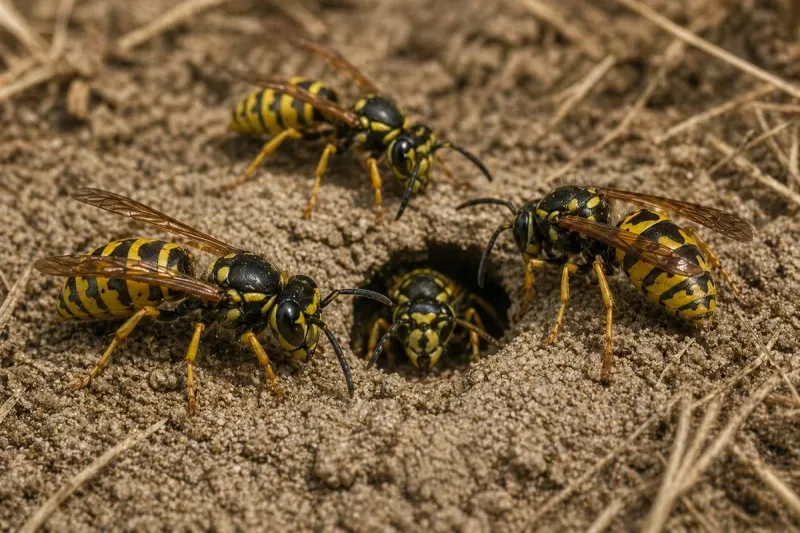
Yes, the picnic crasher makes the list. Western yellowjackets have a bad reputation at barbecues, but early in the season they are hunters first.
Workers grab caterpillars, flies, and other soft insects to feed the growing colony.
Spring and early summer are when this protein hunt peaks. Only later in the year do they switch to sweets and soda cans.
A colony that stays far from people can quietly clear a lot of pests.
Ground nests near play areas are another story, and those may need removing. If a nest sits at the far edge of the yard, consider giving it a pass until fall.
7. Potter Wasp

Somewhere on a twig in your yard, there may be a perfect tiny clay pot no bigger than a pea. A potter wasp built it by hand, mixing mud and spit.
Inside, she has packed several paralyzed caterpillars for her single baby.
Potter wasps, including Eumenes species, prefer small caterpillars like leafrollers and inchworms. They are gentle and solitary, rarely stinging unless squeezed.
Mason wasps, their close cousins, use old holes in wood the same way.
Keep a damp, muddy spot near a hose bib in summer, and these little potters will thank you. A wood bee hotel can also invite their mason relatives to move in.