
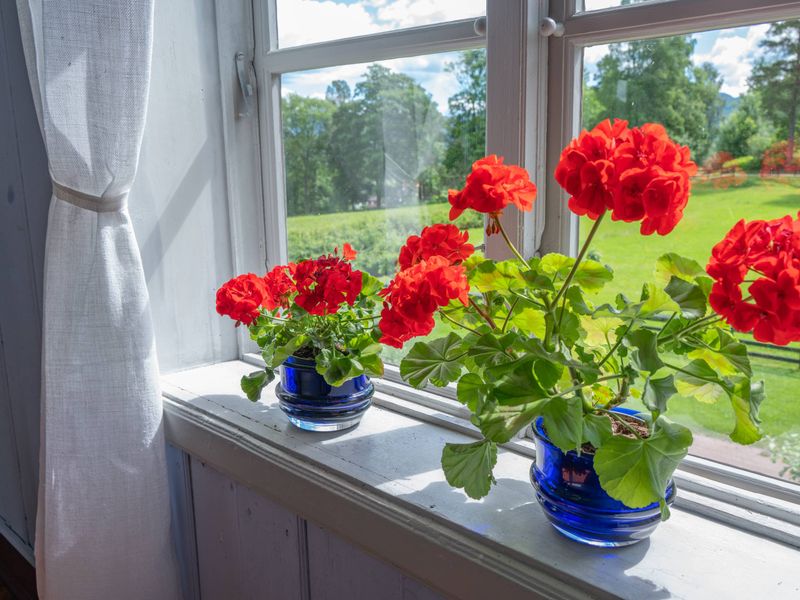
Geraniums stretch and fade indoors mostly because winter light is weaker than the plant needs, and a few small changes to placement and pruning can keep them bushy. Brighter light, cooler air, and a well-placed snip all help the plant grow sturdy stems instead of long, floppy ones.
Pale leaves can have more than one cause, so it pays to look closely before you fix anything. Here is how to keep your potted plants tidy until it is time to send them back outside.
Start with an actively growing, healthy plant
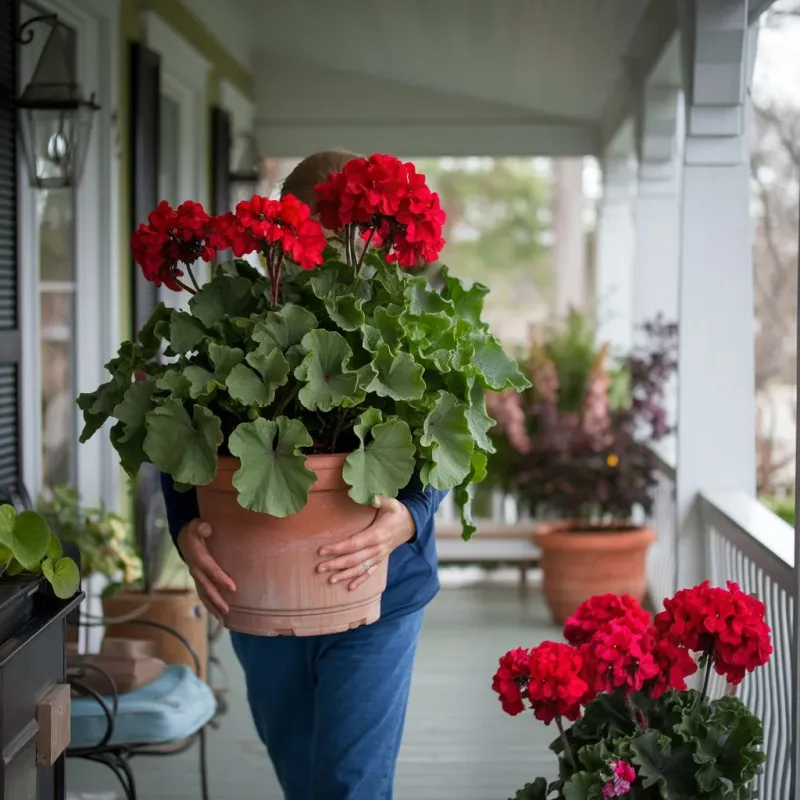
Everything in this guide is meant for potted bedding geraniums, which are Pelargonium, that you keep growing through winter. True hardy geraniums are a different genus and do not follow this routine.
Plants stored dormant or nearly dormant in a cool, dark spot need different light, watering, and pruning, so do not mix the two methods.
Before a pot comes inside, look it over closely. Check the undersides of leaves, the stems, and the soil surface for insects, spots, or rot.
Illinois Extension advises bringing in only healthy plants, because an infested or diseased one can spread trouble to your other houseplants.
If a plant looks rough, keep it apart from the rest of your collection while you sort it out. Starting with a clean, vigorous plant gives you the best chance at sturdy growth, as University of Minnesota Extension describes for geraniums kept growing indoors.
Give the plant as much suitable light as you can
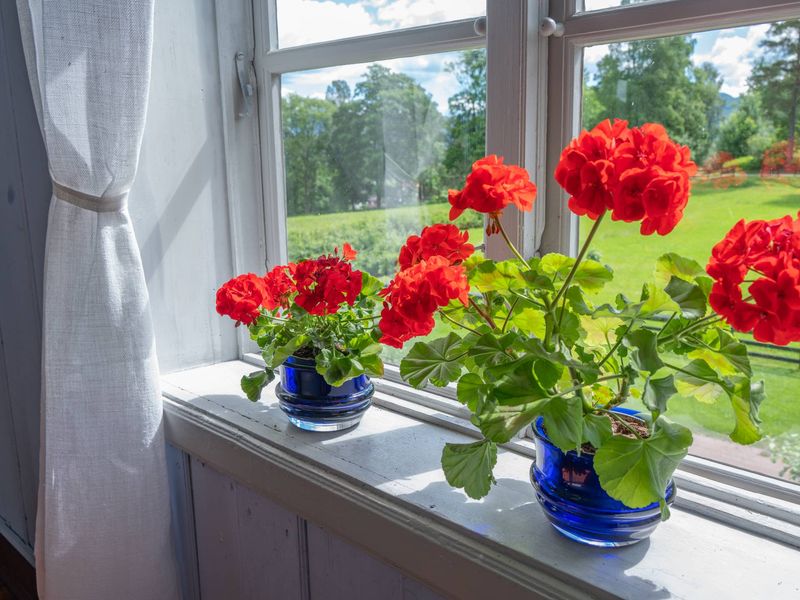
Weak winter light is a common reason geraniums stretch, leaving long gaps between leaves as stems reach toward the window. University of Minnesota Extension points to insufficient light as a cause of this spindly growth.
Walk around your home and find the brightest window you have. A south-facing one is often a good choice.
Keep leaves from pressing against cold glass, and turn the pot now and then so all sides get a turn.
When daylight falls short, a grow light can fill the gap. For flowering houseplants, UMN guidance on indoor lighting gives 14 to 16 hours of total light a day as a broad target.
That number is general advice for flowering houseplants, not a promise for Pelargonium specifically, so watch how your plant responds and adjust.
Keep actively growing plants away from excess heat
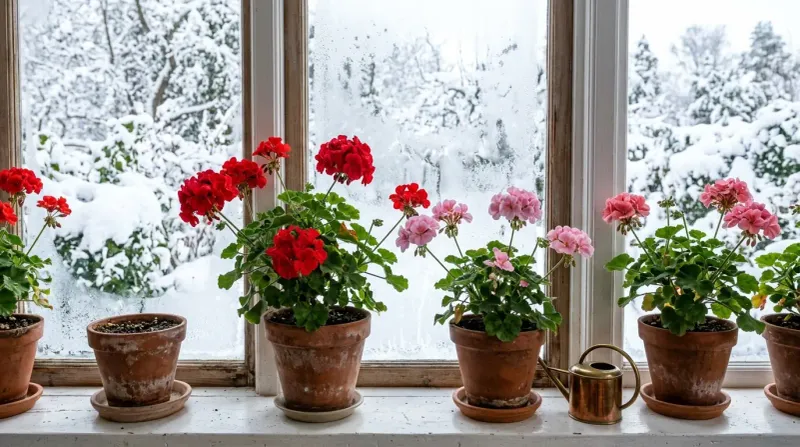
A toasty room can work against you. Warmth paired with too little light pushes lanky growth, a point Illinois Extension makes about overwintered geraniums.
Where you can, aim for roughly 60 to 65°F, the range suggested by University of Minnesota and Wisconsin Extension. An unheated sunroom, a bright entryway, or a window in a cooler bedroom can fit the bill.
Move pots away from heat vents and fireplaces, which dry the air and warm the plant unevenly. Keep in mind that cool air only helps when the plant also gets enough light.
It supports good light but cannot stand in for it.
Pinch stems above a leaf node to encourage branching
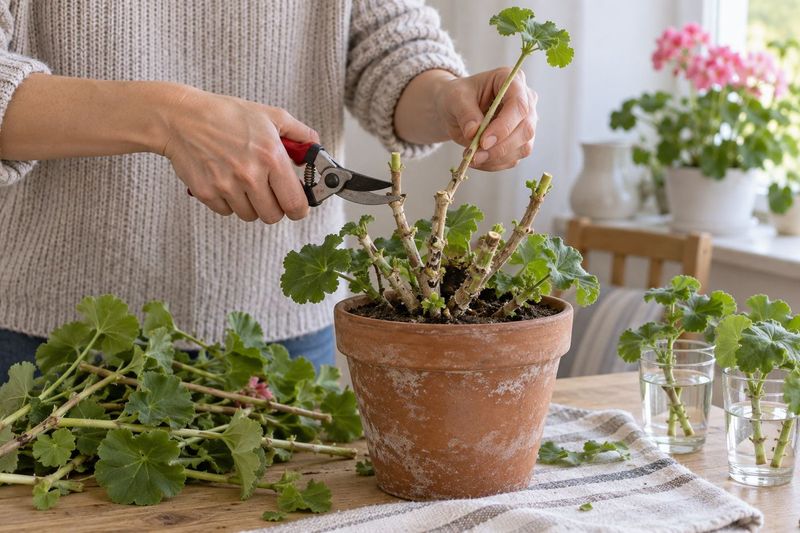
Find a stem that is reaching out farther than the rest, then trace it down to a leaf node, the bump where a leaf joins the stem. Pinch or snip just above that spot.
The plant can then send out side shoots, which makes it look fuller over time.
When plants first come indoors, some guidance suggests a larger cutback. Wisconsin Extension and Illinois Extension describe reducing the plant by roughly one-third to one-half.
Treat that as one option, not a required amount or a fixed schedule.
Pruning shapes a plant, but it does not fix a dim window. University of Minnesota Extension links good form to adequate light, so if new shoots still stretch, look to your window before you reach for the shears again.
Let the potting mix guide winter watering
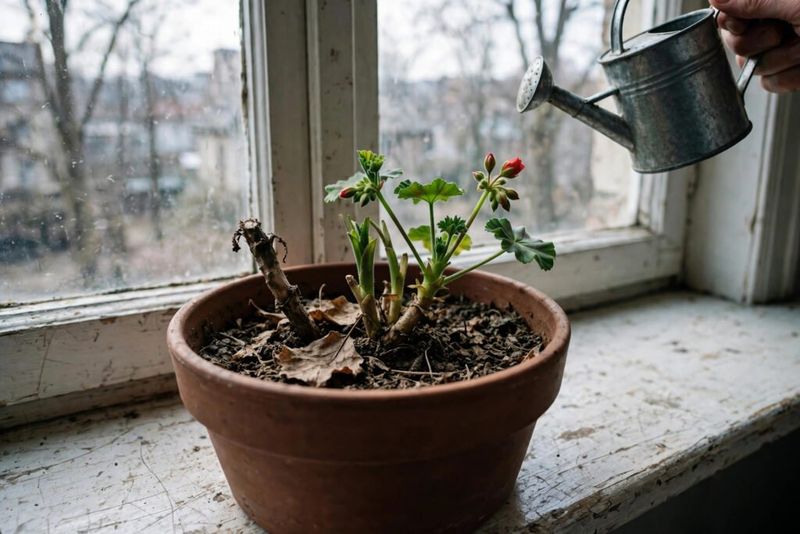
Forget the calendar. A geranium’s thirst shifts with its growth, and in winter growth and water use may slow.
Push a finger into the potting mix instead and let the soil tell you when it is time.
For a plant that is actively growing, University of Minnesota Extension advises letting the mix dry out, then watering thoroughly. Illinois Extension offers similar advice about checking the soil first.
Pour until water runs out the bottom, then empty the saucer so roots do not sit in a puddle. Extra water will not make a stretched plant grow better, and soggy soil causes its own problems.
Check several possible causes of pale leaves
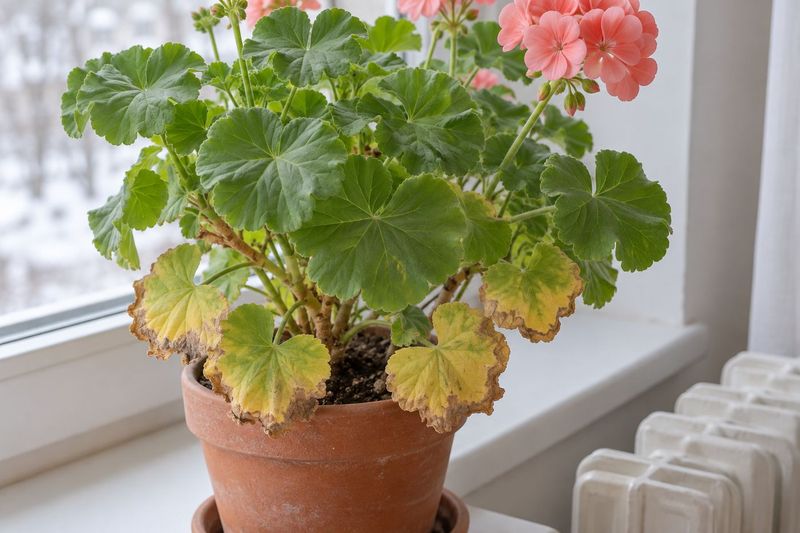
Stretched stems and pale leaves often show up together, but they are not the same clue. Long gaps between leaves point toward low light.
Leaf color alone cannot name one cause.
According to the UC Statewide IPM Program, yellowing or weak growth can come from too much water, poor drainage, temperature stress, pests, and other problems. Light matters too, as UMN’s lighting guidance explains.
Work through a checklist. Is the soil soggy?
Does the pot drain? Is the window bright enough and the room cool enough?
Do leaf undersides show insects? Fix what you find.
Do not reach for fertilizer just because leaves look pale. If you feed, do it only when you see active growth, as University of Minnesota Extension recommends.
Wait for frost danger to pass before moving plants outside
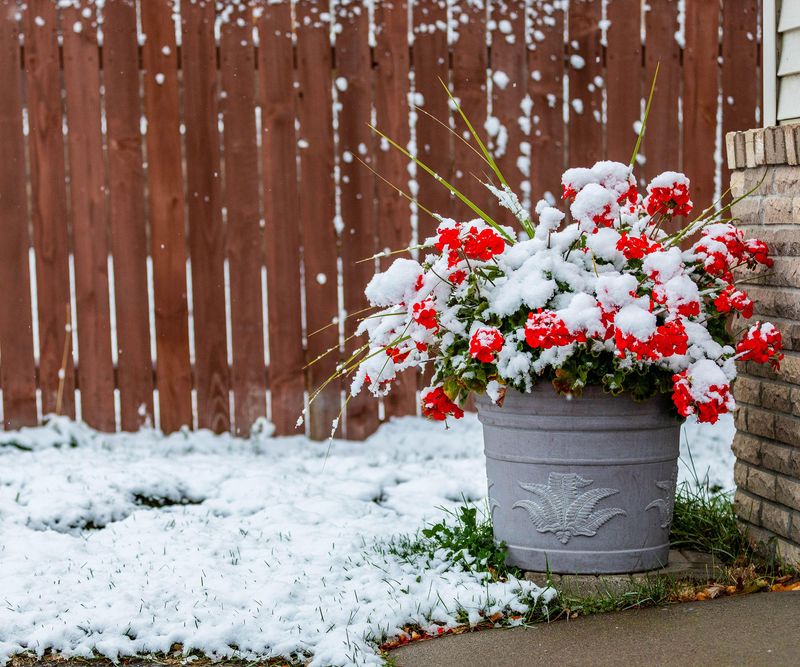
Spring fever can tempt you to rush the pots outside. Hold off until frost danger has passed.
A single cold night can undo months of careful windowsill work.
For planting out, University of Minnesota Extension says to wait until frost risk is over and the soil reaches 60°F. A cheap soil thermometer takes the guesswork out.
Timing varies by region, so skip any universal calendar date and watch your local conditions instead. Setting pots outdoors for a few hours at a time first helps plants adjust.
Good winter care gives a plant a healthy start, though it cannot promise blooms. A geranium that spent winter near the glass is simply ready to enjoy the sun again.