
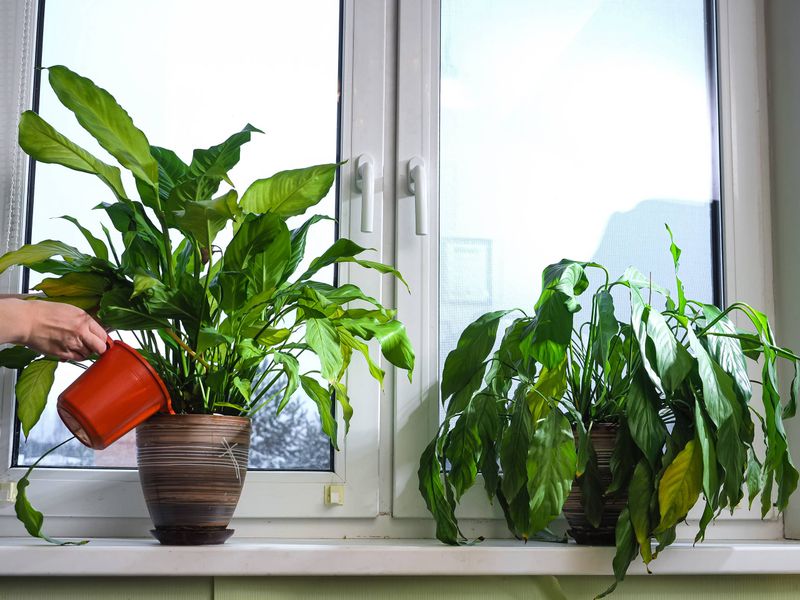
Your peace lily looked lush in September, but now the leaf tips are turning brown and crunchy like burnt toast. The culprit is usually winter air, which gets very dry once the furnace kicks on.
Peace lilies come from steamy tropical forests, so a heated living room can feel like a desert to them. The good news is that a few simple changes can stop the damage and help new leaves come in fresh and green.
1. Run a Small Humidifier Nearby

Picture a rainforest floor where the air feels like a warm, damp towel. That is home for a peace lily, and most heated houses in January sit closer to 20 or 30 percent humidity.
Your plant would much rather have 50 percent or higher.
A small cool-mist humidifier is the single most reliable fix on this list. Set it a few feet from the plant, not blowing straight onto the leaves, and let it run during the day when the heat cycles most.
You do not need a fancy model, since a basic tabletop unit covers one room easily.
Grab an inexpensive hygrometer too. These little gauges cost a few dollars and tell you exactly how dry the room really is, which takes the guessing out of plant care.
Many people are shocked to see readings in the teens on cold mornings.
Clean the tank weekly so mold and mineral film do not build up. If your tap water is hard, distilled water keeps white dust from settling on furniture and foliage.
Within a few weeks, you should notice new leaves unfurling smooth and green instead of crisping at the edges, and your own dry skin will thank you as well.
2. Build a Pebble Tray
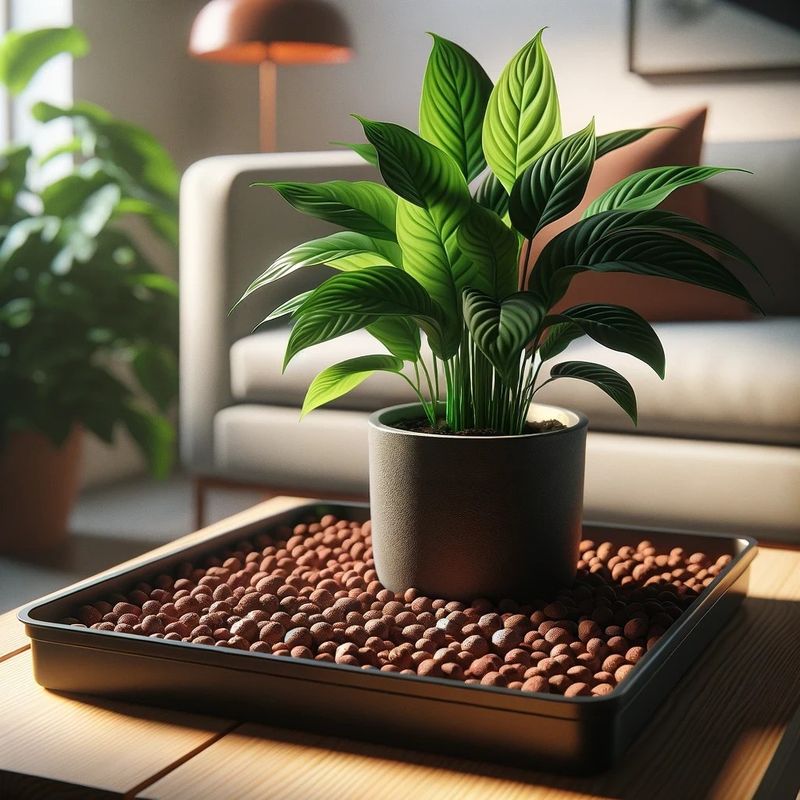
Grandma’s old trick still earns its keep. A pebble tray is cheap, quiet, and needs no electricity, which makes it perfect for a bedroom or office where a humming humidifier would be a nuisance.
Here is how it works. Fill a shallow saucer or baking dish with a layer of pebbles, aquarium gravel, or even clean marbles.
Pour in water until it sits just below the tops of the stones, then set the pot on top so the bottom never touches the water.
As the water slowly evaporates, it creates a small pocket of moist air right around the leaves. The effect is modest, so think of it as a helper rather than a cure-all.
It shines when paired with grouping plants or a humidifier in the same room.
Keep the pot high and dry, though. If roots sit in standing water, they can rot, and that problem is far worse than a few brown tips.
Top off the tray every couple of days because furnace air drinks it up fast.
Bonus tip: rinse the pebbles every month or so. Minerals and algae collect over time, and a quick scrub keeps everything fresh and working well.
3. Move It Away From Heat Vents
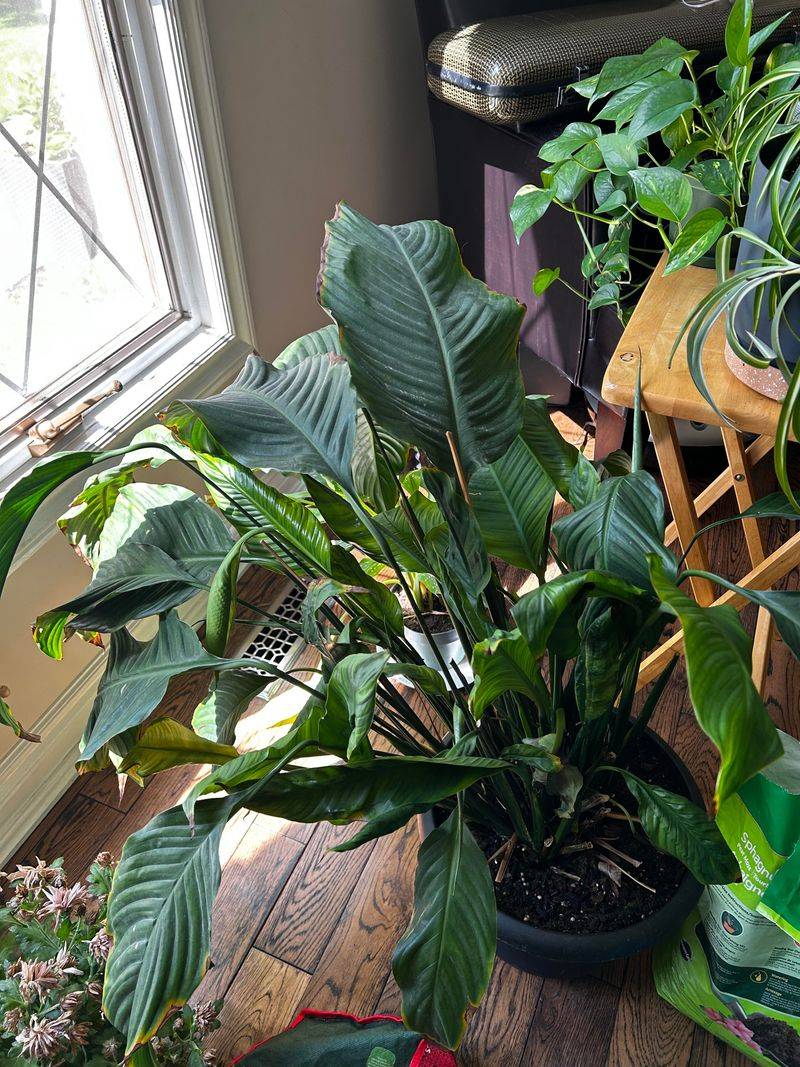
Ever stood in front of a hair dryer for too long? That is roughly what a peace lily goes through when it sits near a heating vent.
Hot, bone-dry air blasts the leaves all day, and the thin tips are always the first part to crisp.
Walk around your house and check where the registers, radiators, and space heaters are. Then look at where your plant lives.
If it is within about three to four feet of any heat source, it is time for a move.
Fireplaces and wood stoves count too. They make a room cozy for people but pull moisture out of the air quickly.
Even the top of a refrigerator or TV can run warm enough to stress foliage over time.
Choose a new spot with steady temperatures between 65 and 80 degrees. An interior wall works nicely because it avoids both heat blasts and icy window drafts.
If you cannot relocate the plant, a simple vent deflector can redirect airflow upward and away.
Moving the pot takes thirty seconds, yet it often makes the biggest difference of all. Many gardeners see browning stop almost overnight once the hot breeze is gone.
4. Group Your Houseplants Together

Plants are surprisingly social. When you huddle several leafy houseplants together, they create their own little microclimate, a bit like friends sharing body heat around a campfire.
Every leaf releases moisture through tiny pores in a process called transpiration. One plant alone loses that moisture to the open room.
A crowd of plants, however, traps some of it, raising the humidity in the space right around them.
Try making a winter jungle corner. Pair your peace lily with other moisture lovers like ferns, pothos, calatheas, or a Boston fern.
Set them on a plant stand or windowsill shelf with a few inches between pots so air can still move and fungus does not settle in.
Fun fact: NASA’s well-known Clean Air Study in 1989 included the peace lily, and grouped plants were part of what made that research so popular with houseplant fans. Your cluster may not scrub the air like a lab, but it sure looks cheerful.
Add a pebble tray underneath the whole group and you double the benefit. It is an easy, pretty fix that turns a gloomy corner into a green retreat during the darkest months of the year.
5. Switch to Filtered or Rain Water
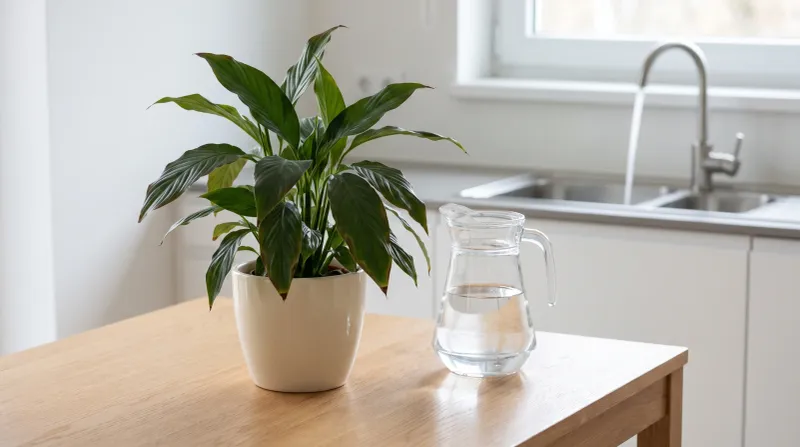
Dry air often gets the blame alone, but tap water can quietly team up with it. Peace lilies are sensitive to fluoride, chlorine, and salts found in many city water supplies.
Those chemicals travel up into the leaves and pile up at the tips, right where the browning shows.
Winter makes this worse. With dry air pulling moisture from the foliage faster, the leaves concentrate those minerals even more, so the edges burn quickly.
Easy swaps help a lot. Distilled water, filtered water from a pitcher, or collected rainwater are all gentle choices.
If you live where snow falls, you can even melt clean snow in a bucket and let it warm to room temperature.
Sticking with tap water? Fill a jug and let it sit out overnight.
Chlorine will escape into the air, though fluoride stays behind, so this is a partial fix rather than a full one.
Always use room temperature water, never icy cold. A chilly drink shocks tropical roots and can cause its own leaf damage.
Making this one change often slows browning noticeably, especially when combined with better humidity in the room.
6. Water on a Smarter Schedule
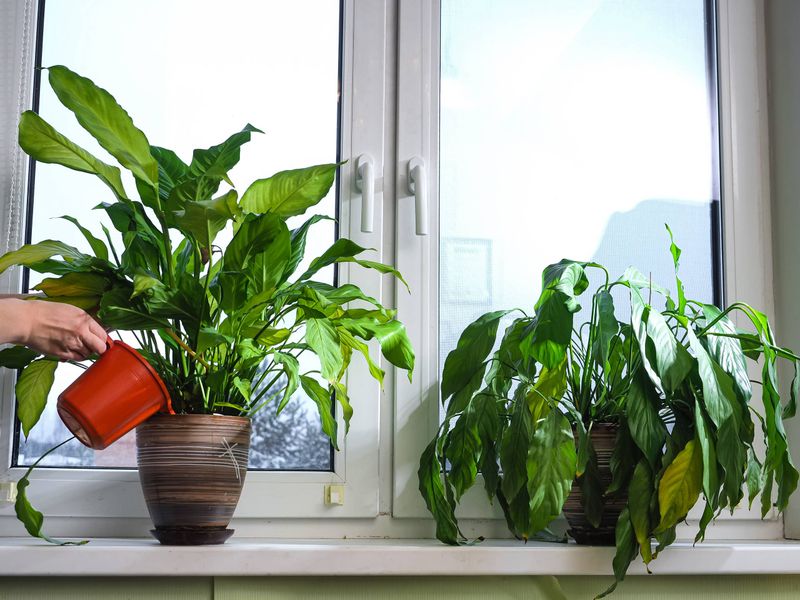
Here is a quirk worth loving: the peace lily is a drama queen. When it gets thirsty, the whole plant flops over as if it has fainted.
That theatrical droop is actually helpful, because it tells you exactly when to water.
Trouble starts when the soil swings between bone dry and soggy. Indoor heat dries pots faster than you might expect, and repeated droughts damage the leaf tips first.
Overwatering, on the flip side, rots roots, which then cannot deliver moisture upward, leading to brown edges anyway.
Aim for the middle ground. Push a finger about an inch into the soil, and water when it feels dry at that depth.
In most winter homes, that works out to roughly once a week, but let the soil guide you, not the calendar.
Water slowly until it drains from the bottom, then empty the saucer after fifteen minutes. That flush also rinses built-up salts out of the soil.
Try not to wait for a full collapse every time. Constant fainting spells wear the plant out.
A steady rhythm keeps the foliage plump, hydrated, and much better at resisting crispy tips during heating season.
7. Mist With Care, Not as a Crutch
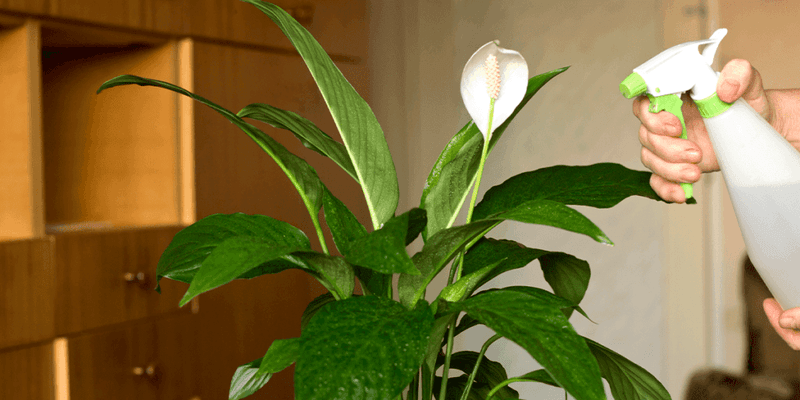
Let’s be honest about misting. It feels great, the leaves sparkle, and you get to fuss over your plant.
Still, the extra humidity fades within about fifteen minutes, so a spray bottle alone will not fix truly dry air.
That does not mean you should toss the mister. Used wisely, it offers small perks.
A gentle morning spritz rinses dust off leaves, helps the plant breathe, and adds a short burst of moisture on extra-dry days.
Timing matters. Mist early so the foliage dries before evening, since leaves that stay wet in a cool room invite fungal spots.
Use a fine-mist bottle and room temperature filtered water to avoid mineral specks on those dark, glossy leaves.
Skip misting the spathes, those white flower hoods. Water can leave brown blotches on them, which kind of defeats the purpose.
Think of misting as dessert rather than dinner. Pair it with a humidifier, a pebble tray, or a cluster of plants for real results.
Once you stop expecting miracles from the spray bottle, it becomes a pleasant little ritual that keeps your peace lily clean and lovely.
8. Trim the Brown Tips the Right Way
Sadly, once a leaf tip turns brown, it will never turn green again. That damaged tissue is done.
The upside? A quick trim makes the plant look healthy again while your other fixes protect the new growth.
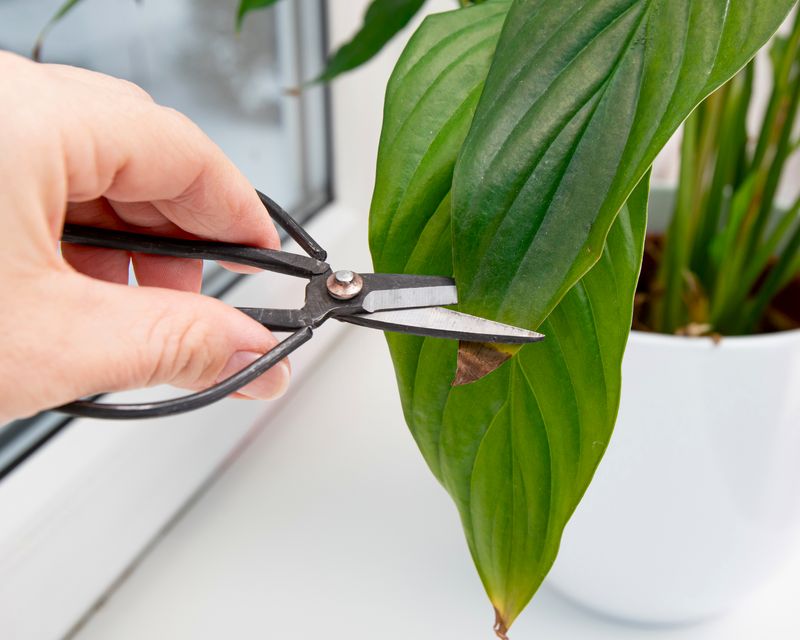
Grab sharp, clean scissors. Wipe the blades with rubbing alcohol first so you do not spread any germs from plant to plant.
Now for the secret that separates a pro job from a hack job. Cut along the natural pointed shape of the leaf rather than straight across.
Follow the curve so the tip still comes to a graceful point, and nobody will ever guess it was trimmed.
Leave a hair-thin sliver of brown at the edge instead of cutting into green tissue. Slicing into healthy leaf creates a fresh wound that often browns again, starting the cycle over.
If more than half a leaf is brown or yellow, remove the whole thing at the base. The plant will redirect its energy into fresh leaves instead.
Trimming is cosmetic, so do it after you have fixed the humidity problem. Otherwise you will just be snipping the same leaves every few weeks all winter long.
9. Hold Off on Fertilizer Until Spring
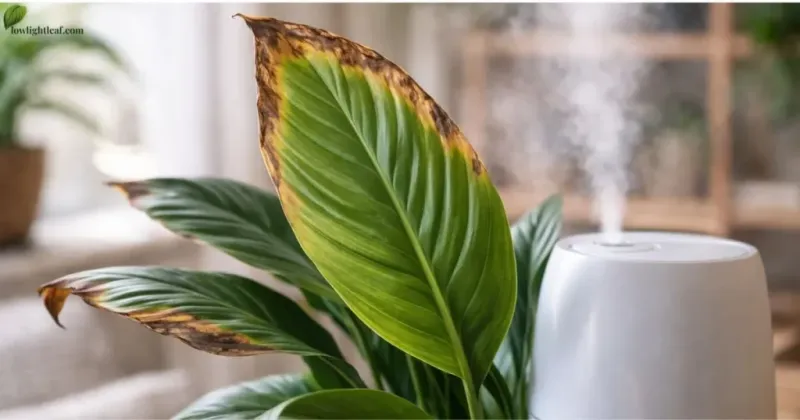
Feeding a plant more when it looks sick seems kind, but in winter it can backfire. Peace lilies slow down when days get short and light gets weak.
They simply do not need much food until spring arrives.
Extra fertilizer that the roots cannot use turns into salt buildup in the soil. Those salts pull water away from the roots and travel into the leaves, where they burn the tips.
Combine that with dry furnace air and you have a recipe for crispy edges.
So give your plant a winter break. Stop feeding from about November through February.
When new growth picks up in March or April, start again with a balanced houseplant fertilizer mixed at half strength every six to eight weeks.
Already overfed? Look for a white crust on the soil surface or pot rim.
Flush the pot by slowly running plenty of room temperature filtered water through it, letting it drain completely.
Many gardeners find this the easiest fix on the list, because it means doing less. Resting through winter, your peace lily saves its energy and rewards you with bright green leaves and fresh white blooms come spring.