
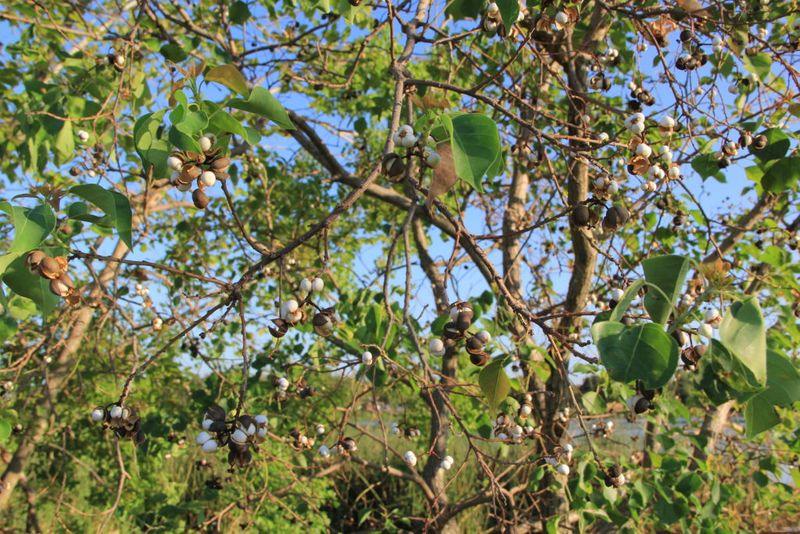
A pretty tree with white, popcorn-shaped seeds and brilliant red fall color sounds like something you’d plant on purpose, and many Texans once did exactly that. Chinese tallow, also called popcorn tree, has quietly spread across Southeast Texas, the Gulf Coast, coastal prairies, wetlands, and East Texas, converting open native plant communities into dense tree-dominated stands. That slow, gradual takeover is what makes it so hard to stop: by the time homeowners notice, the native plants they grew up around may already be gone. Learning to spot this tree early and act on it is one of the most practical things a Texas landowner can do for local habitat.
Chinese tallow can overtake native Texas habitat
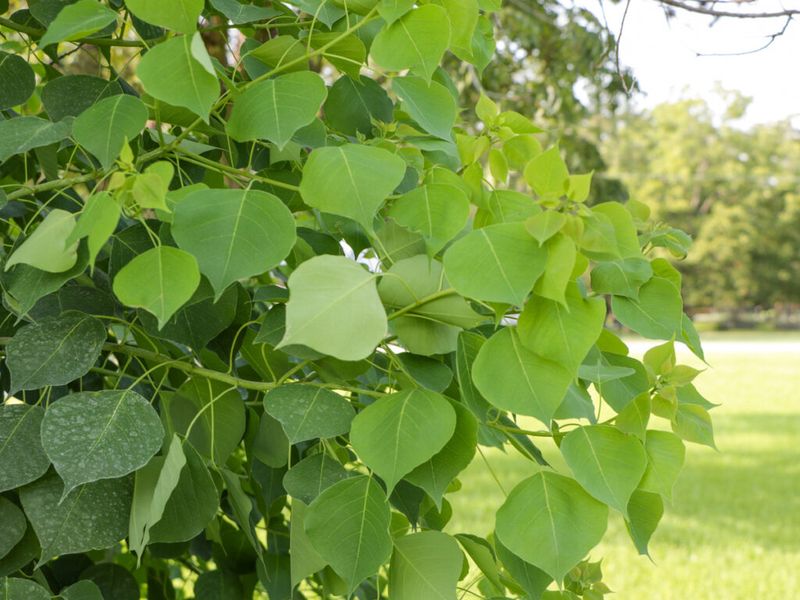
Chinese tallow (Triadica sebifera), commonly called popcorn tree, is a fast-growing introduced tree that has become one of the most consequential invasive plants in Southeast Texas, the Gulf Coast, coastal prairies, wetlands, floodplains, and East Texas. The headline phrase “wipes out” is rhetorical shorthand for something real but more precise: the tree can convert or simplify native plant communities, reducing the diversity and structure that native wildlife and plants depend on. It does not mean every native plant or animal vanishes from a site.
Texas Parks and Wildlife has documented dense Chinese tallow stands as a distinct invasive woodland type, a category that tells you how thoroughly this tree can reorganize a landscape. When left unmanaged in the right conditions, it can push coastal prairie or wetland habitat toward a tallow-dominated stand where the original native plant community barely registers. That kind of habitat conversion is the core concern, and it is serious.
Fire ants are also a well-documented Texas threat, and both species deserve attention from landowners and managers. The available research does not rank one as more damaging or less noticed than the other; they operate through entirely different mechanisms and affect different parts of the ecosystem. The point here is not competition between threats but recognition that Chinese tallow deserves the same urgency Texans already apply to other invaders.
The Texas Wildlife Action Plan identifies Chinese tallow among invasive plants that threaten native habitat, and Texas Parks and Wildlife guidance confirms the species can significantly alter native plant communities when unmanaged. The regional focus of this article is intentional: Chinese tallow is concentrated mainly in Southeast Texas and East Texas, not equally problematic across every part of the state. West Texas and the High Plains face different pressures; this tree belongs to the Gulf Coast story.
Learn the attractive clues that reveal Chinese tallow
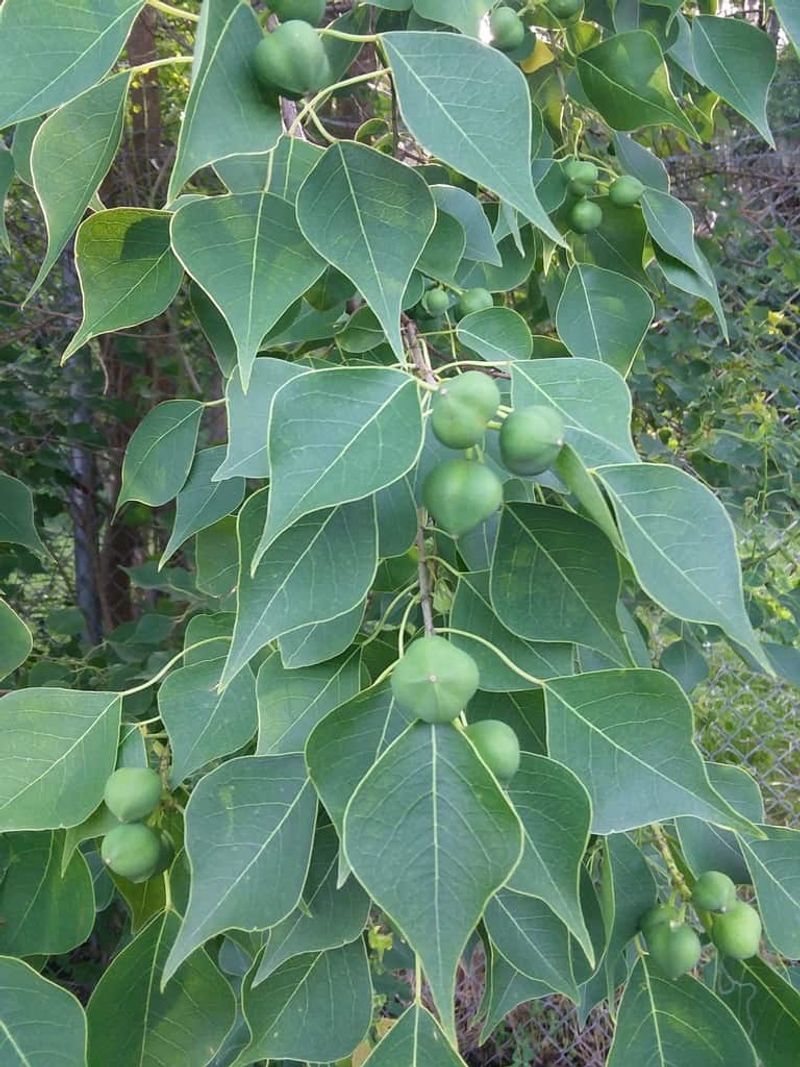
Knowing what to look for is the first step toward stopping Chinese tallow before it seeds out. The leaves are smooth and hairless, arranged alternately along the branch, and shaped like a heart or a broad diamond with a pointed tip. That combination of smooth texture, alternate arrangement, and distinctive leaf shape sets it apart from many native trees in the same region. In fall, the foliage turns shades of red, orange, and yellow that genuinely rival any ornamental tree you’d find at a nursery.
Spring brings slender, yellowish flower spikes that are easy to overlook until you know to watch for them. By late fall and into winter, the real giveaway appears: clusters of small, round seeds covered in a white waxy coating that breaks open and resembles popcorn scattered along the branch tips. Those white seed coverings are conspicuous enough that the tree earned its common name, and they’re visible from a distance along roadsides, fencerows, and creek banks across Southeast Texas. Texas A&M rangeland plant photography shows these identification features clearly if you want a visual reference before heading outside.
Mature trees can reach roughly 60 feet tall, though many specimens in open settings stay shorter. The bark on young trees is smooth and gray; older trunks develop shallow furrows. If you break a twig or leaf stem, a milky white sap appears, which is another useful field clue.
One practical caution: Texas A&M Forest Service confirms that the leaves and fruit of Chinese tallow are toxic to humans and cattle if ingested. Do not eat any part of this tree, and keep children, pets, and livestock from chewing the leaves or seeds. Ordinary contact with the bark or leaves during removal does not carry the same documented risk, but washing your hands after handling the plant is always a reasonable precaution.
Seeds and waterways carry the invasion beyond one property
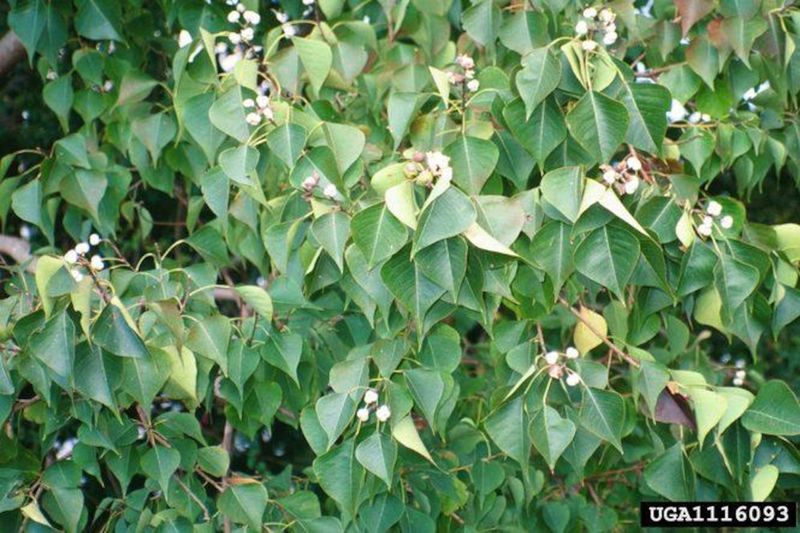
A single mature Chinese tallow tree can produce thousands of seeds in one season, and those seeds do not stay on your property. Birds, including species that feed on the waxy seed coating, can carry seeds considerable distances before depositing them in new locations. Water is the other major dispersal route: seeds that fall near a bayou, creek, or coastal wetland can float downstream and establish wherever conditions are right. Texas A&M Forest Service reports that the tree can begin reproducing in as little as three years after establishment, which means a seedling you ignore this spring could be seeding out a new stand before the decade is over.
Waterways matter especially in the landscape types where Chinese tallow causes the most documented harm. Coastal floodplains, riparian corridors, and freshwater wetlands all provide the hydrology and bare soil disturbance that help tallow seeds germinate and establish. Texas Parks and Wildlife wetland ecology guidance notes that invasive trees can move quickly into disturbed wetland margins, and Chinese tallow fits that pattern well in Southeast Texas.
That said, neither birds nor floods spread the species everywhere uniformly. How far seeds travel and where they successfully establish depends on local bird communities, hydrology, soil conditions, and the presence of existing vegetation that can resist invasion. A heavily shaded, intact native forest understory is less vulnerable than a disturbed field edge or a recently flooded prairie. The U.S.
Geological Survey review of Chinese tallow in the southeastern coastal plain describes how landscape context shapes where and how quickly the species spreads. Removing seed-producing trees near waterways and wetlands is therefore one of the highest-priority actions a landowner can take.
Dense stands simplify prairie, wetland, and woodland communities
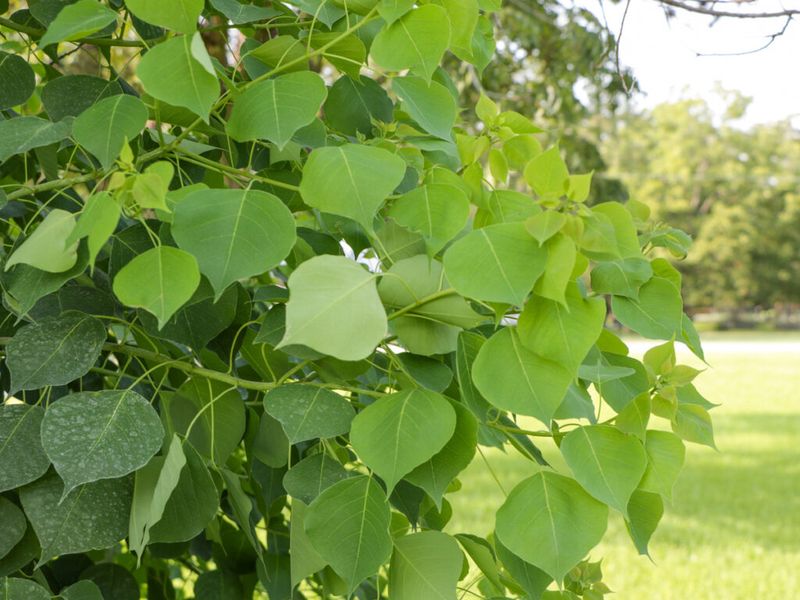
One tallow tree on a property edge is a problem you can manage. A dense stand of them is a different ecological situation entirely. As Chinese tallow trees crowd together, their canopy closes and blocks the sunlight that native prairie grasses, wildflowers, and low-growing wetland plants need to survive. Sun-loving species like bluestem grasses, native sedges, and coastal prairie forbs simply cannot persist under a solid tallow canopy.
Over time, the open, structurally diverse community that once occupied the site gives way to a shaded, simplified stand dominated by a single introduced species.
The leaf litter Chinese tallow drops also changes the soil environment beneath the trees. Tallow leaves decompose differently from the organic matter native plants produce, and research documents that this altered litter layer can shift soil chemistry and microbial communities in ways that favor the invader over native species trying to reestablish. The U.S. Forest Service analysis of Chinese tallow invasion mechanisms identifies these soil-level changes as part of why the species is so persistent once established.
Texas wildlife documents describe invaded coastal prairies becoming near-monocultures when tallow goes unmanaged for years. The USGS coastal plain review documents how the species can progressively replace native plant diversity across large areas of the southeastern coastal plain, including Texas. The Texas Wildlife Action Plan flags this habitat simplification as a direct threat to species that depend on diverse native plant structure for food, cover, and reproduction.
Severity varies by site. A tallow tree growing at the edge of a healthy, intact native community with good hydrology and minimal soil disturbance may spread more slowly than one rooted in a disturbed field or a degraded wetland margin. Texas A&M Forest Service and federal researchers both note that density, hydrology, disturbance history, and management all shape how quickly and thoroughly tallow converts a site. That variability does not reduce the urgency; it means prioritizing the most vulnerable and restorable sites first.
Wildlife use does not make an invasive stand equivalent to native habitat
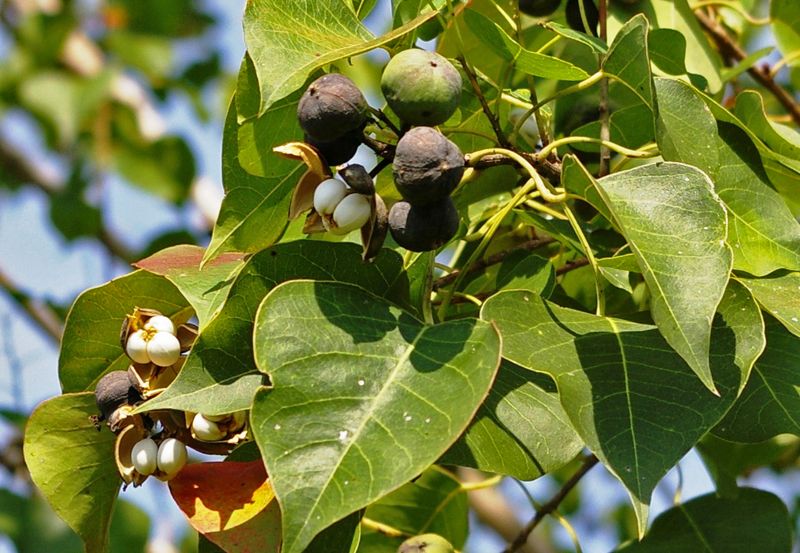
Spend a winter morning near a fruiting Chinese tallow and you will almost certainly see birds feeding on the white seeds. Cedar waxwings, robins, and other generalist species do visit the trees, and the flowers attract some pollinators during bloom. These are real observations, and they sometimes lead homeowners to conclude that the tree must be good for wildlife. That conclusion skips an important step in the reasoning.
A recent peer-reviewed study on tallow, pollinators, and native ecosystems examines the nuanced relationship between Chinese tallow’s floral resources and native bee communities, finding that the nectar benefits for some generalist visitors do not offset the broader losses that come with displacing diverse native plant communities. Native plants support specialized insects, including many native bee species and moth and butterfly larvae, that cannot complete their life cycles on Chinese tallow. When tallow replaces the native understory, those specialist relationships collapse even if a few generalist visitors remain.
The Texas Parks and Wildlife guide to native plants and wildlife habitat explains how native plant diversity underpins the layered food web that supports birds, reptiles, amphibians, and mammals across Texas ecosystems. A dense tallow stand can provide seeds and some nectar, but it cannot replicate the varied insects, native fruits, browse, cover types, and seasonal resources that a diverse native plant community offers across the whole year. Birds that eat tallow seeds in winter may still struggle to find adequate nesting cover, caterpillar prey for their nestlings, or late-summer foraging resources in a tallow-dominated landscape. Seeing wildlife in a tallow stand is not evidence that the stand is ecologically healthy; it is more often evidence that the wildlife has adapted to reduced options.
Remove young trees before they become seed sources
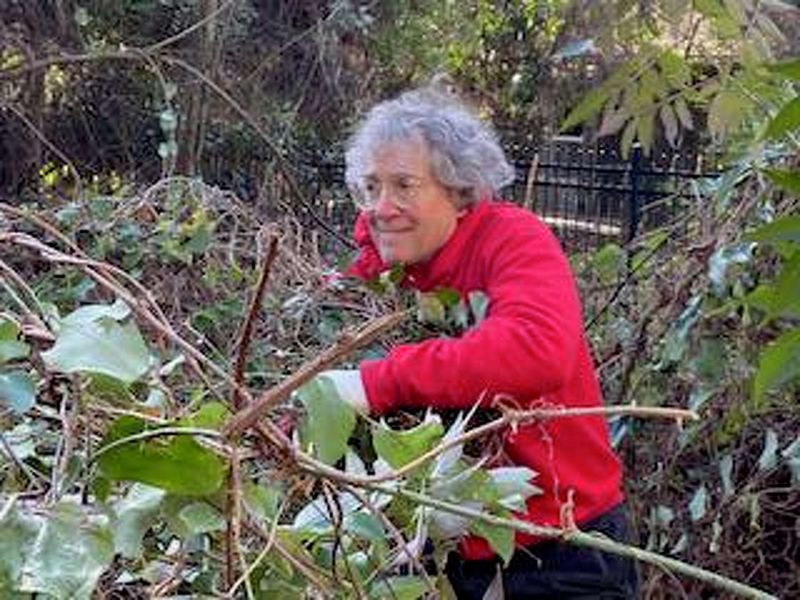
The easiest Chinese tallow to remove is the one you pull out of the ground before it ever flowers. Young seedlings, those in their first one or two growing seasons, can often be hand-pulled or dug out when the soil is moist, root and all. Getting the root matters because a seedling that breaks off at the soil surface can resprout. Make a habit of walking your property edges, fence lines, creek banks, and any disturbed soil areas in spring and again in fall, when new seedlings are easiest to spot and remove by hand.
Do not plant Chinese tallow, propagate it, or move seeds or seedlings from one location to another. That guidance from Texas A&M Forest Service sounds obvious, but the tree is still sold in some areas under ornamental names, and well-meaning neighbors sometimes share cuttings without realizing what they are distributing. If a neighbor or nursery offers you a “popcorn tree,” decline.
Prioritize your removal efforts where they will do the most good. Seed-producing trees growing near native prairie remnants, wetland edges, waterways, conservation easements, and restorable habitat deserve immediate attention because those are the sites where tallow spread causes the greatest documented harm and where restoration is most feasible. Texas A&M AgriLife Extension’s tallow removal guidance emphasizes that preventing seed production is the foundation of any management plan.
After removing tallow from a site, inspect the area again at least once a season for the next several years. Seeds already in the soil can germinate long after the parent tree is gone, and federal fire ecology and species review data confirm that persistent seed banks are a major reason tallow infestations return. Plan native plant restoration alongside removal so that desirable vegetation can fill the gap and compete against new tallow seedlings trying to establish.
Use treatment and monitoring instead of cutting or burning alone
Cutting a Chinese tallow tree at the base feels like a decisive solution, but for mature trees it is usually just the beginning of the problem. The stump, roots, and base of the trunk can all produce vigorous sprouts within weeks of cutting, and those sprouts grow fast because they have an established root system driving them. A tree you cut in spring can have a ring of knee-high sprouts by fall. Without follow-up treatment, you have traded one trunk for a cluster of them.
Texas A&M AgriLife Extension’s individual-plant treatment guide describes specific approaches for Chinese tallow, including cut-stump treatment, basal-bark application, and foliar methods for smaller trees. Each method requires applying an appropriate herbicide product according to the current product label, which specifies the correct concentration, timing, application technique, and required personal protective equipment. Do not substitute guesswork for label instructions; the label is a legal document and the authoritative source for safe, effective use.
The U.S. Forest Service research on hack-and-squirt herbicide efficacy and related federal work confirm that cut-stump and stem-injection treatments can be effective when applied correctly and followed up consistently. Additional Forest Service research on managing established tree invaders reinforces that large or well-established tallow populations typically require multiple treatment rounds rather than a single pass.
Prescribed fire is sometimes discussed as a tallow management tool, but it is not a backyard solution. Mature trees can survive fire and resprout, established tallow stands may lack the fine fuel necessary for effective burns, and open burning near homes carries obvious safety and legal risks. Fire belongs in professionally planned, site-specific management programs, not in a homeowner’s standard toolkit.
For large trees, extensive infestations, or any situation where you are uncertain about chemical selection or application, contact a qualified vegetation-management professional or your local Texas A&M AgriLife Extension office. Plan for three to five years of repeated inspection and retreatment, because resprouting and seed-bank germination will test your follow-through long after the original trees are down.
Protect native diversity before tallow dominates the site
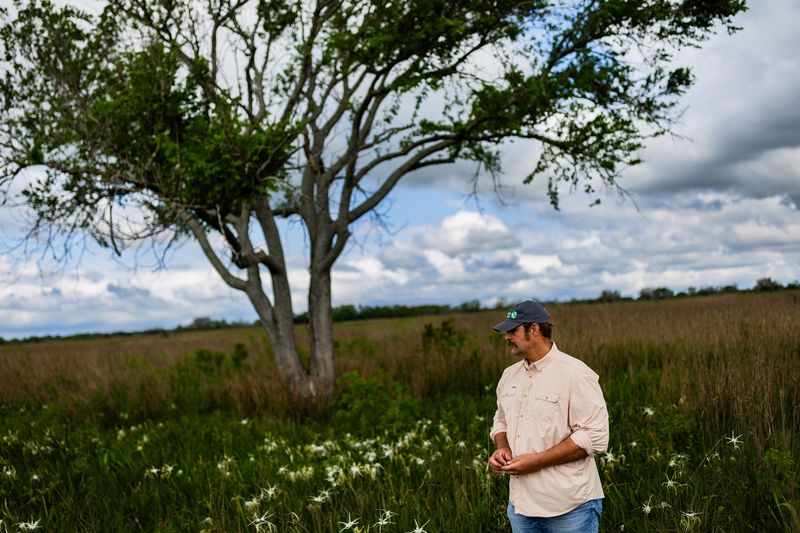
Chinese tallow poses its greatest documented Texas threat in specific coastal and East Texas settings where open prairie, wetland margins, floodplains, and transitional woodlands give the tree the conditions it needs to establish and spread. Catching it early, before seed production begins and before the canopy closes over native plants, is far less costly in time, money, and ecological damage than trying to reclaim a mature stand.
Early identification, consistent seed prevention, label-compliant treatment, native plant restoration, and sustained follow-up monitoring form the core of a practical management plan. None of those steps works reliably in isolation, and all of them work better when started before the problem has grown past a few trees.
One point worth clarifying before you start: being listed as invasive does not automatically make Chinese tallow illegal to own or remove under Texas law. Invasive-plant recommendations from conservation agencies and the official noxious-plant regulatory list maintained by the Texas Department of Agriculture are separate designations. Texas Parks and Wildlife’s guide to common exotics notes that recommendation lists do not automatically carry legal force. Check current state and local rules before assuming any specific restriction applies to your situation.
The native plant communities that Chinese tallow quietly displaces, coastal prairie, bottomland hardwood forest, freshwater marsh, took centuries to develop. Giving a fast-growing introduced tree a foothold in those systems is easy; reclaiming them requires years of sustained effort. That asymmetry is the real reason early action matters so much.