
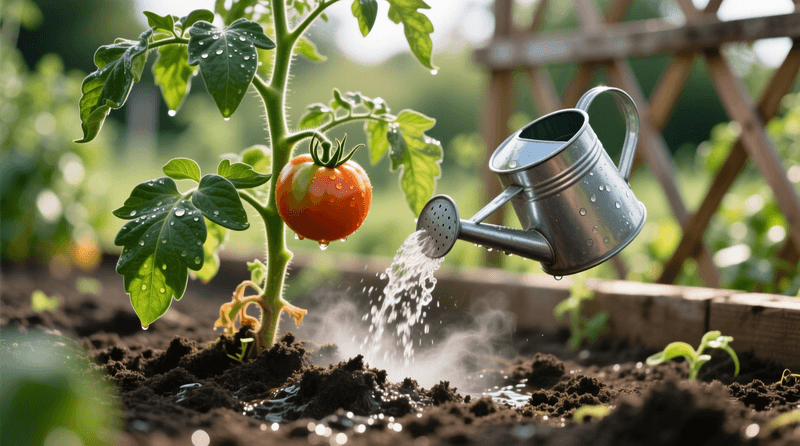
Tomatoes are frustrating when they wilt in the morning, crack just before harvest, or sit there barely growing despite your best efforts. Most of the time, the root cause is not a mystery pest or a rare disease – it is the way water reaches the roots. Swinging between too dry and too wet stresses the plant at every stage, and that stress shows up in ways that look like three separate problems. Learning to keep root-zone moisture steady can reduce a lot of that damage, even if it cannot solve everything on its own.
Start with steady moisture, not a fixed watering schedule
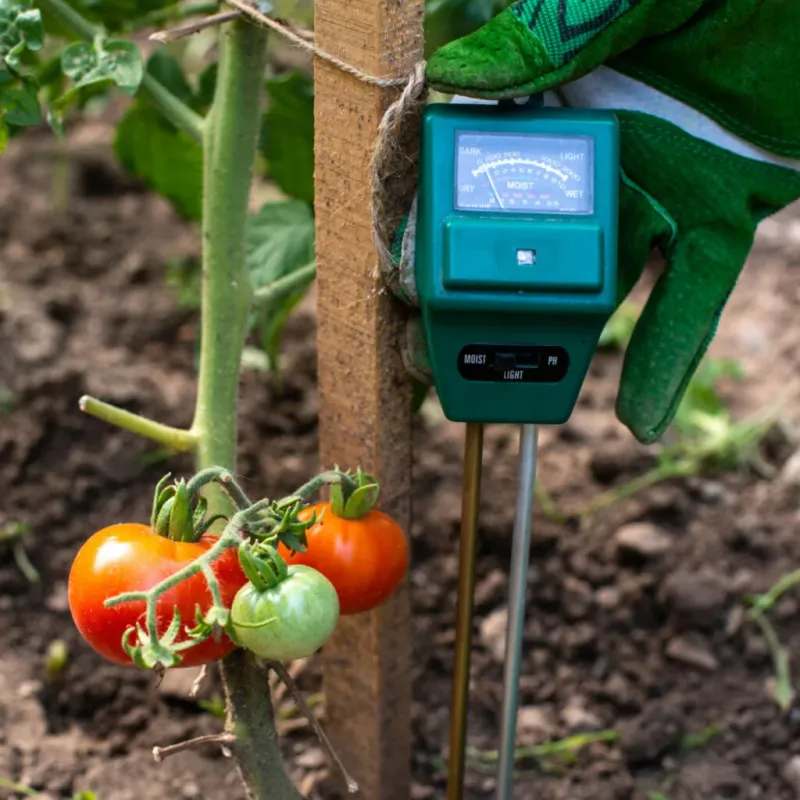
Plenty of gardening advice tells you to water your tomatoes every two or three days, but a fixed calendar can get you into trouble fast. The soil in a raised bed dries out at a completely different rate than heavy clay in the ground, and a plant loaded with fruit on a 95-degree afternoon drinks far more than a small transplant on a cool, cloudy morning. What actually matters is the moisture level in the root zone – not the date on the calendar.
The target is a root zone that stays evenly moist without staying waterlogged. Before reaching for the hose, push a finger, a trowel, or a soil probe several inches below the surface. If the soil at that depth feels moist, hold off. If it is starting to dry out, water now.
That simple check keeps you from both under-watering and over-watering, which can damage roots just as reliably as drought stress can.
University of Minnesota Extension guidance on growing tomatoes treats roughly 1 to 1.5 inches of combined rainfall and irrigation per week as a reasonable starting point for in-ground plants – but that figure shifts based on soil texture, heat, wind, plant size, drainage, and whether the tomato is growing in a container. Penn State Extension recommends checking soil about 2 inches down rather than relying on surface appearance. A consistent soil-moisture routine can reduce water-related stress, but it will not cure heat damage, disease, root problems, or every cause of wilting and slow growth.
Moisture swings can contribute to symptoms, but they are not the whole diagnosis
When the root zone swings from bone-dry to soaking wet and back again, tomato plants feel that stress in real and measurable ways. Dry soil limits the water a plant can pull up during the heat of the day, which shows up as drooping leaves and slowed growth. Then, after a heavy watering or a rainstorm following a dry stretch, the plant absorbs water rapidly – and the fruit skin, which stopped expanding during the drought, may split under the pressure. University of Minnesota Extension’s tomato disorders resource connects both cracking and several other common fruit problems to irregular moisture patterns.
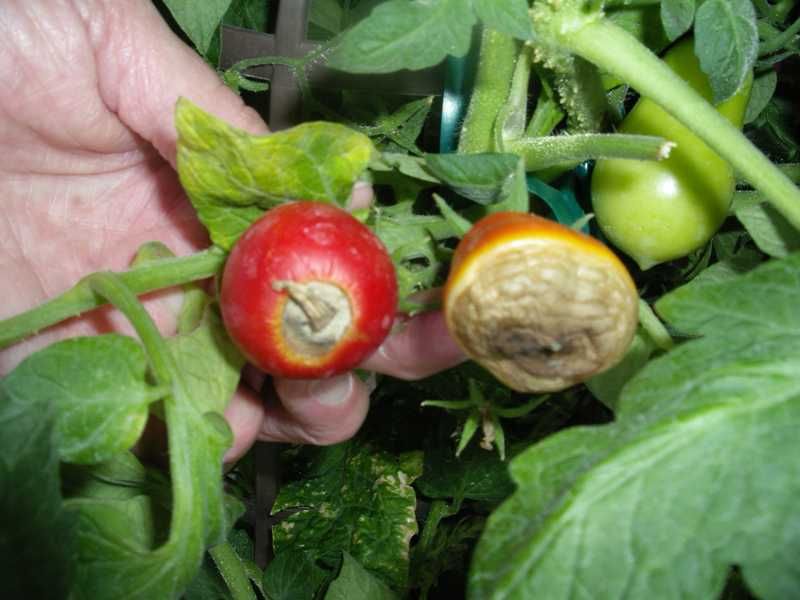
Blossom-end rot fits into this picture too, though it works differently. University of Illinois Extension explains blossom-end rot as a physiological disorder involving calcium distribution inside the developing fruit – not simply a calcium deficiency in the soil. Drought, fluctuating moisture, waterlogged soil, rapid growth, and heat can all interfere with how calcium moves through the plant during fruit development. Keeping moisture steady reduces that interference, but it is not a guaranteed fix.
Heat-induced wilt is a different matter entirely. Penn State Extension’s heat stress research shows that high temperatures in roughly the upper-80s to low-100s Fahrenheit can affect photosynthesis, flower development, and fruit set even when soil moisture is perfectly adequate. Cool nights below about 55 degrees Fahrenheit can slow growth and pollination for similar reasons. Consistent moisture reduces one category of risk; it cannot address these separate causes.
Water slowly and deeply when the active root zone begins to dry
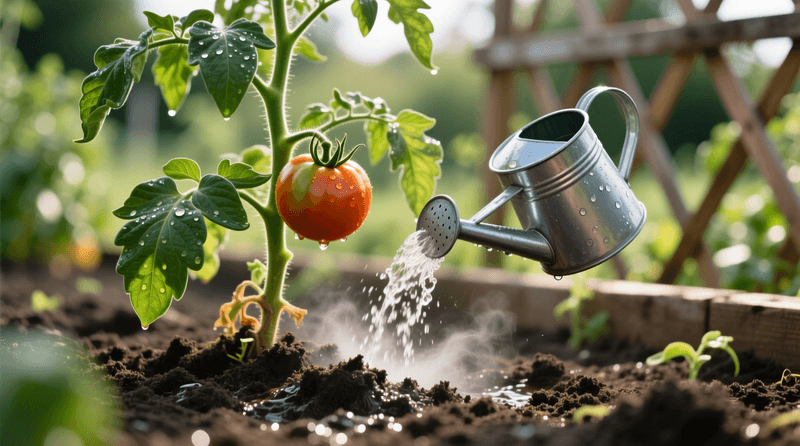
The mechanics of watering matter as much as the timing. Shallow daily sprinkling wets only the top inch or two of soil, which trains roots to stay near the surface where they are most exposed to heat and drought. A deep, slow watering that moves moisture down through the active root zone encourages roots to follow the water downward, making the plant more resilient between waterings.
Before watering, check below the surface – several inches down – with a finger, a trowel, or a soil probe. If the root zone is starting to dry, water slowly and steadily at the soil line until you are confident moisture has reached the needed depth. University of Arizona Cooperative Extension notes that watering every three or four days generally works better than light daily sprinkling, but adds clearly that sandy soils may need near-daily attention while clay soils can hold moisture much longer. The interval is always a moving target.
Do not add water to soil that is already saturated – waterlogged roots lose access to oxygen and can suffer damage that looks surprisingly similar to drought stress. The next watering happens when the root zone begins to dry again, not on a predetermined schedule. Penn State Extension emphasizes checking the soil rather than relying on how the surface looks, because the top layer can dry out quickly while deeper soil stays adequately moist.
Use mulch and soil-line irrigation to reduce sharp changes
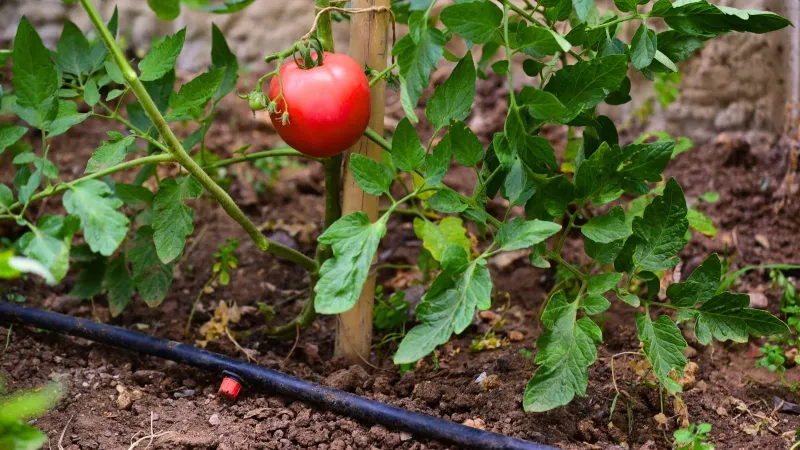
Even the best watering routine loses ground quickly when bare soil bakes in full sun. Moisture evaporates fast, the soil temperature spikes, and the root zone dries unevenly between waterings. Organic mulch addresses all three of those problems at once.
A layer of roughly 2 to 4 inches of straw, shredded leaves, or wood chips slows evaporation, moderates soil temperature, and helps buffer the swings between waterings. Colorado State University Extension’s tomato growing guide recommends keeping mulch pulled back a few inches from direct contact with the stem to avoid creating conditions that favor rot or pest harborage at the crown. Beyond moisture retention, mulch also reduces the soil splash that can carry soilborne pathogens up onto lower leaves during rain or irrigation.
Where and how you deliver water matters alongside the mulch. Drip irrigation, a soaker hose, or slow hand watering directed at the soil line keeps the foliage dry and puts moisture exactly where roots can use it. Minnesota Extension and Penn State Extension both favor morning watering so that any moisture on leaves or the soil surface has time to dry before nightfall. Overhead irrigation is not automatically harmful – rain does not ask permission – but directing water to the soil line rather than the canopy is a reasonable disease-management habit whenever you have the choice.
Protect later fruit instead of promising to repair damaged tomatoes
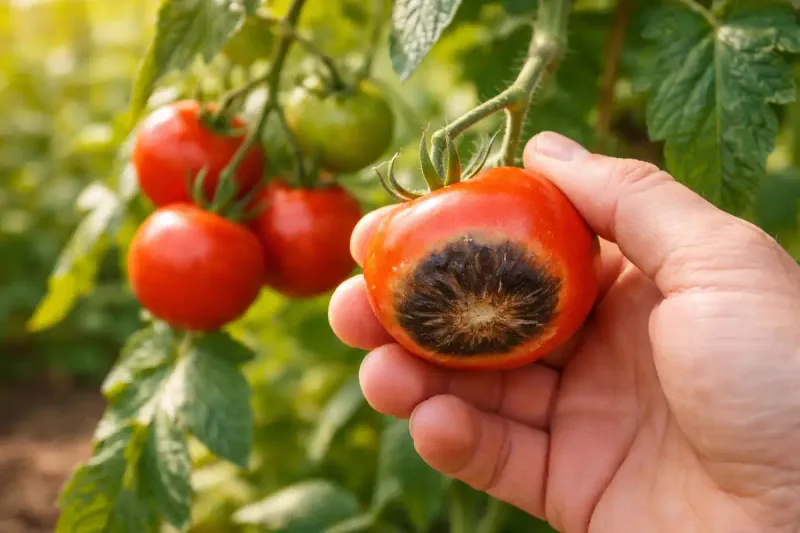
Once a tomato has developed blossom-end rot, that dark, sunken patch at the bottom of the fruit is not going to heal. The tissue damage is done. Removing badly affected fruit is the right call – it redirects the plant’s energy toward developing later fruit that may come in without the disorder if moisture stays steadier going forward. Mildly affected fruit with a small spot and healthy flesh elsewhere can be used fresh after trimming, but Colorado State University Extension’s canning guide makes clear that damaged or decayed tomatoes are not suitable for home canning, where fruit quality and acidity directly affect safety.
Cracked tomatoes need prompt attention for a different reason. A split skin creates an opening for decay organisms, so inspect cracked fruit right away, harvest anything that looks sound, and use it quickly for fresh eating. The crack itself will not close up, but catching it early usually saves the tomato.
Calcium supplements and foliar sprays come up often in blossom-end-rot conversations, but University of Illinois Extension and their companion podcast on the disorder both explain that soil calcium is often adequate and that the real problem is uptake and distribution under stress. Adding calcium without a soil test may not help and could create other imbalances. Beyond moisture, cultivar susceptibility, rapid vegetative growth, excessive nitrogen, heat, fruit exposure, pruning, and rainfall all contribute to both cracking and blossom-end rot – which is why Minnesota Extension’s tomato disorders overview frames consistent moisture as a risk-reduction measure rather than a complete solution.
Adjust the routine for containers, weather, and growth stage
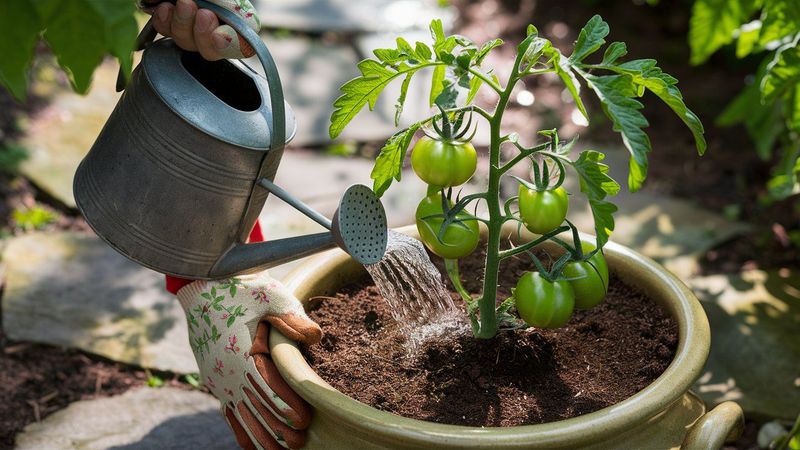
Container-grown tomatoes play by different rules. Potting mix dries out far faster than garden soil, and a large plant in a warm pot on a sunny patio can exhaust its available moisture in a single afternoon. University of Minnesota Extension’s container watering guidance confirms that daily watering is common during hot weather, and that some containers may need attention more than once a day. The goal stays the same – evenly moist, not saturated – but the check-in frequency is much higher than for in-ground plants.
In-ground plants face their own variables. Sandy soil drains quickly and may need watering well before the three-to-four-day window that works in loam. University of Arizona Cooperative Extension notes that clay holds moisture considerably longer, while heat, wind, and plant size all shorten the interval regardless of soil type. Raised beds often fall somewhere between sandy and loam behavior depending on their fill mix.
Growth stage shapes water demand too. Penn State Extension’s tomato production resource and their seedling-to-fruit guide both identify transplanting, flowering, and active fruit development as periods when water stress can reduce fruit size, yield, and fruit set. Utah State University Extension’s irrigation guidance echoes this, noting that abrupt moisture changes after fruit set can increase cracking risk. Timers can help deliver consistent intervals, but they need periodic soil checks to confirm that output matches actual conditions – especially after rain, a heat wave, or a growth surge.
Check for heat, cold, disease, or root problems before adding water
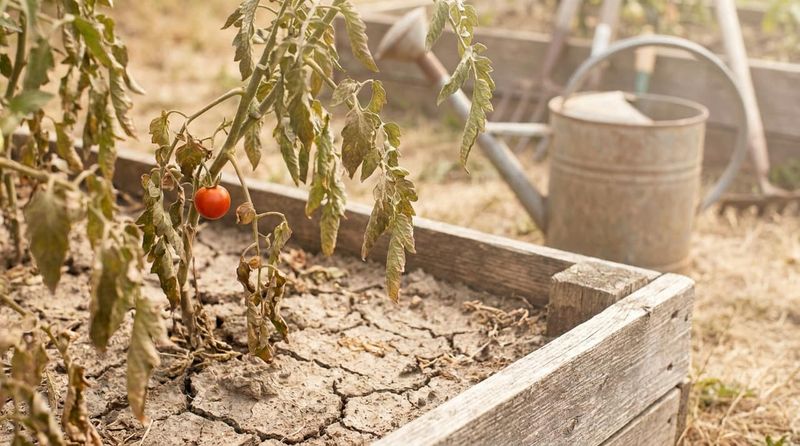
Wilting is not always a call for more water. On a hot afternoon, tomato plants commonly droop even when the root zone holds plenty of moisture – the plant is losing water through its leaves faster than roots can replace it, and that recovers on its own once temperatures drop in the evening. Using leaf wilt as the only watering trigger can lead to overwatering, which robs roots of oxygen and creates its own problems.
Check the soil first, every time. If the root zone is already moist and the plant is still wilted – especially if it stays wilted after the heat of the day passes, or if only one side of the plant droops while the other looks fine – something other than thirst is likely involved. University of Minnesota Extension’s tomato wilt diagnostic tool walks through multiple possible causes including poor drainage and soilborne pathogens. Penn State Extension’s bacterial wilt resource and Minnesota Extension’s Fusarium crown and root rot page both describe vascular diseases that cause wilt regardless of soil moisture – adding water will not help and may worsen root conditions.
Penn State Extension’s heat stress research reports that temperatures in roughly the upper-80s to low-100s Fahrenheit can disrupt photosynthesis, pollination, and fruit set even when plants are well-watered. The University of Georgia Cooperative Extension’s tomato production handbook notes that cool soil and night temperatures below about 55 degrees Fahrenheit can stall growth and slow maturation in a similar way. The watering routine described in this article addresses water stress specifically – persistent symptoms that do not improve with better moisture management deserve a separate diagnosis.
Use the routine as prevention, then reassess persistent symptoms
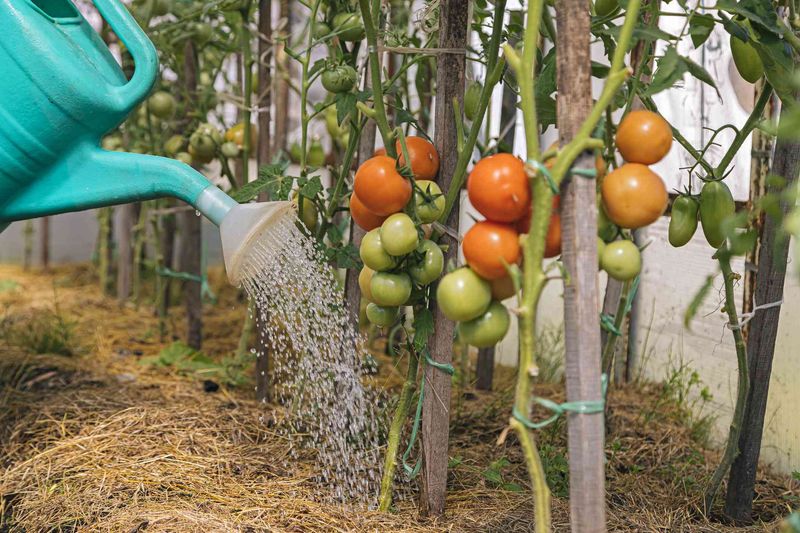
The operating sequence is straightforward: check several inches below the surface before watering, water slowly and thoroughly at the soil line when the root zone begins to dry, and keep 2 to 4 inches of organic mulch over the soil to slow the swings between wet and dry. After rain, check before watering again – the rain may have already done the job. After a heat wave or a growth surge, check more frequently than usual. Container plants get a daily look regardless of weather.
Minnesota Extension’s tomato growing guide and their tomato disorders resource both support this approach as a way to reduce water-related stress and lower the risk of cracking, blossom-end rot, and drought-related growth losses. That is a meaningful benefit – but the routine cannot reverse existing fruit damage, stop a disease already spreading through the vascular system, or coax flowers to set fruit during a heat event. When wilting, cracking, or stalled growth persists after moisture is genuinely stable, the next step is diagnosis rather than more water.
Steady moisture is not the same as constant saturation, and it is not the same as deliberate drought stress. Penn State Extension reinforces that overwatering carries real consequences for root health. The goal is a root zone that stays consistently moist – the kind of stable, unremarkable condition that lets tomatoes do their job quietly, without sending distress signals every few days.