
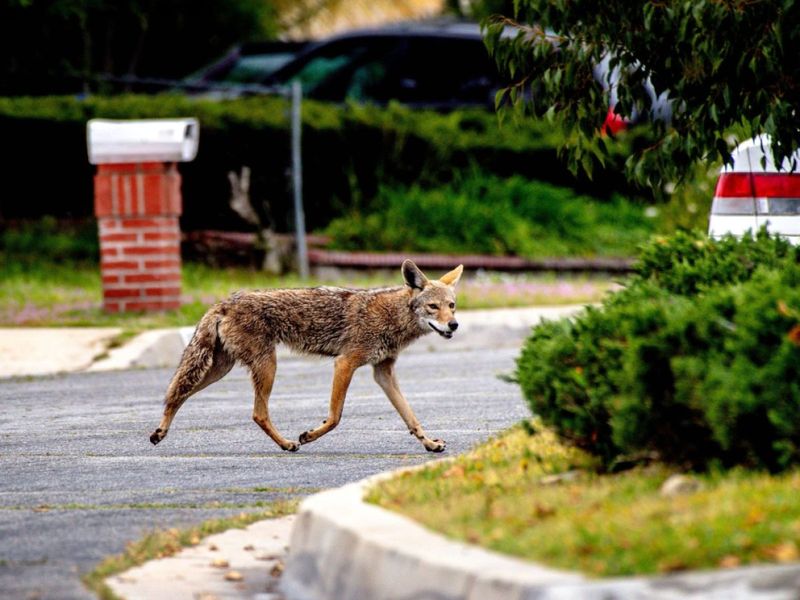
A coyote trotting across your lawn at dusk can make anyone stop and stare. Most of the time, the animal is simply moving through, and a sighting alone does not tell you why.
Still, a California yard can hold a few easy opportunities, like food, water, and cover, that are simple to manage. Here is how to spot them and close them off without overreacting.
A late-fall sighting does not prove winter hunger
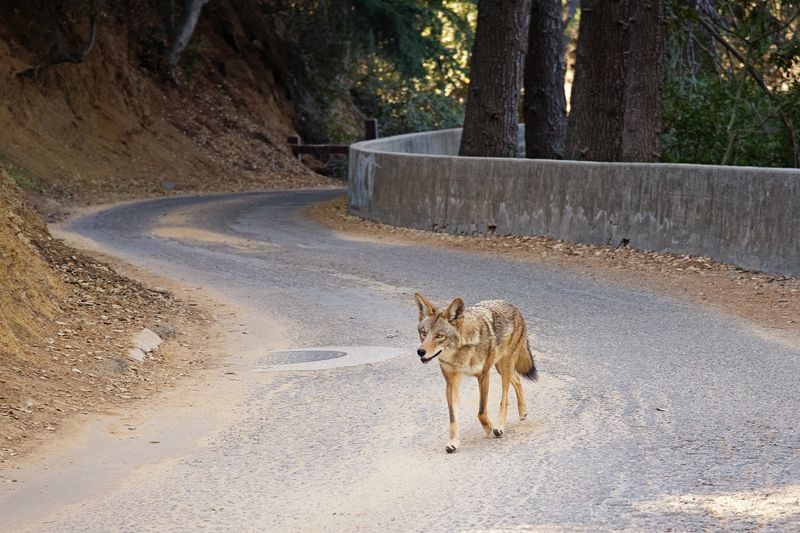
Late fall brings a few seasonal changes, but none of them prove that hungry coyotes are heading for yards. UC IPM notes that young coyotes may disperse by late fall, which means some are simply traveling to find new territory.
That movement can put them on streets and through neighborhoods.
Winter also brings breeding season. San Francisco Animal Care and Control reports mating activity from December through February.
More movement can mean more sightings, but neither fact shows that a food shortage is pushing coyotes into yards.
Coyotes are adaptable animals that live alongside people across the state. The California Department of Fish and Wildlife explains that encounters happen where people and wildlife habitat overlap.
A coyote crossing your property may be taking a shortcut between a creek and a park.
So a sighting does not mean your landscaping drew the animal in. It does give you a good reason to look over the yard for easy opportunities, which the next sections cover one at a time.
Accessible food can offer an easy opportunity
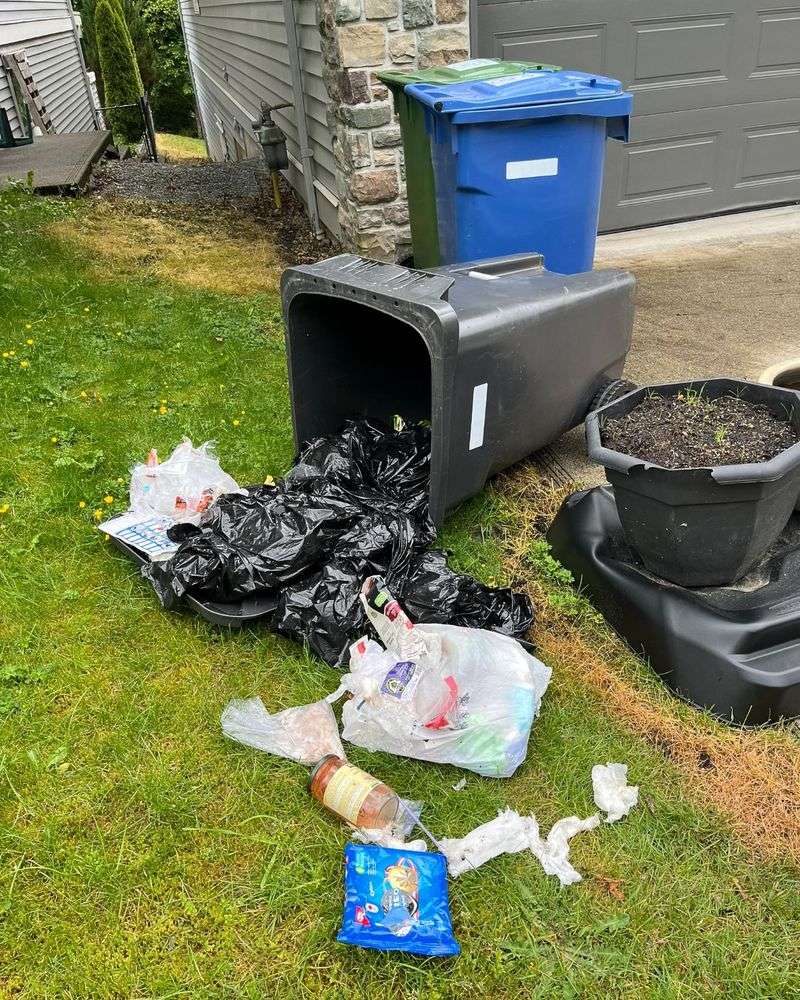
Coyotes are opportunistic omnivores, so they may use food that people leave within reach. CDFW guidance repeatedly recommends securing garbage and not leaving pet food outside.
Think of these as practical opportunities to close, not a ranked list of causes.
Fruit trees are a good place to start. Harvest ripe fruit from figs, persimmons, or citrus, and pick up fallen fruit every few days.
One Southern California scat study found ornamental fruits and seeds, including figs, palm fruits, and grapes, among the human-associated foods coyotes ate. The foods varied by place and season, so treat it as an example of variety, not a statewide ranking.
Next, check the bins. Use lids that latch, keep garbage, recycling, and compost secured, and put cans out the morning of pickup instead of the night before.
Finally, handle pet food. UC Cooperative Extension also advises bringing it indoors or removing bowls and leftovers promptly.
Feeding your pets inside takes care of this in one move.
Seed spills can draw prey coyotes hunt
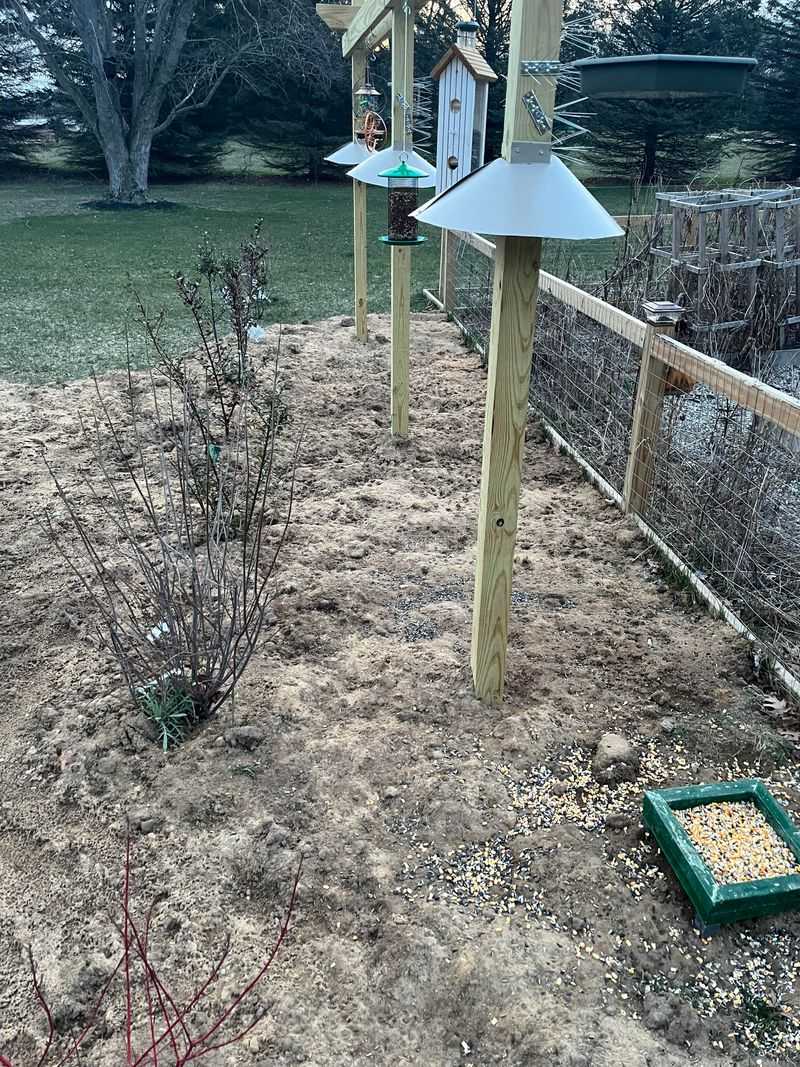
Birdseed is a different kind of cue. Coyotes are not mainly after the seed itself.
The concern is indirect: spilled seed may attract rodents or other small animals, and coyotes naturally hunt prey such as mice and rabbits.
CDFW advises keeping feeders clean, and UC IPM likewise recommends managing spills. Rodents and rabbits also show up as common native prey in a Southern California diet study, though its results do not describe every region.
None of this means every feeder brings in a coyote. If you enjoy feeding birds, a few habits can shorten the chain: sweep up hulls and seed under the feeder each day, choose a tray or catcher, and bring feeders in at night if rodents show up.
If you notice mice or rats around the feeder, that is a handy clue that the spot needs more frequent cleanup.
Water features are possible resources, not a universal explanation

UC IPM lists ponds and fountains among the possible water sources coyotes may use. That is worth knowing, especially in our long dry summers and early fall, when natural water can be scarce.
The sources reviewed do not show that a typical garden water feature is a major or universal reason for coyote visits. Many yards with fountains never see a coyote, and many yards without them do.
A proportionate approach works best. You do not need to drain a pond or remove every birdbath.
If you have a feature that sits near a gate, a wild edge, or a spot where you have seen tracks, consider moving it closer to the house, or turning off a fountain overnight.
Keep your energy for the practical steps in other sections, like securing food and limiting cover near the house.
Dense cover and sheltered gaps may offer places to hide
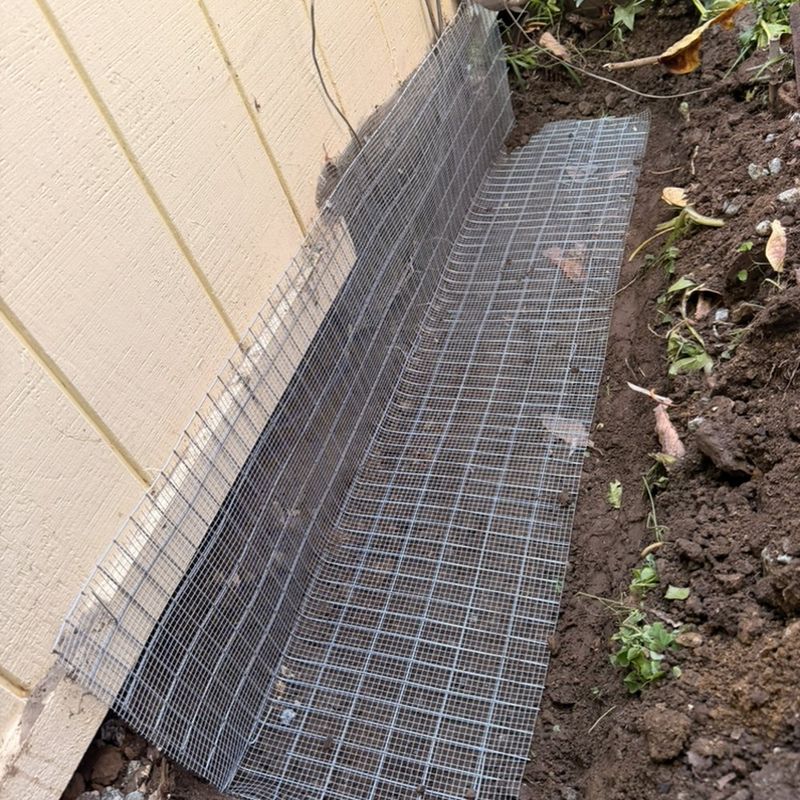
Coyotes may use dense vegetation and spaces beneath decks, porches, or sheds as cover or shelter. Contra Costa County and UC IPM both suggest reducing these nearby hiding spots.
Start close to the house. Trim or thin dense brush near walls and walkways so you can see through it, and close gaps under decks, porches, and sheds where practical.
Sturdy mesh or lattice, secured at the bottom, is a common choice.
Before sealing any opening, make sure no animal is inside. Look for signs of use, and do it during the day.
This is targeted yard management, not a call to clear every shrub. Native plantings feed pollinators and birds, so keep them farther from the house.
A coyote walking through also does not mean it is denning on your property.
Protect pets and small animals without relying on a perfect fence

Pets and small animals are where a little planning counts most. CDFW guidance advises keeping cats indoors, supervising small dogs outside, and leashing dogs on walks.
UC Cooperative Extension adds that poultry and other small animals should be kept in enclosures that block access, including from above.
A covered run with a solid roof or heavy wire top, plus a latched coop at night, covers sides and overhead alike.
Fences help, but coyotes may go over, under, or through them. UC IPM describes deterrent features: a fence at least 5½ feet high, secure mesh, and a buried wire apron along the base.
It also warns that a completely coyote-proof fence is difficult and expensive to build. Treat a fence as one layer of protection, and pair it with supervision and secure housing for animals.
Respond to an encounter without closing distance
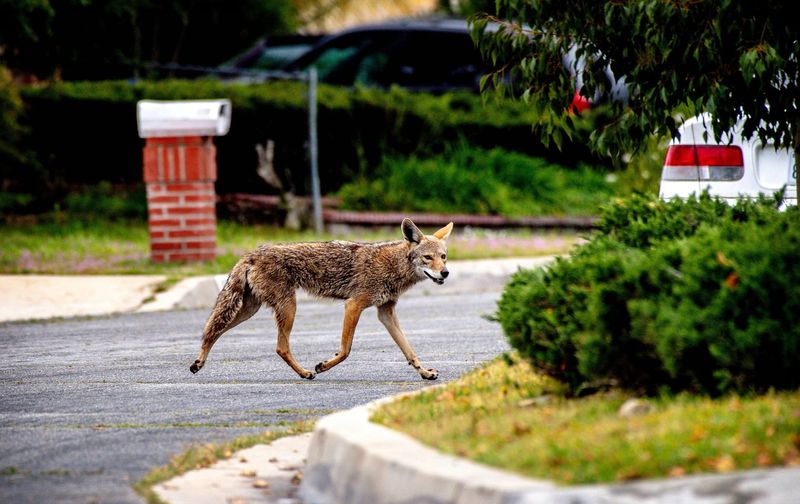
If a coyote comes close, stay calm and keep children and pets near you. CDFW recommends making yourself look larger, making noise, and backing away slowly.
Do not run or walk toward the animal, and let it leave on its own.
Hazing, meaning loud and assertive noise, can help, but CDFW hazing guidance has exceptions. Do not haze a coyote that is cornered or injured, or one with pups.
Keep your distance and back away instead.
Seeing a coyote in daylight is not proof that it is sick or dangerous. San Francisco guidance notes that urban coyotes may be active at different hours.
Look at behavior, not the clock.
For an animal that seems injured, sick, or keeps approaching people, contact your local animal-control office for guidance.
Focus on access, not alarm
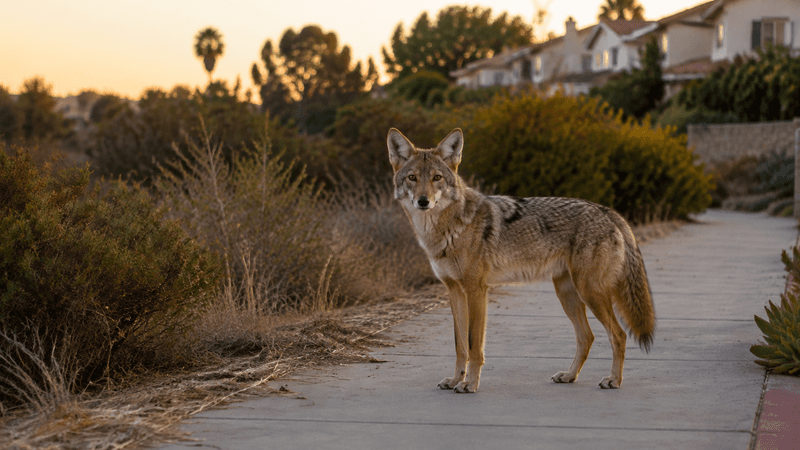
A calm, steady routine does most of the work: keep food out of easy reach, thin out hiding spots near the house, and protect pets and small animals. CDFW frames coexistence the same way.
A coyote crossing your lawn tells you little about your yard. Sometimes it is just on its way somewhere else.