
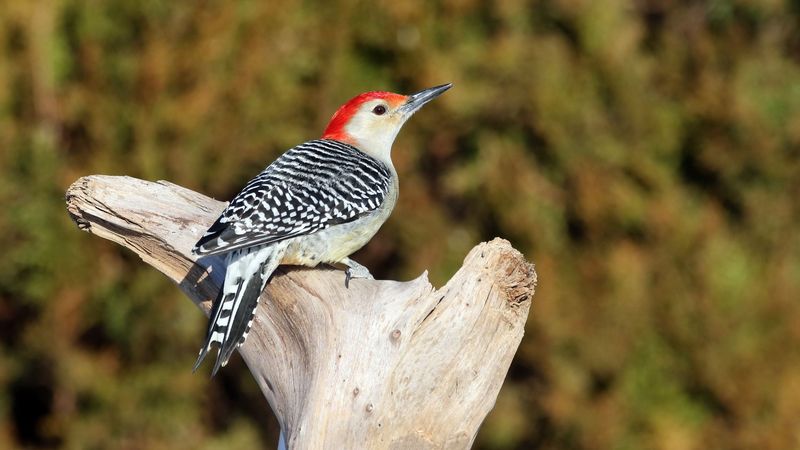
Spotting a Red-bellied Woodpecker once is exciting, but watching one return to your yard again and again makes most Florida gardeners wonder what they did right. The short answer is that the bird is picking up on something useful in your landscape or neighborhood, and figuring out what that is can help you make smarter, low-effort habitat decisions. Think of the visit as a clue worth reading, not a trophy to claim.
A Repeat Visit Is a Habitat Clue, Not a Yard Report Card
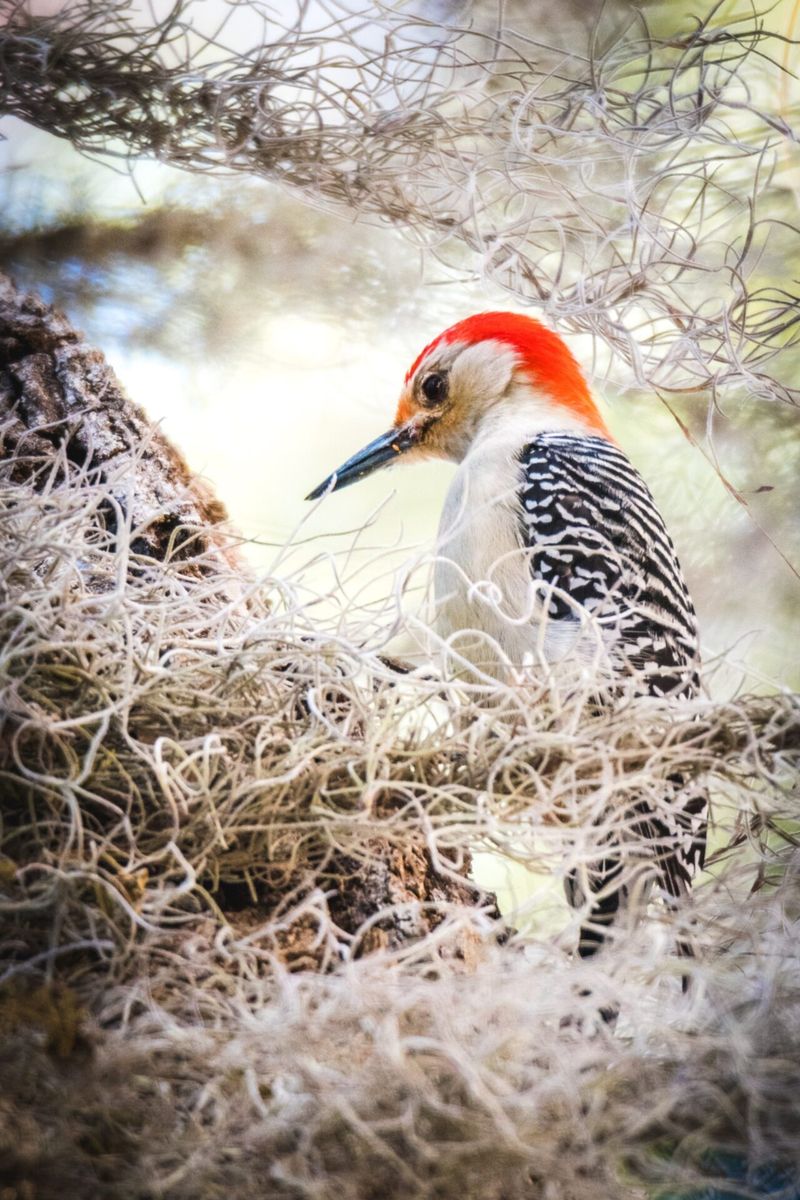
Seeing a Red-bellied Woodpecker return to your yard day after day carries more weight than a single sighting, but it still tells a measured story. Cornell Lab of Ornithology’s life history profile describes the species as broadly adaptable, using forests, pine-hardwood stands, pine flatwoods, wetlands, wooded suburbs, and backyard feeders across its range. That adaptability is exactly why repeated visits work better as a habitat clue than as a formal grade on your gardening efforts.
The bird may be coming back for a suet feeder, a single large oak, a fruiting shrub, or a dead limb that holds the insects it wants. It may also be working a territory that stretches well beyond your property line, pulling resources from a neighbor’s yard, a nearby park, or a strip of woods down the street. Attributing every return visit entirely to what grows inside your fence gives the yard more credit than the evidence supports.
What repeated visits do suggest is that the landscape, taken as a whole, has retained at least some of the woody structure, food, or cover the species looks for. UF/IFAS research on how birds select habitat makes clear that birds respond to conditions across multiple spatial scales, including the yard, the neighborhood, and the surrounding landscape, not just the plants inside one property.
A stronger habitat picture emerges when repeated visits come alongside visible canopy, understory layers, dead wood, natural food sources, water, and other bird species. Without those supporting details, the woodpecker is best read as a promising signal that something useful is nearby, not proof that the yard has achieved exceptional biodiversity or become a complete wildlife habitat.
What the Woodpecker May Be Finding in Florida
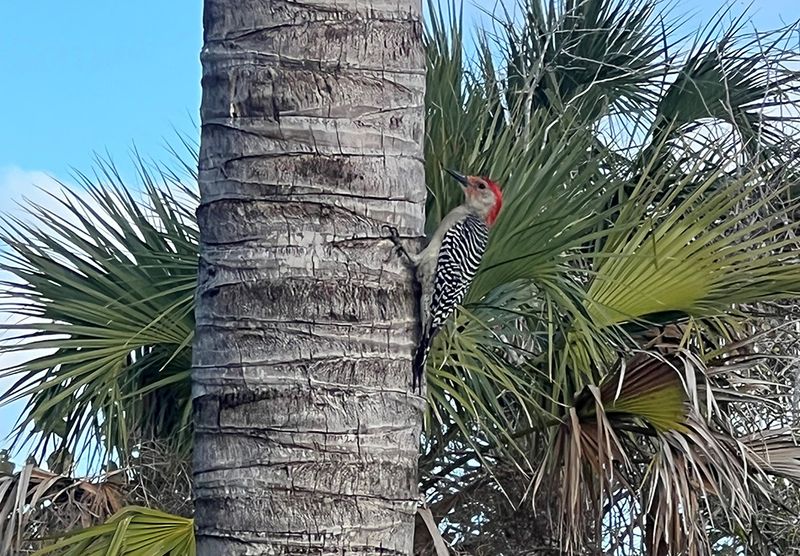
Florida offers this woodpecker a surprisingly wide range of places to operate. Cornell Lab’s life history account lists forests, pine-hardwood stands, pine flatwoods, river bottoms, wetlands, oak-hickory forests, and wooded suburbs among the habitat types the species regularly uses in the southern part of its range. If your yard sits near any of these environments, the bird’s territory may simply overlap with your property.
Mature or large trees are often the anchor. A single old live oak, a towering slash pine, or a cluster of cabbage palms can provide foraging surfaces, bark crevices full of insects, and potential nesting sites that make a yard worth revisiting. Woody cover in the form of shrubs, hedgerows, or neighboring tree canopy also matters, because the species moves through layered vegetation rather than crossing wide open turf.
Landscape connectivity plays a quiet but important role too. A yard that backs up to a wooded lot, a retention pond lined with trees, or a neighborhood with older tree canopy gives the woodpecker a corridor to travel, so it may pass through your space as part of a larger daily route rather than treating your yard as its primary destination.
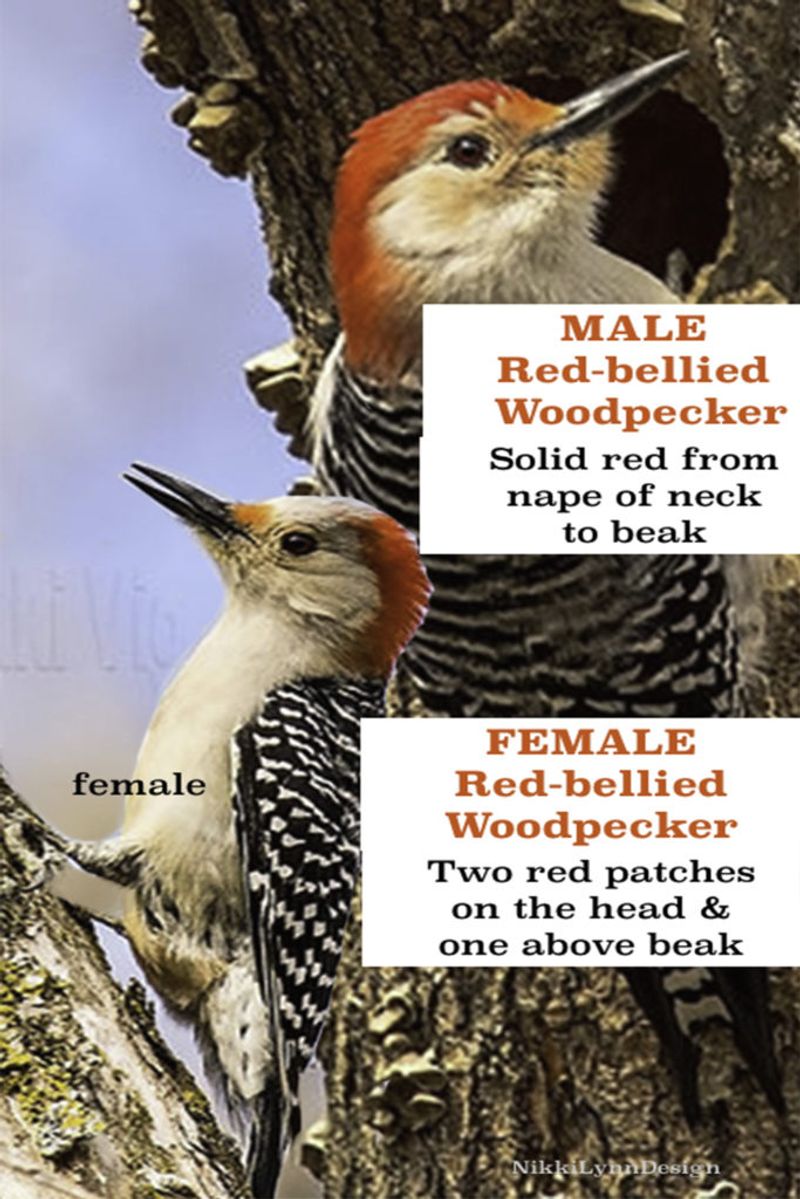
Knowing what the bird looks like helps confirm you have the right species before drawing any conclusions. Cornell Lab’s identification guide describes Red-bellied Woodpeckers as having black-and-white barred backs, pale underparts, and red coloring concentrated on the crown and nape. The red belly the name references is often hard to see in the field. The species is distinct from the Red-headed Woodpecker, which has an entirely red head and a very different look.
Confirming the ID keeps the habitat reading accurate.
Follow the Feeding Behavior Before You Diagnose the Garden
Watching where the bird goes when it lands tells you far more than simply knowing it showed up. Red-bellied Woodpeckers are well-documented foragers along trunks and branches, working their way up and around bark surfaces while probing crevices for insects, spiders, and other arthropods. Cornell Lab’s life history profile also lists acorns, nuts, pine-cone seeds, cultivated and wild fruits, and feeder foods such as suet, peanuts, and sunflower seeds as regular parts of the diet.
A bird that heads straight to your feeder and then leaves is telling a different story than one that spends ten minutes working the bark of a large tree or picking through a fruiting shrub. The feeder visit confirms the bird found an available food source. The bark-foraging or fruit-feeding visit suggests the yard or its immediate surroundings hold natural resources worth the trip.
Some gardeners assume that a woodpecker probing their trees means the yard has a pest problem. That reading overclaims what the behavior reveals. The bird may be eating wood-boring beetles, bark beetles, ants, or other insects that live in healthy as well as stressed bark, and its presence alone does not measure pest abundance or signal that something is wrong with the tree.
Equally, the woodpecker should not be expected to serve as a reliable pest-control service. It eats what it finds, which may include lawn-damaging grubs or ornamental pests, but one bird working a yard part of the time will not materially eliminate a pest population. Watch the foraging behavior as a way to understand which resources the bird is using, then use that observation to decide which habitat features are worth protecting rather than assuming the yard has a problem or a solution it may not have.
Mature Trees and Dead Wood Are Important Habitat Clues
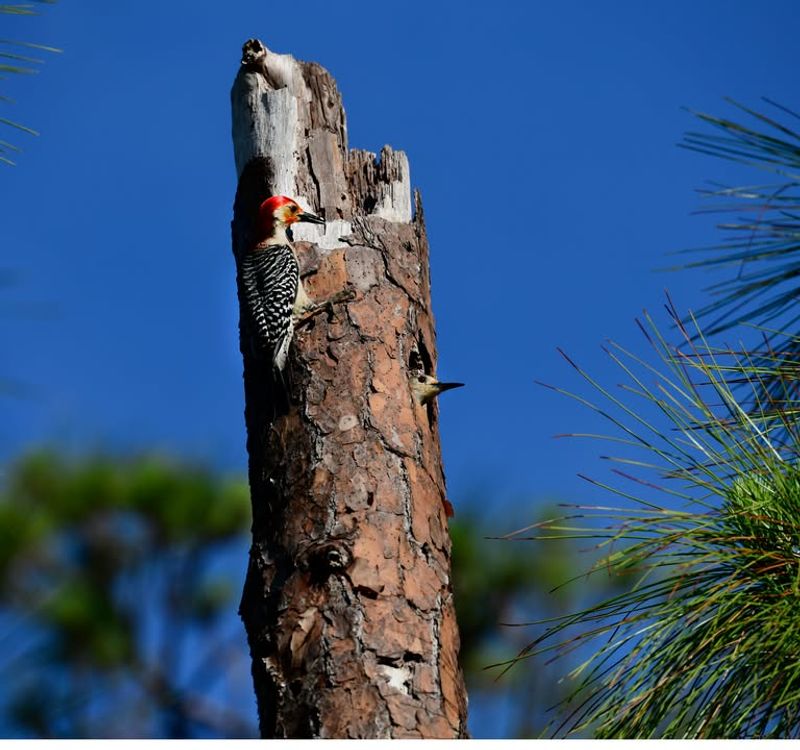
Large trees and dead wood show up repeatedly in the woodpecker’s story for good reason. Cornell Lab’s life history account notes that the species nests in cavities it excavates in dead trees, dead limbs of live trees, and sometimes fence posts. The same dead surfaces also concentrate the bark-dwelling insects the bird forages on, making a snag or a large dead limb both a dining room and a potential nursery.
UF/IFAS wildlife habitat guidance identifies snags as sources of insects, nesting cavities, and shelter for woodpeckers and other wildlife, and encourages retaining them where practical. The preservation-first approach makes sense: a dead limb left on a mature pine or a standing snag in a back corner of the yard can provide years of habitat value that a freshly planted shrub cannot replicate quickly.
That said, the habitat value of any particular dead tree or limb depends on the broader landscape context. A snag surrounded by no other canopy in a small urban lot contributes differently than one embedded in a yard with layered trees, shrubs, and nearby woods. Dead wood is a meaningful clue, but not automatically the dominant reason a woodpecker keeps coming back.
Florida’s storm environment adds a layer of caution that does not apply in calmer climates. UF/IFAS guidance on habitat wood recommends evaluating potential targets, including homes, vehicles, utility lines, walkways, and frequently occupied areas, before deciding whether to retain a dead tree or large limb. Retaining mature trees and nonhazardous habitat wood where practical is the goal; removing every dead branch out of habit removes habitat unnecessarily, but leaving a structurally dangerous tree standing purely for wildlife value is not a safe trade.
Native Plants Can Add Food and Cover
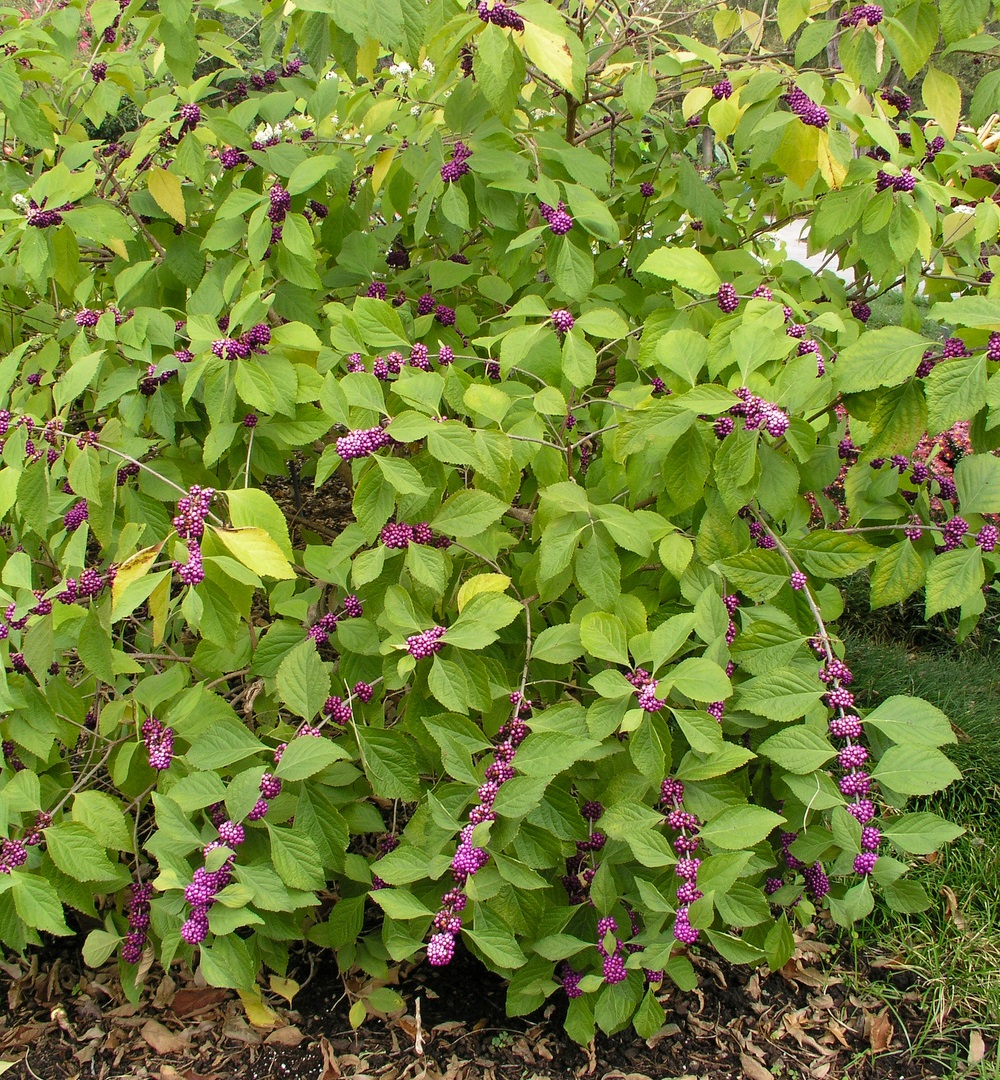
Florida-native plants can strengthen the food and cover resources a yard offers without replacing the mature trees, dead wood, and landscape connectivity that matter most to a woodpecker. UF/IFAS Gardening Solutions lists bird-friendly native plants that can provide fruit, seeds, cover, and the insects birds need, and frames them as one layer of a broader habitat strategy rather than a stand-alone fix.
Among the examples UF/IFAS mentions are American beautyberry, native hollies, wax myrtle, wild coffee, blueberry, Chickasaw plum, pawpaw, seagrape, Simpson’s stopper, and native viburnums. Each of these can add seasonal fruit or berry crops that feed a range of wildlife, and the insects they host add another food source a foraging woodpecker may use. No single plant on this list should be treated as a guaranteed woodpecker attractant; the bird responds to the overall character of the landscape, not to one shrub.
UF/IFAS Extension in the Florida Panhandle emphasizes that native plants support insects and other invertebrates that form the base of the food web birds depend on, which is part of why they tend to outperform non-native ornamentals as habitat plants over time. But the benefit is cumulative and landscape-wide, not a quick switch that changes what one bird does.
Plant selection still has to follow the right-plant-right-place principle, because Florida conditions shift considerably by region. UF/IFAS bird habitat research reinforces that birds read habitat at multiple scales, so a native planting works best when it fits the local light, soil moisture, salt exposure, and storm conditions of the specific site. Seagrape belongs near a coastal yard, not an inland sandy site; pawpaw does better in moist, shaded spots than in full-sun, dry soil. Verify each choice through UF/IFAS resources or the Florida-Friendly Landscaping plant database before planting.
Safety Decides Which Habitat Features Stay
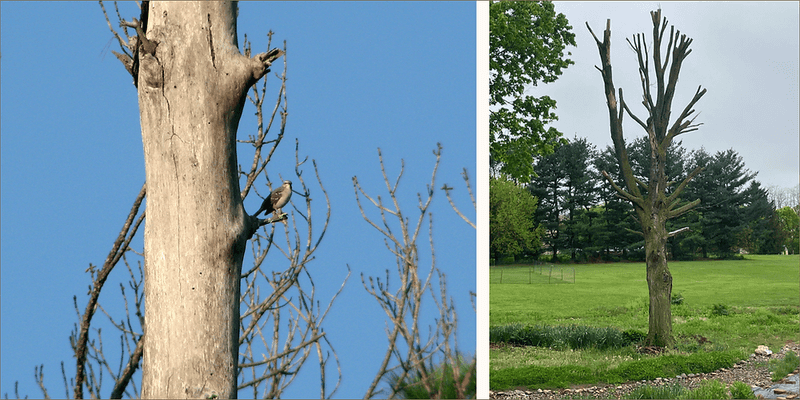
Deciding whether to keep a dead tree or large dead limb in a Florida yard is not purely a wildlife question. UF/IFAS guidance on woodpecker poles and habitat wood recommends a straightforward evaluation process: identify what the tree or limb could strike if it fell, and consider how often people, vehicles, structures, utility lines, or walkways occupy that zone.
A snag standing at the back of a large lot, well away from the house and any paths people use regularly, presents a very different risk profile than a dead pine leaning over a roof or a driveway. Florida’s hurricane season raises the stakes because a tree that looks stable during a calm week can become a projectile in a tropical storm. The question is not whether dead wood has habitat value, which it clearly does, but whether the specific location and condition of that wood make it safe to leave standing.
When the answer is unclear, a qualified arborist is the right resource. Arborists can assess structural integrity, root health, and decay patterns that are not visible from the ground, and they can recommend whether to retain, shorten, or remove a particular tree. Shortening a hazardous snag to a lower height sometimes preserves some foraging and nesting value while reducing the fall radius and the risk to targets below.
Removing a dead tree does not have to mean losing all of its habitat value. Leaving the cut wood on the ground as a log or stump can still provide insects, shelter, and foraging opportunities for woodpeckers and other wildlife. The goal is to keep as much nonhazardous habitat wood as the site safely allows, not to clear every dead surface in the name of tidiness or to leave every standing snag in the name of wildlife.
Feeders Can Explain the Visits—and Create New Responsibilities
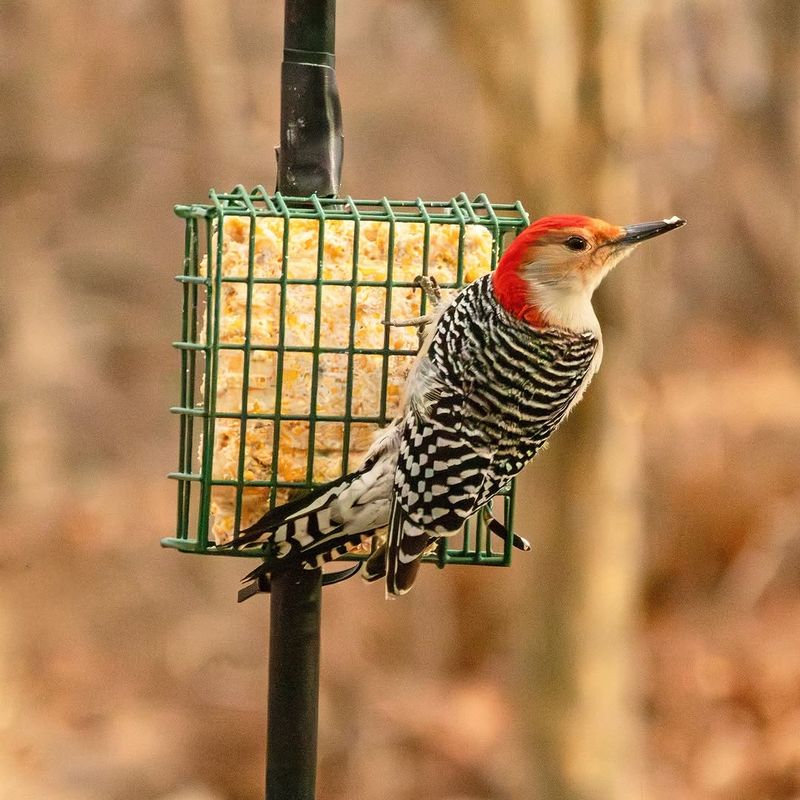
A feeder visit and a habitat visit are not the same thing, and knowing the difference shapes how you interpret the bird’s return trips. UF/IFAS guidance on backyard bird feeder selection describes native plantings as the best foundation for attracting birds, with feeders serving as optional supplements rather than replacements for habitat. Red-bellied Woodpeckers commonly use suet, peanuts, and sunflower seeds at platform or hopper-style feeders, so a bird that appears only when you stock the feeder is primarily telling you it found a reliable food source, not necessarily that your yard offers high-quality nesting habitat.
Suet is one of the most popular offerings for woodpeckers, but Florida’s heat makes it a complicated choice. Audubon advises against putting out ordinary suet when outdoor temperatures climb, noting that dripping rendered fat can damage feather waterproofing and that warm conditions cause suet to turn rancid quickly. In Central and South Florida, that warning applies for much of the year. No-melt or heat-tolerant suet formulations perform better in Florida summers, and shading the feeder extends the safe window further.
Feeder hygiene matters as much as feeder placement. Feeders and birdbaths concentrate birds from a wide area, which creates conditions where disease can spread easily. Audubon recommends cleaning seed feeders about every two weeks as a baseline, with more frequent cleaning in hot, humid conditions like Florida summers. Wet or moldy food and accumulated waste below the feeder should be removed promptly.
If visibly sick birds appear near your feeder, the responsible step is to take the feeder down temporarily, clean it thoroughly, and let the area clear before putting it back up. A well-maintained feeder supplements the natural habitat your yard already offers; a neglected one can undermine the wildlife value you are trying to build.
Let the Visit Guide a Lighter-Touch Yard Routine
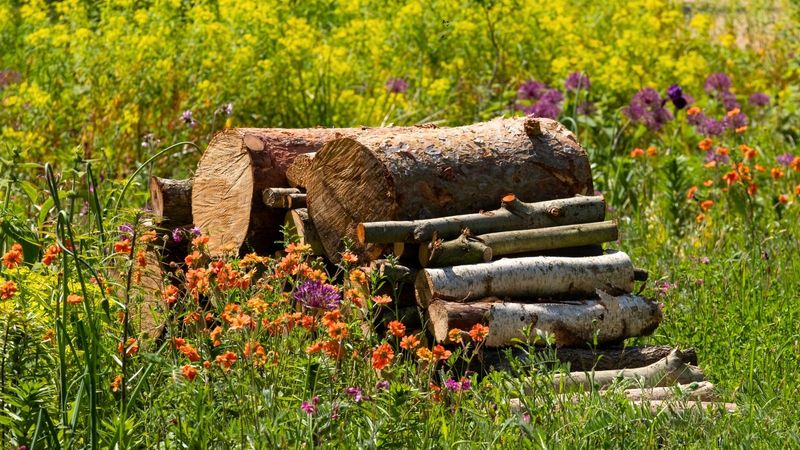
One of the most practical things a woodpecker visit can do is give you permission to ease up on yard cleanup in the places where it is safe to do so. Leaving some leaf litter under trees, allowing dead flower heads to stand through the season, and keeping a small brush pile in a low-traffic corner of the yard can preserve the insects and other invertebrates that make a landscape worth visiting. UF/IFAS Gardening Solutions explains how these lighter-touch practices contribute to community ecology by keeping organic material and the organisms it supports in place.
The balance matters in Florida. Leaf litter piled against a foundation can create pest harborage, and dense brush near the house may conflict with HOA rules, fire safety guidelines, or storm-drainage requirements. The goal is not to stop maintaining the yard but to make deliberate choices about where cleanup serves a real purpose and where it is simply habit. A tidy mulched bed under a live oak does not need to be raked bare to look cared-for.
Pesticide use is another area where a lighter touch pays dividends for wildlife. EPA guidance on reducing pesticide impacts on wildlife recommends using pesticides only when necessary, treating only the affected area, following the product label, and avoiding application before heavy rain that could carry chemicals into storm drains or waterways. Reducing broad pesticide applications preserves the insects that woodpeckers and other birds eat, which benefits the habitat more than any single plant addition.
Before drawing strong conclusions about what the woodpecker means for your specific yard, take stock of the whole setting. UF/IFAS research on bird habitat selection reminds us that birds read canopy, cover, food, water, and landscape connectivity across the yard, the neighborhood, and the broader surroundings. The Red-bellied Woodpecker may be responding to one feature you have, to a neighbor’s old oak, or to a wooded patch two streets over. Either way, the visit is a quiet sign that the landscape still holds something worth coming back to.