
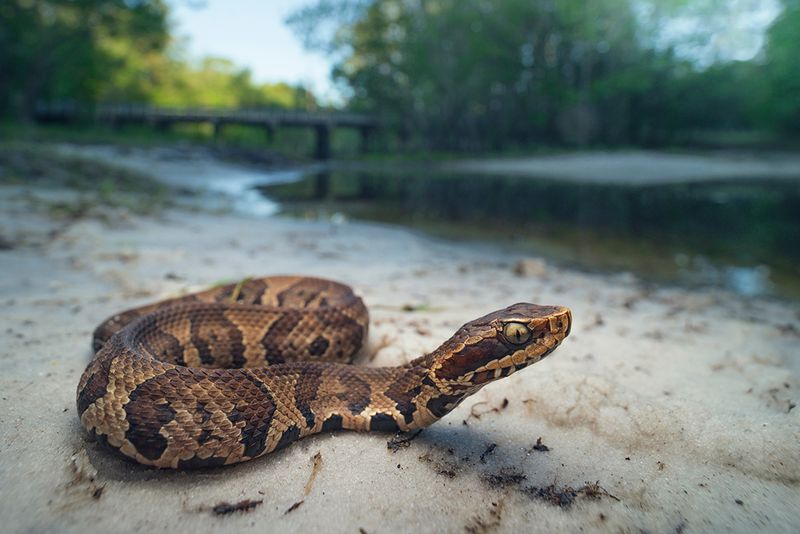
You are raking leaves along the edge of a pond when something moves in the debris, and a sharp pain follows. Cottonmouths live in wet areas all over Florida, so a surprise meeting near a pond or retention pond is possible.
Most snakes want nothing to do with people, but a suspected bite still needs fast action. Knowing the first steps ahead of time can keep a scary moment from getting worse.
Get clear of the snake and call 911
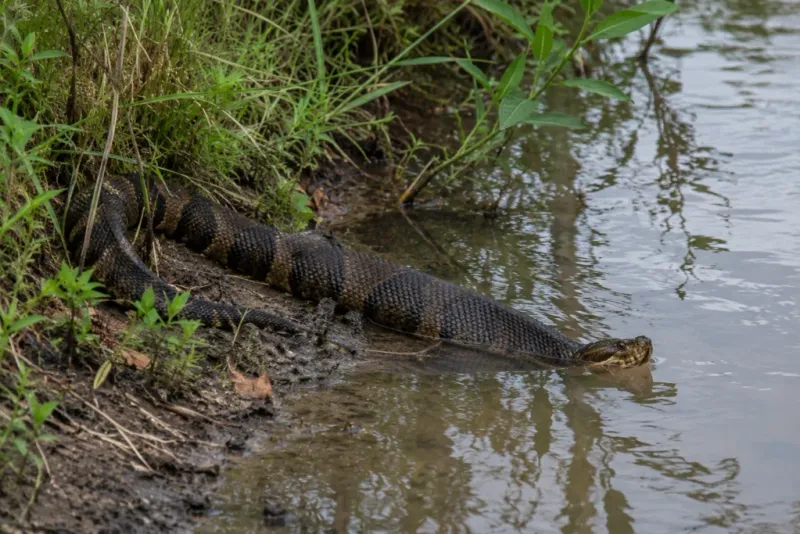
Step away first. Move the bitten person out of the snake’s reach, and do it without walking toward the snake, poking at the leaves, or trying to find it.
A few steps back on open, dry ground is enough.
Next, call 911. Do it right away, because a suspected bite is treated as an emergency.
UF/IFAS snakebite guidance says not to delay care to identify the snake, and trying to get a closer look can put the victim or others at more risk.
Do not stop to inspect the wound, and do not wait to see whether swelling shows up. Not every cottonmouth bite injects venom, and not every bite looks the same, but nobody can tell that from the yard.
Only a medical team can sort it out.
Give the dispatcher your exact location, such as the street address and which side of the pond you are on. Tell them it is a suspected venomous snakebite.
The 2024 AHA and Red Cross first aid guidelines cover North American snakes and support getting emergency help quickly. Put the phone on speaker so your hands are free to help.
Keep the person calm and still while help is coming

Once help is on the way, the goal is simple: less movement. Have the person sit or lie down in a comfortable spot away from the pond edge and the leaf debris.
Walking around, pacing, or going back to finish the job can speed the spread of venom if any was injected.
Calm voices help. A frightened person breathes fast and moves a lot, so tell them help is coming and that staying still is the most useful thing they can do.
If it does not delay care, keep the bitten arm or leg resting and immobilized. The 2024 first aid guidelines recommend rest and immobilization without naming a set limb height.
Advice on positioning differs a bit. Florida’s Poison Control Centers suggest keeping the limb below heart level, while CDC guidance suggests a neutral position of comfort.
Pick a comfortable, supported position and let the 911 dispatcher adjust that advice if needed.
Prepare the bite area without delaying care
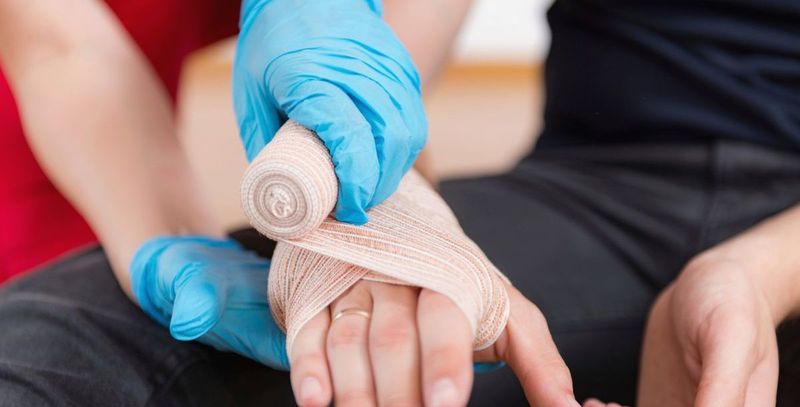
Anything you do here comes second to the 911 call. If another person is with you, they can handle these tasks while you stay on the phone.
Remove rings, watches, bracelets, and tight sleeves or pant legs near the bite. Swelling can build quickly, and jewelry that fits now may become a problem in minutes.
If it is easy to do, wash the bite gently with soap and water. Then cover it with a clean, dry dressing.
The 2024 AHA and Red Cross guidelines include these steps for snakebites. If water and soap are not close, skip the washing and keep the person still.
Finally, jot down the time of the bite on your phone. Watch for changes in swelling or tenderness and note when you see them.
Paramedics and hospital staff will want that timeline. Do not squeeze, scrub, or poke at the bite to check it.
Let emergency professionals guide transport and care

Do not drive yourself to the hospital, even if you feel fine and the hospital is close. CDC guidance warns that dizziness or fainting can come on after a suspected venomous bite, and that is a dangerous thing to happen behind the wheel.
Let paramedics decide how and where to go. They can start care on the way and tell the hospital what is coming.
If someone else is with you, they should stay with the patient rather than driving off on their own.
Florida’s Poison Control Centers can also help. You can reach them at 1-800-222-1222, and their snake guidance notes they can coordinate with hospital staff.
Think of the poison line as an extra layer of help, not a replacement. Call 911 first, and get seen by medical professionals even if you have no symptoms yet.
Avoid these home treatments
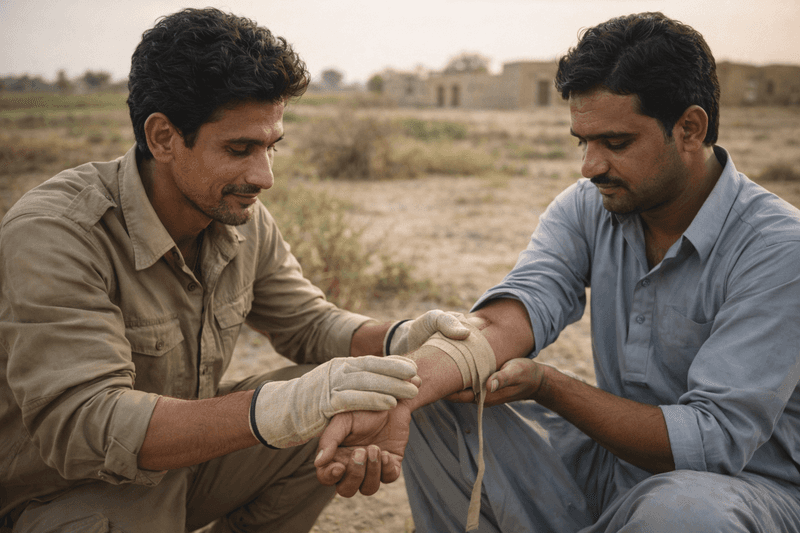
Old movie remedies can do real harm. For a suspected cottonmouth bite, skip all of these: tourniquets, ice, suction devices or sucking the wound, electric shock, cutting the bite, and pressure-immobilization bandages.
Current U.S. first aid guidance says these measures can be ineffective or harmful. A tight band can trap damage in one spot, cutting adds injury and infection risk, and ice or shocks do nothing helpful.
The same guidance is aimed at North American snakes, so advice you read about snakes elsewhere in the world may not fit here. A trick that is standard in another country could be the wrong move on a Florida pond bank.
If a neighbor offers a favorite folk remedy, politely pass. Put the effort into what works: keep the person still, keep the phone line open, and wait for paramedics.
Nothing from the kitchen or garage will beat that.
A pond-side snake is not yours to identify
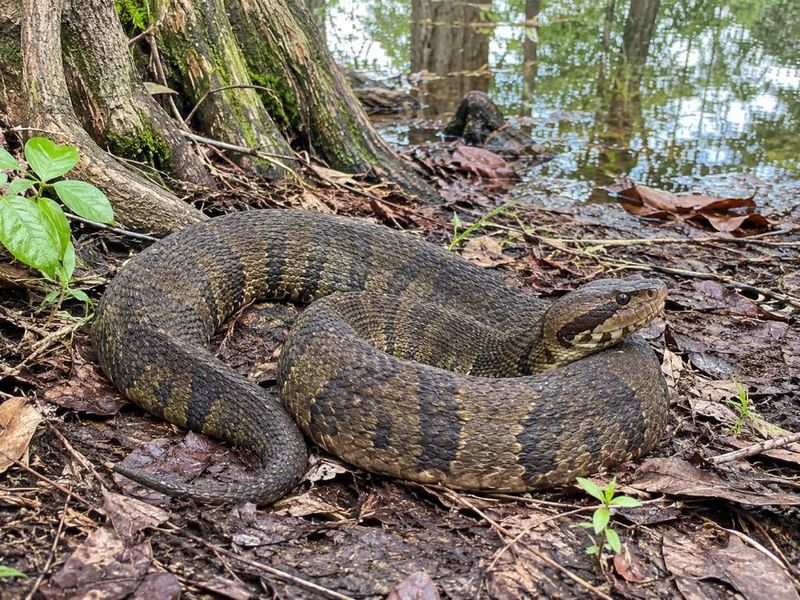
Cottonmouths live statewide in Florida wet areas, including ponds and retention ponds, according to the Florida Fish and Wildlife Conservation Commission. FWC also says they are not necessarily aggressive.
That is not a reason to get closer, because the snake is venomous and is best left alone.
Telling one apart from a harmless snake is harder than it sounds. The Florida Museum notes that nonvenomous watersnakes share the habitat and look similar.
So not every snake near your pond is a cottonmouth, but a quick glance will not settle it.
That is why a bite victim should never rely on a guess. Treat the bite as suspected and call for help.
Do not catch, kill, or carry the snake to the hospital, since UF/IFAS guidance warns that attempts to identify it can raise the risk for everyone.
A photo is optional. Take one only from a safe distance, and only if it does not slow anything down.
Make the next raking session safer
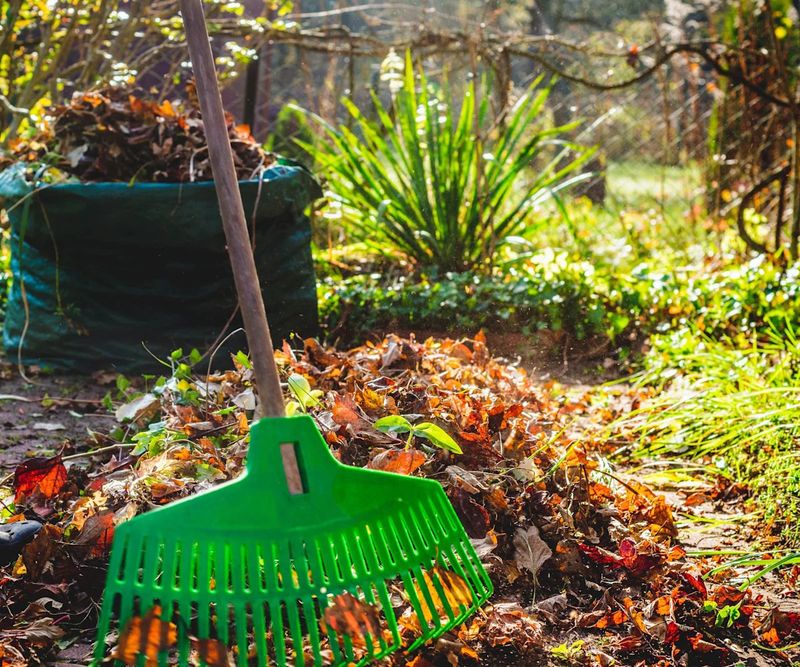
Raking near water means working where snakes sometimes rest. A little gear and planning make it safer, though nothing removes the chance of an encounter completely.
CDC guidance for outdoor workers advises avoiding leaf piles and wearing boots, long pants, and leather gloves when handling brush or debris. Use the rake handle to move material from a stance with room to step back, and do not reach in barehanded.
FWC advice on living with snakes includes leaving snakes alone and clearing brush or debris that piles up around buildings. Haul debris away from the house and the pond edge rather than stacking it nearby.
Keep your phone in a pocket on every pond-side chore. If you ever see a snake, back off and let it move on.
The best bite plan is the one you never need.