
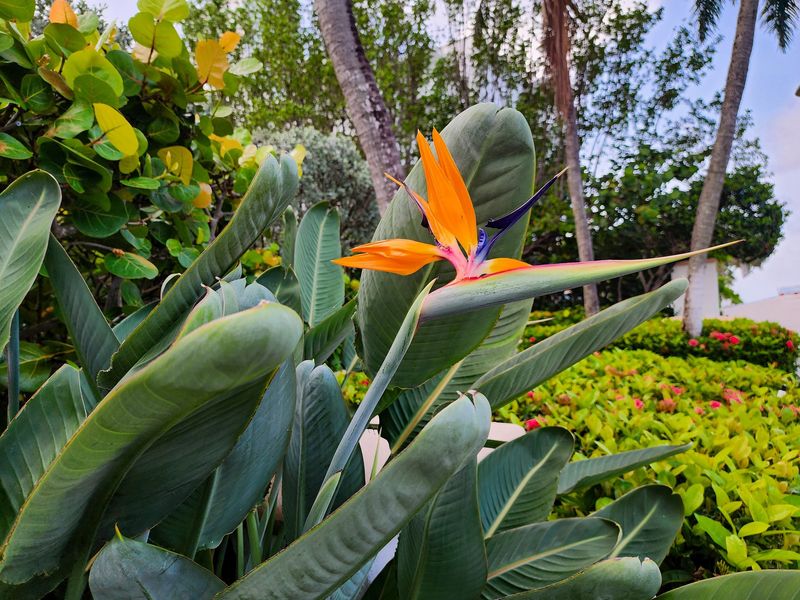
Your Florida bird of paradise is one of those yard showpieces that rewards a little attention at the right time of year. Late summer is a good moment to check in on it, but whether you should feed it right now depends on a few things you need to confirm first.
One fertilizer application will not guarantee bigger leaves or a fall bloom, yet the right combination of feeding, water, mulch, light, and sanitation can keep an established plant in the best possible shape heading into fall.
Confirm which bird of paradise you grow
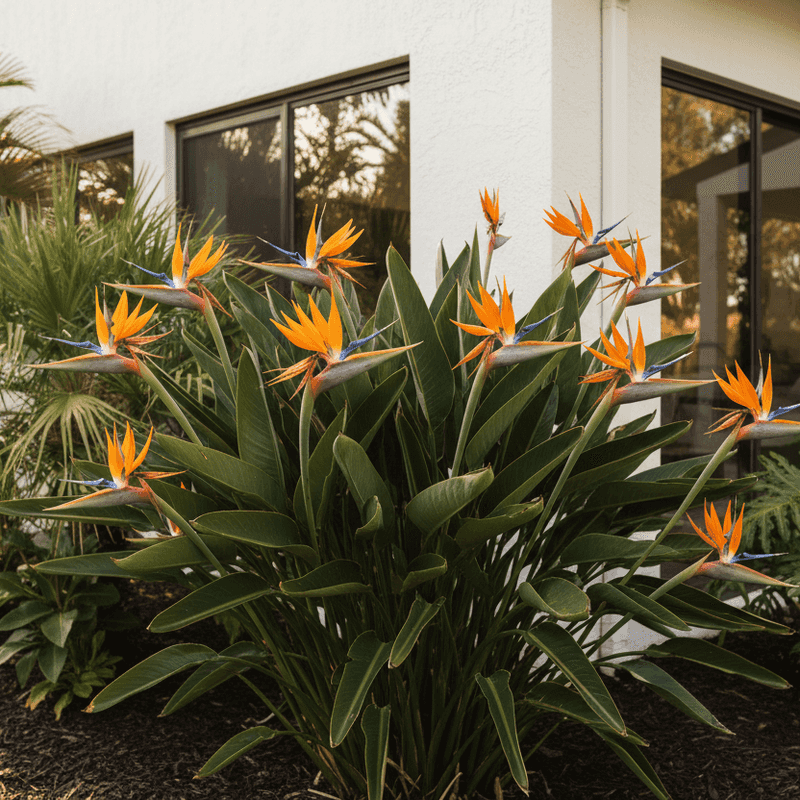
Before adjusting any care routine, know exactly which plant is growing in your yard. Two species share the common name “bird of paradise,” and they behave very differently in the Florida landscape.
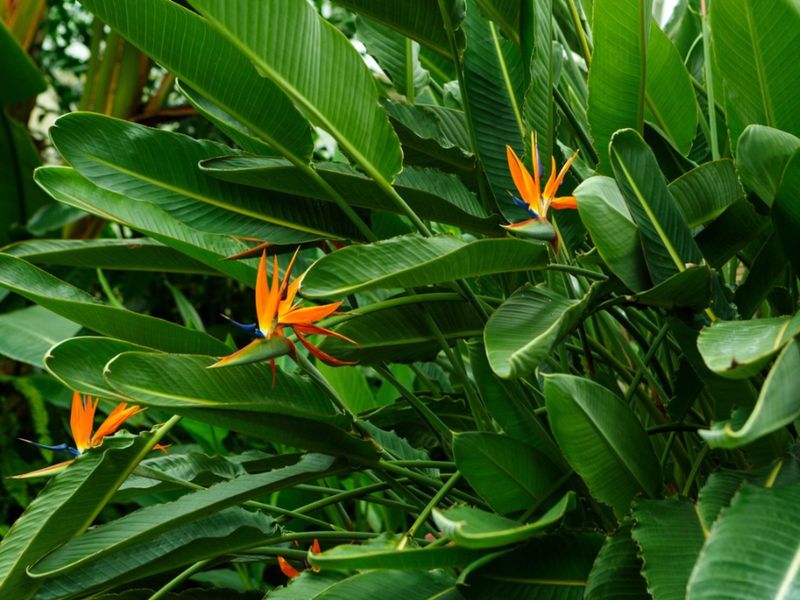
Orange bird of paradise, Strelitzia reginae, is the one most Florida gardeners picture when they hear the name. UF/IFAS Extension’s bird-of-paradise guide describes it as a clumping perennial that typically reaches 3 to 5 feet tall, with stiff paddle-shaped leaves and the unmistakable orange-and-blue flower that looks like a tropical bird in flight.
This guide’s feeding schedule, bloom expectations, and care advice apply specifically to an established landscape specimen of S. reginae.
White or giant bird of paradise, Strelitzia nicolai, is a completely different animal. It can reach roughly 15 to 30 feet and is often used as a large screening plant or bold tropical focal point.
Its flowers are white and purple rather than orange and blue, and its landscape behavior, spacing needs, and mature size are far removed from its smaller relative.
If your plant towers above your roofline or looks more like a small tree than a clumping perennial, you are likely growing S. nicolai, and the specific fertilizer timing and bloom-season information here may not apply cleanly to it. Check the UF/IFAS species profile for Strelitzia reginae if you need a quick visual reference for the orange species.
One more distinction worth making: container care and in-ground landscape care are not interchangeable. Some houseplant sources recommend liquid fertilizer on a much more frequent schedule, sometimes every two to four weeks during the growing season.
That advice is written for a potted plant with limited soil volume and faster nutrient depletion. Applying a houseplant feeding schedule to an established in-ground Florida specimen can lead to overfeeding.
Stick with Florida landscape guidance for an in-ground plant.
Decide whether the plant is due for a late-summer feeding
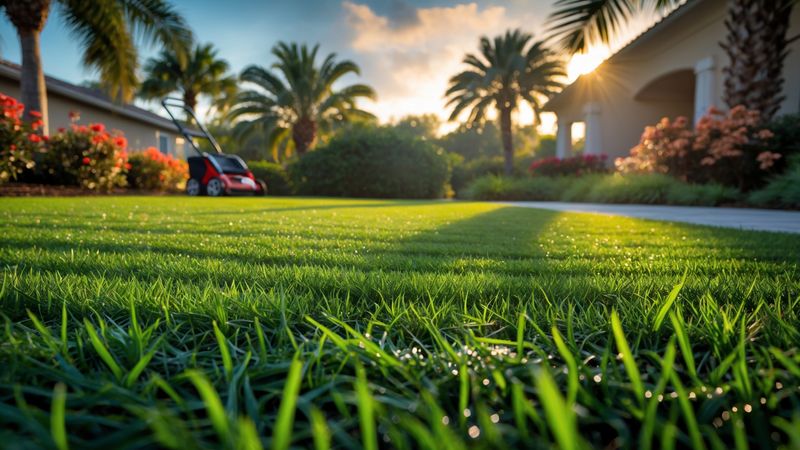
Feeding your bird of paradise right now sounds straightforward, but two questions need honest answers before you open any bag of fertilizer. Skip either one and you risk wasting money, harming the plant, or running afoul of local environmental rules.
The first question is timing. UF/IFAS recommends fertilizing an established bird of paradise about every three months during the growing season, following the product label.
That means the right move is to check when you last fed the plant, not to fertilize automatically because the calendar says late summer. If your last application was roughly three months ago and the plant is actively pushing new growth, it may genuinely be due.
If you fertilized six weeks ago, or you cannot remember the last time you fed it, wait until you can confirm the interval.
The second question is legality. Many Florida counties and municipalities prohibit applying nitrogen- or phosphorus-containing fertilizer to landscape plants during summer blackout periods, commonly running from June 1 through September 30.
UF/IFAS Extension’s fertilizer management guidance explains how these local ordinances work and why they exist, primarily to protect water quality during Florida’s heaviest rain months.
To find out whether your address falls under a blackout rule, start with the UF/IFAS Florida-Friendly Landscaping fertilizer ordinance resource, which explains the ordinance landscape across the state. For a location-specific lookup, the UF/IFAS fertilizer ordinance application tool lets you search by area.
Even after using the tool, confirm the current details with your county or municipal office directly, because local rules can change and online databases may lag behind recent updates.
Once you have both answers, the path forward is clear. Feed only when the three-month interval has passed and local rules permit fertilizing.
If the plant is not yet due, wait and focus on water, mulch, and light in the meantime. If a blackout period applies regardless of timing, postpone the fertilizer and shift entirely to the nonfertilizer care steps covered in the next sections.
Follow the label instead of chasing a stronger dose
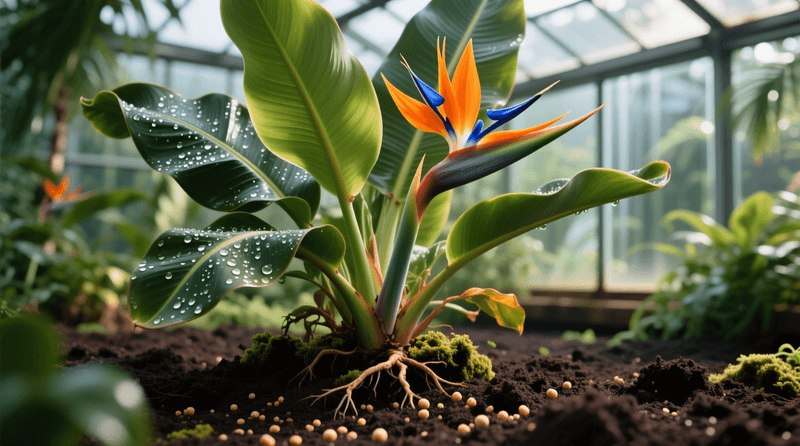
Once your bird of paradise clears both the timing check and the local ordinance check, the actual feeding step is simpler than most gardeners expect. The guidance from UF/IFAS points toward an organic, granular landscape, or controlled-release fertilizer applied exactly as the product label directs.
That label is the authoritative instruction for that specific product, and it accounts for concentration, coverage area, and application frequency.
No universal N-P-K ratio applies to every bird of paradise in every Florida yard. Resist the urge to grab a high-phosphorus “bloom booster” on the theory that more phosphorus will force flowers.
Florida landscape guidance does not support that approach for this plant, and excess phosphorus can contribute to runoff and water-quality problems. Choose a product labeled for use on landscape plants or flowering ornamentals and follow its directions precisely.
Sandy soil is a real feature of many Florida yards, and some gardeners assume that means they should apply extra fertilizer to compensate for faster leaching. UF/IFAS warns that excess fertilizer can create soluble-salt injury, damage roots, and scorch leaf margins, and that too much nitrogen in particular can produce weak, overly vegetative growth while making the plant more attractive to insects and disease.
More fertilizer is not a workaround for sandy soil; it is a path to a stressed plant.
Environmental responsibility matters here too. UF/IFAS guidance on fertilizer and irrigation recommends keeping fertilizer off driveways, sidewalks, and other hard surfaces, and avoiding applications on sloped sites or near surface water where runoff is likely.
Sweep up any granules that land on pavement immediately.
Timing within the day also matters. Do not apply fertilizer immediately before a heavy rain event.
Rain can wash granules off the root zone and into storm drains before they have a chance to break down, which wastes your effort and contributes to nutrient pollution. Florida-Friendly Landscaping guidance reinforces that responsible fertilizer use means applying at the right time, at the right rate, and in the right conditions, not simply whenever it is convenient.
Improve moisture and light before expecting stronger growth
Fertilizer only works when the plant’s basic growing conditions are already in good shape. Water and light are the two variables most likely to limit what your bird of paradise can actually do with any nutrients it receives, so getting those right matters more than any single feeding decision.
Water consistently during Florida’s warm months. UF/IFAS notes that established plants prefer frequent watering during warm weather, and that both drought stress and excessively wet conditions can cause yellowing and leaf loss.
The goal is a root zone that stays evenly moist but drains freely. If water pools around the base after rain or irrigation, that is a sign of a drainage problem worth addressing before you consider any other intervention.
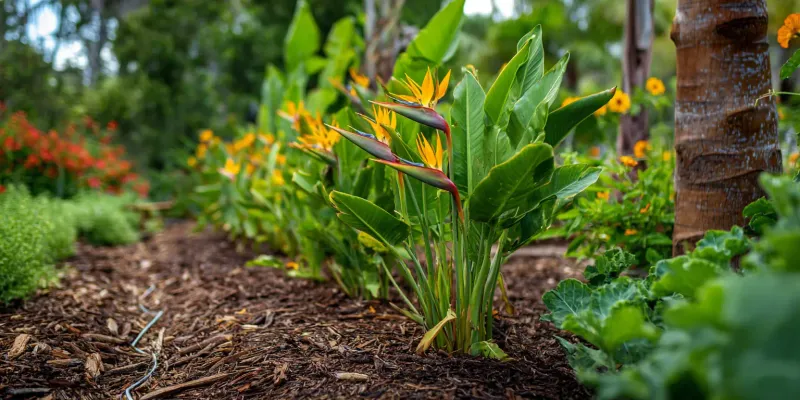
A 2- to 3-inch layer of mulch around the plant helps hold moisture in the soil and moderates root-zone temperature during Florida’s hottest months. Keep the mulch pulled back from the base of the stems, leaving a bare ring of a few inches around them.
Mulch piled against the stems traps moisture against the plant tissue and raises the risk of stem rot, which can undo the benefit of good watering habits in a hurry.
Light is a genuine tradeoff for this species, and understanding it helps you set realistic expectations. Sunny or partially shaded locations both support growth and flowering.
Plants grown in full sun tend to be somewhat smaller overall and produce shorter flower stems. Plants growing in partial shade often develop taller growth and can produce somewhat larger flowers, though they may not bloom as freely as plants in a sunnier spot.
Neither end of that spectrum is automatically better; the right light depends on your specific site, what you value most in the plant’s appearance, and what you can actually change.
Resist the temptation to treat more sun, more water, or more fertilizer as automatic routes to larger leaves or more flowers. An established bird of paradise in good health, receiving consistent moisture and appropriate light, is in the best position to grow well and eventually flower.
Pushing any single input beyond what the plant needs creates stress rather than reward.
Clean up the plant and check for seasonal pests
A quick maintenance pass through the plant right now costs almost nothing and pays off in appearance, airflow, and early pest detection. Start with what you can see clearly: dead or brown leaves, spent flower stalks, and any debris collecting around the base of the clump.
Remove dead leaves and old flower stalks by cutting them cleanly at the base. UF/IFAS presents this cleanup primarily as aesthetic maintenance and a sanitation practice, not as a technique for triggering new blooms.
Removing dead material improves airflow, reduces hiding spots for pests, and keeps the plant looking its best without stressing healthy tissue. Do not remove green, healthy leaves in the hope of forcing the plant to push new growth faster; that is not supported by the evidence and can set the plant back.
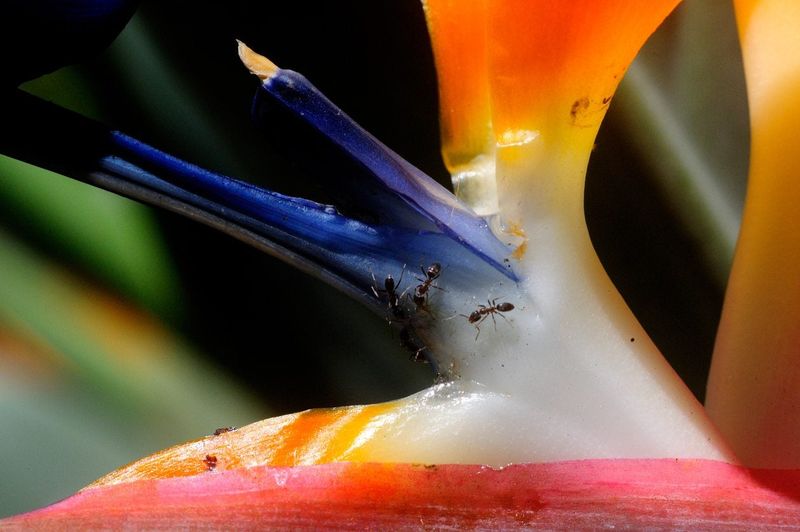
After the cleanup pass, work through the plant methodically looking for pest activity. Common problems on bird of paradise in Florida include scale insects, aphids, caterpillars, grasshoppers, and snails.
Check the undersides of leaves, the junctions where leaf stems meet the clump, and the surface of any developing flower bracts.
Pay particular attention to the flower bracts during late summer. UF/IFAS specifically flags that a leaf borer may attack flower bracts during August and September, which is exactly the window most Florida gardeners are in right now.
If you notice tunneling damage, discoloration, or small entry holes in a bract, that is a sign of borer activity worth investigating before it spreads to additional stems.
Keep this section focused on observation and sanitation. If you find a pest problem, identify it accurately before reaching for any treatment.
Misidentifying a pest and applying the wrong product can harm beneficial insects and will not solve the actual problem. When in doubt, bring a sample or photo to your local UF/IFAS Extension office for a reliable identification before acting.
Set realistic expectations for fall flowers
The title of this article promises bigger leaves and fall blooms, and that promise deserves an honest correction before you walk away with the wrong expectations. Fertilizer supports the overall health of an established plant, but it does not flip a switch that makes an immature or stressed plant bloom on a schedule you choose.
Plant maturity is one of the most important variables. UF/IFAS notes that seed-grown bird of paradise may take three to five years to produce its first flower, while plants that were recently divided may need one to two years to reach flowering maturity again.
If your plant is young or was recently divided or transplanted, no amount of fertilizer this season will move up that biological clock.
Bloom timing is also less predictable than the title implies. UF/IFAS describes orange bird of paradise as a plant that flowers periodically or intermittently through much of the year in Florida, while a separate UF/IFAS species database for Strelitzia reginae categorizes it primarily as a spring- and summer-flowering plant.
A fall bloom is genuinely possible under the right conditions, but it is not a reliable outcome of a late-summer feeding, and the sources do not support presenting it as one.
Some gardeners assume that dividing or thinning a congested clump will make the plant flower more freely. UF/IFAS guidance actually points the other direction, noting that bird of paradise may flower more freely when somewhat crowded and that established clumps are generally best left undisturbed.
If you are thinking about dividing your plant as a quick bloom strategy, set that plan aside. Division is best attempted in late spring or early summer, and newly divided sections will need time to re-establish before they flower reliably.
North Florida gardeners face an additional variable: cold. Freezing temperatures can damage developing buds and open flowers, which makes a fall-bloom expectation less certain for plants exposed to hard freezes later in the season.
If your plant is in a frost-prone location, winter protection becomes part of the flowering equation, not an afterthought.
The honest payoff of this season’s care is a healthier, better-supported plant that is well-positioned to flower when conditions align, and that is still a meaningful outcome worth working toward.
Use this conditional care checklist now
Run through these steps in order before doing anything to your plant. First, confirm the species.
If it is an established Strelitzia reginaeS. nicolai growing in the ground, this checklist applies. If it is or a container plant, get species-specific guidance before proceeding.
Second, check your feeding history. UF/IFAS recommends fertilizing about every three months during active growth, so only proceed if roughly that interval has passed.
Third, verify your local ordinance. Use the UF/IFAS fertilizer ordinance resources and confirm with local officials, because many Florida jurisdictions prohibit nitrogen- or phosphorus-containing fertilizer during summer blackout periods.
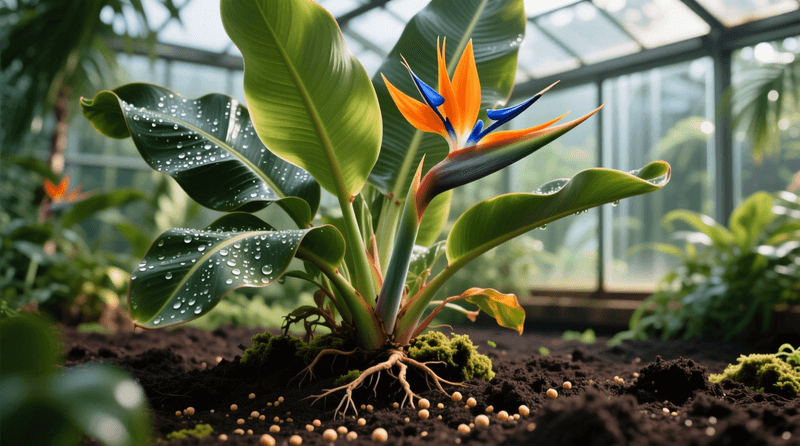
If both checks clear, apply an organic, granular landscape, or controlled-release fertilizer at the product-label rate only. Keep it off pavement, away from water, and never apply before a heavy rain event.
If either check does not clear, skip the fertilizer entirely and focus on consistent irrigation, a 2- to 3-inch mulch layer with a bare ring around the stems, appropriate light, a cleanup of dead leaves and old flower stalks, and a careful look for scale, aphids, caterpillars, and leaf-borer activity on the bracts.
These steps can support a healthy, established plant heading into fall, but no single late-summer intervention can guarantee bigger leaves or a bloom on demand. A well-tended bird of paradise earns its flowers over time, not in one season.