
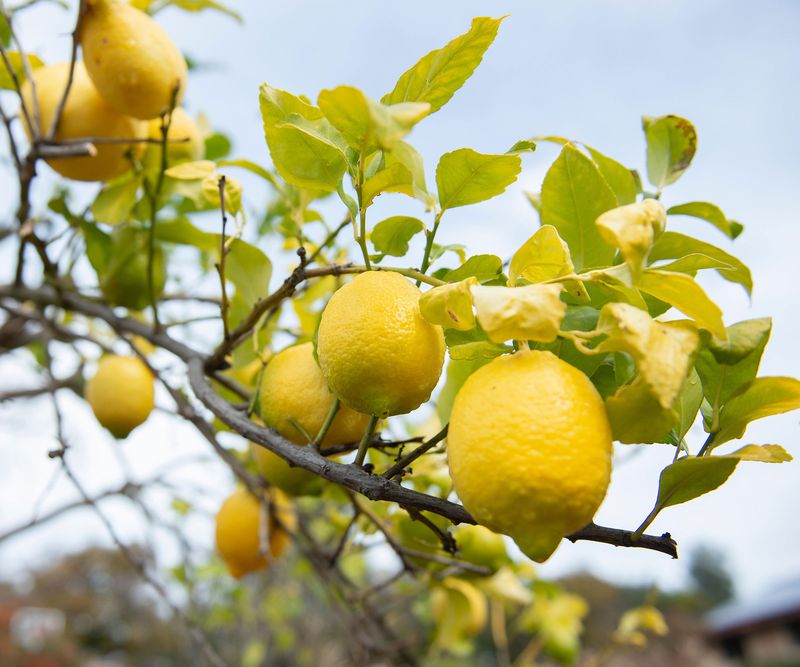
A lemon tree with yellow leaves in fall can make any California gardener reach for the fertilizer bag. But yellow is a color that many different problems share, and the wrong fix can waste money or even make things worse.
A few quick checks of the leaves, the soil, and the undersides of the foliage can point you toward the real cause. Here is how to read the clues before you change anything.
The pattern of yellowing matters more than the color alone
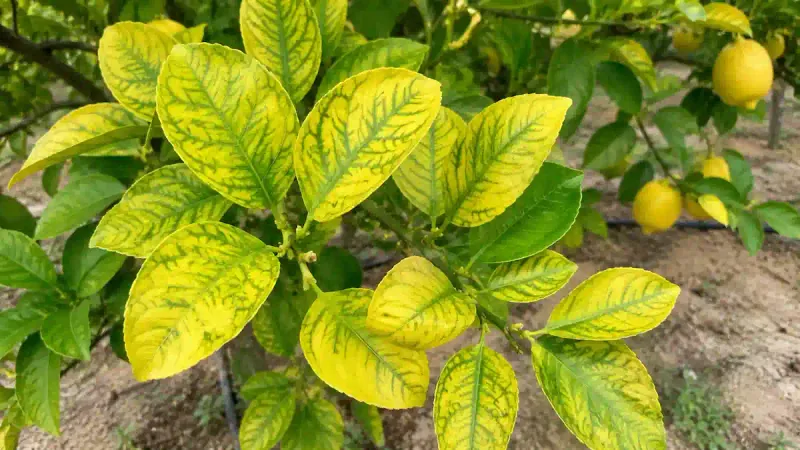
Start by standing back and looking at the whole tree. Are the yellow leaves mostly the older ones near the inside of the branches, or the tender new growth at the tips?
Is the yellowing spread evenly across the canopy, or limited to one limb? Is the tree also growing more slowly than usual?
Those three questions narrow the field. According to UC guidance on yellowing citrus leaves, low nitrogen, impaired nutrient uptake in cold or soggy soil, other nutrient problems, pests, and natural leaf turnover can all look alike at first glance.
Citrus does shed some older leaves as part of its normal cycle, so a few yellow leaves scattered here and there may be nothing to worry about.
Jot down what you see, or snap a few photos. Note which leaves are affected, whether the veins stay green, and whether the yellowing is even or patchy.
UC IPM also publishes a guide to identifying disorders of citrus leaves and twigs that is handy for comparing what you find.
Keep in mind that these observations are clues, not verdicts. Two different problems can produce nearly the same look, which is why a single response, especially a scoop of fertilizer, can miss the mark.
If the real trouble is in the roots or a pest on the leaf undersides, extra nitrogen will not touch it, and too much can create new problems of its own.
Think of this first look as gathering evidence. The next sections walk through the soil, the nutrient patterns, the pests, and one serious warning sign, so your notes have somewhere to land.
Check wet soil and root conditions before changing the watering routine
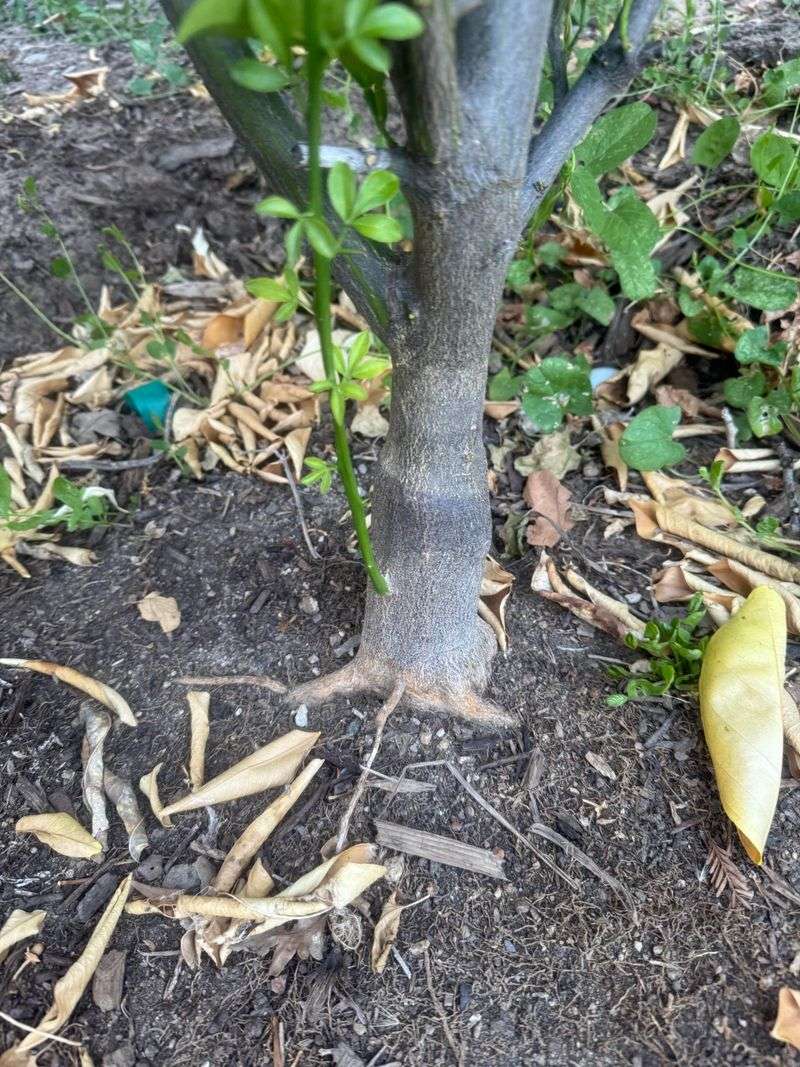
Before you water again, put a finger or a trowel into the soil under the tree’s canopy. For an established tree, UC Master Gardeners of Santa Clara County advise letting the top 3 to 6 inches dry out before watering.
If the soil is still damp at that depth, wait.
Rain deserves a careful look here. Fall rain on its own is not the problem.
It matters when the soil stays soggy for days or drains poorly, because UC IPM warns that overwatering can set citrus up for root and crown rot. After a storm, skip your usual irrigation if the root area is still wet.
Walk the area and look for standing water, compacted ground, or a spot where the tree sits lower than the surrounding soil. Those are signs of a drainage issue that fertilizer will never solve.
Fixing the irrigation schedule or improving drainage is the better move.
Cool soil can also play a part. As UC citrus growing guidance describes, cold and wet soil can limit how well roots take up nutrients, so leaves may yellow even when nutrients are present in the ground.
This is not the same as frost or freeze injury. Freeze damage depends on how cold it gets, how long, and the condition and variety of the tree, as outlined in UC IPM’s frost damage page.
There is no single temperature that proves cold roots are your culprit, so judge by the soil itself: wet, cool, and slow to drain is the combination to watch for.
Older-leaf yellowing and green-veined new growth point to different nutrient clues
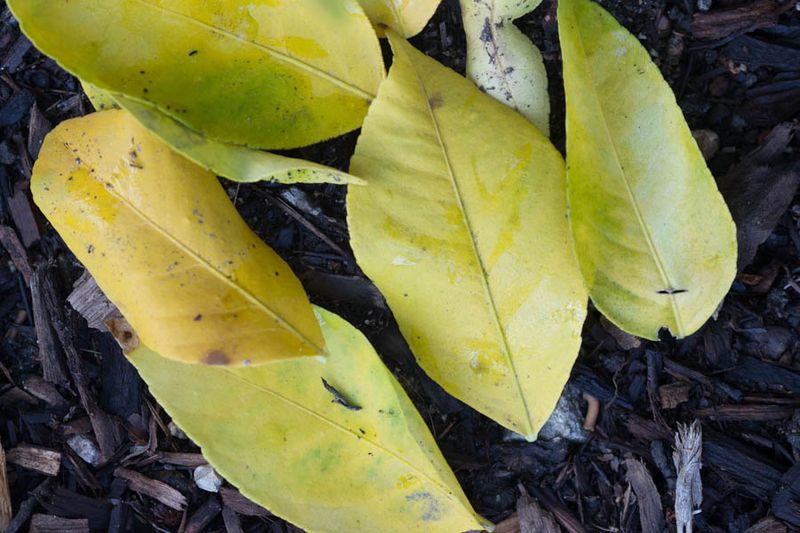
Two leaf patterns tell two different stories. When older leaves turn evenly pale or yellow and the tree grows slowly, that fits nitrogen deficiency better than yellowing limited to new leaves, as UC guidance on yellowing citrus explains.
Now look at the newest growth. If the tissue between the veins is yellow while the veins stay greener, the clue points toward iron, zinc, or manganese availability rather than a simple nitrogen shortage.
You can compare your leaves with the photos in UC IPM’s mineral deficiencies page.
Fall adds a twist. UC IPM notes in its guide to citrus leaf and twig disorders that iron-related yellowing can show up on young growth as soils cool and root activity slows.
That means a tree can look short of iron even when the soil holds some.
Here is the catch. These patterns are clues, not proof.
Unhealthy or waterlogged roots can create the same pale look as a true nitrogen shortage, because damaged roots cannot move nutrients up into the leaves.
A practical example: if your tree has pale older leaves but the soil under it has been wet for a week, check the roots and drainage first. If the soil is well drained and the pattern is clear, you have a stronger reason to think about nutrients.
Either way, a leaf pattern is a starting point for the next check, not the end of the investigation.
Stippling, webbing, and winding tunnels call for a pest check
Flip a few leaves over. Spider mites are tiny, so look for fine stippling, a bronzed or dusty look, and sometimes light webbing, especially on leaves that are stressed for water.
A hand lens or a white sheet of paper held under a tapped branch can help you spot them.
Confirm that mites are actually present before you treat. UC IPM’s spider mite page notes that natural enemies often keep mites in check, and broad-spectrum sprays can wipe out those helpful predators, which can make mite trouble worse.
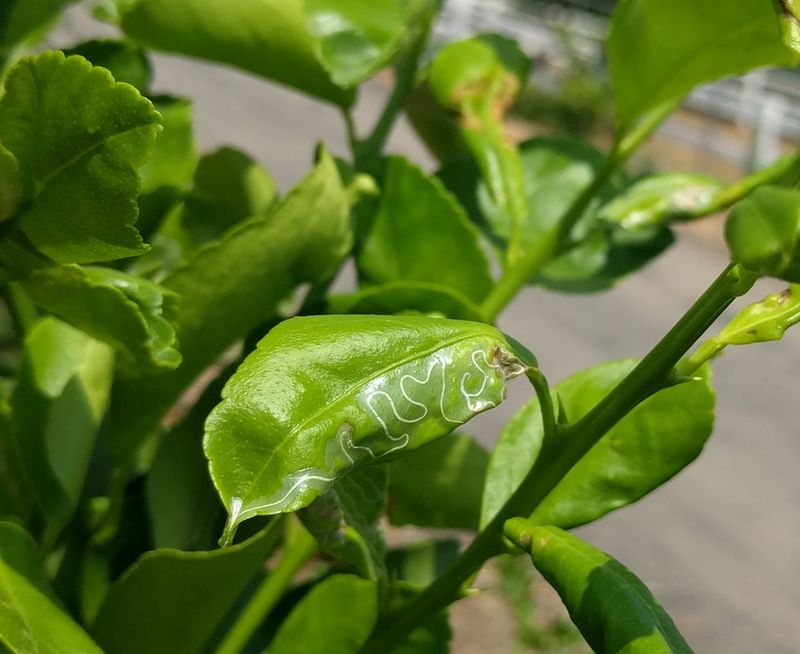
Winding, silvery tunnels in tender new leaves tell a different story. That is the work of the citrus leafminer, and it is not a nutrient problem.
The leaves may curl and look blotchy, which can fool a quick glance. According to UC IPM’s citrus leafminer guidance, even heavy damage to new flush on mature citrus often does not call for insecticide.
That is good news for backyard trees. You can usually let a mature lemon outgrow leafminer damage, and skipping the spray protects the bees and beneficial insects that visit your yard.
If you do decide a pest product is needed, read UC IPM’s overview of pesticides first. Choose a product labeled for the specific pest and for citrus, and follow the label closely.
Routine spraying for yellow leaves is not a diagnosis, and it rarely solves the real problem.
Blotchy yellowing on one side of the tree deserves special attention
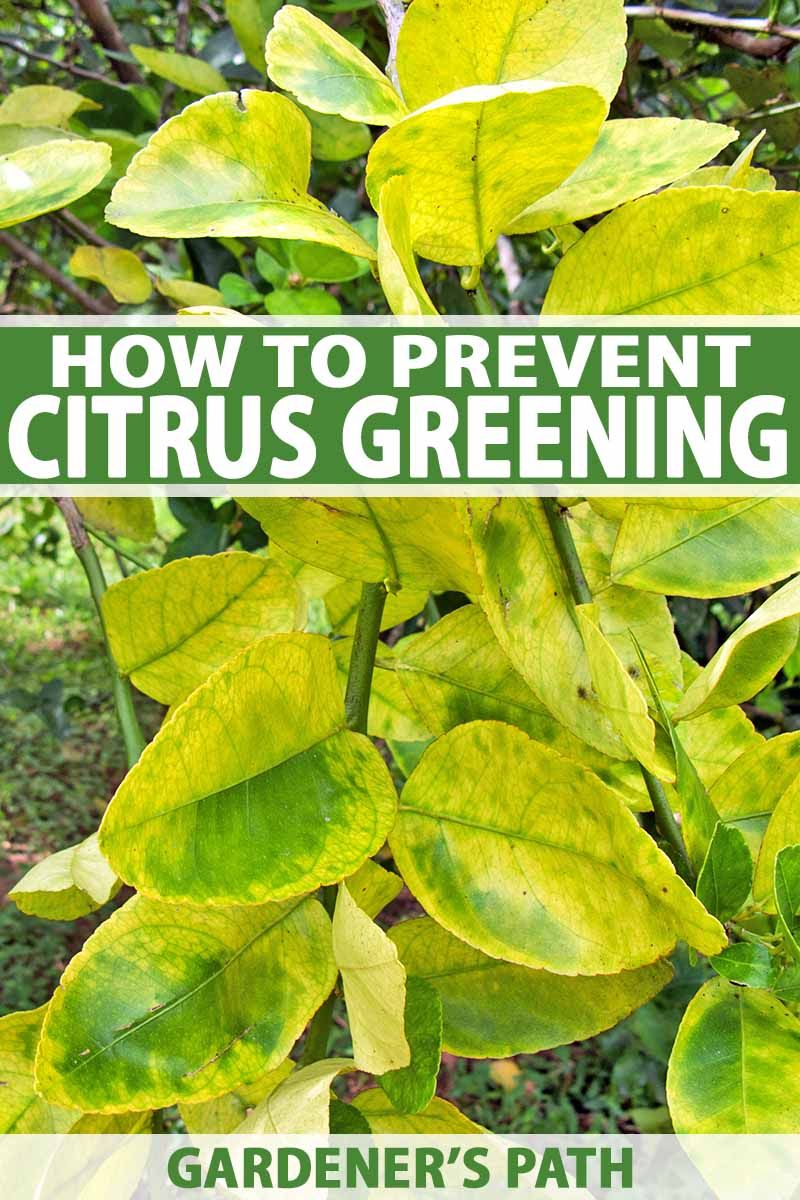
Most nutrient problems show up fairly evenly, with similar leaves on both sides of the tree looking alike. A different pattern is worth pausing over: a yellow patch on one limb or one section of the canopy, with blotchy mottling that crosses the leaf veins and looks lopsided from leaf to leaf.
That kind of asymmetrical pattern is one possible sign of huanglongbing, also called HLB or citrus greening. UC IPM’s page on the Asian citrus psyllid and HLB describes the disease and the insect that spreads it.
To be clear, leaf color alone cannot confirm HLB, and a homeowner cannot diagnose it by eye. Other problems can cause blotchy leaves too.
The point is that this pattern is a reason to ask for expert help rather than to guess with fertilizer or a spray.
Other signs strengthen the case for getting guidance. Fruit that looks suspicious, or twigs that die back steadily over time, are both worth mentioning.
The California Department of Food and Agriculture’s HLB page is a good place to learn how the state handles the disease and its quarantine areas.
If your tree fits this description, take clear photos of the affected limb and the leaves, and contact official citrus pest resources in your county or state. Avoid moving cuttings or fruit from the tree in the meantime.
Careful reporting protects your tree and the citrus growing in neighboring yards.
Correct the likely cause before reaching for fertilizer or a spray
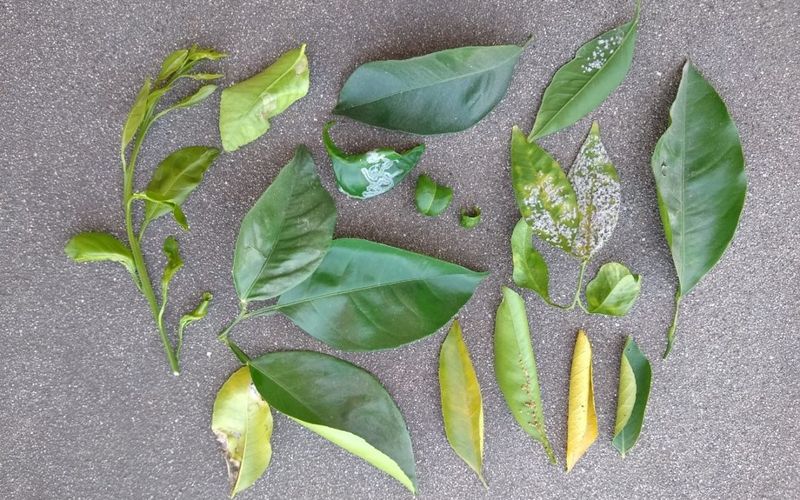
Once you have your clues, work in a sensible order. First, check moisture and drainage, and adjust irrigation or fix a soggy spot.
Second, compare old and new leaves and match the pattern to what you read above. Third, inspect leaf undersides and new growth for pests.
Only then decide whether any product makes sense.
Fertilizer cannot repair roots that are waterlogged or damaged. UC guidance on yellowing leaves warns that overfertilizing can create additional problems, so a quick nitrogen dose is a poor way to test a guess.
Timing advice is not one-size-fits-all, either. UC IPM’s citrus fertilizing page recommends main nitrogen applications before bloom and cautions against late-season feeding, while noting that organic materials such as manure or blood meal may go on in fall.
Another UC source says lemons may receive nitrogen at any time. With that range of advice, no single fall schedule fits every tree.
If a pattern points to a micronutrient, the UC IPM mineral deficiency guide is a better next read than the fertilizer aisle.
If pests are confirmed and you are weighing a product, choose one labeled for your plant and the specific pest, and follow the label, as UC IPM’s pesticide basics advise.
Oils need extra caution. UC IPM explains that oils can injure foliage in unsuitable conditions, including temperature extremes or a stressed tree.
Do not expect a fast return to green, since fixing the underlying condition takes time.
A short check now can prevent the wrong fix
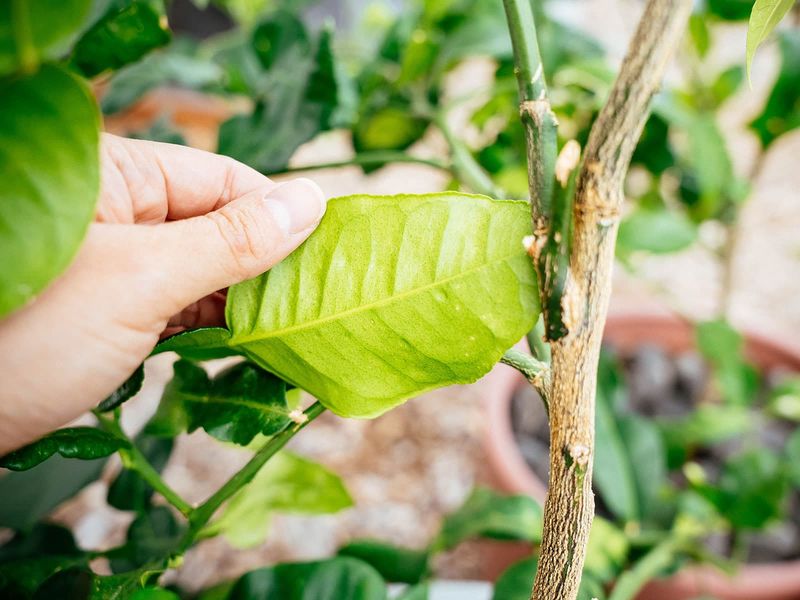
Keep this checklist by the tree. Read the leaf pattern on old and new growth.
Test the soil moisture and look at UC IPM’s watering guidance if drainage is a concern. Turn over a few leaves to check for pests.
If you see lopsided, blotchy yellowing on one part of the canopy, contact official sources like those listed in UC IPM’s HLB information.
Fixing the underlying condition matters more than expecting an instant color change, and the UC overview of yellowing citrus backs that patient approach.
A yellow leaf is a message, and it rewards the gardener who reads it before acting.