

A heaved driveway slab or a sewer backup with roots in the pipe can leave you staring at a big repair bill and a neighbor’s tree. It is tempting to blame the tree and send the invoice next door.
California law is not that simple, and a quick accusation can make things harder. Knowing how responsibility gets sorted out can help you stay calm and protect your wallet.
A tree’s owner is not automatically the repair payer
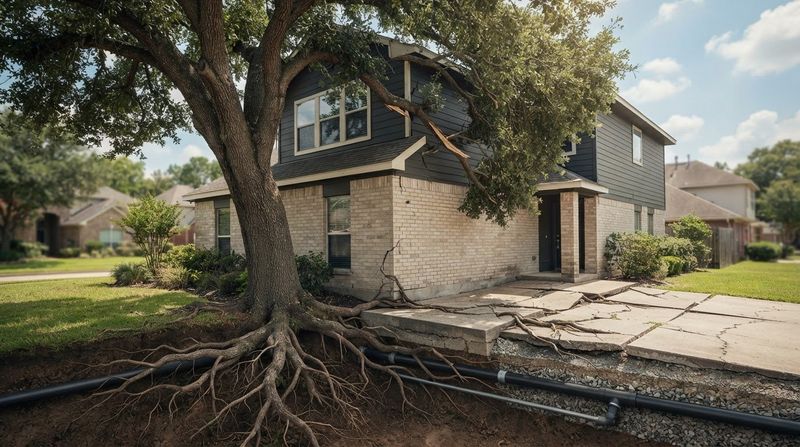
Plenty of homeowners assume the rule is simple: the tree belongs to the neighbor, so the neighbor pays. Others assume the opposite, that damage on your land is your problem no matter where the roots came from.
California has no automatic rule that sends every root-damage bill to one side or the other.
What usually matters is the type of claim being made and the facts behind it. A person whose property is harmed by encroaching roots may be able to seek money for the harm, or ask for the problem to be stopped, which the law calls nuisance abatement.
Those are possible legal routes, not guaranteed outcomes.
Courts look at specific elements. California’s private-nuisance jury instruction lists things like substantial interference, actual harm, and a substantial-factor link between the conduct and that harm.
In plain terms, you would need to show that the roots really did cause the damage you are describing, and that the damage is real.
The Judicial Council also notes in its private-nuisance commentary that courts have treated some tree-root situations in their own way. That is another reason a one-line rule will not fit every yard.
So the practical approach is to slow down and sort out facts first. Figure out what was damaged, what actually caused it, who maintains it under local rules, and what records you have.
The next sections walk through each of those steps before anyone is confronted or paid.
Identify the tree and the property at issue
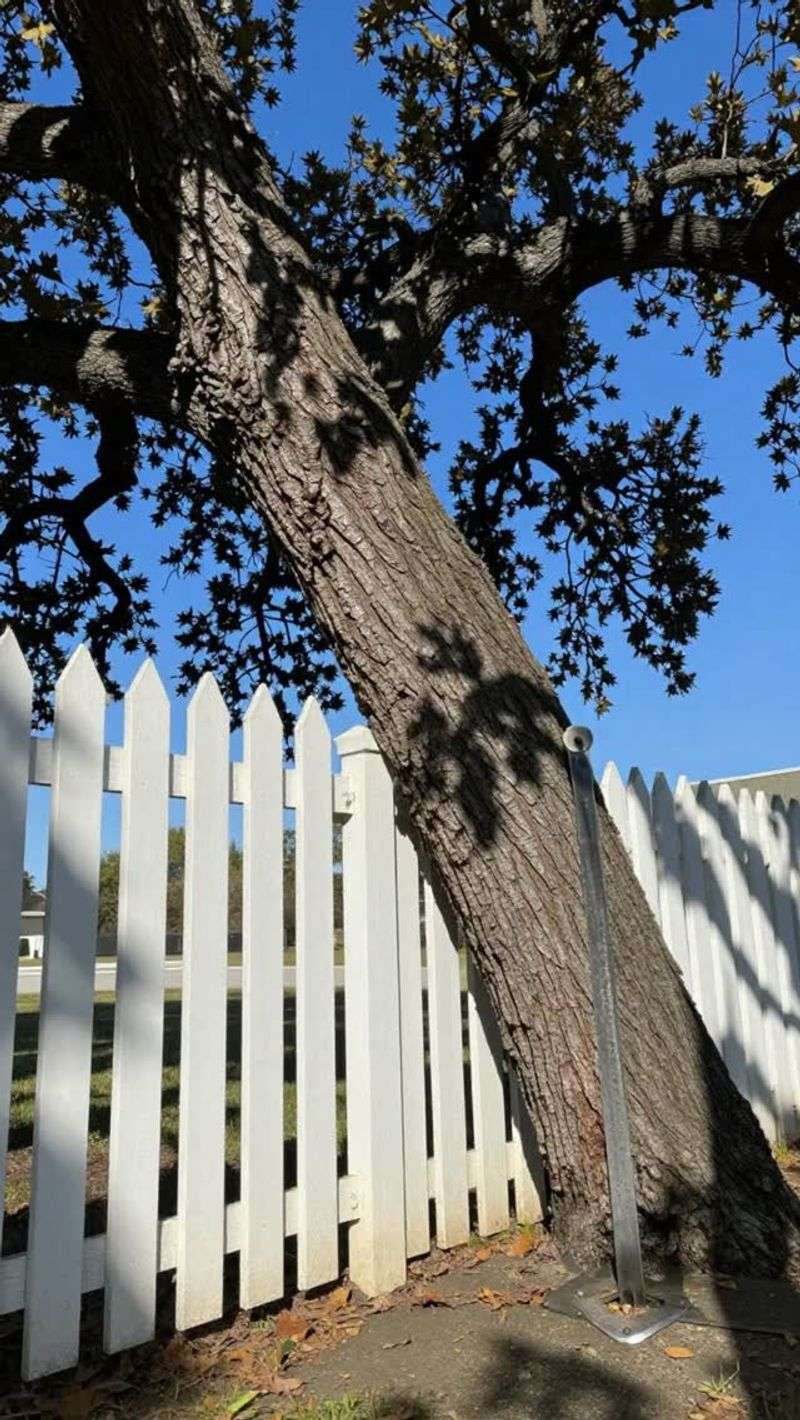
Start by working out whose tree it is. Under Civil Code section 833, a tree whose trunk stands wholly on one owner’s land belongs to that owner, even if its roots wander across the boundary.
If the trunk sits partly on both properties, section 834 says the neighbors hold it in common.
Those two rules answer an ownership question. They do not say who must pay for every repair.
Knowing who owns the trunk is one piece of the puzzle, not the final answer.
Next, name the thing that was damaged. A driveway, a private sewer lateral, a public sewer main, and a public sidewalk can each have different owners and different maintenance rules.
A cracked slab on your lot is a very different situation from a clogged pipe under the street.
Trees on public land add another layer. A city-owned tree is not necessarily governed by the same rules as a neighbor’s backyard oak, and sidewalk repair duties often depend on local policy.
UC’s guide to tree disputes and a city page such as San Mateo’s tree-root damage information show how local approaches can differ.
Treat identifying the affected property as its own step. Sketch the lot lines, note where the trunk stands, and mark the damaged area.
That map will make every later conversation clearer.
Roots in a sewer line do not prove what broke it
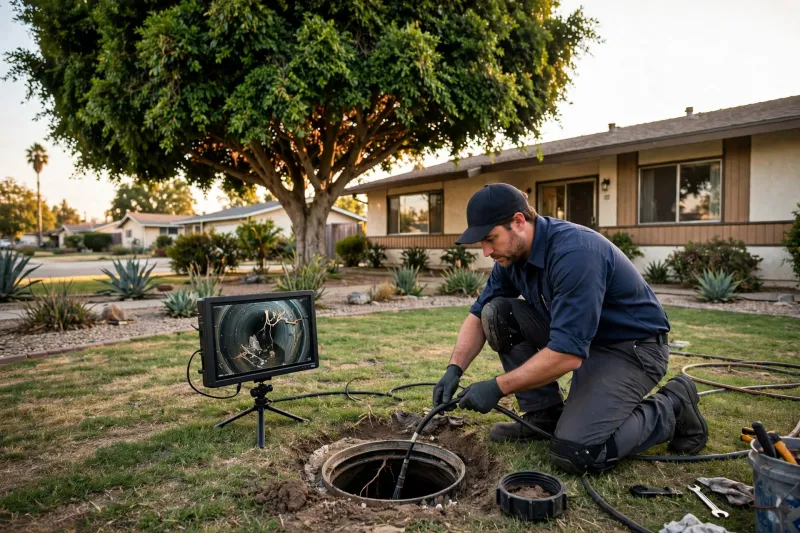
A plumber’s camera shows a tangle of roots inside your sewer pipe. It feels like a clear answer, but it is not.
Seeing roots in a line tells you roots are there, not what opened the door for them.
Municipal guidance points the same way. Riverside’s guidance on tree roots and sewer lines explains that roots commonly enter through a leak, crack, misalignment, or joint.
Its policy treats those cases differently from roots that themselves misalign, crush, or break a pipe. Burbank’s sewer lateral FAQ likewise says roots generally get in at an open joint or crack.
These are local examples, not statewide rules.
That is why the pipe’s condition matters. An older line with loose joints may have been vulnerable long before the roots arrived.
A pipe that was sound but got crushed or shifted by a growing root tells a different story.
Ask a plumber for a camera inspection and a written explanation of what they see: where the roots entered, whether the pipe was cracked or offset, and what the pipe material and age look like. Ask them directly whether the roots appear to be the cause or a result of an existing opening.
This matters legally, too. In a possible nuisance claim, the jury instruction’s harm and causation elements are the heart of the matter.
Good inspection findings can help show what really happened, while guesses rarely do.
Local sewer rules can change who maintains the line
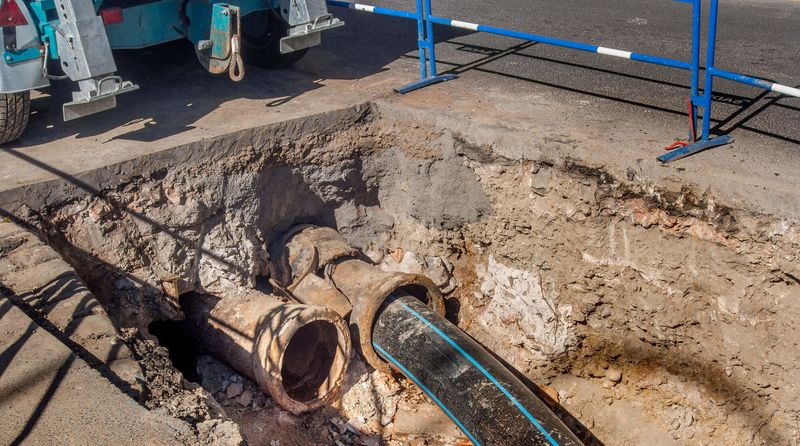
Who looks after the pipe between your house and the main sewer depends heavily on where you live. California has no single statewide answer, so your city or sanitation district sets much of the picture.
Los Angeles shows one approach. The city’s sanitation program generally treats property owners as responsible for their entire sewer lateral.
Riverside is different. Under its private lateral policy, the city maintains some lower portions of laterals.
Both are local policies, and neither one is a statewide rule.
Because of that, the spot where the problem sits may not settle the question. A blockage under the street does not automatically mean the city is responsible.
Call your city public works office or sanitation district and ask which part of the lateral you maintain, and whether any reimbursement or repair program applies.
Keep one more distinction in mind. A utility’s rule about who maintains a pipe is about maintenance.
It does not necessarily decide a separate claim that a neighbor’s tree caused damage. You might be responsible for fixing your lateral under local rules and still wonder whether you have grounds to raise the cause with the tree owner.
Write down who you spoke with, the date, and what they said, and ask for the policy in writing or a link to the official page.
Cutting encroaching roots can create another problem
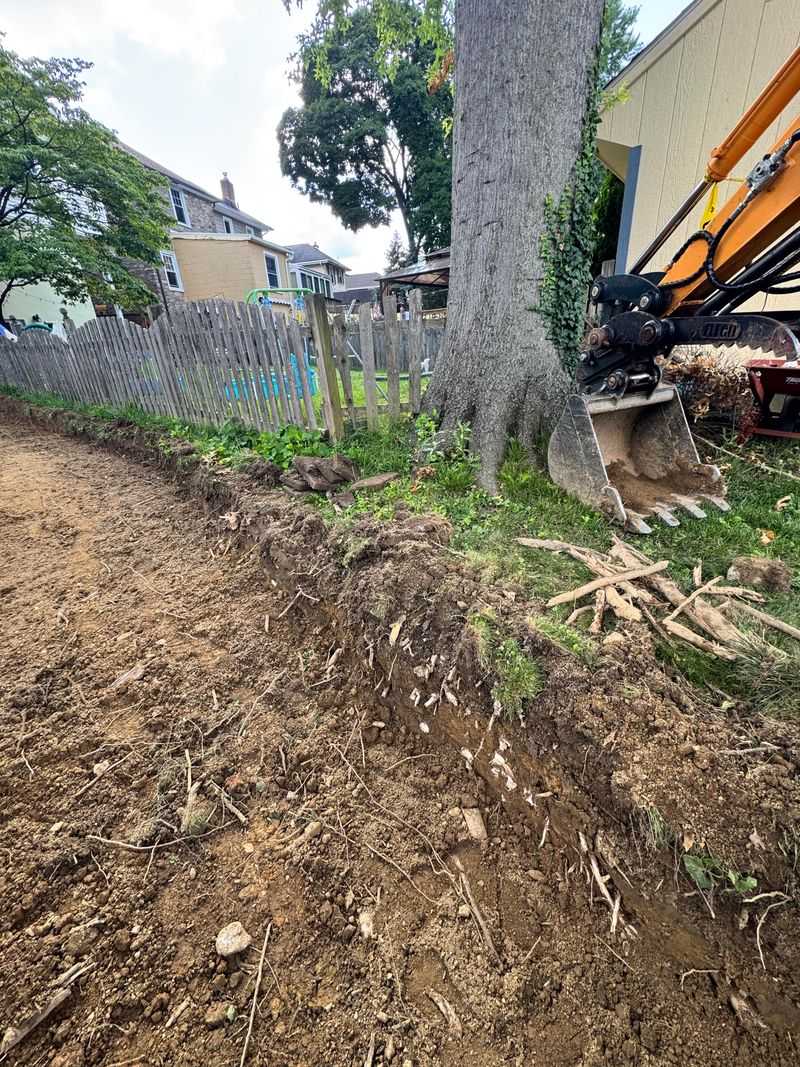
When roots cross onto your land, it is natural to grab a saw. California cases do recognize that a neighboring owner may remove encroaching portions on their own side, and Bonde v.
Bishop discusses that kind of self-help alongside nuisance and damages remedies.
That right has limits, though. In Booska v.
Patel, the Court of Appeal rejected an absolute privilege to cut roots without regard to foreseeable harm to the tree owner’s property. If a cut weakens the tree and it later falls, you could face a new dispute.
There is a plant-health side as well. UC’s Integrated Pest Management program warns that cutting or injuring large roots can make a tree more likely to fall, especially in wet soil, and advises avoiding cuts to roots larger than about two inches.
That does not mean every root must be left alone, or that every root should go. Thin roots poking into a planting bed are a different matter from a thick structural root near the trunk.
Before digging or severing anything significant, talk with a qualified arborist. Ask what size root is involved, how close it is to the trunk, and what the tree’s condition looks like.
Photograph the roots before any work, and consider telling the neighbor what you plan to do.
Build the record before repairs erase the evidence
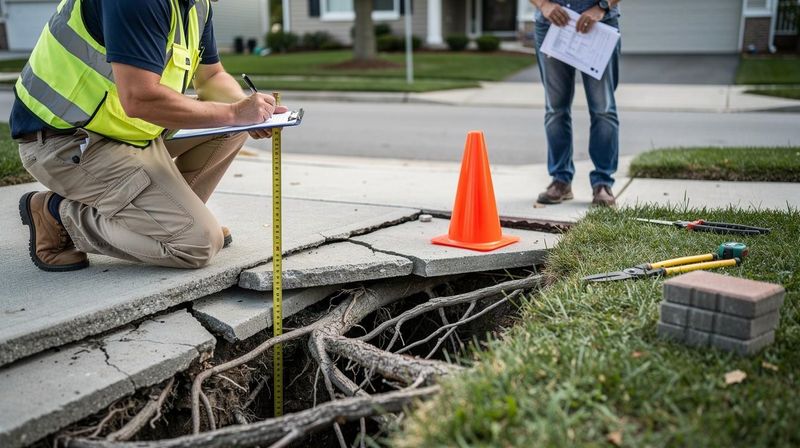
Once a contractor breaks up a slab or a plumber replaces a pipe, the original evidence is gone. If you can, create a record first.
Repairs may be urgent, especially with a sewer backup, so do what is feasible without delaying necessary safety work.
Photograph the damage from several angles, including wide shots that show the tree’s location and close-ups of cracks, lifted edges, and exposed roots. A tape measure or coin in the frame helps show scale.
Date-stamped photos are a bonus.
Keep the plumber’s camera inspection video and ask for written findings that describe the pipe’s condition. Save every estimate, invoice, and receipt, including smaller costs like drain cleaning.
Hold on to emails, texts, and letters exchanged with the neighbor, the city, or contractors.
California Courts, in its guidance on starting a small-claims case, lists photos, repair receipts, emails, and business records as examples of evidence. That is a helpful reminder of what ordinary paperwork can do.
Records like these can clarify cause, cost, and who said what if neighbors later disagree about responsibility. No single item proves a claim by itself, and a case can turn on many facts.
Think of the file as a tool for a clear conversation, whether that happens over the fence, with an insurer, or in court.
Decide what to do after you know what failed
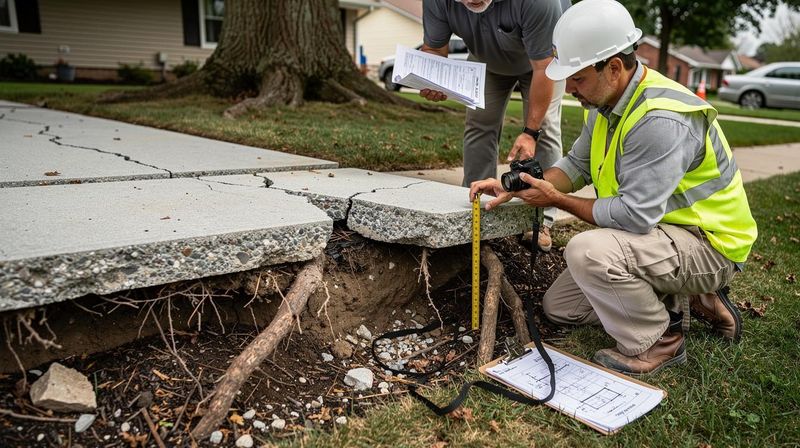
Work in order. First, identify the damaged item and check your city or sanitation district’s rules for who maintains it.
Second, get a professional account of what caused the damage. Third, preserve photos, reports, invoices, and messages.
Fourth, hold off on cutting large roots until an arborist weighs in.
These steps help you judge possible responsibility, but they cannot decide how a particular dispute turns out. Facts, local rules, and the claim itself all matter.
Roots show up where the ground lets them in, and so do arguments.