
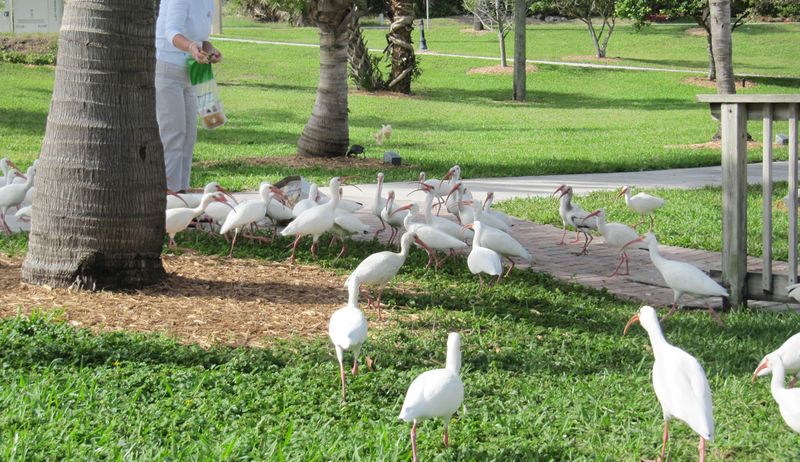
You look out after a storm and there they are: curved orange bills poking into your soggy grass. White ibis are common Florida birds, and their lawn visits can leave homeowners wondering if something is wrong underfoot.
The answer is more modest than most lawn lore suggests, and it tells you what to look for and what to ignore. Here is what the birds may be after and how to judge your own turf calmly.
Rain can make some prey easier to reach
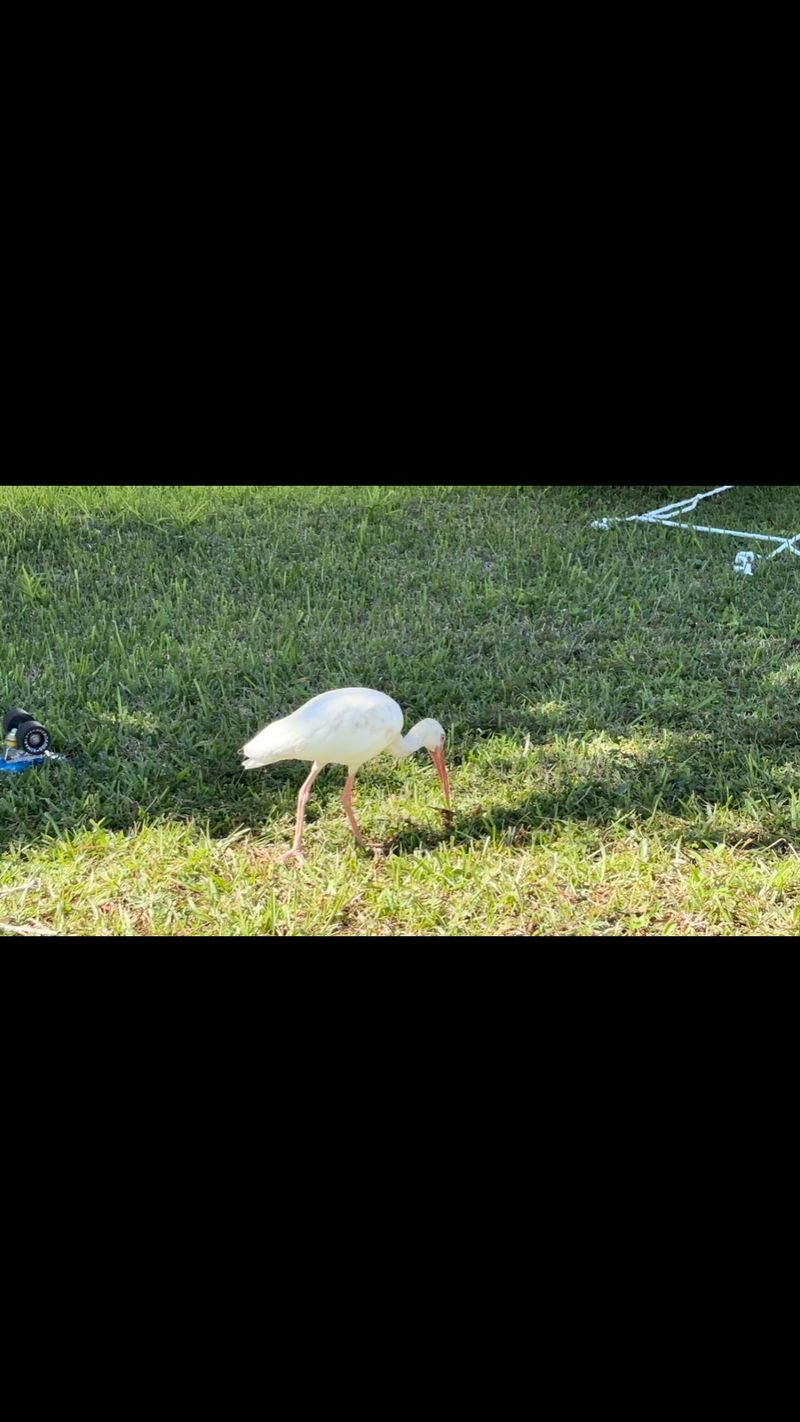
Damp ground changes what is reachable for a bird that feeds by probing. Soft, wet soil is easier for a long bill to push into, and some soil animals move closer to the surface when the ground is soaked.
That makes rain a plausible reason for a lawn visit, though it is not a confirmed cause for any particular bird in any particular yard.
Some real evidence points in this direction. A 1975 study of white ibis diets in southern Florida described worms brought to the surface by rainfall and ibis taking worms among plant roots or after rain.
It was a regional look at what the birds ate and where, not a modern controlled test of lawn visits after storms. It cannot tell us that ibis arrive right after every rain.
A separate line of research comes from Sydney, Australia. A controlled study of Australian white ibis found more earthworms available and eaten in wet weather.
That is a different species on a different continent, so it only supports the general idea that rain can shape foraging. It does not prove that Florida’s American white ibis behave the same way.
You may have heard that worms surface because they are drowning. That explanation is too definite.
The National Institute of Environmental Health Sciences describes worms moving across wet ground, and the reasons for surfacing can vary.
What an ibis might find in the grass
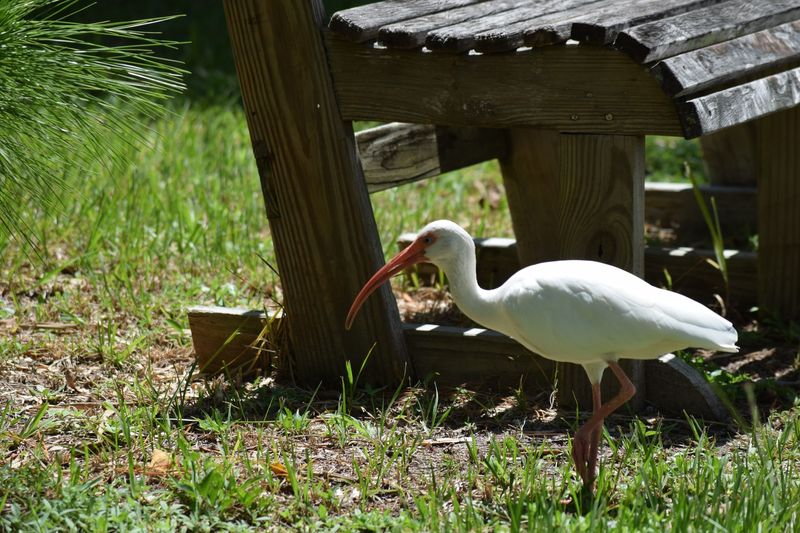
Picture the ibis bill as a built-in probe. The long, downward-curved shape slides into soft ground and lets the bird feel for food it cannot see.
Ibis also forage in lawns and parks, especially in southern Florida, so a bird working your yard is doing something ordinary for the species.
The menu is wide. The Florida Fish and Wildlife Conservation Commission lists insects, frogs, fish, crayfish, and crabs among their main foods.
The Cornell Lab of Ornithology adds that they pull earthworms from soft ground. Kushlan’s Florida diet paper also recorded earthworms taken from pastures, which fits the picture of a bird that will take what the soil offers.
So earthworms and other small soil animals are reasonable possibilities. Possibilities are as far as it goes, though.
From your patio, a bird with its bill in the turf looks the same whether it just swallowed a worm, a cricket, or nothing at all.
Unless you actually see the prey in the bill, treat the menu as unknown. Watching for a few minutes can be fun, and you may catch a glimpse of a pale worm, but a guess about the meal is still a guess.
Earthworms are not white grubs
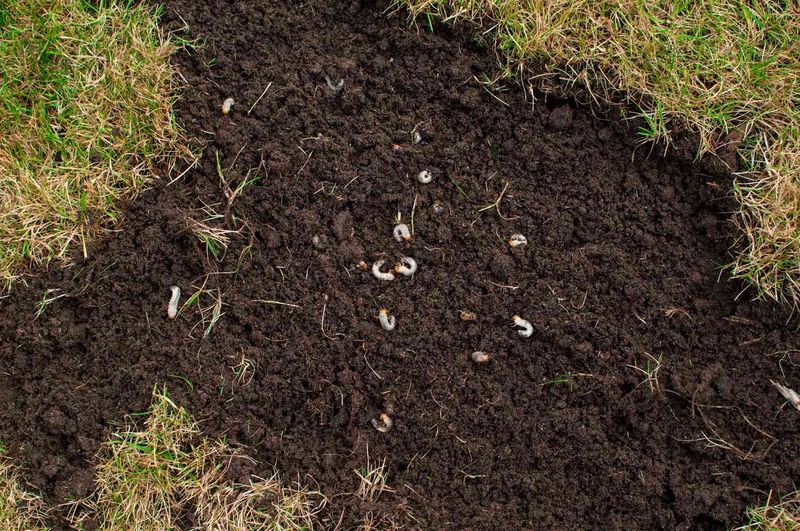
Two soil animals often get lumped together, and they are quite different. Earthworms are long, segmented worms that move through soil and eat decaying matter.
White grubs are the plump, C-shaped larvae of scarab beetles, and they feed on turfgrass roots.
That difference matters for how you read a bird sighting. According to UF/IFAS Gardening Solutions, white grubs are only a sporadic turf problem in Florida.
A lawn can host plenty of earthworms with no grub trouble at all.
If an ibis is probing your yard after rain, the likeliest targets mentioned in the research are earthworms and other soil invertebrates. That does not mean the bird found grubs, and it does not mean your lawn has a damaging grub population.
Without seeing the prey, nobody can say what was eaten.
Think of the bird as a curious visitor, not an inspector. It tells you the ground is soft enough to probe and that something edible may be in it.
Whether that something is a worm, a beetle larva, or a cricket is a question the bird cannot answer for you.
An ibis visit is not a lawn or soil test
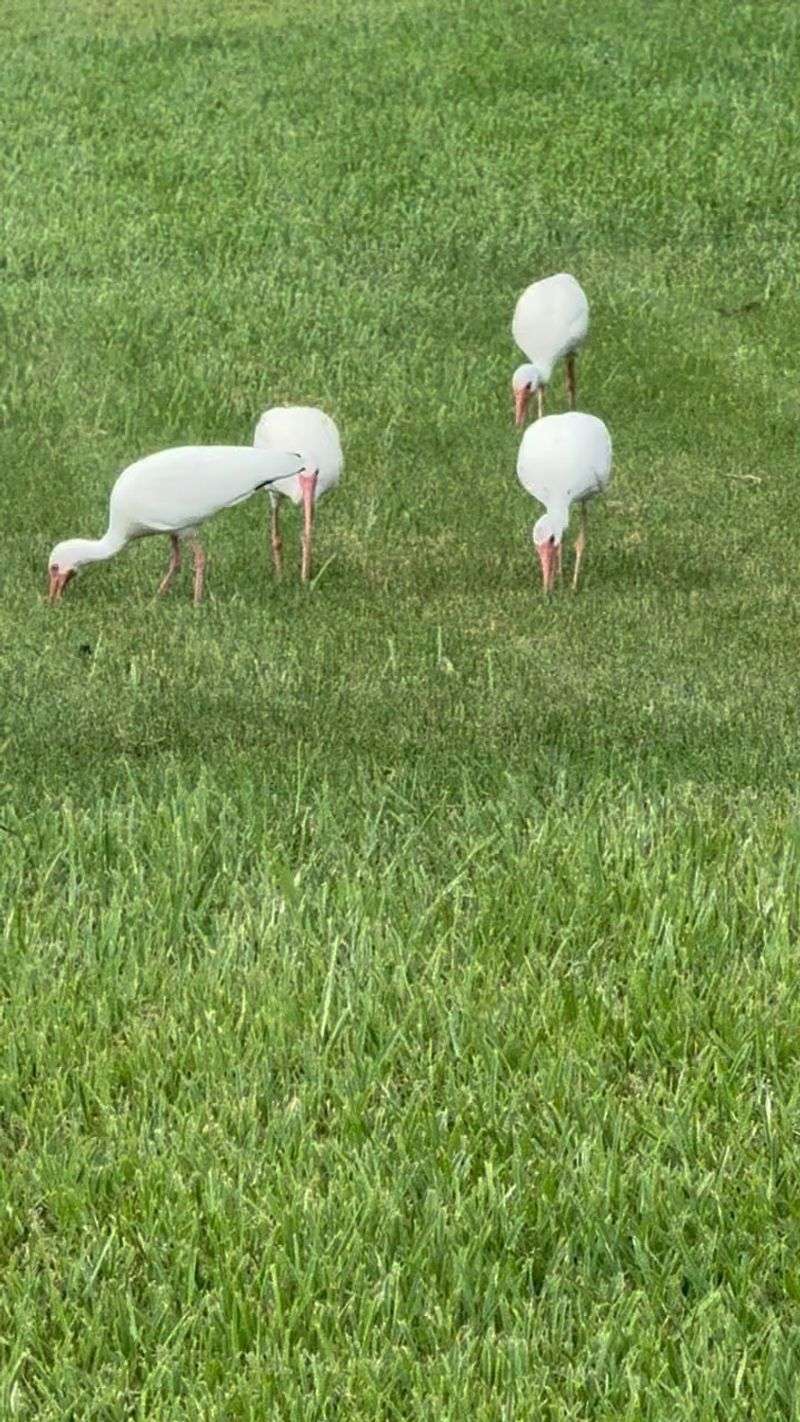
It is tempting to read a flock of ibis as a report card. Some people hear that birds mean healthy soil, others that they mean pests.
Neither conclusion holds up, because a visit shows only that birds found your lawn worth probing.
Earthworms do real work. The USDA Natural Resources Conservation Service notes that they help build soil structure and cycle nutrients.
Even so, seeing earthworms, or birds hunting them, is not a stand-alone measure of soil condition. Florida’s sandy soils, drainage, and organic matter all play a part that a bird cannot summarize.
The same limit applies to pests. A bird cannot confirm that grubs are present, and it does not prove the birds are clearing pests out of your yard.
UF/IFAS points out in its white grub guidance that grub symptoms can look like other turf problems, so a diagnosis needs a closer look at the grass itself.
For a real soil check, rely on the grass and the ground, not the wildlife. If the lawn looks green and firm, a few ibis on a wet afternoon are just a bit of backyard entertainment.
Inspect damaged turf before considering treatment
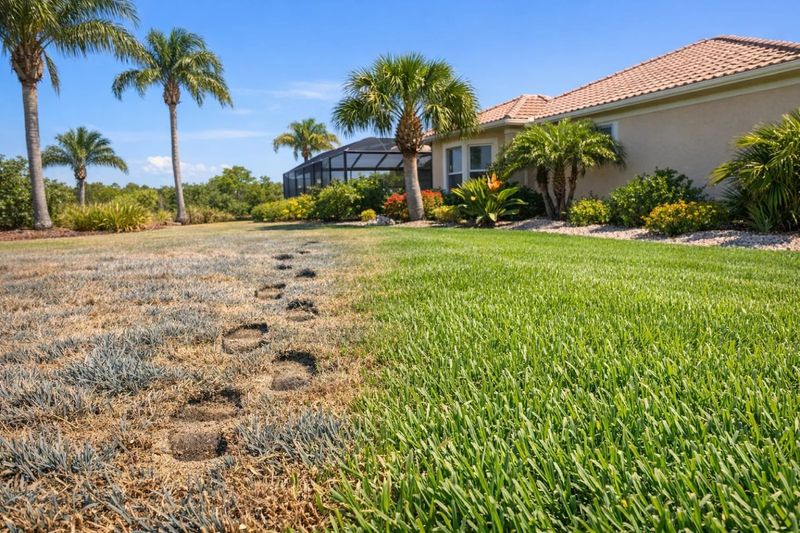
Act only when the lawn itself shows trouble. Look for discolored patches or turf that lifts easily, almost like loose carpet.
If the grass looks healthy, there is nothing to check, no matter how many birds stopped by.
When damage is visible, UF/IFAS describes a simple test in its white grub guide. Cut around three sides of a roughly one-foot-square piece of sod, about two inches deep.
Then lift the flap like a page and inspect the underside.
Look for missing or chewed roots and for grubs in the soil. A few grubs are not automatically a crisis, and finding none is useful information too.
Check more than one spot along the edge of the damaged area, since problems often show up where healthy and unhealthy turf meet.
Yellowing alone does not confirm grubs. Drought stress, disease, nutrient problems, and other pests can look similar, which is why the flap check matters.
Put the sod back, water it, and keep notes or photos of what you saw.
Before choosing any treatment, call your county Extension office. They can identify what you found and give advice that fits your grass and your location.
Skip preventive insecticide because of bird activity, since the birds alone give you no reason to treat.
Let the ibis forage undisturbed
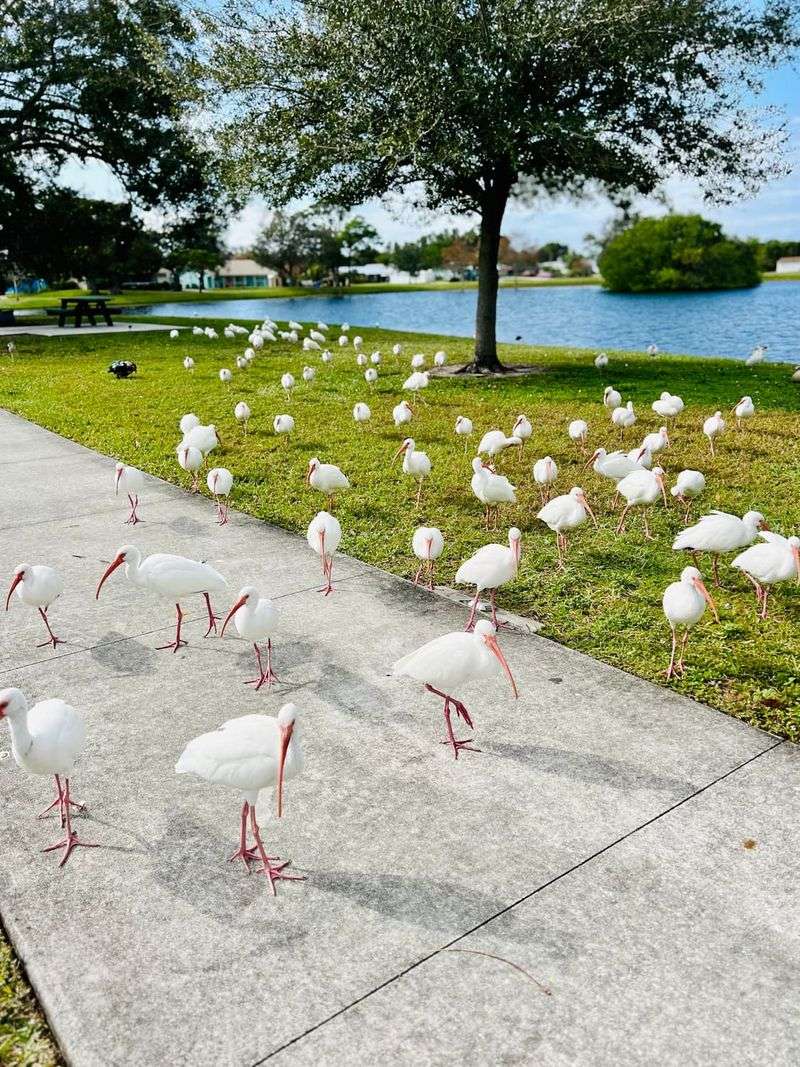
Here is the calibrated takeaway. Rain may make some prey easier for ibis to find, but a visit does not diagnose grubs or measure your soil.
You only need to act if you see actual lawn damage, and then the sod flap check and your county Extension office are the next steps.
The best way to enjoy the birds is from a distance. The Florida Fish and Wildlife Conservation Commission advises against feeding wildlife, and that includes tossing out bread or scraps for ibis.
Chasing or crowding them is no better, since it pulls them away from the very foraging you came to watch.
White ibis also have legal protection. FWC’s white ibis profile identifies them as protected under federal and Florida rules, and the Migratory Bird Treaty Act is the federal law involved.
Next time the clouds clear and the bills start probing, grab a chair and watch. The lawn does not need fixing, and the show is free.