
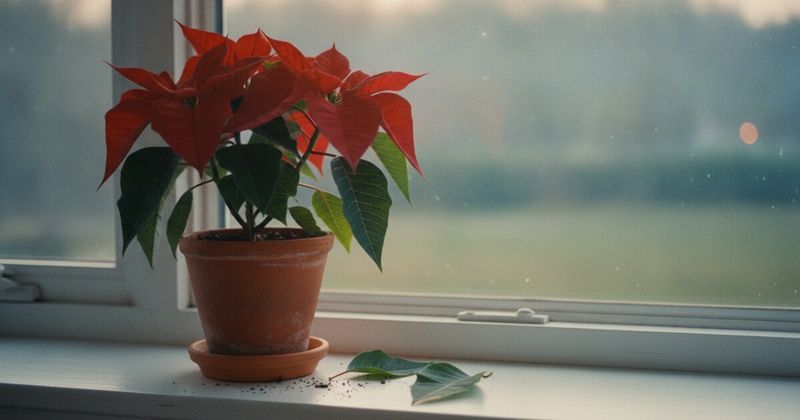
You carried a gorgeous poinsettia home, and a few days later there are leaves and colored bracts on the floor. It feels alarming, but it is a common problem, and there are steps you can take today to reduce further loss.
Cold air is one real suspect, though it is not the only one. Here is how to sort out what may be going on and what to do about it.
Leaf drop has several possible causes
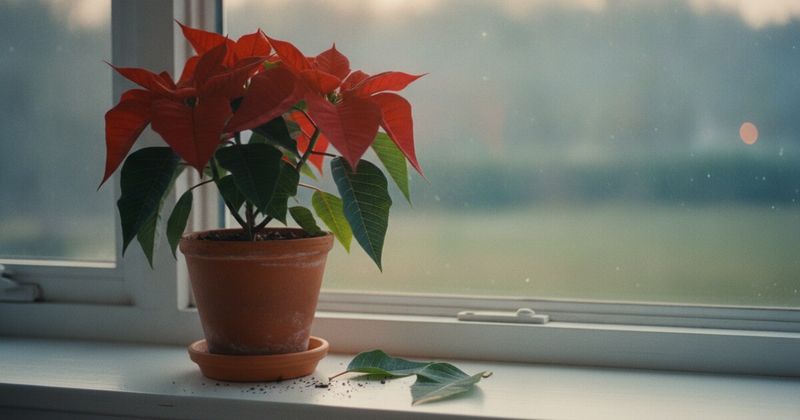
Finding leaves on the floor under a new poinsettia is unsettling, but the symptom alone does not point to one cause. Cold exposure is possible.
So are drying out, overwatering, poor drainage, heat, sudden temperature swings, and too little light, according to University of Minnesota Extension.
Here is a detail that helps when you look closely. The bright red, pink, or white parts are not petals.
They are bracts, which are modified leaves, and the real flowers are the tiny yellow clusters in the center. That means a plant can lose green leaves, colored bracts, or both, and each clue helps narrow things down.
Instead of guessing that a draft did it, take a quick tour of the plant’s conditions. Feel the soil, lift the pot to judge its weight, check whether water is sitting in foil or a saucer, and notice how much light it gets.
Advice from Mississippi State University Extension also stresses steady, appropriate care, so those checks are the best place to start.
Cold exposure may have happened before you got home
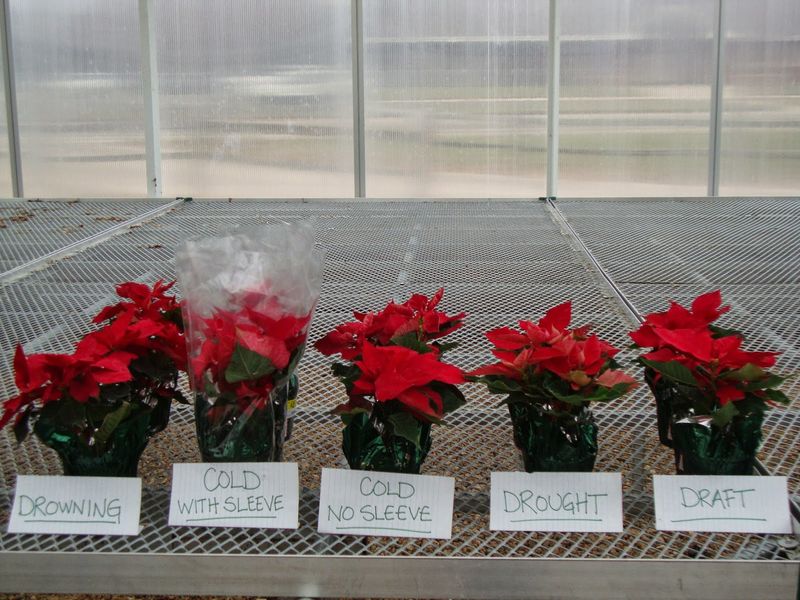
Cold is a believable culprit when leaves or bracts drop soon after you buy a plant. Still, timing alone cannot prove the cause.
The plant may have been chilled in transit, in a store entryway, or in the car, long before it reached your living room.
A home draft is a different situation from a cold trip. A plant beside a leaky window or exterior door can get repeated chills over days, while a bad ride home is a single event.
North Carolina State Extension notes that cold injury can discolor bracts as well as contribute to leaf loss, so look for dull or off-color bracts too.
Research shows how much handling matters. In a simulated-shipping study, two cultivars responded differently, and both cold and warm storage caused problems.
That does not diagnose your plant, but it shows that conditions before purchase can leave a mark.
Move it to a steady, draft-free spot
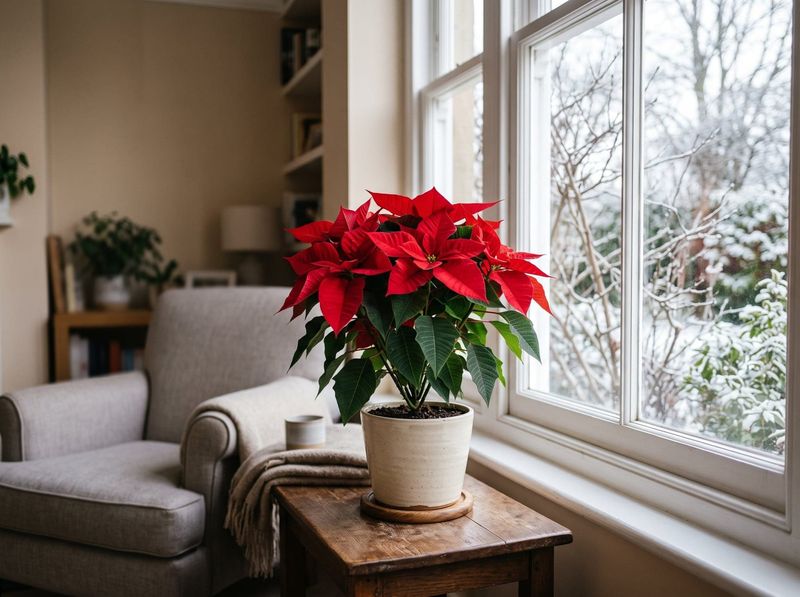
Once you suspect cold stress, the quickest response is to relocate the plant. Move it away from drafty doors, cold windowpanes, heating vents, and fireplaces.
A steady room with bright, indirect light is the goal.
Many guides suggest daytime temperatures around 65 to 70°F, as University of Minnesota Extension does. Treat that as general guidance, because recommendations vary a bit.
Cold-risk numbers differ too: North Carolina State Extension points to trouble below roughly 50°F, while Illinois Extension advice leans toward keeping the plant comfortably warm.
Those figures are risk thresholds, not a promise that any brief dip causes instant leaf drop. Damage depends on how cold it got, how long, and the plant itself.
Moving the pot can reduce further stress, but it will not fix leaf loss caused by dry soil, soggy roots, or dim light.
Check the soil and let excess water drain
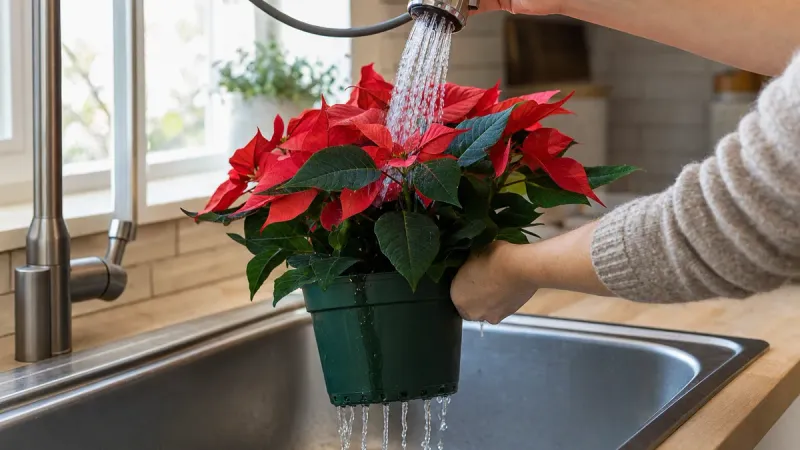
Poke a finger into the soil before you do anything else. If the surface feels dry, it is time to water.
If it is damp, wait.
When you water, do it thoroughly, then let the pot drain completely before it goes back on its saucer or into a decorative cover. Both bone-dry soil and waterlogged soil can contribute to leaf loss, as noted by Mississippi State University Extension.
A sink works well for this step.
Foil wrapping is a frequent trouble spot because it can trap water around the roots. Remove it, or poke open the bottom so water escapes.
Light belongs in this check too: bright, indirect light is the usual advice from University of Minnesota Extension. Make one change at a time so you can tell what helps.
If you handle the plant, remember that the sap can irritate skin. Keep it away from your eyes and mouth, and wash your hands afterward.
Protect the plant on the trip home
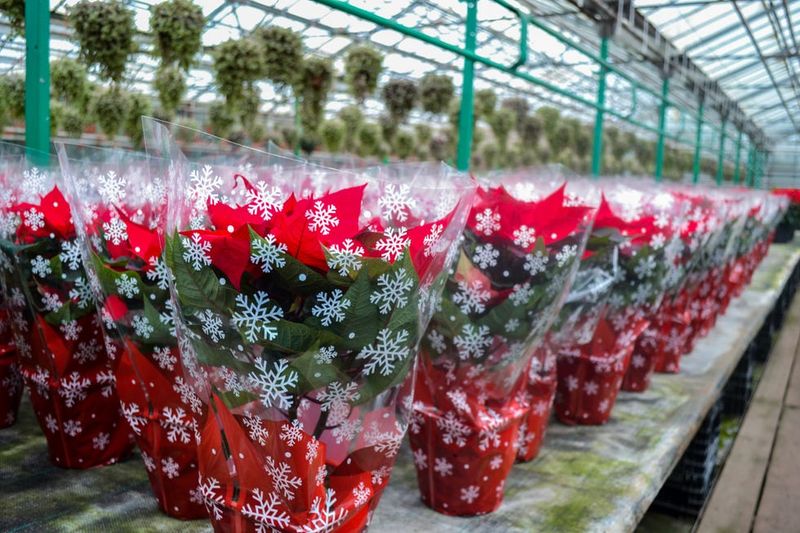
Next time you buy a poinsettia in cold weather, plan the trip like you would for a tender houseplant. Ask the seller to sleeve or wrap it before it leaves the building.
A paper or plastic sleeve cuts down on wind and chill.
Keep the time outdoors short. Park close, warm the car beforehand if you can, and place the plant inside instead of in an open trunk.
Once home, bring it straight into a heated room.
Iowa State University Extension warns that even brief exposure to freezing temperatures can blacken leaves and cause them to drop. That is a freezing scenario, so do not assume every short errand in cool air will cause the same damage.
The goal is simply to keep the exposure small and the transfer quick.
Good care helps, but cannot guarantee a full display
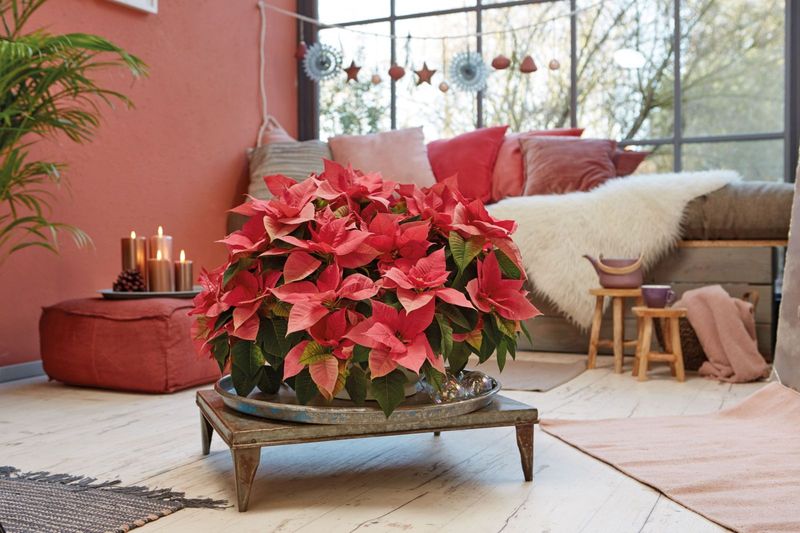
Your action list is short: keep the plant out of drafts, give it bright, indirect light, and manage water so the pot drains fully. Then watch it for a week or two and adjust one thing at a time.
Be realistic about the outcome. No cold-draft fix can promise a plant that stays full through Christmas.
Its starting condition, cultivar, earlier handling, and your home care all affect how long it looks good. Illinois Extension says well-cared-for plants may last 6 to 8 weeks, which is a general expectation rather than a guarantee.
A few lost leaves do not mean the plant is doomed. Steady care often gives it its best shot.