
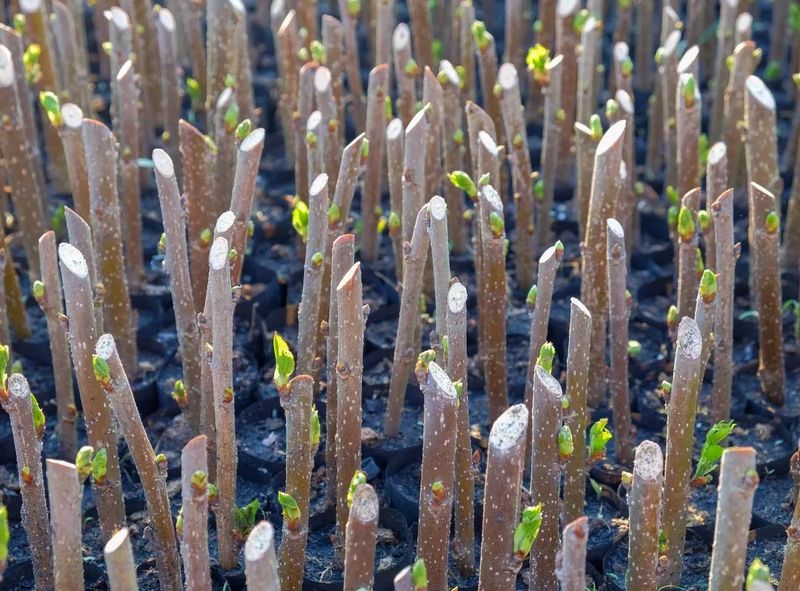
A productive fig tree can give you more than fruit – it can give you free trees. Dormant hardwood cuttings are one of the most reliable ways to clone a fig you already love, preserving its cultivar identity and passing it along to a new planting spot.
The catch is that timing depends on the tree’s condition, not the calendar, and not every cutting will root into a vigorous plant. Get the basics right, though, and a single parent tree can supply several new starts worth growing on.
Dormancy matters more than the fall calendar
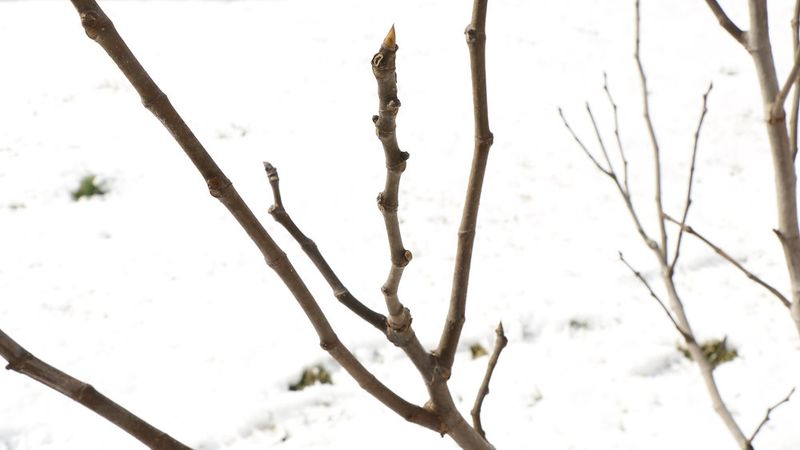
Most gardeners hear “fall cuttings” and immediately head outside with pruners the moment September arrives. The real target, though, is not a season on the calendar but a biological state in the tree: firm, fully hardened wood after active growth has stopped.
That usually means waiting until after leaf drop, which in much of the South can stretch into late fall or even early winter, and in some years a late-winter collection makes more sense than an early one.
Iowa State University Extension guidance on hardwood cuttings describes the goal as wood that has completed its growth cycle and hardened off – soft green shoot tips and actively growing stems are a different category entirely, requiring higher humidity and misting conditions that dormant cuttings do not need. Taking a cutting before the wood has matured gives you material that is far more likely to rot or fail before roots ever form.
Florida gardeners face a specific wrinkle here. Mild winters in much of the state can delay or limit the depth of dormancy a fig actually reaches, which means a rigid “cut in October” rule may produce poor results.
UF/IFAS guidance on the fig recommends dormant-season propagation and notes that late-winter timing can be more appropriate for Florida conditions than treating all of fall as an open cutting window.
One more distinction worth keeping clear: some sources describe fall as a good time to plant established young fig trees. That is a transplanting recommendation, not a cutting-collection recommendation.
Watching the tree – not the calendar – is the most reliable guide to when cuttings are ready.
Choose a healthy parent worth cloning
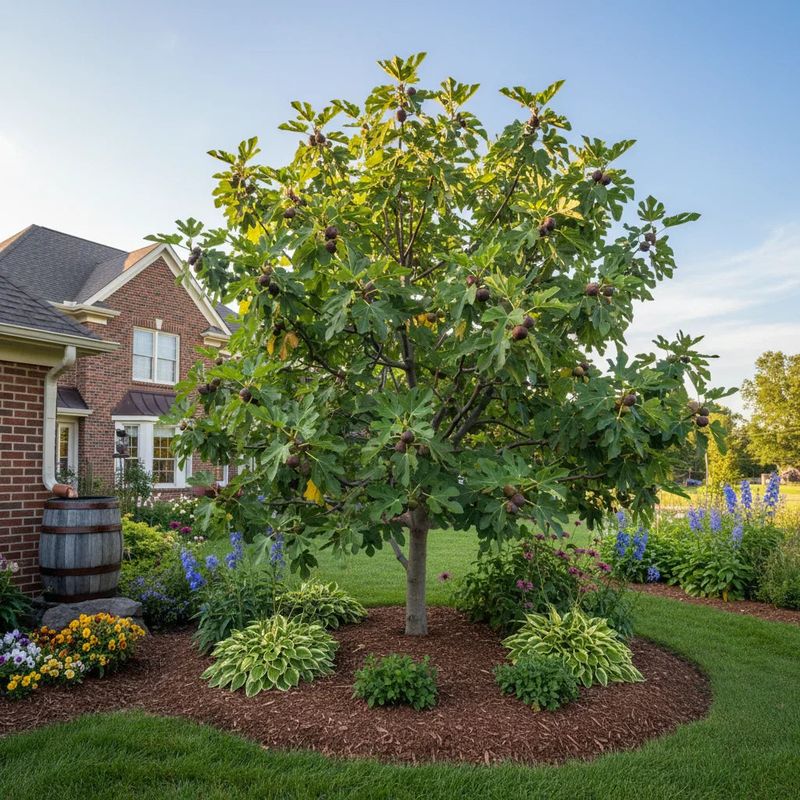
Before you take a single cutting, spend a moment looking honestly at the tree you plan to clone. Vegetative propagation creates a genetic copy of the parent, which means every strength comes along for the ride – and so does every weakness.
A fig that fruits heavily, shows no signs of disease, and has grown vigorously for several seasons is a genuinely good candidate. A tree with spotty production, unusual leaf distortion, or a history of pest problems will pass those same traits to its offspring.
WSU Extension’s guide to stem-cutting propagation makes the point plainly: cuttings preserve cultivar identity, which is why propagating vegetatively is more predictable than growing from seed. That reliability cuts both ways, so start with the healthiest wood from the most productive tree available to you.
Cultivar selection also matters for Southern gardeners, and the regional picture is not uniform. University of Georgia Cooperative Extension guidance on home garden figs recommends common-fig cultivars such as Celeste and Brown Turkey for the Southeast because they set fruit without requiring a specific pollinating wasp.
Smyrna-type figs, which do depend on that pollinator, are generally not suited to most Southern home gardens.
Texas gardeners should be especially careful about applying Georgia or Florida cultivar lists to their own situation. Texas A&M’s plant disease handbook for figs highlights sanitation as a priority concern and lists root-knot nematodes and fig mosaic virus among common problems in Texas plantings.
Climate zone and local disease pressure vary considerably across the state, so Texas-specific extension guidance should be the first stop before choosing a parent or a cultivar.
Select mature wood and mark the basal end
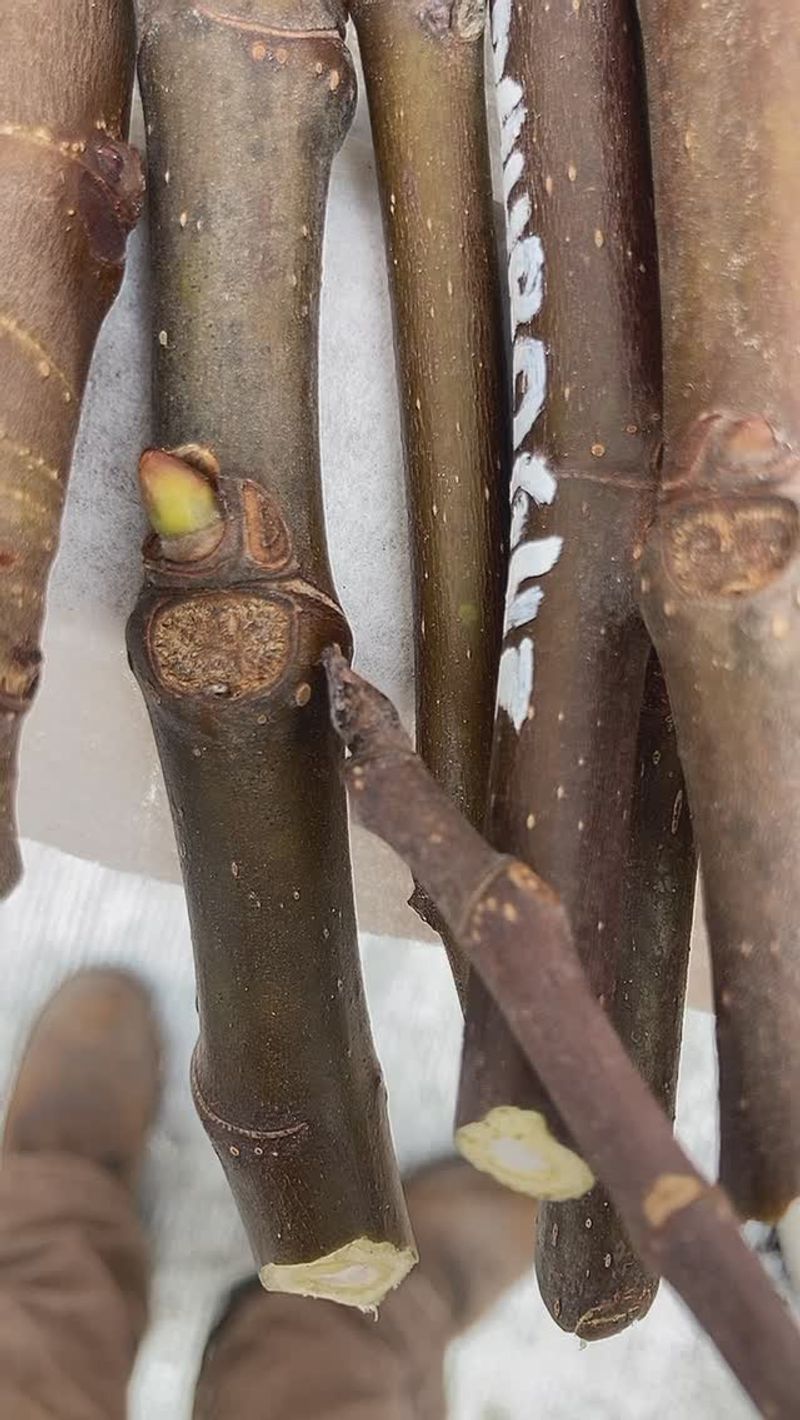
Once the parent tree has gone fully dormant, the cutting itself should meet a fairly specific profile. Look for straight, firm, pencil-thick stems – roughly the diameter of a standard pencil, though some extension sources allow wood up to about three-quarters of an inch.
Length commonly falls between six and ten inches. One-year-old wood is frequently recommended as the best choice because it has had a full season to mature without becoming overly woody; well-matured wood from suitable older growth can also work in some cases.
Cut placement matters for rooting. UF/IFAS guidance on fig propagation specifies making the basal cut just below a node and the top cut just above a node.
An angled top cut is a practical trick: it sheds water away from the cut surface and, more usefully, gives you a visual cue so you never accidentally plant the cutting upside down. The basal end – the flat or square cut – always goes into the medium.
Figs exude a milky latex sap from any fresh cut, and UF/IFAS identifies it as a skin irritant. Wear gloves before you start, consider eye protection if you are working close to the cuts, and wash any exposed skin that contacts the sap promptly.
This is a minor precaution, but one worth taking every time.
Be thoughtful about how many stems you remove. Figs typically fruit on the previous season’s growth, so stripping a small tree of productive wood to gather cuttings can noticeably reduce next year’s crop.
Take what you need from a healthy, well-established parent rather than pruning heavily for the sake of volume.
Root the cutting in a porous, well-drained medium
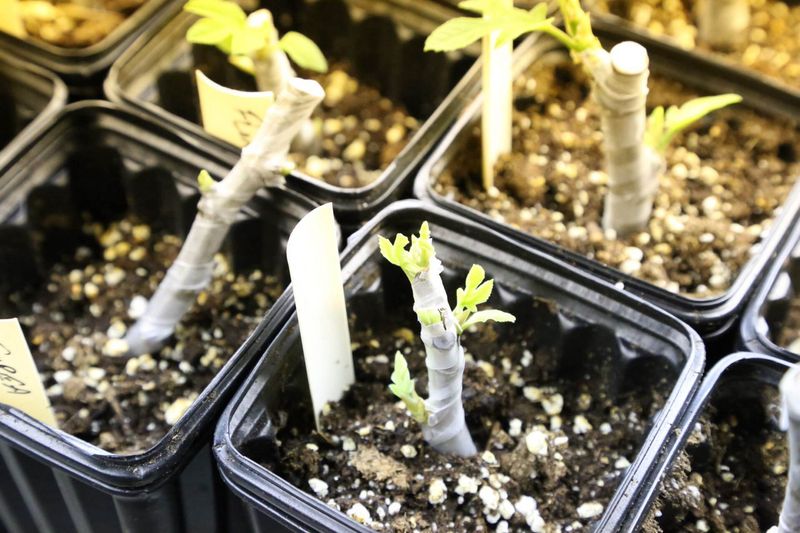
Water propagation gets mentioned in various how-to accounts, but the strongest extension guidance consistently points toward a clean, porous rooting medium as the better general approach. Perlite works well on its own; a suitable commercial rooting or potting mix with good drainage is another reasonable option.
The key quality in any medium is that it holds enough moisture for the cutting while draining freely enough to keep oxygen available at the base of the stem. Saturated, airless conditions around the basal end are a direct path to rot.
Moisten the medium before you insert the cutting – it should feel damp throughout but not dripping when squeezed. UF/IFAS fig propagation guidance recommends burying at least half the cutting, with some sources specifying that only the uppermost bud should remain above the surface.
That depth gives the basal end and the nodes below the medium good contact with moisture and the best environment for callus and root formation.
Rooting hormone is worth mentioning but should not be treated as a requirement. UF/IFAS notes it may improve rooting efficiency, and Iowa State Extension guidance on hardwood cutting propagation describes it as a tool that can help under the right conditions.
University of Georgia research has shown that softwood fig cuttings can root without hormone under mist. Use it if you have it and want to try it, but do not count on it to rescue a cutting that was taken at the wrong time or planted in a poorly draining medium.
Insert the basal end straight down, firm the medium gently around the cutting, and make sure the container has drainage holes. Label each cutting with the cultivar name if you are working with more than one parent tree.
Provide steady moisture without creating a wet greenhouse
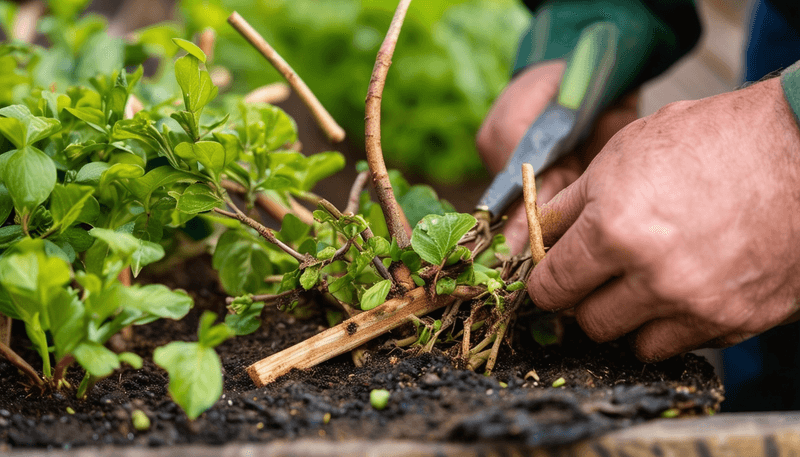
Aftercare for dormant hardwood cuttings is simpler than many gardeners expect, but it still requires attention. The medium should stay evenly moist – never bone dry, never waterlogged.
Check it every few days and add water as needed rather than on a fixed schedule, since temperature, container size, and medium type all affect how quickly moisture is used or lost.
Bright indirect light is the right environment. Direct midday sun can overheat both the medium and the stem, especially if you are using a plastic cover.
A covered porch, a shaded cold frame, or a spot near a window that gets filtered light gives cuttings what they need without cooking them. Iowa State Extension’s hardwood cutting guide notes that a clear plastic cover can help limit moisture loss from the medium, but it must not create a sealed, overheated environment.
Dormant hardwood cuttings behave differently from leafy or softwood cuttings. Leafy material loses water through its leaves continuously, which is why those cuttings need high humidity or intermittent misting to survive.
Dormant cuttings have no leaves to lose moisture through, so the focus is simply on keeping the medium consistently moist rather than maintaining a high-humidity chamber around the stem itself.
NC State Cooperative Extension’s account of propagating figs through hardwood cuttings is clear that not all cuttings root successfully. Expect callus formation to take roughly two to three weeks under good conditions, with root development following over additional weeks or even months.
Some cuttings will simply fail, and that is a normal part of the process rather than a sign that something went seriously wrong.
Acclimate rooted plants before outdoor planting
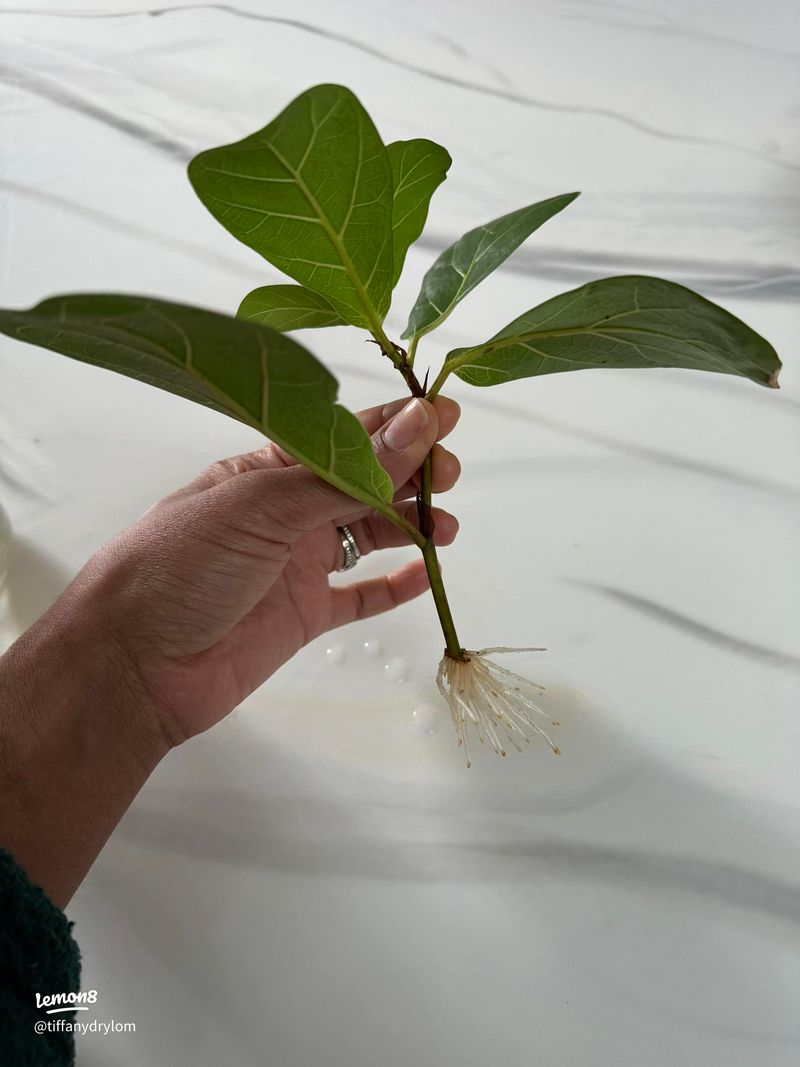
A cutting that has produced roots is not yet a garden-ready tree. The transition from propagation conditions to the outdoor environment is a step that deserves as much care as the rooting process itself.
Before transplanting, check that the root system has developed enough to support the plant – a gentle tug on the stem should meet resistance, and ideally you can see roots beginning to emerge from the drainage holes or visible through the container walls.
Hardening off means exposing the young plant to outdoor conditions gradually over one to two weeks. Start with an hour or two of sheltered outdoor time each day and increase the duration and sun exposure slowly.
Skipping this step and moving a rooted cutting directly into full sun and open air often results in wilting, leaf scorch, or setback that can take weeks to recover from.
UF/IFAS recommends watering newly set fig trees every day or every other day during the establishment period – a frequency that reflects how vulnerable young root systems are to drying out. Once the plant is in the ground, consistent irrigation through the first growing season is not optional; it is the difference between a plant that establishes well and one that stalls or dies.
On the question of timing: a source that recommends fall as a good season to plant established young trees does not establish fall as the universal best time to collect cuttings. Those are separate decisions.
Rutgers NJAES guidance on figs in the home garden notes that own-rooted figs may take approximately three to four years to begin bearing fruit. A rooted cutting is a long-term investment, not a shortcut to next season’s harvest.
Match the cloned tree to its Southern site
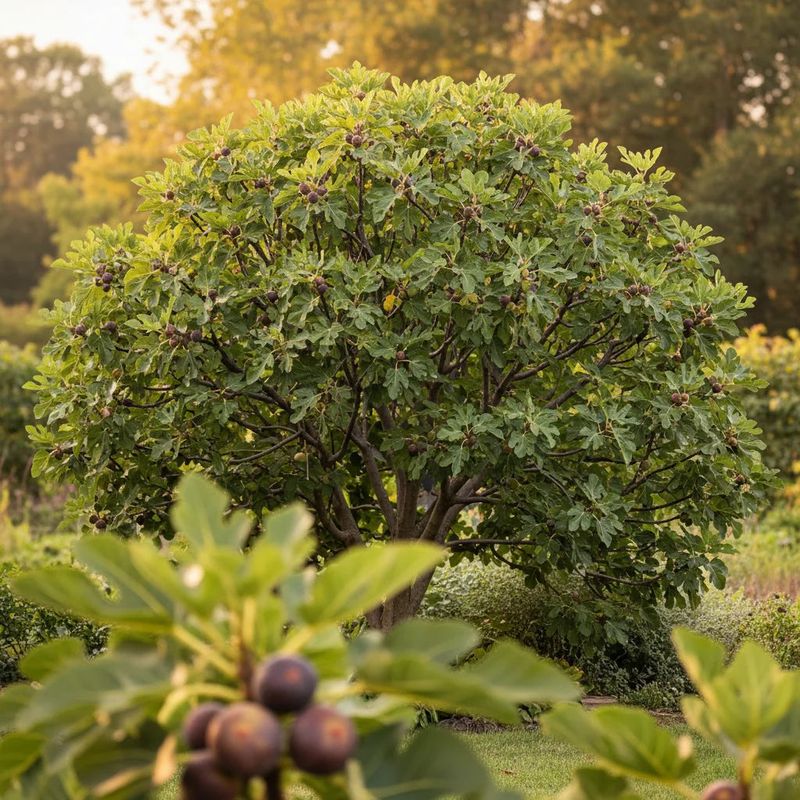
Cloning a fig preserves cultivar identity, but it does not guarantee that the new tree will perform exactly like the parent in a different location. Sunlight, water availability, soil drainage, local disease pressure, and winter conditions all shape how a fig grows and fruits at any given site.
A cutting from a tree that thrives in one corner of a Georgia yard may perform quite differently in a shadier spot, a heavier soil, or a location with a different frost history.
UF/IFAS Gardening Solutions guidance on figs emphasizes that site selection – full sun, good drainage, and appropriate spacing – is fundamental to long-term fig success in Florida. UF/IFAS fig production guidance gives orchard-style spacing of approximately 10 to 16 feet between plants and notes that fig roots can extend well beyond the canopy edge.
Use those figures as planning references rather than strict rules, since mature size varies by cultivar, soil, and climate.
University of Georgia Cooperative Extension guidance on home garden figs supports cultivar recommendations for the Southeast, particularly common-fig types suited to Georgia conditions. Those recommendations do not transfer automatically to all parts of Texas, where climate zones range from humid subtropical in the east to semi-arid in the west.
Texas gardeners should look for state-specific extension guidance tied to their local zone rather than assuming that what works in coastal Georgia will work in central or west Texas.
Disease management is a continuing responsibility, not a one-time setup. Root-knot nematodes, fig mosaic virus, and other problems identified in Texas A&M research can affect trees of any age, and a cloned tree inherits whatever disease susceptibility its parent carried.
Treat several new trees as a possibility, not a promise
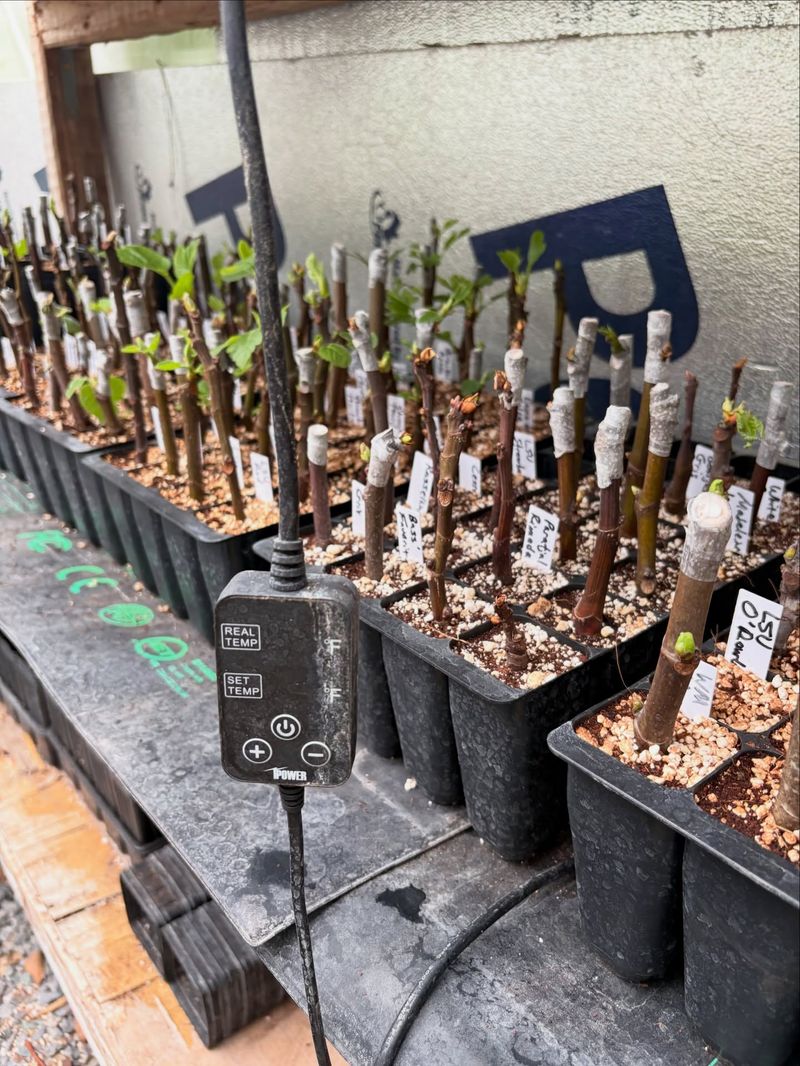
Working through the full sequence gives you a realistic shot at several new own-rooted figs from one productive parent. Select a vigorous, disease-free tree with fruit you actually want to replicate.
Wait for genuine dormancy – confirmed by leaf drop and firm, hardened wood – rather than acting on a calendar date alone. Prepare pencil-thick cuttings six to ten inches long, cut just below a node at the base and just above one at the top, and plant the basal end down in a clean, porous, consistently moist medium.
Keep the medium damp but not saturated, provide bright indirect light, and allow weeks to months for callus and root development. NC State Cooperative Extension is clear that not every cutting will root, so take more cuttings than you think you need.
Once roots develop, harden the plants off gradually and water them consistently through their first season in the ground. UF/IFAS fig guidance reinforces that establishment irrigation is essential, not optional.
Multiple viable cuttings can become multiple trees, but the outcome depends on the quality of the parent wood, the rooting conditions, and the aftercare each cutting receives. Fruit production, when it comes, may still be three or four years away.
The gardener who understands those terms going in is the one most likely to end up with a row of figs worth waiting for.