
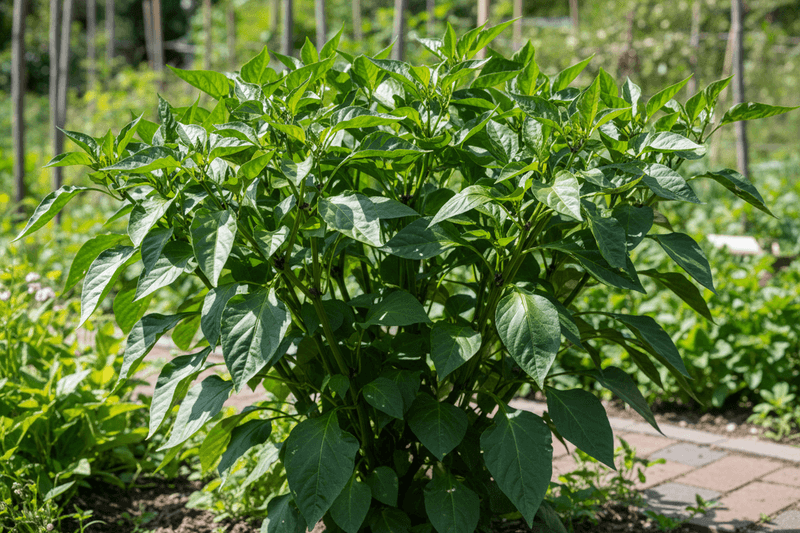
Few things are more frustrating than a pepper plant that looks absolutely thriving – dark green leaves, sturdy stems, plenty of flowers – yet never produces a single pepper to harvest. The problem often starts weeks before you notice it, during the time when flowers were forming and pollen was developing.
Warm nights are one real suspect worth investigating, especially for gardeners in Florida, Texas, and other hot-summer regions, but they are not the only explanation. Understanding what actually goes wrong inside the flower can help you figure out what to fix and what to watch for next.
A leafy pepper plant can grow well without setting fruit
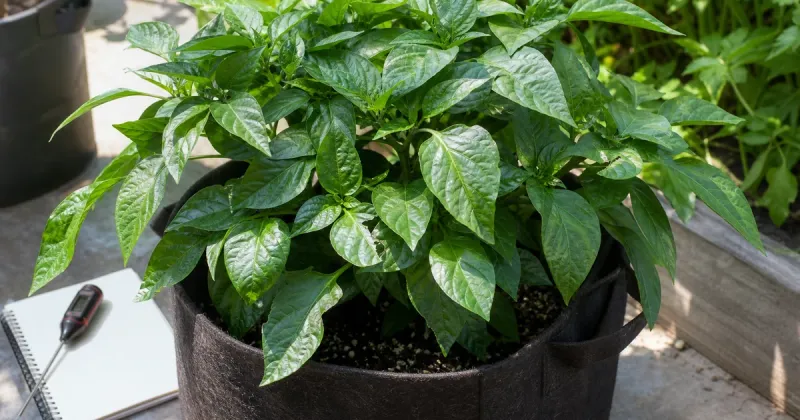
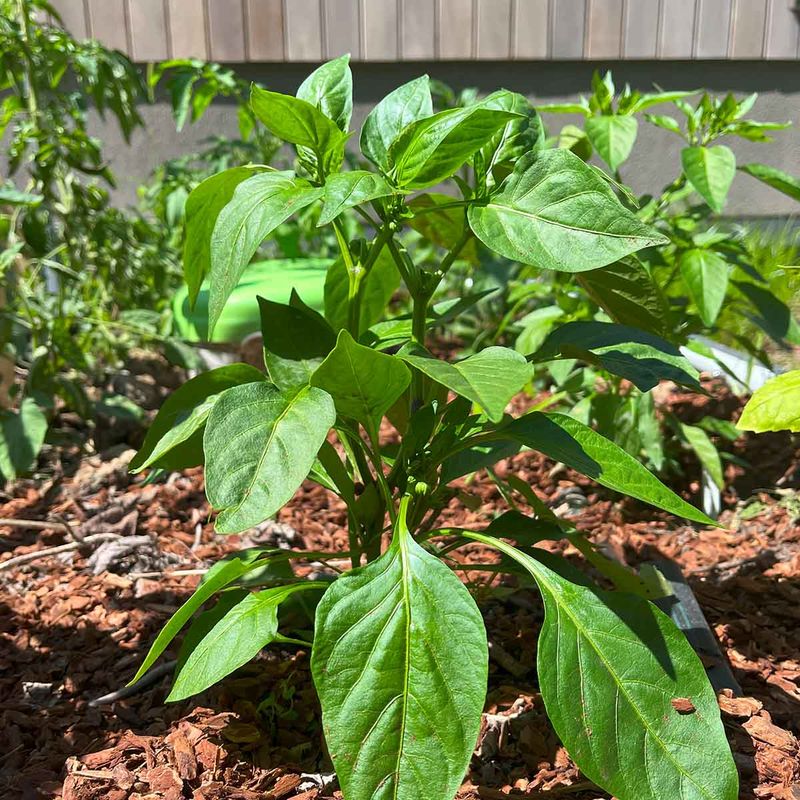
Seeing a pepper plant covered in leaves and even dotted with flowers while producing zero peppers can feel like a contradiction. Vigorous leafy growth simply means the plant is photosynthesizing, taking up water, and building stems, which are processes that continue even when fruit set has completely failed.
The two things, vegetative growth and reproductive success, run on separate tracks, and a lush canopy is not evidence that pollination is working.
One reason gardeners are often caught off guard is timing. University of Illinois Extension notes that pepper fruit can take more than a month to mature after pollination, so a plant that looks bare today may have already lost its flowers weeks ago under conditions that have since changed.
Whatever weather or stress event damaged those earlier flowers may not be visible in the garden right now.
Warm nights are a plausible suspect when temperatures have been persistently high, but they are one explanation among several. Utah State University Extension lists excessive heat, drought, waterlogging, insufficient light, and other stressors as contributors to poor fruit set.
Ruling out the obvious problems systematically gives you a much better picture than assuming any single cause is responsible.
Warm nights can disrupt fruit set before a flower opens
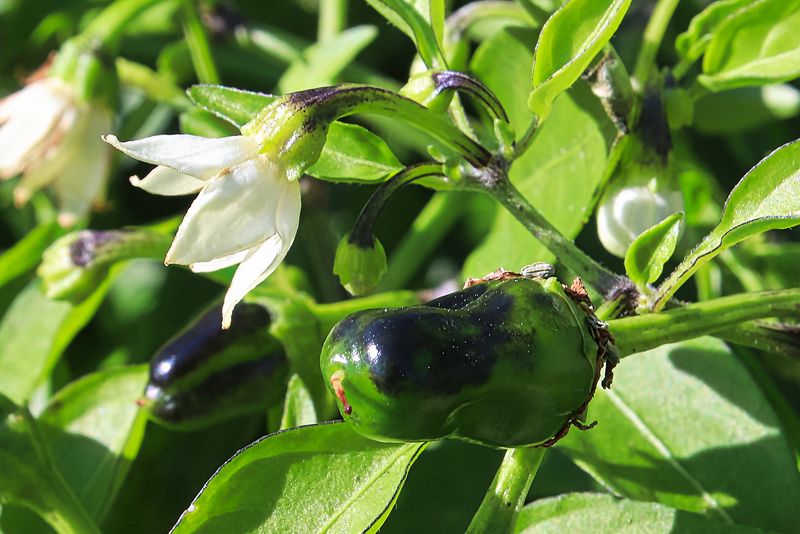
Most gardeners think about pollination as something that happens when a flower is fully open and buzzing with activity. The problem with heat is that it can do damage earlier, during the days when a flower bud is still developing inside the plant.
Research on bell pepper by Erickson and Markhart found that high-temperature exposure during flower development reduced pollen viability, meaning that by the time the flower opened and looked perfectly normal, the pollen inside was already less capable of completing fertilization.
Heat can interfere at multiple points in the reproductive process. Elevated temperatures may reduce how much viable pollen a flower produces, disrupt pollen release when the flower opens, prevent pollen from germinating on the stigma, block fertilization from completing, or interrupt the very early stages of fruit development after fertilization.
A flower can look healthy and open on schedule while being biologically limited in ways that are impossible to see from the outside.
Nights are relevant because pollen development and early fruit growth happen continuously, including overnight. University of Maryland Extension identifies sustained warm nights as a condition associated with reduced fruit set in peppers.
The plant is not choosing to stay vegetative; reproductive failure is happening at a cellular level that no amount of otherwise good care can undo after the fact.
Measure temperatures where the pepper flowers grow
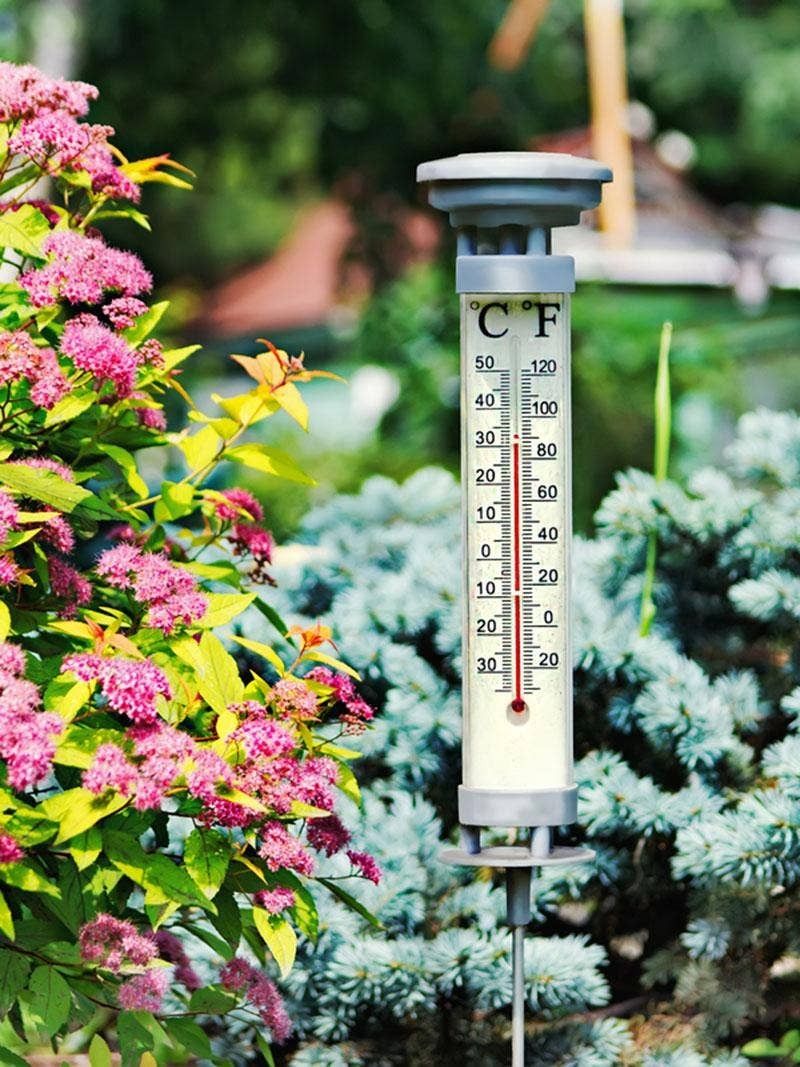
Weather apps and official forecasts report temperatures measured several feet above an open surface, which may not reflect what your pepper plants actually experience at flower level. A min/max thermometer placed directly in the canopy, near the flowers, gives you the most relevant reading for diagnosing heat-related fruit-set problems.
Record both the overnight low and the daytime high for several consecutive days before drawing any conclusions.
A sustained nighttime low above roughly 70 to 75 degrees Fahrenheit is a reasonable warning range. University of Maryland Extension and University of Connecticut Extension both point to nights above 75 degrees as a threshold associated with poor pepper fruit set.
These are not hard cutoffs that guarantee failure at exactly 75 degrees; cultivar, flower-development stage, how many nights in a row temperatures stay elevated, humidity, and daytime heat all affect the outcome.
Daytime heat matters too. University of Illinois Extension and Utah State University Extension both associate daytime temperatures in the range of 85 to 95 degrees Fahrenheit with flowering and fruit-set problems, though the precise number varies by source and cultivar.
Using your own thermometer at canopy height, rather than relying solely on a distant weather station, gives you a much more accurate picture of what your specific plants are enduring through the night and day.
Blossom drop shows a symptom, not a separate cause
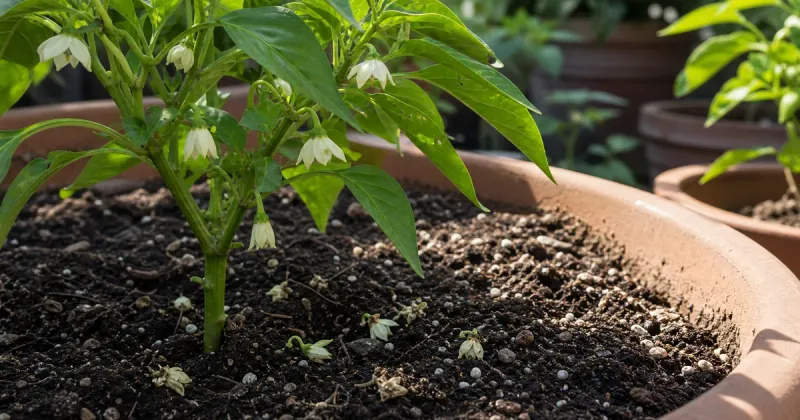
When flowers fall off a pepper plant without developing into fruit, gardeners often call it blossom drop and treat it as its own diagnosis. What blossom drop actually describes is a visible outcome, not an explanation.
The flowers fell because something prevented pollination or fertilization from completing, and the plant shed the unfertilized flower rather than invest resources in developing it further.
Warm temperatures are one cause of that underlying failure. University of Maryland Extension and University of Illinois Extension both describe heat as a contributor to flower abortion in peppers.
Research on bell pepper confirmed that post-pollination exposure to high temperatures sharply reduced fruit set, meaning heat can cause reproductive failure even after a flower has opened and received pollen.
Drought, waterlogging, and other environmental stresses can produce the same visible result, flowers dropping before fruit develops. Before concluding that heat is the cause, check whether the soil has been staying consistently moist, whether drainage is adequate, and whether any other stressor was present during the flowering period.
Blossom drop is a clue that points toward a problem, not a problem you can solve directly on its own.
Check moisture, light, pests, and cultivar before blaming heat
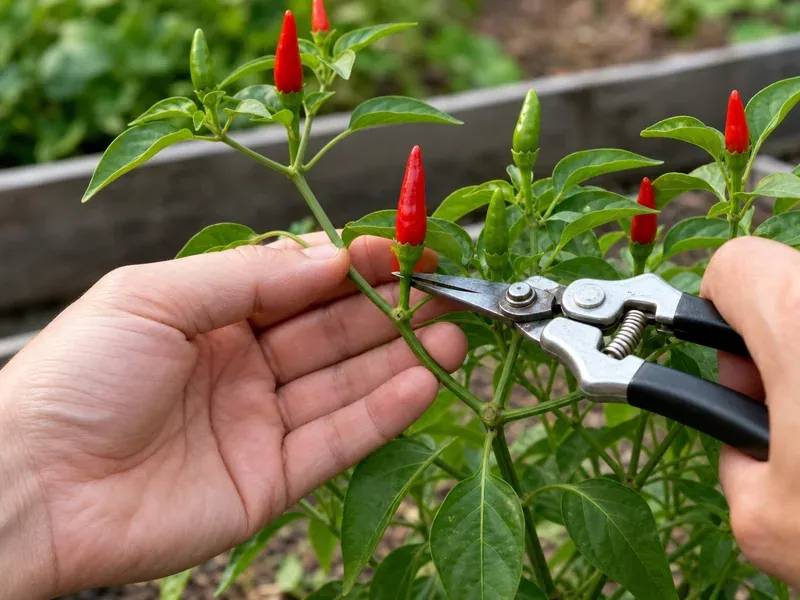
A high nighttime temperature reading is worth investigating, but it should not be the only thing you look at. Several other conditions produce the same lush-but-fruitless pattern, and treating the wrong problem wastes time and may make things worse.
Run through a quick checklist before settling on heat as your primary suspect.
Start with moisture. Both drought and waterlogging can interfere with fruit set, and irregular watering during flowering is a well-documented contributor to flower loss.
Utah State University Extension emphasizes consistent soil moisture as a key factor in pepper fruit production, and UConn Extension guidance on drought and heat reinforces that root-zone stress can compound heat problems. Check whether your soil is staying evenly moist several inches down, not just at the surface.
Light is another factor that sometimes gets overlooked. Peppers need full sun to flower and fruit well, and plants shaded by a fence, a taller crop, or a tree canopy may look healthy but lack the energy to complete fruit development.
UC IPM guidance on poor pollination in peppers also points to insufficient light as a factor in incomplete fruit set.
Check for pests and disease symptoms on leaves, stems, and the undersides of remaining flowers. Look at how recently the plant was transplanted, since newly established plants sometimes delay fruiting while roots settle in.
Finally, consider your cultivar. Iowa State University Extension notes that bell peppers tend to be more heat-sensitive than many hot-pepper types, though no universal rule applies to every variety grown in Southern gardens.
Protect future flowers from extreme heat and uneven moisture
Once you have confirmed that heat and moisture stress are likely contributors, the focus shifts to protecting the flowers that have not yet opened. Flowers that are already damaged by heat cannot be repaired, but you can improve conditions for the next round of blooms.
The most reliable starting point is the root zone.
Consistent soil moisture during flowering and fruit set is one of the most practical things you can do. Utah State University Extension and Iowa State University Extension both recommend keeping soil evenly moist and using mulch to reduce surface evaporation and buffer soil temperature swings.
Deep, infrequent watering that reaches the root zone is more effective than frequent shallow watering that evaporates before roots can use it. UConn Extension also recommends mulching as a way to reduce soil heat and maintain moisture during extended hot periods.
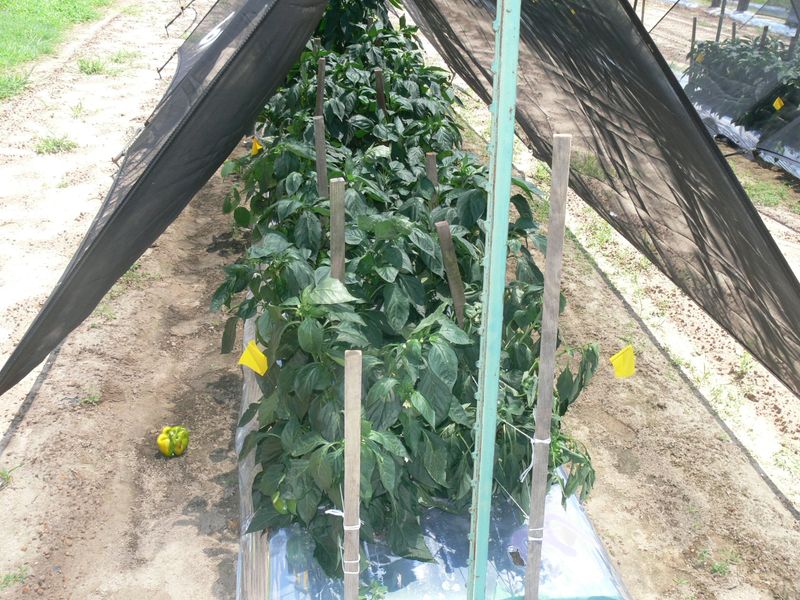
Strategic shade can help reduce heat load on plants during the worst of a heat wave. University of Delaware Extension recommends 30% shade cloth as a practical option that cools plants without blocking so much light that flowering suffers.
Use shade cloth temporarily during extreme heat rather than as a permanent fixture. University of Maryland Extension specifically notes that afternoon shade from a structure or taller planting can improve season-long yields for peppers.
Heavy, permanent shade is counterproductive because peppers need strong light to flower and develop fruit in the first place.
Skip guesswork fertilizer and use hand-pollination selectively
A pepper plant full of leaves and short on fruit can tempt gardeners to reach for fertilizer, especially a phosphorus-heavy bloom booster. That instinct is understandable but often misplaced.
University of Illinois Extension explains that a healthy-looking, fruitless pepper may simply be directing energy into vegetative growth because fruit production has not succeeded, not because the plant is starved of nutrients. Adding fertilizer without a soil test can create new imbalances rather than solving the underlying problem.
Excess nitrogen in particular can push more leafy growth rather than fruit production, though nitrogen excess is not the default explanation for every lush, unproductive plant. University of Connecticut Extension recommends following crop-specific fertilizer rates based on soil-test results rather than guessing.
If you have not tested your soil recently, that is a better first step than adding any amendment.
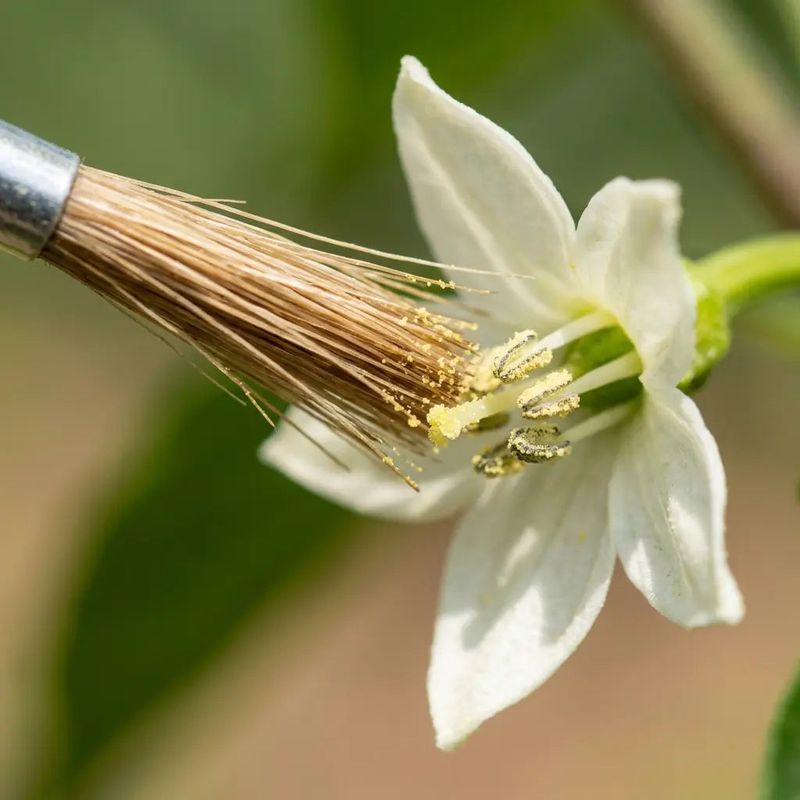
Hand-pollination is another commonly suggested remedy that deserves some qualification. Peppers are largely self-pollinating, meaning wind, gentle plant movement, or even a passing insect can transfer pollen within the flower without any intervention.
North Dakota State University Extension confirms that peppers do not require bees to set fruit, though pollinators can improve fruit set and quality. UC Marin Master Gardeners note that hand-pollination can be a useful aid in still or enclosed growing conditions.
However, if the underlying problem is heat-damaged pollen or failed fertilization from high-temperature exposure during flower development, moving compromised pollen from one place to another will not produce a pepper.
A cooler stretch may restart production, but keep diagnosing
Pepper plants that have been stressed by heat often resume fruit production when temperatures moderate, but that outcome is not guaranteed for every plant in every situation. University of Maryland Extension notes that healthy plants may set another crop in late summer or early fall after a hot mid-summer pause.
University of Illinois Extension similarly observes that flowers produced after a cooler period may still develop into a later harvest.
The word “healthy” is doing real work in those statements. Plants that have also experienced prolonged drought, root damage, disease pressure, or significant nutrient problems may not bounce back as reliably even when the weather improves.
Utah State University Extension notes that multiple stressors compound each other, so a plant managing heat plus irregular watering plus a pest problem faces a steeper recovery path than one dealing with heat alone.
Judge your plant’s progress by what you can observe: new flower buds forming, flowers staying on the plant rather than dropping, and small fruit beginning to develop. If temperatures have moderated and you are still seeing no progress after a few weeks, go back through the diagnostic checklist rather than waiting longer.
Measure canopy temperatures, verify consistent moisture, check for pests and disease, and hold off on fertilizing unless a soil test supports it. The plants that tend to come back strongest are the ones whose gardeners kept watching closely rather than assuming the problem had solved itself.