
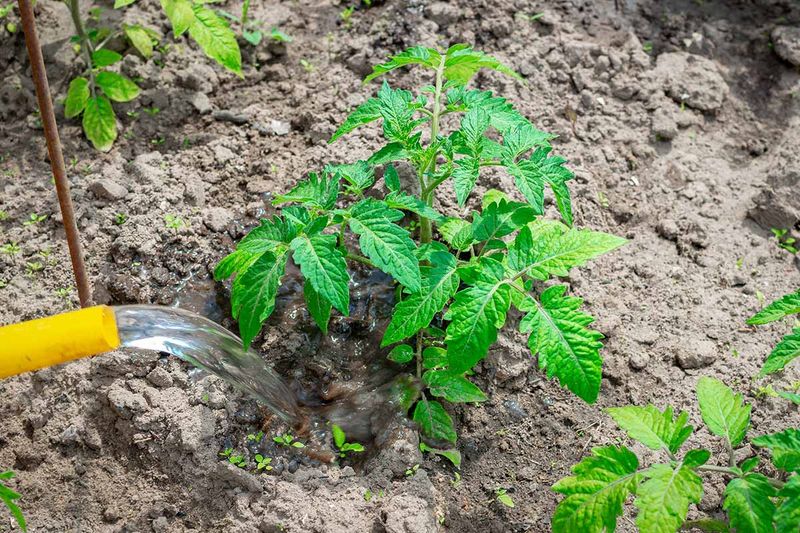
Most gardeners reach for the hose the moment their tomatoes look stressed, but adding more water is not always the answer. Tomatoes growing in typical backyard soil need steady, consistent moisture in the root zone, not repeated surface sprinkles or a constantly soaked bed. Getting the approach right can protect your fruit from cracking, blossom-end rot, and dropped flowers, all of which show up when water delivery goes wrong. Understanding what the roots actually need changes everything about how you water.
Smarter means condition-based watering—not automatically less
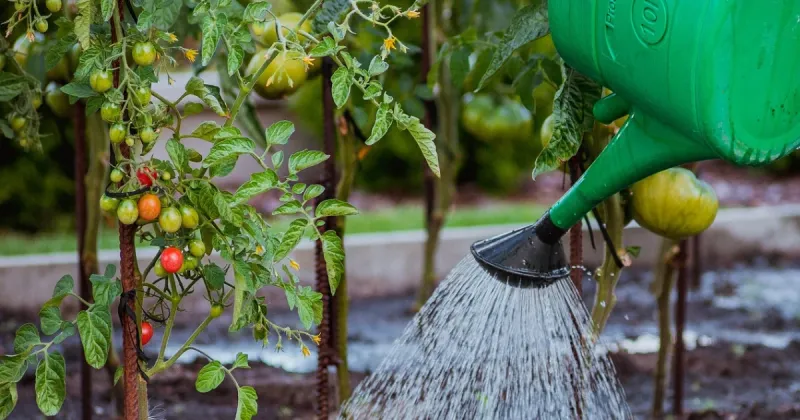
The title’s premise deserves a quick correction right up front: smarter watering does not mean automatically less water. Tomatoes can genuinely need more irrigation when heat climbs, wind picks up, soil drains fast, or plants grow large and heavy with fruit. The real shift is away from watering on a fixed calendar and toward watering based on what the soil and roots actually need at a given moment.
The target condition is moist, well-drained soil around the active root zone. Repeated light sprinkles often wet only the top inch or two, leaving deeper roots dry while encouraging shallow surface roots that are more vulnerable to heat and drought. On the other end, overwatering pushes oxygen out of the soil pores that roots depend on, which can impair nutrient uptake and contribute to root disease. NC State Extension guidance on tomato care notes that waterlogged conditions reduce the oxygen available to roots and can undermine plant health just as drought stress does.
A brief midday wilt during extreme heat is not a reliable irrigation trigger on its own. Tomatoes sometimes droop in afternoon sun even when soil moisture is adequate, then recover by evening. Check the soil before adding water. University of Minnesota Extension recommends using a trowel to confirm actual soil moisture rather than responding only to how the plant looks above ground.
Use the weekly range as a starting estimate
A practical benchmark for established, in-ground tomatoes is roughly 1 to 2 inches of rain or irrigation per week. Utah State University Extension cites that 1 to 2 inch weekly range, while several other extension programs, including Minnesota, use about 1 inch as their general starting point. Neither figure is a rigid prescription, and treating either one as a fixed weekly rule will get you into trouble.
Sandy soil drains quickly and may need more frequent irrigation to keep the root zone from drying out between sessions. Clay soil holds moisture longer, so the same weekly total might be reached with fewer, more spaced-out applications. Hot weather and persistent wind increase evaporation from both the soil surface and the plant itself, pushing demand higher. Raised beds, which often contain lighter mixes, can dry faster than in-ground plots.
Mulch slows evaporation and can meaningfully reduce how often you need to water, while large, heavily fruiting plants draw more moisture than younger transplants.
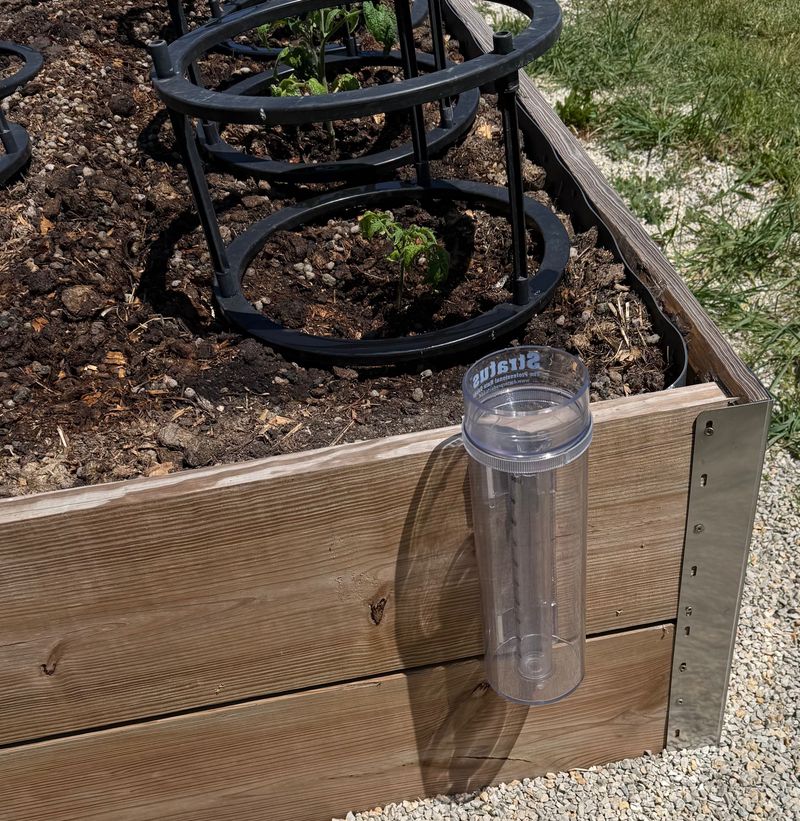
Rainfall counts toward the weekly total, so a rain gauge in the garden helps you track what nature has already delivered. University of Georgia Extension reminds gardeners to account for natural precipitation before adding irrigation. When in doubt about whether more water is needed, check below the surface rather than estimating from the weekly number alone.
Check below the surface and beyond six inches
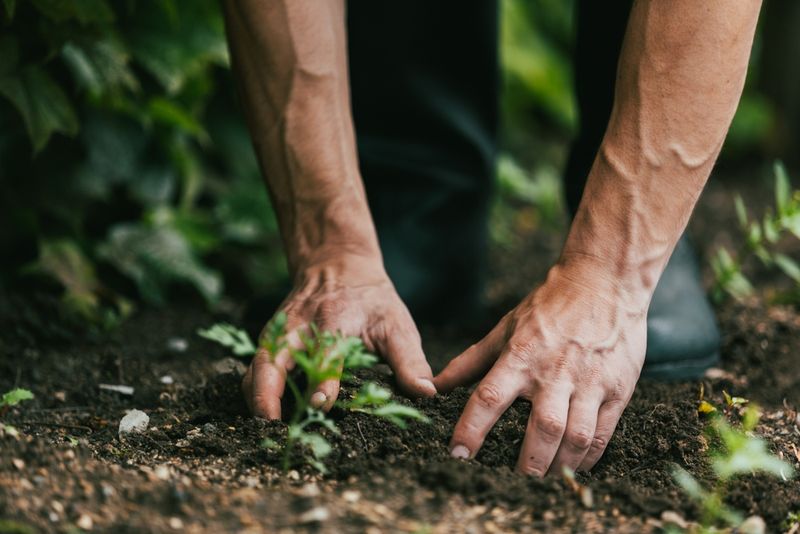
Probing the soil before watering turns an instinct into an actual decision. Start by pushing a trowel or finger probe roughly 6 inches into the soil near the base of the plant. If the soil at that depth feels moist and cool, the root zone likely has enough water and adding more is probably premature. If it feels dry or barely damp, watering is warranted.
Six inches is a convenient starting point for a quick check, but it does not represent the full active root zone for every established tomato plant. University of Minnesota’s irrigation scheduling guidance notes that irrigation management depth for tomatoes in productive garden soil can extend to 12 to 24 inches, depending on soil type, planting depth, and how consistently the plant has been irrigated. Roots follow moisture, so plants that have been watered shallowly for weeks may have most of their active roots concentrated near the surface.
After watering, dig again to see how deeply the water actually moved. Arizona Cooperative Extension recommends this kind of verification to confirm that irrigation is penetrating beyond a shallow surface layer. If water has only reached 2 or 3 inches after what felt like a long session, the application rate was too fast for the soil to absorb, or the duration was too short. Adjust and check again until you understand how your specific soil and setup respond.
Deliver water slowly at the soil line
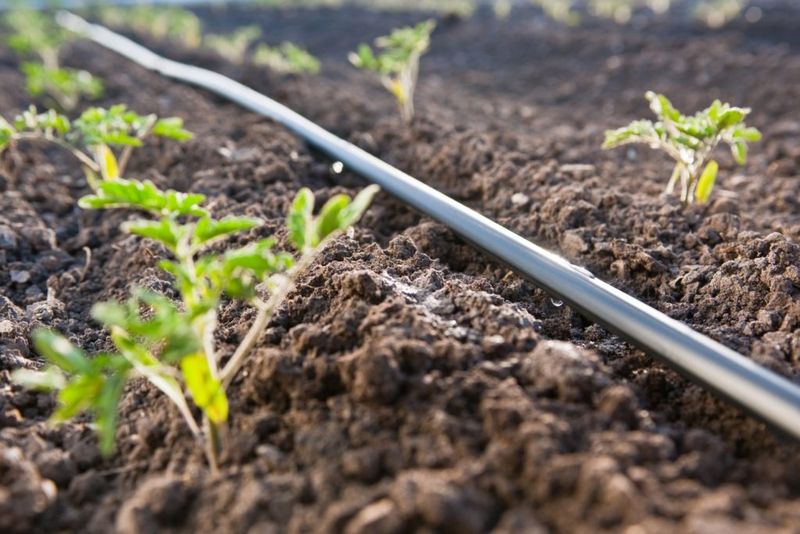
Where and how water lands matters almost as much as how much you apply. The goal is to wet the root zone thoroughly without splashing soil onto the leaves or routinely soaking the foliage. Drip irrigation, soaker hoses, or slow hand watering aimed at the soil surface around the plant are all solid approaches. Colorado State University Extension recommends keeping water at the soil level and avoiding overhead sprinklers for tomatoes whenever possible.
Routine overhead watering creates two problems. Wet foliage that stays damp for extended periods raises the risk of fungal diseases like early blight and Septoria leaf spot. Soil splash from heavy water drops can also transfer soilborne pathogens onto lower leaves. University of Georgia Extension notes that drip or ground-level irrigation reduces both of these risks compared with sprinkler systems.
Apply water slowly enough that it soaks in rather than runs off across the surface. A practical sequence: check soil moisture with a trowel, water at the soil line for a reasonable period, then dig again to confirm penetration depth. Avoid setting a fixed runtime for every session because hose pressure, emitter size, soil texture, and plant size all vary. Morning is a reasonable default time because any accidental foliage wetness has time to dry during the day, though the more important rule is simply to avoid leaving leaves wet overnight.
Protect moisture during flowering and fruit development
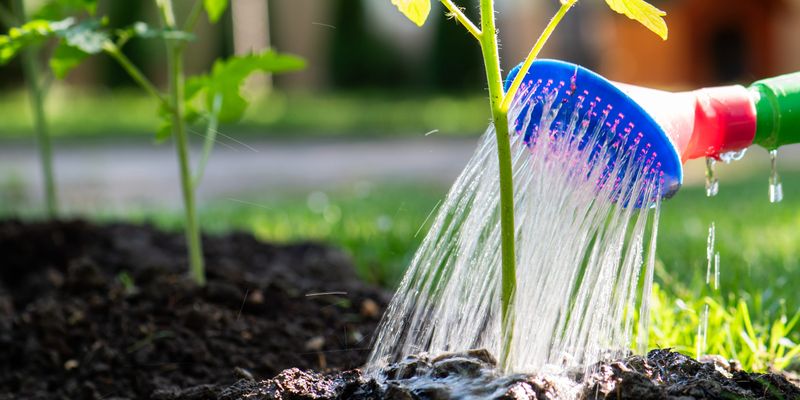
Tomatoes become particularly sensitive to water stress during three overlapping stages: when flowers open, when fruit first sets, and when fruit is actively sizing up. Stress during these windows can cause flowers to drop before they set, reduce the number of fruit that develop, limit how large individual fruit grows, and lower overall yield. Published research on tomato water stress documents that reproductive stages are especially vulnerable to moisture deficits, with measurable effects on fruit number and fruit size.
Some gardeners have heard that letting tomatoes wilt occasionally forces roots to grow deeper and ultimately improves the plant. That advice does not hold up for home gardens, especially during the growing season. Earlier controlled research on tomato water stress found that stress during fruit development reduces marketable yield, not just plant appearance. Allowing repeated wilting during flowering and fruiting is more likely to cost you tomatoes than help you grow them.
Consistent moisture does not mean keeping the soil perpetually saturated. The target remains moist, well-drained soil that replenishes the root zone before it gets very dry, while still allowing excess water to drain away. More recent research on tomato irrigation and fruit quality reinforces that steady moisture during reproductive growth protects both yield and fruit quality better than cycles of stress and recovery.
Adjust for heat, mulch, soil, and containers
Hot, windy days pull moisture from the soil faster than mild, overcast ones. During a heat wave, established in-ground tomatoes may need water every two to three days rather than once a week, especially in sandy or loamy soil. Check the root zone more frequently during stretches of weather above 90 degrees Fahrenheit, and do not wait for the plant to droop before acting.
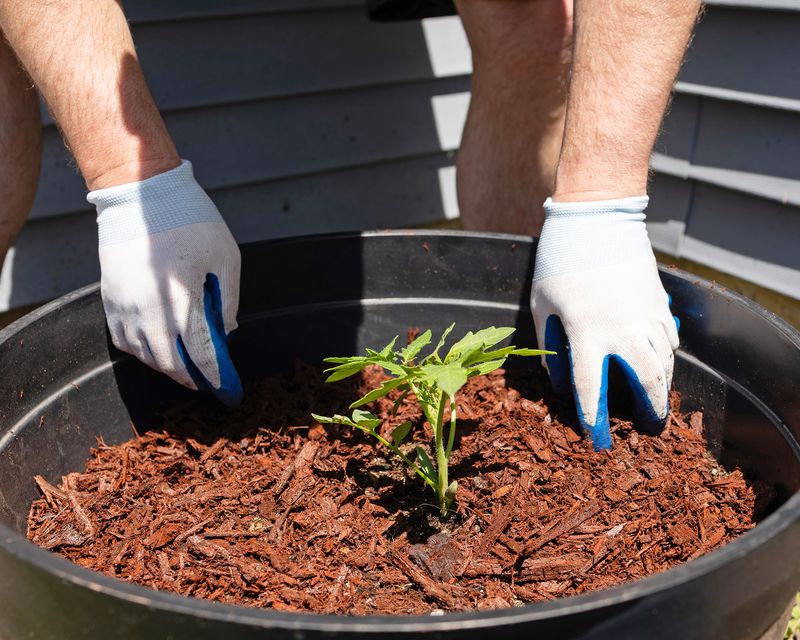
A 2 to 3 inch layer of organic mulch, such as straw, shredded leaves, or wood chips, can meaningfully slow evaporation from the soil surface and buffer the swings between wet and dry that damage fruit quality. Utah State University Extension recommends mulching around tomato plants to conserve moisture and moderate soil temperature. Keep mulch pulled back a few inches from the main stem to avoid creating a moist environment against the stem that can invite rot or disease. Colorado State University Extension echoes this, advising that mulch should not be packed directly against plant stems.
Container tomatoes need a separate approach entirely. Pots dry out far faster than garden beds, particularly when small, dark-colored, or positioned in full sun on a patio. Colorado State University’s container gardening guidance notes that containers may need daily checking during summer heat. Water thoroughly until water drains from the bottom, then let the mix partially dry before watering again.
Never leave a container sitting in a saucer of standing water, as this recreates the waterlogged conditions that harm in-ground plants just as readily.
Treat blossom-end rot by stabilizing conditions
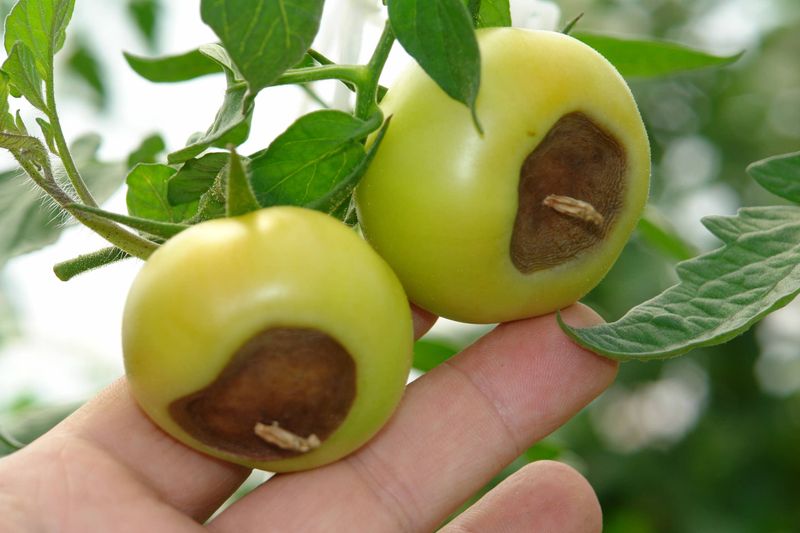
Blossom-end rot shows up as a dark, sunken, leathery patch on the bottom of developing fruit. Many gardeners assume the soil is low in calcium when they see it, but the disorder more commonly reflects a breakdown in calcium transport within the plant rather than an absence of calcium in the soil. Clemson Extension’s review of blossom-end rot myths explains that calcium moves into fruit through the water stream, so anything that interrupts consistent water uptake can cut off calcium delivery to the fastest-growing tissue.
Fluctuating soil moisture is the most common culprit in home gardens, but it is not the only one. High temperatures, root damage from cultivation or compaction, excessive nitrogen fertilizer, high soil salinity, and even waterlogged conditions can all contribute. University of Nebraska Extension’s guide to blossom-end rot lists these contributing factors and notes that soil pH outside the preferred range for tomatoes can also reduce calcium availability even when calcium is physically present in the soil.
Fruit that already shows the disorder will not recover. Remove severely affected fruit so the plant directs energy toward developing tomatoes. Alabama Extension’s blossom-end rot guidance confirms that stabilizing consistent moisture and drainage is the most reliable corrective step for protecting later fruit. Calcium sprays applied to leaves or fruit do not reliably reach the affected tissue.
Eggshells, Epsom salts, and milk are not evidence-based treatments. If you suspect a genuine soil deficiency, run a soil test and follow its recommendations rather than adding amendments by assumption.
Build a routine that protects potential yield
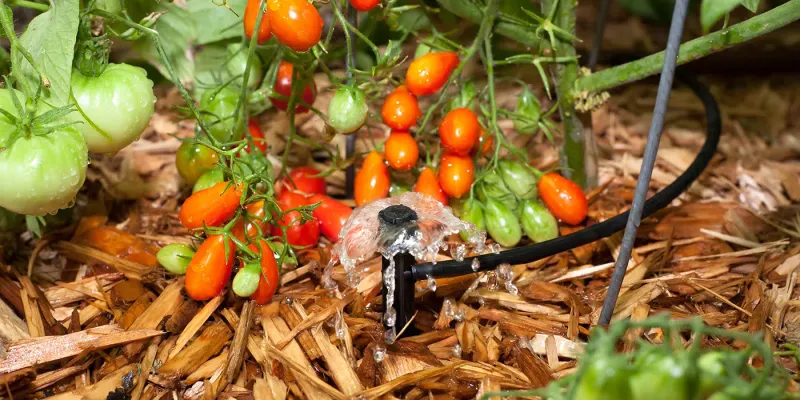
A workable watering routine comes down to a short sequence repeated consistently through the season. Check soil moisture below the surface before watering, probe deeper than the top layer to confirm the relevant root zone is actually drying out, then water slowly at the soil line until moisture reaches the appropriate depth. Let excess drain freely, and do not water again until that check tells you the root zone needs it. University of Georgia Extension’s tomato production guide frames consistent, root-zone-focused irrigation as one of the most controllable factors in protecting fruit set and fruit quality.
Adjust frequency and volume as conditions shift: more often during heat waves or in fast-draining soil, less often after rain or with mulch in place, and more vigilantly for containers. Utah State University Extension reinforces that soil type, weather, and plant size should all factor into how the weekly range is applied in practice.
This routine protects the root environment and reduces preventable losses from water stress, but it does not replace attention to soil fertility, sunlight, disease management, or cultivar selection. A well-watered plant still needs the rest of its growing conditions to be reasonably sound. Steady moisture is not about pouring on more water; it is about delivering the right amount where and when the roots can use it.