
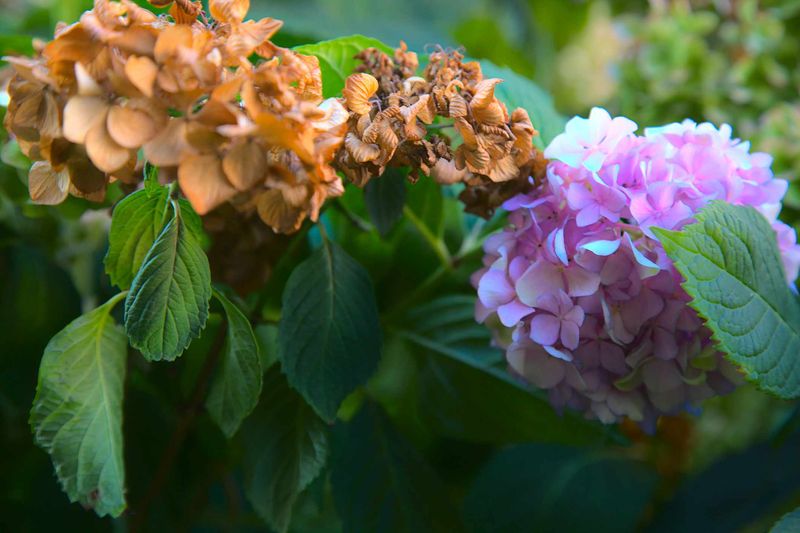
Stepping outside to find your hydrangea drooping on a hot July afternoon can send any gardener straight for the hose. Before you water, though, it pays to slow down for just a minute, because adding more water is not always the right move. The real clue to what your plant needs is not in the leaves – it is in the soil a few inches below the surface.
Wilting does not tell you to water
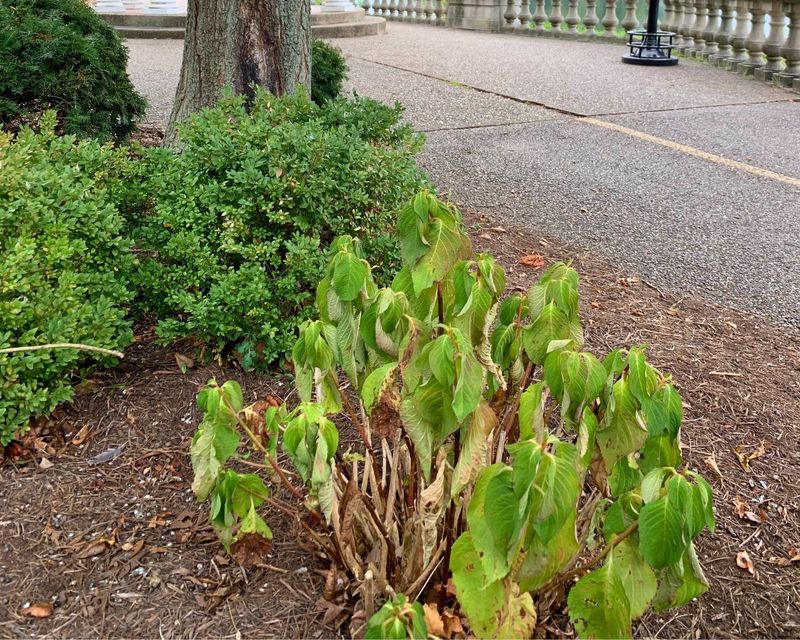
Wilting is a symptom, not a diagnosis. A hydrangea that collapses on a July afternoon could be reacting to heat, drought, too much sun, or even roots that have been sitting in soggy soil for too long. Looking at drooping leaves alone cannot tell you which problem you are dealing with, so reaching for the hose without more information can sometimes make things worse.
University of Maryland Extension guidance on hydrangea problems notes that weather extremes, incorrect care, and waterlogged soil are all recognized causes of decline in hydrangeas. In other words, the plant is signaling stress, but the signal looks nearly identical across very different causes.
July heat can temporarily overwhelm a hydrangea’s ability to move water from its roots to its leaves, even when the soil is adequately moist. A plant that slumps during the hottest part of the afternoon but bounces back by evening or the following morning, with moist soil underneath, is more consistent with temporary heat stress than with thirst or overwatering. Persistent wilt that does not ease overnight is a different situation entirely and calls for a closer look. The governing rule throughout this article is simple: check the soil before you add any water.
Check the root zone instead of guessing from leaves

The most reliable first step is also the least glamorous one: push your finger or a wooden dowel into the soil near the base of the plant and check what the soil feels like 6 to 9 inches below the surface. That depth is where an established hydrangea’s roots are actively drawing up water, and the surface layer can be misleading in both directions – bone dry on top while still moist below, or crusted and deceptively firm while hiding soggy conditions underneath.
University of Minnesota Extension guidance on watering established shrubs recommends checking approximately 6 to 9 inches into the root zone: if the soil feels cool and moist, the plant does not need more water yet; if it feels dry, watering is appropriate. That single check is more informative than any amount of leaf-reading.
A fixed watering calendar cannot replace this hands-on check. Penn State Extension’s review of common watering myths points out that water needs shift with soil type, plant species, sun exposure, rainfall, plant age, and current weather conditions. Two identical-looking hydrangeas planted ten feet apart in different soil or shade levels may need water on completely different schedules. Moisture in the root zone, not the calendar date, is what actually matters.
When wet soil becomes the problem
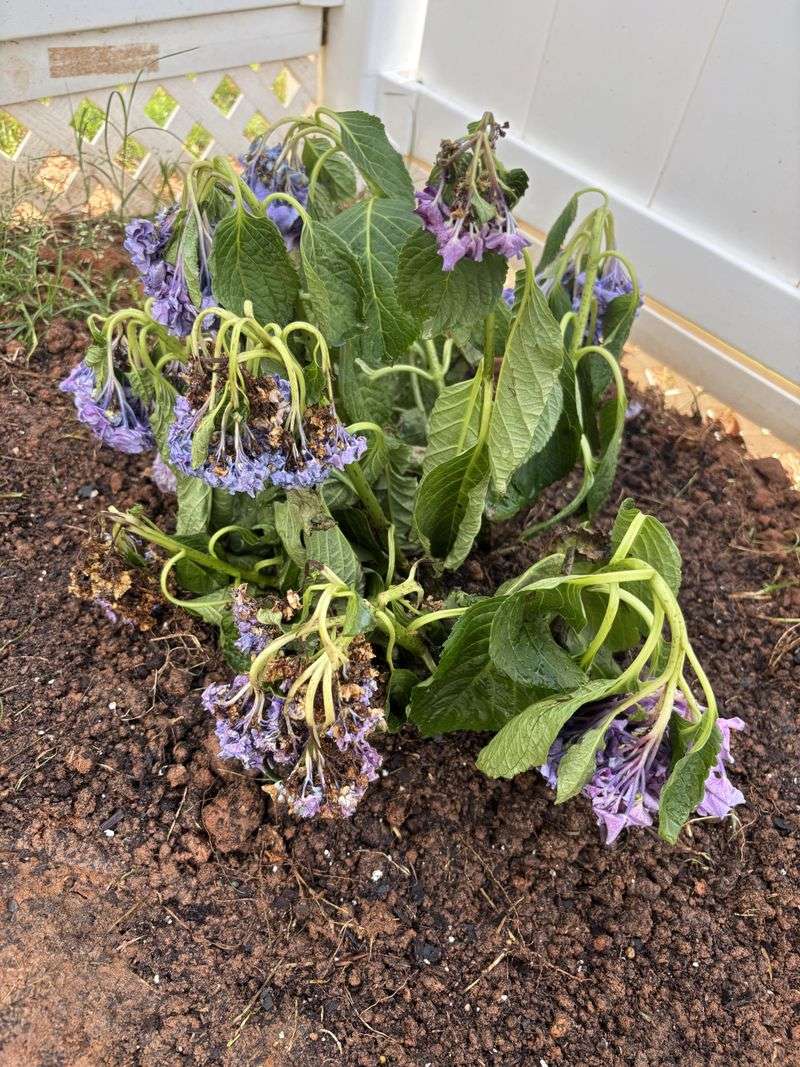
Overwatering is a real possibility, though it is not the most common explanation for every wilting hydrangea. When soil stays constantly saturated or is compacted enough to prevent drainage, the air pockets that roots depend on for oxygen get squeezed out. Roots under those conditions can begin to deteriorate, leaving the canopy wilted even though water is technically surrounding the plant on all sides.
OSU Extension’s general hydrangea care guidance specifically notes that hydrangeas can be overwatered and do not tolerate roots sitting in standing water. Saturated conditions can also create an environment where root-rot diseases take hold, compounding the damage. Penn State Extension’s overview of root rot in woody ornamentals describes how wilting from root rot can closely resemble drought stress, making the two conditions easy to confuse without checking soil conditions.
The key distinction is persistence. A brief hot-day slump that eases overnight is different from wilt that continues into the next morning while the soil around the roots remains wet. If you probe the root zone and find soggy, waterlogged soil, adding more water is not the answer. Instead, hold off on irrigation, look at whether the bed drains well after a rain, and treat damaged roots as a possibility worth investigating rather than a confirmed diagnosis.
Correcting drainage first gives the plant its best chance to recover.
How to water a genuinely dry hydrangea
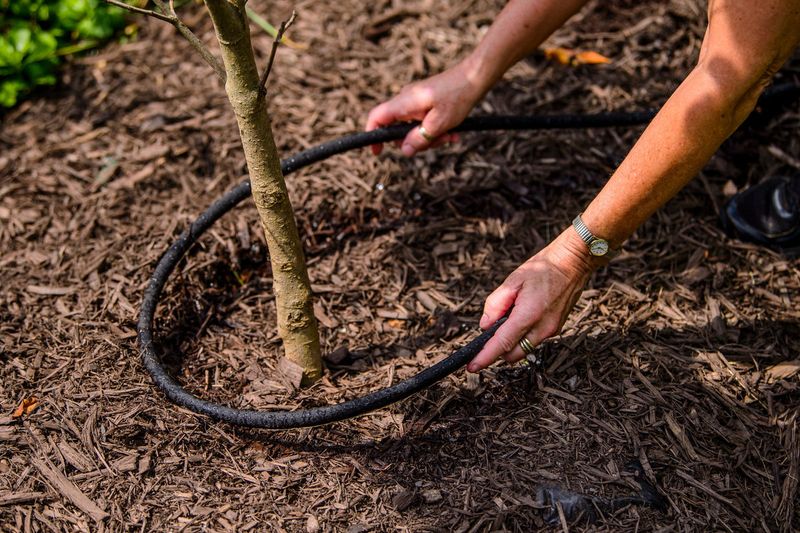
When the root zone is genuinely dry, the plant needs water promptly and thoroughly. Slow and deep is the right approach: a soaker hose, drip irrigation line, or a garden hose set to a slow trickle placed at the base of the plant will penetrate the soil far more effectively than a quick spray from above. A fast sprinkle may wet only the top inch or two and run off before it reaches the roots where it is actually needed.
The goal is to soak the entire root zone, not just the surface. Once you have confirmed the soil is dry, let water move in gradually so it has time to percolate down to root depth. OSU Extension recommends directing water to the soil at the base of the plant rather than overhead, both for penetration and to avoid prolonged leaf wetness. After watering, check the soil again the next day to see whether moisture has reached the deeper zone.
Mulch is one of the most practical tools available for protecting the root zone between waterings. A 2 to 3 inch layer of organic mulch – wood chips, shredded bark, or compost – spread over the root zone can moderate soil temperature and slow evaporation significantly during a July heat spell. UMN Extension’s established-shrub watering guide includes mulching as part of a practical summer care sequence. Keep mulch pulled a few inches away from the plant’s main stems to avoid trapping moisture against the crown and creating conditions for rot.
Heat, hydrangea type, and planting situation change the diagnosis
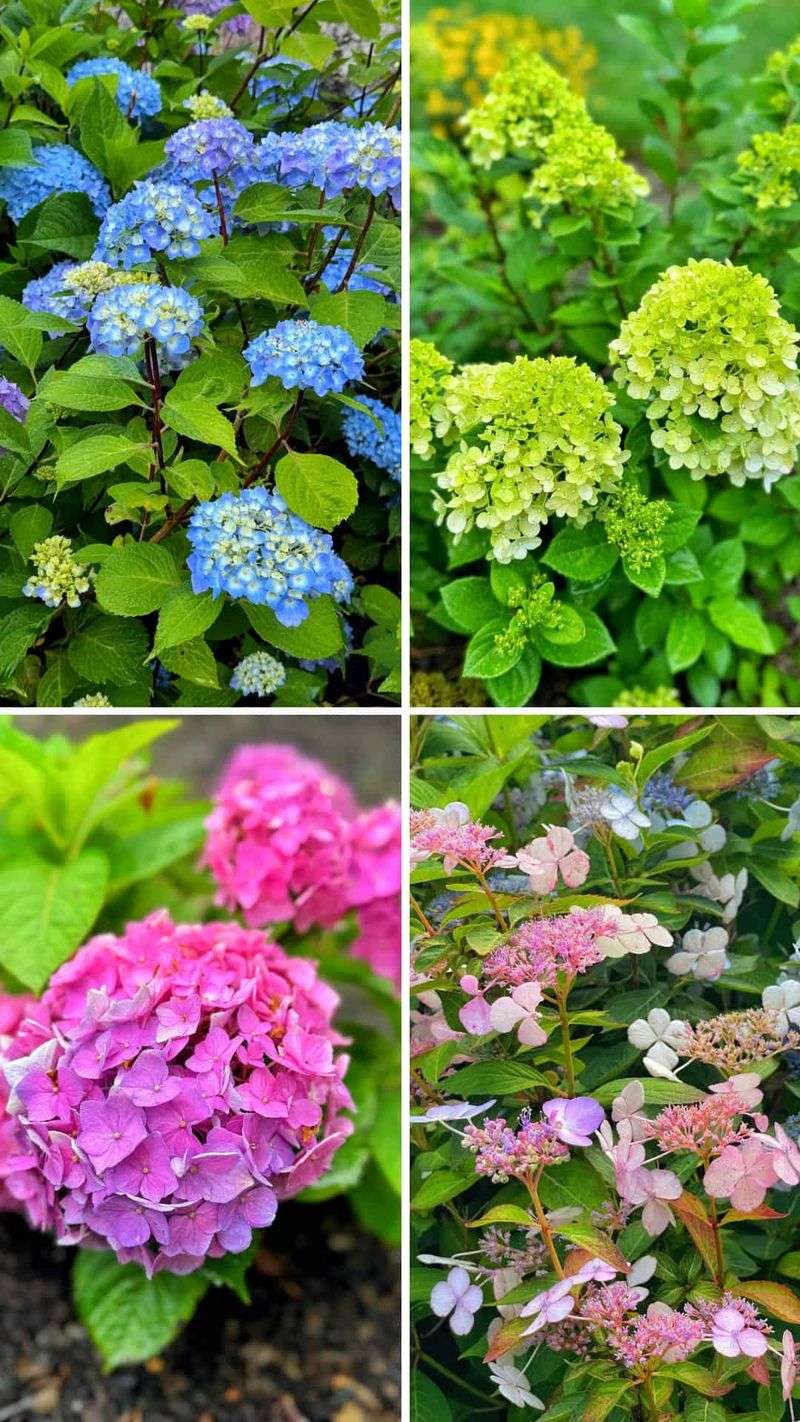
Not every wilting hydrangea is working from the same baseline. The species and cultivar you are growing, how long the plant has been in the ground, and whether it is in a container or in a garden bed all change how quickly the root zone dries out and how the plant handles heat stress.
Bigleaf hydrangeas (Hydrangea macrophylla) are generally less forgiving of heat and drought than panicle hydrangeas (Hydrangea paniculata). OSU Extension’s guide to helping hydrangeas through a heat wave notes that panicle types may handle heat and somewhat drier conditions better than some other hydrangea species, though they still benefit from adequate soil moisture and should not be treated as fully drought-tolerant. Smooth and oakleaf hydrangeas can also show more resilience in appropriate conditions, but no hydrangea thrives with neglected irrigation during a prolonged heat event.
Newly planted shrubs behave differently from established ones. Their root balls have not yet spread into surrounding soil, so they can dry out surprisingly fast, but heavy or compacted soil can also keep the original root ball saturated while appearing dry nearby. UMN Extension’s guide for newly planted shrubs recommends slow, measured irrigation and frequent moisture checks rather than large, repeated applications. Containers are a separate situation again: they dry much faster than in-ground plants, but Penn State Extension’s summer watering advice cautions that containers must have clear drainage and should never sit in standing water.
In every case, the soil check still comes first.
Brown leaves show stress, not a single cause
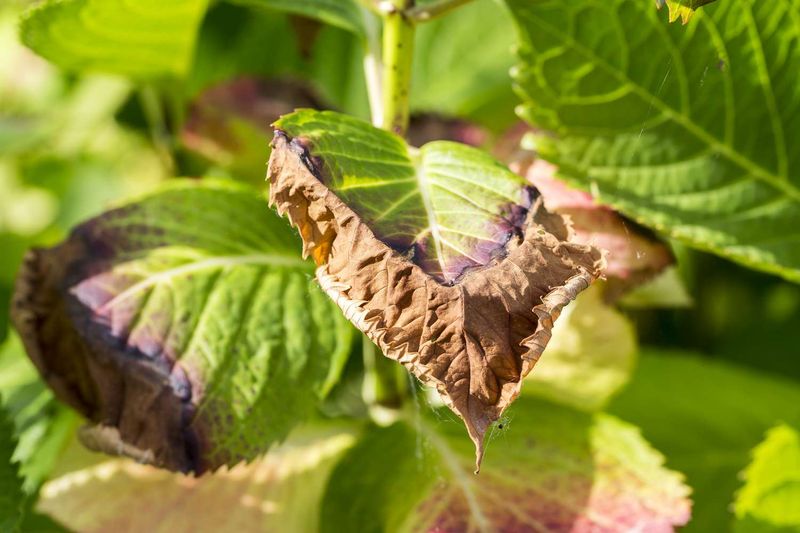
Brown, crispy edges on hydrangea leaves are distressing to see, but they are not a reliable indicator of any single cause. University of Missouri Extension’s overview of leaf scorch in ornamental shrubs identifies heat, drought, hot or drying winds, intense direct sun, and root damage as conditions that commonly produce brown leaf margins. Overwatering and root rot can also cause browning, but so can a dry spell or an afternoon of reflected heat from a nearby wall. The margin damage alone cannot tell you which of these is responsible.
One piece of practical advice worth following: heat-damaged leaves and flowers will not recover their appearance. OSU Extension’s heat-wave guidance for hydrangeas recommends against severe pruning during or immediately after a heat event because cutting back stimulates new tender growth at exactly the moment when the plant is already under stress. Remove only material that is clearly dead; otherwise, hold off until the weather moderates and the plant has had a chance to stabilize.
A separate clue worth checking during hot, dry weather is pest activity. Bronzing or stippled leaf surfaces, fine webbing on stems, and general yellowing that appears during a heat spell can point to spider mites rather than a watering problem. Flip a few affected leaves over and look at the undersides before making any changes to your irrigation routine. Adjusting water will not solve a mite infestation, and identifying the right problem keeps you from chasing the wrong fix.
Prevent the next heat-related collapse
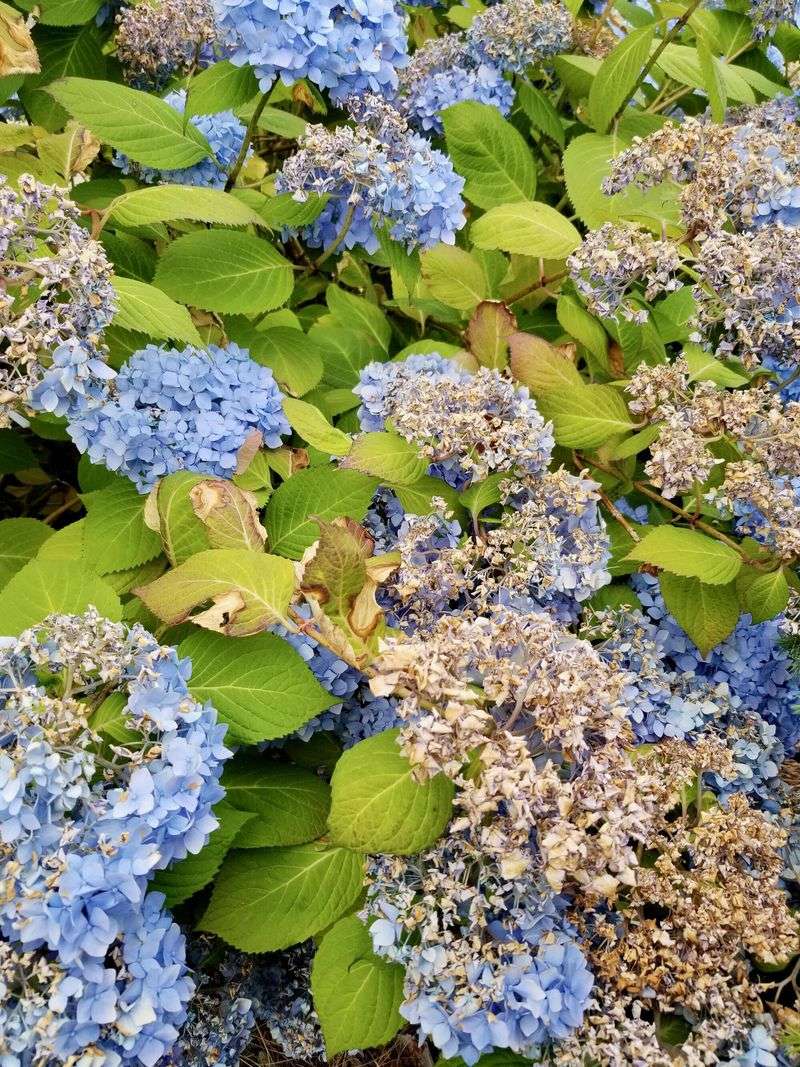
Catching a problem after the leaves are drooping is reactive. A few consistent habits during hot weather can reduce how often you find yourself in that position in the first place. Monitor root-zone moisture during heat spells by checking several inches below the surface every couple of days rather than waiting for visible wilt to appear. That small habit gives you a head start before the plant reaches the point of stress.
Maintaining a 2 to 3 inch mulch layer throughout summer is one of the most effective things you can do for soil temperature and moisture retention. OSU Extension’s hydrangea care guide emphasizes that hydrangeas need moist, well-drained soil – not saturated soil – and that consistent moisture management is more protective than corrective watering after the fact. If you have a low spot or a bed where water lingers after rain, correcting the drainage before the next heat wave protects roots from the oxygen-depleted conditions that lead to decline.
Direct irrigation water to the soil rather than routinely spraying the foliage. University of Maryland Extension notes that overhead watering can prolong leaf wetness and splash pathogens through the plant canopy, creating conditions that favor leaf-spot diseases. Adjust your approach for the type of hydrangea you are growing, its age, its exposure, and whether it is in a container or in the ground, since those factors change how quickly conditions shift from adequate to dry or from moist to waterlogged.
Use this three-way watering decision
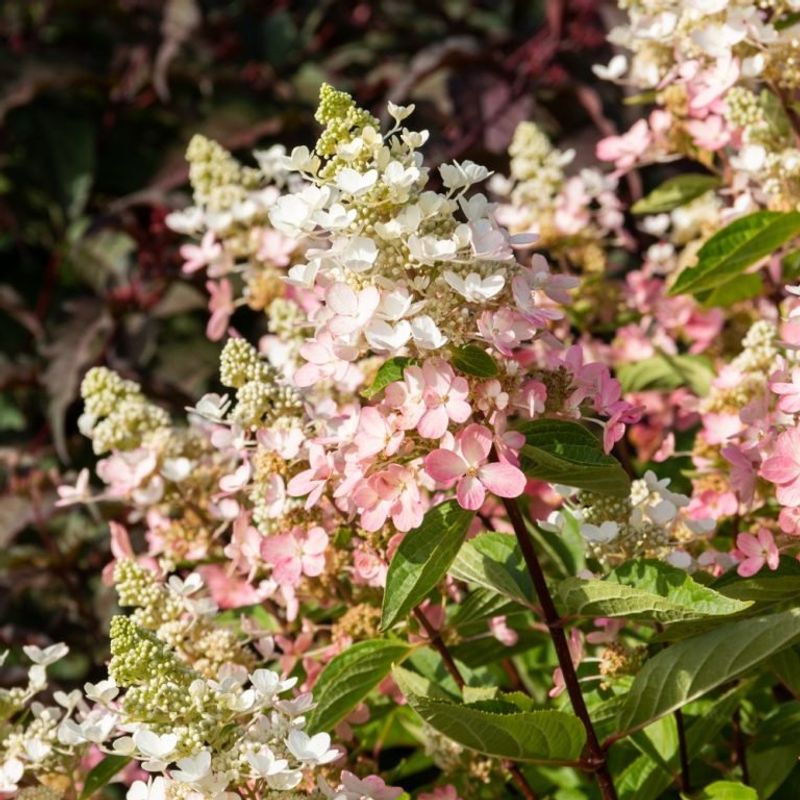
When your hydrangea wilts, the soil check you do in the root zone points you toward one of three responses. Wilt paired with dry soil 6 to 9 inches down calls for a slow, thorough soak directed at the base of the plant – not a quick sprinkle. Wilt paired with moist soil and a plant that recovers by evening or the next morning is more consistent with temporary heat stress; the right response is patience and shade management rather than automatic irrigation.
Wilt that persists even though the root zone feels soggy is the situation that calls for restraint. University of Maryland Extension and UMN Extension both point toward investigating drainage and root conditions rather than adding more water when soil is already saturated. Withhold irrigation, examine how water moves through the bed, and treat root damage as a possibility worth ruling out.
Leaves cannot prescribe a watering schedule on their own. A wilting hydrangea is asking you to look below the surface before you decide what to do next – and that single check is usually enough to point you in the right direction.