
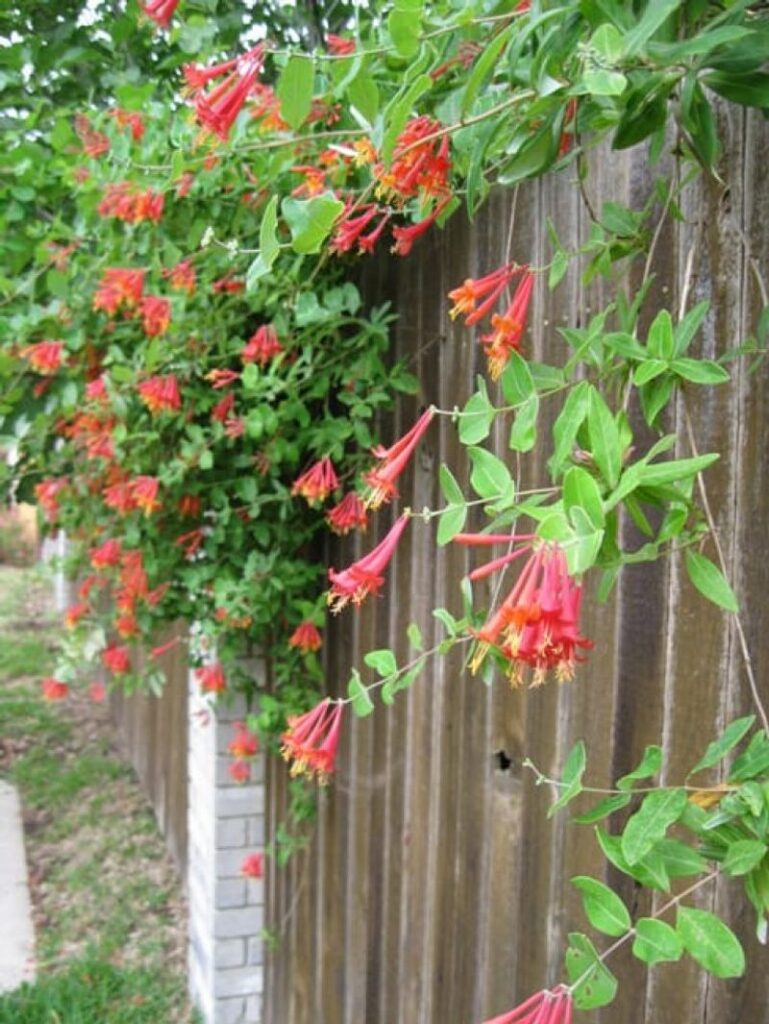
Wisteria can look romantic for one spring, then spend the next decade trying to swallow your fence, trees, and patience. In Texas, you have better native choices that handle heat, drought swings, clay or rocky soil, and local pollinators without turning into a full-time removal project. These vines can soften privacy fences, feed wildlife, and bring real seasonal color while staying far more manageable with normal pruning. If you want coverage without regret, start with natives that already understand Texas weather.
1. Coral Honeysuckle

Coral honeysuckle is one of my favorite Texas fence vines because it gives you color without the bullying habits of Japanese honeysuckle or wisteria. Its red to coral trumpet flowers show up heavily in spring, then repeat off and on when moisture and heat line up. Hummingbirds find it fast, so you get movement along the fence instead of just foliage.
Plant it in sun to part shade, especially in Central, North, and East Texas where it handles ordinary garden soil well. In hotter western spots, a little afternoon shade helps keep leaves fresher. Give it a trellis, cattle panel, or wire support, then prune after bloom to keep it full and polite.
2. Crossvine

Crossvine is a tough native choice when you want quick coverage on a sturdy fence without inviting a monster. It climbs with small tendrils and adhesive tips, so it can grip lattice, welded wire, or rough wood more easily than twining vines. The orange, red, or yellow trumpet flowers are spectacular in spring and often catch hummingbirds during migration.
It tolerates Texas heat, periods of drought once established, and a range of soils from sandy East Texas ground to heavier clay. Full sun gives the best bloom, while part shade still works for foliage screening. Prune after the spring flower flush, and remove wayward stems before they wander onto gutters or nearby shrubs.
3. Passionflower Vine

Passionflower, especially purple passionflower, brings a wild Texas look to a fence without acting like imported wisteria. The flowers look almost unreal, with lavender petals and fringed centers that make visitors stop and ask what you planted. It is also a host plant for Gulf fritillary butterflies, so expect caterpillars and chewed leaves as part of the show.
This vine can spread by runners, but it is usually much easier to manage than wisteria if you patrol edges. Give it sun, good drainage, and space where summer growth can ramble across wire or rail fencing. In colder parts of Texas it may freeze back, then return from the roots when soil warms.
4. Snapdragon Vine

Snapdragon vine is a lighter, more delicate native for Texas gardeners who want charm rather than a heavy woody climber. Its small purple, pink, or violet flowers resemble tiny snapdragons, and the fine foliage suits picket fences, porch rails, and small garden enclosures. It is especially useful where a massive vine would overwhelm a narrow side yard or courtyard.
This vine often behaves as a short-lived perennial or reseeding annual, depending on your winter lows and drainage. It appreciates sun to part shade and is well suited to rocky Hill Country soils once established. Keep seedlings you like, pull those you do not, and you will have easy seasonal coverage with very little drama.
5. Carolina Jessamine

Carolina jessamine is a graceful evergreen to semi-evergreen vine that can turn a Texas fence golden in late winter or early spring. The fragrant yellow flowers arrive when many yards still look tired, giving you a bright preview of the growing season. It twines neatly, so it is easier to train than aggressive woody vines that muscle through everything nearby.
Use it in East Texas, the Gulf Coast, and protected Central Texas sites where soil is reasonably drained. It handles sun to part shade, though better light usually means heavier bloom. Remember that all parts are toxic if eaten, so place it thoughtfully away from grazing pets, livestock, and curious children, then prune after flowering.
6. Pearl Milkweed Vine

Pearl milkweed vine is a quieter native, but it is a smart pick for gardeners who love unusual plants and Texas ecology. Its heart-shaped leaves and greenish star flowers with pearly centers look subtle from a distance, then fascinating up close. It will not create a dense privacy wall like crossvine, but it can soften a fence beautifully.
This vine fits Central and South Texas gardens with well-drained soil, including limestone areas where many fussier ornamentals struggle. It supports native insects and adds diversity without demanding constant irrigation once established. Give it a small trellis, fence wire, or nearby shrub for support, avoid overwatering, and let its natural, modest habit be part of the appeal.