
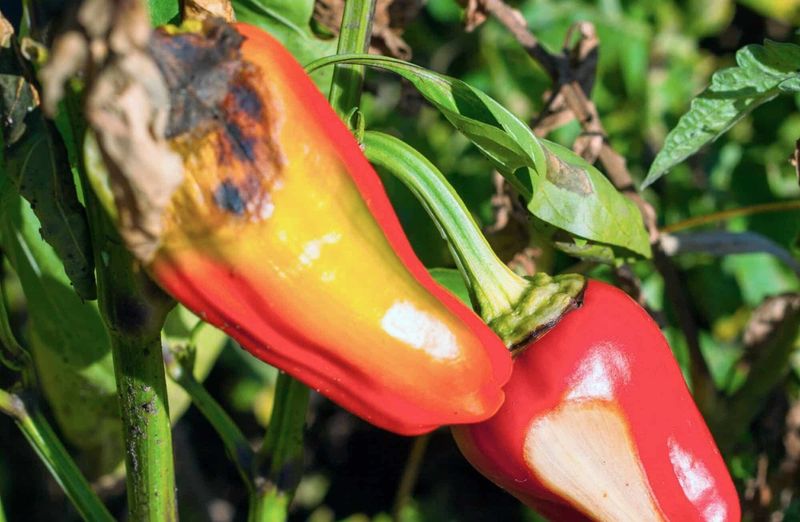
Walking out to your pepper patch and finding pale, leathery patches on fruit you have been watching for weeks is genuinely discouraging. Those white or tan sunken spots are often a sign of sunscald, a heat and light injury that catches gardeners off guard during summer heat waves. The good news is that once you understand what exposed that fruit to intense sun, you can take steps today to protect what is still growing. Pruning is one possible trigger, but it is not the only one, and knowing the difference matters.
Pale, leathery patches can signal sudden sun exposure
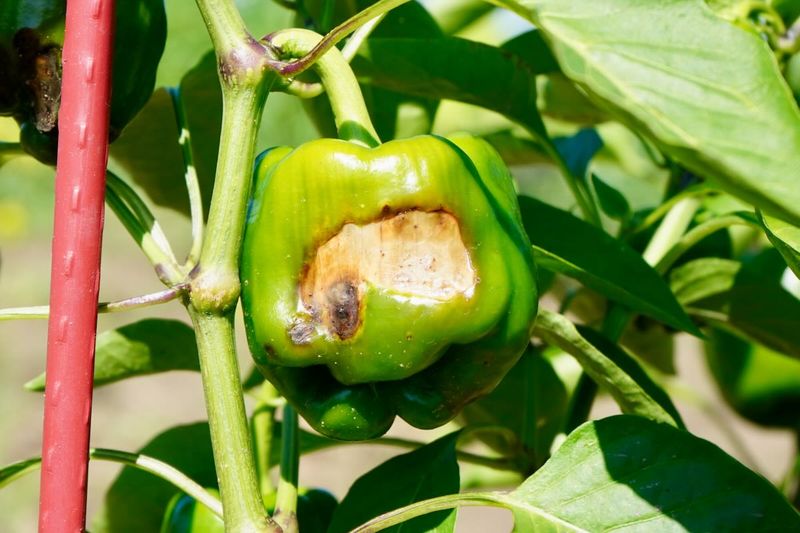
A pepper that looked perfectly healthy last week can develop a bleached, papery patch almost overnight during a heat wave. What you are looking at is likely sunscald, a noninfectious injury caused when intense light and heat hit fruit tissue that was not gradually exposed to those conditions. University of Illinois Extension plant disease guidance describes sunscald lesions as beginning soft, pale or blistered, then progressing to white, tan, sunken, wrinkled, dry, leathery or papery areas as the tissue dries out. Secondary fungi or bacteria can move into the damaged zone afterward, so what started as a simple heat injury can become something messier.
Your first diagnostic step is to check where the patch sits on the fruit. Sunscald most commonly appears on the sun-facing side, shoulder or another area that was recently open to direct afternoon light. That location clue is useful, but it is not definitive on its own. University of Georgia Extension’s pepper defect guide notes that exposure history and the overall symptom pattern both matter when trying to pin down a cause.
Think back over the past week or two: did anything change in how much shade that fruit was getting? A sudden shift in canopy coverage, not sunlight alone, is usually what tips a pepper from fine to scalded. The rest of this article works through the most common reasons that shift happens and what you can do about each one.
Pruning can expose fruit, but it is not the only trigger
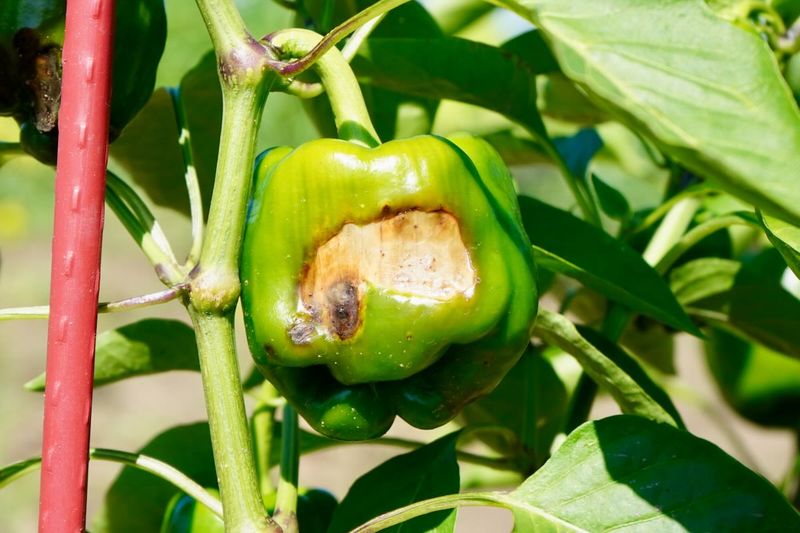
Healthy pepper leaves do real work beyond photosynthesis: they cast shade over the developing fruit hanging beneath them. When you remove a cluster of those leaves late in the season, fruit that had been sitting in filtered light is suddenly getting the full force of afternoon sun. South Dakota State University Extension’s leaf scorch and sunscald guidance confirms that sudden exposure is a key factor, and late pruning is one documented way that exposure happens.
However, pruning is far from the only path to the same outcome. University of Maryland Extension research on sunscald in peppers documents wind as another common culprit: a strong gust can push branches aside or cause a plant to lean, instantly moving fruit into direct sun even when the plant still has plenty of leaves. Broken stems, plant lodging after a heavy rain, insect defoliation, disease-related leaf drop and naturally sparse foliage on smaller-canopied varieties can all produce the same effect.
Before you settle on pruning as the explanation, compare the timing carefully. Did patches appear within a day or two of leaf removal? Or did you not prune at all, yet the damage still showed up? If you have not touched the plant recently, look for leaning branches, storm damage, spots on the leaves that suggest a disease moving through the canopy, or signs that insects have been feeding.
Matching the timeline of canopy loss to the first lesion is more useful than assuming a single cause.
Preserve useful foliage during extreme heat
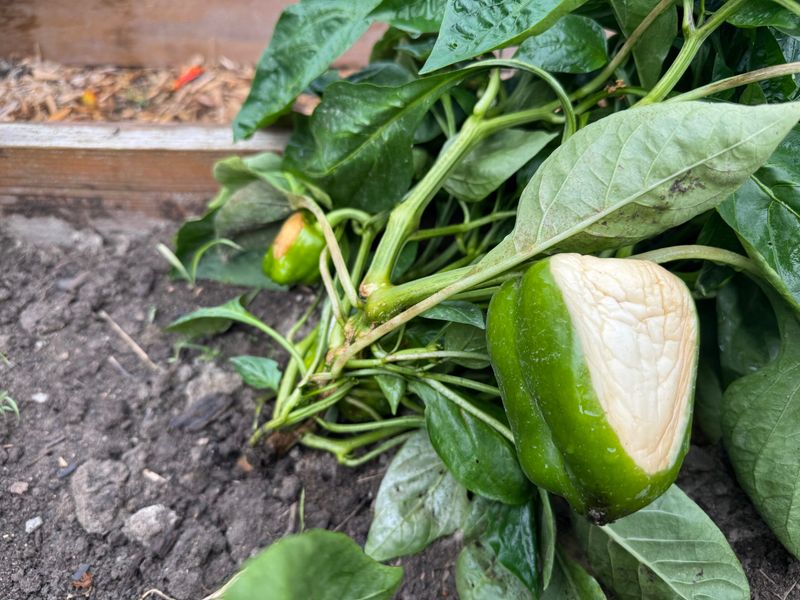
The most immediate thing you can do when sunscald appears is to stop opening the canopy further. Leave healthy leaves exactly where they are, especially any that are casting shade over developing fruit. During a heat wave, removing foliage is the wrong direction, even if your instinct is to tidy up the plant or improve airflow.
South Dakota State University Extension specifically recommends against stripping leaves that still provide shade, even when those leaves show some heat or sun damage themselves. A scorched leaf is not pretty, but it is still intercepting light and reducing the heat load on the fruit below it. Strip it reflexively and you may create the very exposure you were trying to avoid.
When cleanup genuinely is necessary, be selective. Remove material that is clearly dead, heavily diseased or so damaged that it poses a real infection risk. University of Minnesota Extension disease management guidance suggests not removing more than one-third of a plant’s leaves when addressing diseased foliage, and that figure is a conservative ceiling for disease control situations, not a routine pruning target. University of Illinois Extension’s pruning guidance for peppers reinforces that any foliage removal should be approached carefully when fruit is actively developing.
The goal right now is to keep the shade pattern intact, not to sculpt a picture-perfect plant.
Support the canopy so fruit stays shaded
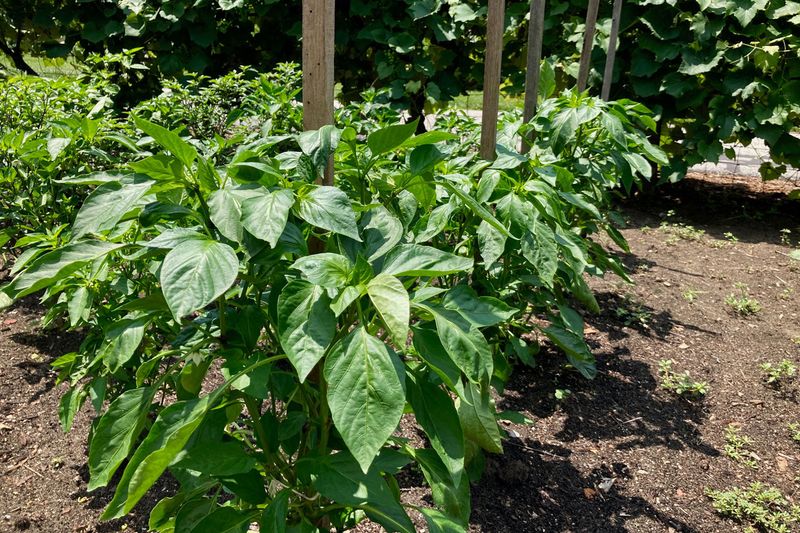
Even a plant with plenty of leaves can expose its fruit if branches are leaning at the wrong angle. Wind, the weight of developing fruit and wet soil after a heavy rain can all cause a pepper plant to tilt, rotating fruit that was previously tucked into shade directly into afternoon sun. Staking, tying and stringing are practical ways to hold the existing canopy in place and keep that shade pattern where you need it.
University of Maryland Extension’s sunscald research specifically identifies staking and tying as tools that reduce the leaning that suddenly exposes previously shaded peppers. Missouri Extension’s pepper growing guide also connects staking with reduced sunscald risk. A simple bamboo stake and a soft plant tie can make a real difference on a heavy-fruiting branch that has started to droop.
Physical support cannot reverse lesions that already exist, and it will not help if the problem is that too many leaves were already removed. Think of staking as a way to preserve the shade arrangement you still have, not as a substitute for foliage. Illinois Extension notes that limited pruning may still serve plant-health or disease-management goals in some situations, provided you retain enough healthy foliage to protect the fruit that remains. The practical test: before removing any leaf, ask whether the fruit below it will be exposed to direct sun if you do.
Manage moisture and add temporary afternoon shade
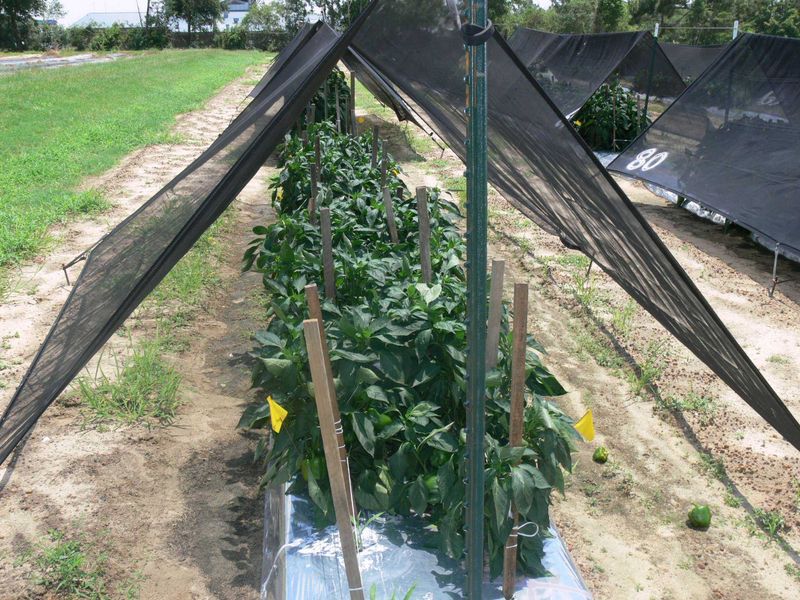
Consistent soil moisture plays a bigger role in pepper health during heat waves than many gardeners expect. When roots are stressed from drought, the plant struggles to move water through its tissues efficiently, which can make fruit more vulnerable to heat injury. Letting the soil go bone dry and then drenching it with a heavy soak creates a different kind of stress and can contribute to other problems. University of Minnesota Extension’s pepper growing guide recommends keeping soil moisture consistent rather than allowing dramatic swings.
A two-to-three inch layer of mulch around the base of the plant helps moderate those swings by slowing evaporation and keeping the root zone cooler. Missouri Extension and Utah State University Extension both recommend mulching as part of summer pepper care. Water at the soil surface using drip irrigation, a soaker hose or careful hand watering directed at the root zone. Avoid routinely wetting the foliage with overhead irrigation, because wet leaves are more prone to bacterial and fungal disease.
For fruit that is already exposed, temporary shade cloth or a screen positioned to block the hottest late-afternoon sun can limit additional damage. Oregon State University Extension’s pepper guide and Utah State University’s shade use research support temporary shading as a practical protective measure during extreme heat. Keep the shade structure open enough for good air movement, and remember that peppers still need full sun overall. These steps protect new fruit from additional exposure; they cannot repair tissue that is already damaged.
South Dakota State Extension is clear that affected areas will not recover.
Check for blossom-end rot or bacterial spot
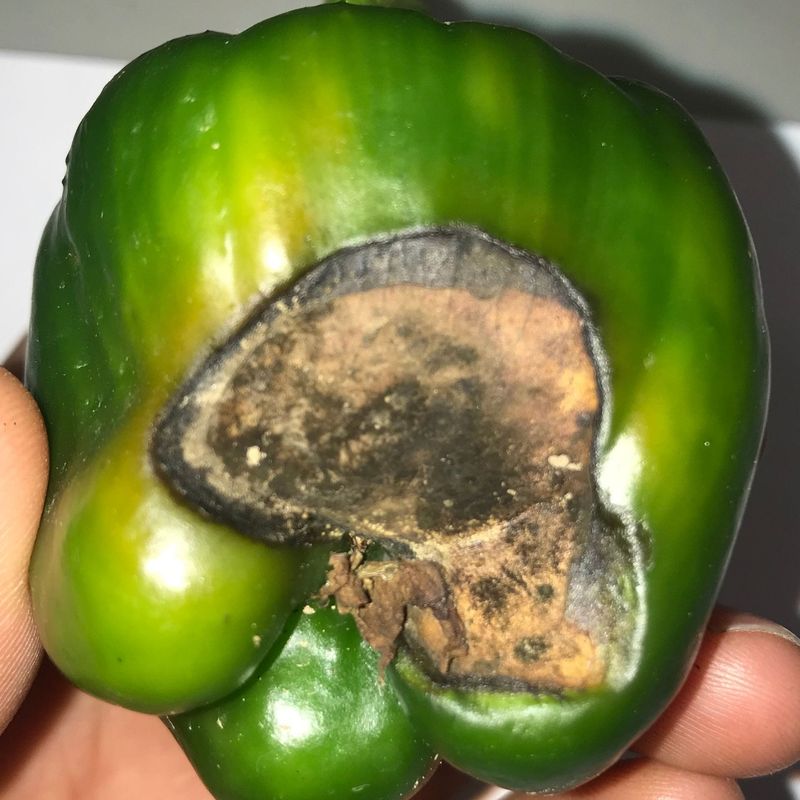
Not every damaged patch on a pepper points to sunscald, and treating the wrong problem will not help your plants. Two conditions worth ruling out are blossom-end rot and bacterial spot, both of which can produce lesions that gardeners sometimes confuse with sun damage.
Blossom-end rot is probably the most common look-alike. University of Minnesota Extension’s pepper fruit problem diagnostic explains that blossom-end rot typically begins at the blossom end of the fruit, which is the end opposite the stem, and develops as a dark brown or black sunken area. Sunscald, by contrast, is generally pale white or tan and appears on the sidewall or shoulder of the fruit in an area that corresponds to recent sun exposure. South Dakota State University’s blossom-end rot fact sheet and University of Georgia Extension guidance on blossom-end rot both reinforce that color and location are the key distinguishing features.
If the damaged area is dark and at the tip, blossom-end rot is more likely. Adding calcium to the soil will not help sunscald, and Minnesota Extension notes that foliar calcium applications are generally ineffective even for blossom-end rot itself.
Bacterial spot is a trickier situation because it can contribute to sunscald indirectly. University of Maryland Extension’s bacterial leaf spot resource describes water-soaked leaf spots that enlarge, turn tan and eventually cause leaves to drop. That leaf loss can expose fruit to sunscald even when you have not touched the plant with pruning shears. Bacterial spot can also produce raised, rough lesions directly on fruit, which look different from the smooth, sunken texture of sunscald.
If your leaves are showing water-soaked spots alongside the fruit damage, bacterial disease may be part of the picture. UGA Extension’s pepper defect guide recommends evaluating the full symptom picture rather than assuming a single cause.
Judge damaged peppers by their condition
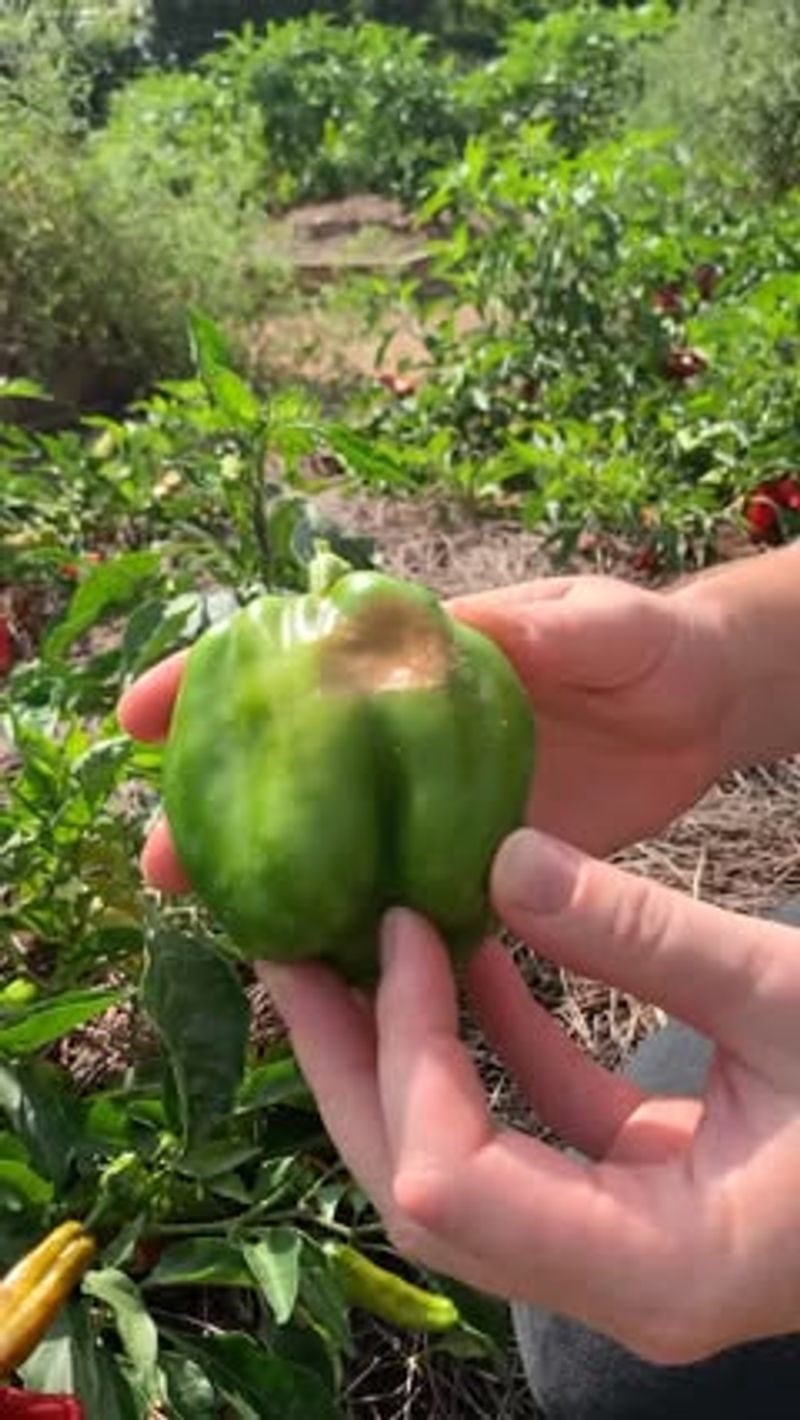
Once sunscald damage appears, the affected tissue is not going to recover. That is simply how the injury works: the cells are dead, and no amount of shade, water or fertilizer will restore them. What matters now is figuring out which peppers are still worth eating and which ones need to come off the plant entirely.
South Dakota State University Extension recommends removing badly damaged immature fruit from the plant rather than leaving it to worsen or attract secondary rot. For mature peppers with limited, dry damage confined to a small area, the situation is more forgiving. University of Maryland Extension’s sunscald resource supports cutting away the damaged section and using the rest of the pepper promptly once it has been properly washed.
Before cutting, rinse the pepper thoroughly under cool running water. FoodSafety.gov’s four steps to food safety is clear that soap, bleach and household cleaners should never be used on produce. After washing, cut away the damaged area with a clean knife, leaving a margin of sound tissue around it, and use the pepper the same day.
Discard any pepper that feels soft or watery when you press it, shows visible mold, smells off or has extensive decay spreading beyond the original lesion. South Dakota State’s pepper internal rot research notes that secondary pathogens can move into sunscalded tissue quickly, so when in doubt, throw it out. A small, dry, superficial patch on an otherwise firm pepper is a very different situation from a fruit that has gone soft or started to collapse.
Protect the next crop by managing exposure
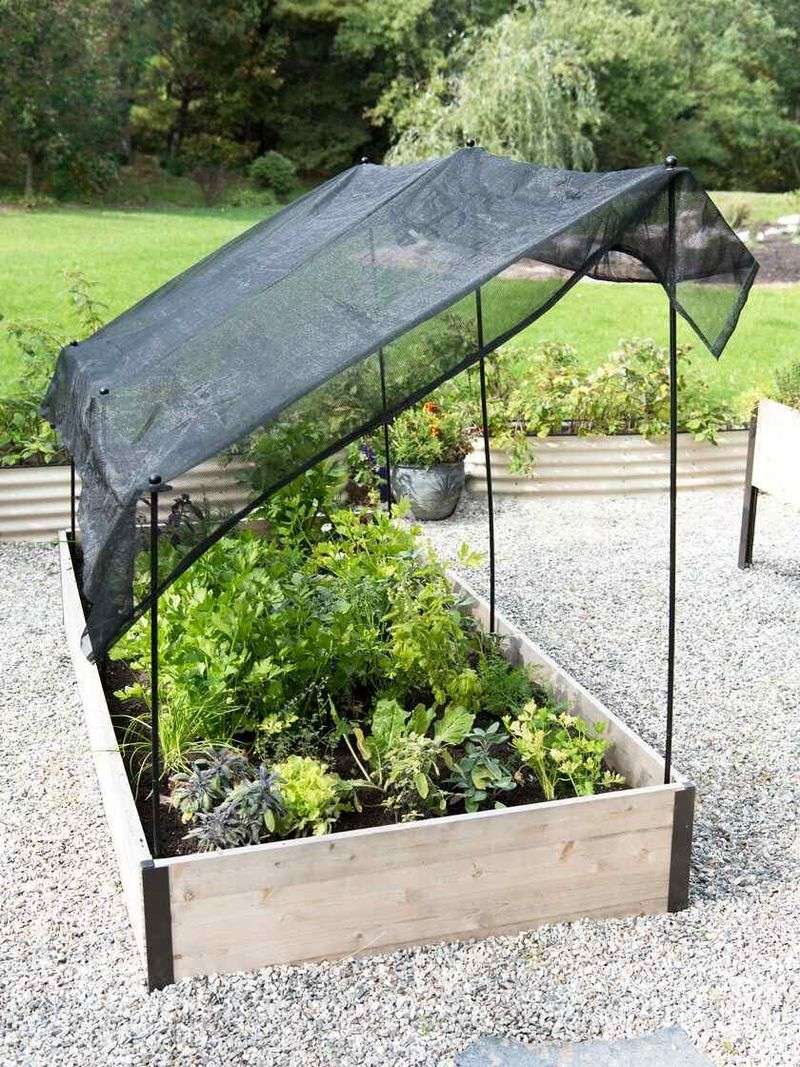
Protecting the fruit still developing on your plants comes down to a short list of actions you can take this week. Stop removing healthy leaves, particularly any that are shading green peppers. Stake or tie any branch that has started to lean or droop so that wind and fruit weight do not shift the canopy and expose new fruit. Keep the root zone consistently moist with mulch and surface-level watering, and set up a temporary shade screen on the west or southwest side of the plants if afternoon temperatures are regularly above 90 degrees Fahrenheit.
University of Illinois Extension’s sunscald documentation and South Dakota State Extension’s guidance both point to sudden exposure as the core mechanism, while University of Maryland Extension research reminds us that wind and lodging can cause that exposure even when you have not touched the plant. If new damage appears despite these steps, look at the lesion location, check the leaves for spots or drop, and consider whether insects, disease or a structural problem with the plant is the real driver.
Peppers belong in full sun, and the goal is never to eliminate sunlight from the equation. Managing exposure means keeping a healthy canopy over developing fruit and responding quickly when something disrupts it. A garden that stays one step ahead of sudden canopy loss will grow a lot more usable peppers than one chasing damage after it appears.