
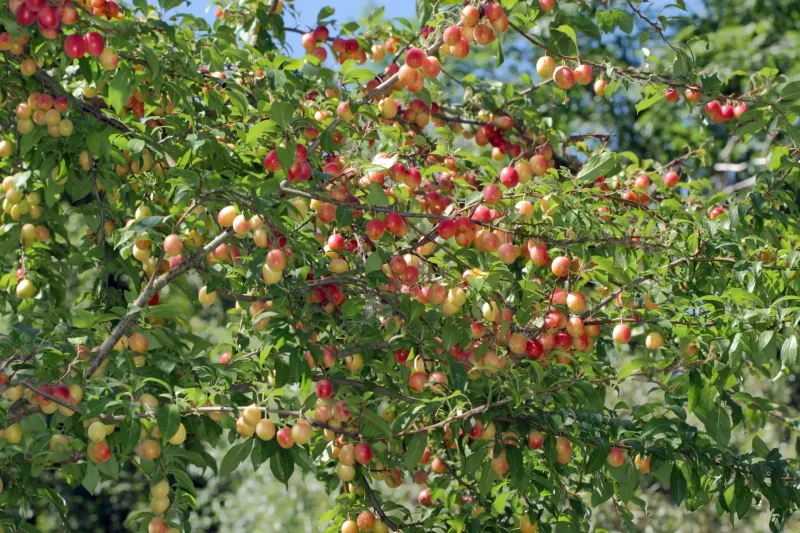
Two fruit-bearing North Carolina natives deserve a closer look from anyone who wants edible harvests and real wildlife habitat without planting an orchard. Red mulberry and Chickasaw plum both feed people and animals, bloom on their own schedule, and grow without the fertilizer and spraying routines that come with most fruit trees. Neither one is a perfect fit for every yard, but in the right spot, each one pulls more weight than almost any ornamental you could plant instead. Understanding where they thrive, and where they cause problems, is what makes the difference between a great addition and a regrettable one.
Why these natives fit some yards better than others
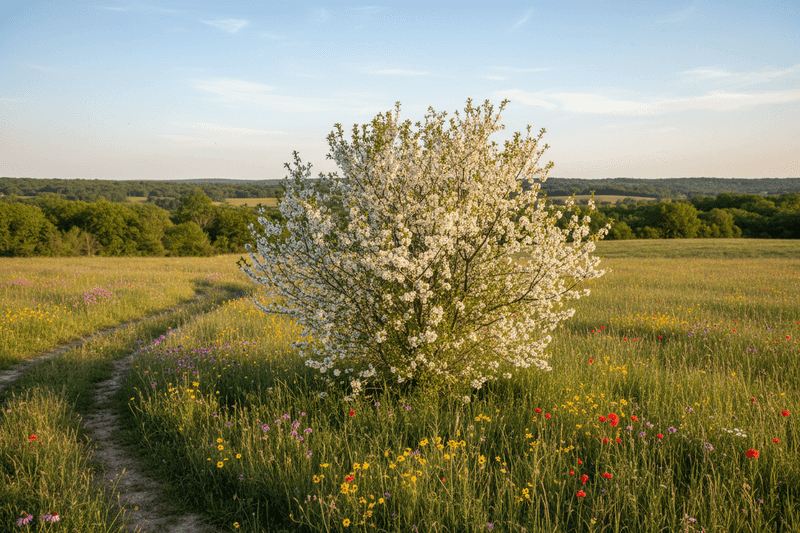
Not every native plant belongs in every yard, and red mulberry and Chickasaw plum are good examples of that truth. Both species are native to North Carolina, both produce edible summer fruit, and both support wildlife in documented ways. But their size, growth habits, and maintenance needs are different enough that choosing between them, or deciding whether either belongs on your property, comes down to honest site assessment rather than enthusiasm for native plants.
Red mulberry, Morus rubra, is a medium-sized tree with relatively modest cultural needs when planted in suitable soil. NC State Extension’s plant profile notes that it grows throughout North Carolina and performs best in rich, moist, well-drained soil with full sun to part shade. Its main drawbacks are fruit drop that can stain hard surfaces and occasional self-seeding, neither of which is a dealbreaker if the tree is sited thoughtfully.
Chickasaw plum is a different story in terms of upkeep. NC State classifies Chickasaw plum as high maintenance because it suckers aggressively, forms dense thickets, and can develop a range of pests and diseases. That suckering behavior is actually an asset along a naturalized edge or open wildlife strip, but it makes the plant a poor choice beside a walkway, a formal foundation bed, or a tight property line where spread is unwelcome.
Native status, as the NC State Extension Gardener Handbook makes clear, does not eliminate the need to match a plant to its site. Sunlight, drainage, soil quality, mature size, and tolerance for fruit mess or root spread all matter just as much with native species as with any other plant. The right yard for red mulberry has room for a spreading tree and a harvest area away from pavement. The right yard for Chickasaw plum has space for a thicket or a gardener willing to manage one.
Red mulberry offers edible fruit from a real tree
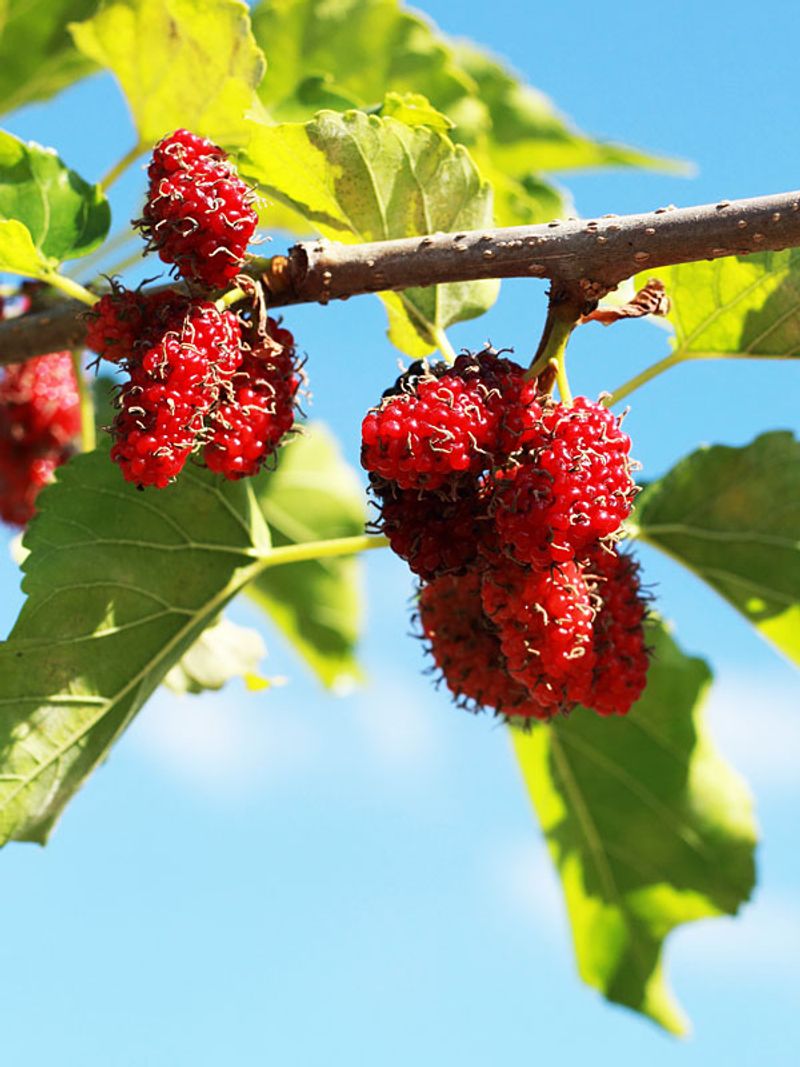
Red mulberry, Morus rubra, is the only mulberry species native to North Carolina, and that distinction matters more than it might seem. White mulberry is a separate, nonnative species that has been flagged as invasive in some regional guidance, so when choosing a mulberry for a wildlife or edible planting, the species name is worth confirming with your nursery before you buy.
As a tree, red mulberry earns its space. NC State’s profile puts typical height around 30 feet, while Audubon lists mature trees reaching up to 60 feet with a broad, spreading crown. Plan for a medium-sized tree, not a shrub, and give it room to grow outward as well as upward. Full sun to part shade both work, but full sun generally produces more fruit.
The tree performs poorly in poor or compacted soil, so rich, moist, well-drained ground is the target condition.
When a red mulberry is well sited, the summer fruit crop is genuinely worthwhile. Ripe berries are sweet and can be eaten fresh, added to baked goods, or made into jam. Birds arrive quickly once the fruit colors up, which is part of the appeal for wildlife gardeners. The catch is that ripe fruit drops fast and stains whatever it lands on.
Concrete driveways, patios, wooden decks, parked vehicles, and sidewalks are all candidates for purple staining that does not wash off easily.
Site the tree where fallen fruit lands on mulch, lawn, or bare ground rather than any hard surface. A location at least 20 to 30 feet from the house, driveway, or paved path gives the spreading crown room and keeps the mess away from places it will cause problems. Self-seeding is also possible, so seedlings may appear nearby and should be pulled when small if unwanted spread is a concern.
Chickasaw plum builds habitat through flowers and thickets
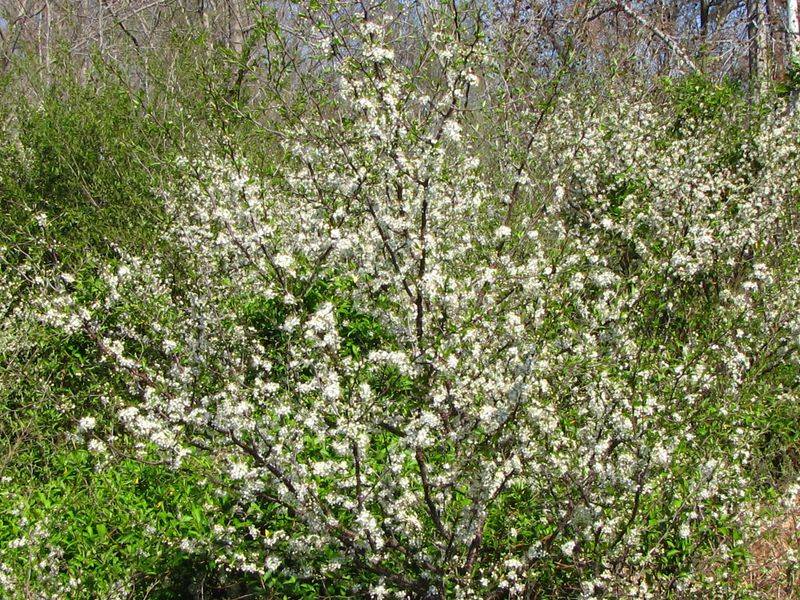
Chickasaw plum starts earning its keep before most trees have leafed out. White flowers open in early spring, often while nights are still cold, making the plant one of the earliest nectar sources available to bees and other pollinators in the yard. That early bloom is a genuine contribution to the local pollinator community, particularly in years when other flowering plants are slow to start.
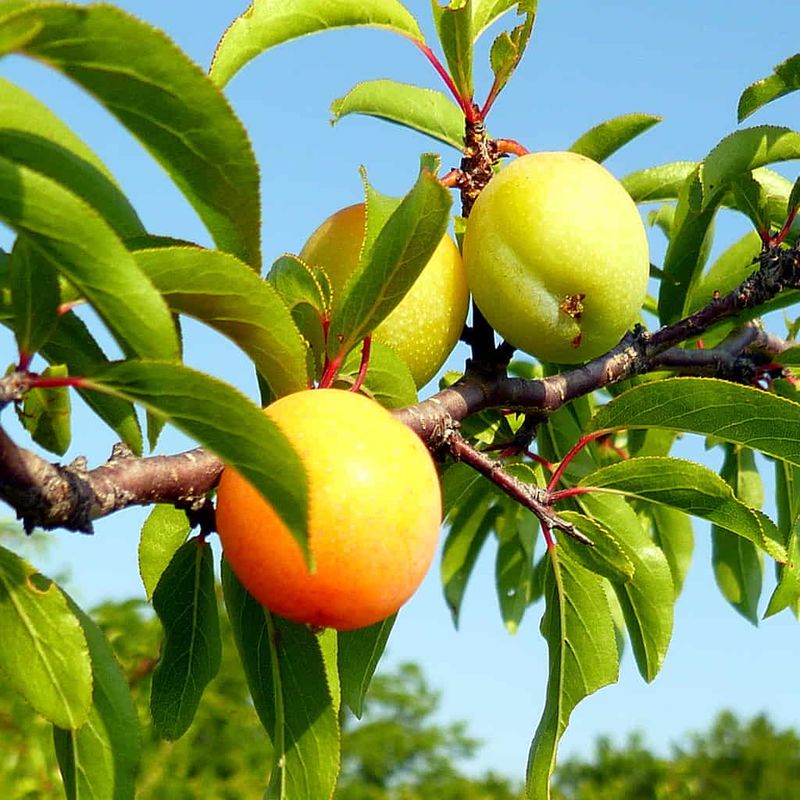
The plant grows as a shrub or small, multi-stemmed tree, typically reaching 4 to 15 feet tall and spreading 4 to 20 feet wide according to NC State’s Chickasaw plum profile. Yellow-to-red fruit ripens from roughly May through July. Beyond pollinators, Chickasaw plum serves as a larval host for eastern tiger swallowtails, coral hairstreaks, spring azures, viceroys, red-spotted purples, and several moth species. Birds, turkeys, deer, and small mammals eat the fruit, and the dense growth provides cover and nesting sites for songbirds and other wildlife.
The thicket-forming habit is the plant’s central tradeoff. Root suckers spread outward from the base, and if left alone, a single plant can expand into a dense colony over several years. Along a back fence line, a meadow edge, or an open slope where wildlife cover is the goal, that thicket is an asset. Beside a walkway, a play area, a formal bed, or a neighbor’s property line, it becomes a recurring management problem.
UF/IFAS extension guidance on Chickasaw plum reinforces that placement away from areas where spread is unwelcome is the key to keeping the plant manageable.
Pest and disease pressure is real and documented. Chickasaw plum can develop plum curculio, brown rot, leaf spot, canker, black knot, aphids, scale insects, borers, and tent caterpillars. None of these problems are automatic, but they are common enough that anyone planting Chickasaw plum should plan to monitor the plant rather than ignore it after the first season.
Wildlife benefits do not equal pest control
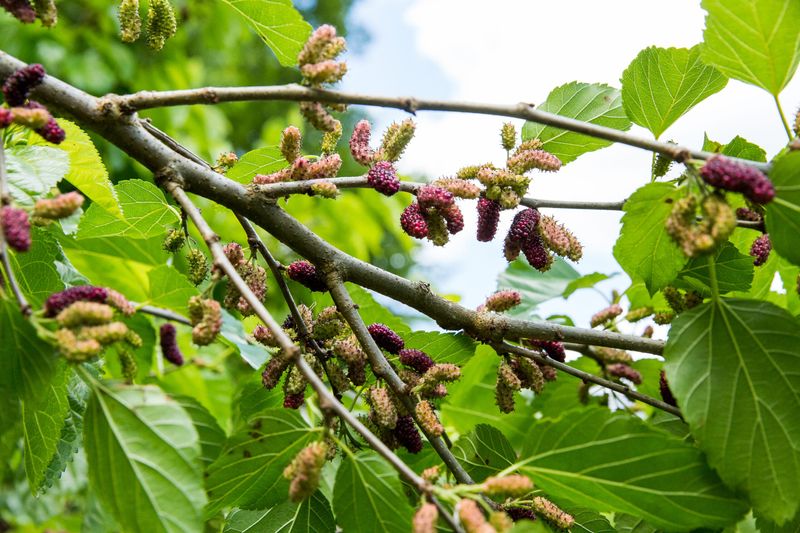
Both plants deliver real wildlife value, and that value is worth understanding on its own terms rather than as a promise of something more. Red mulberry fruit draws a broad range of birds and mammals during summer. Catbirds, mockingbirds, and many other bird species feed on the ripe berries, as do foxes, opossums, raccoons, and squirrels, according to NC State’s mulberry cultivar resource and Audubon’s native plant profile for red mulberry. That fruit availability during the summer months is a meaningful contribution to local food webs.
Chickasaw plum adds a different set of benefits. Early flowers feed bees and other pollinators when alternatives are scarce. The foliage supports butterfly and moth larvae through the growing season. Dense thickets offer cover, nesting spots, and escape routes for songbirds and small mammals.
The fruit feeds birds, turkeys, deer, and other wildlife from late spring into midsummer. Taken together, those contributions are substantial, covering food, reproductive support, and shelter across multiple wildlife groups.
What neither plant does, based on the evidence available, is reduce ticks, cut mosquito populations, or keep birds away from your vegetable garden or other fruit crops. Planting fruit-bearing natives may attract more birds and mammals to your yard, which is wonderful for wildlife watching but should not be counted on as a diversion strategy. The honest case for red mulberry and Chickasaw plum is that they feed people and wildlife, support pollinators, and contribute to a functioning native plant community. That case is strong enough without adding pest-control claims that the evidence does not back up.
Let the planting site decide the match
Matching these plants to the right spot is the most important decision a homeowner makes, and it starts with being honest about what the yard actually offers. Red mulberry’s mature form, a broad, spreading crown on a tree that commonly reaches 30 feet or more, means it needs genuine open space. Planting one within 20 to 30 feet of a driveway, sidewalk, patio, or parking area sets up a staining problem that will last for decades. The fruit is ripe and dropping for several weeks each summer, and purple mulberry juice on concrete or a vehicle finish is stubborn to remove.
NC State’s red mulberry profile confirms that the tree prefers rich, moist, well-drained soil and performs poorly in poor ground. That rules out compacted clay, dry sandy spots without amendment, and low-lying areas that stay wet. Full sun favors fruit production, so a partly shaded location under taller trees will reduce the harvest even if the tree survives.
Chickasaw plum is more forgiving of soil variation. NC State lists it as tolerant of a broad range of conditions, and USDA guidance describes it as drought tolerant once established. Full sun to part shade both work, though full sun generally produces more fruit and stronger growth. The real site constraint is width: a mature Chickasaw plum can spread 20 feet, and suckers push that footprint wider over time.
Any location where lateral spread would create a conflict, a property line, a play area, a foundation planting, should be ruled out.
Both plants are listed for the Coastal Plain, Piedmont, and mountain regions of North Carolina, as the NC State Extension Gardener Handbook on native plants supports. Being native statewide does not mean every yard in every region is automatically suitable. Local drainage, sun exposure, and available space still determine whether either plant will thrive or become a problem.
Plan for establishment and recurring management
Getting either plant through its first year or two requires more attention than the long-term routine, and understanding that distinction helps set realistic expectations. Chickasaw plum needs regular watering during the establishment period, which typically runs through the first growing season and sometimes into the second. UF/IFAS guidance on Chickasaw plum notes that once established, the plant tolerates dry conditions well, though supplemental watering during extended summer drought still improves performance and fruit quality.
Red mulberry is less demanding during establishment but has one specific pruning window that matters. NC State recommends pruning in late fall or winter, when the tree is less likely to bleed sap. Pruning at other times of year, particularly in spring or early summer when growth is active, can cause heavy sap flow from cuts. Keeping pruning work in the dormant season avoids that problem and makes wound closure more reliable.
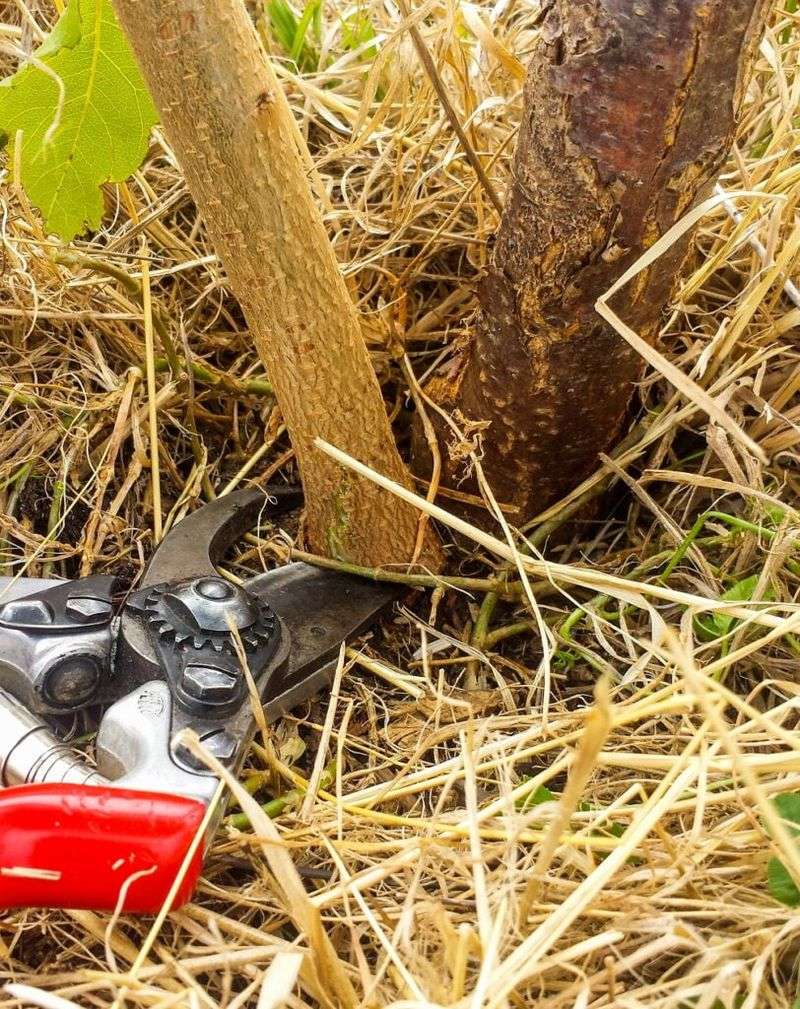
Managing Chickasaw plum over the long term depends entirely on what outcome the homeowner wants. Gardeners who want a contained shrub need to remove root suckers promptly and consistently, cutting them at ground level as they appear. NC State’s Chickasaw plum profile confirms that allowing suckers to develop will produce a spreading wildlife thicket, which is a legitimate and valuable goal for the right location. The choice between those two outcomes is not automatic; it requires a decision and follow-through.
Pest and disease monitoring is part of the honest picture for both plants. Chickasaw plum is particularly susceptible to plum curculio, brown rot, black knot, aphids, scale, borers, tent caterpillars, and various fungal diseases. Red mulberry is generally more problem-free but is not immune. Neither plant comes with a guarantee of trouble-free seasons, and gardeners should check their plants periodically rather than assuming native equals pest-resistant.
Harvest safely and set realistic fruit expectations
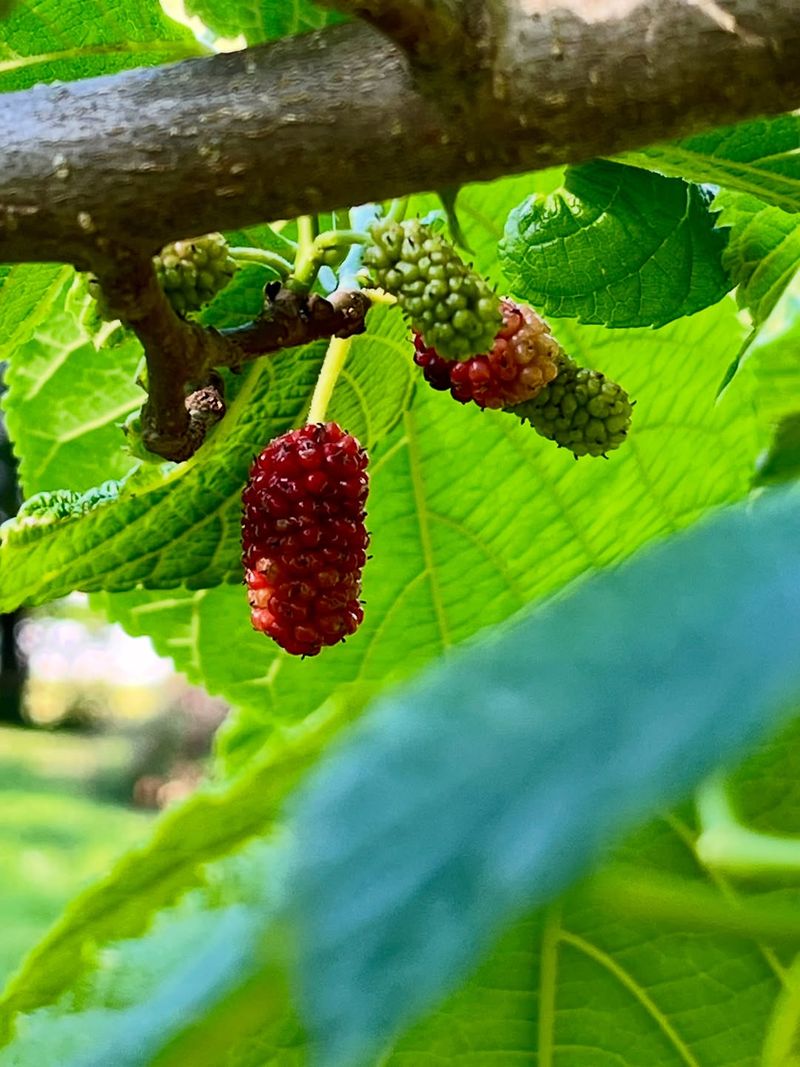
The two crops are genuinely different as food, and treating them the same way leads to either disappointment or a safety problem. Red mulberry fruit, when fully ripe, is sweet and can be eaten fresh, used in baked goods, or made into preserves. The critical qualifier is fully ripe. NC State’s red mulberry profile states clearly that unripe fruit and the tree’s milky sap are poisonous, while ripe fruit is safe to eat.
Ripe red mulberries are dark red to nearly black and come off the branch with no resistance. Fruit that is still red or pink, or that requires pulling, is not ready.
Chickasaw plums are small, and most are tart enough that fresh eating is not the obvious use. NC State notes that the fruit is often better suited to preserves and jellies than straight off the branch. That is not a flaw so much as a realistic description: a jar of Chickasaw plum jelly made from backyard fruit is a worthwhile outcome, but expecting grocery-store sweetness from a wild-type native plum will lead to frustration. Yields can also be uneven from year to year depending on weather, pest pressure, and the age of the plant.
Before eating, blending, or processing Chickasaw plums in any form, remove and discard the pits. Plum pits contain cyanogenic compounds, and Poison Control explains that chewing or crushing pits increases exposure to those compounds in ways that swallowing an occasional intact pit does not. The practical rule is simple: pit the fruit before it goes into any recipe, smoothie, or jar, and keep pits away from children. An accidentally swallowed whole pit is unlikely to cause harm in an adult, but that is not a reason to leave pits in food being prepared for the table.
Fruit yields from both plants can vary with age, sun exposure, soil quality, and seasonal conditions. Neither plant should be counted on to produce a reliable orchard-style crop every year, especially in the first several years after planting.
Choose the plant that matches your tolerance for tradeoffs
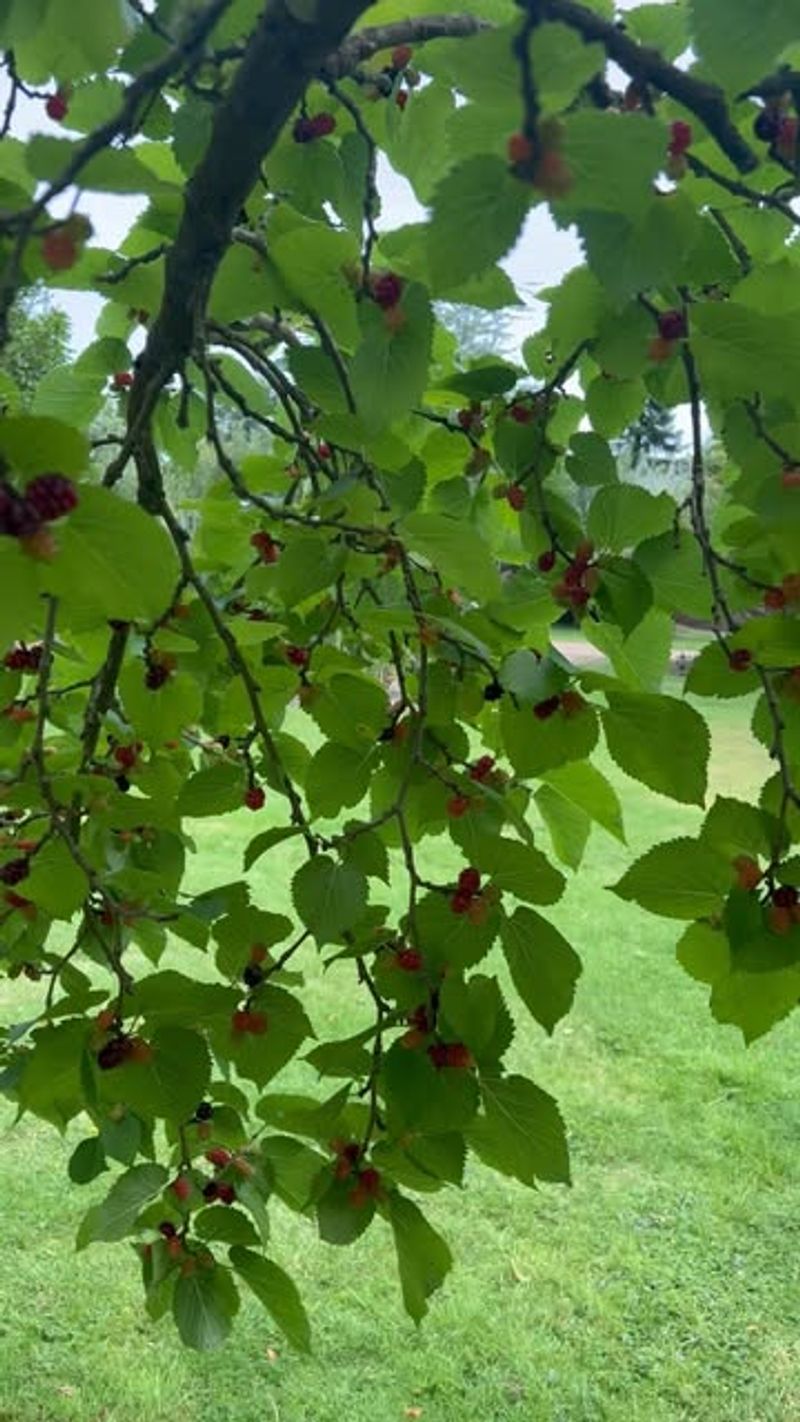
Choosing between these two plants is mostly a question of what your yard can absorb. Red mulberry suits homeowners who have room for a medium-sized tree with a broad, spreading crown, soil that is rich and well-drained rather than compacted or sandy, and a harvest zone where dropped fruit lands on grass or mulch rather than concrete or wood. If those conditions are present, red mulberry is a straightforward native fruit tree that feeds people and wildlife with relatively modest ongoing care.
Chickasaw plum fits a different kind of yard. Homeowners who have an informal edge, a back fence line, a slope, or an open strip where a spreading thicket would be welcome rather than a problem are the right candidates. The plant rewards anyone who wants early spring flowers for pollinators, larval-host foliage for butterflies, summer fruit for preserves, and dense cover for birds, and who is willing to either manage suckers consistently or let the thicket develop intentionally. NC State’s full profile lays out both the benefits and the documented maintenance demands clearly enough that anyone reading it will know what they are signing up for.
Neither plant belongs in every yard, and neither one eliminates the maintenance that comes with growing fruit. What both plants offer is a connection between your yard, your table, and the wildlife that moves through your neighborhood, built around species that belong in North Carolina’s landscape. A yard with the right site for either one is a yard worth planting it in; a yard without that site is better served by a different choice, and knowing the difference is the whole point.