
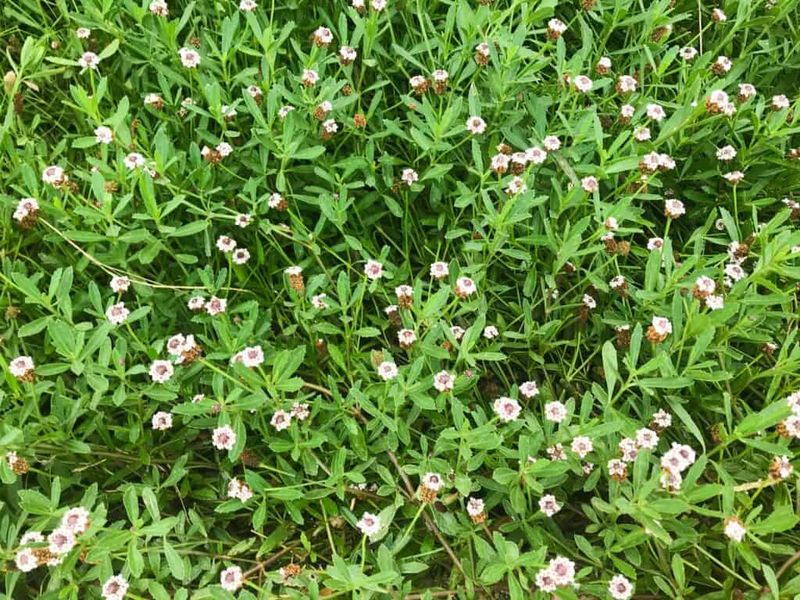
Grass often thins out under Florida trees, even when you water it. Too much shade, thirsty roots, and sandy soil can make those patches hard to fix.
Native ground covers give you another way to turn bare dirt into a planted space. The best choice depends on how much light and moisture the spot gets.
1. Twinflower
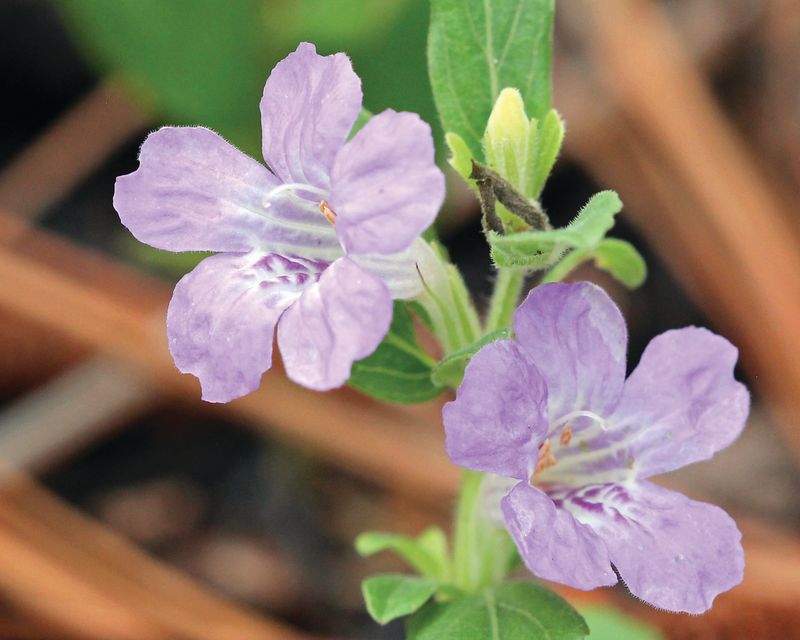
That dry patch beneath an oak may be the toughest place in the yard to grow grass. Twinflower, or Dyschoriste oblongifolia, is a good plant to try where tree roots compete for water.
Its low stems spread outward, and small lavender blooms add color without making the bed look overgrown.
Give twinflower dappled light or part shade and soil that drains well. It suits many of Florida’s sandy yards, though new plants still need regular water while their roots settle in.
Plant several nursery-grown starts across the bare area rather than expecting one plant to cover it quickly. Leave room for the stems to spread, then mulch between them to keep soil from washing away.
Twinflower’s strength is its tidy, low look in a spot that is too dry for many shade plants. Once established, it usually needs little attention beyond pulling stray weeds and trimming stems that cross a path.
It is not a walking surface, so keep stepping stones wherever people cut through the bed. Choose it for a shady border or tree island where you want a soft, green finish with occasional flowers.
2. Creeping Sage
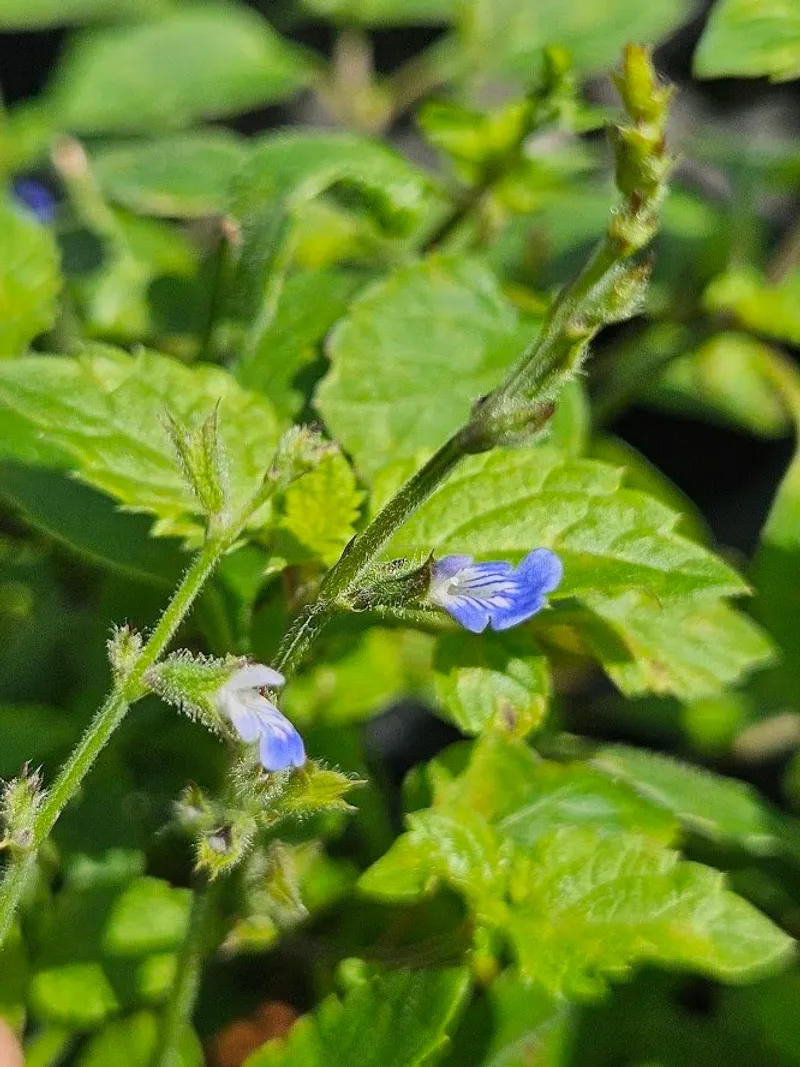
A shaded bed can still have flowers. Creeping sage, Salvia misella, sends thin stems along the soil and produces small, pale blue blooms that are easy to miss from a distance but lovely up close.
It is a particularly nice choice beside a bench or path, where you can see the details.
Unlike twinflower, creeping sage is happier where the soil holds some moisture. Try it in a sheltered, shady bed that gets rain or irrigation but does not stay flooded.
Florida sand can dry out fast, so add a thin layer of leaf mulch around new plants and check the soil during their first growing season. Water when the upper soil begins to dry rather than letting young plants wilt repeatedly.
Its trailing habit can knit small gaps between taller native plants, giving a mixed planting a more finished look. Creeping sage does not form a tough lawn substitute, and foot traffic will damage its stems.
Use it to cover soil, not a shortcut. If the planting becomes loose or uneven, trim a few wandering stems to keep the edge neat.
For a Florida gardener with a lightly moist shade bed, it offers low-growing greenery and a little bloom at the same time.
3. Partridgeberry
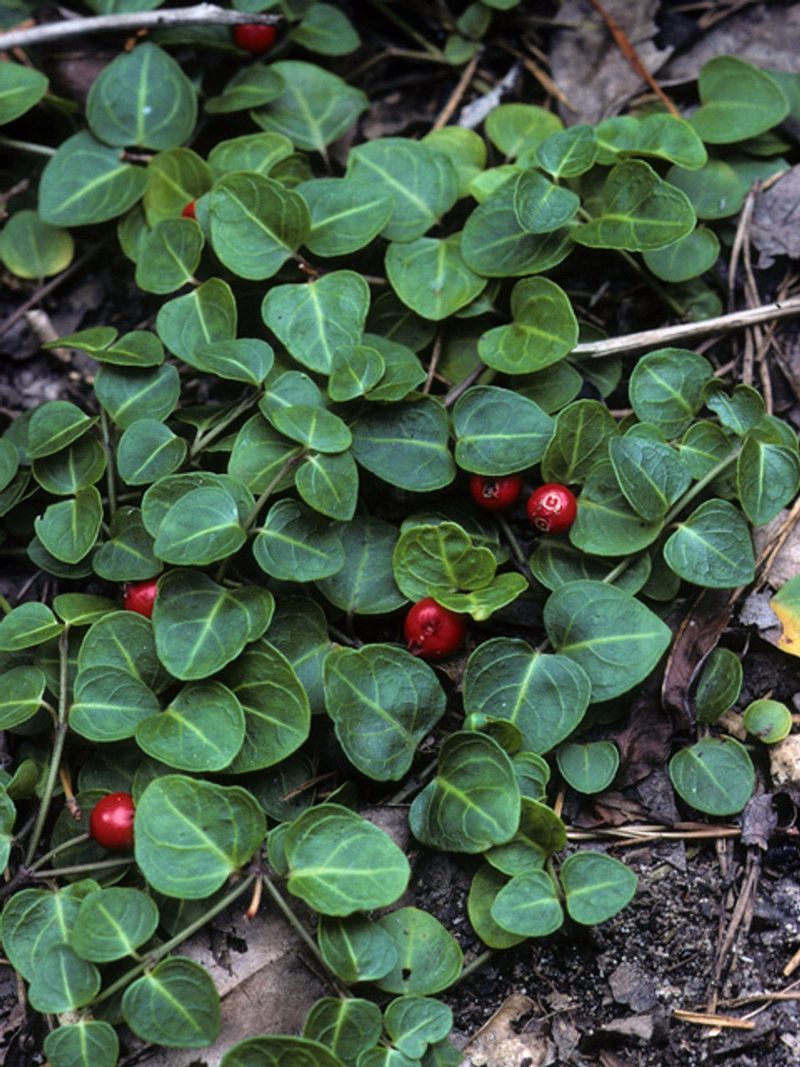
For a woodland look, partridgeberry keeps things wonderfully small. Mitchella repens trails close to the ground, with rounded leaves, little white flowers, and red berries that can remain visible for months.
It brings texture to a shaded planting without hiding fallen leaves or nearby ferns.
This is a more selective choice than an all-purpose ground cover. Partridgeberry grows best in the cooler parts of Florida, especially in moist, acidic, humus-rich soil with steady shade.
A dry, exposed sand patch beneath a thirsty tree is not its ideal home. Look instead for a sheltered area that stays evenly damp, and leave natural leaf litter in place to help protect the roots.
Check with a local native nursery about plants suited to your part of the state.
Set out nursery-grown plants in a group so they can gradually join together. Growth may be slow, which makes patience part of the plan.
Avoid raking the bed clean or walking across it; both can disturb the delicate stems. Partridgeberry earns its spot on this list for gardeners who want a quiet, evergreen-looking carpet in a true woodland corner, not a fast fix for every patch of dead grass.
4. Walter’s Violet
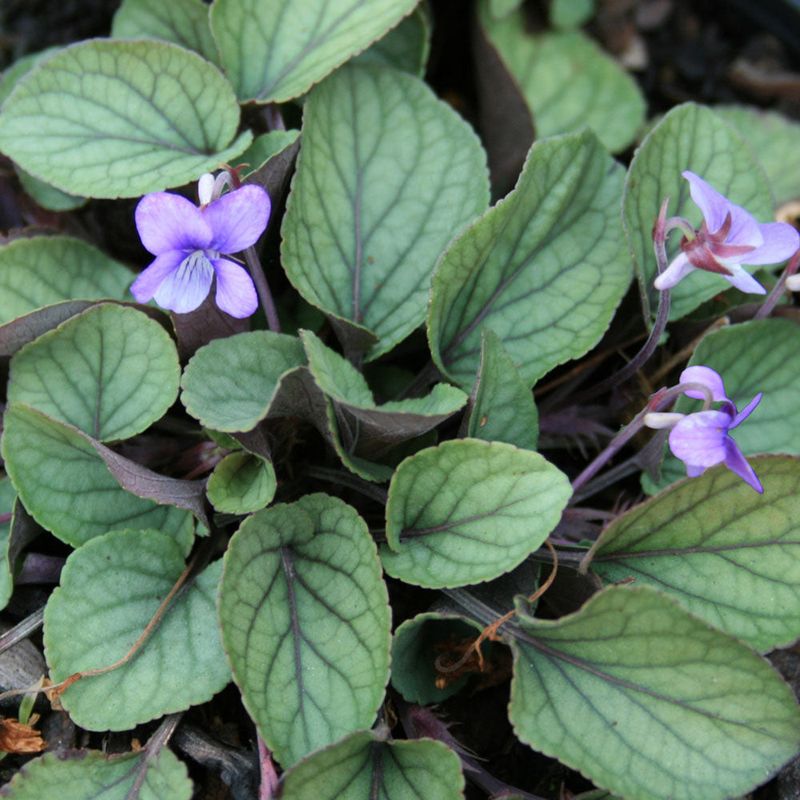
Little purple flowers can change how a bare tree bed feels in spring. Walter’s violet, Viola walteri, is a low-growing native violet that spreads along the ground and fits naturally among fallen leaves.
Its flowers are a bonus; the real job is covering small openings with foliage where a neat lawn has struggled.
Give it shade or dappled light and a spot that does not bake dry every afternoon. Soil beneath established trees varies, even within one yard, so watch the area after rain and during a dry spell before planting.
Set out several plants where conditions look promising, then keep them watered as they establish. A light covering of leaves makes more sense here than a thick pile of mulch that could bury the plants.
Walter’s violet works especially well in a less formal yard where plants are allowed to weave around roots and stones. Let it spread into open soil, but keep an eye on the edge if you want a crisp border.
Do not expect it to handle regular mowing or games on the lawn. If your goal is a small, flower-dotted patch beneath trees, this violet offers a much better match than trying to force turf through another season of shade.
5. Frogfruit
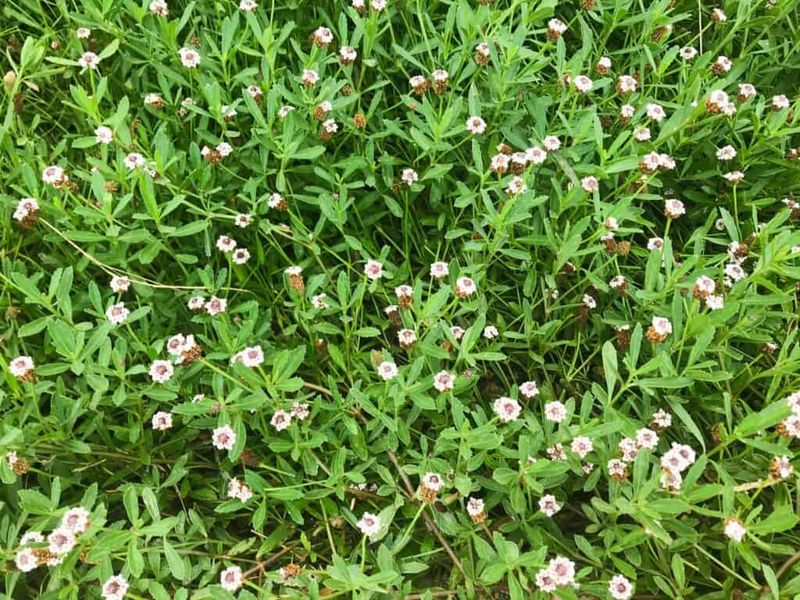
Not every dying strip of grass is in deep shade. At the bright outer edge of a tree canopy, frogfruit, Phyla nodiflora, can spread into a low green cover while offering small flowers for visiting insects.
It is the pick for the part of your problem area that still catches useful light.
Plant frogfruit in part sun or bright, shifting shade. Too little light can leave it thin and short on flowers, so do not tuck it into the darkest corner beneath the trunk.
It tolerates a range of Florida soils once established, but water new plants until they begin to spread. Place starts across the strip you want covered, mulch exposed soil lightly, and give runners time to fill the spaces between them.
Frogfruit can take occasional light foot traffic better than many delicate woodland plants, though a busy walkway still calls for pavers. You can trim it if it wanders past the bed, or let it make a relaxed edge along a path.
Its blooms can attract butterflies and other pollinators, which is a welcome payoff beside a patio or front walk. Check the light first: frogfruit solves the bright-shade problem, not the deep-shade one.
6. Florida Peperomia
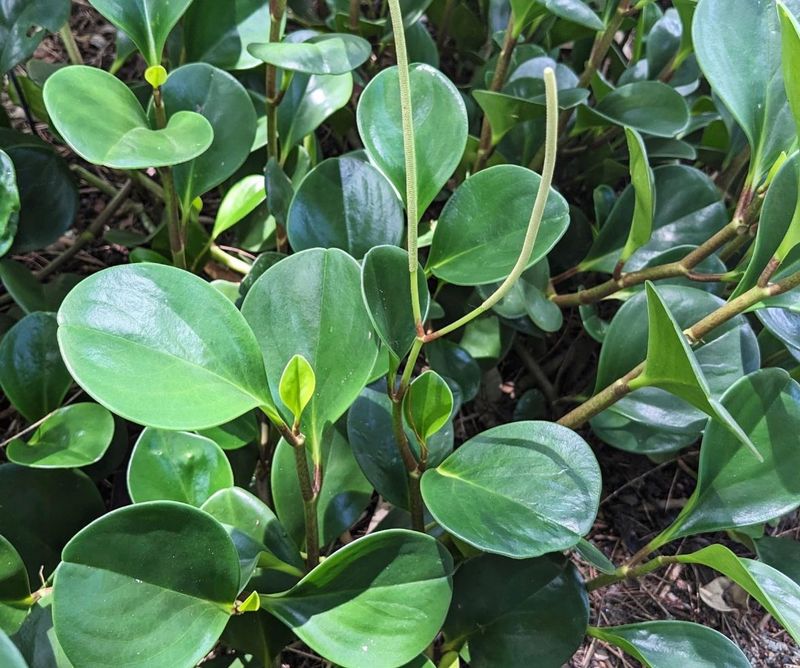
Glossy leaves bring a different kind of appeal to a dark planting bed. Florida peperomia, Peperomia obtusifolia, has thick, rounded foliage that looks lush even when it is not in flower.
In a sheltered South Florida yard, groups of plants can soften bare ground beneath shrubs and palms.
Give it shade, warmth, and soil that drains rather than staying soggy. This native is most useful in frost-free or nearly frost-free parts of the state; gardeners farther north should choose a hardier plant from this list.
Its fleshy stems and leaves can rot in persistently wet soil, so avoid the low spot where stormwater stands after heavy rain. Work around tree roots instead of digging deeply through them, and water new plants carefully until established.
Florida peperomia makes a handsome ground-level accent, but it is not a plant to walk on or mow. Space several plants together for a fuller effect, and use leaf mulch between them while they grow.
Occasional cleanup of damaged leaves is usually enough to keep the bed looking fresh. Choose it when your shaded patch needs bold, polished foliage and your South Florida garden stays warm enough to support it.
7. Lyreleaf Sage
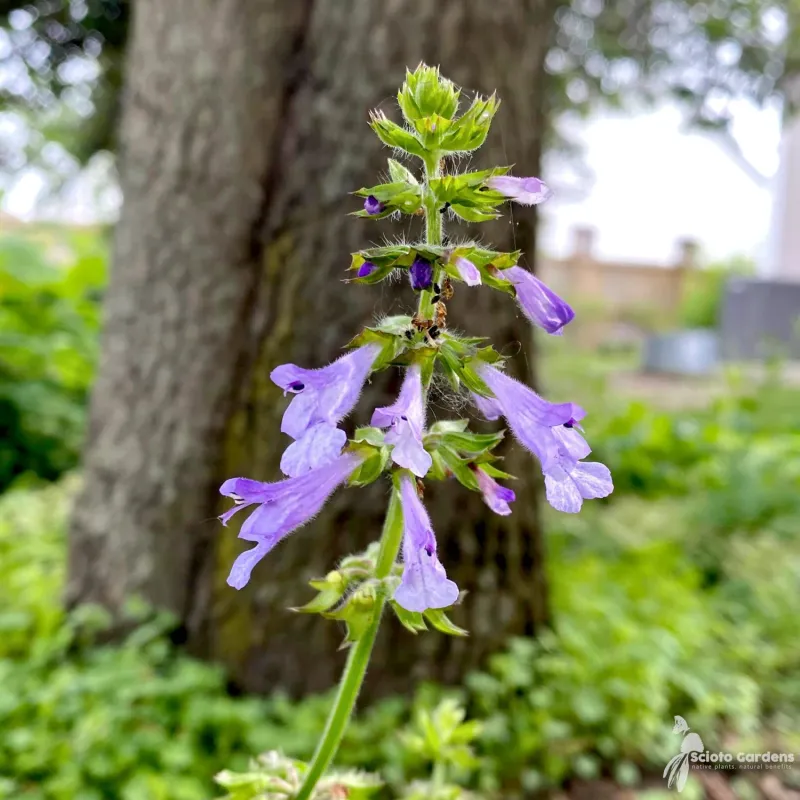
Some shady patches get more light than they seem to. Beneath trees that let sun through for part of the day, lyreleaf sage, Salvia lyrata, forms low rosettes of leaves and sends up blue-purple flower spikes.
It is a useful choice when you want a ground-level planting that looks lively during bloom season.
Lyreleaf sage suits part shade better than a deeply dark bed and is especially worth considering in North and Central Florida. It appreciates some moisture while getting established, though the soil should drain.
Try a small group first if tree roots make the site very dry. Mulch bare spaces between plants, and water the starts until they are growing steadily.
Because the flower stalks rise above the leaves, this will not look like a flat green carpet all year. That changing shape is part of its charm in an informal border or naturalistic tree bed.
Leave some spent blooms if you want to give the plants a chance to reseed, or cut stalks back for a tidier look. Lyreleaf sage fills a different role from the trailing plants on this list: it turns a patch of failed turf into a loose planting with spring color.