
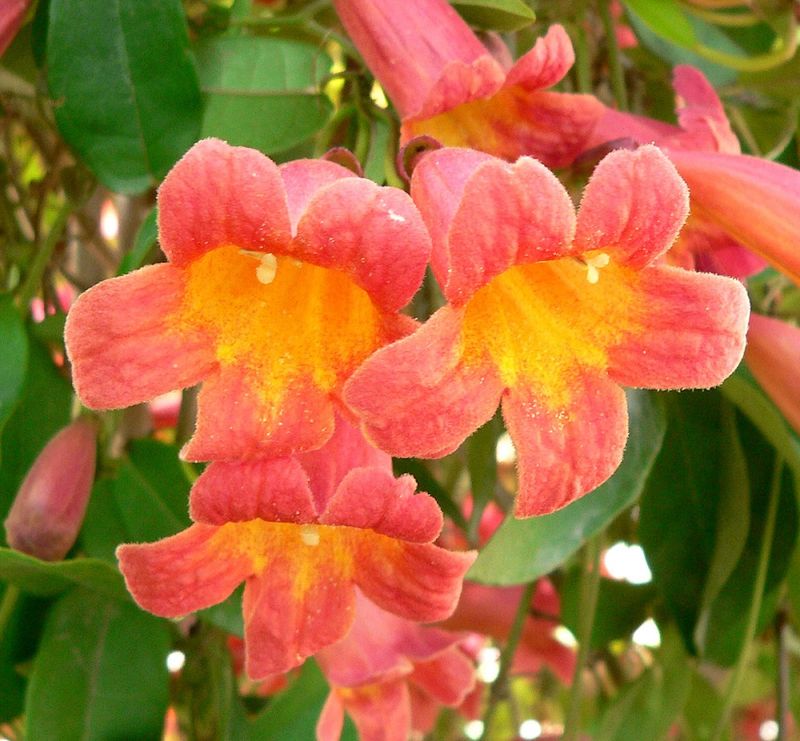
Firespike draws hummingbirds, but it does not have to do the job alone. A mix of Florida native flowers can offer more places to feed as the seasons change.
Winter blooms are easier to keep going in South Florida, while cooler yards need plants that start flowering again near winter’s end. Here are seven choices that can turn one busy flower bed into a longer-lasting food stop.
1. Coral Honeysuckle
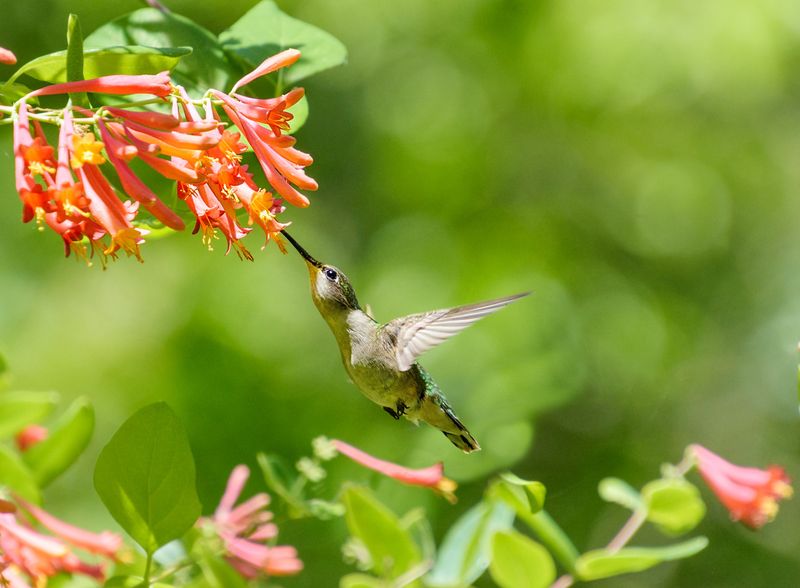
A fence covered in little red trumpets makes a far more useful hummingbird stop than an empty fence. Coral honeysuckle is a Florida native vine with tubular flowers that suit a hummingbird’s long bill.
In mild parts of the state, it can bloom off and on through winter, though its biggest show usually comes in spring.
Give it a trellis, arbor, or fence where you can watch from a window. It handles sun to partial shade and grows best in soil that drains well.
Water it while its roots settle in, then trim wandering stems after the main bloom rather than cutting the whole vine back just before winter.
Unlike firespike, which fills a bed with upright stems, coral honeysuckle uses vertical space. That makes it especially handy for a small yard or porch-side planting.
Look for Lonicera sempervirens on the label: Japanese honeysuckle is a different, invasive vine and is not a substitute.
2. Firebush
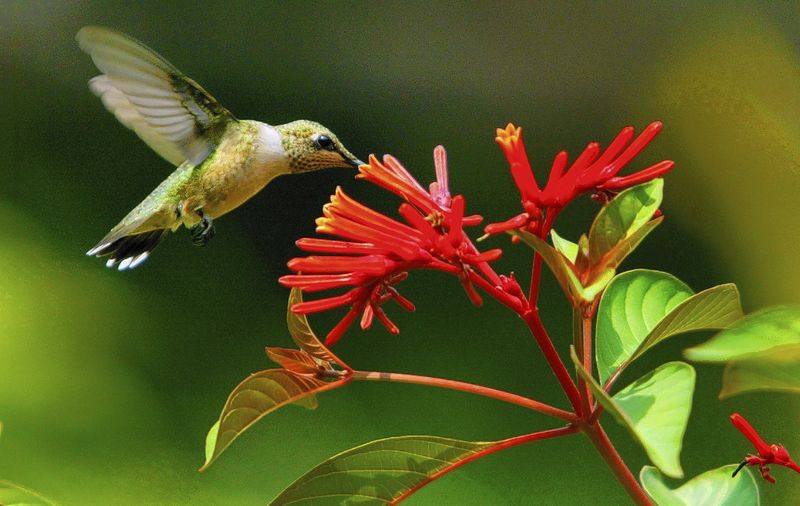
Few shrubs look as busy as firebush when its orange-red flower clusters are open. Hummingbirds can visit one cluster after another without leaving the plant, making it a strong companion to firespike rather than simply a replacement.
Butterflies also use the flowers, and birds eat the berries.
Plant firebush in full sun for the heaviest bloom, leaving room for its loose, spreading shape. Once established, it copes well with Florida’s sandy, fast-draining soil, though a new plant still needs regular water.
Ask for the Florida native Hamelia patens rather than assuming every compact firebush sold at a garden center is the same plant.
Location makes the winter difference. Firebush can keep flowering through warm South Florida winters, but frost may stop the show or knock it back farther north.
In a cooler yard, place it in a sheltered sunny spot and pair it with a late-winter bloomer from this list. You will get a longer feeding season without counting on one shrub to flower in every cold spell.
3. Tropical Sage
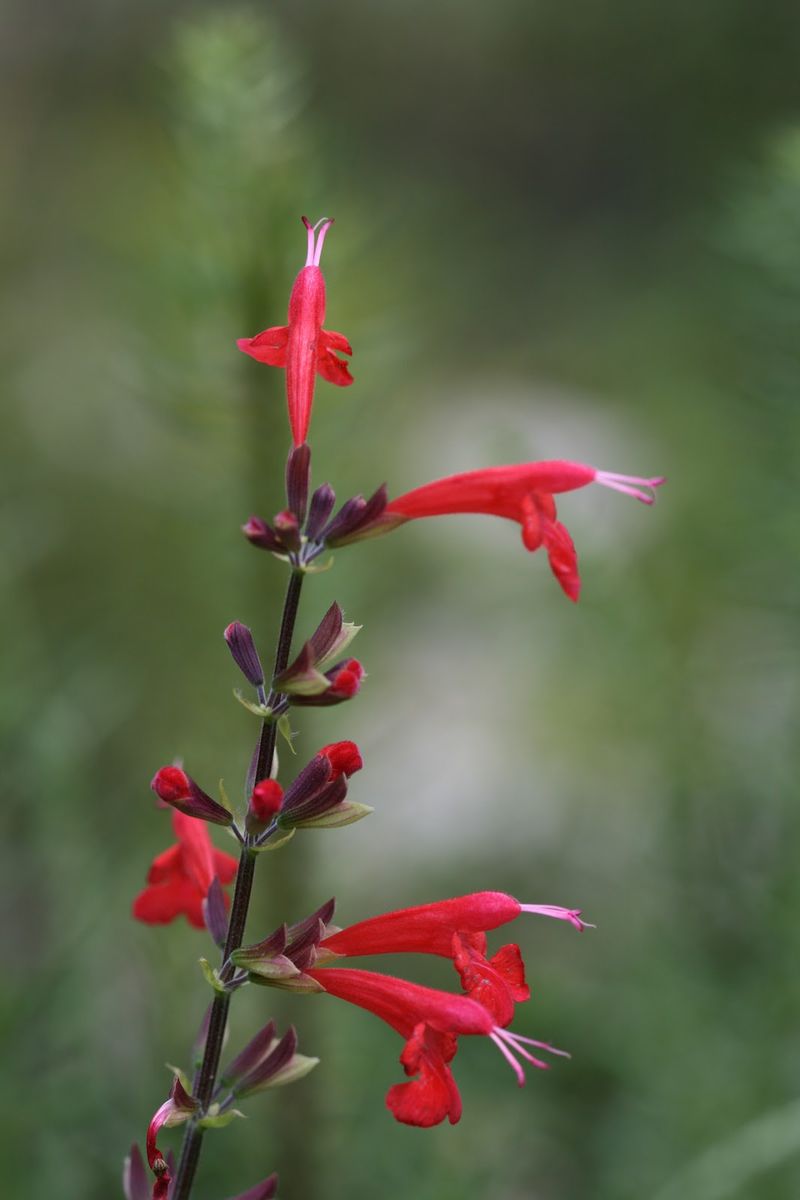
Need flowers in a narrow gap near the front walk? Tropical sage slips between larger plants without making the bed feel crowded.
Its light stems carry bright red blooms that hummingbirds visit, and it often flowers for a long stretch when warmth and moisture are available.
Salvia coccinea is a Florida native that works well in sun or light shade. Give it decent drainage, water during establishment, and let a few flower heads set seed if you want new plants to appear nearby.
The seedlings are easy to move or thin, which makes this one of the simplest ways to keep color scattered through a wildlife bed.
In frost-free South Florida, tropical sage may provide flowers during winter. Freezes in North and Central Florida can pause blooming or kill top growth, so do not treat it as a guaranteed January buffet statewide.
Its special strength is flexibility: tuck several plants around a shrub or vine to add feeding spots at different heights, then allow spring seedlings to fill the gaps left by cold weather.
4. Red Buckeye
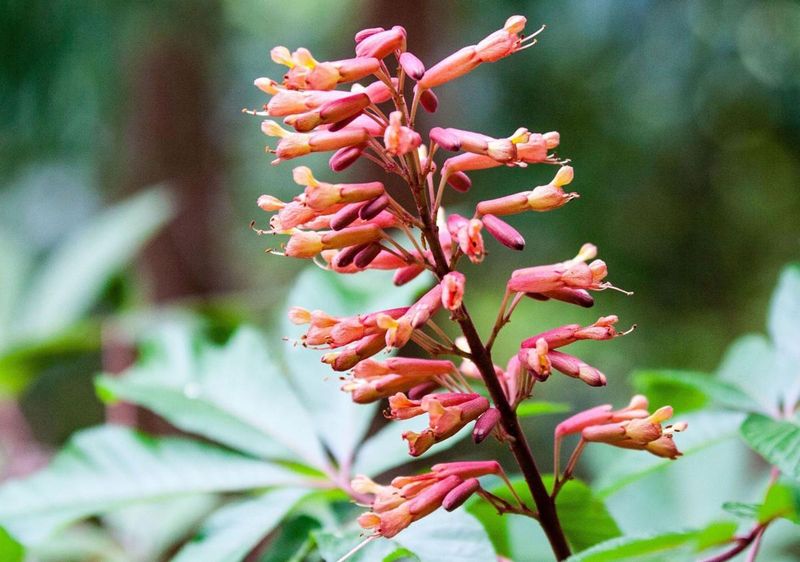
Just when a North Florida garden seems stuck between winter and spring, red buckeye can put up its bold red flower spikes. Those blooms arrive early enough to be valuable to returning hummingbirds.
Its timing is the reason it belongs here: it helps cover the gap left when frost has shut down warm-season favorites such as firespike.
Red buckeye is a small native tree or large shrub, not a plant to squeeze into a tiny flower bed. Give it a woodland edge or a spot with morning sun and afternoon shade.
It prefers soil with some moisture and organic matter, so a bone-dry, exposed sand patch will need more attention, especially while the plant establishes.
Expect a different look after flowering. Red buckeye can shed its leaves early in the hot season, even when it is healthy.
Place it behind summer-flowering plants so the bed still looks full later on. It will not feed hummingbirds all winter, but its late-winter to early-spring bloom is a useful handoff in cooler parts of Florida.
5. Crossvine
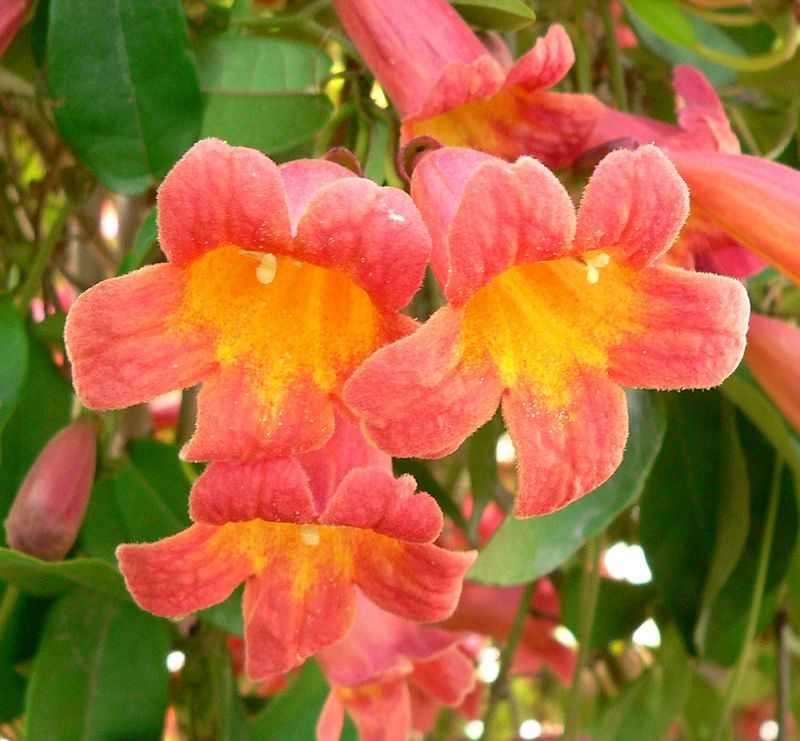
Picture an arbor that starts showing orange and yellow trumpets before the rest of the yard has fully woken up. Crossvine brings that early burst of color, and its nectar-rich flowers draw hummingbirds.
It is a useful choice when you want the overhead planting to do more than provide shade.
This Florida native vine climbs with tendrils, so give it a sturdy arbor, fence, or large trellis from the start. It grows in sun or partial shade, with stronger flowering where it gets good light.
Water a new vine through dry spells while it establishes in sandy soil, and prune after flowering if it begins to cover a gate or roofline.
Crossvine’s main bloom is generally in late winter or spring, depending on where you garden. It is not a dependable source of flowers through the whole winter, especially in North Florida.
Its payoff is the transition: while a frost-damaged firespike is still recovering, crossvine may already be offering fresh flowers above it. Pair the two for feeding space at different heights and at different times.
6. Coralbean
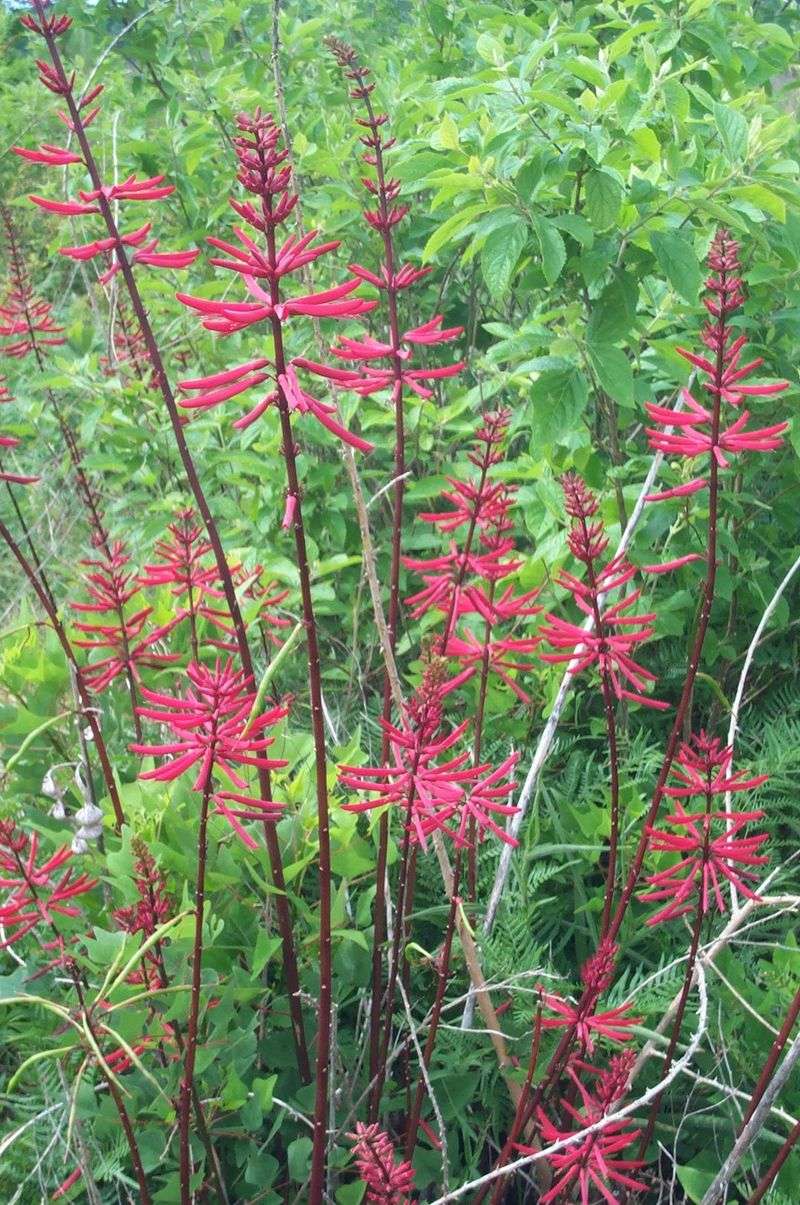
Coralbean has a dramatic trick: its scarlet flower spikes can appear before the plant has much foliage. The blooms stand out across a yard, and their shape gives hummingbirds easy access to nectar.
For a gardener watching for the first strong color of the new season, it is hard to miss.
Set this Florida native in a sunny, well-drained spot with space for its seasonal stems. Established plants tolerate dry conditions better than many lush border flowers, which suits a sandy yard.
In colder areas, the stems may die back and regrow from the base. Wait until frost danger has passed before removing growth that is clearly dead.
Bloom timing varies with winter weather and location, often falling in late winter or spring. Coralbean cannot carry a hummingbird garden through the whole cold season, but it can help restart the feeding calendar when warm-season blooms have faded.
Keep it away from children and pets who might handle the seedpods: the bright seeds are poisonous if eaten. Let the flowers provide the color, and leave the seeds alone.
7. Scarlet Hibiscus
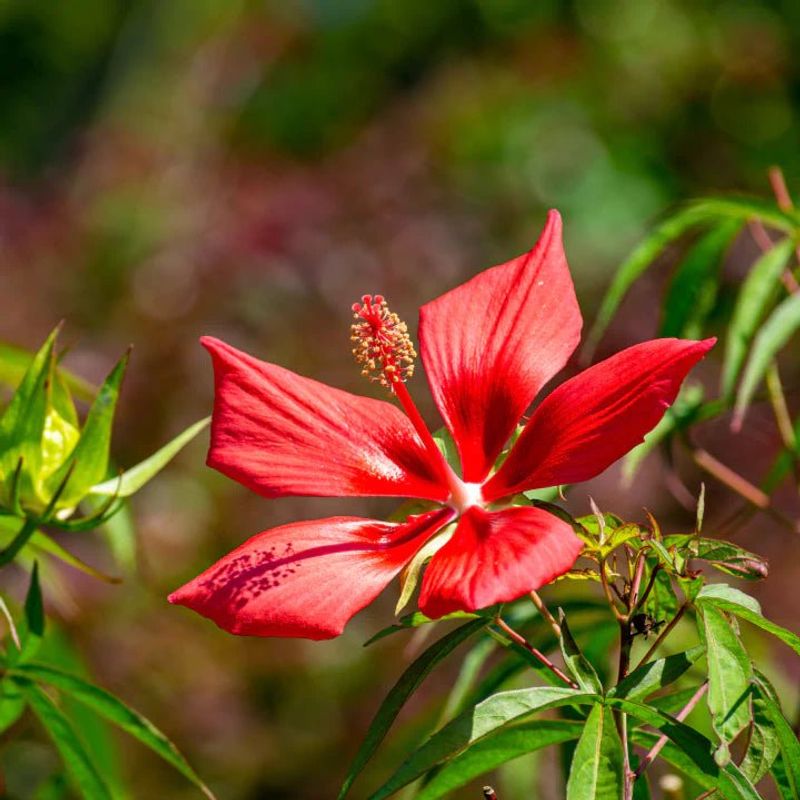
A low spot that stays damp after rain can be frustrating to plant, but scarlet hibiscus welcomes the moisture. Its large red flowers look almost like pinwheels, giving a sunny rain garden a striking focal point.
Hummingbirds visit the blooms, adding another feeding choice when the plant is in season.
Give this Florida native plenty of sun and consistently moist soil. It suits the edge of a pond, a rain garden, or another place that does not dry out as quickly as a raised sandy bed.
If your yard drains fast, use a naturally wetter area rather than trying to make an exposed dry spot work with constant watering.
Scarlet hibiscus earns its place for habitat variety, not for a promise of January flowers. It usually blooms from the warm months into fall and goes dormant after cold weather; mild conditions can extend its season.
Leave room for its tall stems, and cut back dead growth when new shoots return. Alongside winter-flowering natives and late-winter starters, it helps make a yard worth revisiting across more of the year.