
A dark snake streaks across your Florida yard, and your first thought may be to get rid of it. But if it is a black racer, it is a harmless neighbor that hunts small animals around your garden.
Knowing what to look for can help you give it space instead of reaching for a shovel. Here are seven clues to watch for, plus simple ways to make your yard safer for everyone.
1. A Dark Snake That Vanishes in a Flash
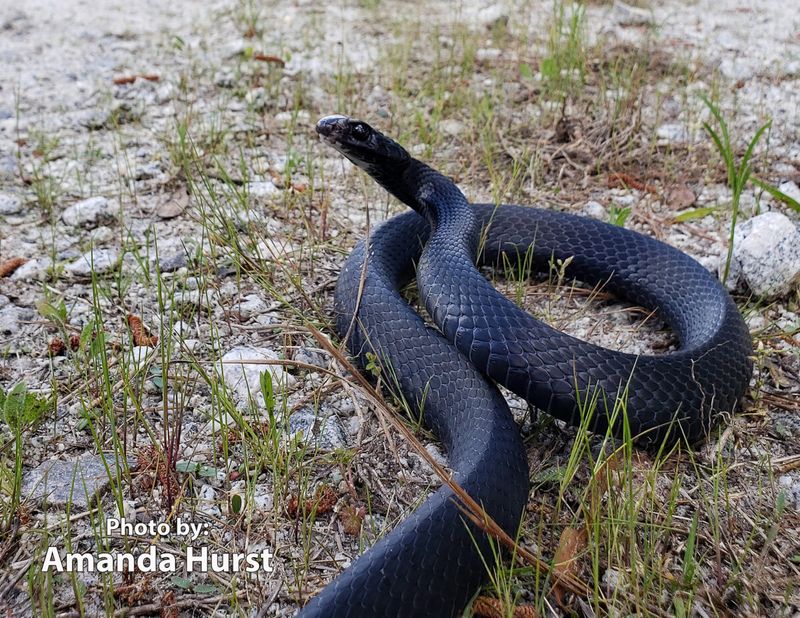
One moment the lawn looks empty; the next, a slim dark snake shoots across it and disappears into the border. That quick escape is a classic black racer move.
Unlike a snake that stays still and relies on camouflage, a racer often tries to get away as soon as it notices you.
Look for a long, narrow body and smooth-looking black back rather than a thick, heavy shape. Speed alone cannot identify a snake, though, and a fast glimpse is not enough to rule out another species.
Watch from a comfortable distance instead of trying to catch it for a closer look.
A racer using your lawn as a travel route may be moving between cover, sunny spots, and places where it can hunt. You can make those trips less risky by checking the grass before mowing and giving the snake an open path to escape.
If it crosses near a doorway or play area, wait for it to leave rather than cornering it. The payoff is a yard visitor that may hunt insects, lizards, frogs, and small rodents without asking you to do any extra work.
2. A Pale Chin Beneath a Black Head
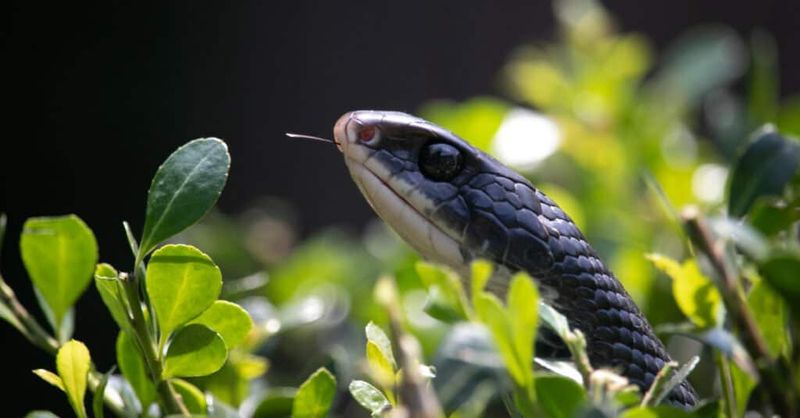
Sometimes the best clue is no bigger than a thumbprint. An adult black racer usually has a pale chin and throat beneath its dark head.
If the snake pauses long enough for you to see that light patch, you have a more useful clue than color alone.
Florida has other dark snakes, including some that people commonly mix up with racers. A black body by itself does not settle the question.
Take in the whole picture from a distance: a slender build, the pale area under the head, and the way the animal moves can all help. Never put your hands near a snake just to inspect its face.
Why welcome a confirmed racer? It is nonvenomous and generally wants to avoid people, while its hunting can add to the natural balance of a busy yard.
Give it room around raised beds, pots, and walkways so neither of you gets surprised at close range. If you cannot identify a snake confidently, leave it alone and consult a local wildlife expert or reliable Florida identification resource.
Respecting that uncertainty keeps the useful snakes safe without asking you to take chances.
3. A Raised Head Watching the Yard
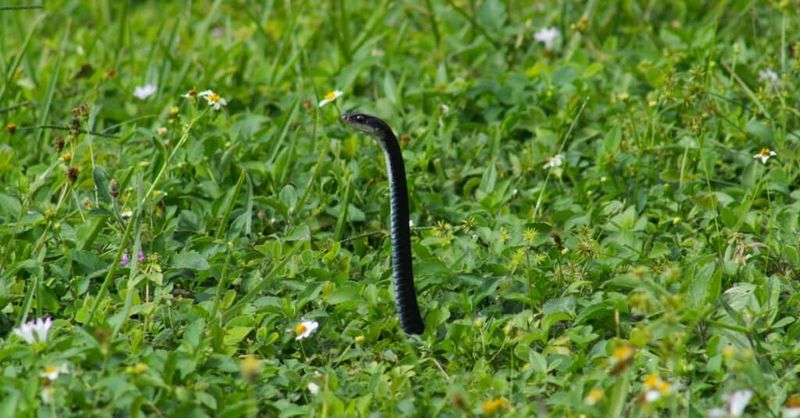
Picture a slim snake lifting its head above the grass like a tiny periscope. Black racers sometimes raise the front of their bodies to look around.
From that higher position, they can spot movement or check for trouble before crossing open ground.
You might notice this pose beside a vegetable bed, along a foundation planting, or at the edge of a mowed lawn. It is a behavior clue, not a final ID: other snakes can lift their heads, too.
Use it alongside the racer’s slender shape and pale chin if you get a clear view.
For gardeners, the raised-head pause is also a handy signal to stop and give the animal space. Step back, keep pets away, and let it choose a route into cover.
Do not poke at it or block every exit; even a nonvenomous snake may bite if grabbed or trapped. A racer that feels safe moving through the yard can continue hunting without a stressful standoff beside your plants.
You get a chance to watch an alert wild animal at work, and it gets to move on without turning a quiet garden visit into an emergency.
4. Regular Visits to a Sunny Border
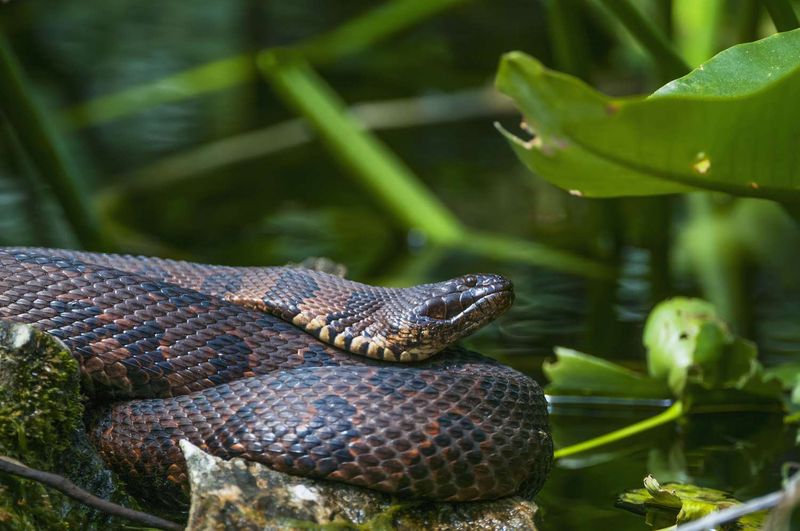
That sunny strip between your lawn and flower bed may have a regular visitor. Snakes use outside warmth to manage their body temperature, and a black racer may pause on open ground before slipping back under plants.
A warm path edge or patch of mulch can offer both sun and a quick escape route.
Spotting a dark snake there more than once suggests your yard has conditions it can use, but it does not prove that one particular snake lives there. Note the location and time without approaching it.
If the spot is beside a door or children’s play area, keep the immediate path clear so you can see where you are stepping and the snake can move away.
You do not need a messy yard to accommodate a racer. Keep useful cover in planted beds while clearing scrap piles and other clutter close to the house.
Florida’s long warm season gives snakes plenty of chances to move through gardens, so make a habit of looking before you reach into dense growth or move a pot. Sharing a sunny border can be as simple as noticing your visitor and letting it leave on its own schedule.
5. Movement Through Shrubs and Low Branches
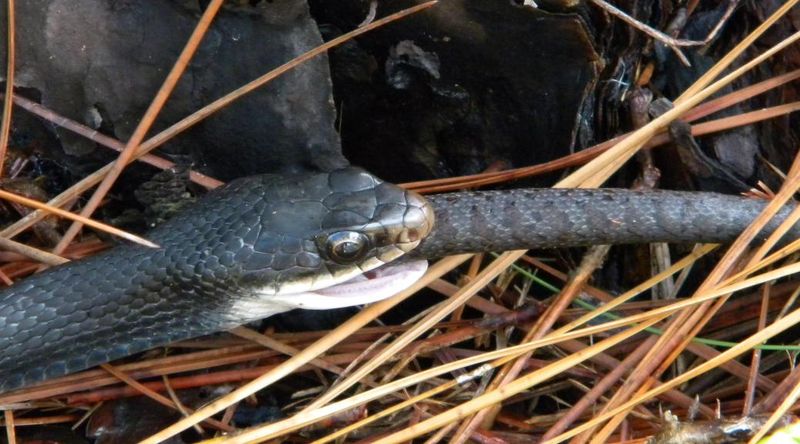
Your eyes are on the grass, but the snake is halfway through a shrub. Black racers can climb, and a low branch or sturdy bush may give one a route through the yard.
Seeing a slender dark snake above ground level can be surprising, especially when you were expecting it to stay on the lawn.
A climbing sighting is another piece of the puzzle, not proof of species. Give the animal room, and keep children and pets from shaking the branch to make it move.
If you need to prune that plant, wait until the snake is gone and look through the foliage before putting a hand inside.
Layered garden beds can offer wildlife places to travel and hunt without requiring an overgrown landscape. Choose plants suited to your Florida site and keep branches from blocking doors and paths.
For a low-effort approach, leave some leaf litter under shrubs where it will not wash into drains, while keeping work areas easy to inspect. The result is a tidy, usable yard that still offers a racer a way to move between hunting spots.
Its visits may help keep small prey populations in check, although no snake can make a garden pest-free.
6. A Chase Near Lizards or Other Small Prey
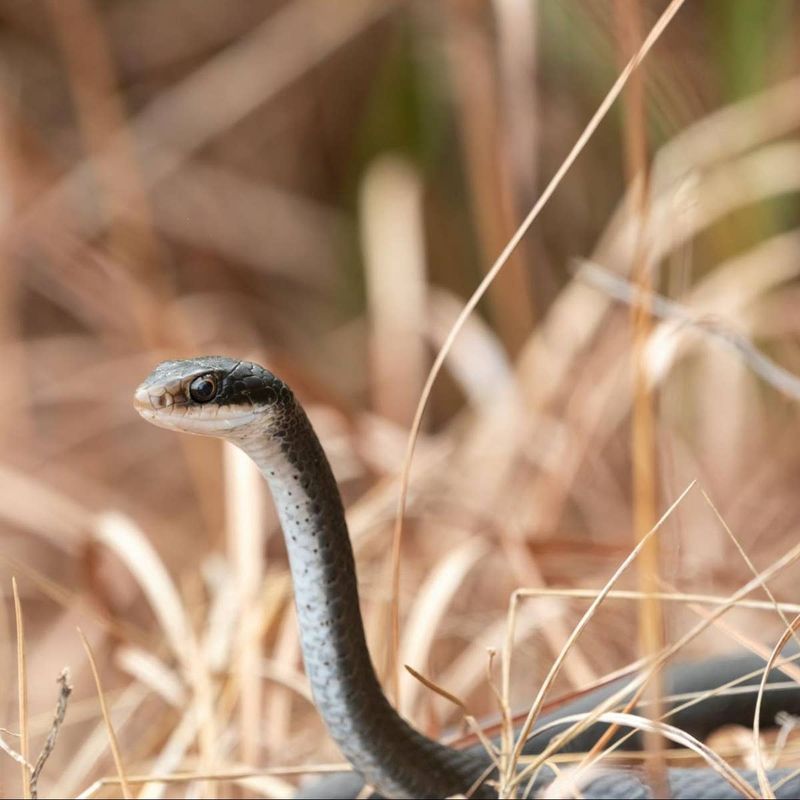
A rustle by the fence turns into a quick chase, and suddenly the yard’s little food web is in plain view. Black racers actively hunt rather than waiting in one place for every meal.
They eat a range of small animals, including lizards, insects, frogs, and rodents, depending on what they find.
Florida anoles are common around patios and garden beds, so seeing a racer follow movement near them can explain why it keeps passing through. You may not enjoy watching a lizard become prey, and that is understandable.
The same hunter can also take animals you are less happy to find near your plants or home. Its presence is not a substitute for sealing gaps around the house or using sensible pest control.
Skip glue traps outdoors if you can; they can catch snakes and other wildlife that were never your target. Secure trash and pet food, and avoid leaving rodent bait where unintended animals may be harmed.
Those steps address pests directly while making the yard safer for a visiting racer. You do not have to feed it or lure it closer.
Letting it hunt naturally, without traps or handling, is the most useful welcome you can offer.
7. A Small, Patterned Young Racer
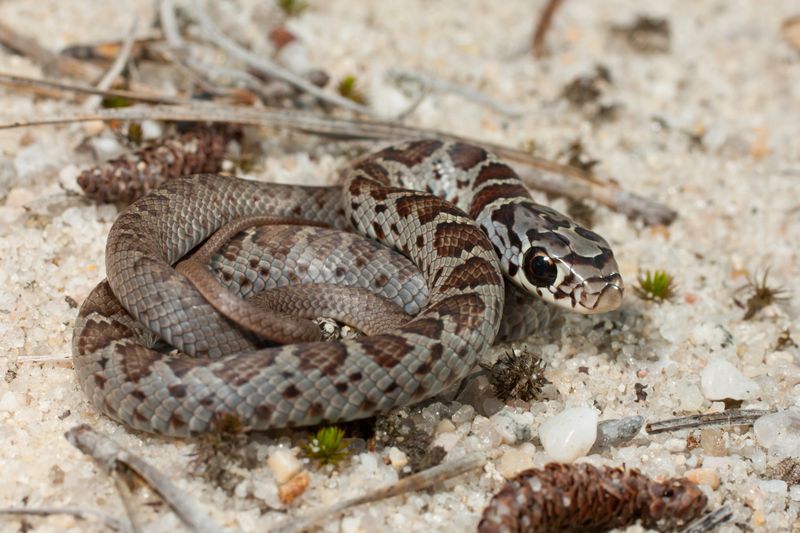
A baby racer can fool even someone who knows what the adults look like. Young black racers are patterned rather than solid black, so a small snake with gray or brown markings in the leaf litter could still belong to the same species.
Over time, that youthful pattern gives way to the adult’s darker look.
Seeing a juvenile tells you a young snake is using your yard; it does not tell you where it hatched or guarantee that an adult has settled there. Because young snakes can be hard to identify, watch without touching.
If you are unsure what you saw, a clear photo taken from a safe distance is more helpful than trying to pick it up.
Before raking a planted bed or moving fallen branches after a storm, take a moment to check for wildlife. Wear gloves for garden work, but never treat gloves as protection for handling a snake.
Keep pets back and allow the youngster an exit into suitable cover. Florida gardens are full of animals at different life stages, and making room for one small racer costs little.
You gain another insect- and small-animal hunter, while the snake gets the chance to grow without being mistaken for a yard problem.