
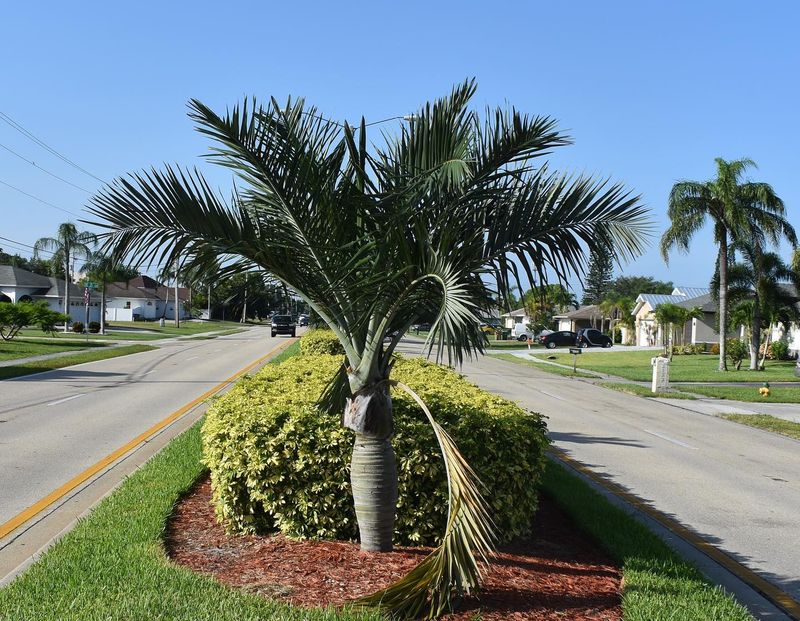
Florida has native trees that most garden centers never carry and many homeowners have never seen. Some survive in only a few wild places, while others are simply hard to find in cultivation.
These seven stand out for their unusual looks, local roots, and stories worth knowing. A few suit carefully chosen yards, but others are best admired in protected places.
1. Florida Torreya
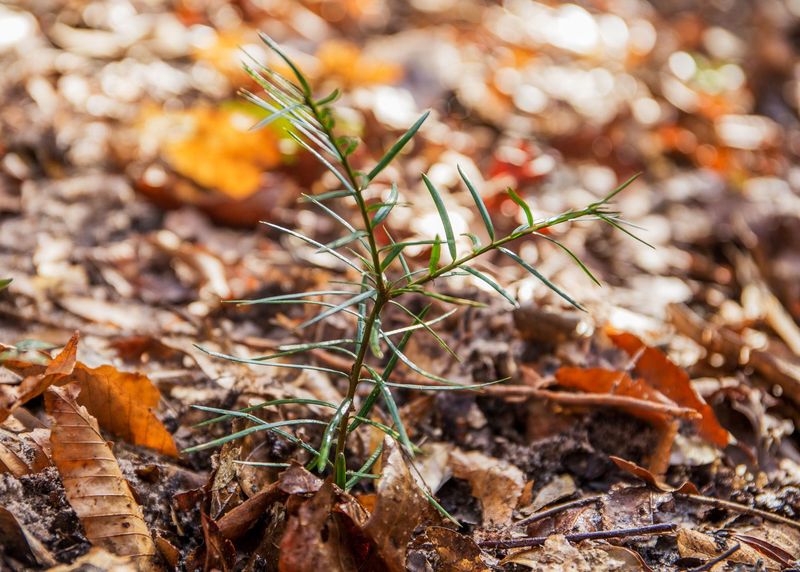
Long before Florida had subdivisions, a prickly evergreen was holding its ground along the Apalachicola River. Florida torreya, Torreya taxifolia, is now one of the rarest conifers in North America, with a tiny native range in the Florida Panhandle and nearby Georgia.
Its flat, sharp-tipped needles line the branches in neat rows. Healthy trees can develop a narrow crown, but disease and other pressures have left many wild plants as small, struggling stems rather than towering forest trees.
That history makes torreya very different from an unusual nursery purchase. Conservation groups and researchers are working to understand its decline and keep its remaining genetic diversity alive.
For homeowners, the main lesson is restraint. Never take seedlings, cuttings, or seeds from wild populations without authorization, and question any seller who cannot explain a plant’s legal origin.
A hot, exposed lawn is nothing like its shaded ravine habitat. Seeing a documented specimen at a conservation collection is often a better choice than trying to make this endangered tree a backyard showpiece.
2. Florida Yew
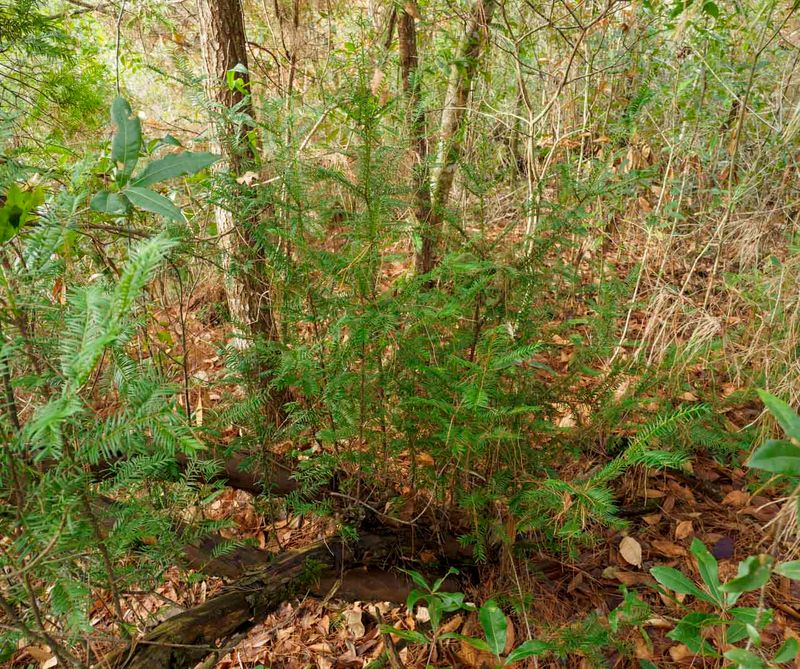
A tree does not need to be tall to be a botanical treasure. Florida yew, Taxus floridana, often grows as a large shrub or small, unevenly shaped tree beneath a forest canopy.
Its entire natural range is confined to a small part of the Florida Panhandle near the Apalachicola River. That tight connection to one landscape helps explain why you are unlikely to find it beside a neighbor’s driveway.
Look closely and its flat evergreen needles give it a softer appearance than Florida torreya. Female plants can produce a red, fleshy cup around the seed, a feature typical of yews rather than the familiar woody cones of pines.
Beauty comes with a serious warning: the foliage and seeds are highly toxic if eaten. It is not a casual choice for a yard shared with browsing pets or curious children.
Its shaded woodland needs also rule out many ordinary planting sites. Anyone considering a legally propagated specimen should first consult a knowledgeable native-plant specialist, rather than treating it like a standard hedge plant.
3. Pygmy Fringetree
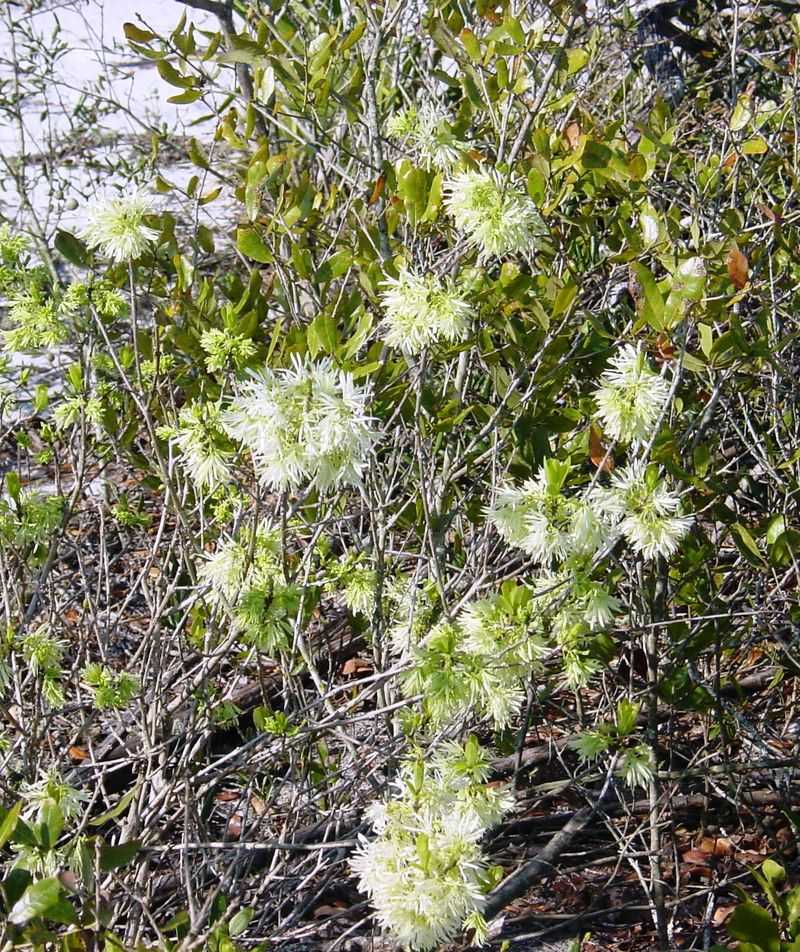
Imagine white ribbons caught all over a little tree’s branches. That is the spring appeal of pygmy fringetree, Chionanthus pygmaeus, a Florida endemic found naturally in parts of the peninsula’s sandy scrub country.
Unlike the larger fringetrees sometimes sold for landscapes, this species usually stays a shrub or small tree. Its loose clusters of narrow white petals give it an airy look that feels especially surprising against dry sand and tough scrub vegetation.
Its rarity is tied closely to habitat loss. The high, sandy ridges it calls home have also attracted development and agriculture, leaving many native scrub plants with less room to survive.
A suitable garden would need excellent drainage, room for its natural branching, and conditions that resemble its native setting. Rich, constantly wet planting beds are a poor substitute for scrub soil.
Ask a specialist nursery about legally propagated stock and confirm the scientific name. A common fringetree is not the same plant, even when a nursery tag uses similar wording, and wild plants should always stay where they grow.
4. Lignum Vitae
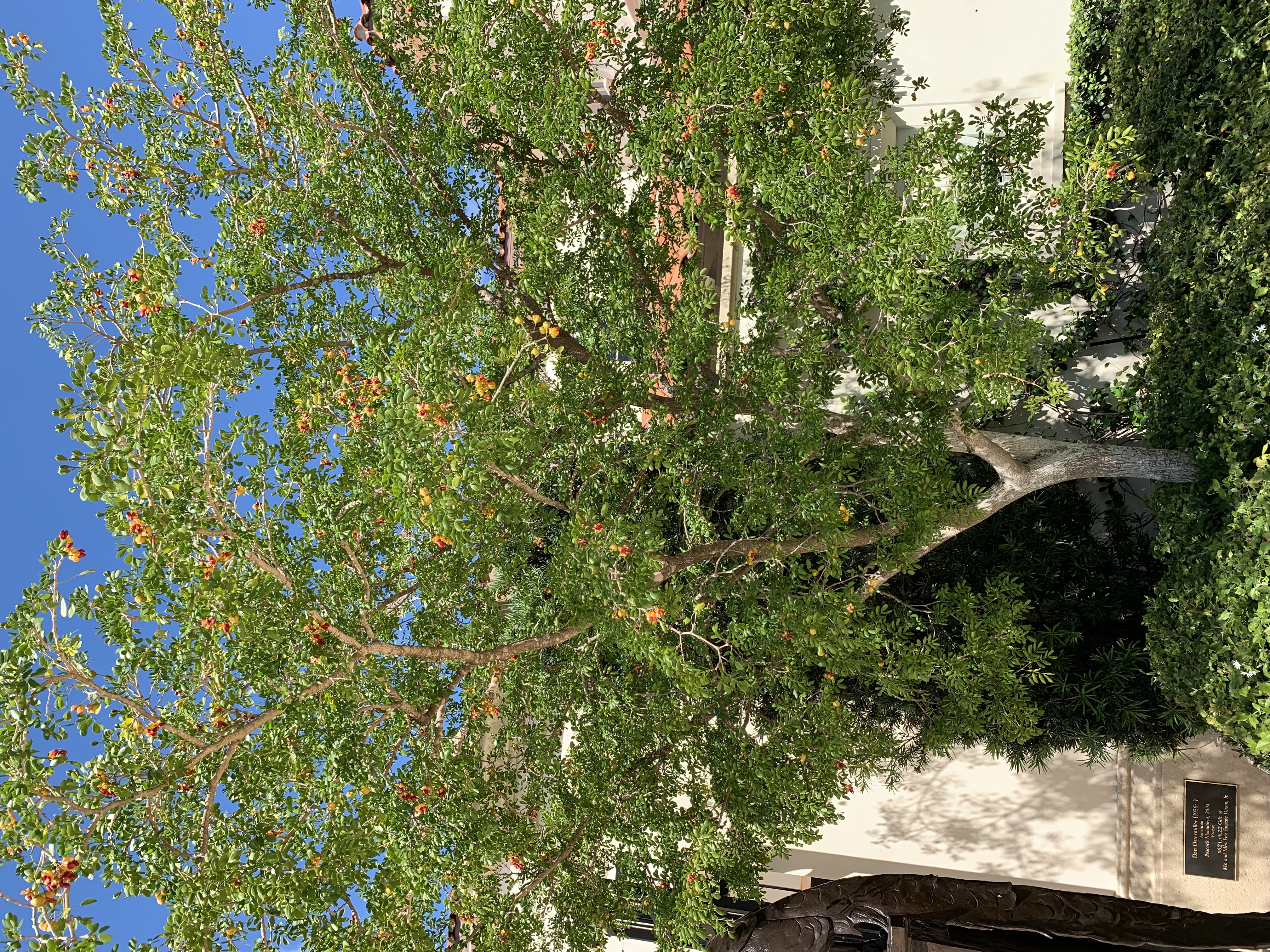
Blue flowers are enough to stop a sidewalk conversation, especially when they cover a native tree. Lignum vitae, Guaiacum sanctum, adds that unusual color to the warmest parts of Florida, where its natural range reaches the Keys.
The flowers are only part of the show. Yellow-orange fruit capsules can open to reveal seeds with bright red coverings, giving the branches another burst of color later on.
Its wood is famously dense, and past harvesting helped put pressure on wild populations. In Florida, it is a state-listed endangered species, so a garden specimen should come from a reputable source that sells legally propagated plants.
Of the trees on this list, it offers a particularly striking option for a suitable frost-free yard. Give it sunshine, excellent drainage, and enough room to develop a rounded crown without repeated shearing.
Patience belongs on the care list, too, because growth is slow. Gardeners in colder inland areas should not mistake its tropical toughness for freeze tolerance, and even South Florida homeowners should choose a warm, protected location.
5. Buccaneer Palm
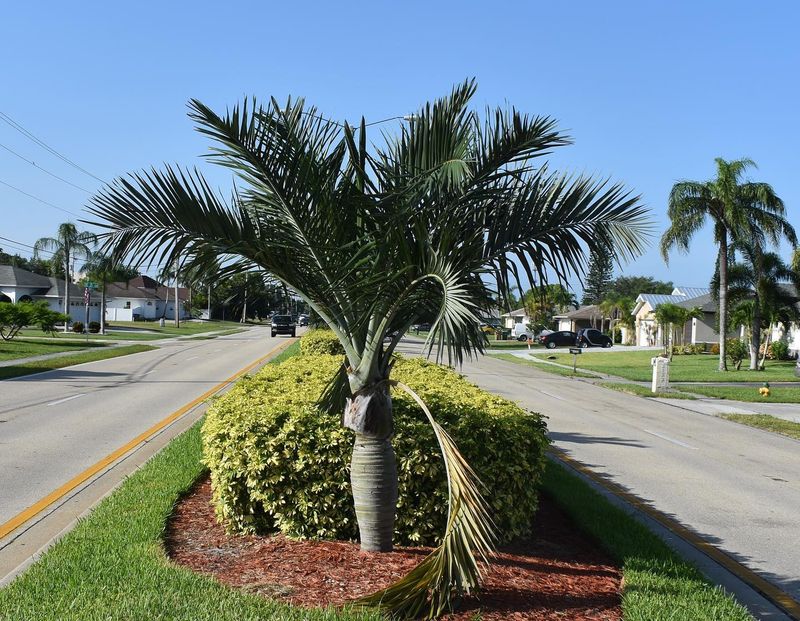
For a palm with a pirate-worthy name, buccaneer palm takes life at a remarkably unhurried pace. Pseudophoenix sargentii grows slowly, which helps explain why a sizable nursery specimen can be expensive and uncommon.
In Florida, its native history is tied to a very small part of the Keys. Wild populations are protected, and habitat loss and past collecting have made responsible sourcing especially important.
The look is quietly dramatic: a smooth, ringed trunk, sometimes swollen through the middle, topped with arching featherlike fronds. It offers a more distinctive silhouette than the palms repeated across many South Florida subdivisions.
A warm site with very good drainage is essential. Once established, it handles dry conditions well, but a soggy lawn pocket or a freeze-prone inland yard is not a sensible match.
Buy only nursery-grown plants from a trustworthy grower, and ask how the stock was produced. Slow growth is part of the bargain, so choose it for its character rather than expecting quick shade or an instant resort-style entrance.
6. Florida Silver Palm

Wait for a breeze, and the surprise appears. Florida silver palm, Coccothrinax argentata, has fan-shaped leaves with green upper surfaces and striking silvery undersides that flash as the fronds move.
Its native Florida range is limited to the far south, including the Keys, where it belongs to landscapes such as pine rocklands and coastal habitats. Loss of those places has helped make it rare in the wild.
Although specialist growers do offer it, you will not see it planted nearly as often as standard landscape palms. Its slender form and measured growth make it a subtle accent rather than a quick screen.
For the right South Florida property, its appeal is movement and contrast. Place it where the leaves can catch the light, with sunshine and freely draining soil, rather than crowding it behind a thick hedge.
Do not confuse it with saw palmetto or assume every silver-leaved palm is this native species. Confirm the botanical name, buy nursery-propagated stock, and remember that exposure to cold can limit where it succeeds.
7. Pondspice
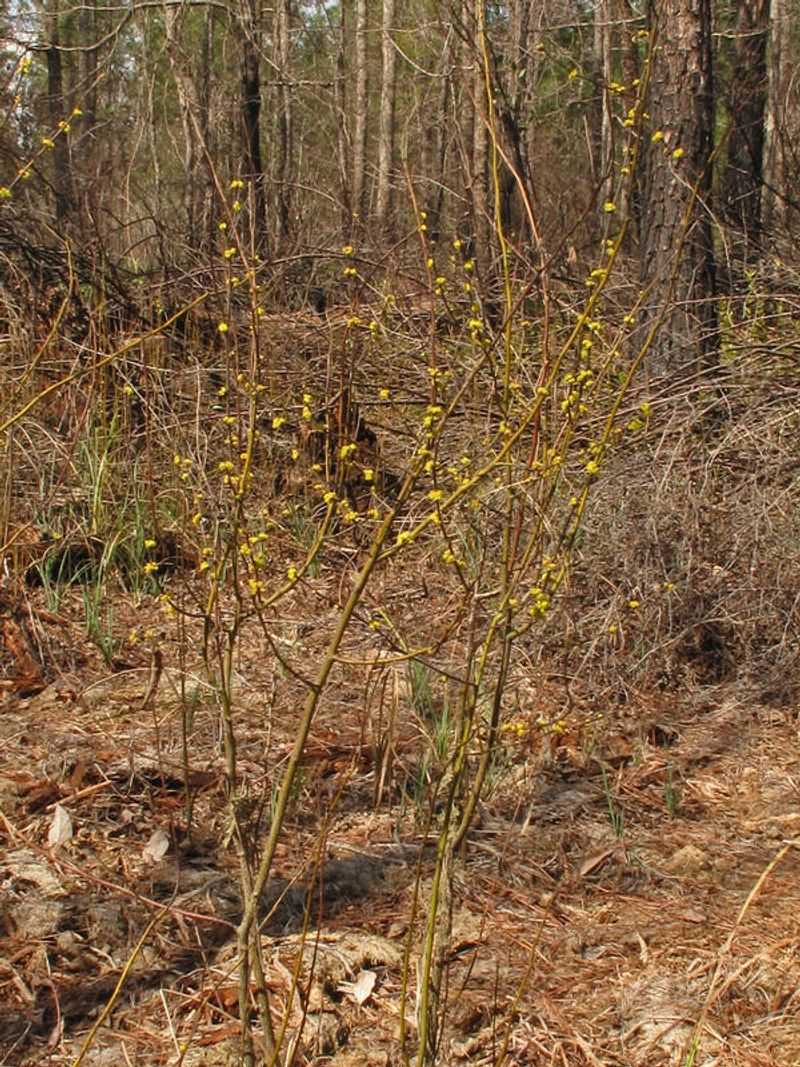
A damp corner is usually the wrong place for a rare-tree experiment, but pondspice changes the conversation. Litsea aestivalis is a deciduous native that grows around wetlands and can take the form of a large shrub or small tree.
Small yellow flowers appear along its branches before or around the time new leaves emerge. The display is modest, yet it arrives when those bare, crooked twigs make every little flower easier to notice.
Unlike the tropical species on this list, pondspice belongs to the southeastern coastal plain, including northern and central parts of Florida. It is uncommon in cultivation and faces threats that include wetland changes and laurel wilt disease.
Its biggest gardening lesson is that native does not mean suitable for every yard. A dry, sandy front lawn will not copy the seasonal moisture patterns of a wetland edge.
Before seeking a legally propagated plant, ask a local specialist whether your soil and water conditions fit. Never dig one from the wild, and do not alter a protected wetland to create a planting spot for it.