
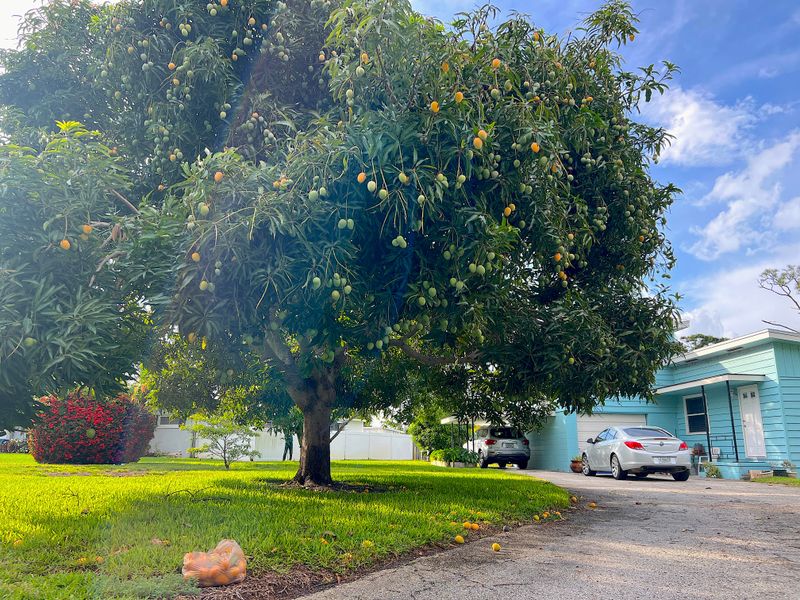
A mango tree can turn a Florida yard into a place you look forward to visiting every morning. But the wrong spot or the wrong tree can mean years of extra work and little fruit.
Before you dig, a few choices can save you trouble and give your tree a better start.
1. Your Part of Florida Changes the Plan
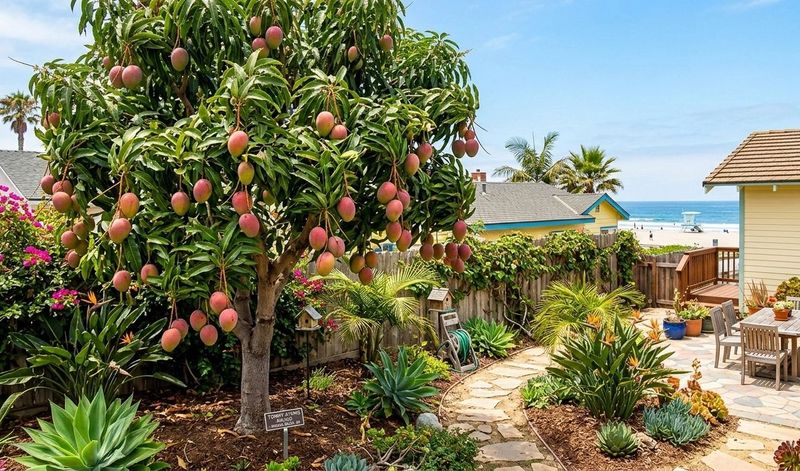
A mango tree growing happily in Miami may have a much harder time in a Central Florida yard. Mangoes thrive where freezes are uncommon, which makes South Florida the safest bet for planting one in the ground.
Farther north, cold snaps can damage leaves, branches, and flowers, especially on young trees.
Check your yard, not just your city on a map. A sheltered spot near a south-facing wall may stay warmer than an open corner where cold air settles.
Even so, a warm wall cannot make an exposed North Florida yard reliably frost-free.
If freezes are a regular event where you live, consider a compact mango in a large container instead. You can move it into a protected space when cold weather is forecast, though a mature potted tree will be heavy.
Gardeners in warmer parts of Central Florida can try an in-ground tree if they accept some risk and have a plan to protect it while it is small.
Look up your area’s typical winter lows before buying. That quick check helps you decide whether a yard tree is a good long-term fit or a container will give you more control.
2. A Grafted Variety Is Worth Choosing Carefully
That seed from a delicious grocery-store mango is tempting to plant. The surprise is that a seed-grown tree may take years to fruit, and its mangoes may not match the one you ate.
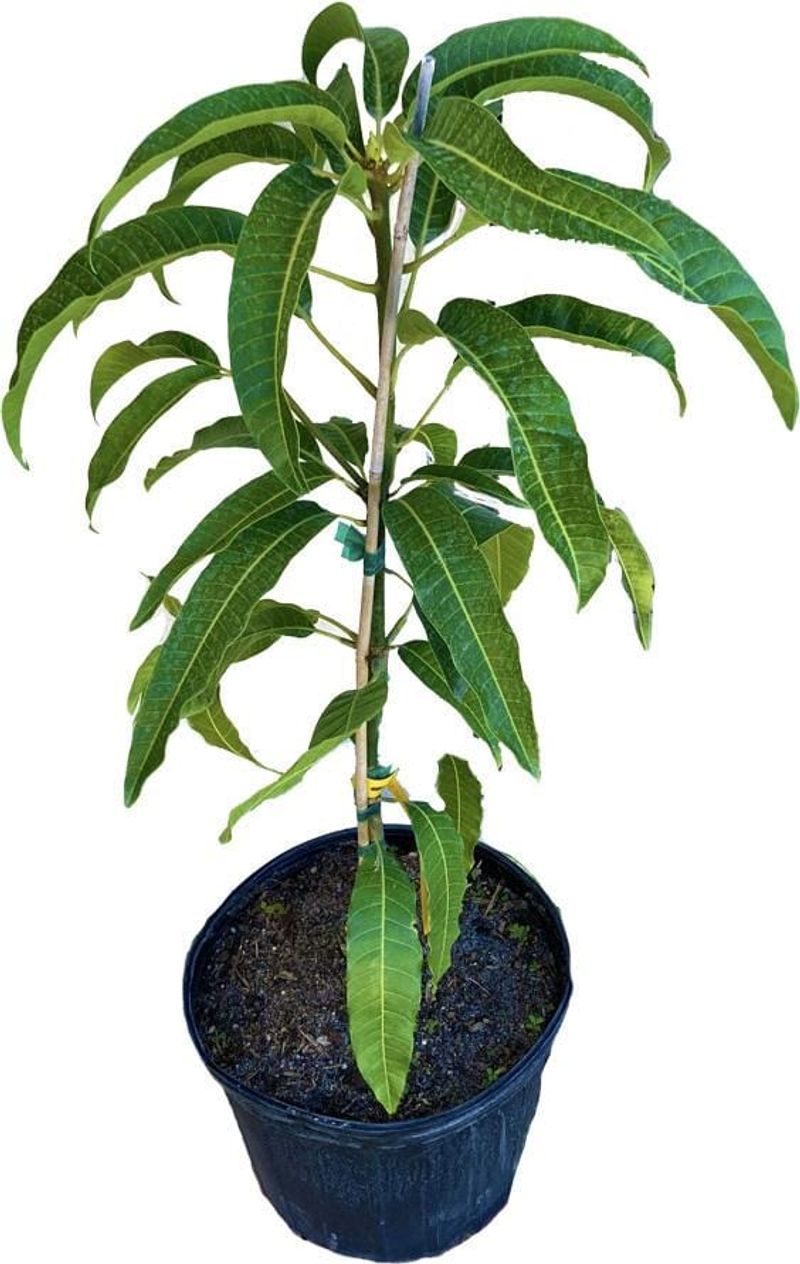
A named, grafted tree gives you a more predictable choice and usually fruits sooner.
Pick a variety for your yard, not just for a beautiful fruit photo. Ask a reputable Florida nursery about mature size, flavor, harvest season, and how the variety performs in your area.
Smaller-growing selections can be easier to prune and harvest than vigorous trees, although no mango stays tiny without care.
Before buying, find the graft union, the slight bend or change in bark where the chosen variety joins the rootstock. When you plant, keep that union above the soil.
Burying it creates a poor start for a tree you expect to keep for decades.
It also helps to ask whether the nursery’s tree has been grown outdoors in full sun. A tree kept under heavy shade needs a gradual move into bright Florida light to reduce leaf scorch.
A few minutes of nursery questions can prevent years of wondering why your tree is too big, slow to fruit, or poorly suited to your yard.
3. The Tiny Nursery Tree Needs a Big-Tree Spot

Picture a ripe mango dropping onto your driveway. Now picture dozens of them, plus branches reaching toward the roof.
The small tree in a nursery pot can become a broad canopy, so its location matters long before the first harvest.
Give your mango full sun and enough room for the mature tree you plan to maintain. Keep it well away from buildings, overhead wires, fences, and paved areas.
Exact spacing depends on the variety and pruning plan, so ask about its expected spread before settling on a spot.
Easy access matters, too. You will need room to walk around the trunk, prune branches, and collect fruit without standing in the street or leaning over a neighbor’s fence.
Placing the tree where you can see fallen mangoes also makes cleanup quicker and may reduce unwanted visits from rodents.
Florida storms add another reason to think ahead. Good pruning can help develop a sturdy shape, but no tree is storm-proof.
Avoid planting where a fallen limb would put a roof, car, or utility line at needless risk. If your yard cannot offer both sun and space, a smaller variety or a container may be the better choice.
4. Drainage Matters More Than a Rich Planting Hole
After a Florida downpour, watch where the water sits. A mango tree does not want its roots trapped in a puddle for days, even if the planting hole is filled with expensive soil.
Standing water can weaken roots and eventually kill the tree.
Choose a well-drained site before you dig. In many Florida yards, sandy soil drains quickly enough, but low spots, compacted fill, and areas with a high water table can stay wet.
If water collects where you planned to plant, look for higher ground or ask your local UF/IFAS Extension office about planting on a mound.
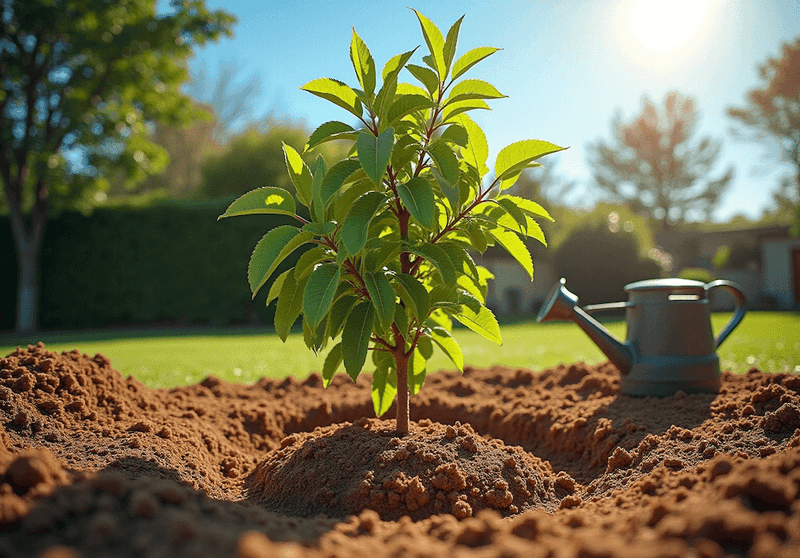
Dig a hole wider than the root ball but no deeper than the root ball itself. Set the tree so the top of the root ball is level with, or slightly above, the surrounding ground.
Backfill mainly with the soil you removed rather than creating a pocket of rich mix that behaves differently from the rest of the yard.
Add mulch over the surrounding soil to help hold moisture, but leave a gap around the trunk. Then water the planting area thoroughly.
Starting with the right height and drainage is much easier than trying to rescue a mango whose roots have spent a rainy season underwater.
5. Watering Changes as the Tree Grows
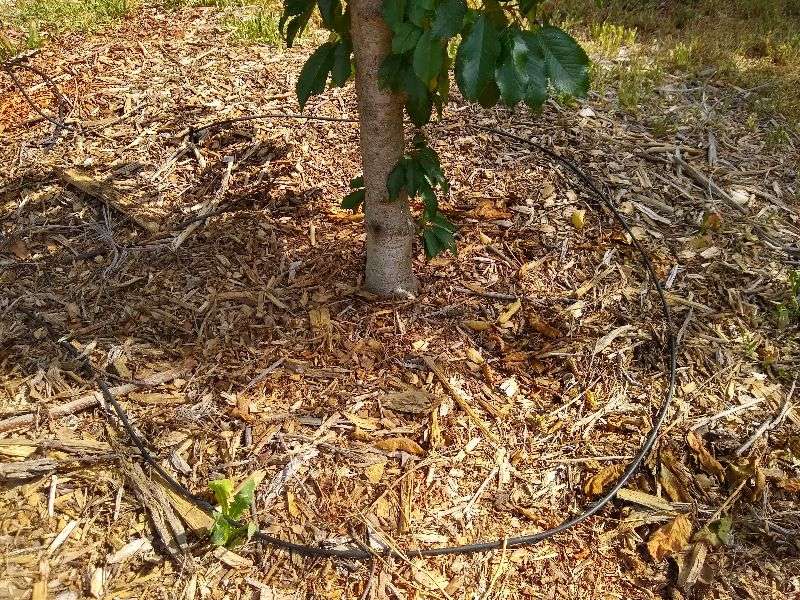
Florida rain can make watering feel like a guessing game. A newly planted mango needs attention while its roots grow into the surrounding soil, yet a mature, established tree usually needs far less help.
Treating both trees the same can lead to dry roots or soggy ground.
For the first several weeks, check the soil near the root ball and water when it begins to dry. As the tree establishes, water less often but soak a wider area so roots spread outward.
Adjust for rainfall, sandy soil, and heat rather than following one rigid schedule all year.
Mulch helps slow moisture loss and keeps grass from competing close to the trunk. Keep that mulch a few inches back from the bark.
A clear ring also makes it easier to notice weeds, mower damage, or a watering problem before it becomes serious.
Fertilizer deserves the same measured approach. More is not automatically better, and heavy nitrogen can push leafy growth instead of helping fruit production.
Follow current UF/IFAS guidance or your local Extension office’s advice for mango nutrition in your area, especially if leaves show yellowing. Once established, a mango can be fairly low-maintenance, but its first year is not the time to forget it.
6. Flowers Are Not a Promise of Fruit
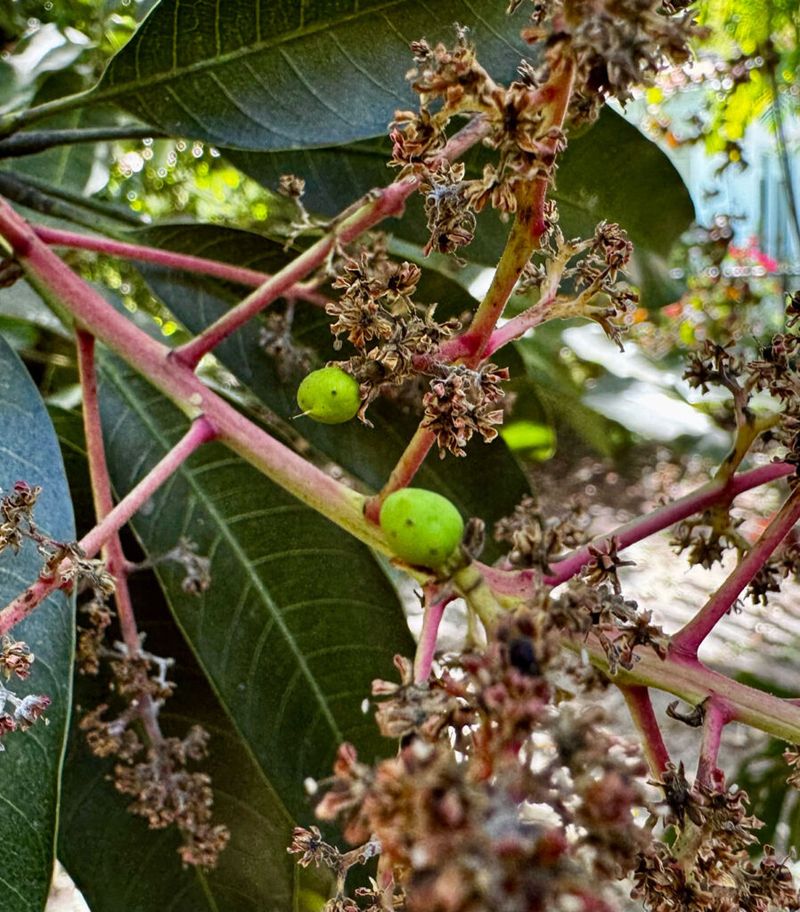
A tree covered in pale flower clusters looks ready to deliver baskets of mangoes. Then the flowers fade, and little fruit appears.
That disappointment is common because flowering is only one step between planting a tree and picking mangoes.
Cold weather during bloom can damage flowers, while rainy or humid conditions may favor diseases such as anthracnose. Powdery mildew can also affect mango blooms.
Weather during flowering changes from year to year, so even a healthy tree may have a light crop after a difficult season.
Your first job is observation, not spraying at the first dark spot. Check whether flower clusters are browning, developing a powdery coating, or dropping after a cold night.
Good airflow and thoughtful pruning can help the canopy dry after rain, though pruning cannot stop bad bloom weather.
If disease keeps returning, ask your county UF/IFAS Extension office for local guidance and use only products labeled for mango, following every label direction. A variety’s performance in your area is another good reason to ask questions before buying it.
Most of all, be patient with a young tree: a few early flowers do not mean it is ready to carry a full crop.
7. Harvest Brings Cleanup and Uninvited Guests
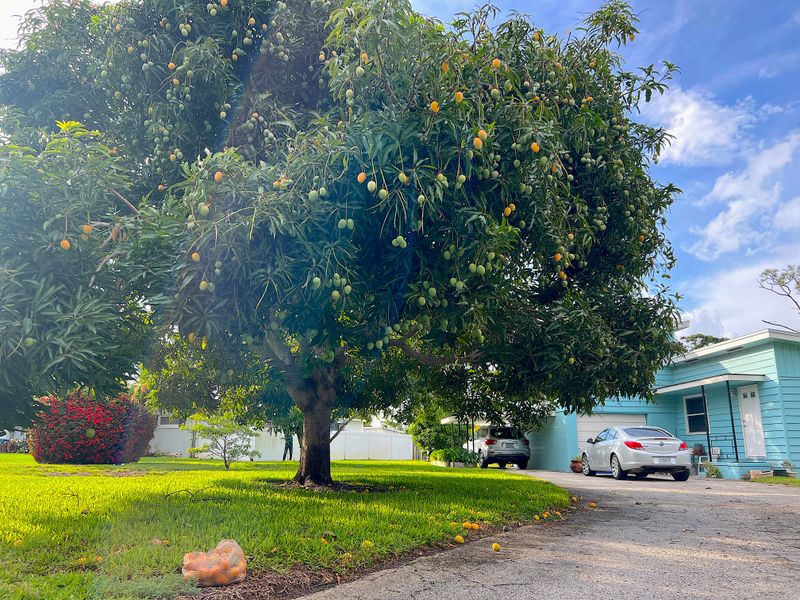
The first homegrown mango tastes even better when you picked it yourself. By the time a tree reaches full production, though, fruit can ripen faster than one household can eat it.
A harvest plan keeps the yard pleasant as well as productive.
Check the tree often during its fruiting season, which varies by variety. Many mangoes can be picked mature and allowed to finish ripening indoors, so you do not have to wait for every fruit to fall.
Ask your nursery how to recognize maturity for your chosen variety, since skin color alone is not always a reliable guide.
Collect fallen fruit promptly and remove damaged mangoes from the yard. Fruit left to rot can draw insects, rodents, and other animals close to the house.
If squirrels or birds take a share, harvest reachable fruit before it becomes overripe rather than relying on risky ladders or loose netting that can entangle wildlife.
Think about where you will put a big crop: share extras with neighbors, freeze cut fruit, or plan a few batches of smoothies. Keep pruning and picking within a safe reach, and hire a qualified tree professional for work high in the canopy.
The sweetest mango tree is one you can enjoy without turning harvest time into a cleanup marathon.